Children's braces costs: what parents should know
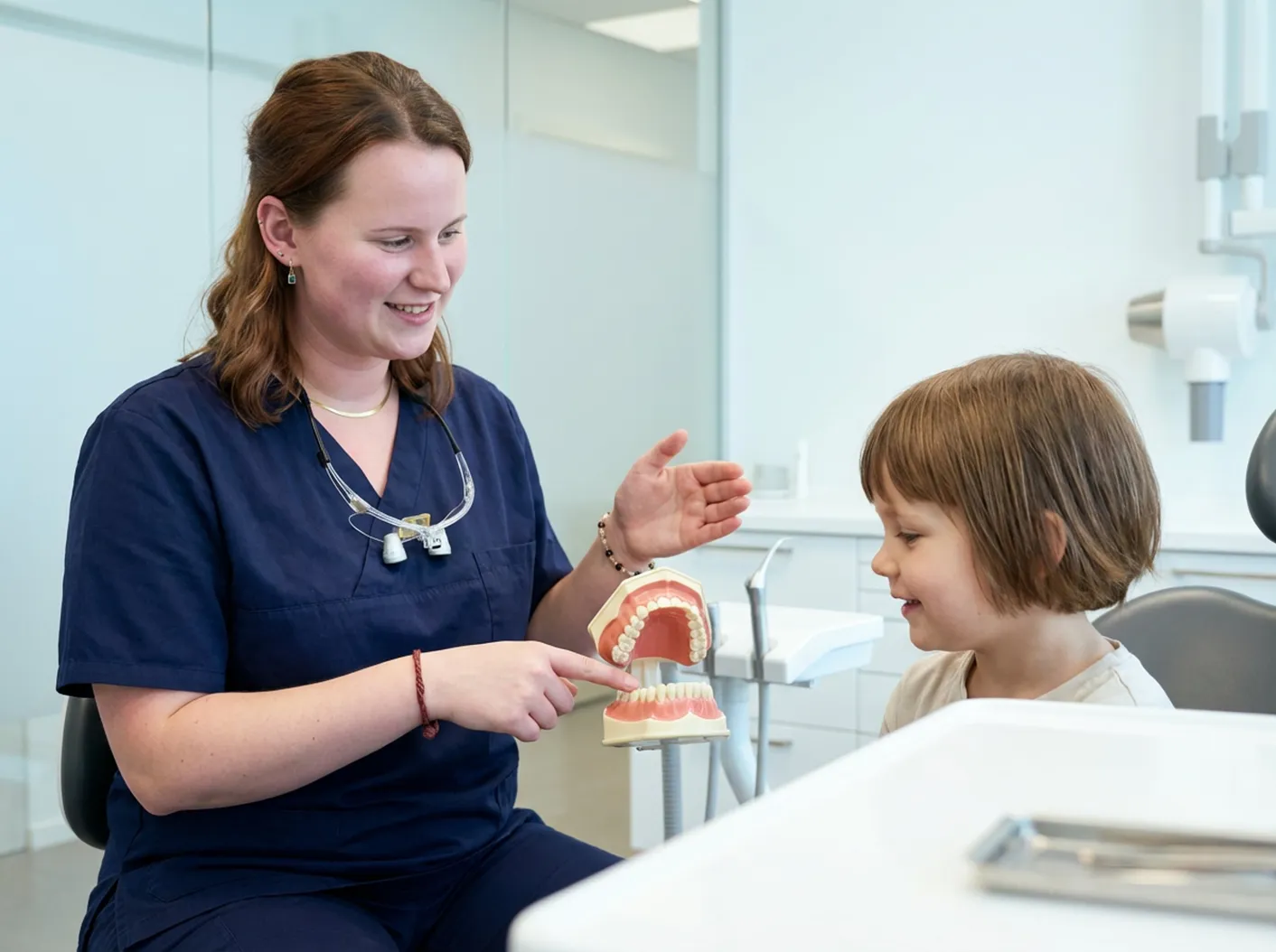
The cost of braces for children depends on the misalignment, type of treatment and insurance status. The KIG classification is particularly important. It determines whether statutory health insurance will pay. At Wunschlachen, we advise parents transparently and in a child-friendly way.
Über 350 Google-Bewertungen
Why do braces for children cost money?
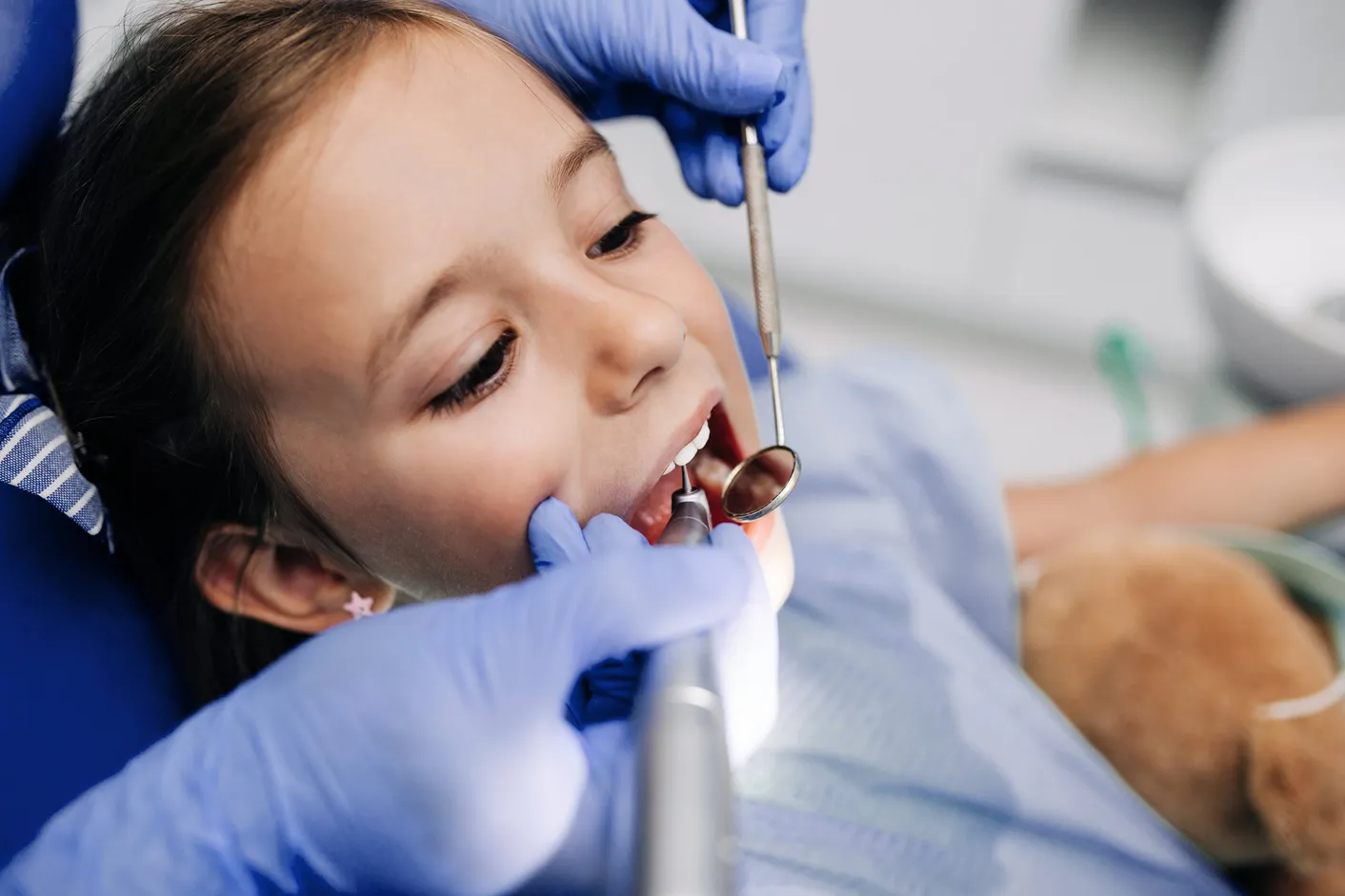
Braces correct misaligned teeth and jaws during growth. This can improve chewing, speech and the bite. They can also often reduce later dental problems.
Costs arise from diagnostics, planning, appliances and regular check-ups. Dental laboratory services are an additional expense. Depending on the diagnosis, treatment can take several years.
Parents often ask which costs are really necessary. Clear advice is particularly important here. It protects against unnecessary additional services.

What does KIG mean in relation to the cost of children's braces?
KIG stands for orthodontic indication group. This system divides dental misalignments into five grades of severity. Classification is based on fixed medical criteria.
KIG 1 and KIG 2 are generally considered less severe misalignments. Statutory health insurance does not usually cover this treatment. Parents generally have to pay for such services privately.
From KIG 3 onwards, there is usually a clear need for treatment. Statutory health insurance then covers standard care. An approved treatment plan is required.
The classification is not a matter of discretion, but follows a table of measured values. Here are a few examples from Annex 1 of the directive, with all measurements in millimetres: An overjet of up to 3 millimetres counts as grade 1 and over 3 to 6 millimetres as grade 2 — neither qualifies for statutory health insurance cover; only over 6 millimetres does it become grade 4. Crowding with a contact point deviation of less than 1 millimetre is grade 1, over 1 to 3 millimetres grade 2, over 3 to 5 millimetres grade 3 and over 5 millimetres grade 4. For lack of space, the threshold for health insurance cover is between 3 and 4 millimetres. A unilateral crossbite is grade 4, a bilateral crossbite grade 3, and a head-to-head bite only grade 2. An open bite of over 2 to 4 millimetres is grade 3. Because the boundary between grade 2 and grade 3 is therefore often just one or two millimetres, the measurement in the treatment plan determines the entire question of costs — which is precisely why it is worth asking for the assessed grade and an explanation of it.
What does health insurance cover for children?
Statutory health insurance usually covers children from KIG 3 onwards. Treatment must begin before the 18th birthday. Cover applies to medically necessary standard services.
During treatment, parents initially pay a co-payment. For the first child, this is usually 20 per cent. For additional children in the same household, it is often 10 per cent.
After treatment has been completed, the health insurance provider refunds the amount paid. The condition is that treatment has been completed to the medically necessary extent specified in the treatment plan; the dentist confirms completion, including retention, in writing (§ 29 paragraph 3 sentence 2 SGB V, KFO Directive section B number 12). Retention includes measures for up to two years after the end of the calendar quarter for which the last interim payment was made. If treatment is discontinued before then, the refund is lost — this is the most important financial reason for completing treatment once it has begun.

Which costs remain for parents?
Private additional costs can arise even when statutory health insurance provides cover. These include special brackets, special archwires or aesthetic solutions. These services go beyond basic standard care.
These services are not left to individual discretion. Since 1 July 2023, the Evaluation Committee for dental services has maintained a catalogue assigning every item to one of three columns: statutory health insurance services, additional services and supplementary services. For the statutory insurance item covering the fitting of a bracket, the catalogue expressly names ceramic brackets, mini brackets, lingual brackets, self-ligating brackets and plastic brackets as additional services. Supplementary services include the fixed maxillary anterior retainer and supplementary fixed appliances such as mini screws. The difference has a considerable impact on your finances: with an additional service, the practice continues to bill the comparable statutory insurance service as a benefit in kind, and you pay only the difference; with a supplementary service, there is no comparable statutory insurance service, and you bear the full amount.
At Wunschlachen, we explain every item clearly. This means parents know in advance what is worthwhile. No one should sign up for a service that remains unclear.
Supplementary dental insurance for braces: what it can cover
Six costs to distinguish when considering braces
What braces cost when health insurance pays nothing
The multiplier: 2.3 times, 3.5 times and the rules for higher rates
Timing is crucial: waiting periods and the duty of disclosure
What to check before signing at the orthodontist
Removable braces for children: costs
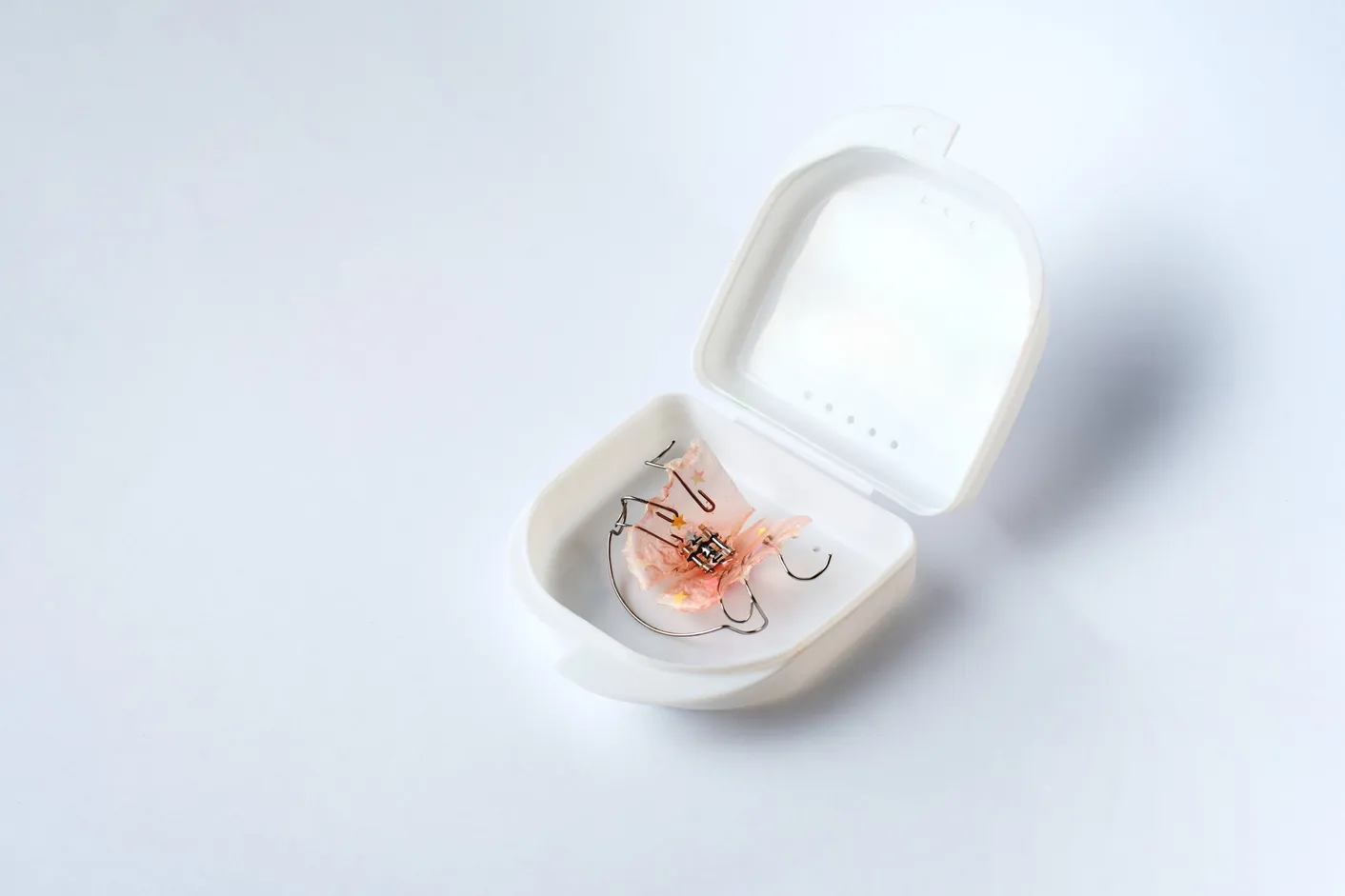
A removable brace is often used for younger children. It can guide jaw growth. It can also support minor tooth movements.
Costs can vary considerably depending on the work involved. Without statutory health insurance cover, they are often in the low four-figure range. The diagnosis, materials and duration of treatment are decisive.
Removable braces require good cooperation from the child. They work only if worn regularly. Parents play an important supporting role.

Fixed braces for children: costs
Fixed braces are attached directly to the teeth. They are suitable for more complex misalignments of the teeth and jaws. They usually consist of brackets, archwires and small retaining elements.
Fixed braces can cost considerably more. With private billing, costs can run to several thousand euros. Statutory health insurance cover reduces the financial burden where the KIG classification qualifies.
Optional extras increase the amount you pay yourself. These include ceramic brackets, self-ligating brackets or particularly discreet solutions. These options should be explained thoroughly.

Clear braces for children
Clear braces interest many families. These include clear aligners or barely visible brackets. They are more discreet than conventional metal brackets.
Not every misalignment is suitable for these systems. Statutory health insurance providers also usually do not cover these options in full. Private additional costs often arise.
An examination will show whether a discreet solution is suitable. Tooth position, growth and cooperation all matter. The child's age is also important.

How does cost planning work?
The first step is a thorough examination. This includes photographs, impressions or scans and X-rays. The misalignment is then assessed medically.
The practice then draws up a treatment plan. This includes the measures, duration and expected costs. For statutory health insurance cases, it is submitted for approval.
Parents should review the plan at their leisure. Supplementary services deserve particular attention. It is always sensible to ask questions before signing.
When is early advice useful?
An initial orthodontic assessment is often helpful at an early stage. Many misalignments can be identified at primary school age. Sometimes observation is sufficient at first.
Monitoring is important for crossbite, severe crowding or an open bite. Premature loss of baby teeth can also have consequences. Timely planning can simplify later measures.
Advice at Wunschlachen takes the child and family into account. We explain the diagnosis, options and costs openly. This provides a sound basis for decision-making.

Conclusion on the cost of braces for children
There is no flat-rate answer to the cost of braces for children. The KIG grade, type of brace and extent of treatment are decisive. Private supplementary services also affect the amount parents pay themselves.
Statutory health insurance usually supports children from KIG 3 onwards. Parents initially pay a contribution and receive it back later. Successful completion of treatment is required.
Transparent advice before treatment begins is important. At Wunschlachen, families receive a clear assessment. This keeps the treatment, benefits and costs understandable.