Dental fistula: causes, symptoms and treatment
A fistula in the mouth often looks inconspicuous. Nevertheless, it usually indicates inflammation. Early assessment protects the tooth and bone.
Über 350 Google-Bewertungen

What does ‘dental fistula’ mean?
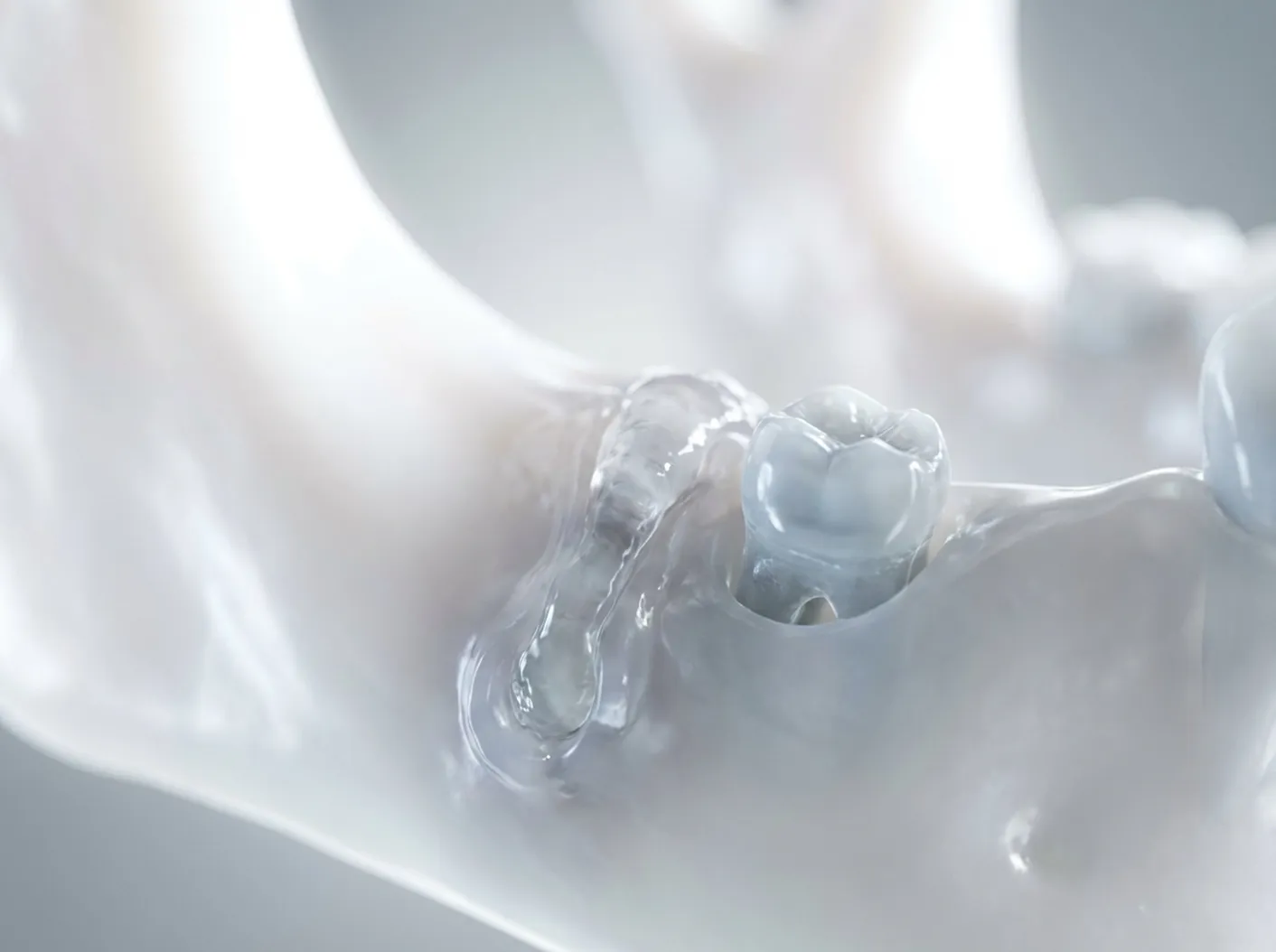
A dental fistula is a narrow connecting channel in the tissue. It runs from a site of inflammation to the oral cavity. Secretions or pus can drain through it. The opening is often in the gums. It appears as a whitish spot or small blister. Many people refer to it as a pus-filled blister. The fistula reduces pressure in the jaw. This relieves pain. However, the underlying cause remains.
How does a dental fistula develop?
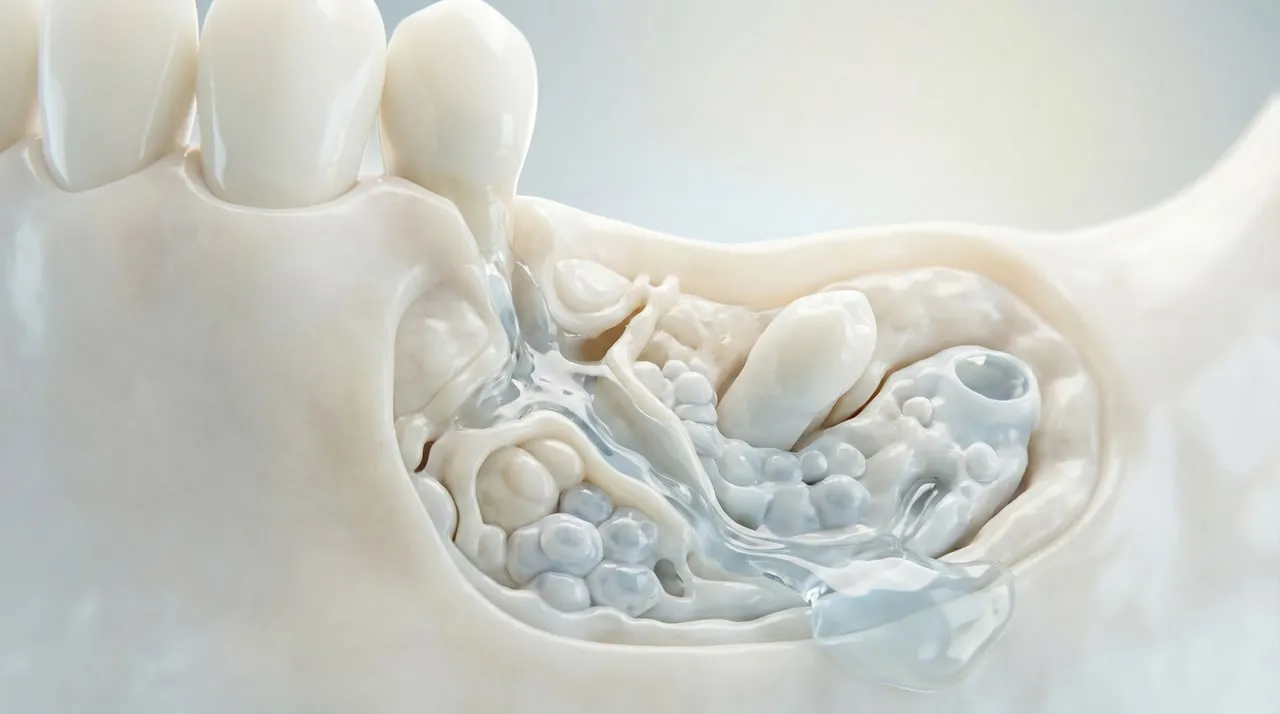
The process most commonly begins at the tooth root. Bacteria enter the root canal. This leads to inflammation of the tooth root. The inflammation can reach the jawbone. A collection of pus forms, often as an abscess. The body then creates a drainage route. The trigger is often deep tooth decay. Dental trauma can also damage the nerve. Leaking fillings are another possible cause. Less commonly, advanced periodontitis is the underlying problem. In this case, the supporting structures of the tooth are affected. The fistula channel may emerge at the side.
Symptoms: how can I recognise a fistula in the mouth?
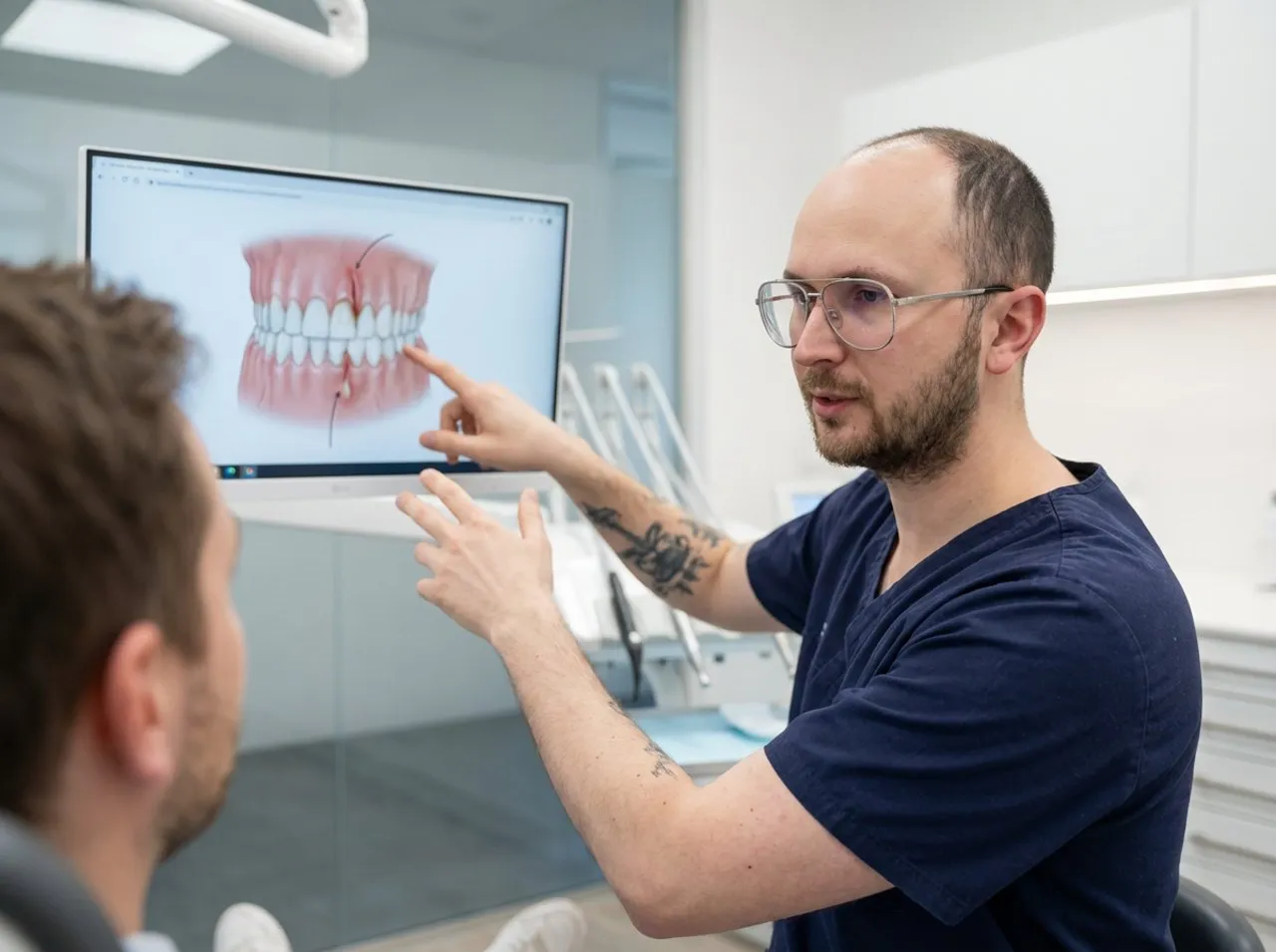
A localised swelling of the gums is typical. The area feels soft or tender to pressure. Pus may be discharged when pressure is applied. Pain is often absent. This may seem reassuring, but it is misleading. The infection remains active and can grow. Many people report throbbing or a feeling of pressure. An unpleasant taste is also possible. Bad breath may occur too. During acute flare-ups, the risk of general symptoms increases. Fever or exhaustion are warning signs. Prompt treatment is then advisable.
Is a dental fistula dangerous?
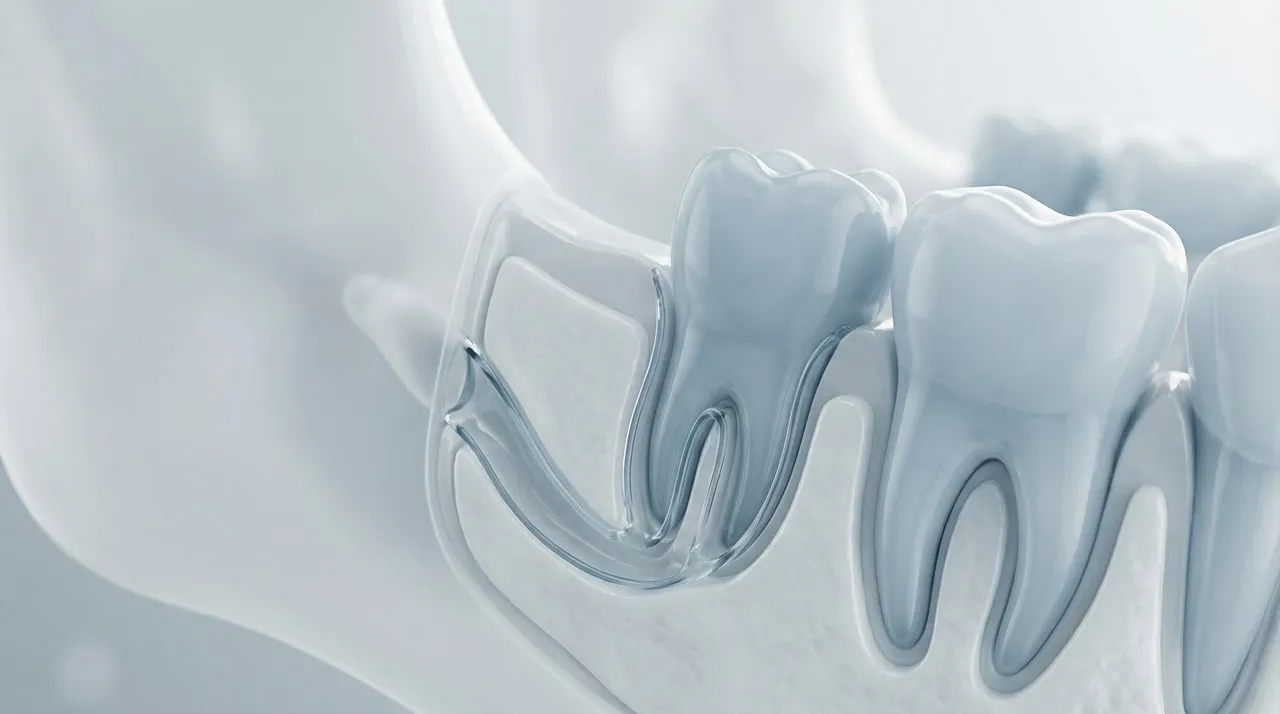
A dental fistula is not a trivial finding. It indicates a chronic infection. Without treatment, there is a risk of bone loss. The affected tooth may become loose. In the long term, it may be lost. Neighbouring teeth can also be affected. The risk of complications increases in people with a weakened immune system. The inflammation can spread. This can have serious consequences.
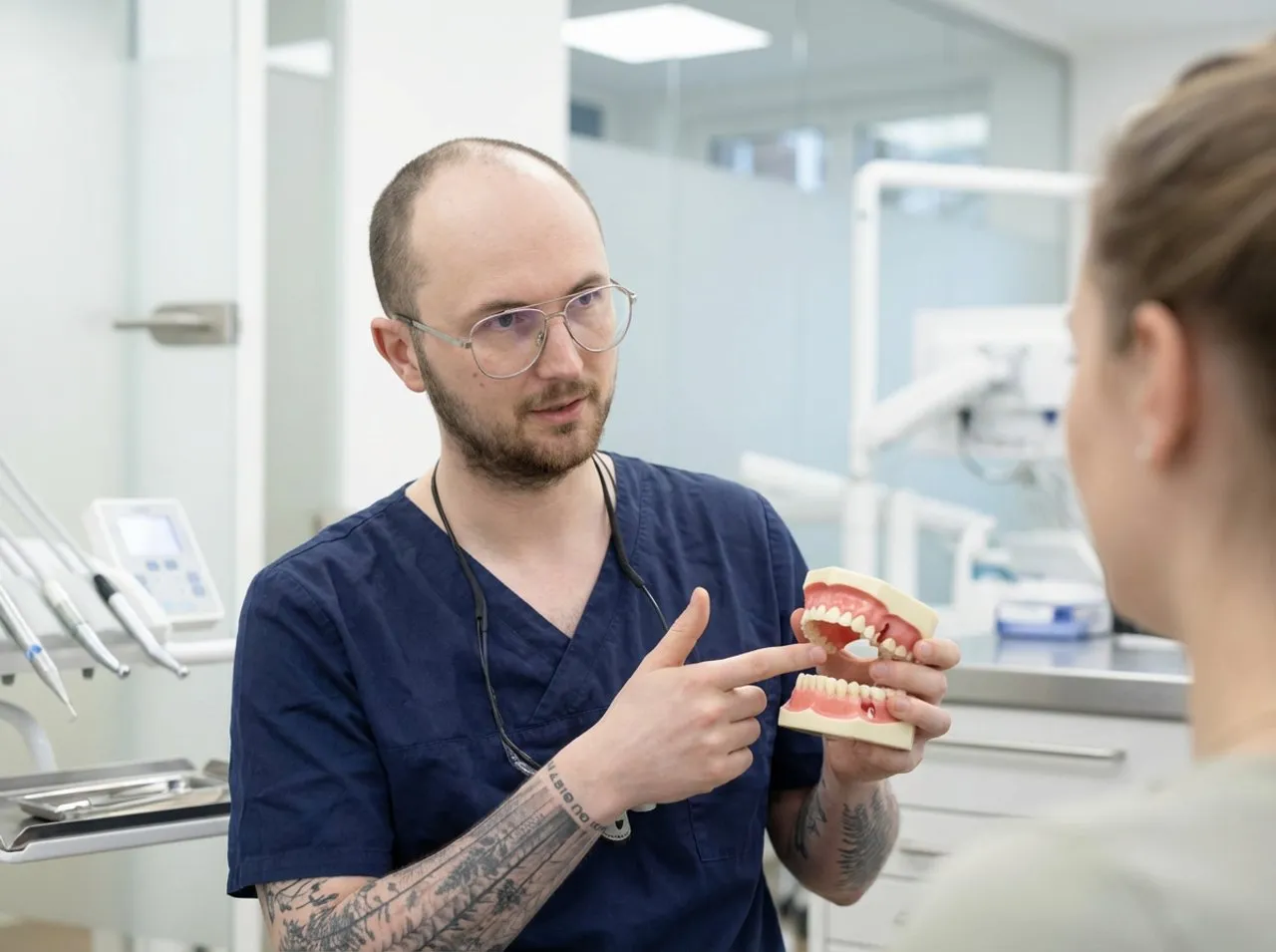
Diagnosis at the dentist
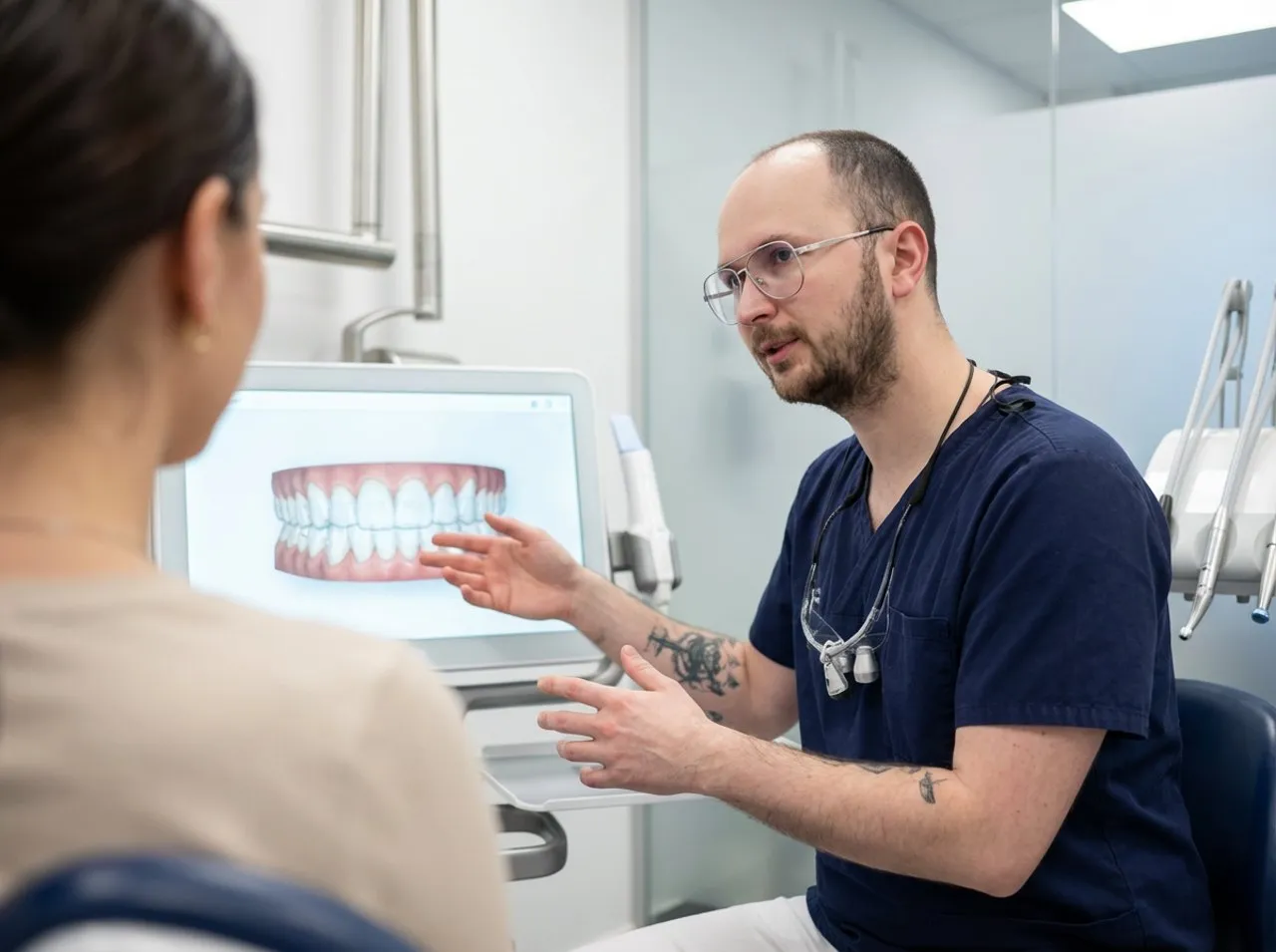
Diagnosis begins with a thorough examination. We assess the tooth, gums and bite. We look specifically for the fistula opening. This is usually followed by a vitality test of the tooth. Cold and percussion tests provide important clues. This helps narrow down the cause. An X-ray often shows the area of inflammation. A 3D scan is useful for complex findings. This allows us to assess the bone more precisely. At Wunschlachen, we value clear diagnoses. We explain the results in an understandable way. We then draw up a structured treatment plan.

Treatment: what closes the fistula permanently?
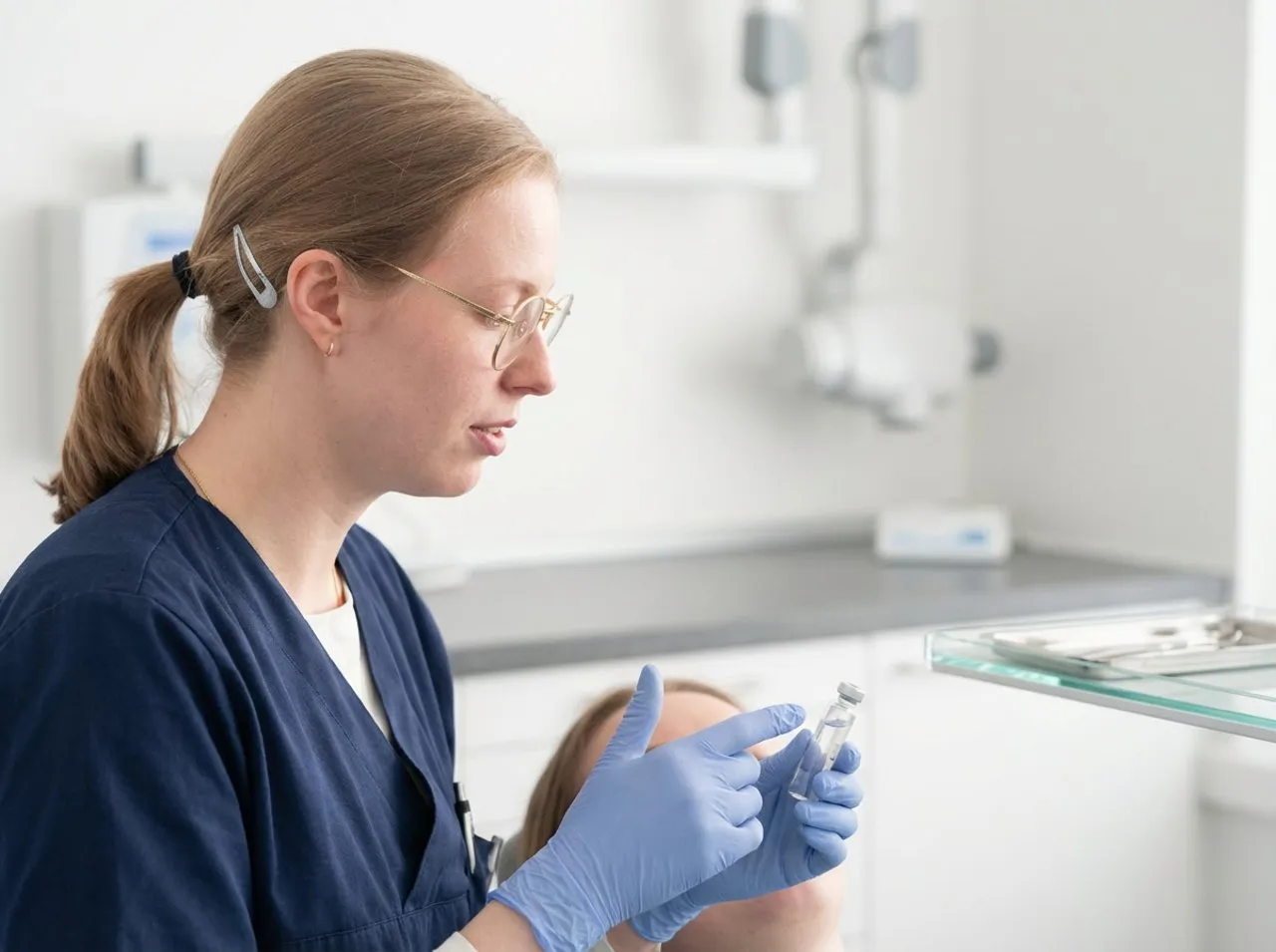
Treating the underlying cause is crucial. This is the only way to make the fistula disappear for good. Measures that only address the symptoms are not enough. If the tooth root is inflamed, root canal treatment is often required. We thoroughly clean the root canals. They are then sealed tightly. Drainage may be necessary for an abscess. This quickly relieves pressure in the tissue. Pain and swelling usually subside. Antibiotics are not always necessary. They are particularly important if you have a fever. They are also considered if the infection is spreading. Some teeth can no longer be preserved. In such cases, removal is medically advisable. We then plan a suitable dental prosthesis.
Healing process: how long does it take?
The tissue often settles down quickly once the underlying cause has been treated. The fistula opening frequently closes within a few days. The bone regenerates over weeks to months. The duration depends on the findings. Oral hygiene also plays a role. Follow-up appointments ensure that treatment is successful.

Home remedies for a dental fistula: what is reasonable?
Mild rinses can provide short-term relief. Salt water is often suitable for this purpose. Chamomile is also often found to be soothing. However, home remedies do not replace treatment. They do not eliminate the source of infection. The fistula can reappear at any time. Please do not squeeze the area. This further irritates the tissue. Germs can penetrate deeper as a result. Applying external heat is not advisable. It can worsen inflammation. Cooling is usually better for swelling.

When should you come in immediately?
Seek help promptly if you have a fever. Increasing facial swelling is also a serious concern. The same applies to difficulty swallowing. You should also come in if the fistula keeps recurring. This suggests that the underlying cause persists. Early treatment improves the prognosis.
Prevention: how to reduce the risk
Regular check-ups are the best preventive measure. They allow tooth decay to be detected early. Small defects can then be treated gently. Brush thoroughly twice a day. Use dental floss or interdental brushes as well. This significantly reduces the bacterial load. Do not ignore silent inflammation. A dead tooth often causes little pain. Nevertheless, it can affect the jaw. At Wunschlachen, we provide individual and transparent advice. We discuss the benefits and alternatives. This enables you to make a well-informed decision.

Conclusion
A dental fistula usually signals a deeper infection. It rarely clears up permanently on its own. Targeted treatment protects the tooth and jawbone. Book an appointment at Wunschlachen soon.
FAQ – frequently asked questions about dental fistulas
A dental fistula is an inflammatory channel in the tissue. It drains pus into the oral cavity.
The pus can drain away. This reduces pressure in the bone.
The opening may close temporarily. The underlying cause usually remains.
Inflammation of the tooth root is very common. It is often caused by deep tooth decay.
There is often an abscess in the bone. The fistula is then the drainage route.
Root canal treatment is often necessary. Drainage may follow if needed.
No, not always. They are important if you have a fever or the infection is spreading.
We carry out a clinical examination and test the tooth’s vitality. An X-ray supports the diagnosis.
Rinse gently with salt water. Apply cooling if there is swelling, and do not apply heat.
If you have a fever, severe swelling or difficulty swallowing. You then need immediate help.
Book your appointment now
We would be happy to advise you in person at our practice.