Dental implants at 70 – still possible?
Dental implants are often perfectly possible at 70. Age is not the only deciding factor; the amount of available bone, gum health, pre-existing conditions and medication also matter. Careful planning and consistent care improve the chances of having fixed replacement teeth in later life.
Über 350 Google-Bewertungen
Are dental implants still worthwhile at 70?
Many people wonder whether a dental implant is still worthwhile in later life. The answer is often yes. The decisive factors are your individual oral health and your general health.
Current patient information and reviews clearly show that age alone does not determine whether implants are suitable. Oral health, the jawbone, smoking habits and a willingness to commit to long-term aftercare are more important. High implant survival rates have also been reported in older patients.

What are the requirements for implants in later life?
Before treatment, the dentist checks several factors. These include the gums, remaining teeth, and bone height and width. Pre-existing conditions and medications are also recorded in detail. A mouth free from inflammation is particularly important.
Untreated periodontitis can increase the risk of complications. The tissue should therefore be stable before implant placement.
The jawbone must also have sufficient volume. If there is not enough bone, bone augmentation may be advisable. Depending on the defect, this can be carried out at the same time or several months beforehand.

What benefits do dental implants offer at 70?
Implants can significantly improve chewing comfort. They provide secure support for a crown, bridge or denture. Many patients find this a considerable relief in everyday life.
Another benefit is the load placed on the jawbone. Chewing keeps this area more active. This is often more limited with purely removable replacement teeth.
Implants can be particularly helpful for loose dentures. Even a few implants can significantly improve their fit. This makes eating, speaking and social situations easier.
What should you pay particular attention to at 70?
Many people take regular medication at 70. This is important for implant treatment. Bisphosphonates and denosumab in particular should always be discussed openly.
Guidelines point out that low-dose osteoporosis treatments do not automatically rule out implants. However, particular caution is needed with high-dose antiresorptive therapy, long-term treatment and additional risk factors. This requires very careful planning.
Smoking also remains an important factor. It can slow wound healing and increase the risk of implant loss. Stopping smoking around the time of treatment is therefore highly advisable.
Diabetes, cardiovascular disease and reduced mobility also deserve consideration. They do not automatically rule out implants. Treatment simply needs to be planned with particular care.

How does treatment work?
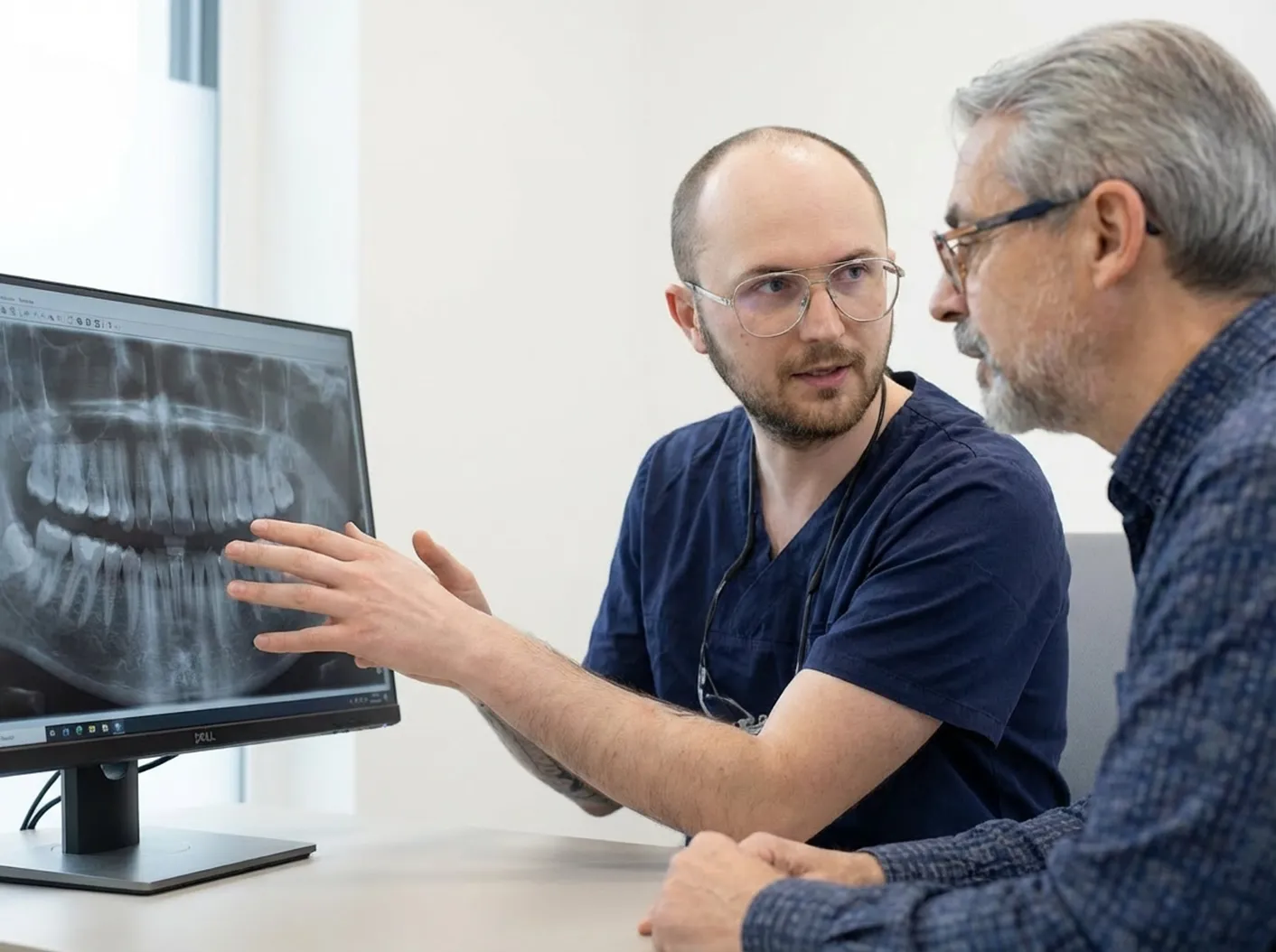
The first step is diagnosis. This includes an examination, X-rays and often a three-dimensional scan. This allows nerves, sinuses and the amount of available bone to be assessed reliably.
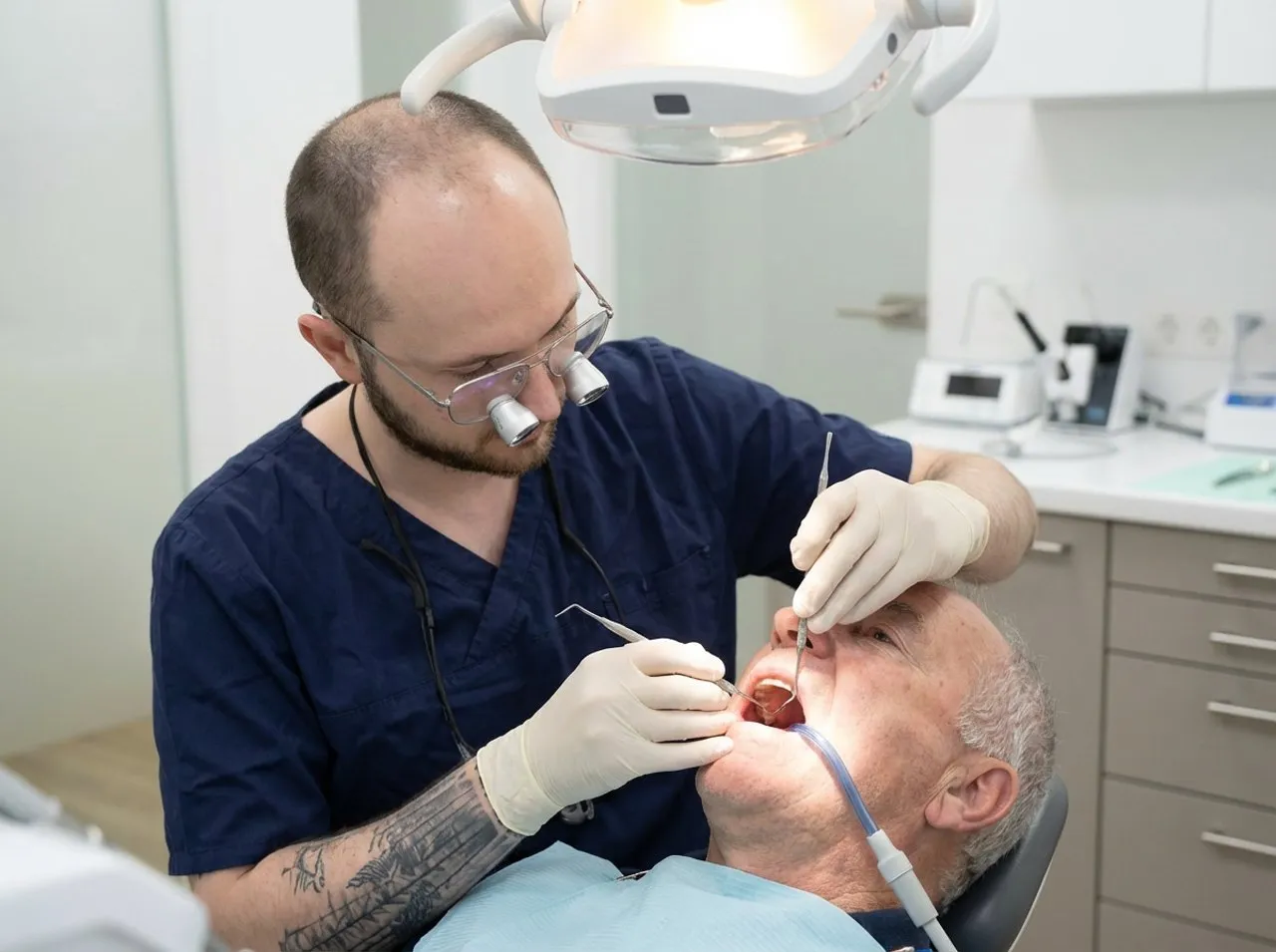
The implant is then placed. Under local anaesthetic, the implant is inserted into the jaw. After the healing period, the visible replacement tooth is attached.
If bone augmentation is necessary, treatment will take longer. Depending on its extent, healing can take several months. This should be discussed realistically beforehand.
Your ability to manage everyday demands is also important. Implants require several appointments and reliable cooperation. Attending appointments consistently often improves the long-term prognosis.
Aftercare and hygiene in later life
The long-term phase really begins after the procedure. Implants require consistent cleaning and regular check-ups. This routine is particularly important in later life.
Plaque must not be allowed to build up around implants for long. Otherwise, the tissue can become inflamed. This can develop into peri-implantitis.
In addition to daily care, regular professional cleaning appointments help. Many centres recommend frequent check-ups. This often allows changes to be detected early.

What risks do implants carry in later life?
Like any surgical procedure, a dental implant carries risks. Possible complications include infection, swelling and subsequent bleeding. The maxillary sinuses are also a consideration in the upper jaw.
In rare cases, nerves can be irritated or adjacent structures injured. This is why precise planning is so important. Modern imaging significantly reduces this risk.
Care is crucial in the long term. If implants are not cleaned properly, the tissue can become inflamed. This inflammation can cause bone loss and put the implant at risk.

Who might benefit from alternatives?
Not every request for implants should be acted on immediately. Sometimes bridges or well-planned dentures are the more suitable solution. This may be the case if there is very little suitable bone or the person does not want surgery.
Highly active periodontitis must also be treated first. Only then can implants be considered responsibly. Honest advice is more important here than a quick procedure.
Conclusion on dental implants at 70
Dental implants can be very worthwhile at 70. The decisive factors are not your date of birth, but your clinical findings, health and aftercare. With good preparation, fixed and functional replacement teeth are possible even in later life.