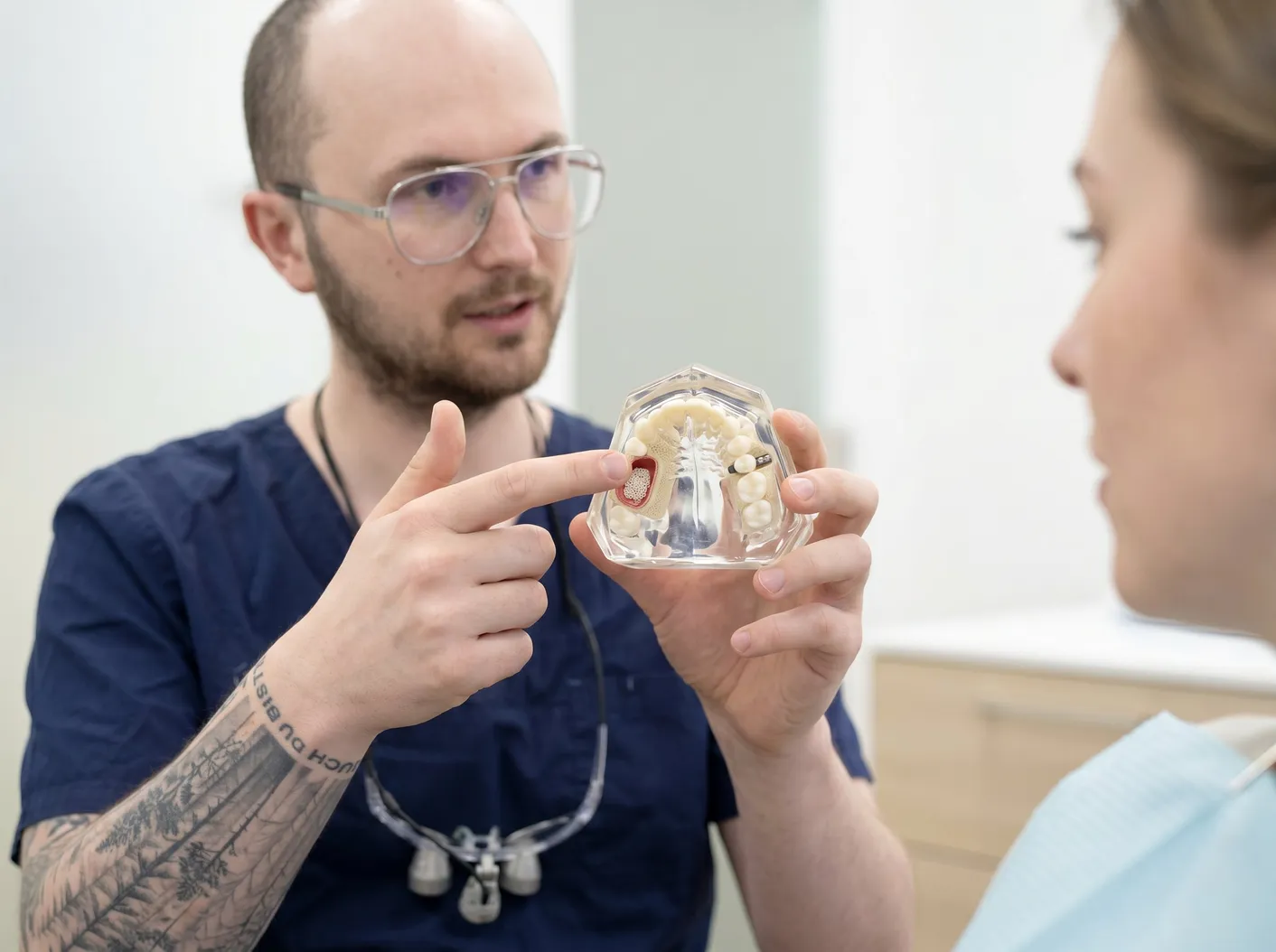
External sinus lift: bone augmentation in the upper jaw
An external sinus lift is a surgical bone augmentation procedure in the lateral upper jaw. It is needed when dental implants are planned but there is insufficient bone height. The floor of the maxillary sinus is raised and stabilised with bone material. This creates a stable foundation for a fixed dental restoration.
Über 350 Google-Bewertungen

What is an external sinus lift?
An external sinus lift is also known as a lateral sinus lift. It is one of the established procedures in implantology. The aim is to restore missing bone volume in the upper jaw.
After tooth loss, the jawbone often gradually shrinks. At the same time, the maxillary sinus lies very close to the back teeth. This can sometimes leave insufficient bone for an implant. People affected usually do not notice the bone loss themselves.
With an external sinus lift, the dentist creates access to the maxillary sinus from the side. The delicate membrane is carefully lifted. Bone substitute material or the patient's own bone is then inserted.
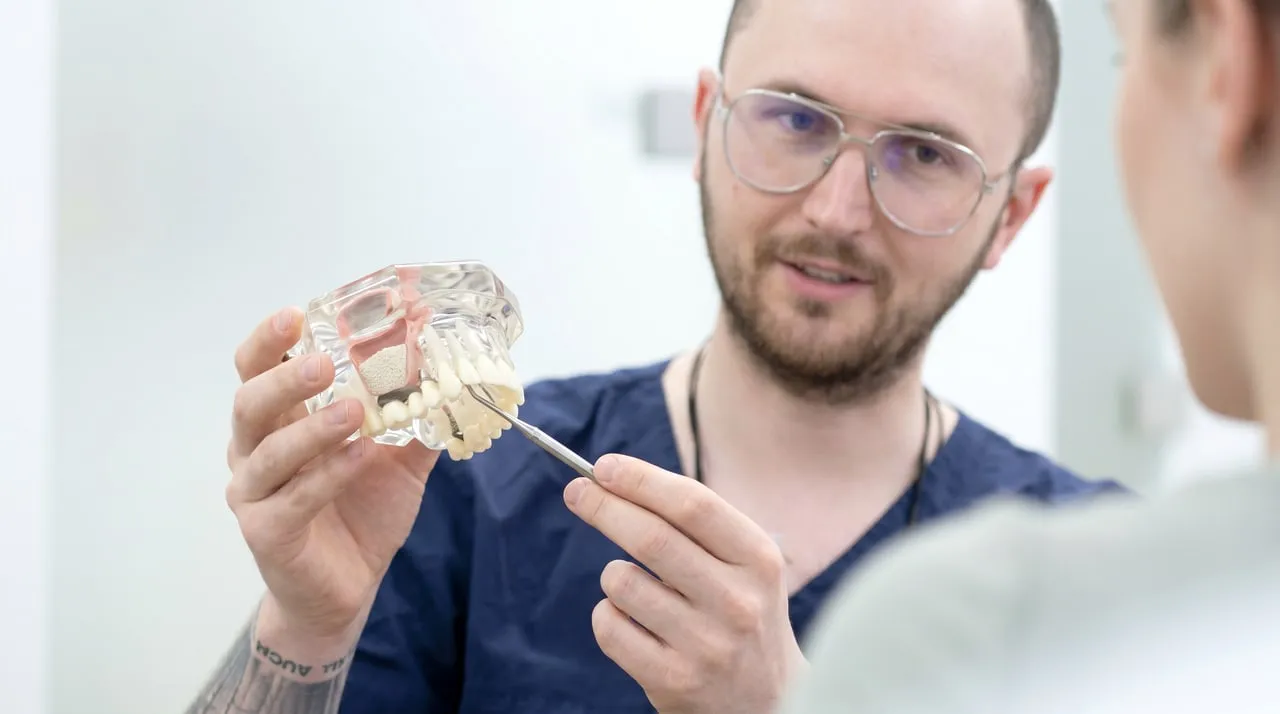
When is an external sinus lift recommended?
An external sinus lift is mainly used in the back of the upper jaw, where premolars or molars are often missing. If teeth have been missing for a long time, the bone can recede considerably.
This method can be useful if an internal sinus lift would be insufficient, especially where there is very little bone height. More extensive implant treatment may also require a sturdy bone graft.
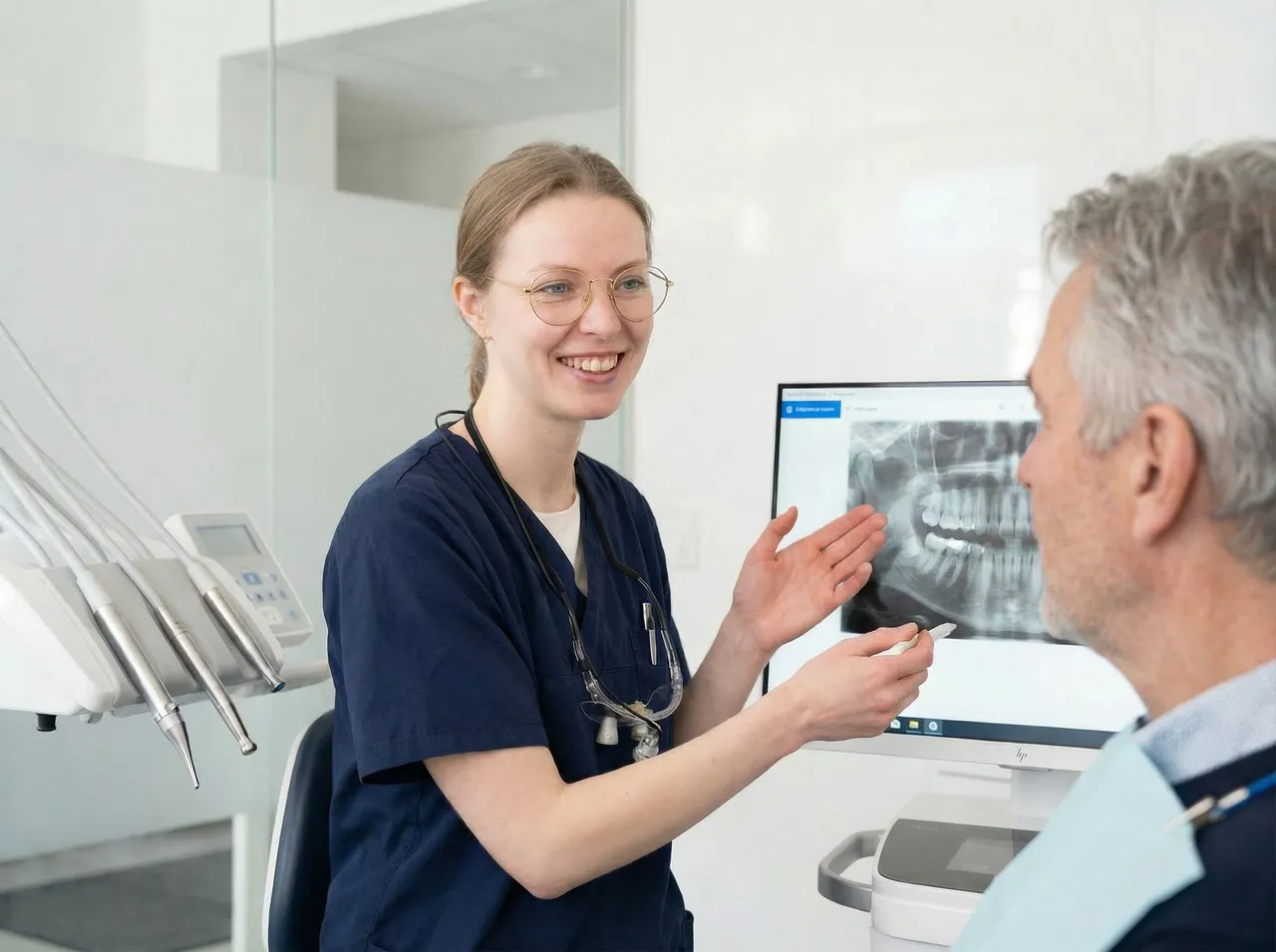
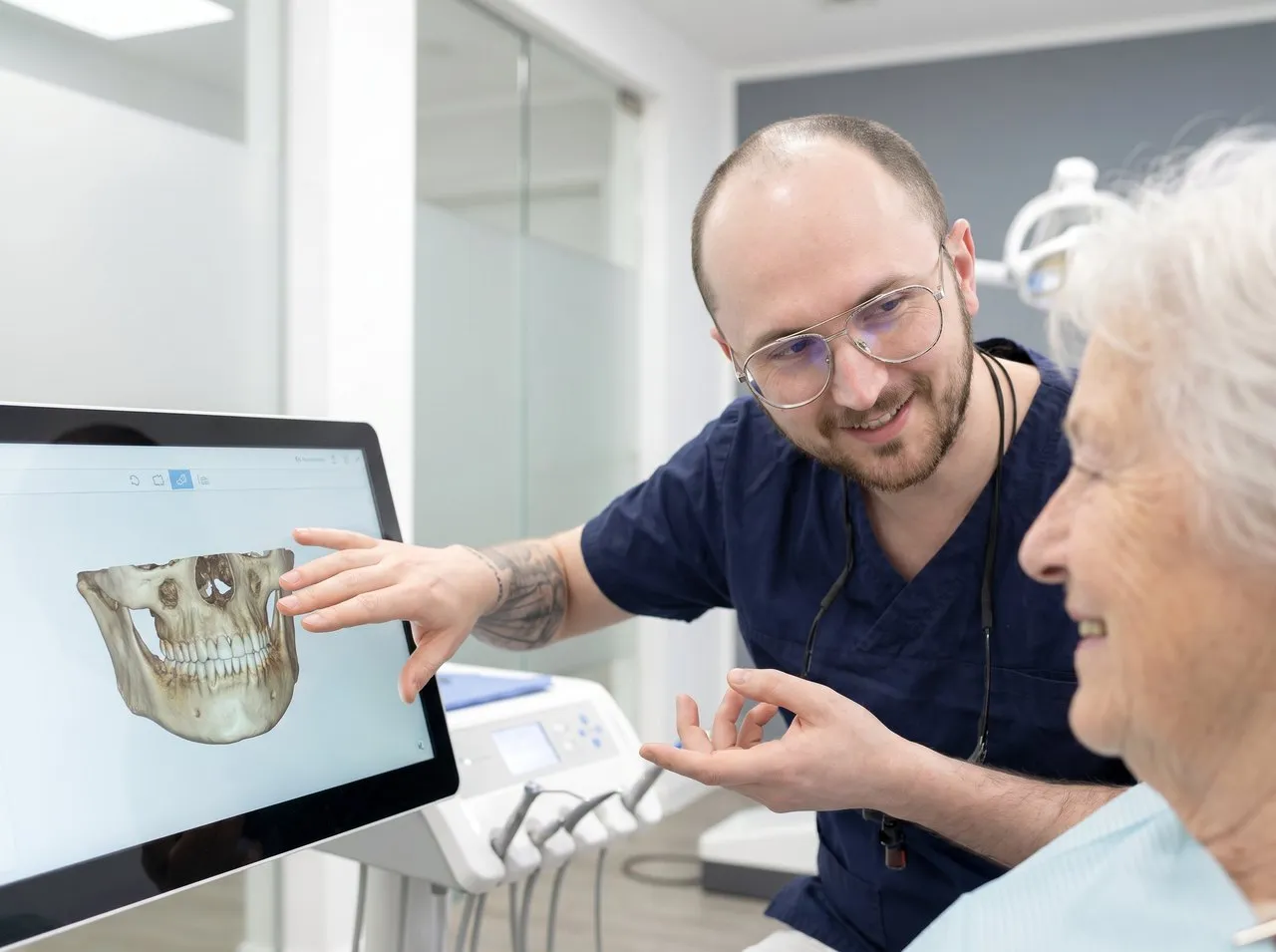
A thorough examination takes place before treatment. Digital X-rays or 3D scans show the available bone height and help the dentist plan the procedure.
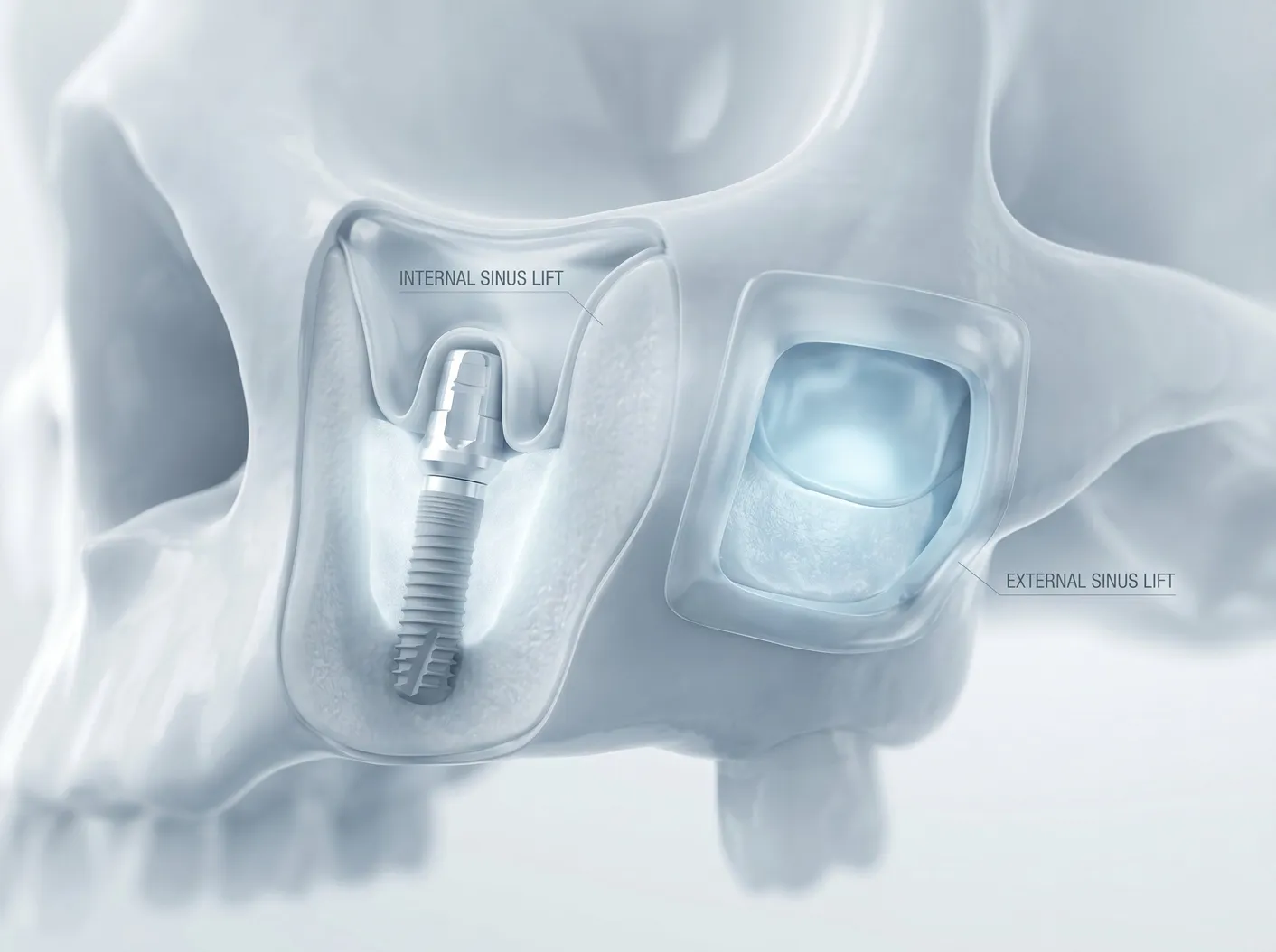
Difference between internal and external sinus lifts
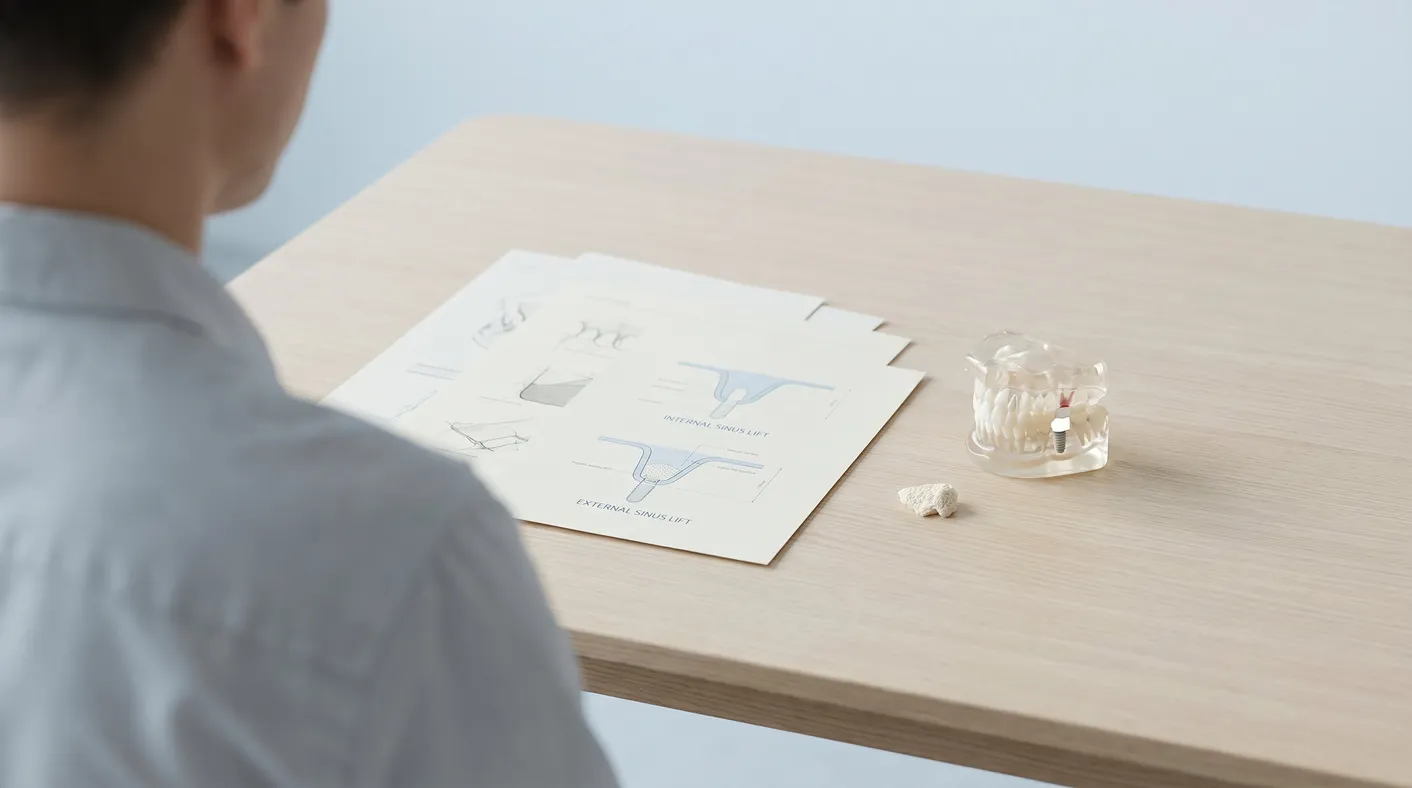
An internal sinus lift is performed through the future implant site. It is generally suitable when bone loss is minor. The access is smaller and the augmentation less extensive.
An external sinus lift is performed through a lateral window in the bone. This allows more material to be inserted. This technique is suitable for more advanced bone loss.
The individual clinical findings determine which method is suitable. The decisive factors are bone height, the shape of the maxillary sinus and the implant position. The planned dental restoration also plays an important role.
Treatment process at Wunschlachen
First, we discuss your wishes and clinical findings in detail. We then assess the available bone, the membrane and the neighbouring teeth. General health factors are also taken into account.
During the procedure, the area is thoroughly anaesthetised. An incision is then made in the gum and the lateral access is prepared. The maxillary sinus membrane is then carefully lifted.
Bone material is inserted into the resulting cavity. This material serves as a scaffold for new bone. The wound is then carefully closed.
Depending on the initial situation, the implant can be placed immediately. If very little residual bone remains, implantation takes place later. We make this decision after careful planning.
Which bone material is used?
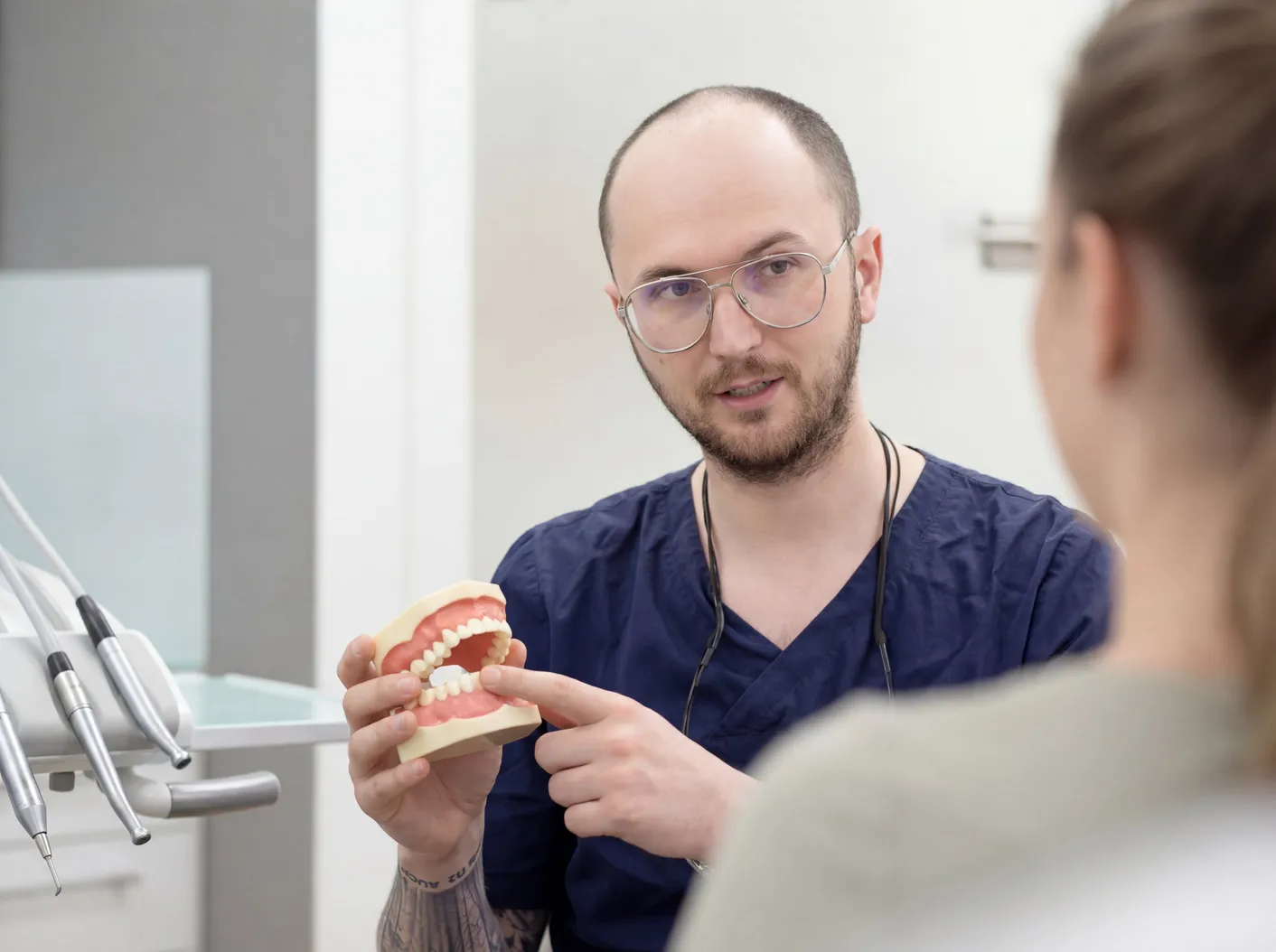
Various materials are available for bone augmentation. Synthetic or biological bone substitute materials are often used. In some cases, the patient's own bone is also suitable.
The material should be well tolerated and dimensionally stable. It is gradually remodelled by the body. This gradually creates new, stable bone.
The choice depends on the clinical findings. Allergies, bone quality and the treatment goal are also taken into account. We explain the options clearly during your consultation.
Healing phase after an external sinus lift
The healing phase begins after the procedure. During this time, new bone grows into the inserted material. This usually takes several months.
Healing often takes between six and nine months. Smaller augmentations can become stable more quickly. More extensive cases, on the other hand, require more time.
Follow-up appointments are important during healing. They help us monitor wound healing and bone augmentation. Oral hygiene should also be particularly thorough.

Possible symptoms and risks
Swelling, a feeling of pressure in the upper jaw and mild bruising can occur after an external sinus lift.
The sinus lining can tear in rare cases. If this happens, it is managed during the procedure. Occasionally, healing may take longer.
Good aftercare is important. Avoid blowing your nose forcefully for the first few days. Smoking can also interfere significantly with healing.
What to do after treatment
You should rest and avoid physical exertion after the operation. Cooling can reduce swelling. Only take medication as recommended by your doctor.
Brush your teeth carefully and thoroughly. The surgical site should not be irritated unnecessarily. An antiseptic mouthwash may be recommended temporarily.
Please contact us if you develop a fever, heavier bleeding or increasing swelling. A persistent feeling of pressure should also be checked. This allows complications to be detected early.
Benefits of precise planning
Careful planning reduces risks and makes the outcome more predictable. We assess bone height, the thickness of the sinus lining, how biting forces will act and the shape of the sinus.
This helps minimise disruption to the tissues and plan a more precise implant position. Both are important for a fixed restoration that functions naturally.

External sinus lift and implants
An external sinus lift creates the foundation for implants in the upper jaw. Without sufficient bone, stable anchorage would often not be possible. This is particularly important when back teeth are missing.
After successful healing, the implant can become firmly integrated. The dental restoration is then planned and fitted. The aim is a functional and aesthetically pleasing result.
At Wunschlachen, we prioritise precise planning. Modern diagnostics support safe implant positioning. This creates a treatment concept tailored to your clinical findings.