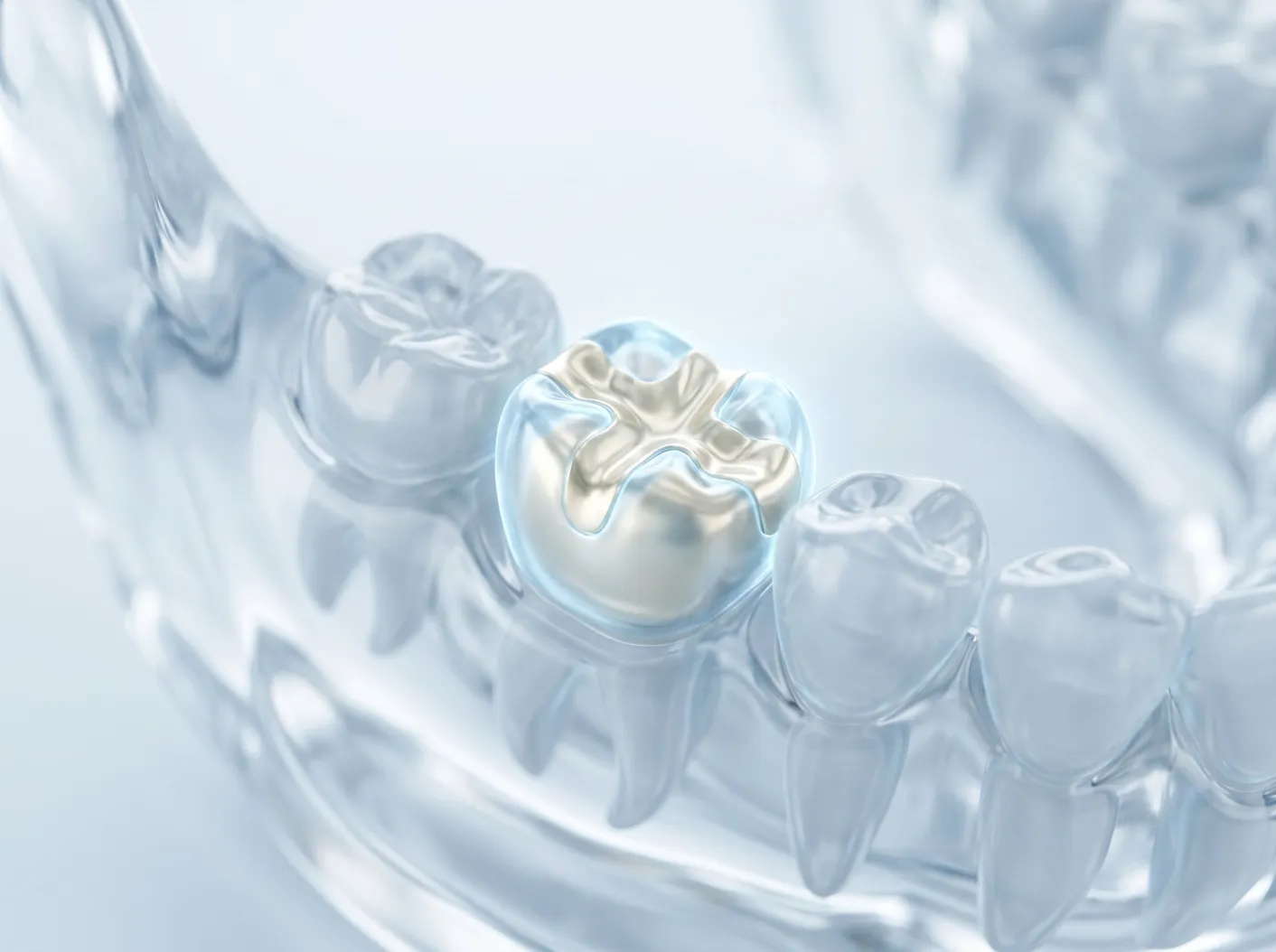
Gold fillings – information and modern alternatives in Berlin
Gold fillings were long regarded as a high-quality solution for damaged molars. They are stable, durable and highly resilient. However, our practice Wunschlachen no longer offers gold fillings. Instead, we can advise you in person on modern alternatives such as ceramic, composite or partial crowns.
Über 350 Google-Bewertungen
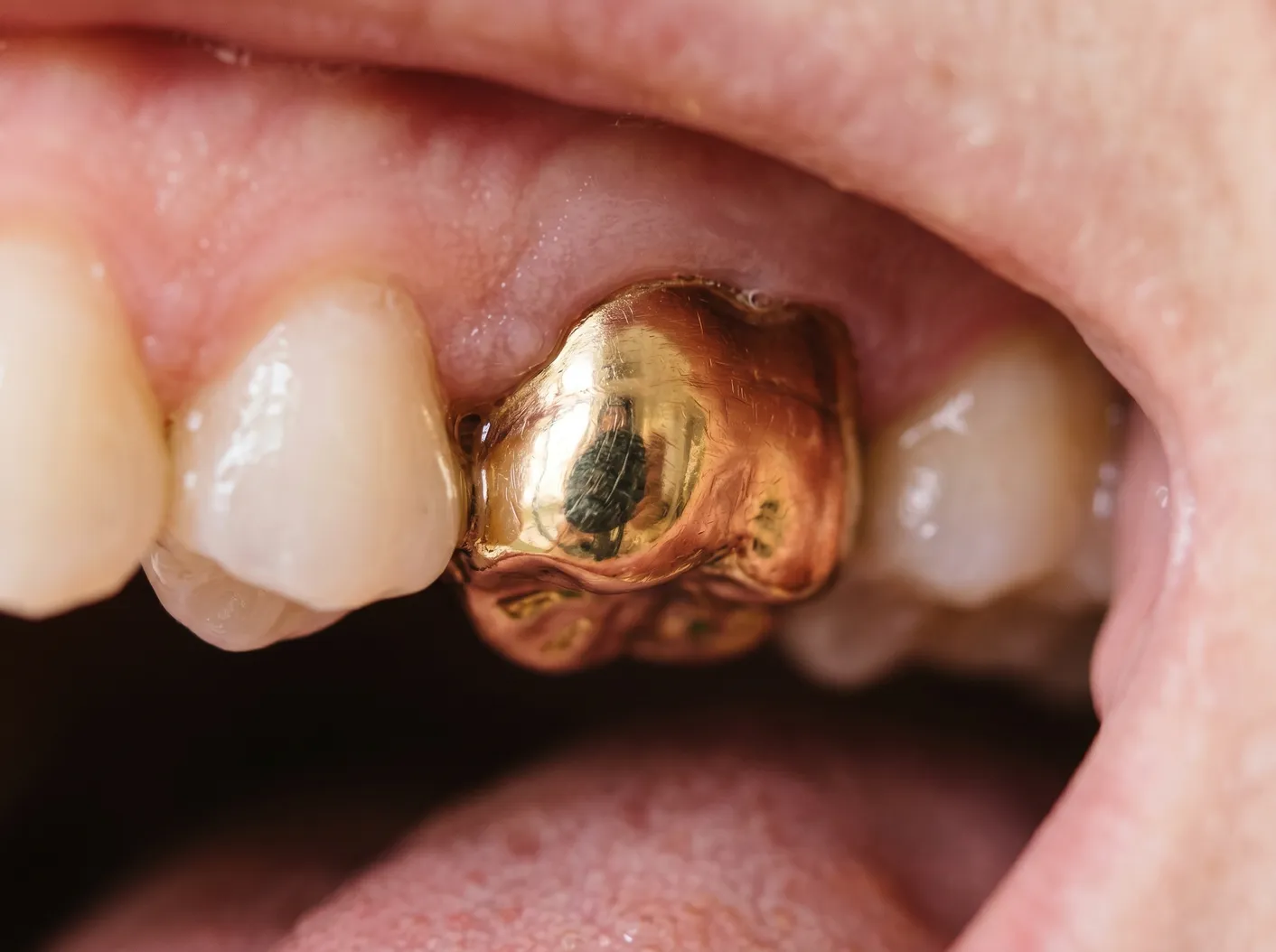
What is a gold filling?
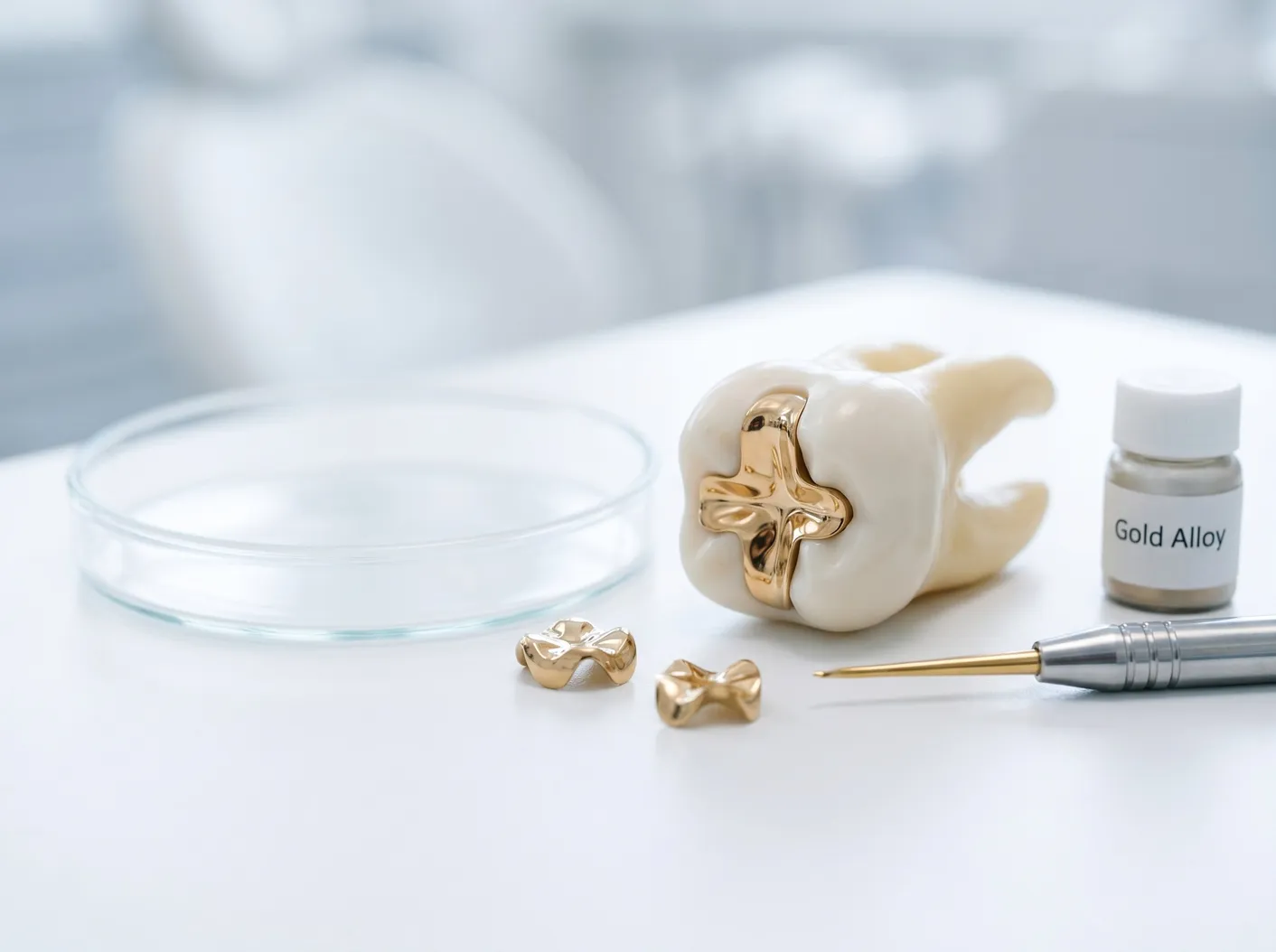
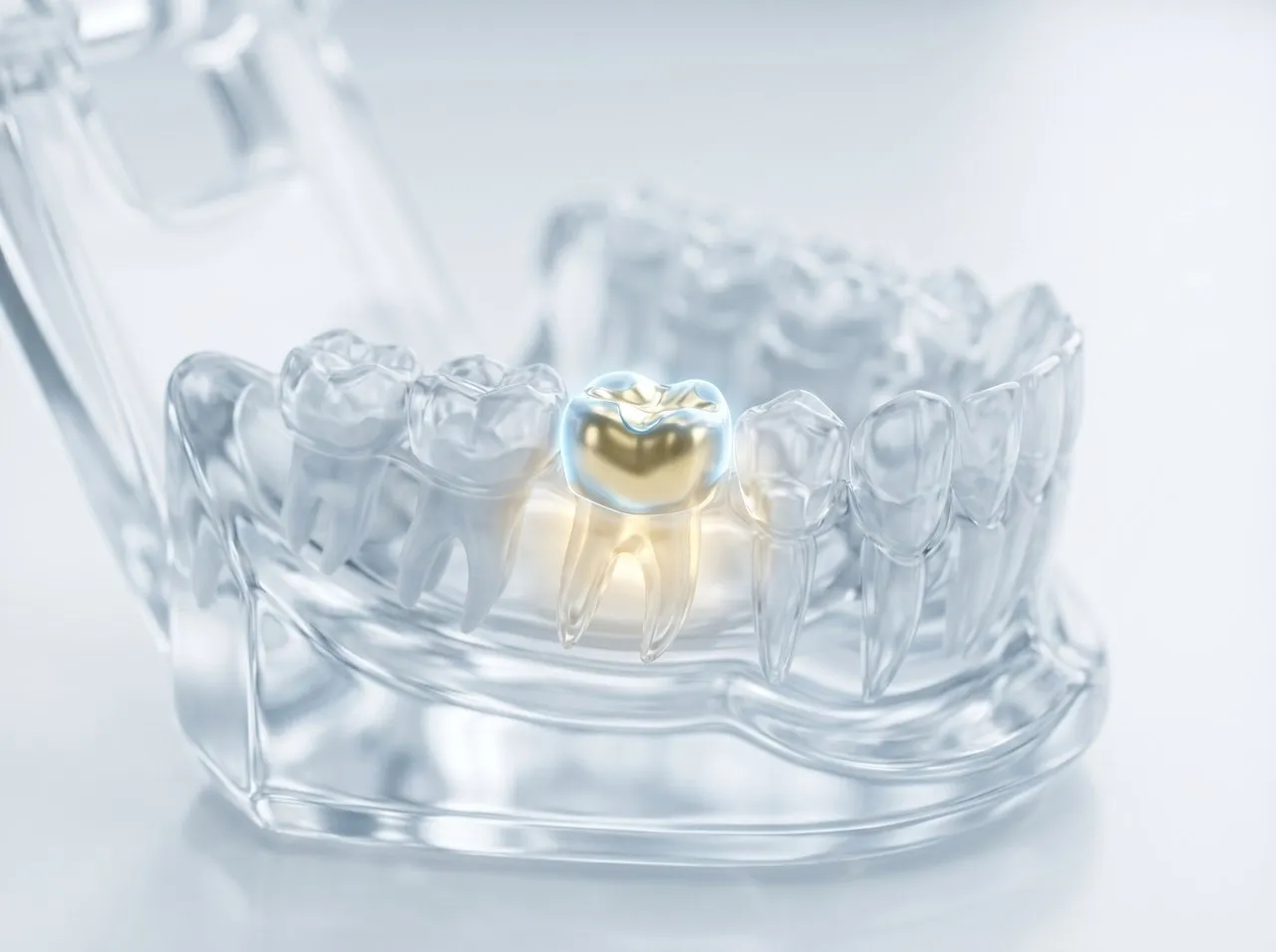
A gold filling is usually not a filling material placed directly in the tooth. It is often a gold inlay or a small gold partial crown. This restoration is made in a dental laboratory.
A special gold alloy is used for this purpose. Pure gold would be too soft to withstand chewing pressure. Only the addition of other metals creates a resilient restoration.
Gold used to be used particularly often in the back teeth. Chewing exerts considerable force on these teeth. This is why the material was very popular for a long time.
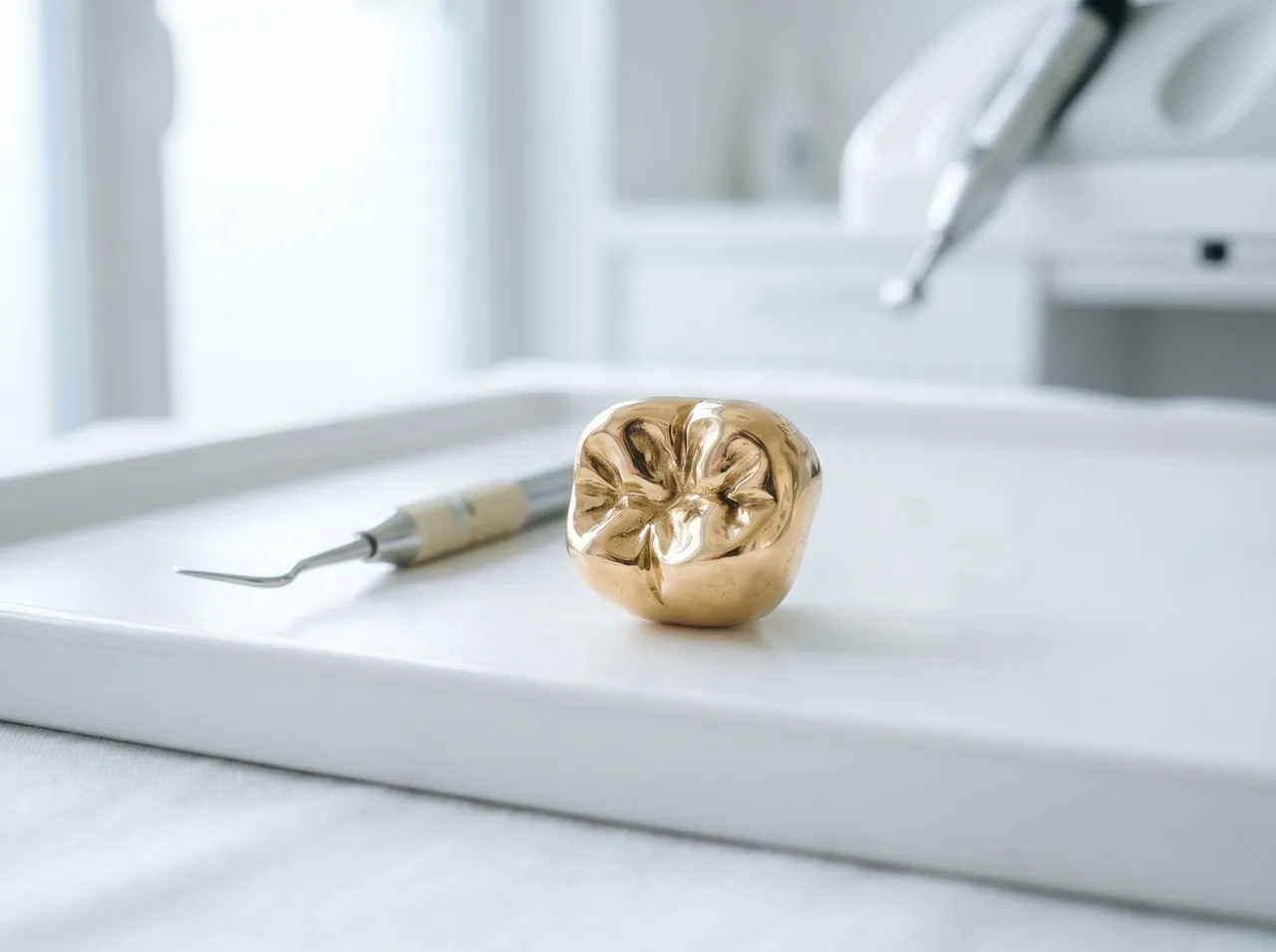
Why were gold fillings commonly used in the past?
Gold has very good material properties. It can be worked precisely and fitted closely to the tooth. This allows the transition between the tooth and the restoration to be made very precisely.
Durability was another important advantage. Many gold inlays remained functional for many years. This required good care and regular check-ups.
Gold also rarely fractures. The material is not brittle and withstands pressure well. This made it particularly suitable for molars, which are subject to heavy loads.
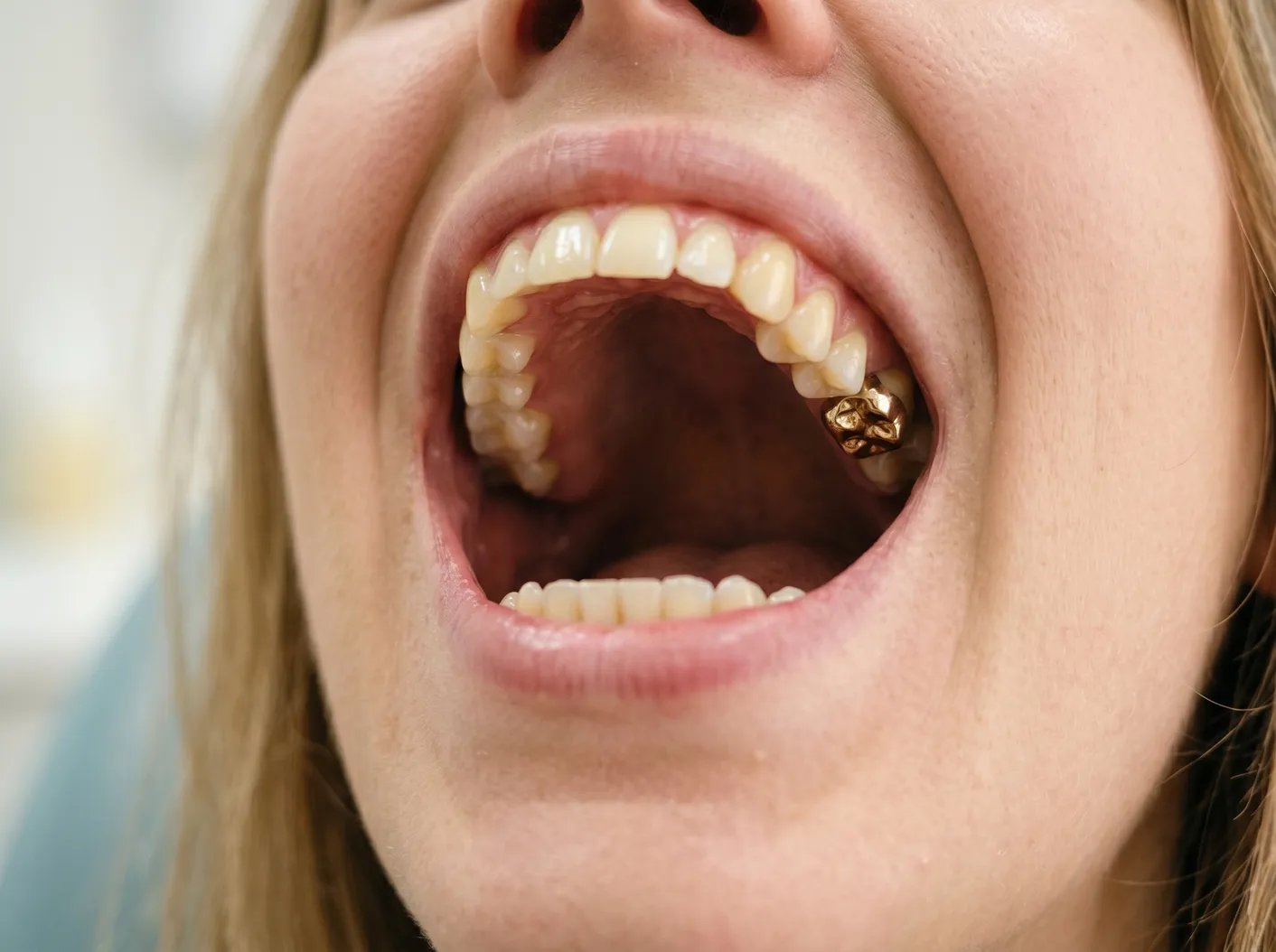
Why are gold fillings chosen less often today?
Many patients now want a tooth-coloured restoration. Gold is clearly visible and does not match the appearance of natural teeth. Its colour can be particularly noticeable when laughing.
Modern materials have also advanced considerably. Ceramic and high-quality composites now offer many advantages. They combine stability with a natural appearance.
For these reasons, demand for gold fillings is steadily declining. Our practice focuses on modern, aesthetic solutions. We therefore no longer offer gold fillings.
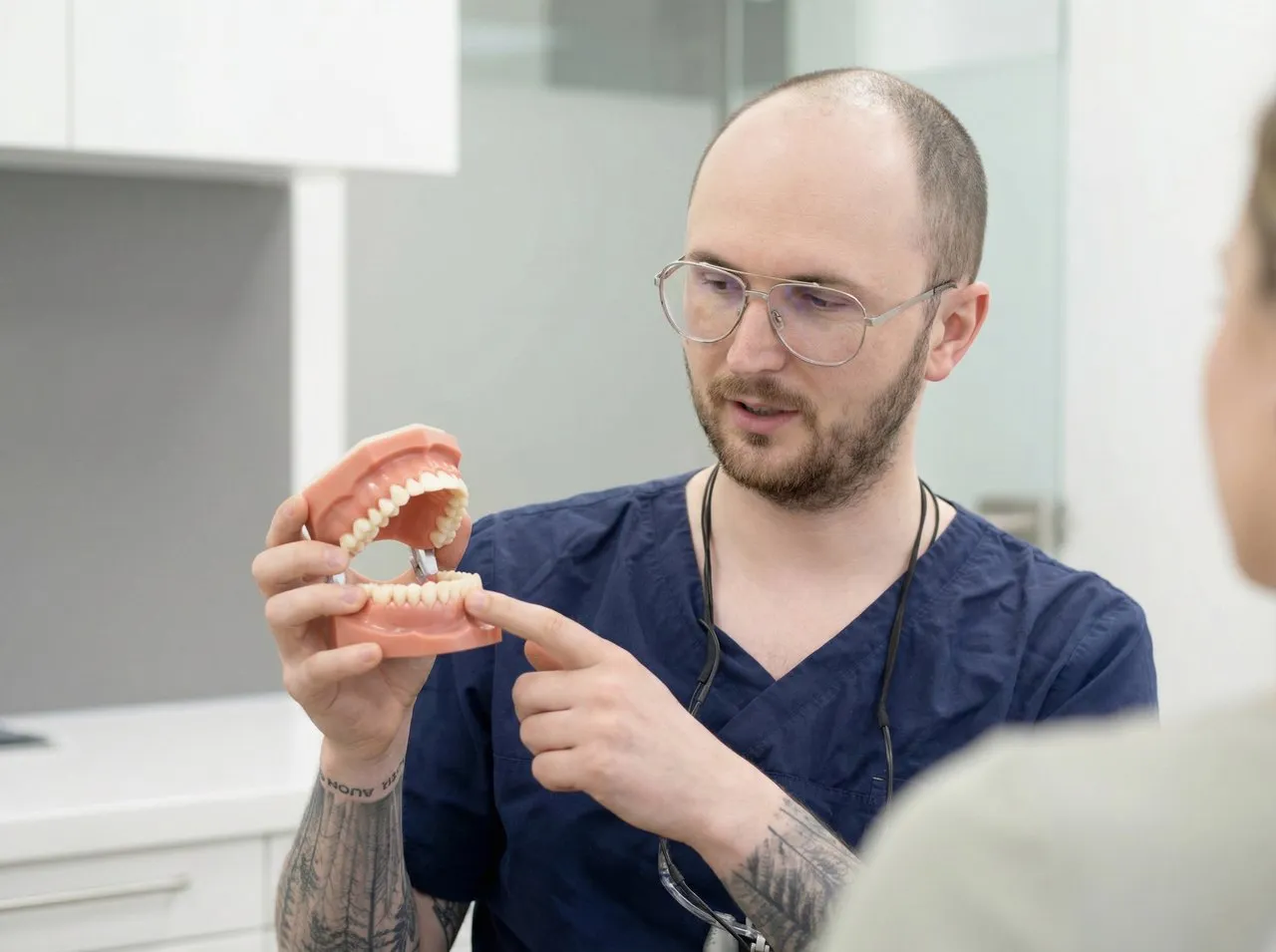
What alternatives are there to gold fillings?
A ceramic inlay is one important alternative. It is custom-made and colour-matched so that it blends in with the natural tooth.
A composite filling may suit smaller defects. This tooth-coloured material is built up directly in the tooth. It is particularly useful when the aim is to preserve as much tooth structure as possible.
A partial crown may be appropriate for more extensive damage. It stabilises the tooth while preserving as much of its structure as possible. The right choice depends on the findings.
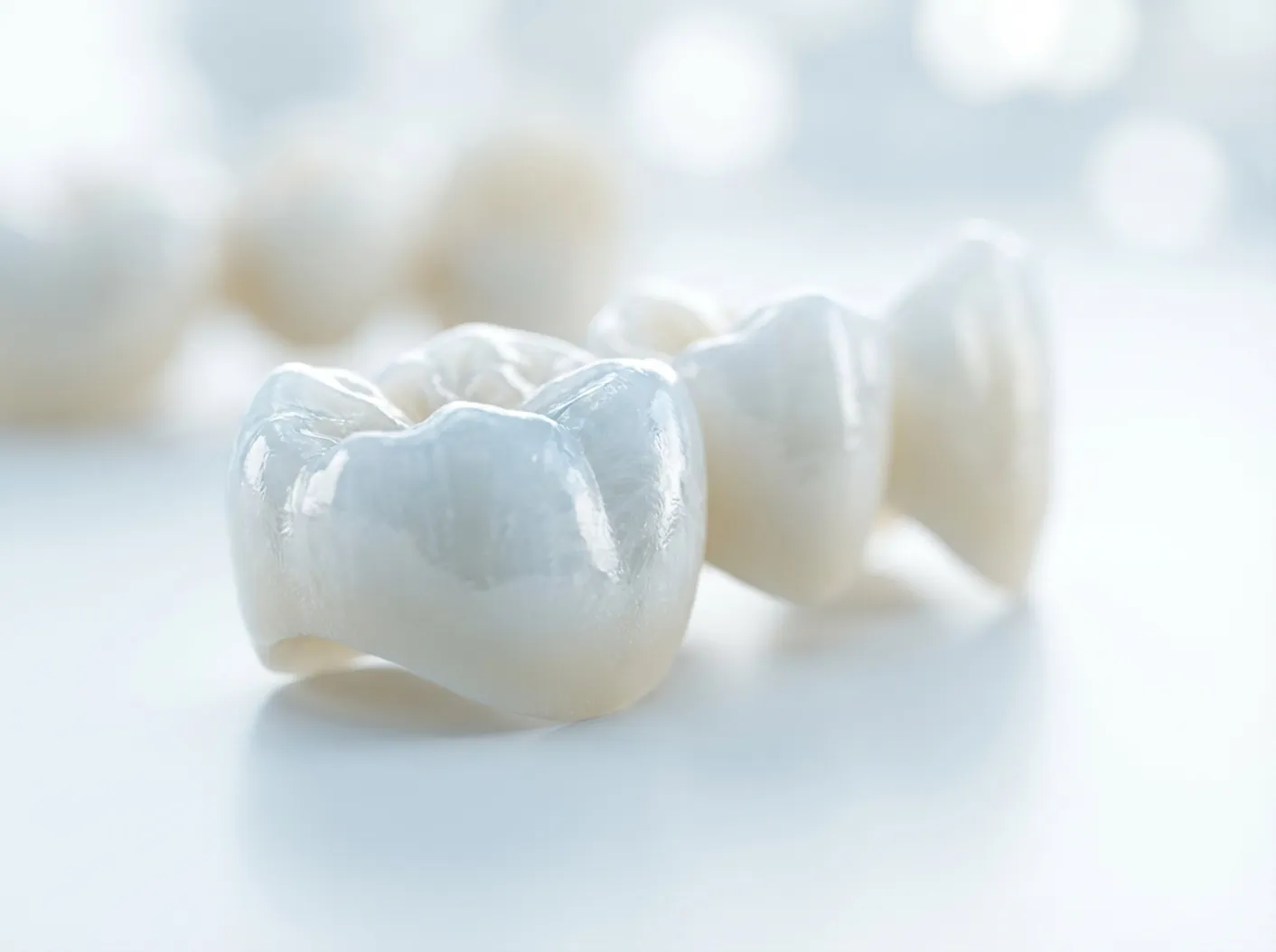
Ceramic instead of gold: focusing on a natural appearance
Ceramic is particularly popular because of its natural appearance. The material can be matched to the colour of the tooth. This makes the restoration barely noticeable afterwards.
The surface of ceramic is also very smooth. This can make it more difficult for plaque to accumulate. At the same time, the colour usually remains stable for a long time.
Ceramic is particularly suitable for patients with high aesthetic expectations. It is also often a good choice for visible back teeth. We provide detailed advice on this at our practice.
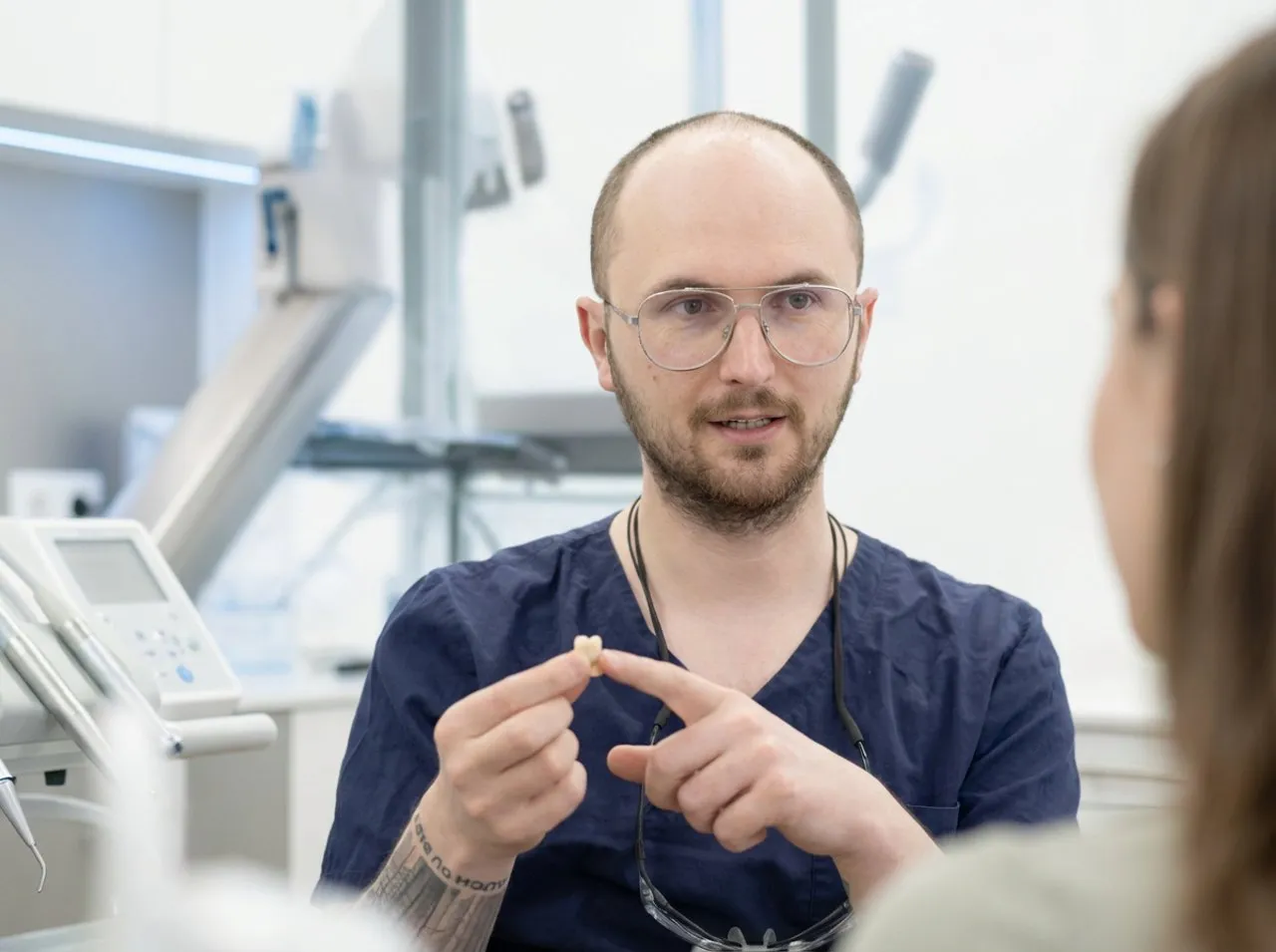
Composite fillings as a modern solution
Composite is a tooth-coloured filling material. It consists of plastic and fine ceramic particles. This creates a stable and aesthetic restoration.
The advantage lies in the direct treatment process. The filling is usually placed in a single appointment. The material is applied in layers and hardened.
Composite is particularly suitable for small to medium-sized defects. It can be applied in a way that preserves a great deal of tooth structure. We assess its exact suitability in person.
Partial crown or inlay for larger defects
When a tooth is more extensively damaged, a simple filling is often insufficient. An inlay or partial crown may then be appropriate. Both are planned to fit the tooth precisely.
A partial crown covers only the damaged or weakened areas. It leaves as much healthy tooth structure as possible intact, making it a modern alternative to a full crown.
Ceramic inlays and partial crowns combine function and appearance. They are planned in the laboratory or digitally, with the aim of achieving a stable, natural-looking result.
Advice at Wunschlachen
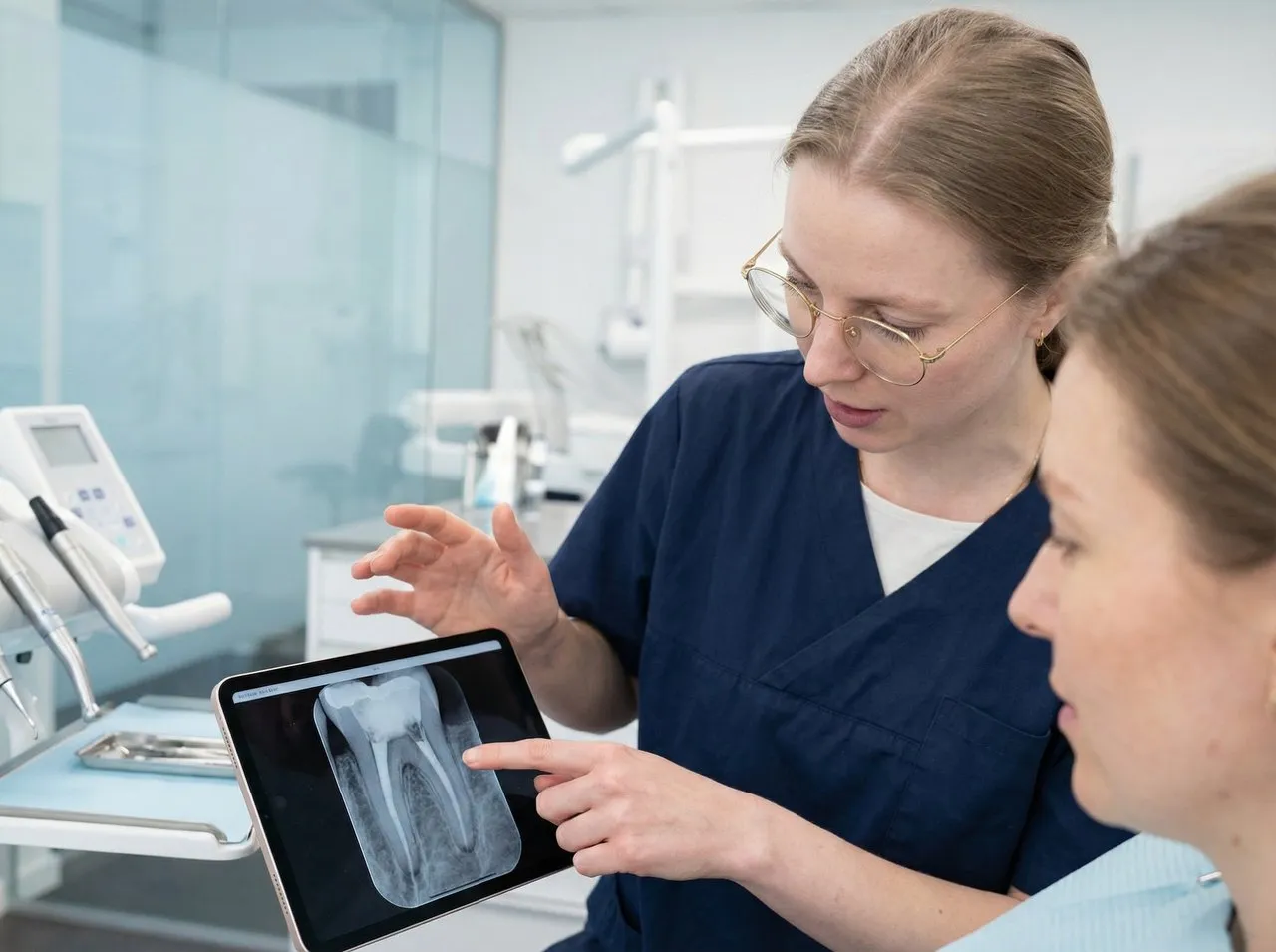
At Wunschlachen, we provide honest information about gold fillings. At the same time, we explain why we no longer offer them. Our focus is on modern, tooth-coloured restorations.
During your personal appointment, we examine your tooth carefully. We then explain suitable alternatives. In doing so, we take function, appearance and tooth preservation into account.
You receive a clear recommendation based on your clinical findings. This helps you understand the treatment. Our aim is to provide a high-quality restoration that is right for you.

Costs and planning for modern fillings
The costs depend on the material, the size of the defect and the work involved. The chosen restoration also plays an important role. A composite filling differs from a ceramic inlay.
Before treatment begins, we discuss all the details with you. You will learn which options are medically appropriate. Possible contributions from your statutory health insurance fund are also taken into account.
Transparent planning is important. This means you know which restoration is recommended. You can then decide at your leisure.
Conclusion: understand gold fillings and choose an alternative
Gold fillings were a very well-established dental restoration for a long time. Today, however, more aesthetic and modern alternatives are available. This is why our practice no longer offers gold fillings.
We would be happy to advise you on ceramic, composite and partial crowns. These solutions can be functional, stable and natural-looking. Please feel free to book an appointment at Wunschlachen.