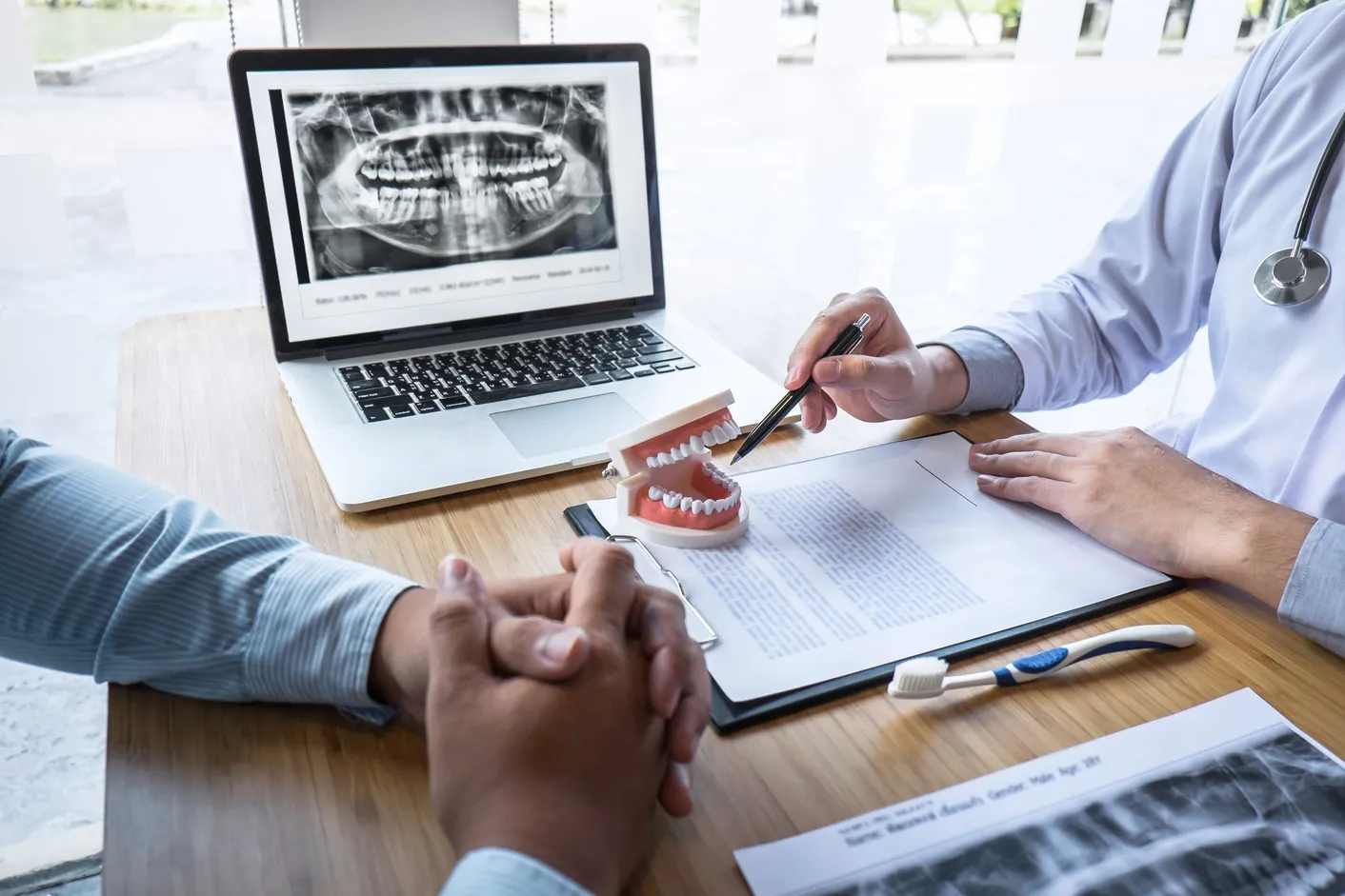
Immediate implant placement costs at a glance
Immediate implant placement saves time and can fill a gap left by a tooth straight away. However, costs vary considerably. The clinical findings, dental prosthesis, available bone and additional services are the key factors.
Über 350 Google-Bewertungen
What does immediate implant placement involve?
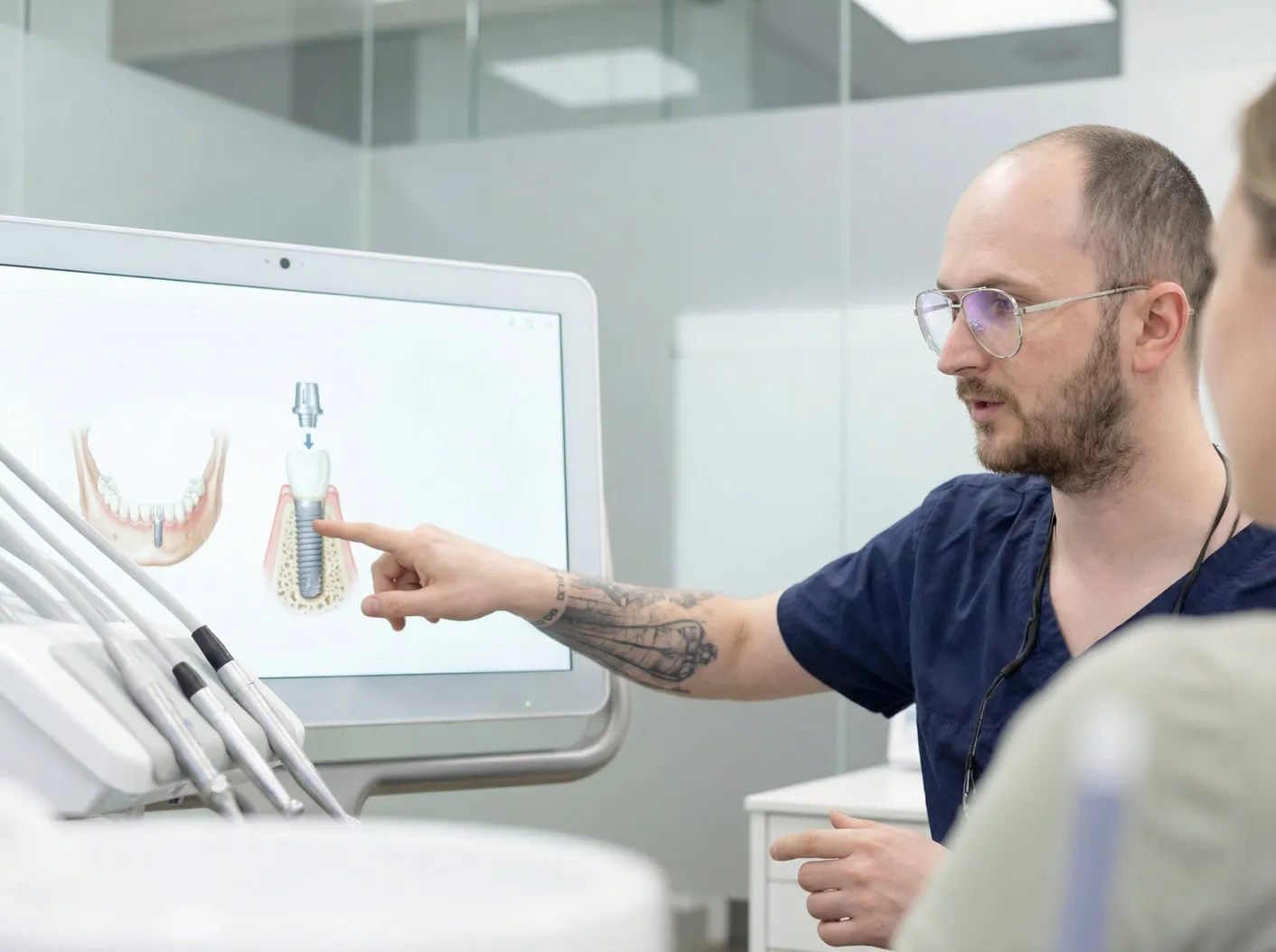
During immediate implant placement, a tooth is removed and replaced straight away. The implant is placed during the same appointment. This often significantly shortens the overall treatment time.
However, the procedure is not always suitable. Sufficient bone is important. There should also be no acute inflammation.
It is also important to distinguish this from immediate restoration. Not every immediately placed implant is loaded straight away. A temporary restoration is often possible, but not in every case.
What are the advantages of the procedure?
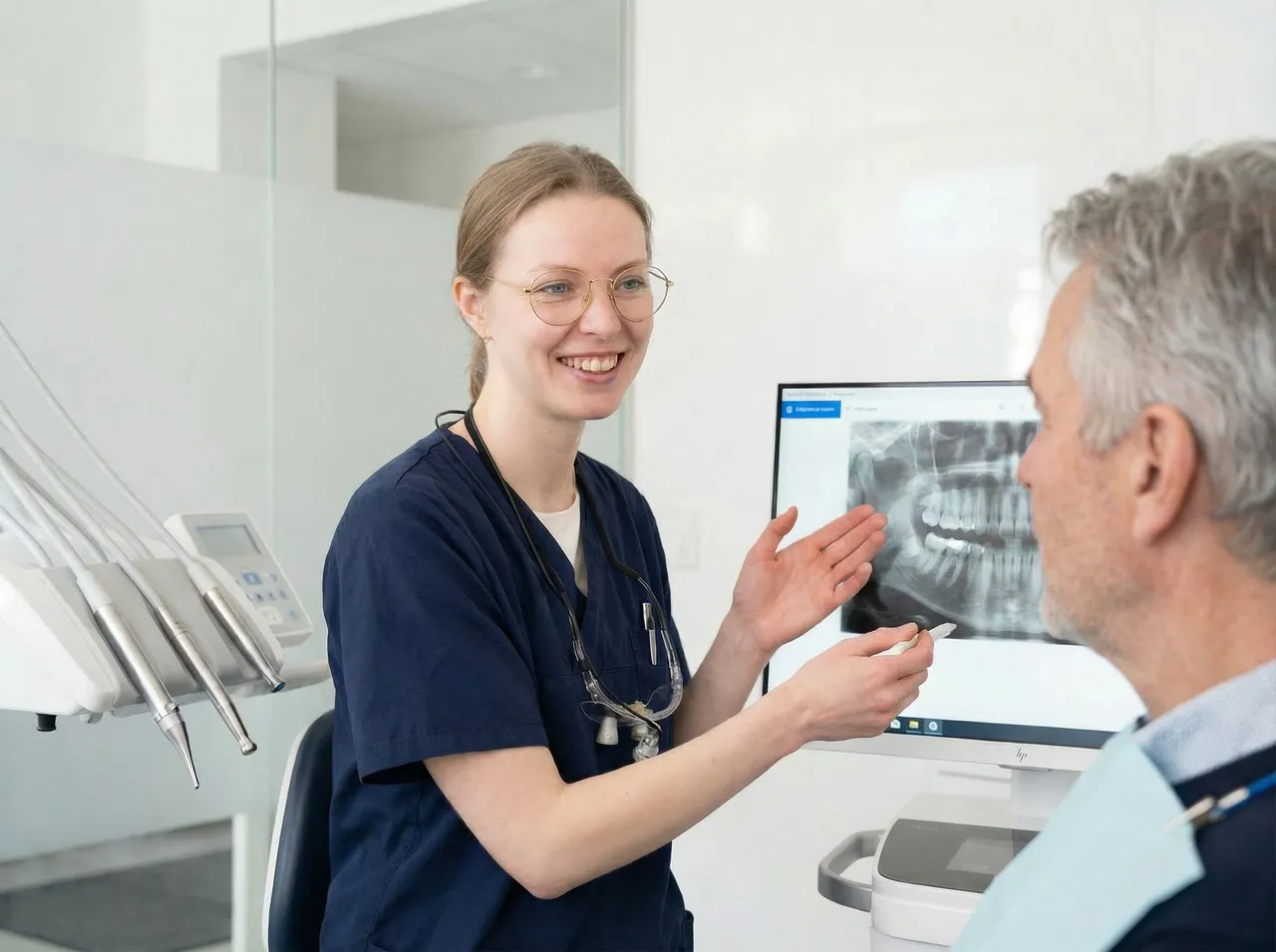
Many patients want rapid treatment. This is precisely where the major advantage lies. Additional waiting periods can often be avoided.
The soft tissue can often also be preserved more favourably. This is particularly relevant in the front-tooth region, where a harmonious transition is especially important.
Nevertheless, the technique remains demanding. Good primary stability is crucial. Only then is reliable healing realistic.

What do the costs depend on?
The costs of immediate implant placement consist of several components. These include diagnostics, implant placement and the dental prosthesis. Materials, laboratory costs and professional fees are added to these.
The dental prosthesis on the implant has a major influence. A single crown often costs more than expected. A high-quality master dental laboratory also increases the final price.
Additional costs arise from CBCT, 3D planning or surgical guides. Bone augmentation makes the treatment more expensive. An aesthetic temporary restoration also affects the total.
The position of the tooth also plays a role. The work involved often increases in the front-tooth region. Shape, colour and the gumline are particularly important there.
What prices should you expect?
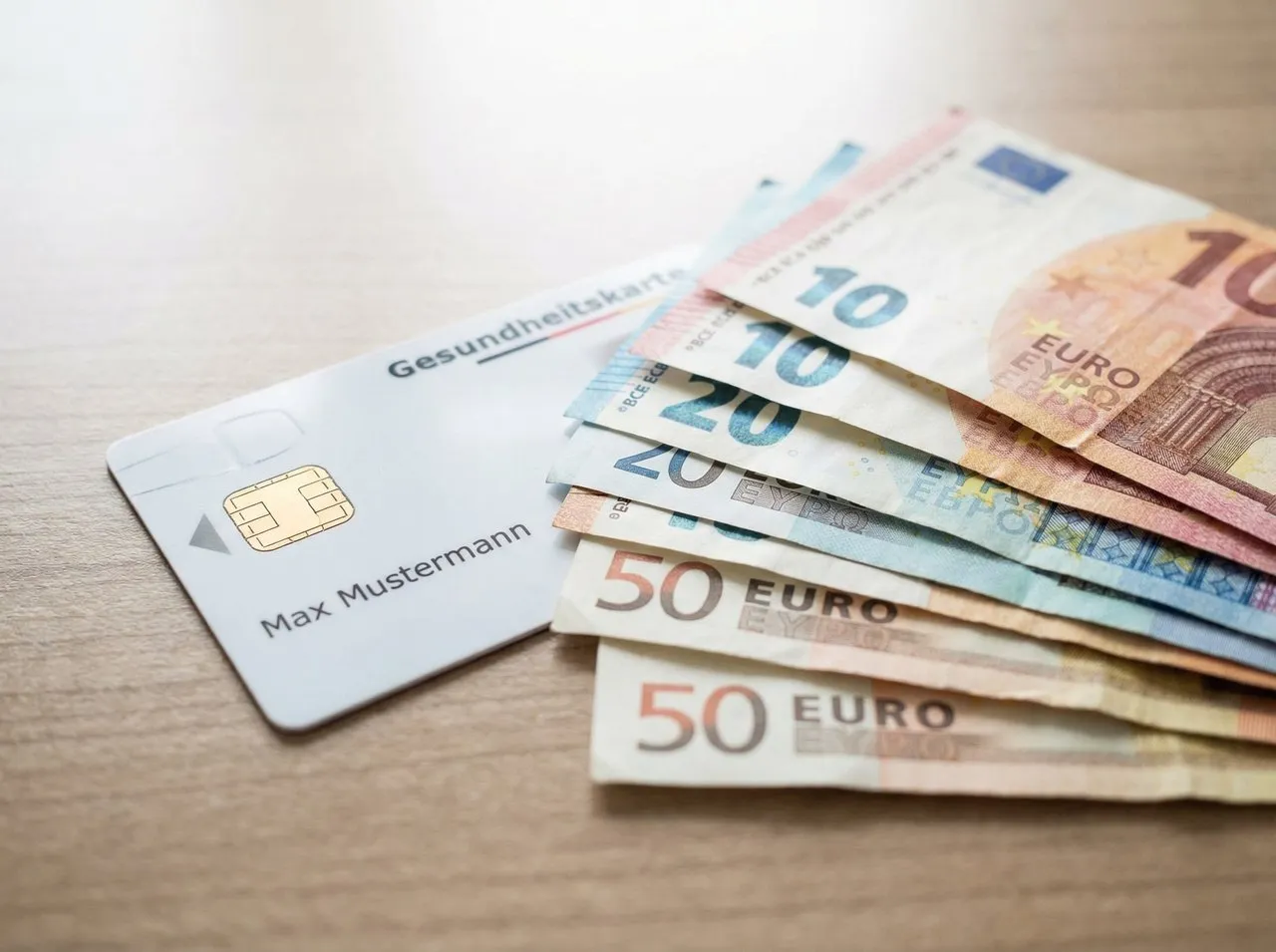
For a single tooth, total costs often run into the mid four figures. They frequently range between 2,100 and 3,400 euros. Some solutions start at around 1,800 euros.
In straightforward cases, the implant alone without the dental prosthesis costs a good 1,100 euros. The crown usually adds another 1,100 euros or so. However, difficult situations can quickly become more expensive.
Bone augmentation increases the costs further. According to the cost calculator, small procedures cost around 260 euros. Larger procedures can also cost 1,000 euros.
When several teeth are missing, the sums rise accordingly. An implant bridge often starts at 4,500 euros. Fixed solutions for an edentulous jaw usually start at 15,000 euros.
Why do prices vary so much?
Not every immediate implant placement procedure is the same. Some cases only require a clear standard procedure. Others demand complex planning and additional surgical steps.
The desired result also affects the bill. Aesthetics and the temporary restoration are more important in visible areas. Function is usually the priority in the back-tooth region.
Region, laboratory and materials also play a part. Titanium and ceramic differ in price. The clinician's experience can also affect the work involved.

What does health insurance cover?
Statutory health insurance funds generally do not cover implants themselves. They generally only subsidise the dental prosthesis. This means the crown, bridge or denture on the implant.
The subsidy is provided as the fixed subsidy for standard care. It generally covers 60 per cent of the average costs of this care. With a bonus booklet, 70 to 75 per cent is usually possible.
This is a key point for patients. The actual implant placement often remains privately funded. The treatment and cost plan should therefore be checked early.
In rare, severe exceptional cases, more benefits may be available. However, this is not normally the case. A clear cost breakdown therefore remains very important.
When is the technique worthwhile?
Immediate implant placement can make financial sense. This is especially true when the initial conditions are suitable. Fewer appointments can shorten the process and reduce interim steps.
However, it is not automatically cheaper. High aesthetic demands often increase the work involved. Difficult bone conditions also make treatment more expensive.
The procedure is often particularly appealing in the front-tooth region, where quickly closing the gap is very important. In the back-tooth region, chewing function is more likely to be the priority.
What should patients consider before deciding?
Do not compare the final price alone. Also check the services, materials and laboratory. A low price may omit important steps.
Ask about CBCT, temporary restorations and follow-up checks. Have the alternatives explained to you as well. These include a bridge, later implant placement or other forms of dental prosthesis.
Experience and planning are also important. The technique requires a precise approach. A realistic assessment protects against false expectations.
It is also sensible to consider follow-up costs. These include aftercare, temporary restorations and possible additional steps. This makes it easier to plan for your out-of-pocket costs.
Conclusion
The costs of immediate implant placement are generally higher than the implant costs alone. For a single tooth, patients should often budget for a price from 2,500 euros. Bone augmentation, front-tooth aesthetics and temporary restorations can increase the total.
An immediately placed implant offers a shorter treatment pathway and rapid restoration. However, it is not suitable for every clinical situation. Careful planning is more important than the lowest possible price.