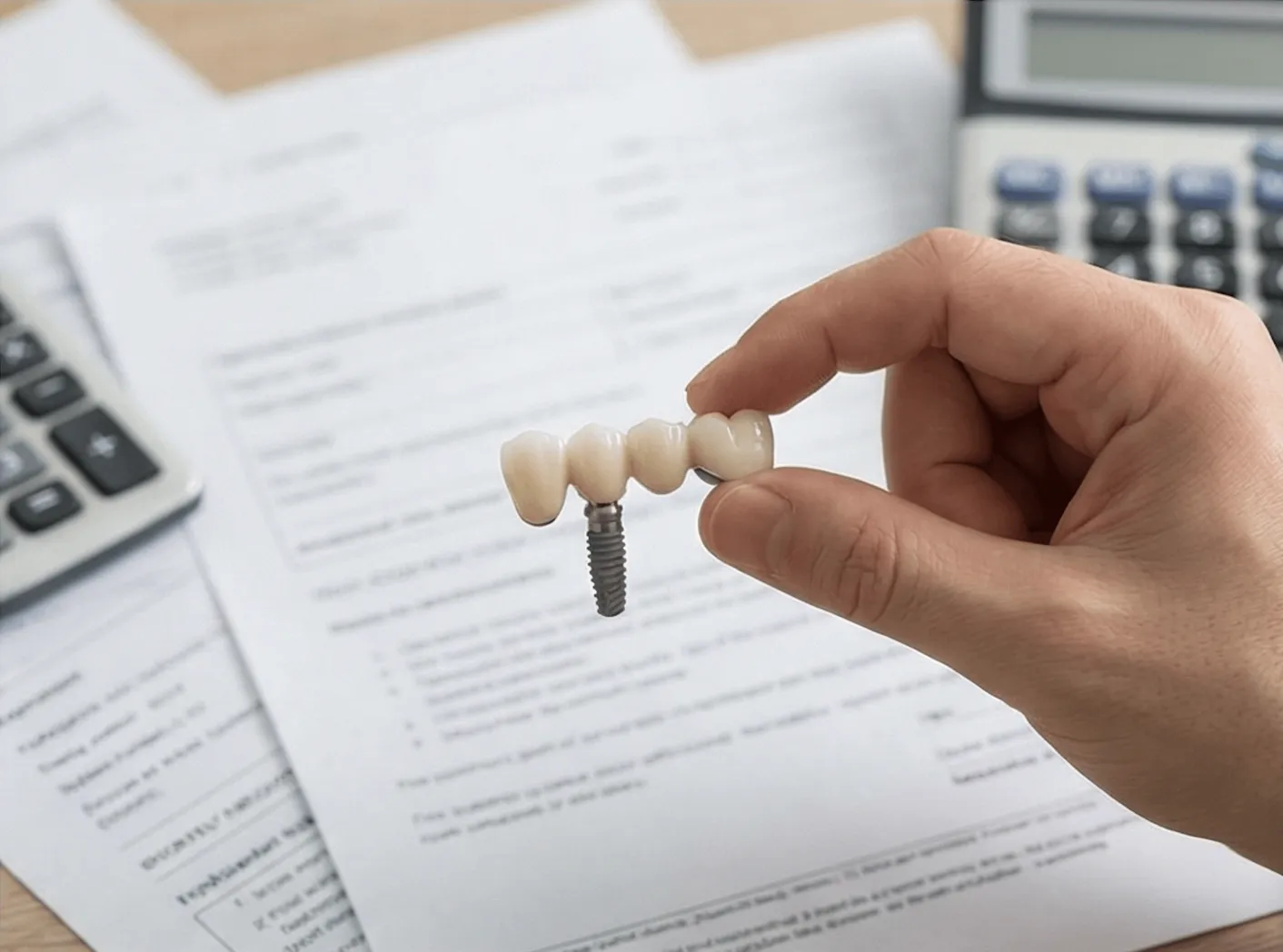
Implant-supported dentures
Implant-supported dentures provide a secure fit and greater confidence. They are suitable when many teeth are missing or the jaw is completely toothless. The dental prosthesis fits more securely, makes chewing easier and supports jaw function.
Über 350 Google-Bewertungen
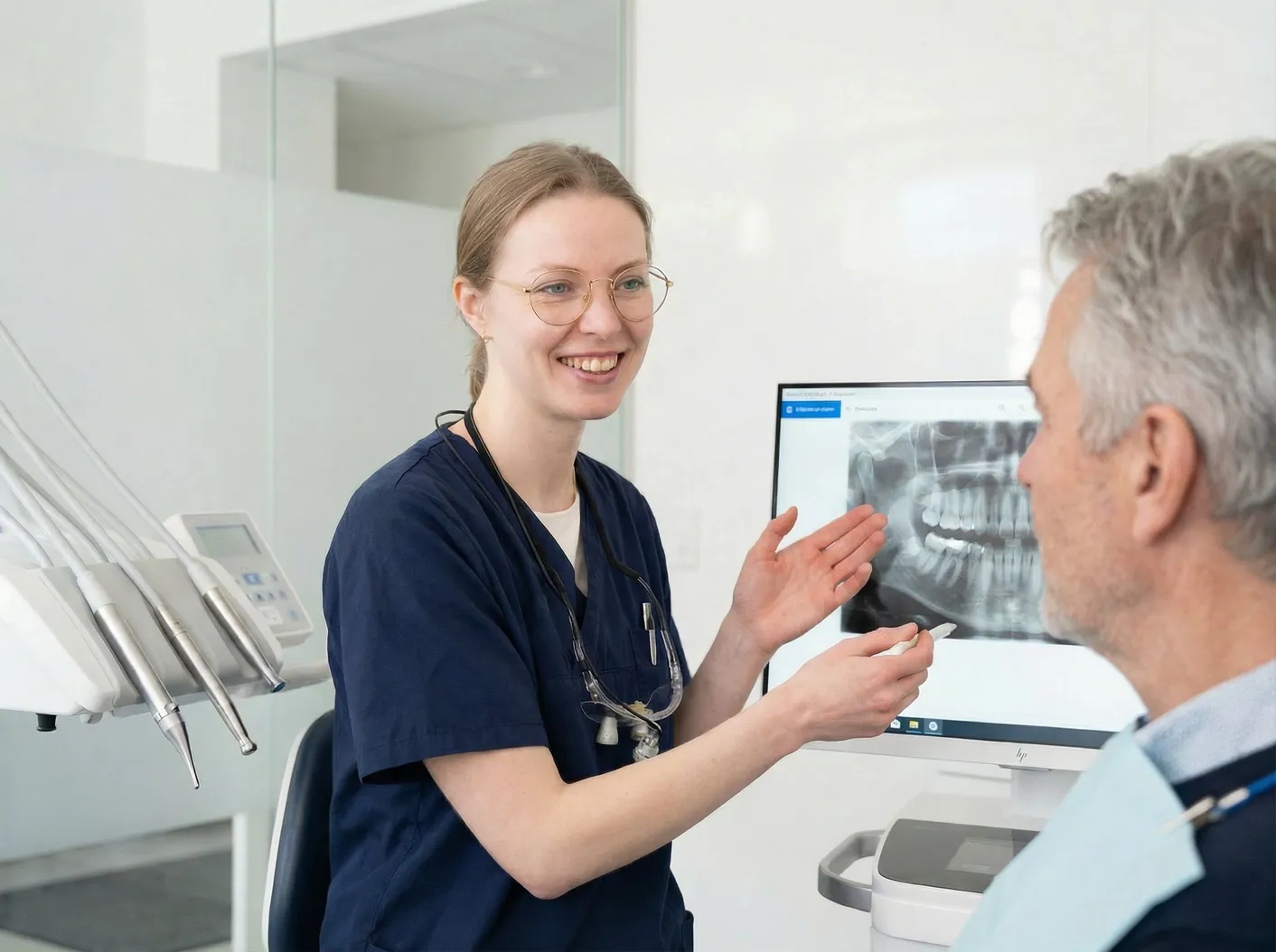
What are implant-supported dentures?
Implant-supported dentures are dental prostheses anchored to implants. The implants serve as artificial tooth roots. This makes the denture considerably more stable.
This treatment is possible in both the upper and lower jaw. It is one of the modern forms of tooth replacement. It is often particularly useful for loose-fitting dentures.
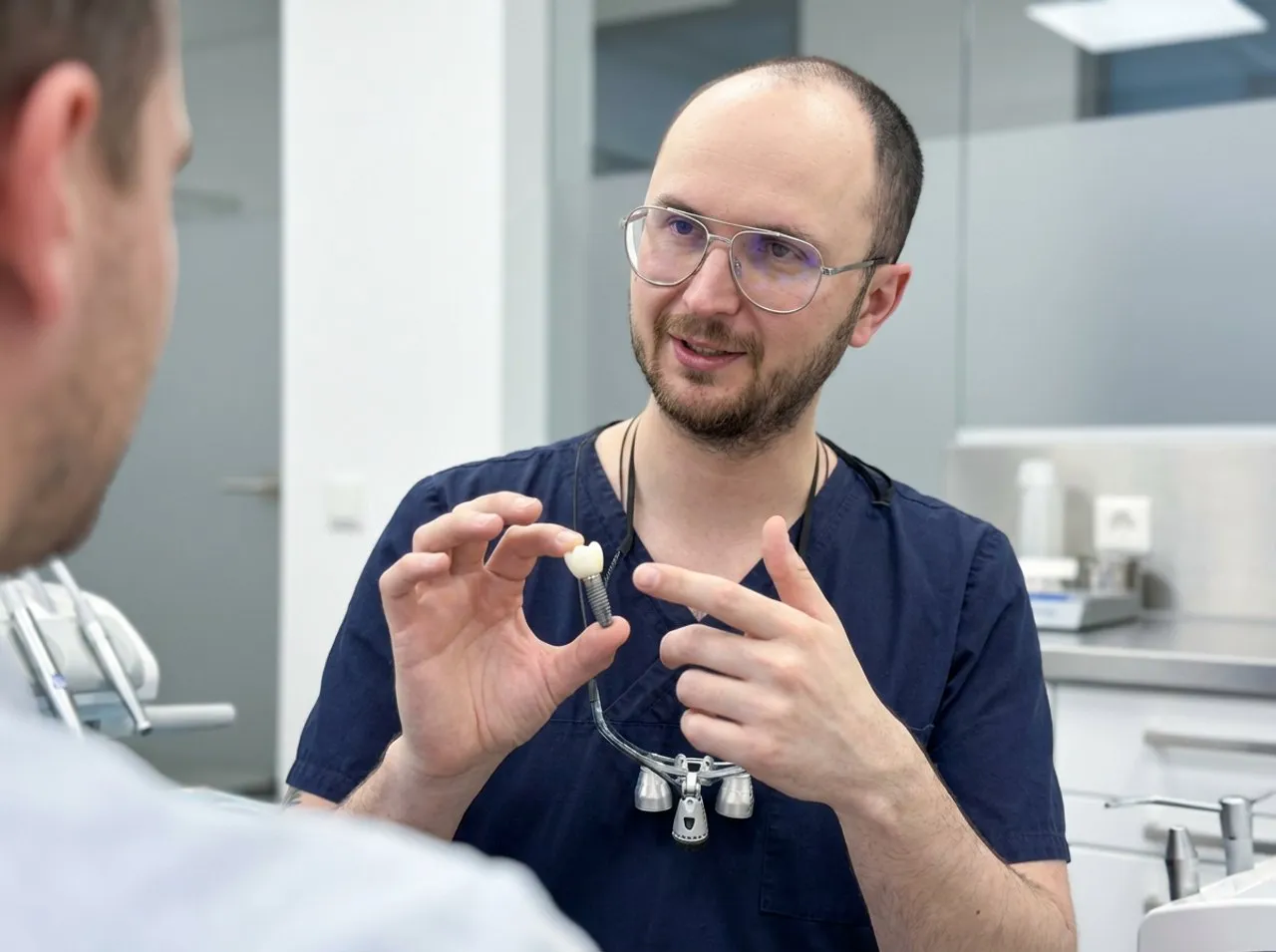
What benefits do implants offer for dentures?
The main benefit is improved stability. The denture is less likely to slip when speaking or chewing. This gives many patients greater confidence.
Chewing pressure is also distributed more favourably. This can significantly improve chewing function. Many people find their dental prosthesis more comfortable.
Implant-supported dentures place more targeted loads on the jawbone. This is important for stability. The dental prosthesis also often looks more natural.
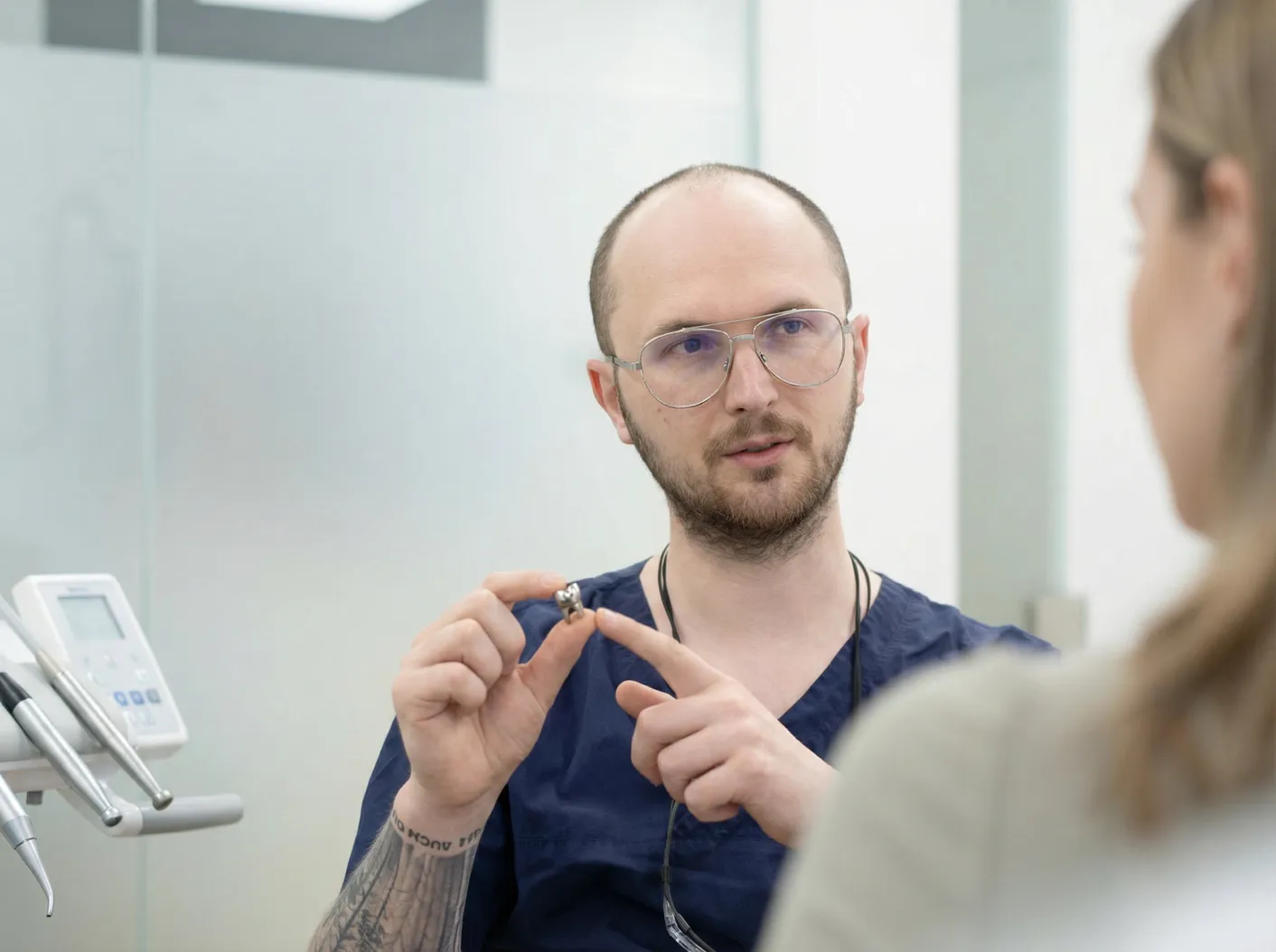
What types of implant-supported dentures are there?
There are removable and fixed options. The right choice depends on your assessment, the amount of available bone, the number of implants and your preferences.
A removable implant-supported denture is held in place by attachments. It can easily be taken out for cleaning. This is a common option when all teeth are missing.
A fixed restoration stays in the mouth and feels particularly secure. It usually requires more implants.
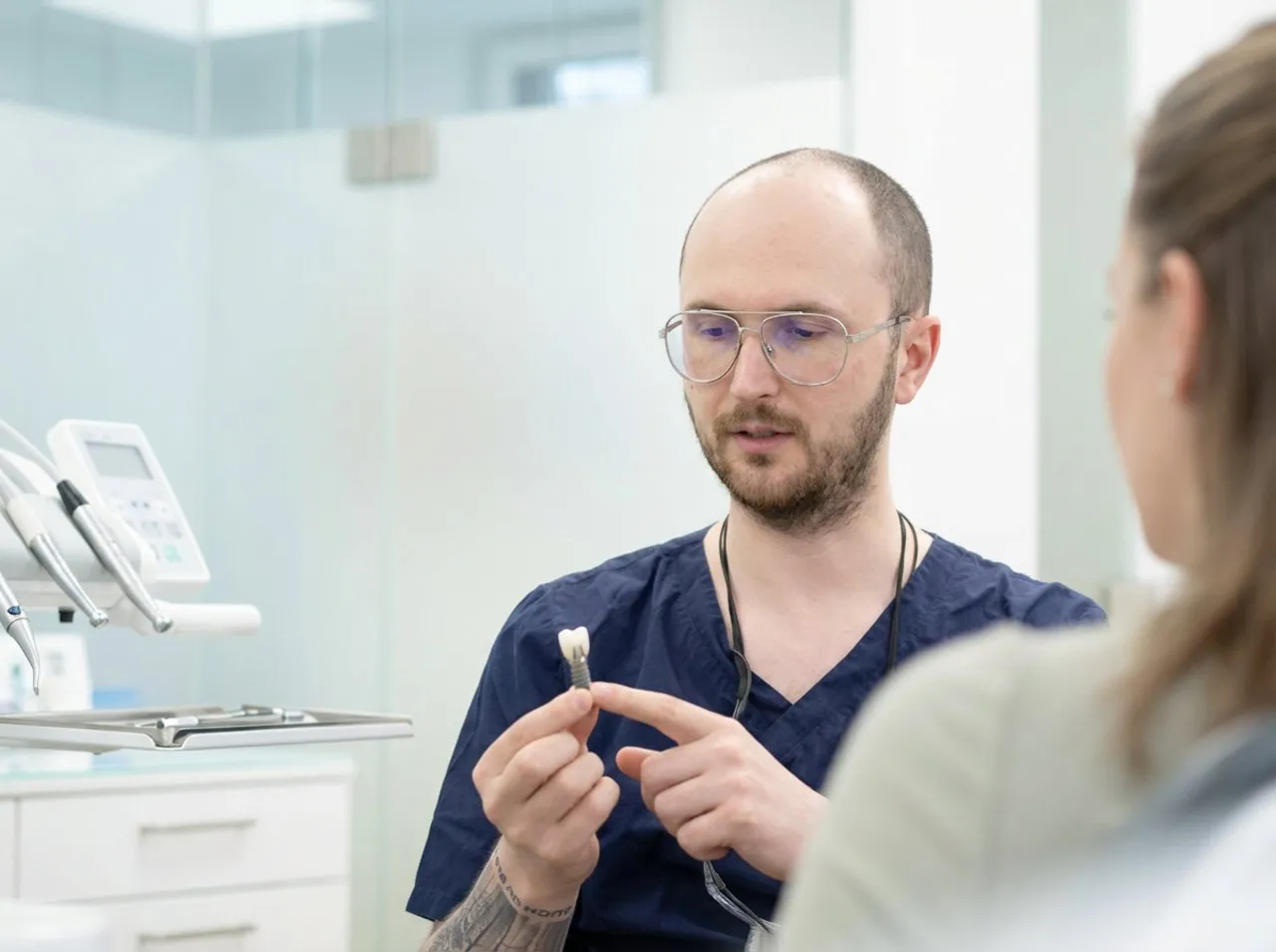
Who are implant-supported dentures suitable for?
This treatment is rarely intended for small gaps between teeth. It is particularly suitable when many teeth are missing. It is also often suitable for a toothless jaw.
Many patients want greater stability in everyday life. This is especially true with a loose complete denture. Implants can improve quality of life in such cases.
An examination will show whether the treatment is possible. Oral health, bone structure and general health are decisive factors. Pre-existing medical conditions are also taken into account.

How does the treatment work?
The first step is a thorough diagnosis. This includes a consultation, an examination and usually digital imaging. This allows implant treatment to be planned precisely.
The dentist then places the implants in the jaw. After the healing phase, the denture is made. It is then precisely adjusted.
Treatment takes varying lengths of time depending on the restoration. Some approaches require several stages. A clear treatment plan provides reassurance.
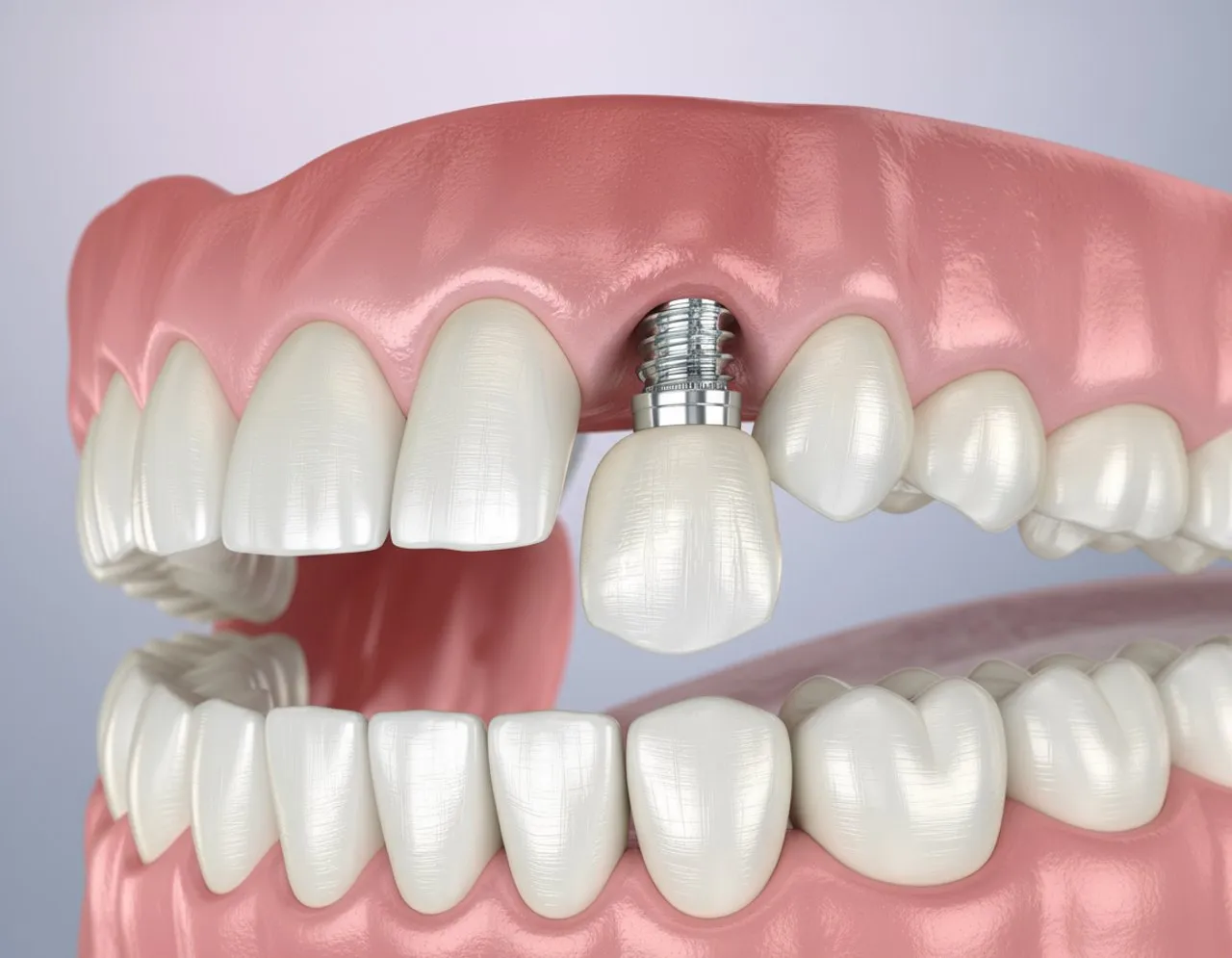
Implant-supported dentures in the upper and lower jaw
In the lower jaw, a denture can often be stabilised very effectively. Just a few implants are often sufficient. Many patients then feel more confident when eating.
The requirements in the upper jaw are often greater. The bone there is frequently softer. Planning is therefore particularly important.
Which solution is advisable always depends on the individual case. Not every jaw offers the same conditions. Individual advice is therefore important.
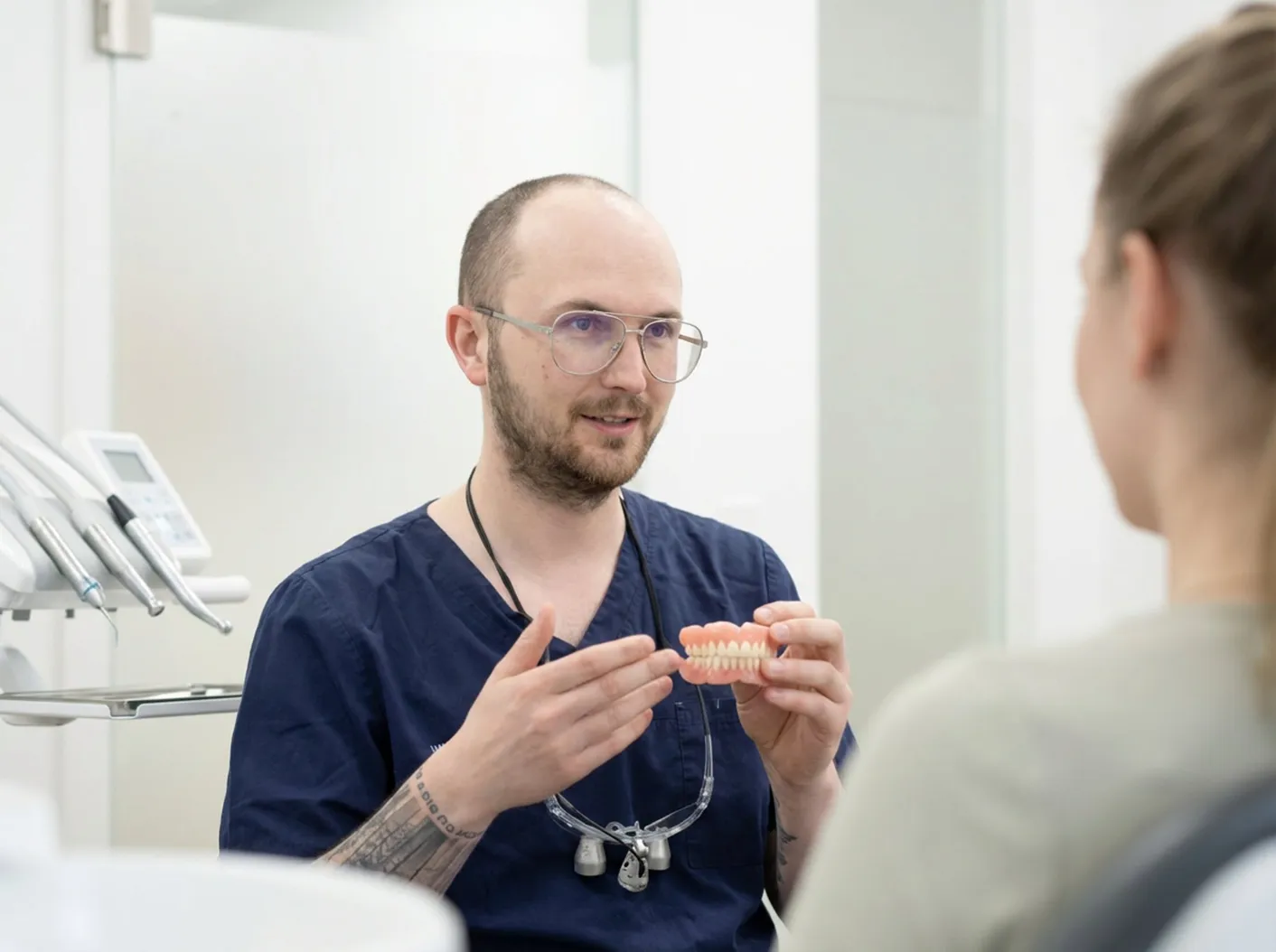
Care and durability
Implant-supported tooth replacements also require careful care. This includes toothbrushing, interdental cleaning and check-ups. Only then will the implants and denture remain stable.
Regular follow-up care is also important. Deposits on implants should be detected early. This reduces the risk of inflammation.
With good care, implants can last for many years. The denture itself can usually also be used for a long time. Consistent oral hygiene is essential.
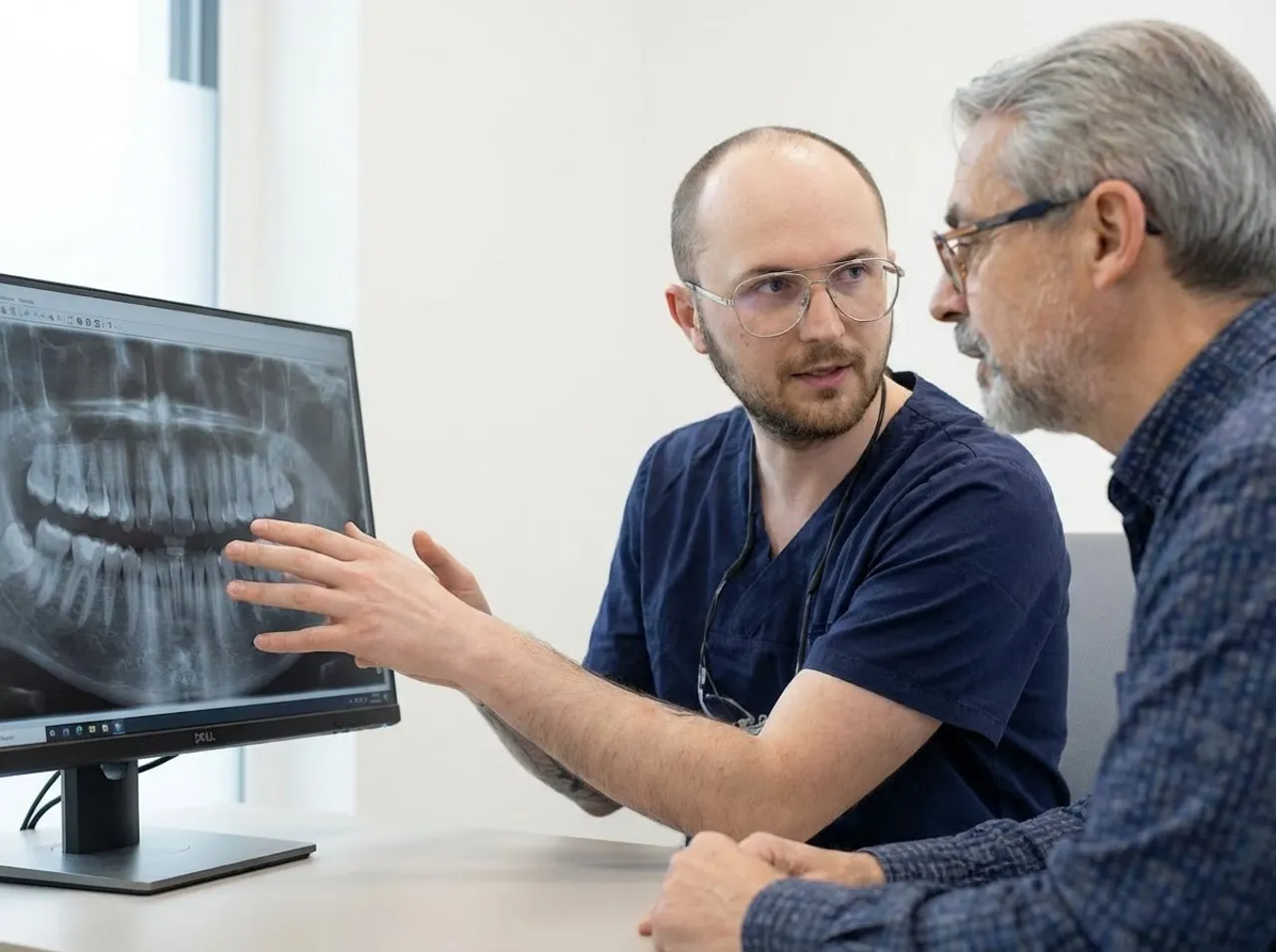
When are implant-supported dentures advisable?
Implant-supported dentures are advisable when a denture lacks stability. They can also be an option when chewing is restricted. Many patients want them to give greater confidence.
The treatment can combine functional and aesthetic benefits. Nevertheless, the decision should be medically justified. Good planning is the basis.

Conclusion: stable tooth replacement with implants
Implant-supported dentures are a well-established solution for extensive tooth loss. They often improve stability, chewing function and confidence. The most suitable treatment should always be assessed individually.
At Wunschlachen, this question can be clarified in detail. This allows a dental prosthesis to be created that suits your jaw. It provides a stable foundation for everyday life.