Internal sinus lift: procedure, benefits and healing
An internal sinus lift can make implants possible in the back of the upper jaw. It is used when there is insufficient bone height. The floor of the maxillary sinus is lifted and the new bone is stabilised.
Über 350 Google-Bewertungen
What is an internal sinus lift?
The internal sinus lift is also known as a closed sinus lift. It is one of the established procedures for bone augmentation in the upper jaw. The aim is to create a stable foundation for a dental implant.
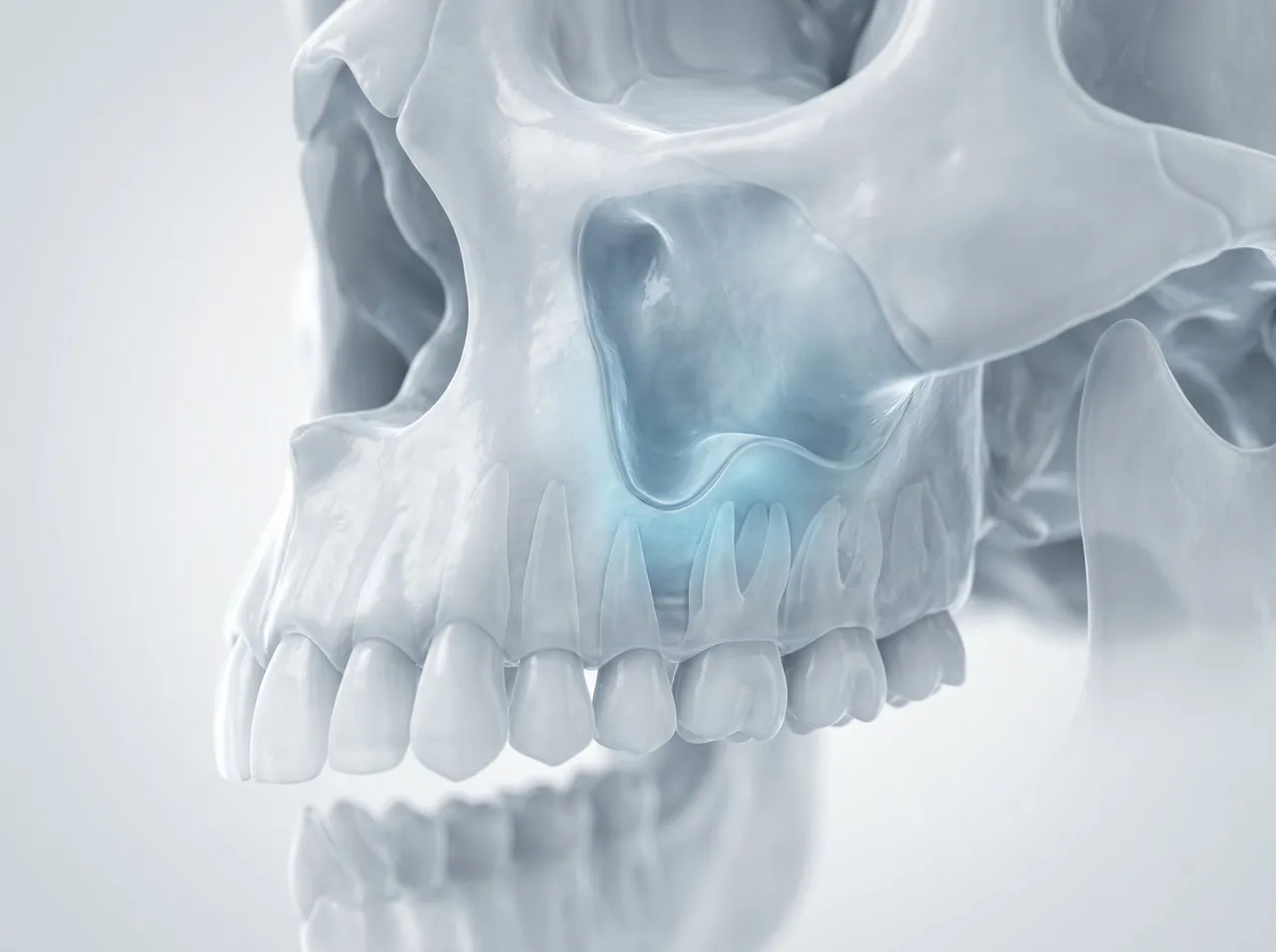
The maxillary sinus lies very close to the tooth roots in the back of the upper jaw. Bone loss often continues after tooth loss. This can leave insufficient height for secure implant anchorage.
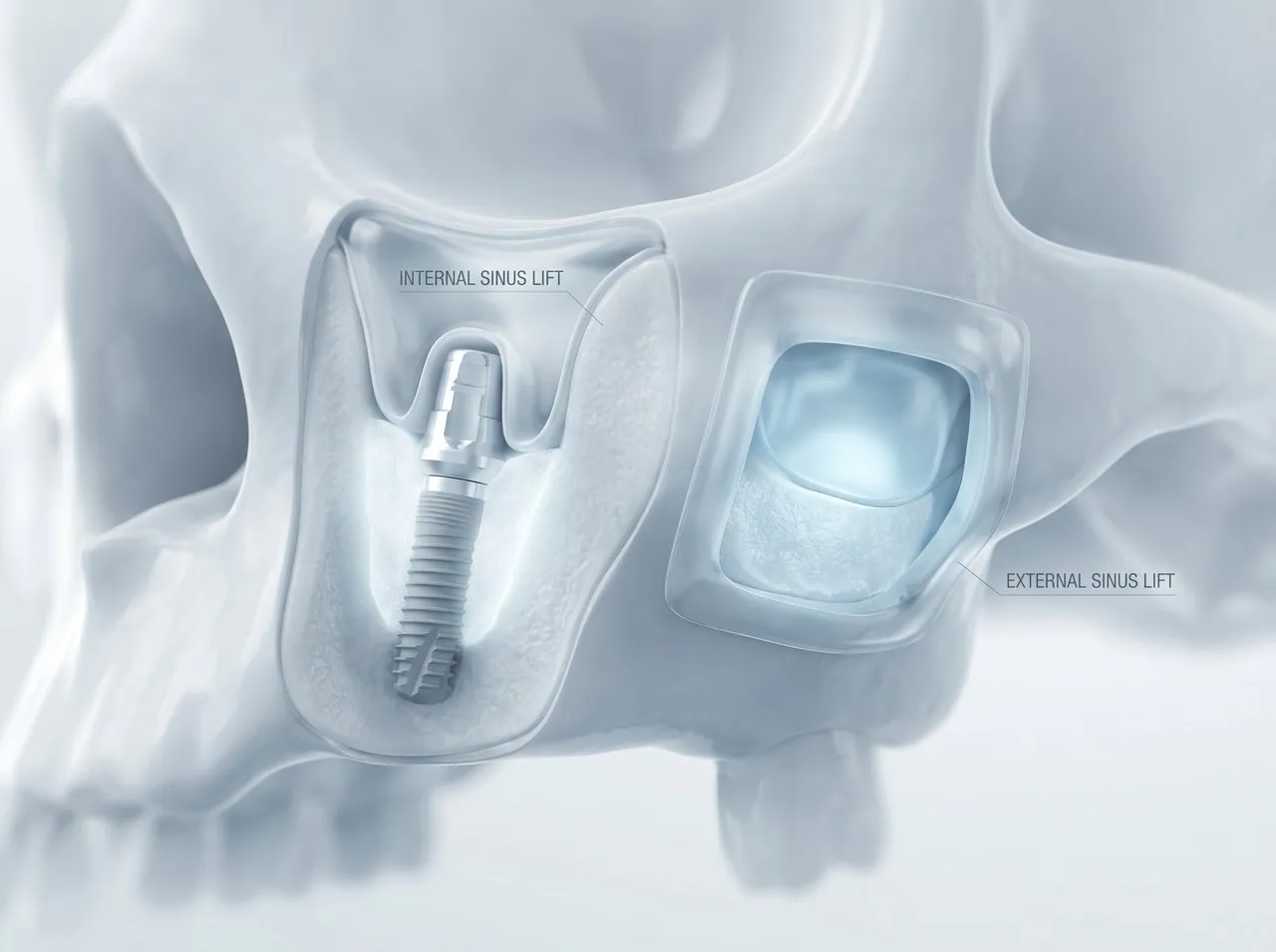
With the internal procedure, the dentist works through the implant channel. The lining of the maxillary sinus is carefully lifted. Bone material or bone substitute material is then inserted.
When is an internal sinus lift advisable?
An internal sinus lift is suitable when there is mild to moderate bone loss. This often occurs where back teeth in the upper jaw are missing. This technique can be particularly useful when teeth have been missing for a long time.
Inflammation or periodontitis can also lead to bone loss. The remaining natural bone height is then often insufficient. A thorough assessment shows whether the procedure is suitable.
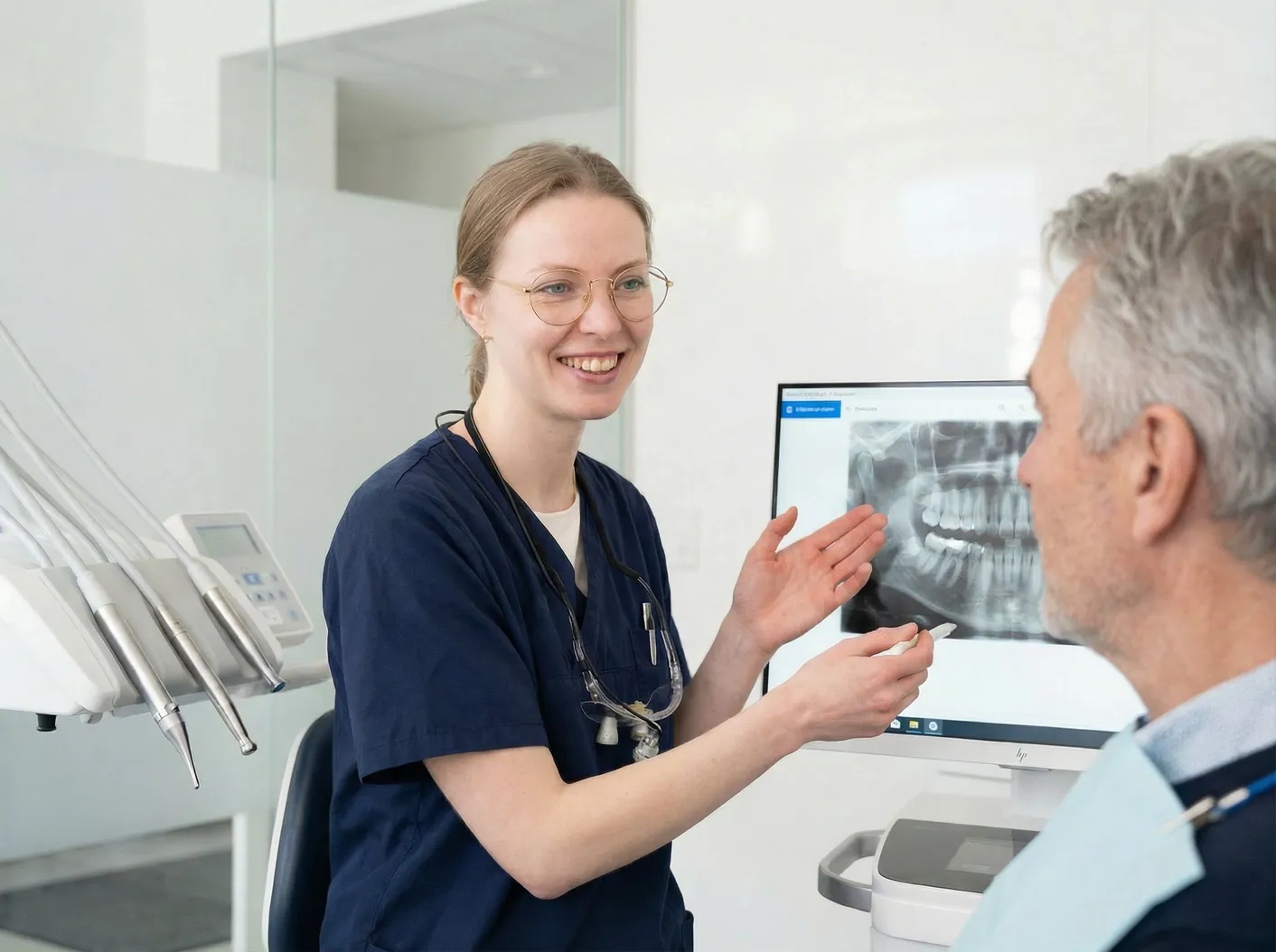
Wunschlachen uses modern imaging to plan treatment. Digital X-rays or 3D scans show the bone height and maxillary sinus in detail, allowing the procedure to be planned for each patient.
Internal sinus lift and implant: how are they connected?
An internal sinus lift is often planned together with an implant. This is possible if sufficient residual bone remains. The implant can then usually be placed during the same appointment.
Where bone deficiency is more severe, separate treatment may be advisable. The bone is augmented first. Implant placement follows after the healing period. Which solution is appropriate depends on the clinical findings.
The key factors are bone quality, bone height and general health. The desired restoration also plays an important role.
Internal sinus lift procedure
A thorough examination is carried out before the procedure. The teeth, mucous membrane and jawbone are assessed. Pre-existing conditions and medication are also discussed.
The procedure is usually performed under local anaesthetic. The dentist prepares the implant channel in a highly controlled manner. The floor of the maxillary sinus is then lifted through this access point.
Suitable material is placed in the space created. This acts as a scaffold for new bone formation. The implant is then placed or the site is closed.
Internal or external sinus lift: the difference
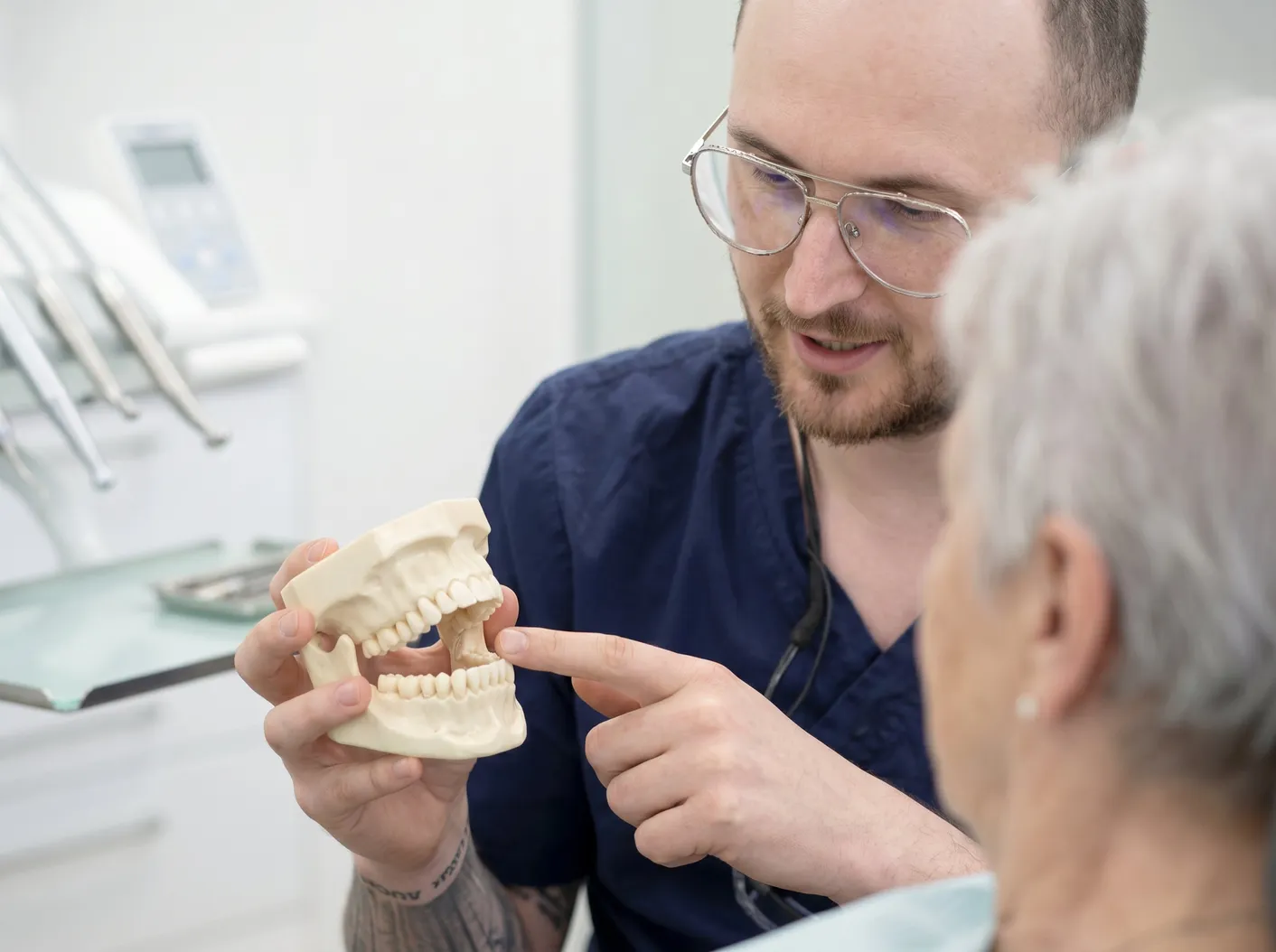
In an internal sinus lift, access is through the implant site. This means there is no need to create a window in the side of the bone, making the procedure less extensive than the external approach.
An external sinus lift is used when more bone has been lost. The maxillary sinus is accessed from the side, allowing a larger volume of bone to be built up.
A thorough assessment determines which technique is more appropriate. An internal sinus lift is suitable only in certain circumstances. At Wunschlachen, treatment is planned individually.

Healing after an internal sinus lift
Healing depends on the extent of the procedure. Bone quality also significantly affects the duration. Many patients can return to their daily routine after a short period of rest. Swelling or a feeling of pressure is possible in the first few days. Cooling and rest support the early healing phase. The practice provides precise instructions for this.
It is important not to place excessive strain on the maxillary sinus. Forceful nose blowing should be avoided at first. Keep your mouth open when sneezing.
Smoking can also impair wound healing. A break from smoking is therefore strongly recommended. Follow-up appointments help to monitor integration safely.

Possible risks and side effects
An internal sinus lift is a well-established surgical procedure. Nevertheless, side effects can occur. These include swelling, secondary bleeding or a temporary feeling of pressure.
In rare cases, the lining of the maxillary sinus can be injured. The procedure then has to be adapted. Careful planning significantly reduces this risk. Infections or delayed healing are also possible.
Good oral hygiene reduces this risk. It is equally important to follow the aftercare instructions precisely.

What are the benefits of an internal sinus lift?
The main advantage is the smaller access point. Compared with the external method, the procedure is usually less extensive. This can reduce the strain on patients.
In addition, augmentation can often be combined with implant placement. This allows the entire treatment to be planned more efficiently. In suitable cases, this saves additional treatment steps.
The internal sinus lift supports secure implant treatment in the upper jaw. Missing back teeth can thus be replaced functionally. This improves chewing, stability and quality of life.
Cost of an internal sinus lift
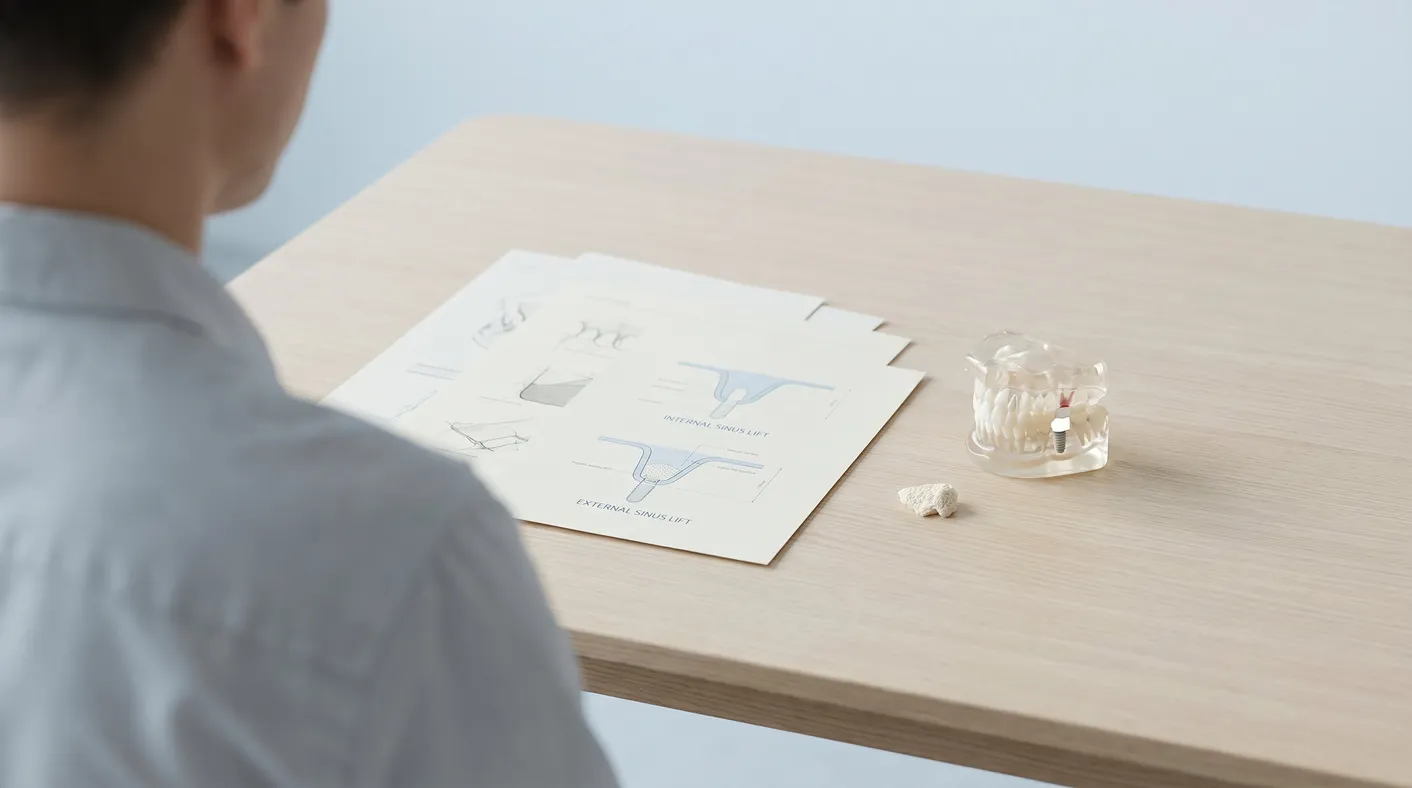
Costs depend on the individual clinical findings. Key factors are the amount of bone, the material and the extent of treatment. 3D diagnostics and laboratory services can also affect the price.
Before treatment, patients receive a treatment and cost plan. All planned steps are listed transparently. This provides a clear basis for making a decision.

Conclusion: stable bone for implants in the upper jaw
An internal sinus lift is a targeted method of bone augmentation. It is particularly suitable for limited bone deficiency in the upper jaw. If the starting conditions are suitable, an implant can be placed at the same time.
Precise diagnostics are essential for this. They show whether a closed sinus lift is advisable. Wunschlachen provides individual advice and plans every step carefully.