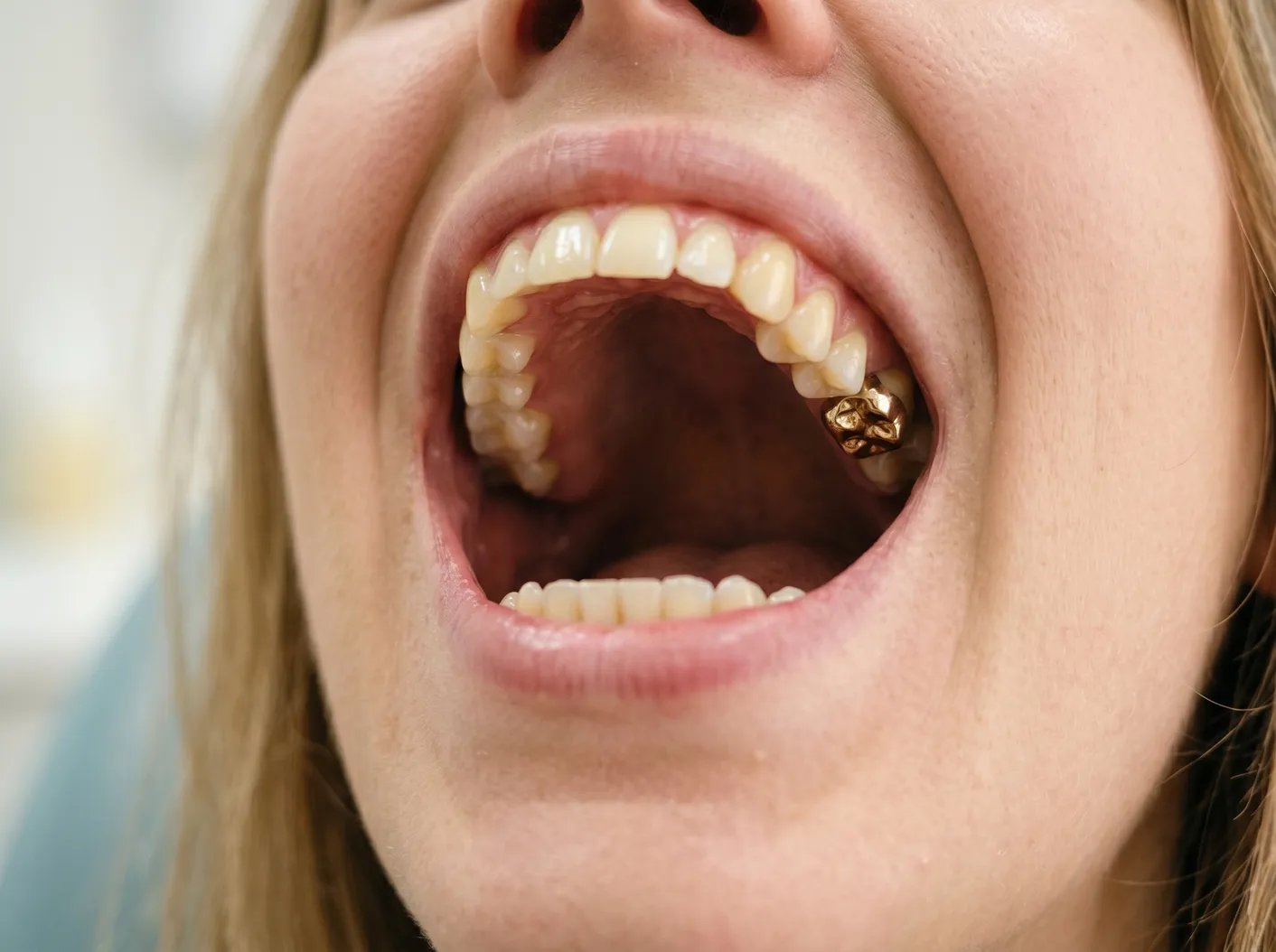
Loose crown – causes and quick help
A loose crown should always be checked by a dentist. It can be caused by tooth decay, loose cement or excessive pressure. An accident, night-time teeth grinding or an old restoration may also be responsible. Acting quickly is important to protect the tooth, crown and gums.
Über 350 Google-Bewertungen
What does it mean if a crown is loose?
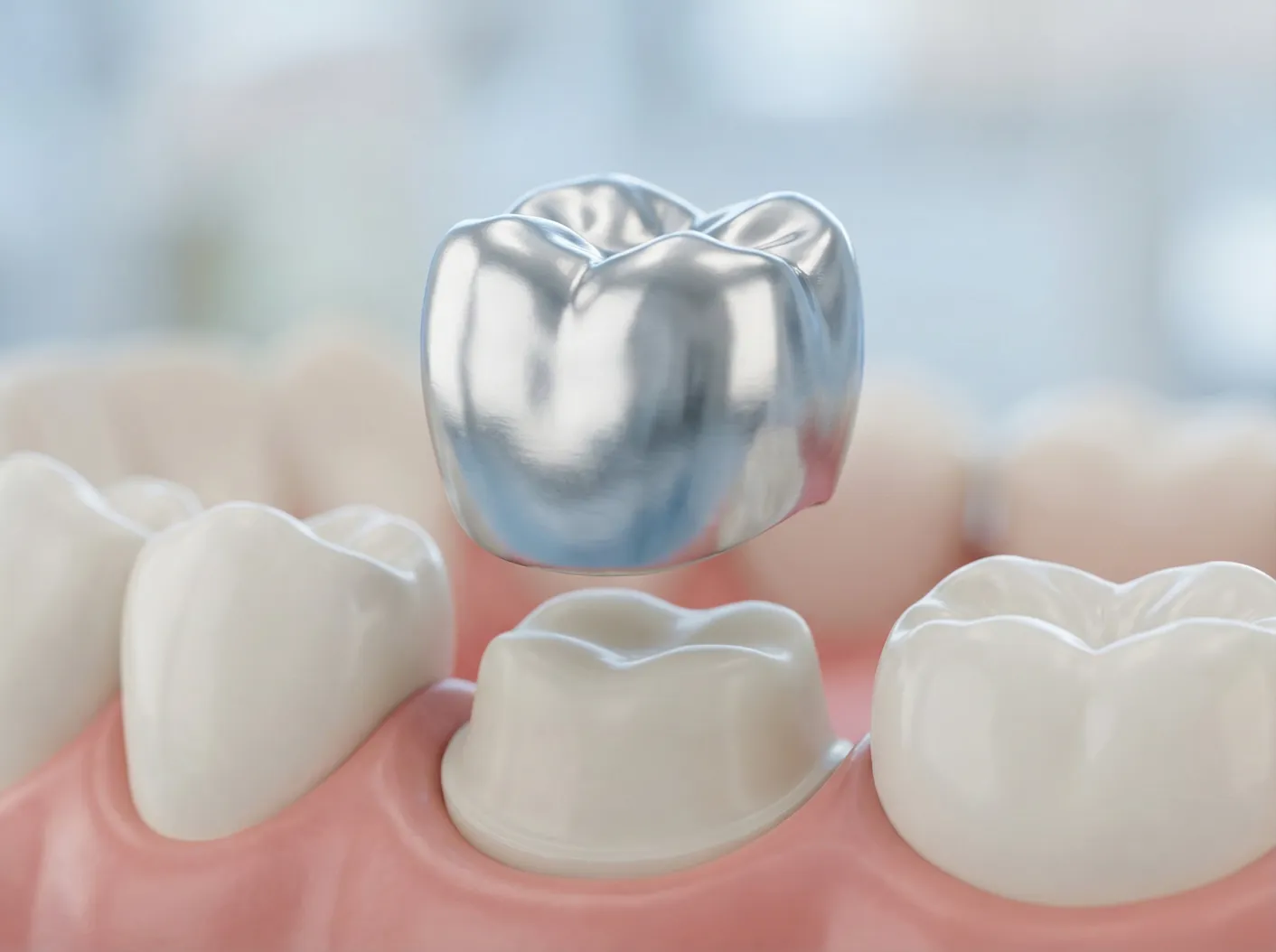
A dental crown normally fits securely on the prepared tooth. It protects weakened tooth structure and restores chewing function. If the crown becomes loose, a small gap develops.
Saliva, bacteria and food debris can enter through this gap. This significantly increases the risk of tooth decay under the crown. The gums may also become irritated.
Many patients first notice a slight wobble. Others experience an unfamiliar sensation when chewing. Sometimes the affected area smells or tastes unpleasant.
Common causes of a loose dental crown
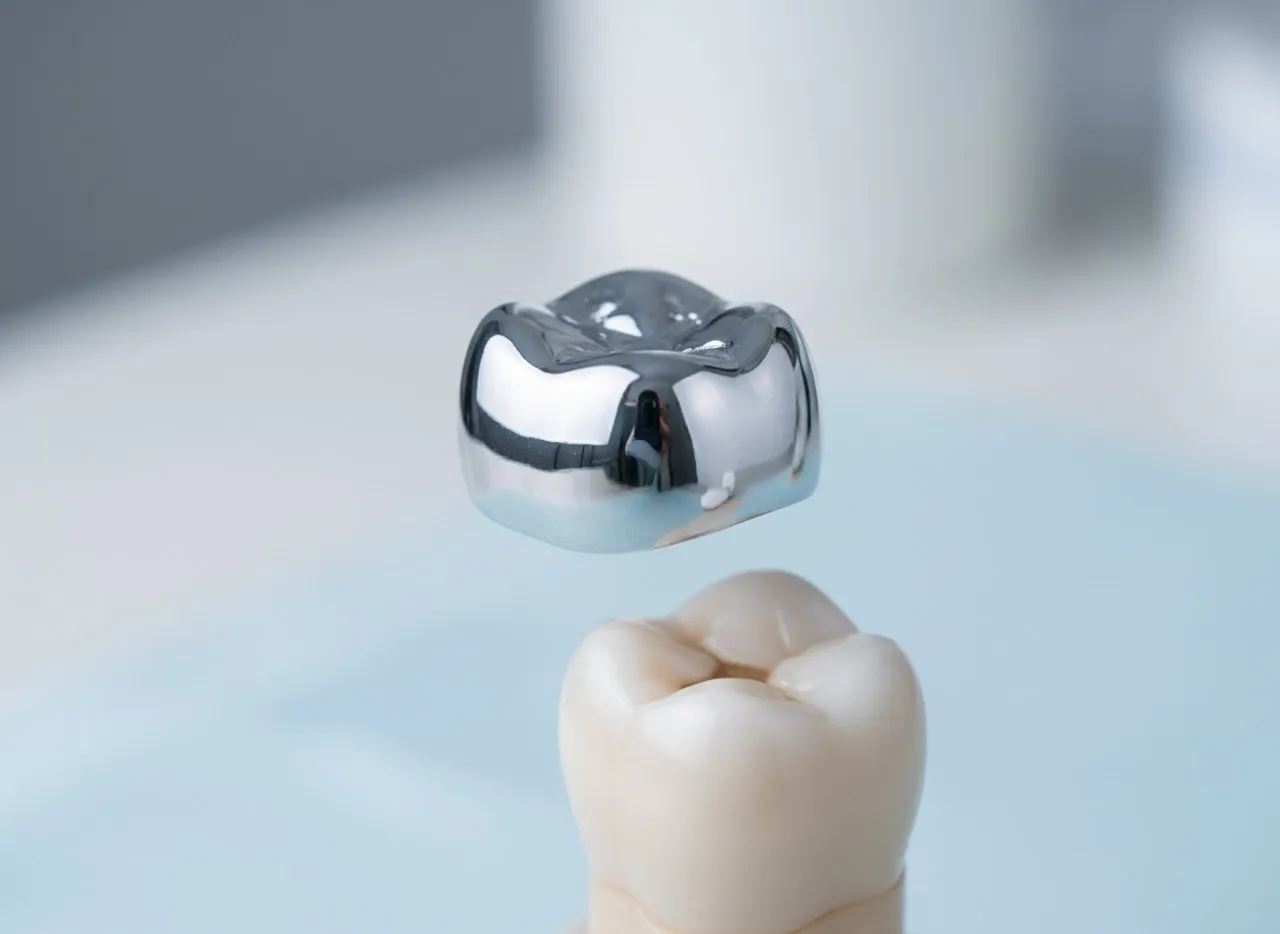
The most common cause is dental cement that has lost its bond. The cement can break down over time, allowing the crown to come loose.
Tooth decay under the crown is another possibility. It often goes unnoticed for a long time. You may first notice the problem when the crown starts to move.
Excessive pressure when chewing is another cause. Very hard foods can loosen a crown. Grinding your teeth also puts considerable strain on crowns and other restorations. An older crown may show material fatigue. Its edge can lose its seal, allowing bacteria to enter.
Wobbly crown: what symptoms are typical?
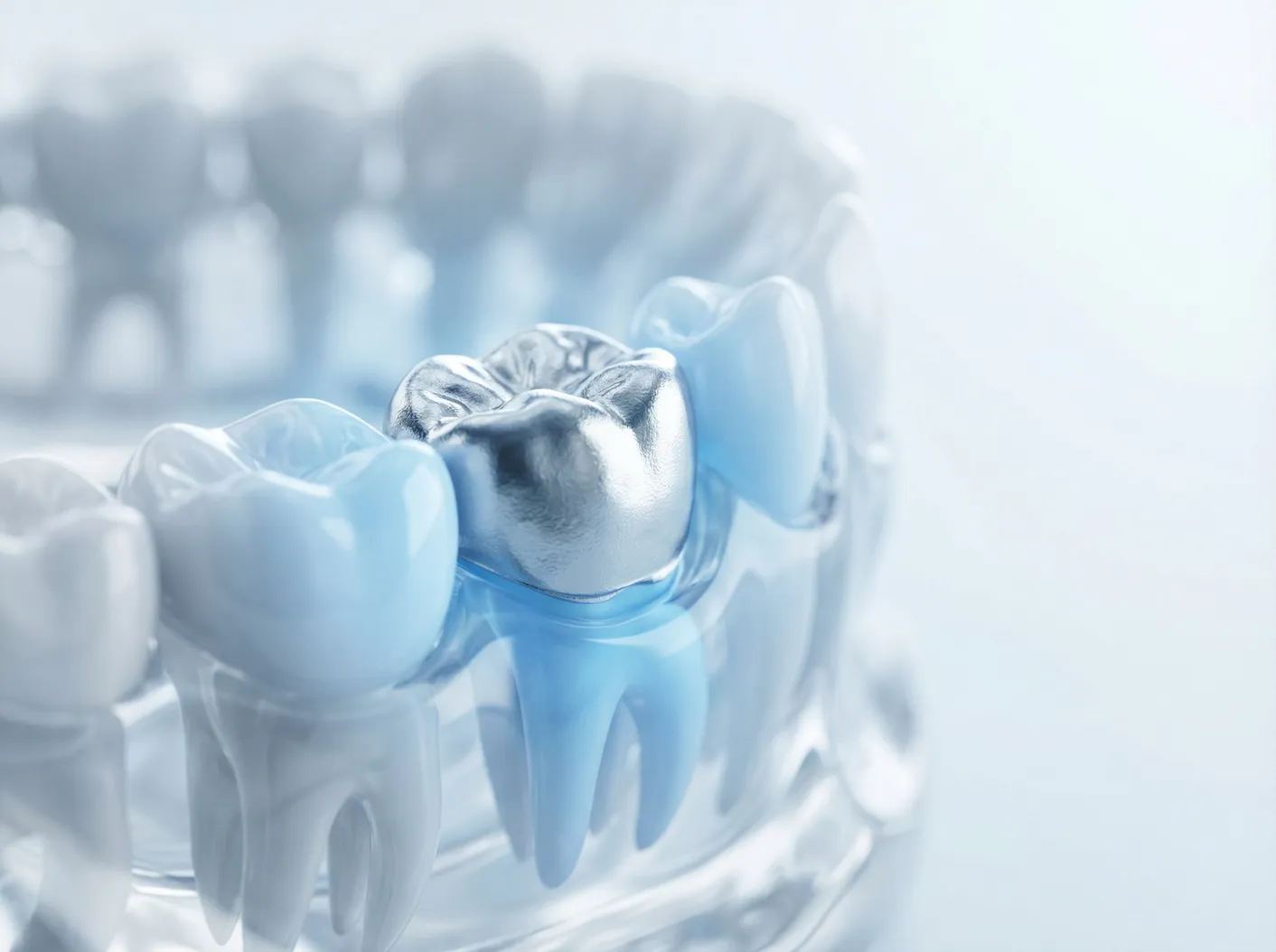
A loose crown can feel different from person to person. It often wobbles when eating or brushing your teeth. Sometimes it moves only slightly.
A feeling of pressure when biting is also possible. Sensitive gums may occur too. Some people notice that their bite no longer feels right.
If the crown has fallen off, it should be kept safe. Please clean it only gently. Bring the crown to your appointment.
What should I do if my crown is loose?
Make an appointment at a dental practice promptly. The sooner the cause is identified, the better. This often allows more tooth structure to be preserved.
Avoid putting pressure on the affected side. Try not to chew hard foods there. Sticky foods can also loosen the crown further.
Do not try to reattach the crown permanently yourself. Household glue must never be used in the mouth. It can damage the gums and tooth structure.
If the crown is loose in your mouth, take it out. This prevents you from accidentally swallowing it. Keep the crown safe.
Can a loose crown be reattached?
Yes, a loose crown can often be refitted. The dentist needs to examine the tooth and crown carefully. The condition of the remaining tooth structure is the deciding factor.
If the tooth is healthy and stable, re-cementing the crown is often enough. The dentist cleans and refits the crown, then checks your bite.
Decay under a crown needs treatment. The dentist first removes the decayed tooth structure, then assesses whether the old crown still fits.
A new crown is sometimes a better option, for example if the crown is cracked, fits poorly or much of the tooth structure has been lost.
Loose crown after root canal treatment
A tooth is often weakened after root canal treatment. If the crown becomes loose, the dentist examines the remaining tooth structure. A build-up within the tooth may also be affected.
In some cases, the build-up needs to be replaced. The crown can then be reattached. For larger defects, a new restoration is planned.
Loose crown caused by teeth grinding
Teeth grinding exerts considerable force on crowns. This strain often goes unnoticed, especially at night. As a result, a crown can gradually become loose.
Fine cracks in the material are also possible. The dentist can detect such changes during an examination. A bite guard can relieve pressure on the restoration.
At Wunschlachen, we also examine your bite. This enables us to identify excessive contact points and uneven pressure. We then plan a suitable solution.

Why prompt treatment is important
A loose dental crown should not be left untreated for long. The open gap can encourage bacteria. This can lead to tooth decay under the crown.
The gums can also become inflamed. In addition, the crown may loosen further. This increases the risk of losing or breaking it. Early treatment is usually simpler. The crown can often be preserved. Prompt dental assessment is therefore worthwhile.
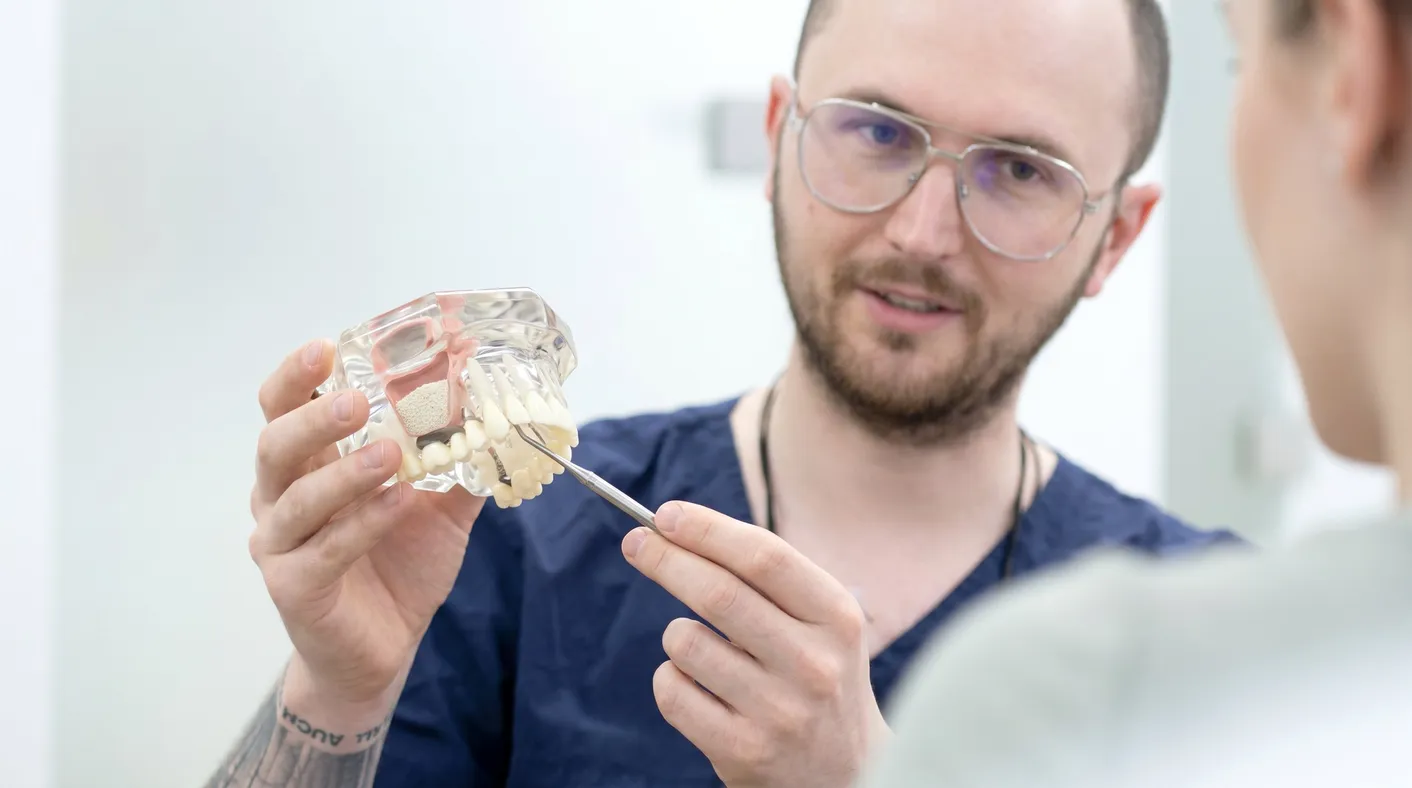
Treatment at Wunschlachen
At Wunschlachen, we examine loose crowns carefully. We check the tooth, crown margin, bite and gums. If needed, we use modern diagnostic imaging.
We then discuss the appropriate treatment. Options include cleaning, re-cementing or fitting a new crown. The decision depends on what we find during your examination.
Our aim is a stable restoration that feels natural, while preserving healthy tooth structure. We explain your options clearly.