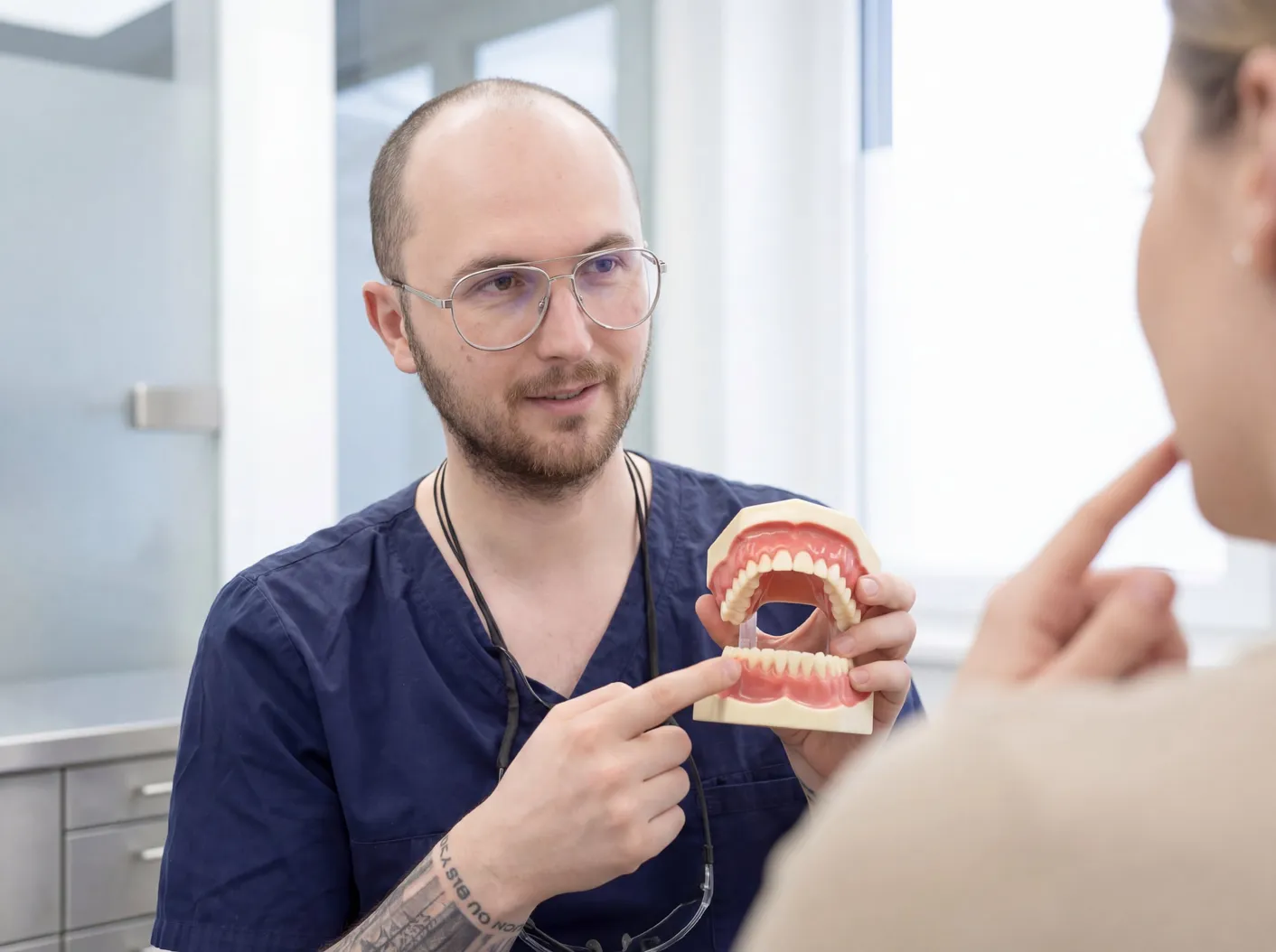
Upper jaw implant procedure
An implant in the upper jaw requires careful planning and several steps. The key factors are the amount of bone, the position of the maxillary sinus and the subsequent restoration. The procedure comprises diagnosis, surgery, healing and the final dental restoration.
Über 350 Google-Bewertungen
Why the procedure in the upper jaw is different
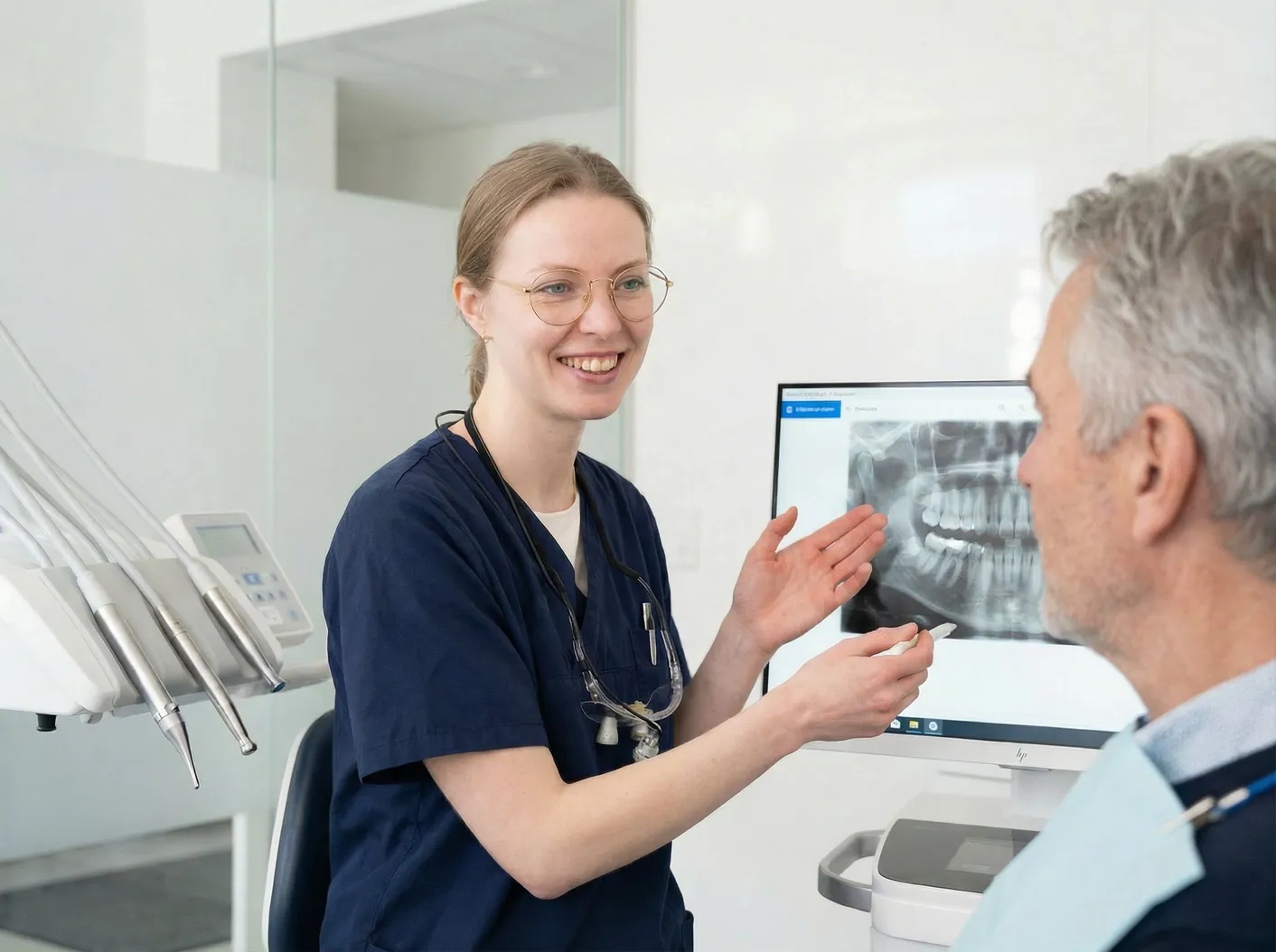
The upper jaw presents different requirements from the lower jaw. The bone there is often softer and less dense. The maxillary sinus also lies close to the tooth roots.
The dentist therefore examines the clinical findings particularly carefully. This allows the implant procedure to be planned safely. Subsequent stability can also be assessed more reliably.
Examination before an upper jaw implant
We first assess the teeth, soft tissues, bite and bone. Existing medical conditions and medicines you take also matter.
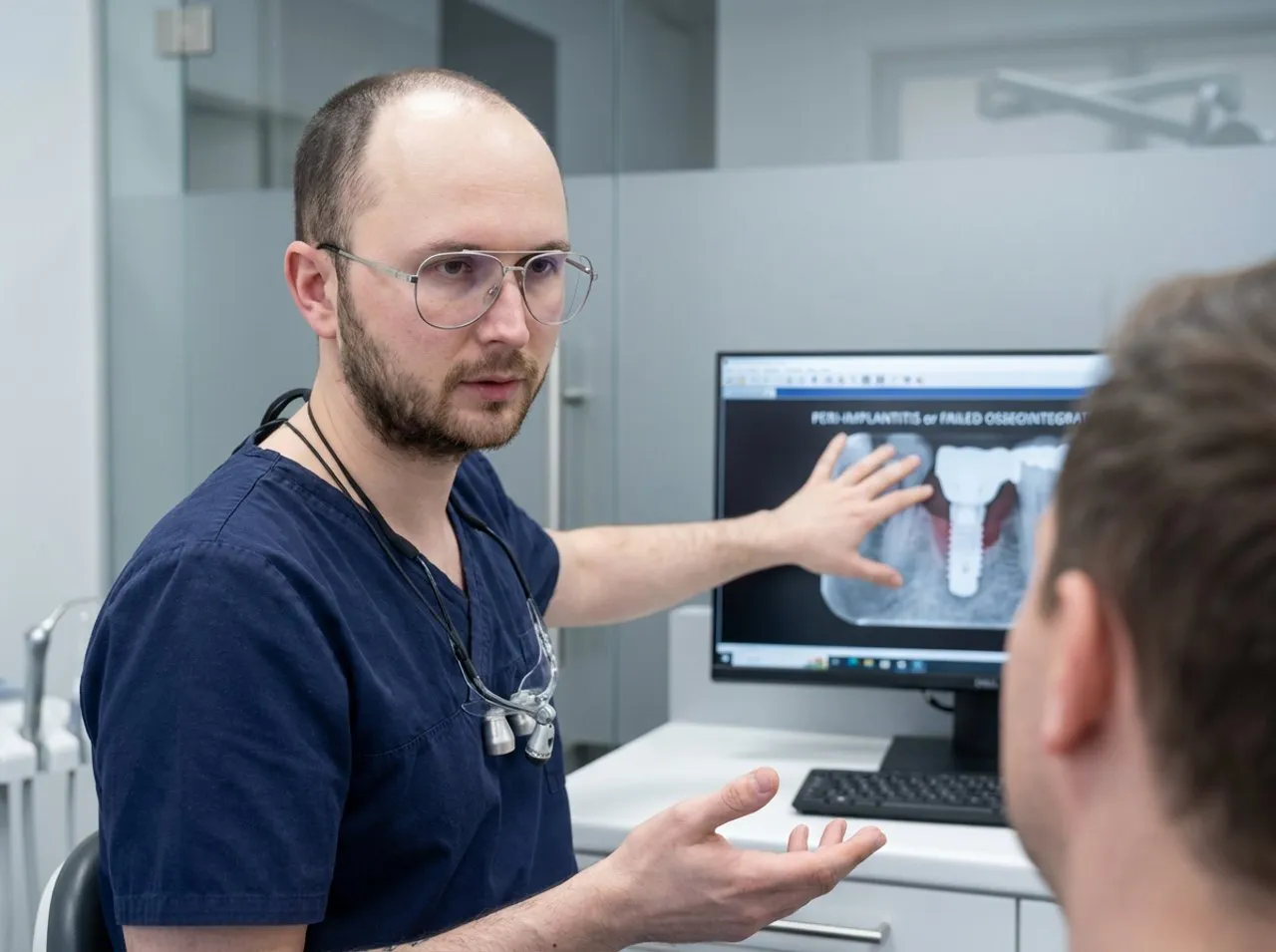
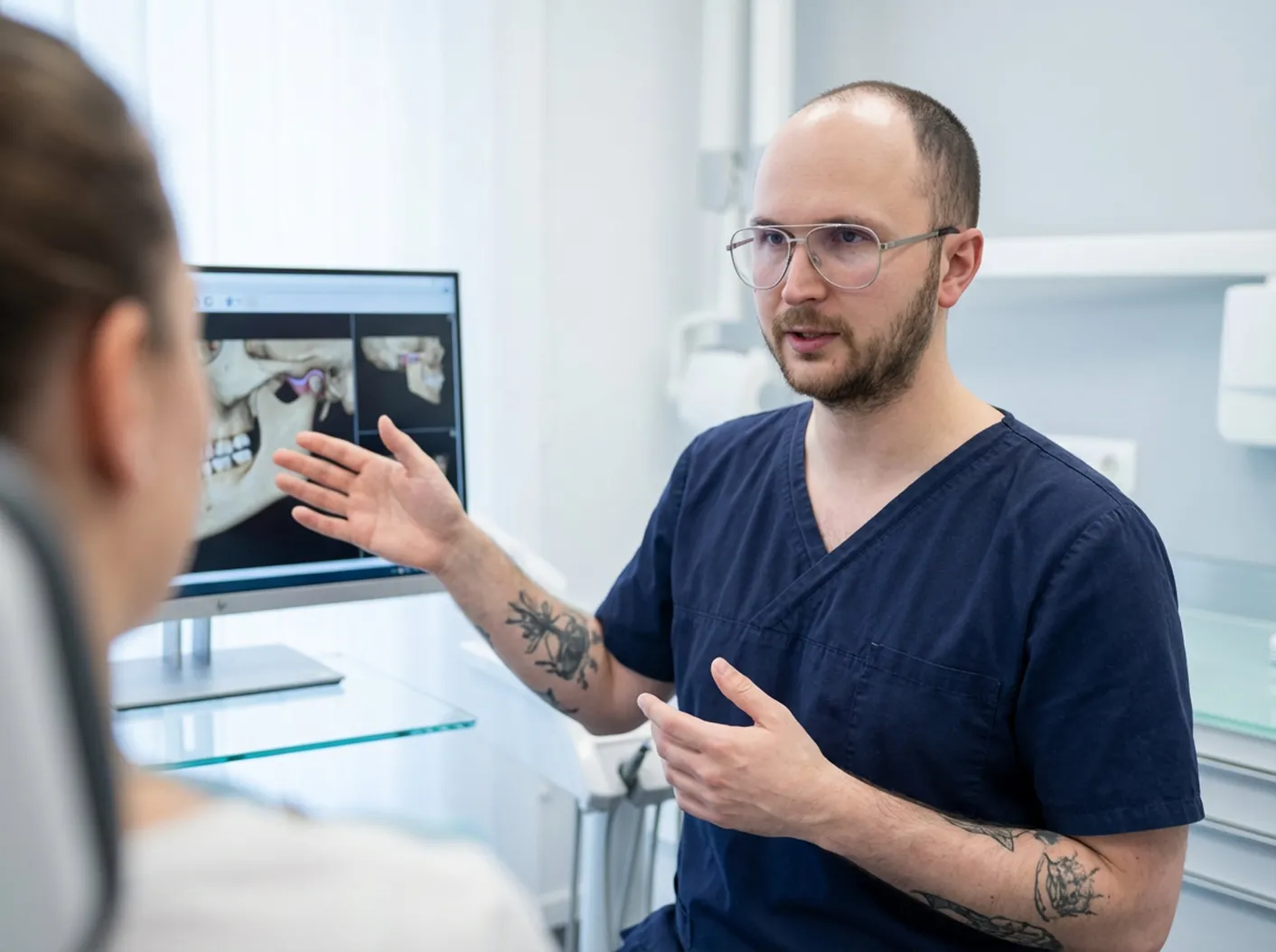
Digital X-rays and a 3D scan are often used to show the width, height and shape of the bone. This helps the team plan the implant position precisely.
If there is too little bone in the upper jaw, we adjust the plan. Bone grafting may be appropriate, and some cases also require a sinus lift.
Consultation and treatment planning
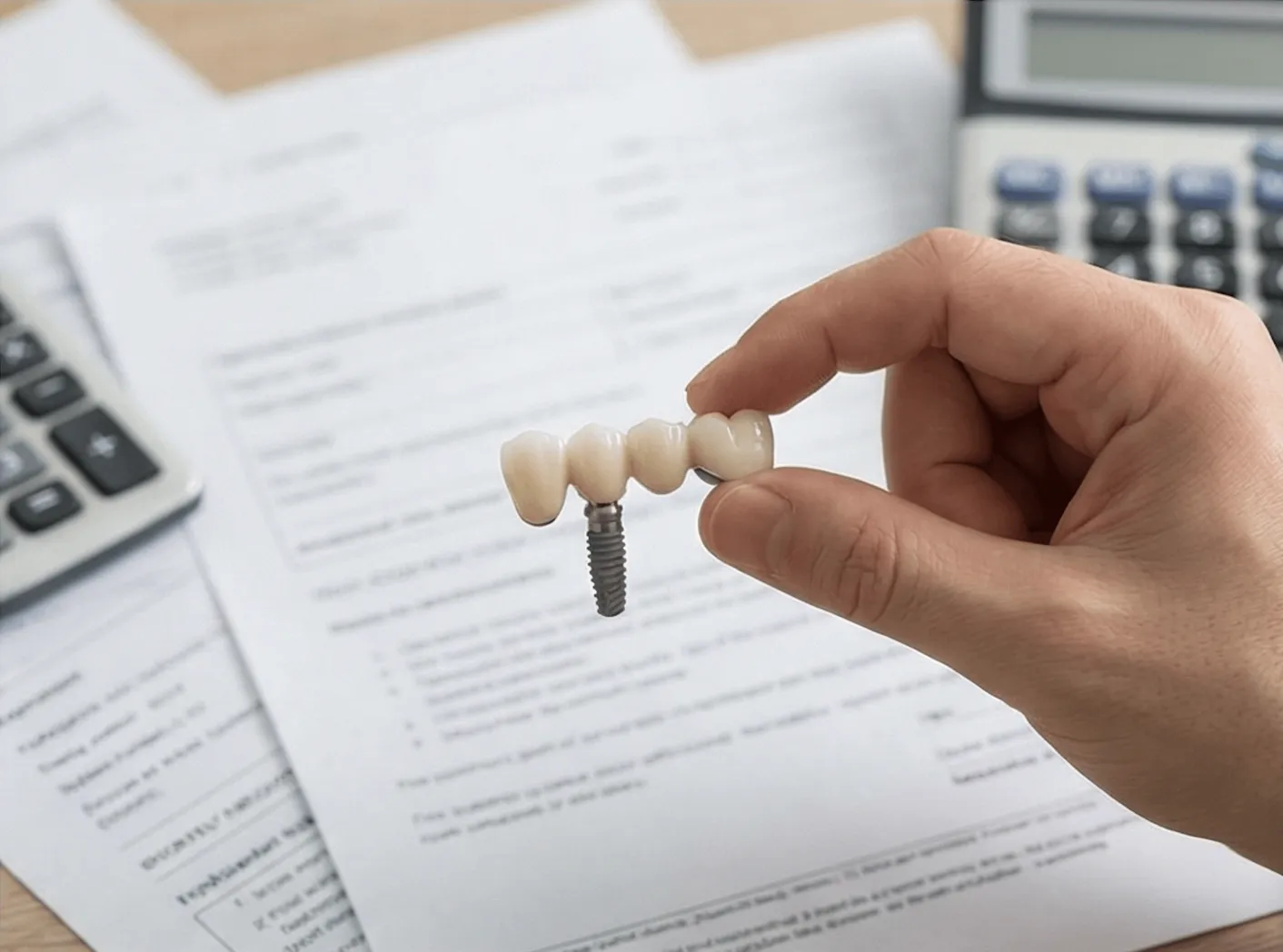
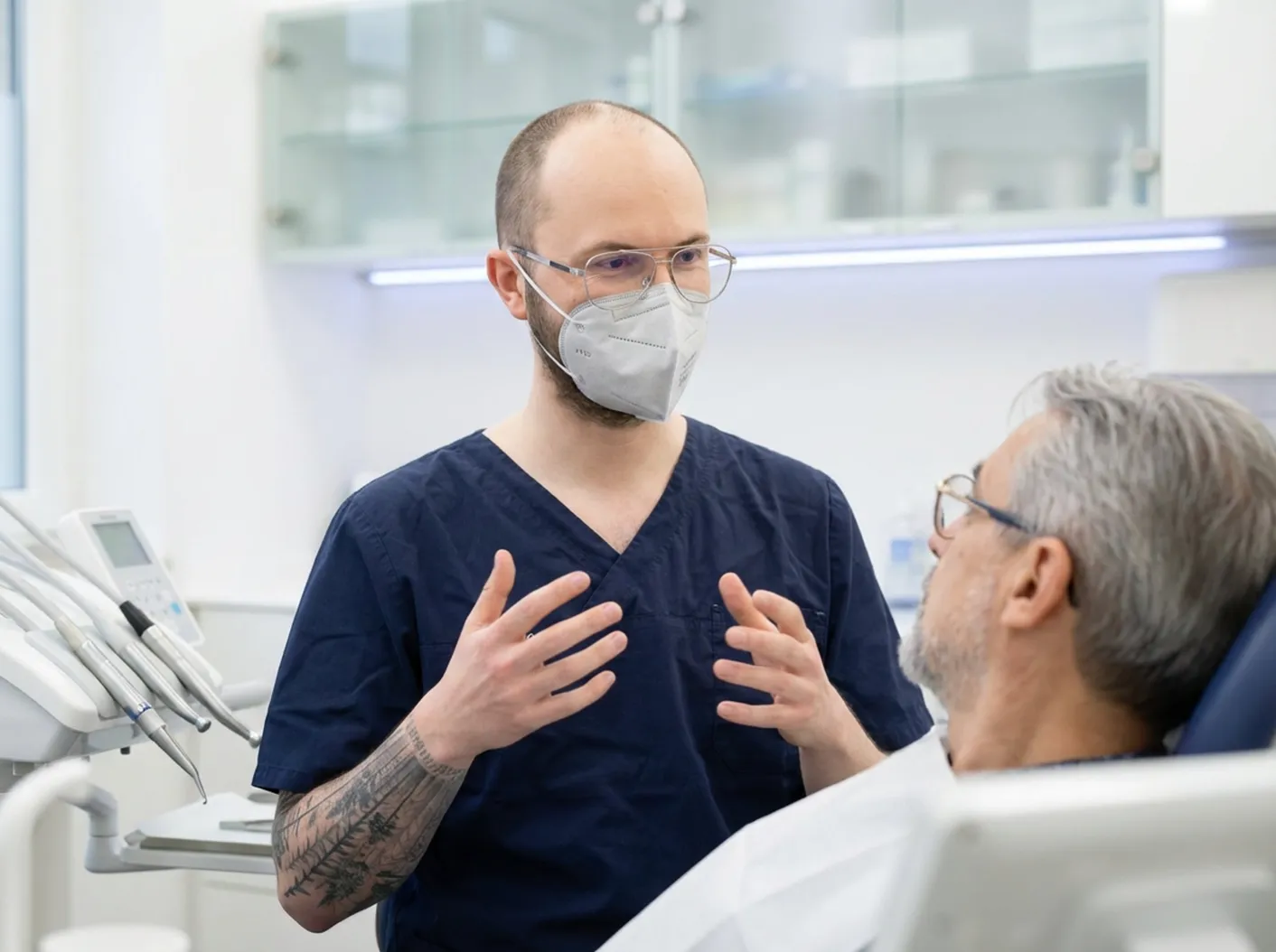
The diagnostic assessment is followed by a detailed consultation. The entire upper jaw implant procedure is explained clearly. Patients learn which steps will take place and in what order.
The material, duration and healing time are also discussed. Other topics include oral hygiene, what to do after the procedure and follow-up appointments. Good planning provides reassurance and clarity.
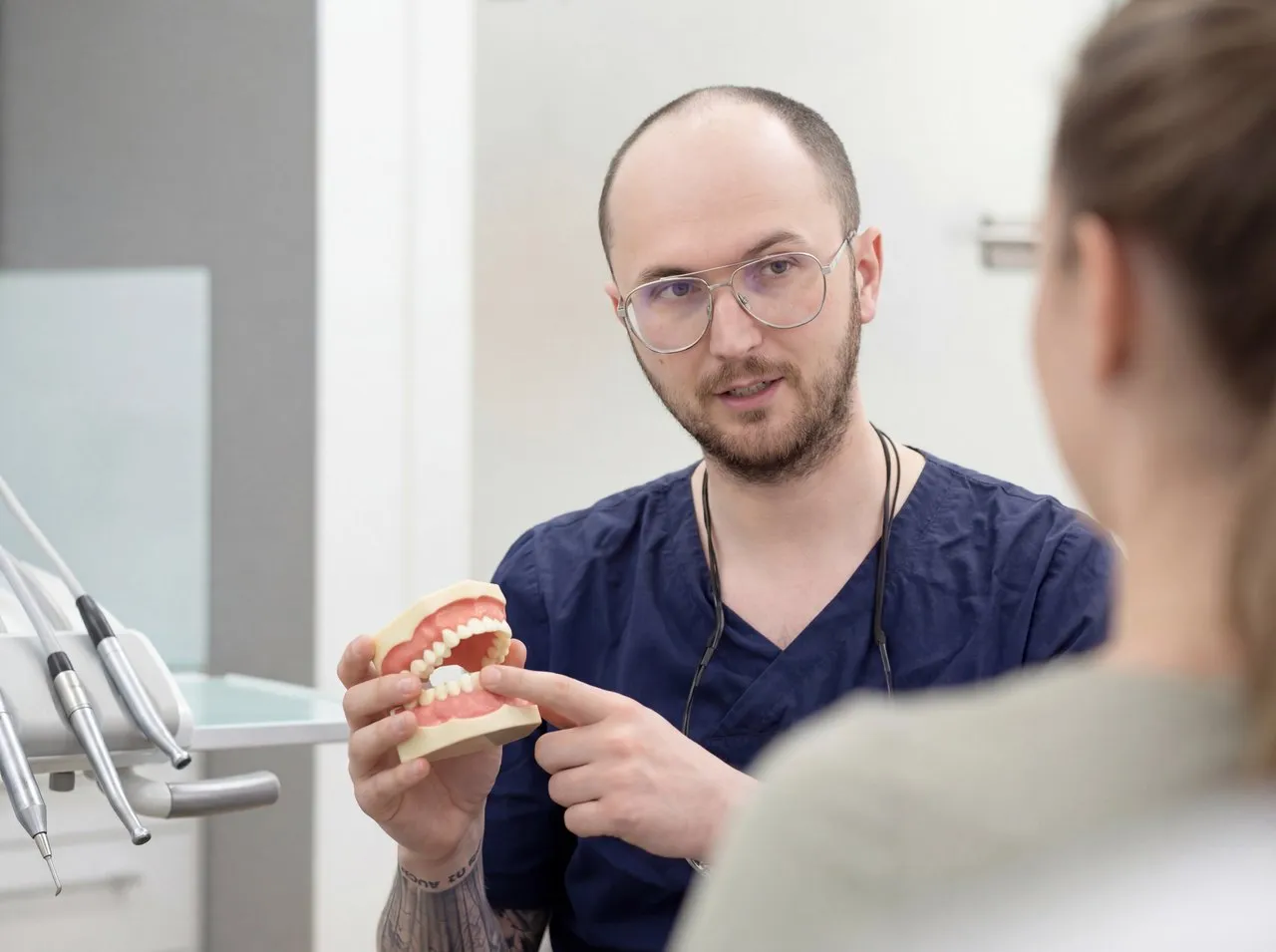
Preparing for implant placement
The mouth is thoroughly checked before the procedure. Any gum inflammation should be treated beforehand. Teeth that cannot be preserved may also need to be removed.
A local anaesthetic is usually used on the day of treatment. Sedation is also possible if needed. The actual implant placement in the upper jaw then begins.
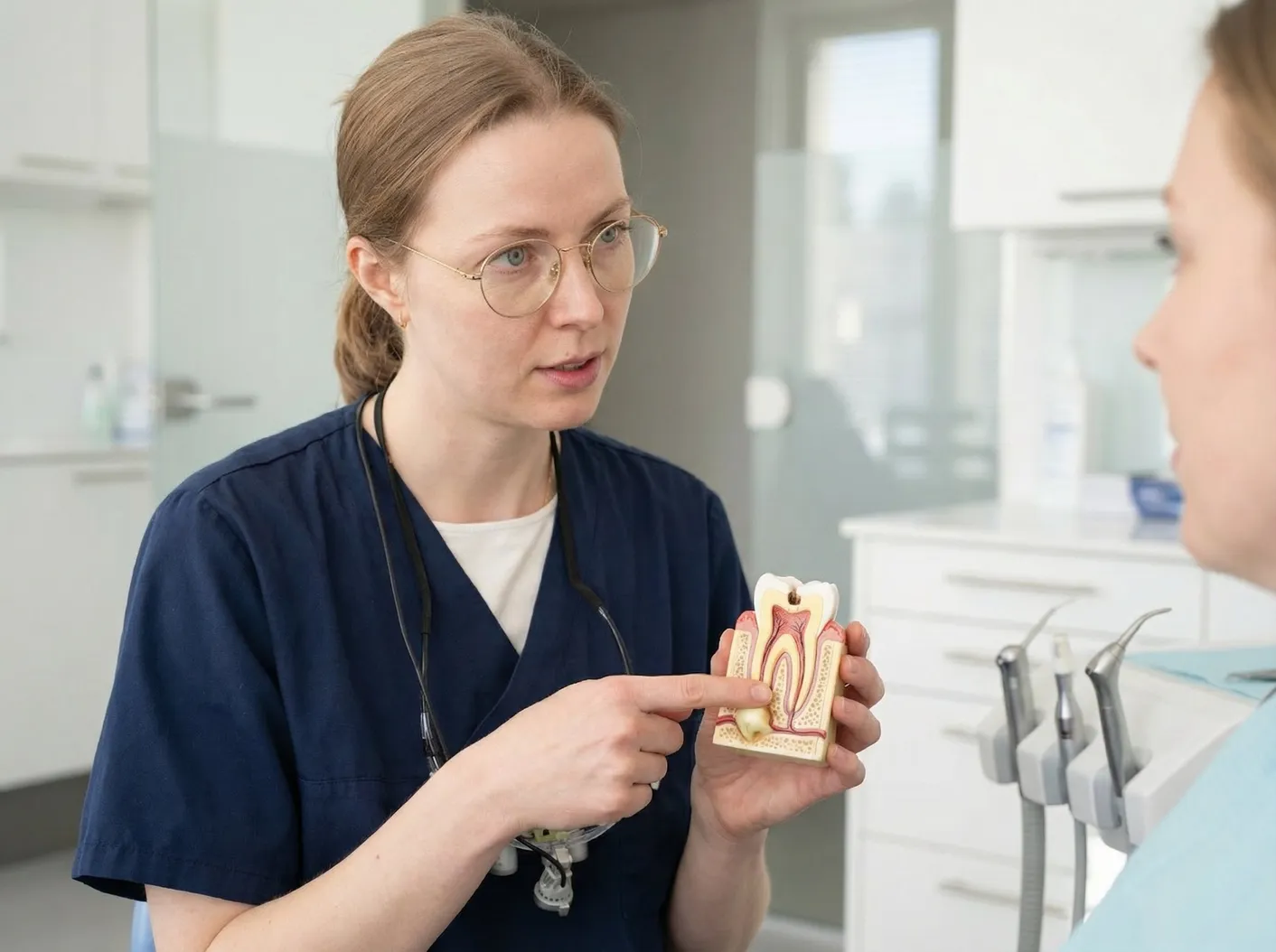
Upper jaw implant procedure during surgery
First, the practitioner opens the mucous membrane in the affected area. The implant site is then carefully prepared. The implant is subsequently inserted into the jaw.
The implant replaces the natural tooth root. It is usually made of titanium or ceramic. The site is then closed or fitted with a healing cap.
How long the procedure takes depends on the clinical findings. A single implant can often be placed quickly. More extensive restorations require more time.
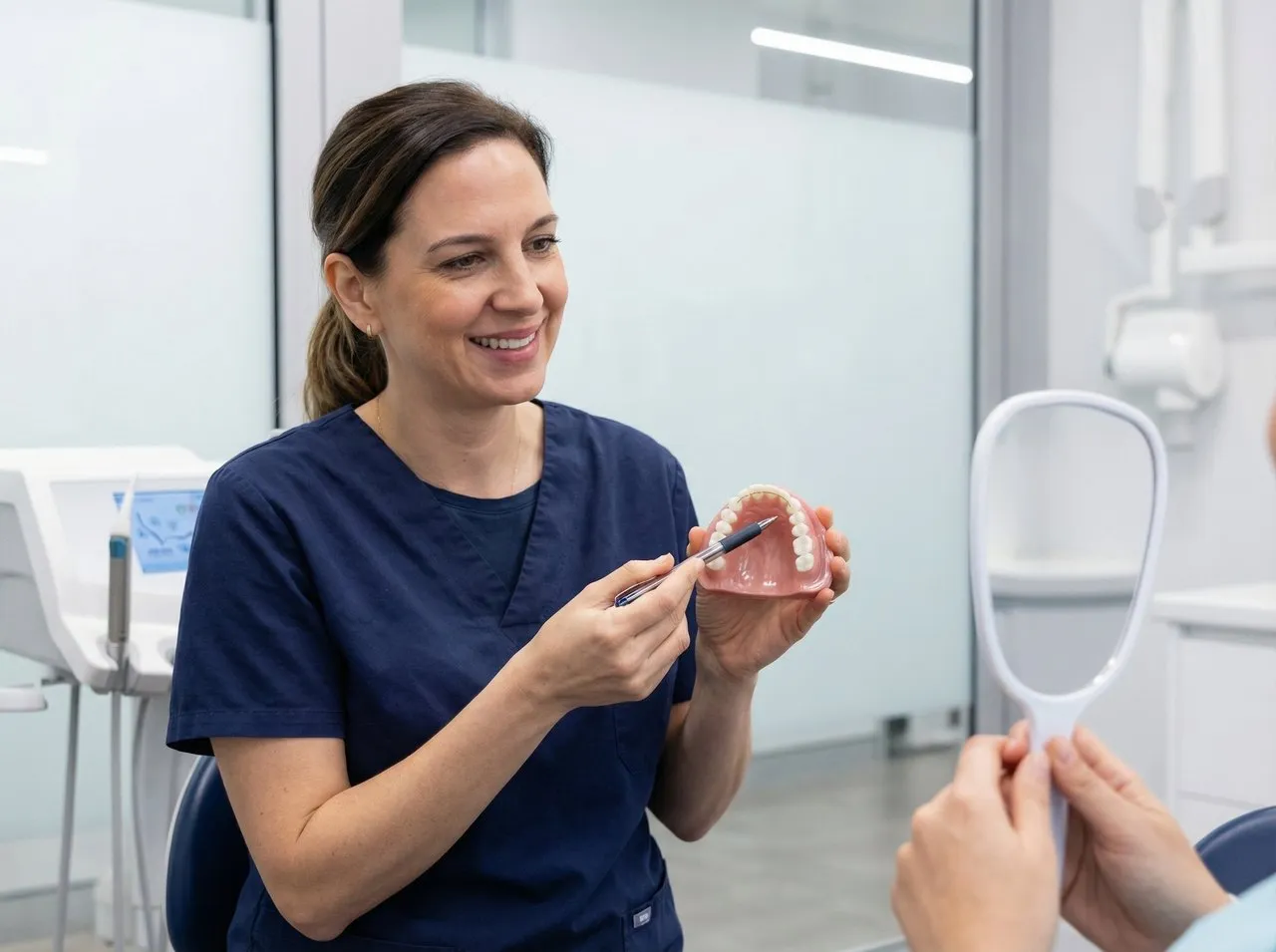
Bone augmentation in the upper jaw
The upper jaw does not always have enough bone to support an implant. Bone often shrinks after tooth loss, leaving no stable base for the implant.
Bone grafting can be an option. It uses your own bone or a bone substitute to create a strong base for the implant.
If the sinus sits very low, a sinus lift is often planned. The floor of the sinus is carefully raised to make more room for the graft.

Healing after an upper jaw implant
The most important phase begins once the implant has been inserted. The implant must fuse firmly with the bone. This process is called osseointegration.
Healing often takes a little longer in the upper jaw. This is because the bone structure is softer. Depending on the initial situation, several months are usually required.
The area should be protected during this time. Very hard foods and pressure on the site are inadvisable. Careful oral hygiene also remains important.
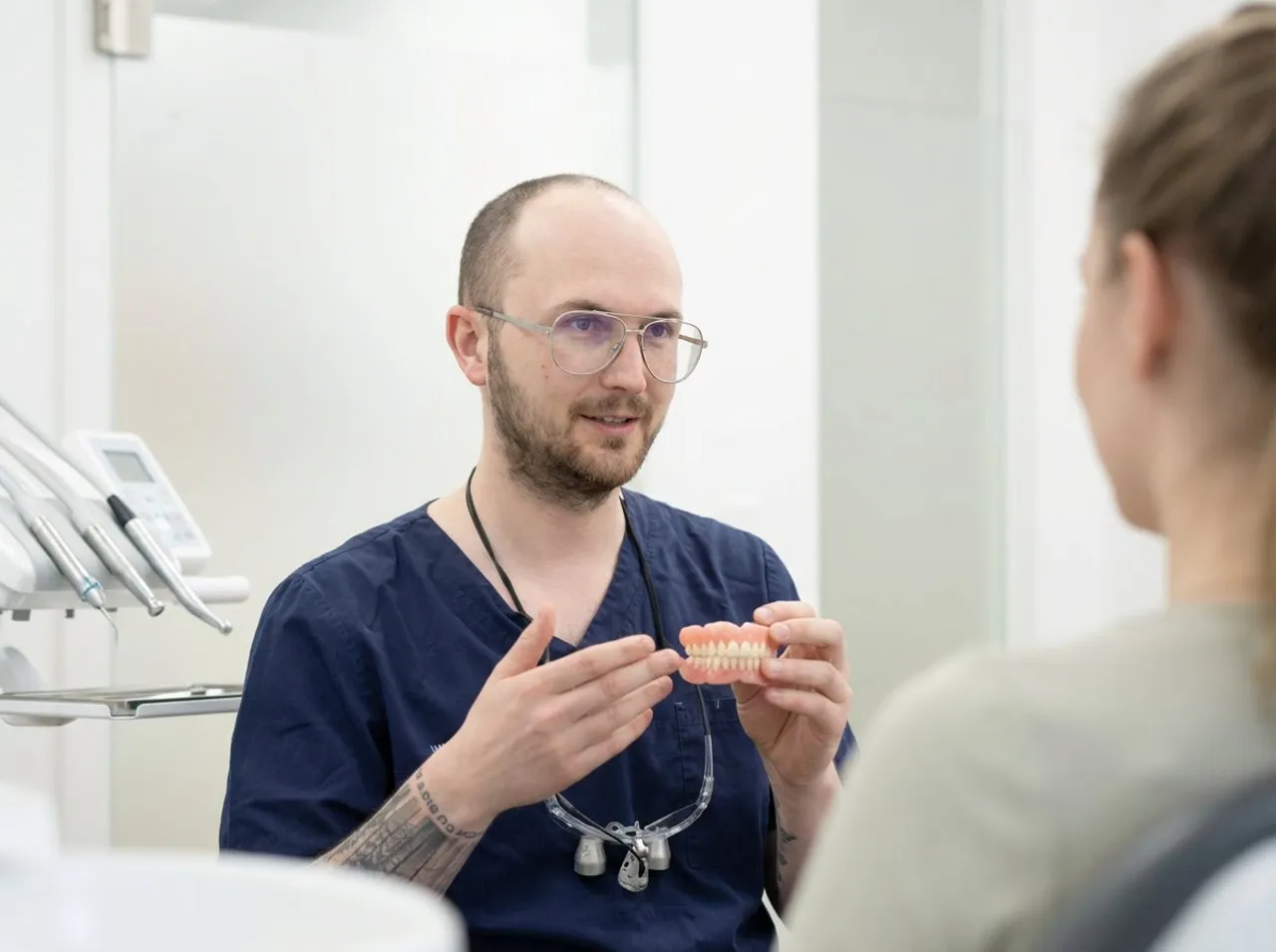
The final dental restoration
After successful healing, the implant is uncovered if necessary. An impression or digital scan is then taken. This forms the basis for the appropriate dental restoration.
Depending on the situation, a crown, bridge or denture is fitted. The new tooth should be both functional and aesthetically pleasing. A harmonious bite and a natural shape are important.
Treatment is usually complete once the final dental restoration has been fitted. Regular follow-up examinations at the practice then follow. This helps keep function and tissue stable in the long term.
Aftercare and the healing process
Mild swelling or pressure can occur after the procedure. Cooling the area and following your clinician’s instructions support recovery. Seek advice promptly if you notice unusual symptoms.
Check-ups and good care at home are important. Keep the gumline around implants clean to help reduce the risk of inflammation.

Who is suitable for an implant in the upper jaw?
An implant in the upper jaw is suitable for many patients. Good general oral health is a prerequisite. The bone and gums must also be assessed.
Solutions are often available even when there is less bone. Modern techniques significantly expand the treatment options. Individual diagnostic assessment always determines exact suitability.
Conclusion on the upper jaw implant procedure
The upper jaw implant procedure follows a clear concept. It begins with diagnosis and planning and ends with the appropriate dental restoration. The available bone, healing and aftercare are particularly important.
Seeking advice early can help you understand the procedure better. This creates a safe restoration step by step. A well-planned upper jaw implant can function reliably in the long term.