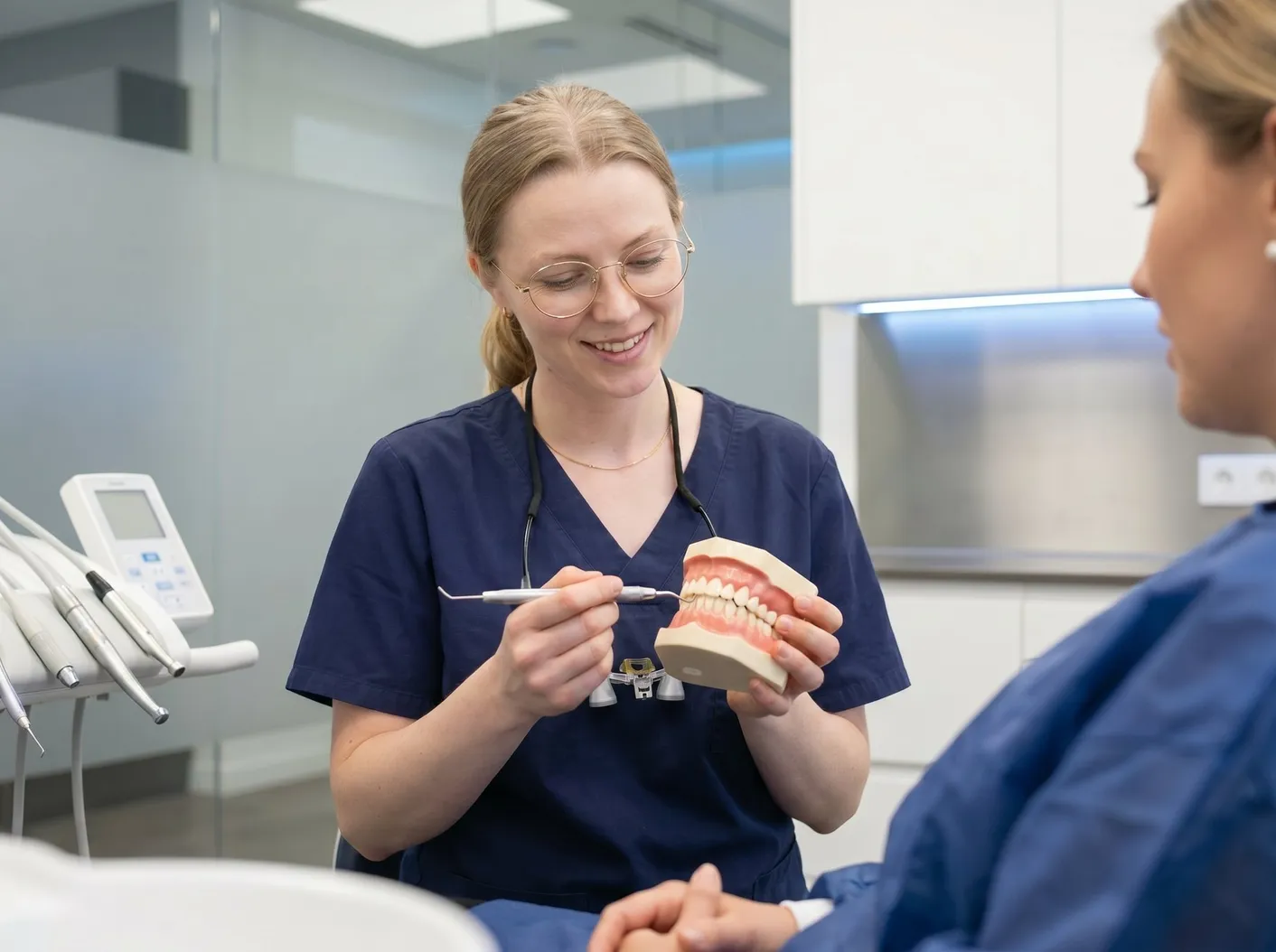
Have your crown checked: peace of mind for your tooth
A dental crown protects damaged tooth structure and restores chewing function and appearance. Regular check-ups often detect loose margins, inflammation or tooth decay at an early stage. If you experience any symptoms, you should have your crown checked promptly at Wunschlachen.
Über 350 Google-Bewertungen

Why should you have a crown checked?
A crown covers large areas of a prepared tooth. However, the natural tooth remains intact beneath it. This means that a crowned tooth also needs ongoing care and dental check-ups.
Bacterial plaque can accumulate at the junction between the crown and the tooth. The risk increases if crown margins are difficult to reach or the gums recede. New decay can develop there unnoticed.
The dental cement used can also change over time. This can sometimes create small gaps at the crown margin. An early examination can prevent more extensive damage to the remaining tooth structure.
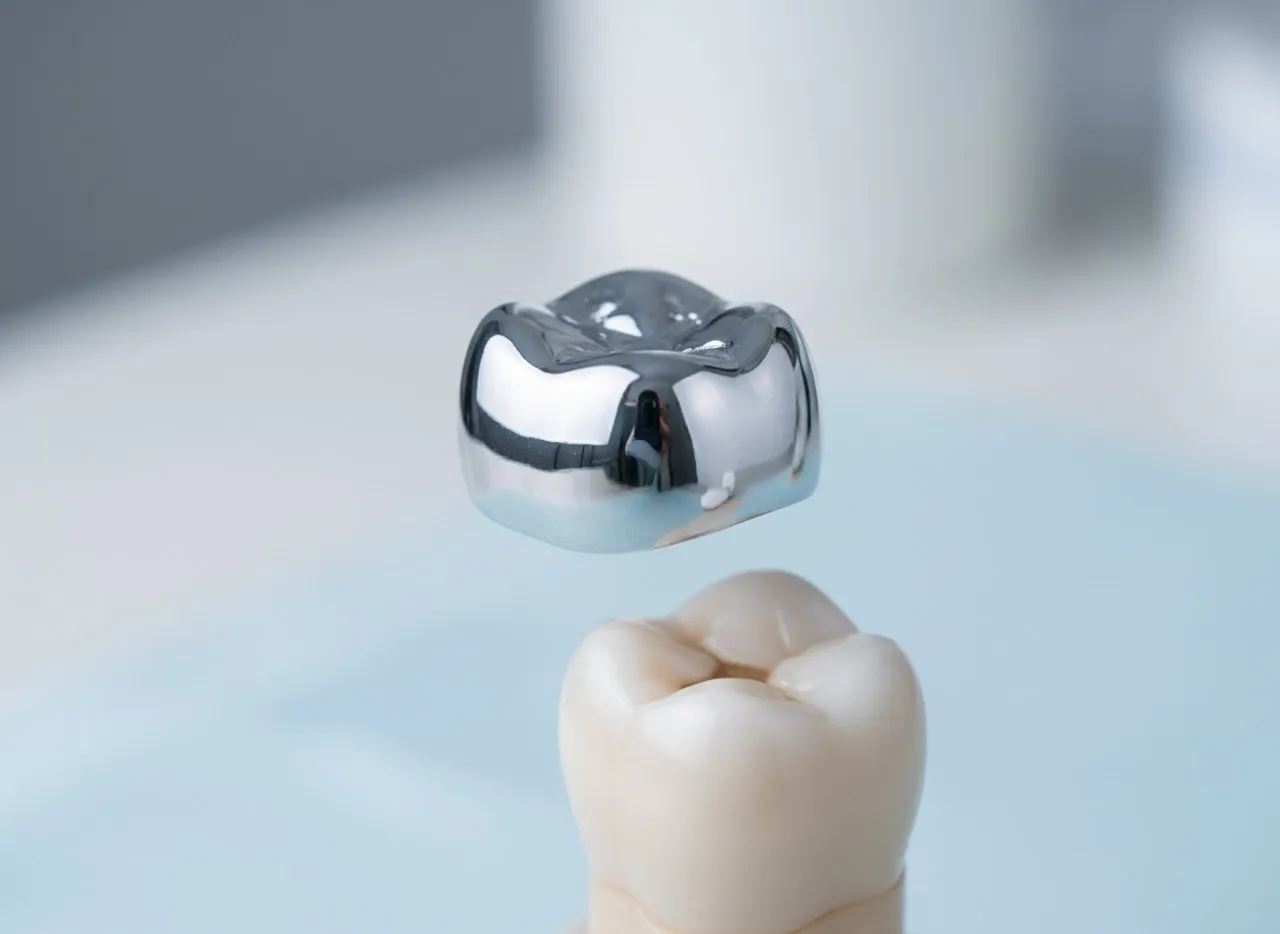
How often should a dental crown be checked?
How often you need a check depends on your oral health. A crown is usually checked at routine dental appointments. Your dentist may recommend more frequent checks if you are at higher risk.
You may be at higher risk if you have periodontitis or recurrent tooth decay. Grinding your teeth can put extra strain on the crown and neighbouring teeth. Implant-supported crowns also need ongoing care.
Have your crown checked even if you have no symptoms. Changes under the crown often go unnoticed at first. Regular checks help preserve the tooth in the long term.

Which warning signs indicate that a check is needed?
A crown may suddenly feel different when you chew. You may notice unusual pressure or a change in your bite. A loose crown should also be examined promptly.
Sensitivity to cold, heat or sweet foods can have various causes. Pain when biting down may indicate excessive strain or inflammation. An accurate diagnosis is only possible through an examination.
Also look out for bleeding gums around the crown margin. Redness, swelling or an unpleasant taste are also important signs. If your symptoms are more severe, you should contact the practice promptly.
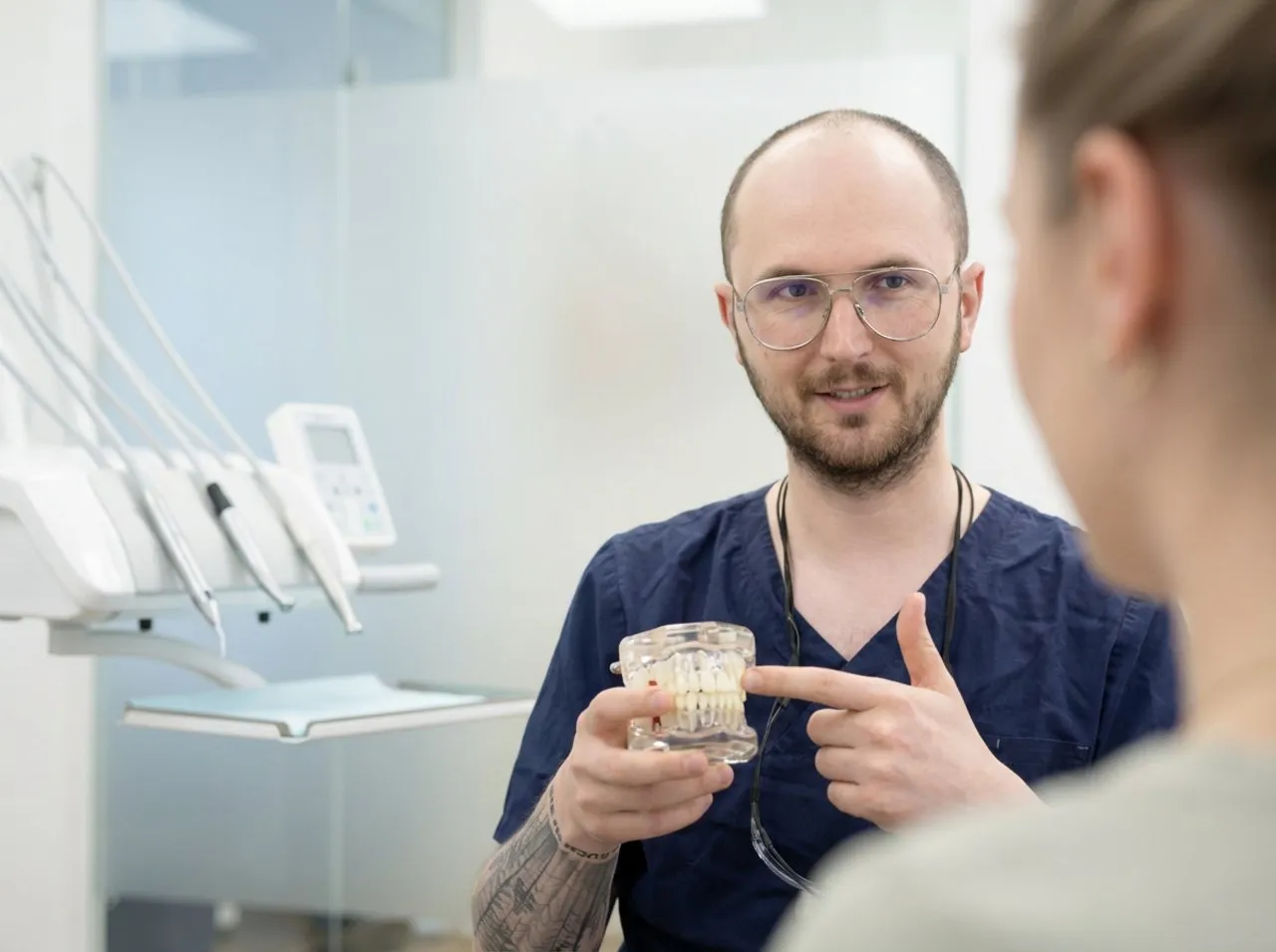
What is examined during a crown check?
First, the dentist asks about any symptoms and changes. They then check that the crown is firmly in place. The crown margin, surface and contact with neighbouring teeth are assessed.
The gums around the restoration are also carefully examined. Inflamed areas may indicate plaque or poorly fitting crown margins. How to clean these areas is discussed with you.
The dentist then checks the contacts when you bite down. Excessive pressure can contribute to discomfort and material damage. Minor adjustments can improve your bite if necessary.
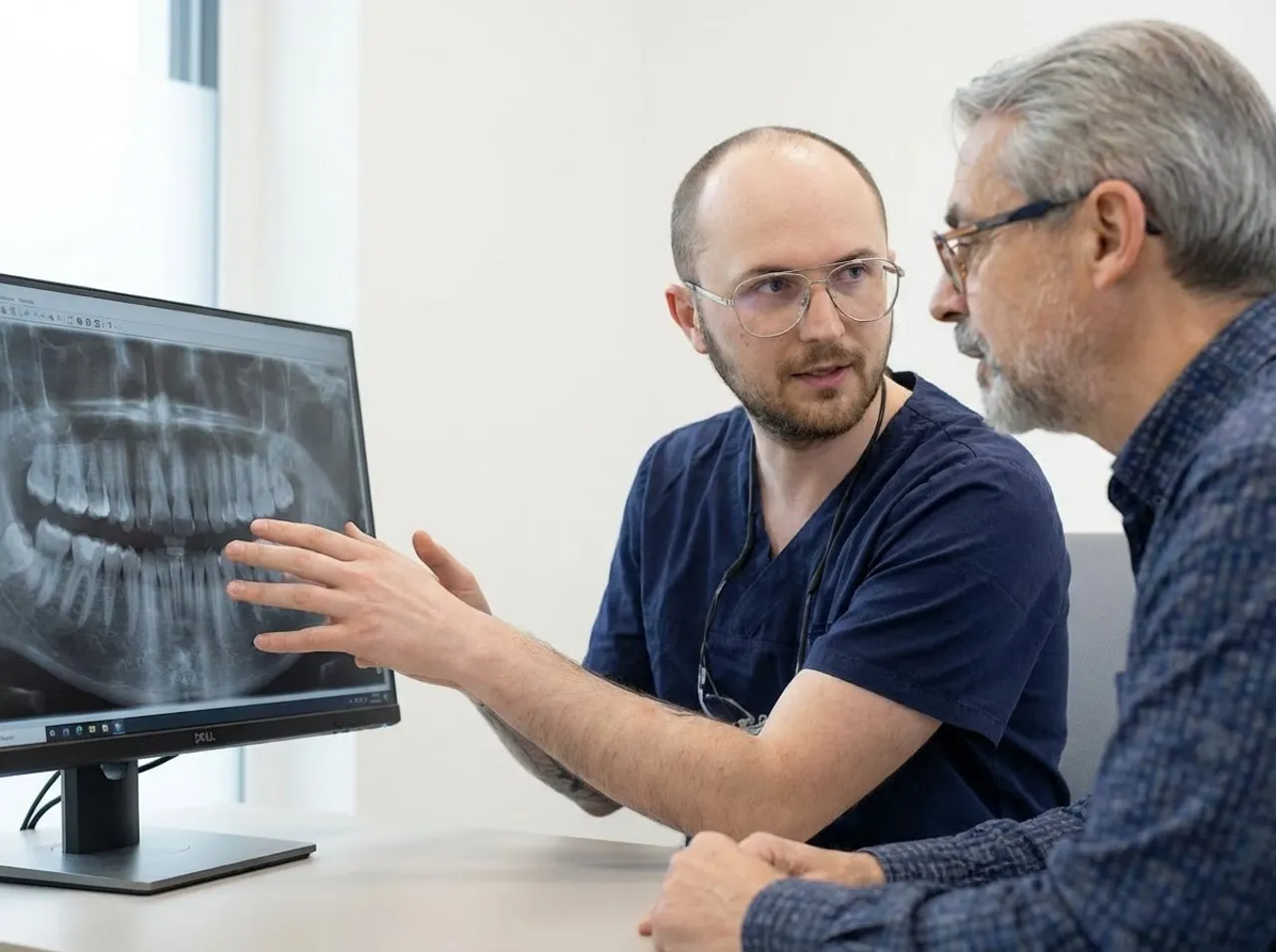
X-rays are not required at every check-up. They are used according to the clinical findings and your individual risk. They can help to assess some hidden changes more effectively.
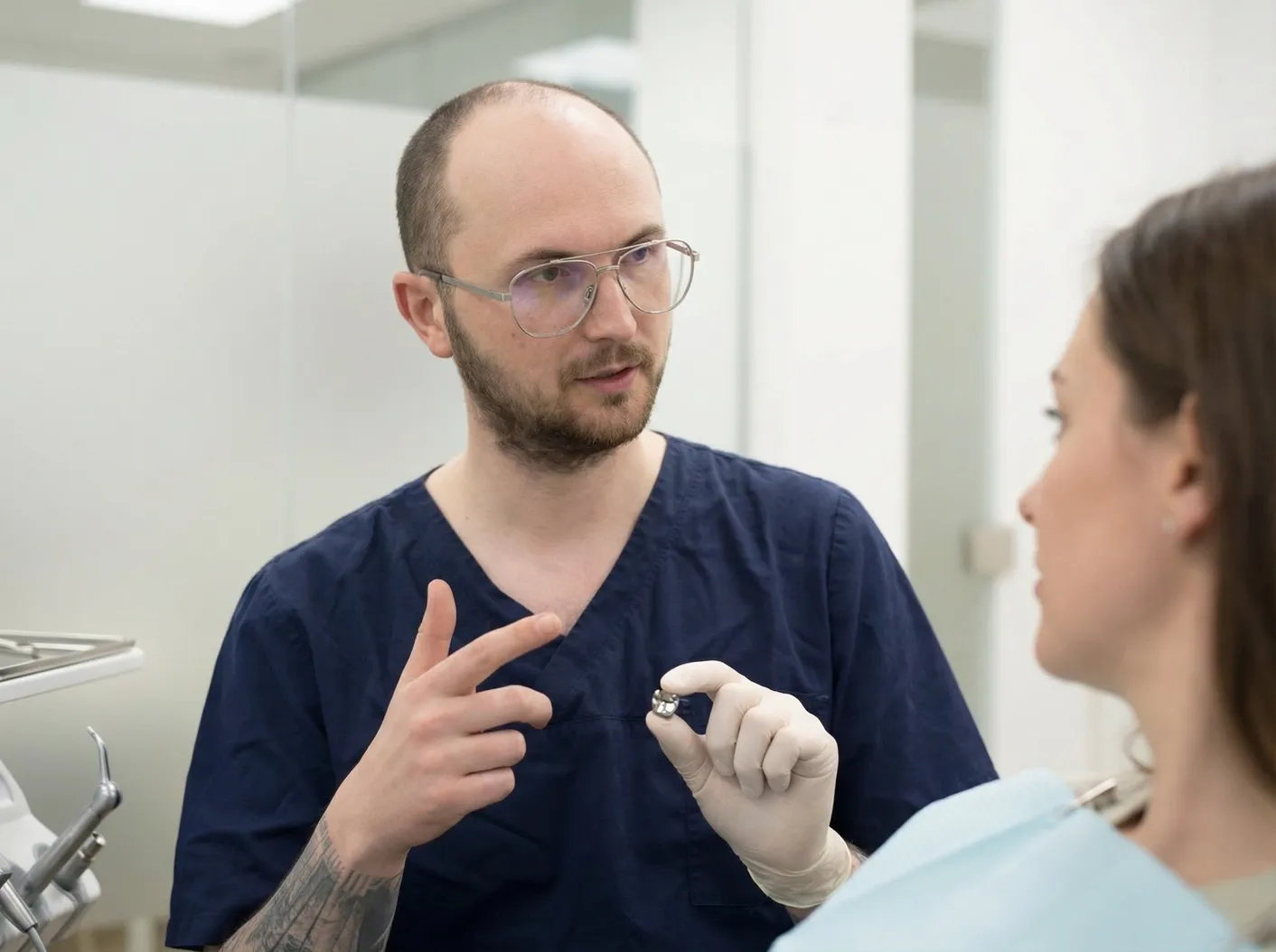
Can damage develop beneath a crown?
Decay can also develop beneath a crown. It often starts at the junction with the natural tooth structure. Good oral hygiene reduces the risk but does not eliminate it completely.
A root-treated tooth can also show changes. Symptoms may sometimes be absent or only appear later. This is why professional assessment remains particularly important.
Fine cracks sometimes develop in the ceramic or veneer. Small chips do not always affect function immediately. Nevertheless, every change should be checked and documented.
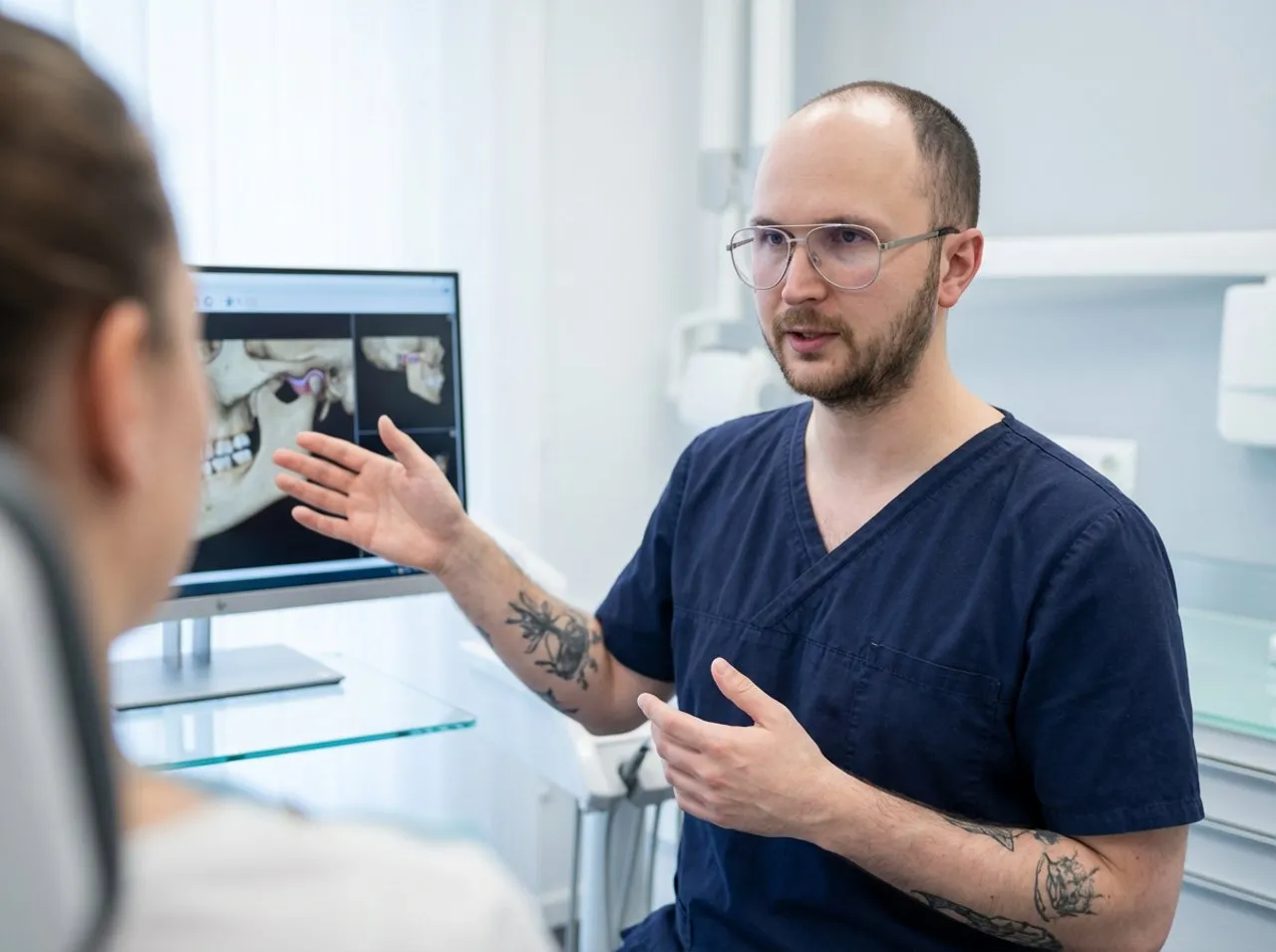
Does an older crown automatically need to be replaced?
Age alone does not determine whether a crown needs replacing. An older crown may still be well sealed, stable and functional. The clinical findings and any changes present are what matter.
If gaps at the margin, recurring inflammation or fractures in the material are found, the restoration is reassessed. Advanced decay can also make replacement necessary. The appropriate treatment depends on the condition of the underlying tooth.
For an implant crown, the dentist also checks the implant and surrounding tissue. Signs of inflammation, stability and the ability to clean the area are assessed. This ongoing care supports the long-term preservation of the entire implant restoration.
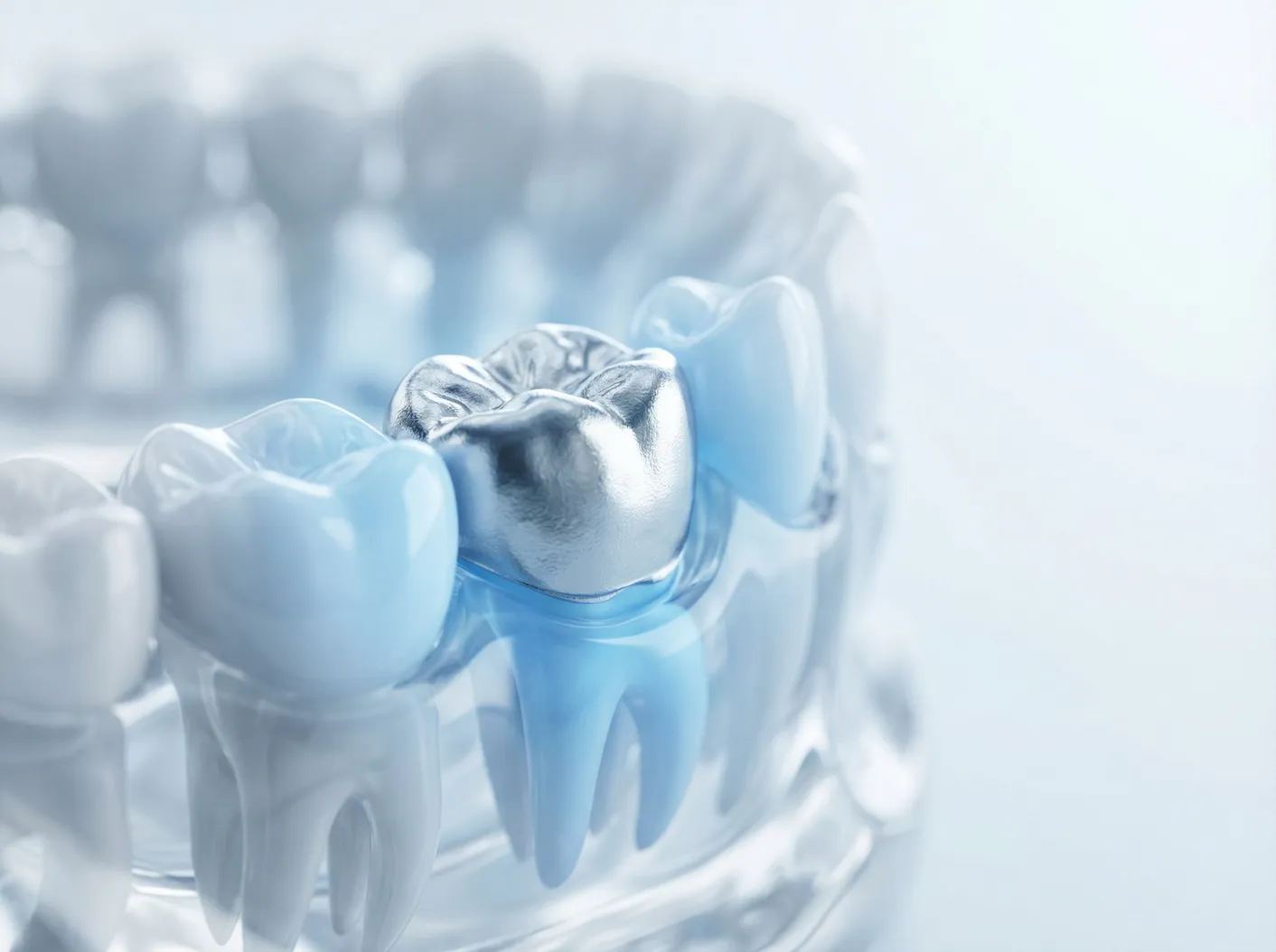
What happens if a dental crown is loose?
A loose crown must not continue to be subjected to ongoing strain. Food particles and bacteria can get underneath it. The remaining tooth can also become further damaged.
Keep a crown that has come off completely in a clean place. Do not put it back using household glue. The practice will examine the tooth and crown and consider possible ways of securing it.
It is not always possible to reattach the crown. The fit, material and condition of the remaining tooth structure are the deciding factors. Sometimes a new restoration is needed.
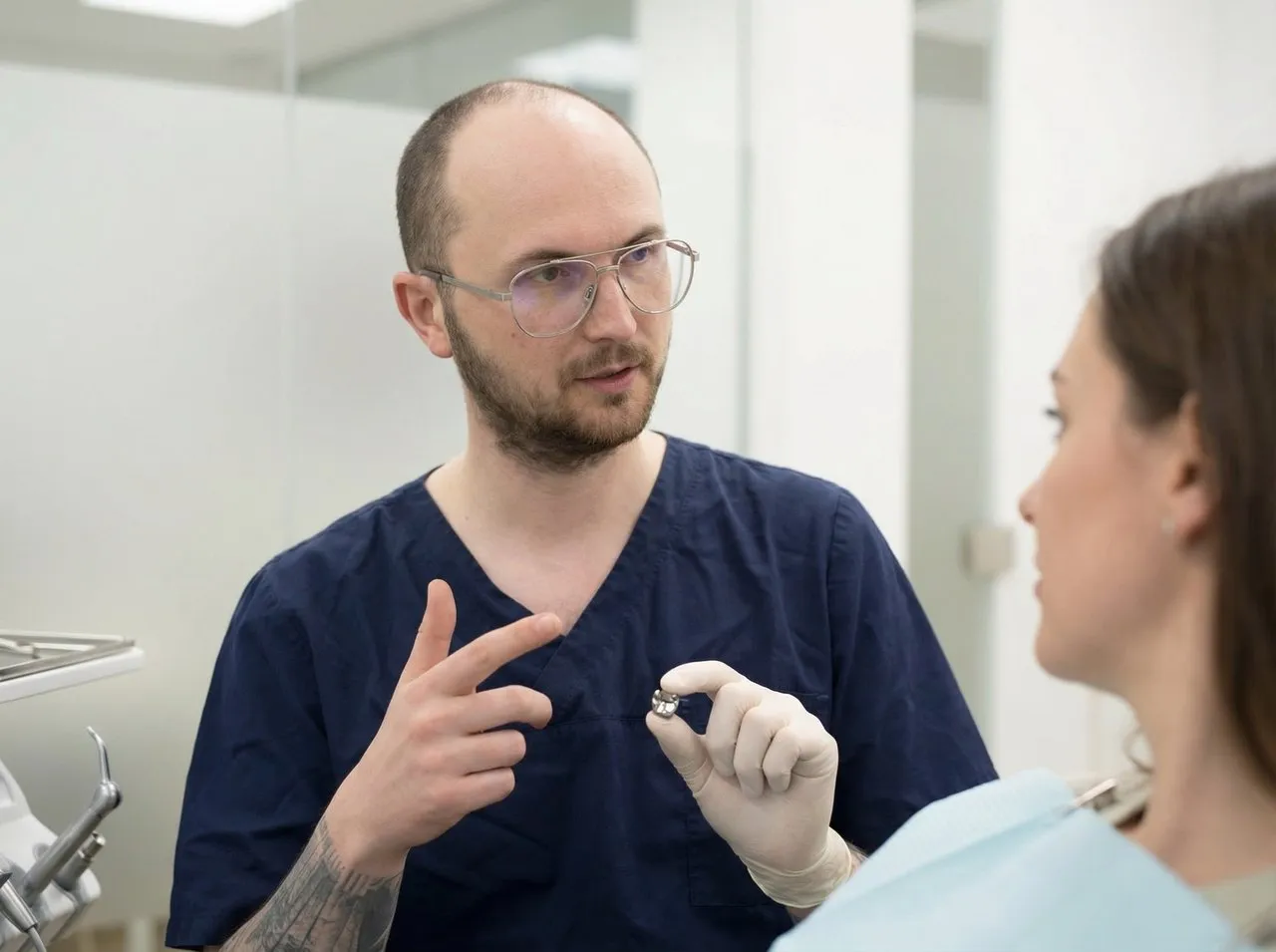
Have your crown checked at Wunschlachen
At Wunschlachen, we assess the crown, gums and bite together. Modern diagnostics support an accurate assessment of your existing restoration. We then explain clearly which steps are medically advisable.
Our aim is to preserve your natural tooth structure for the long term. To achieve this, we take account of care, strain and individual risk factors. Book a check-up if your crown is showing signs of a problem or is older.
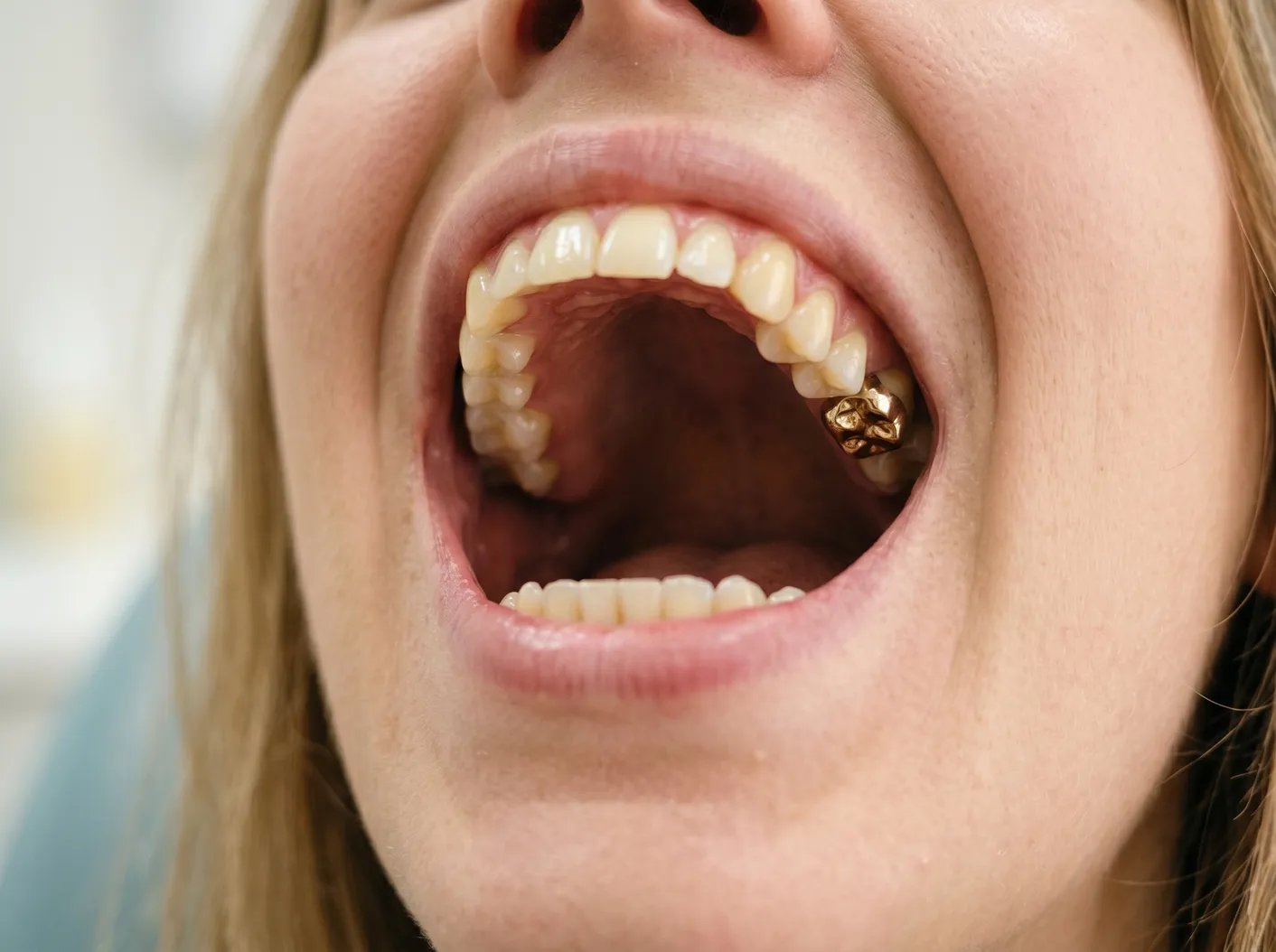
How to care for a dental crown properly
Brush your crowns twice a day with fluoride toothpaste. Clean between your teeth too, using dental floss or appropriately sized interdental brushes.
Pay particular attention to the area where the crown meets the gum. Plaque can easily build up there. Professional cleaning can complement your care at home.
If you grind your teeth at night, your dentist may recommend a protective splint. It reduces the strain on crowns and natural teeth. Your dentist will assess whether it is suitable for you.
Conclusion: crown checks protect your tooth and dental restoration
A regular crown check can reveal hidden problems at an early stage. The fit, margin, bite and surrounding gums are examined. This allows any necessary measures to be planned in good time.
If you notice looseness, sensitivity or changes in your gums, you should not wait long. Wunschlachen will examine your dental crown carefully and provide personalised advice. Good aftercare supports durability and tooth preservation.