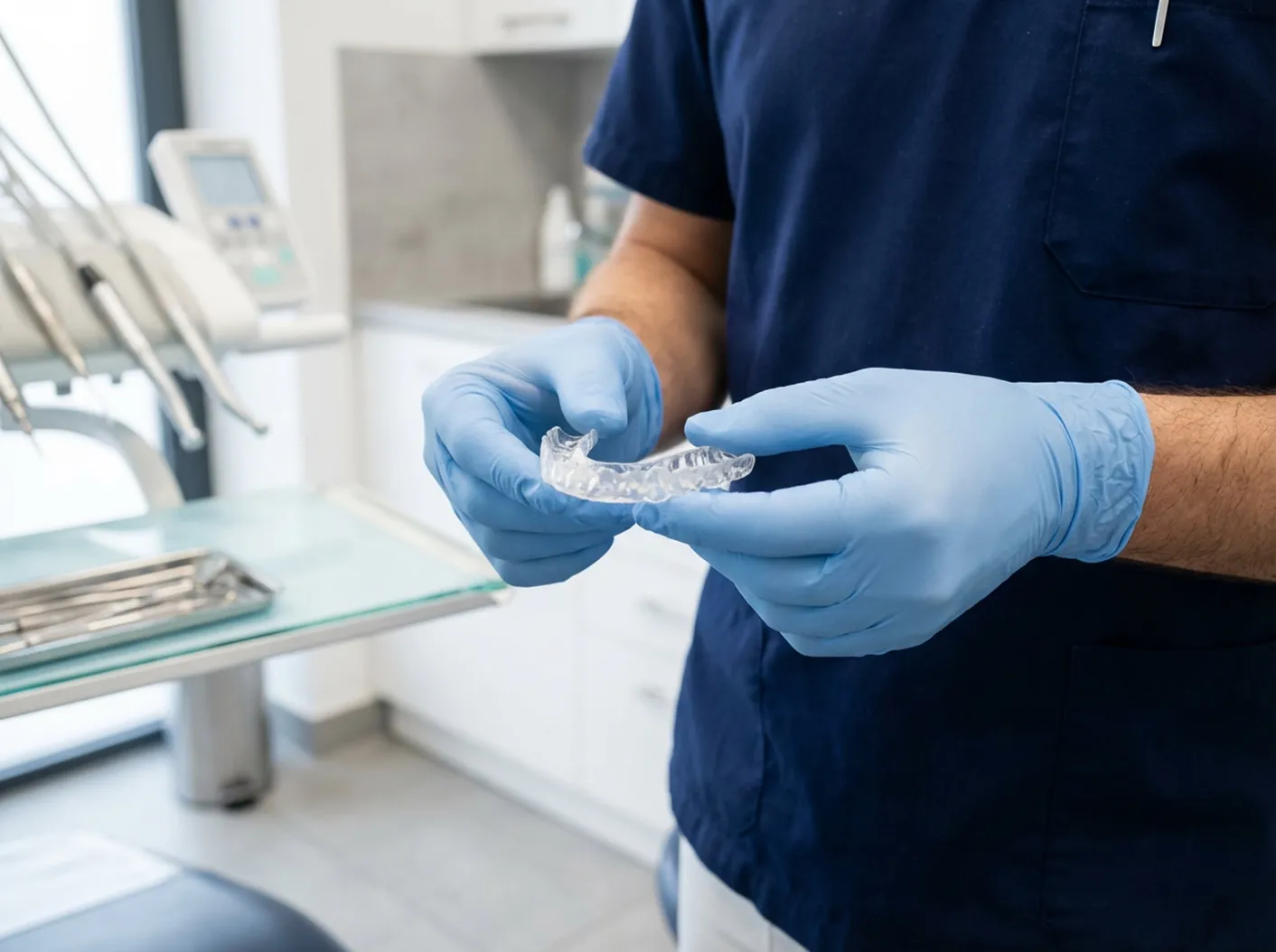
Bruxism splint: protection against teeth grinding
Teeth grinding puts strain on your teeth, jaw and sleep. A bruxism splint protects against damage and relieves symptoms. At the Wunschlachen dental practice in Berlin, we plan this treatment individually.
Über 350 Google-Bewertungen
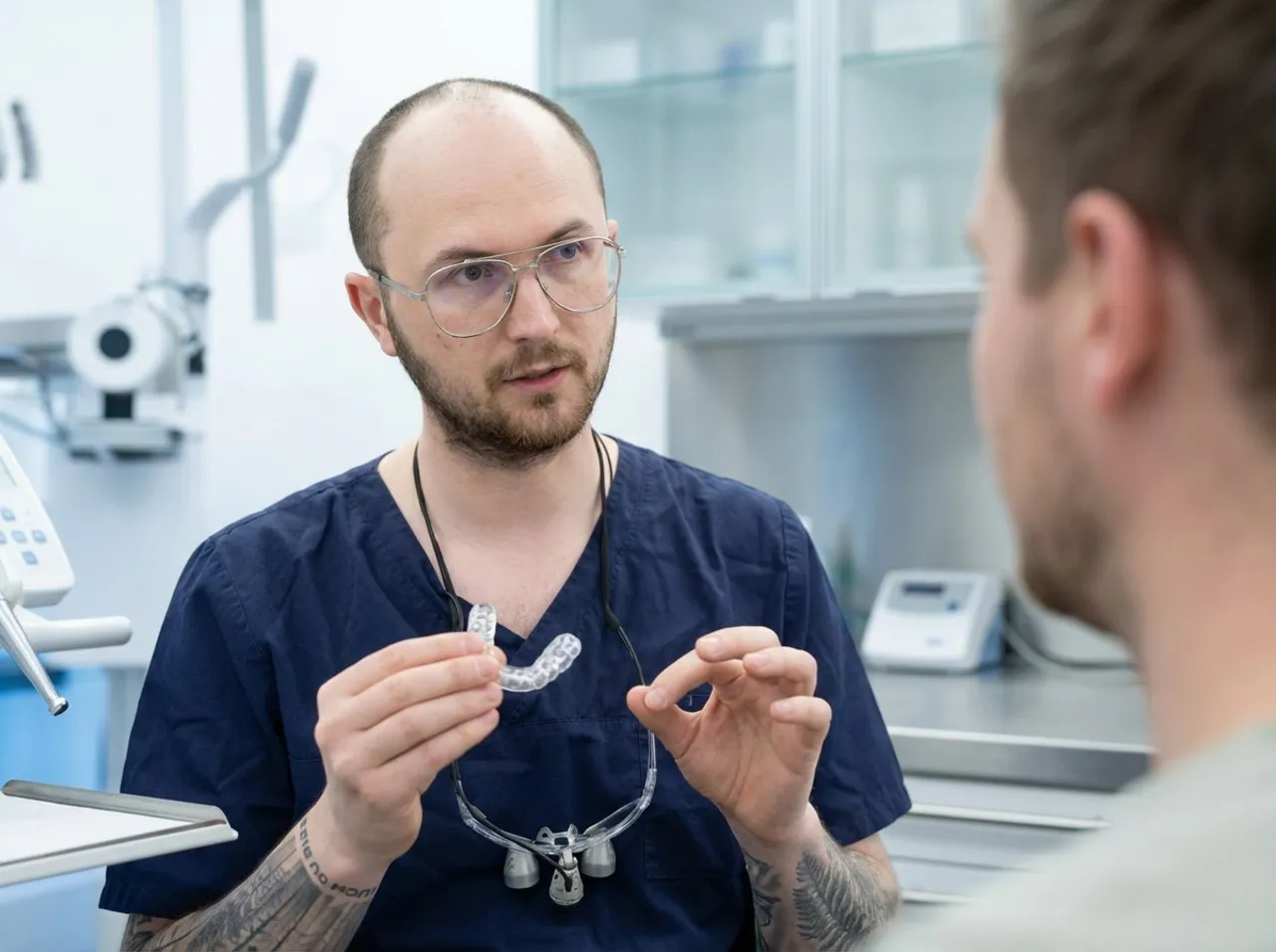
What is a bruxism splint?
A bruxism splint is a transparent plastic dental splint. It fits over the rows of teeth like an occlusal guard. Patients usually wear the device at night while sleeping.
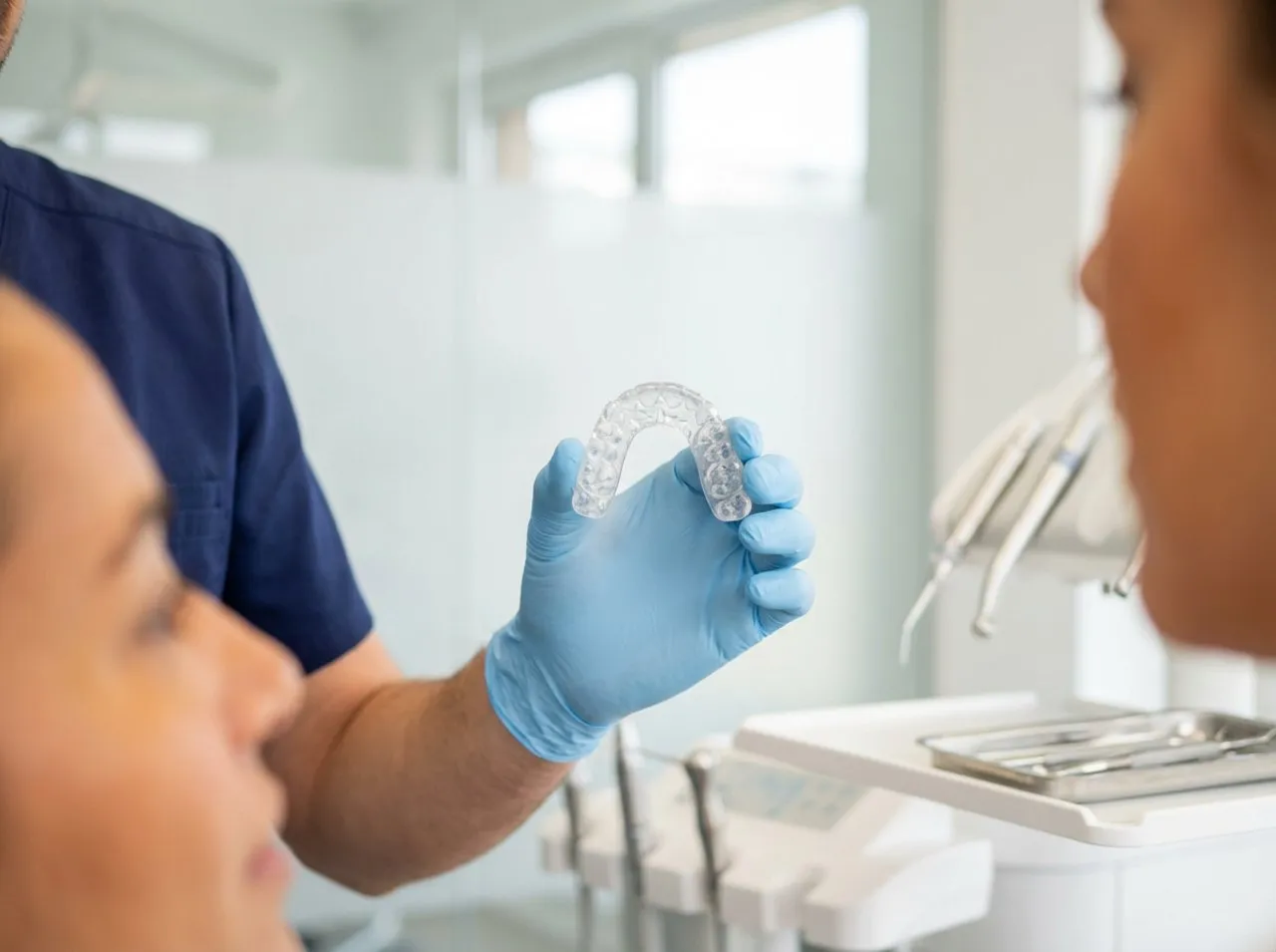
Why does night-time teeth grinding occur?
Bruxism describes unconscious teeth grinding or clenching. Common triggers include stress, tension and a misaligned bite. The jaw muscles remain active even though the body is meant to be at rest.
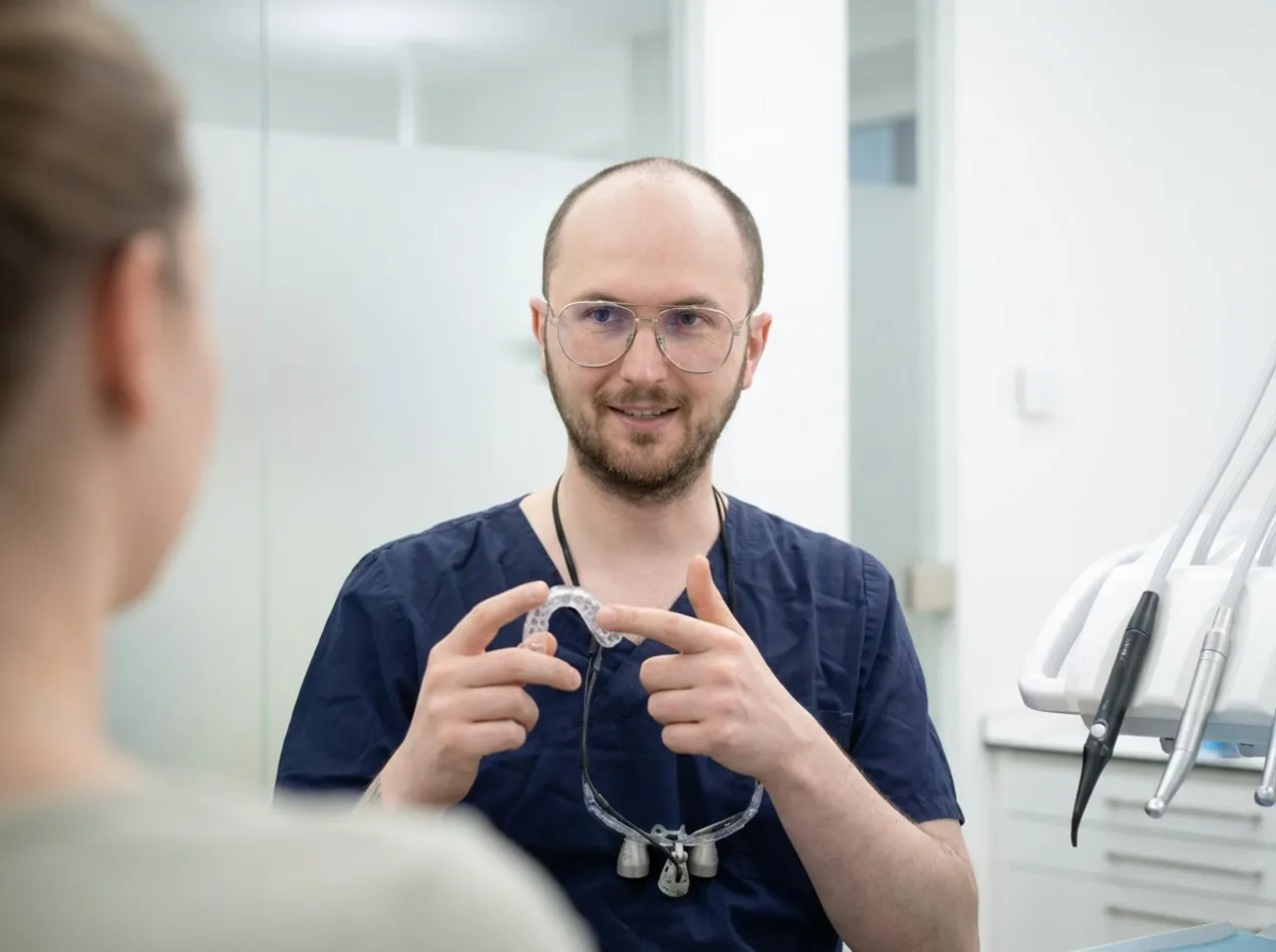
Typical symptoms of bruxism
Many people affected notice tense jaw muscles or headaches in the morning. Others see fine cracks in the tooth enamel or worn chewing surfaces.
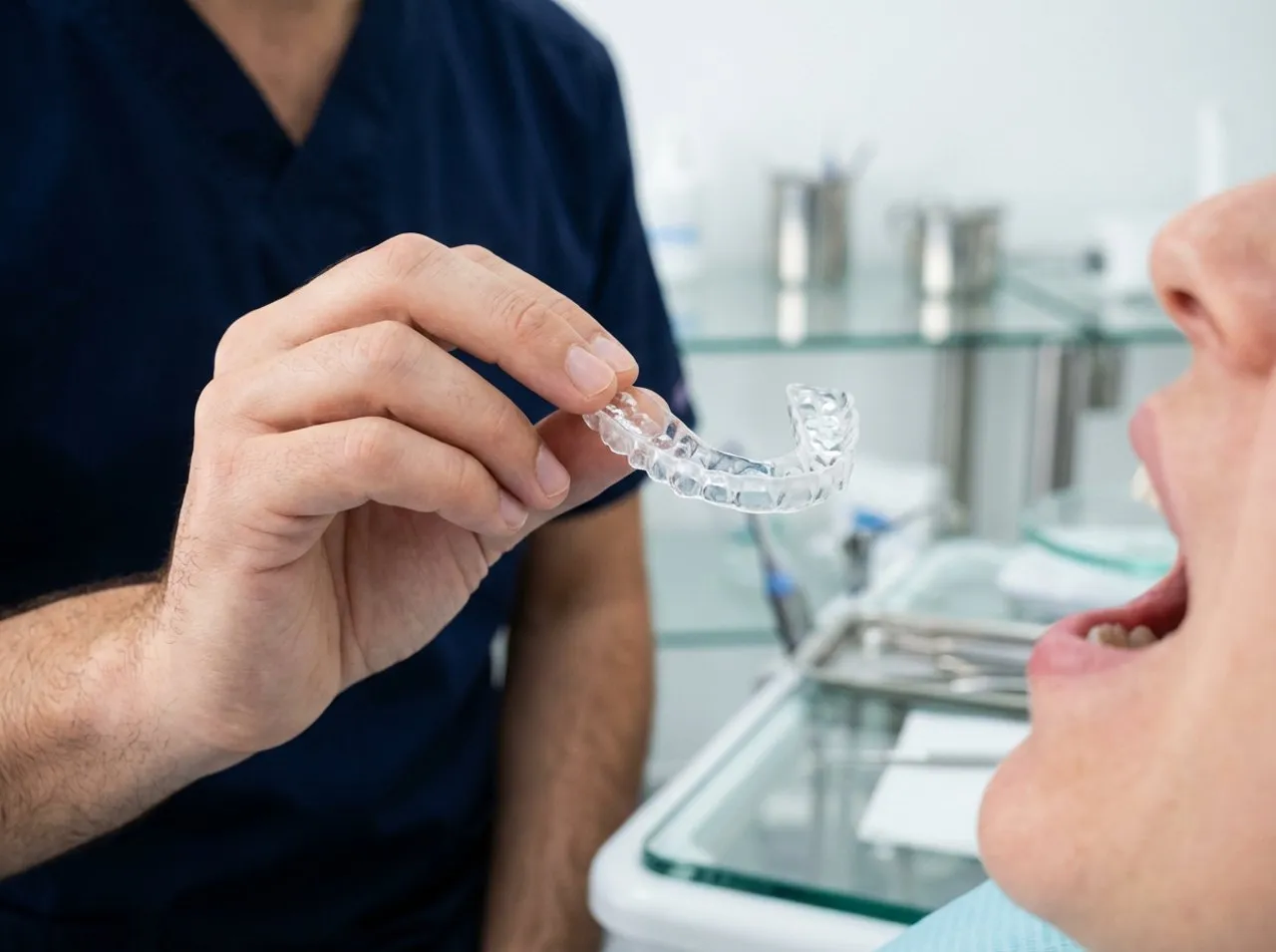
Risks without an occlusal guard
Without protection, teeth can become severely damaged over time. This can lead to loss of tooth substance, sensitive tooth necks and, in extreme cases, tooth fractures. The temporomandibular joint can also become permanently overloaded and inflamed.

How does a grinding splint help?
The grinding splint distributes the forces evenly across the tooth surfaces. It acts as a buffer between the upper and lower jaws.

Treatment procedure at Wunschlachen
We begin with a thorough examination of the teeth, temporomandibular joint and muscles. We discuss your symptoms, habits and possible stress factors. We then take impressions or digital scans for your occlusal guard. Your custom-made dental splint is manufactured to fit precisely in the dental laboratory. At your next appointment, we check the fit, comfort and bite very carefully. You receive clear instructions on wearing and cleaning the grinding splint.
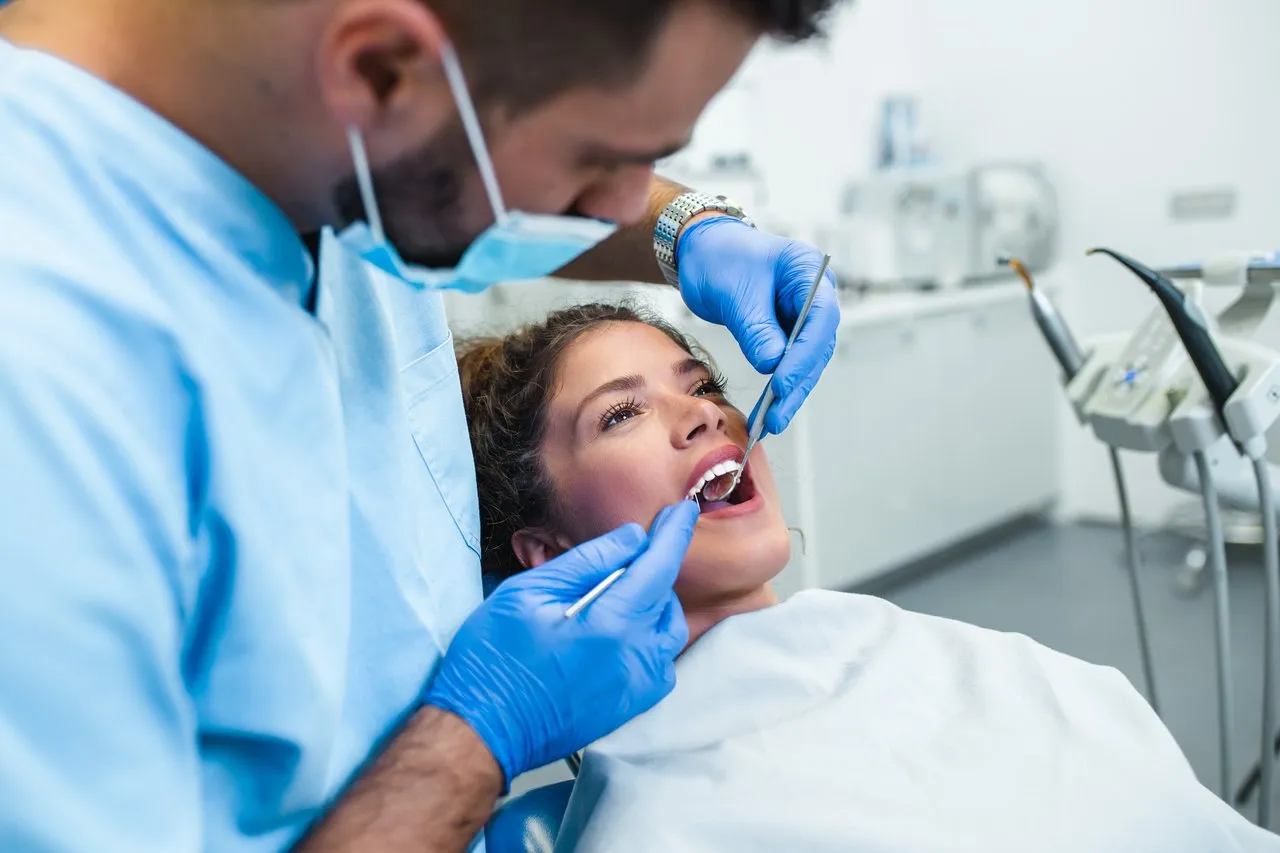
Types of occlusal splints for bruxism
The classic occlusal splint is made of hard, stable plastic. It is particularly suitable for severe night-time teeth grinding. Softer versions are also available, for example as short-term protection for the rows of teeth. For complex jaw problems, we use occlusal devices based on functional diagnostics. They specifically influence the bite and relieve the temporomandibular joint.
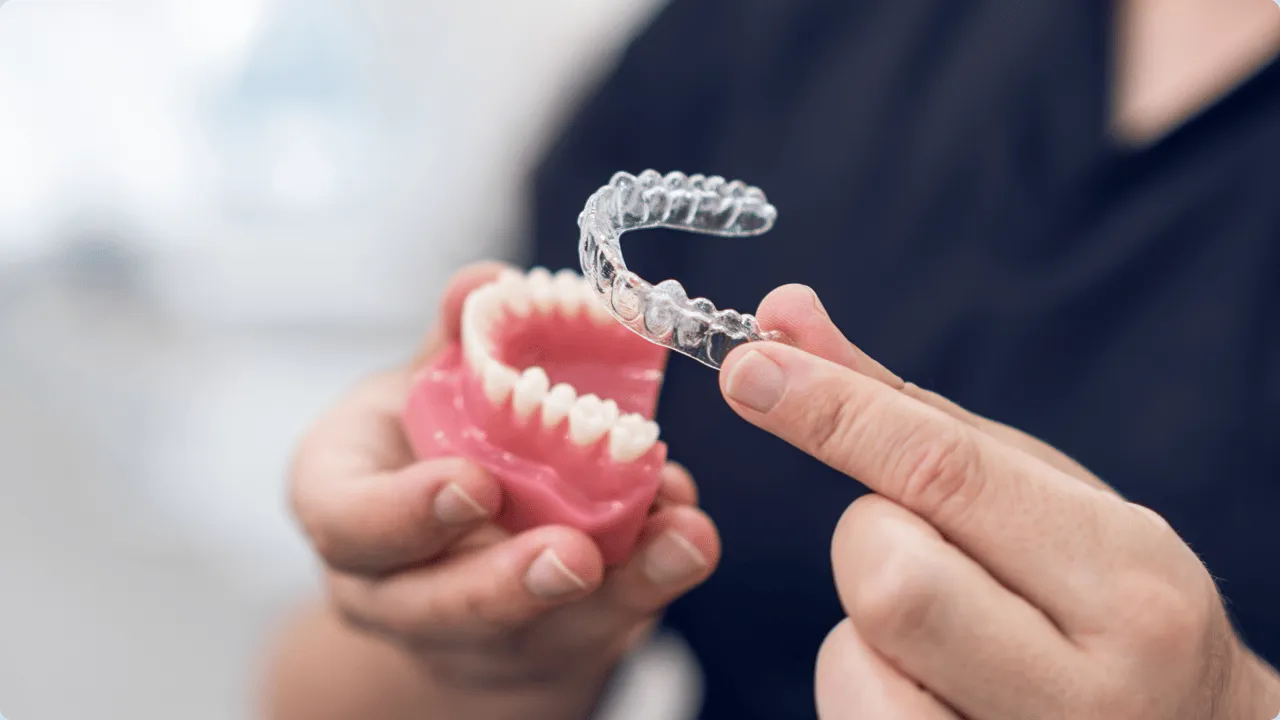
Wearing time and adjustment
You will generally wear the grinding splint every night. Some patients also use the occlusal splint during the day at stressful times. The jaw has usually adjusted well to it after a few days. You may initially experience a feeling of pressure or a slight gag reflex. These sensations usually disappear after a short time. If symptoms persist, we adjust the therapeutic device again.
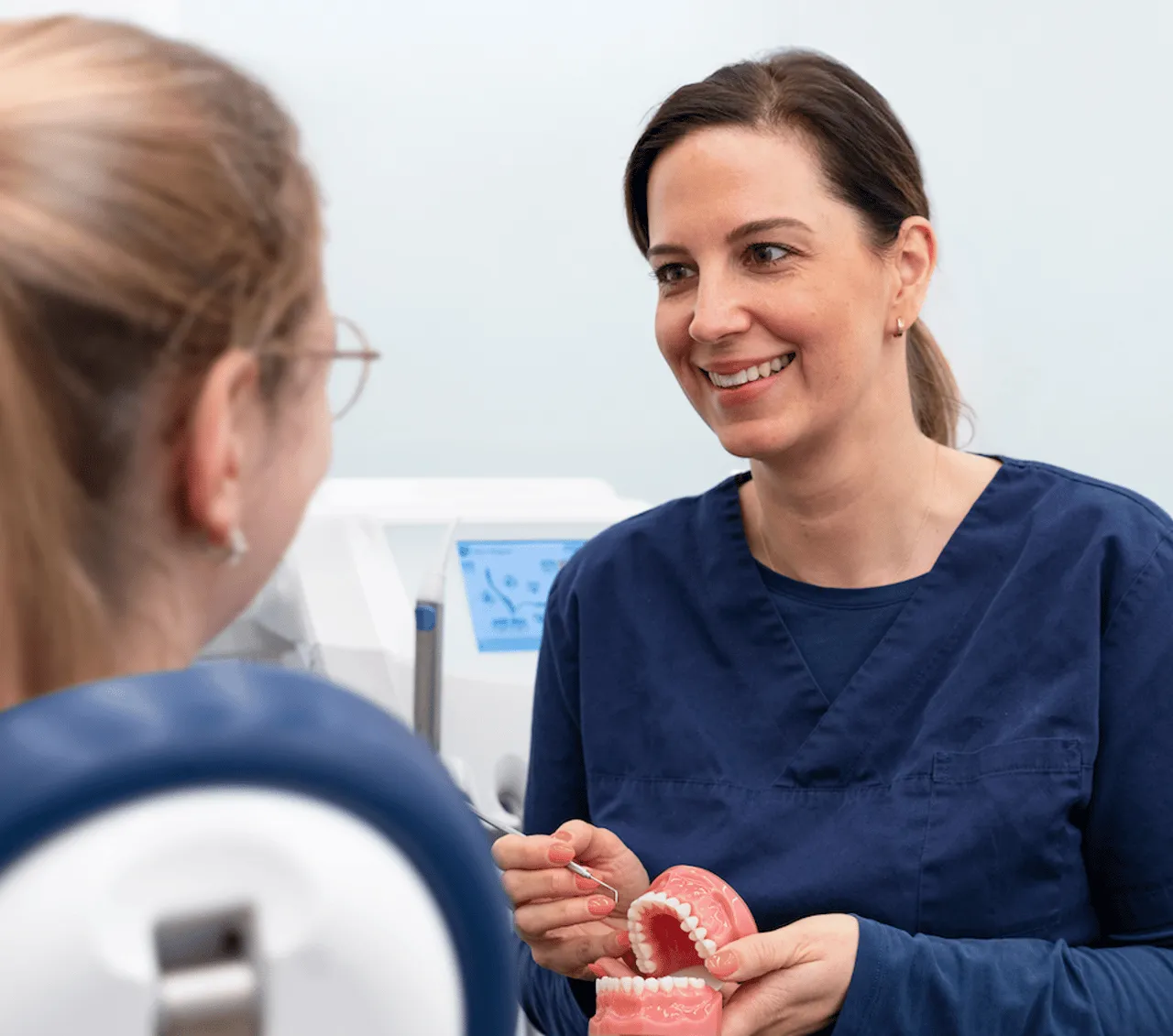
Cleaning and caring for the grinding splint
Good hygiene is important for the occlusal splint and your oral health. Rinse the device thoroughly under lukewarm water every morning. Also use a soft toothbrush and a little mild soap. Do not use harsh cleaning agents or hot water. Both can deform or roughen the plastic surface. Regular check-up appointments ensure that the occlusal splint continues to fit and function properly.
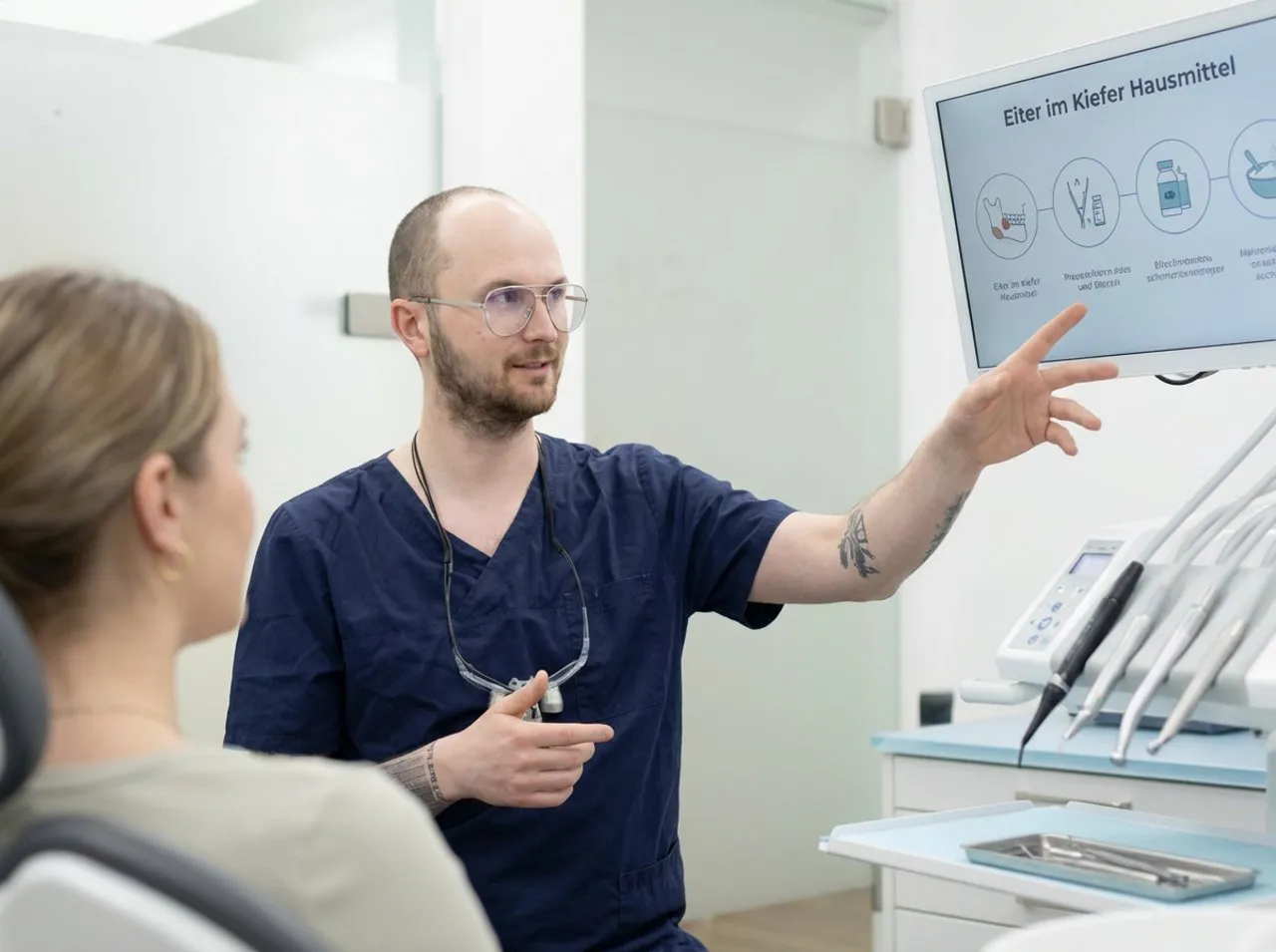
Grinding splint and holistic bruxism treatment
An occlusal guard protects against the effects, but does not resolve every cause. Stress management, physiotherapy or relaxation exercises are often recommended alongside it.
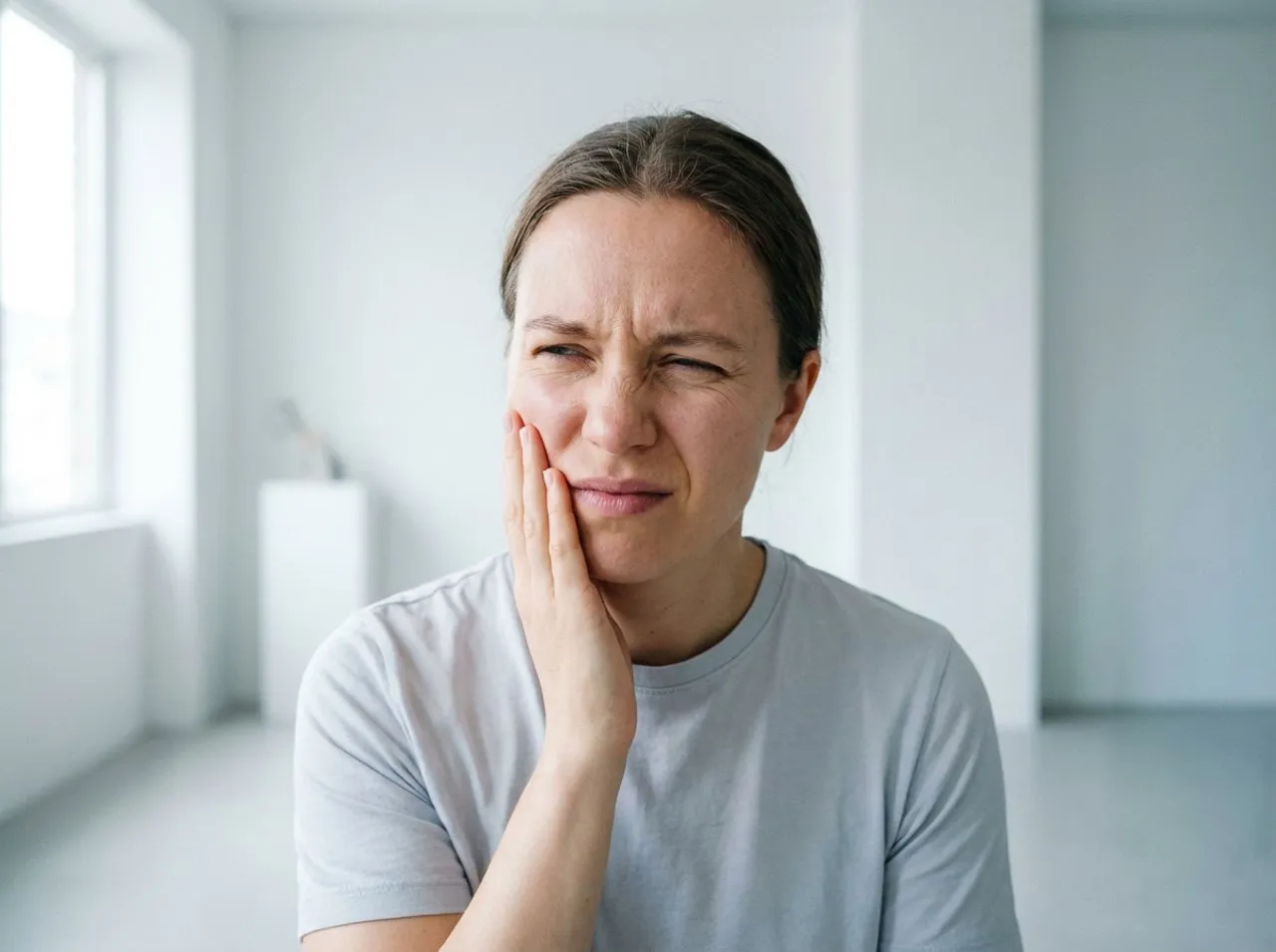
Possible side effects of the occlusal splint
Mild muscle soreness in the jaw is not unusual at first. Sometimes the bite may feel temporarily different in the morning. These effects usually return to normal after a few hours. If symptoms persist, we check the bite and shape again. Occasionally, a small adjustment by grinding the dental splint is necessary. This improves wearing comfort and relieves strain on the jaw.
Difference from a sports mouthguard
A grinding splint must not be confused with a conventional sports mouthguard. The occlusal splint is thinner and allows controlled contact between the rows of teeth. A sports mouthguard, on the other hand, mainly cushions hard blows to the teeth. Using the wrong type of splint can change the bite. We therefore plan every dental splint individually according to functional diagnostic criteria. This ensures that your masticatory system is optimally relieved of strain.
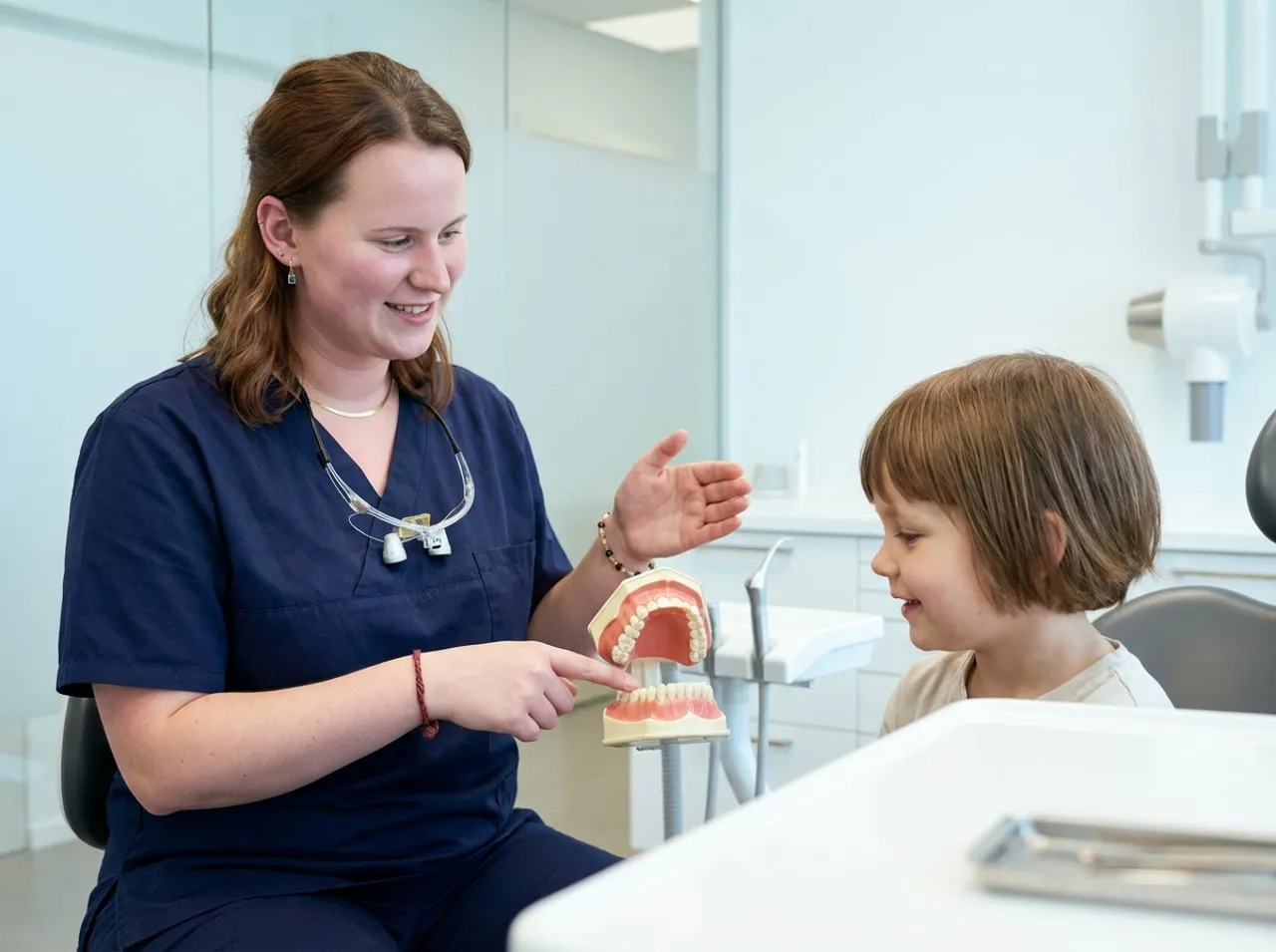
Who is an occlusal splint not suitable for?
Not everyone benefits immediately from a grinding splint. If teeth are very loose, we must first treat the cause. In cases of acute inflammation, stabilising the periodontium is also the initial priority. Children and adolescents require special approaches, often combined with orthodontics. We therefore always carefully assess age, dental condition and general health. Only then do we recommend suitable bruxism treatment with an occlusal device.

Costs and reimbursement for the dental splint
The cost of a bruxism splint depends on the work involved and the material. Statutory health insurance funds often cover part of the cost of the dental splint. We discuss the amount of your personal contribution before treatment begins. Private insurance or supplementary insurance often reimburses higher amounts. On request, we will draw up a detailed treatment and cost plan. This gives you transparency about all the costs of the grinding splint.
Why Wunschlachen is the right practice to contact
Our team combines experience in functional diagnostics, temporomandibular joint therapy and modern prosthodontics. We take your symptoms seriously and listen carefully. Together, we find a solution that fits your everyday life. Modern technology and flexible appointment scheduling make your treatment in Berlin easier. On request, we combine occlusal therapy with other gentle measures. This helps you achieve relaxed nights and a healthy bite step by step.
FAQs about bruxism splints
A bruxism splint is a custom-made occlusal guard. It protects the teeth and temporomandibular joint from the effects of teeth grinding.
Typical signs include jaw pain in the morning, tense muscles or worn tooth surfaces. If you have these symptoms, you should arrange an assessment at our practice.
Yes, most patients get used to it within a few nights. The device feels unfamiliar at first, but then feels completely natural.
Treatment is generally intended to be long term. You should use the protective device for as long as the bruxism persists.
Mild pressure or muscle soreness is possible at first. You should discuss any more severe pain with us promptly.
The grinding splint mainly addresses the effects of teeth grinding. We also treat causes such as stress with supportive measures.
With a little practice, it is usually quite possible to speak normally. As you mainly wear the occlusal guard at night, it causes hardly any disruption.
Statutory health insurance funds usually contribute towards a medically necessary dental splint. We clarify the exact level of cover for you beforehand.
With good care, an occlusal splint can last several years.
Book an appointment at our dental practice in Berlin. After an examination and consultation, we plan your individual bruxism treatment.
Book your appointment now
We would be happy to advise you in person at our practice.