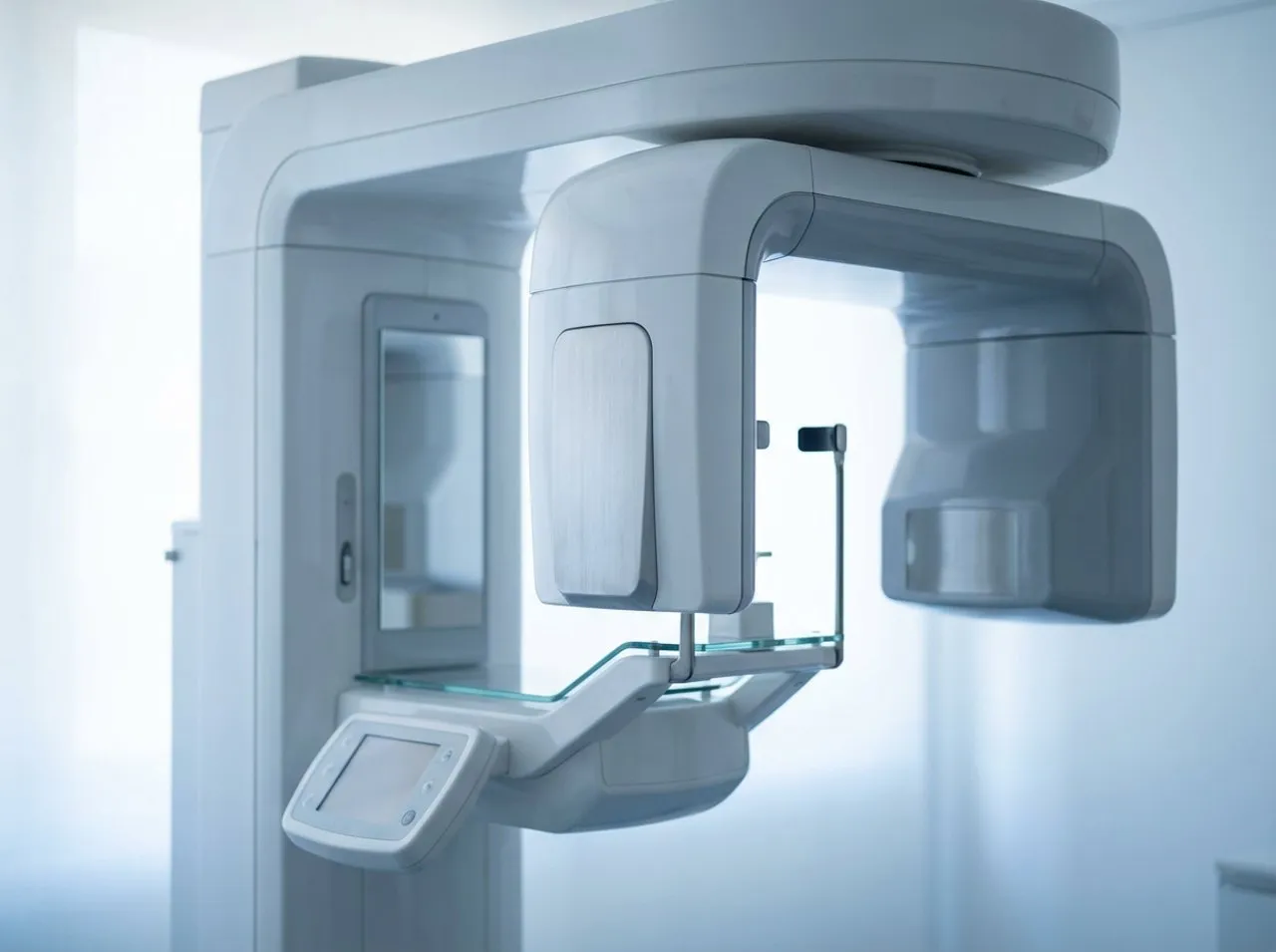
CBCT at the dentist: 3D images for clear diagnoses
Some findings require more than 2D. Every millimetre counts in the jaw. CBCT produces highly accurate three-dimensional images. This often makes planning safer. Many findings can be explained more clearly. This saves time.
Über 350 Google-Bewertungen
What is CBCT?
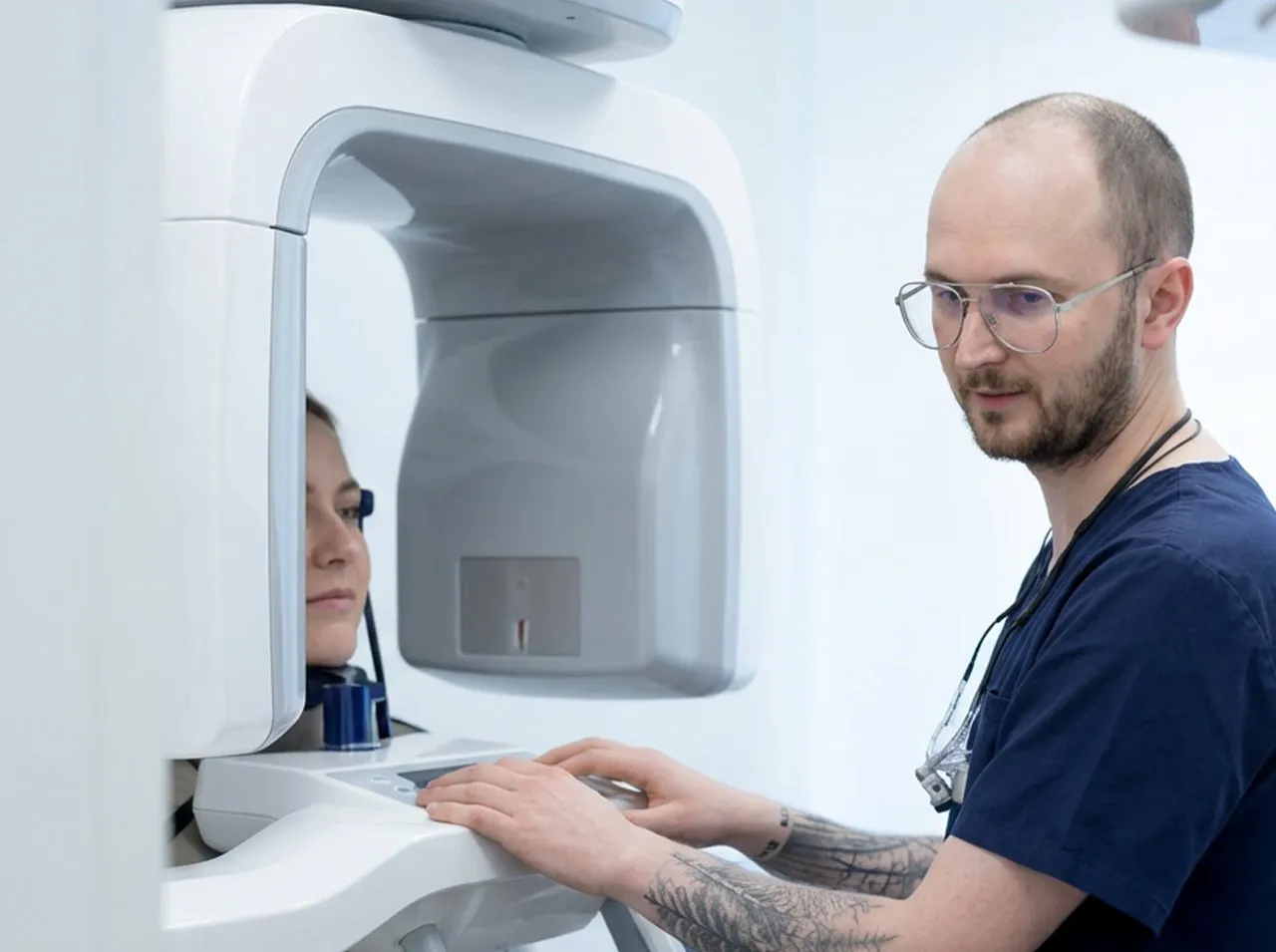
DVT stands for digital volume tomography. It is often called 3D X-ray imaging. Images from many angles are combined to create a three-dimensional volume. The technology shows bone, teeth and neighbouring structures. Details are often easier to see. This supports reliable decisions.
CBCT X-ray: when is the examination useful?
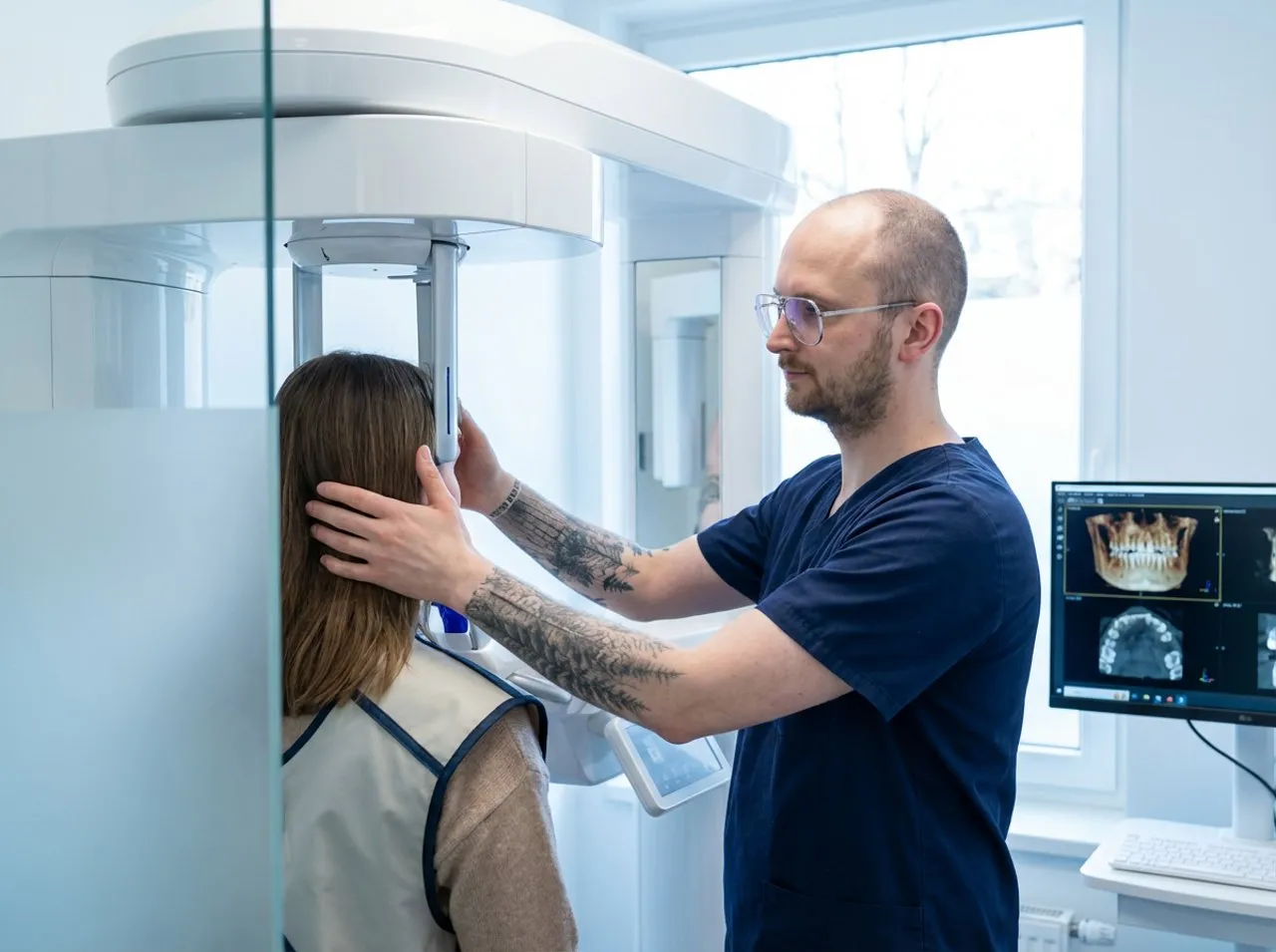
A CBCT X-ray is not a routine check. A conventional image is usually sufficient. We use 3D imaging to answer specific questions. It is often used to assess implants and the available bone. A sinus lift also requires precise measurements. Displaced wisdom teeth can lie close to a nerve. CBCT diagnostics also help with unexplained symptoms. These include problems at root tips and cysts. Fine fractures can also be seen more clearly.
CBCT scan: what can be seen in a tooth on CBCT?
A CBCT scan shows the tooth in sections. Root canals often appear more clearly. The position of the root tip also becomes visible. Bone loss from periodontitis is rarely uniform. 3D imaging makes defects easier to measure. Displaced teeth can also be located precisely.

CBCT scanning at the dental practice
A CBCT scan is quick. You stand or sit still. The scanner rotates once around your head. You remove any metal from the head area beforehand. Where possible, we select a small field of view. This keeps CBCT radiation exposure low. The CBCT images are then available as a data set. We assess them on screen. On request, you will receive a report. At Wunschlachen in Berlin, we explain the findings clearly. The data can also be used for a referral. This is helpful for specialist questions.
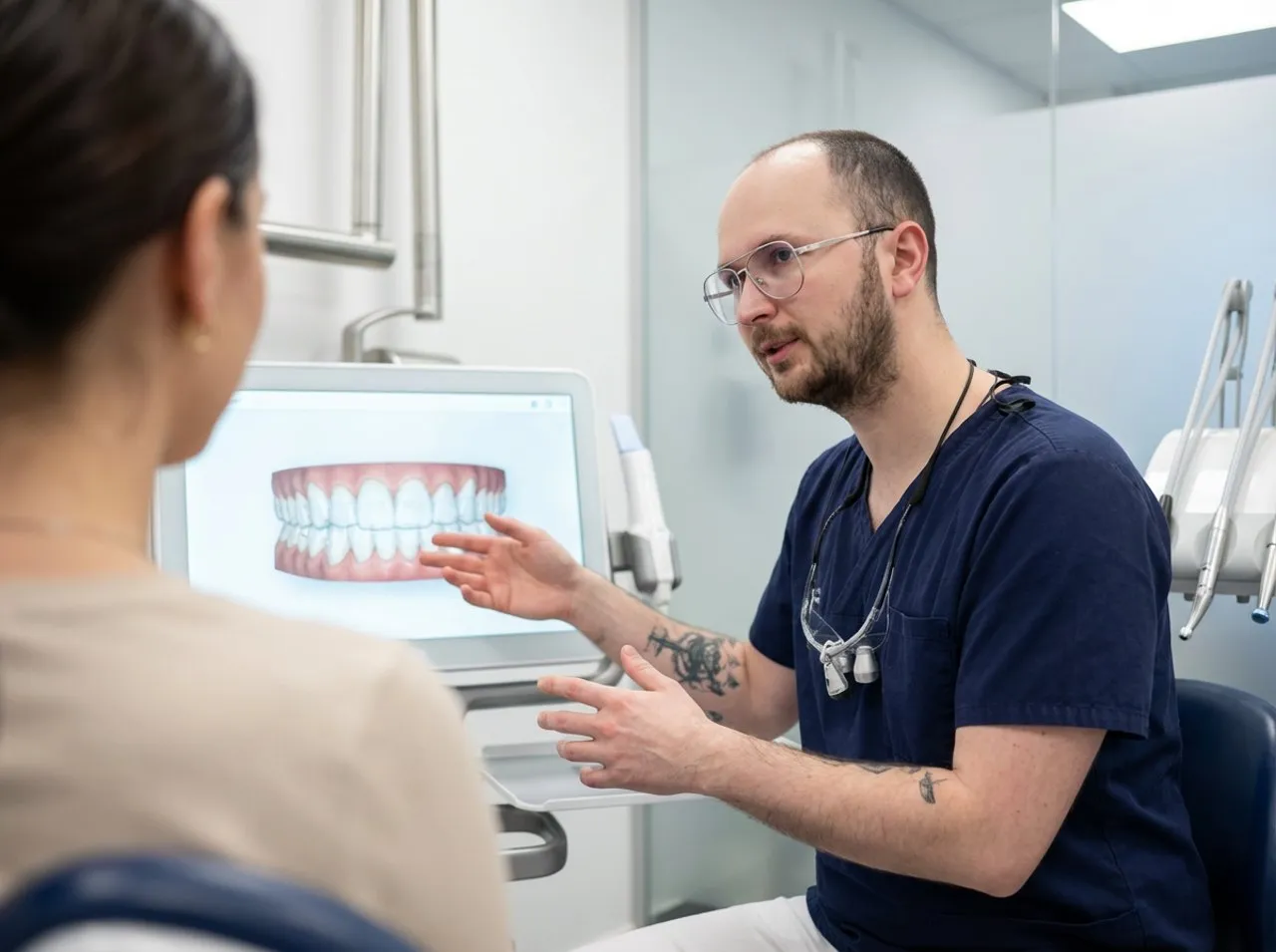
CBCT examination: preparation and safety
A CBCT examination is harmless. You only need to stand still. You can breathe normally. If available, bring any old X-rays with you. This allows us to compare findings more effectively. It may avoid the need for further scans. If you have an acute inflammation, we first determine the cause. Sometimes treatment before imaging is advisable. We then select the appropriate procedure.
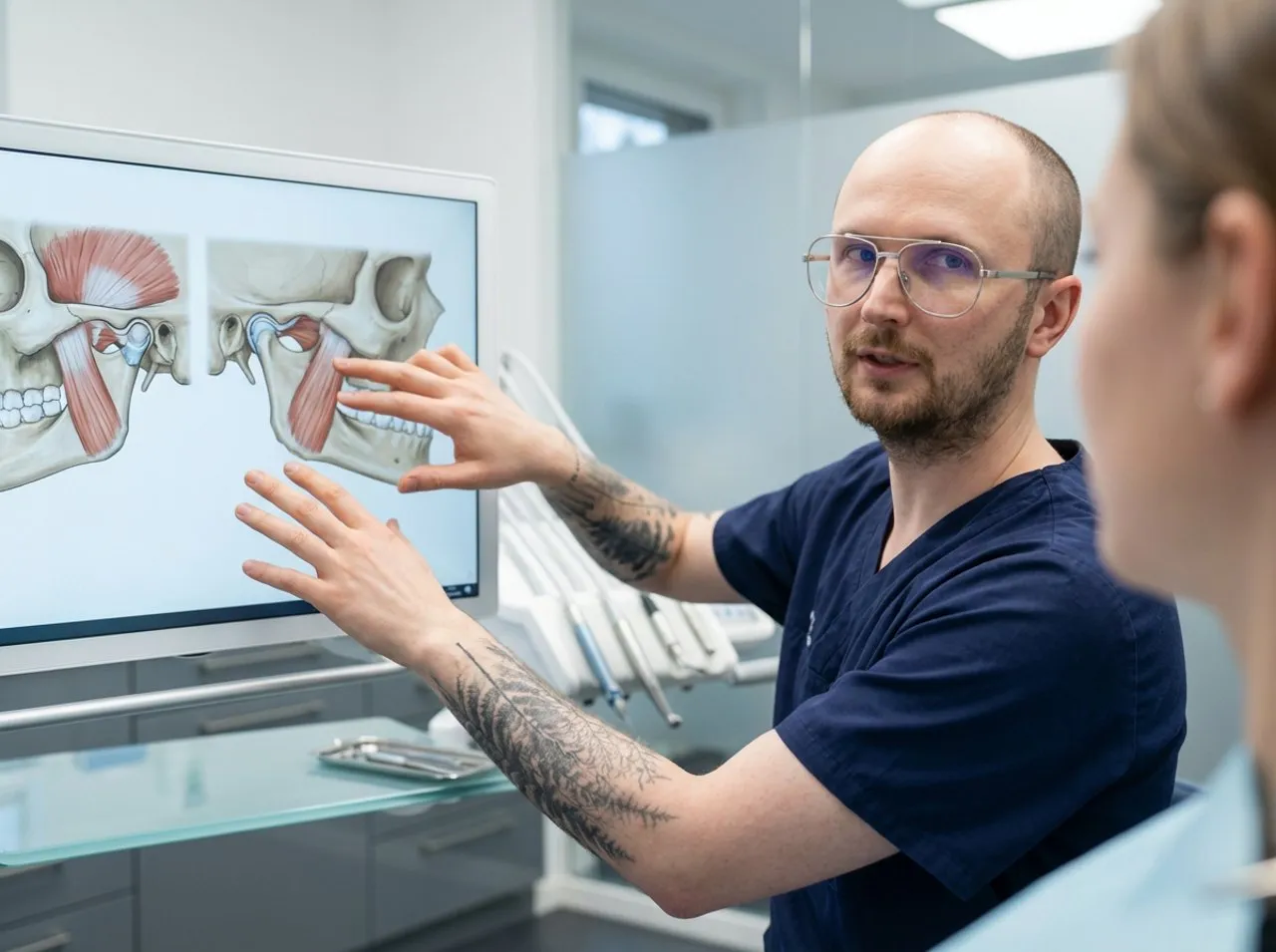
CBCT in medicine: advantages over CT and 2D
CBCT in medicine specialises in imaging the jaw. Hard tissue is shown very clearly. The examination is also quick. Compared with 2D, 3D provides significantly more information. The nerve canal, maxillary sinus and bone height can be measured in three dimensions. This improves implant planning. We can position implants virtually. This allows us to check diameter and length in advance. The distance to the nerve becomes visible. The maxillary sinus can also be taken into account reliably. If necessary, we plan a surgical drill guide. This often shortens operating time. Compared with CT, the information it provides about soft tissue is limited. However, the dose is lower in many cases. The crucial factor is the appropriate clinical indication.
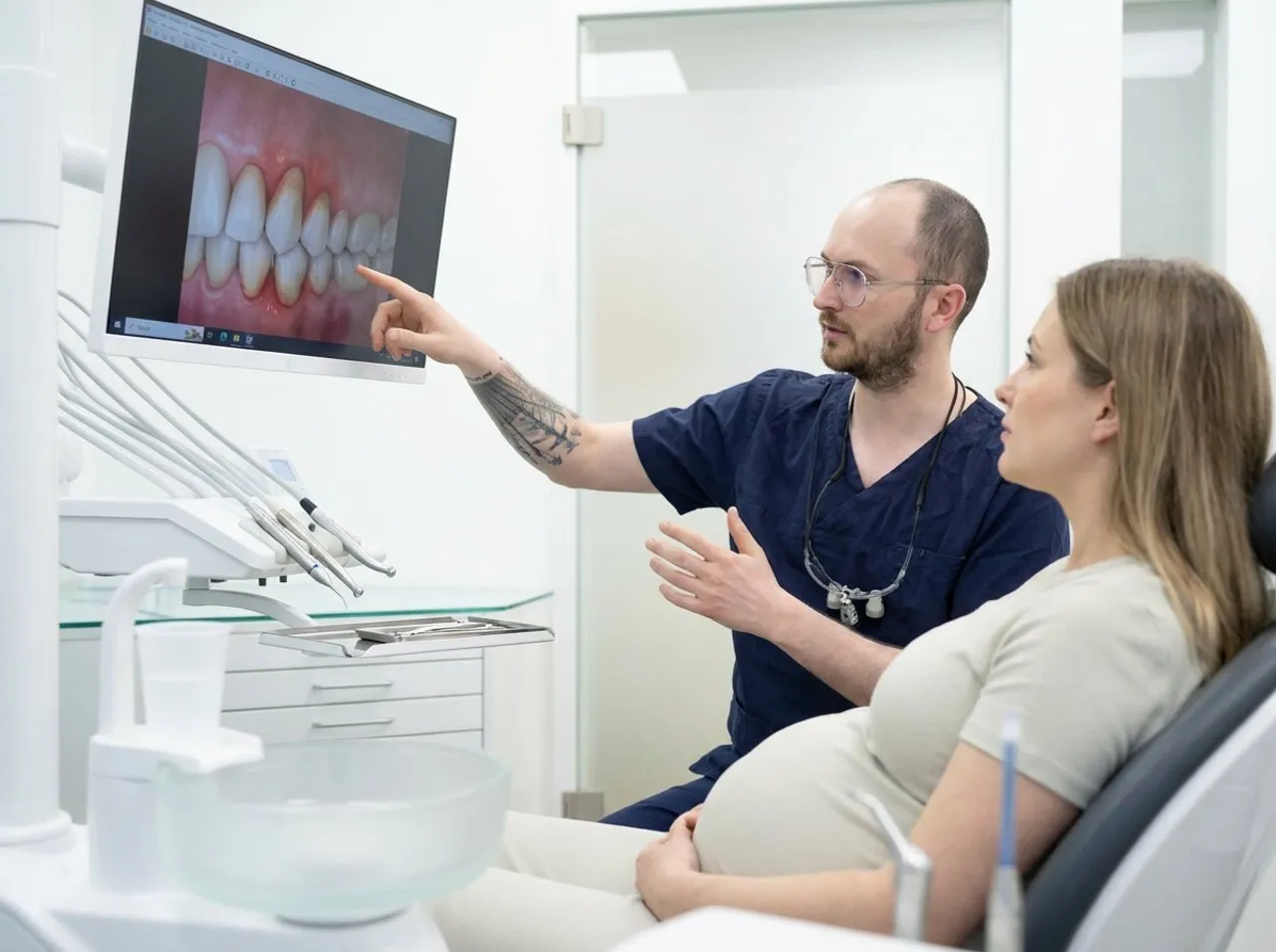
CBCT radiation exposure: what you should know
Many people ask about CBCT radiation exposure. The dose depends on the field size and settings. It is usually lower than with CT. However, it is often higher than with a single 2D X-ray. We therefore carefully assess whether it is necessary. We use the smallest appropriate field. Particular caution applies during pregnancy. We consider alternatives or postponing the scan. We make the decision together with you.

CBCT costs: transparency before the examination
Patients want to know the cost of CBCT in advance. The price depends on the scan volume. Assessment and planning are also included. Some people specifically search for CBCT jaw costs. This usually refers to a 3D scan of the jaw area. We explain the scope clearly. You will then receive clear cost information. This allows you to plan with confidence. If you have any questions, our team can help by phone.
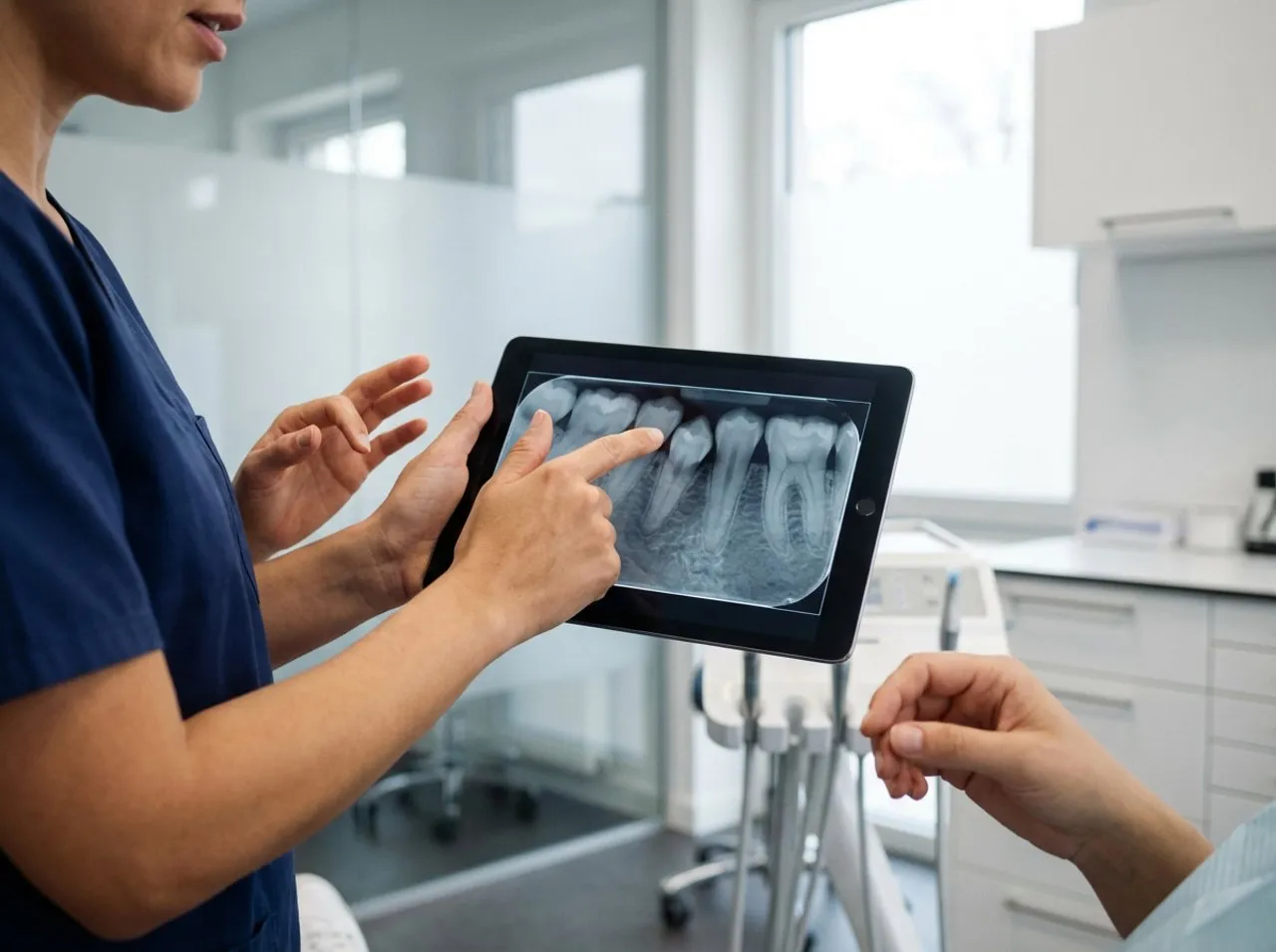
CBCT X-ray costs, CBCT dentist costs and cost coverage
CBCT X-ray costs often have to be paid privately. This applies particularly to scans taken for planning purposes. Private insurers reimburse costs depending on the policy. With statutory health insurance funds, it depends on the individual case. Many people ask about cover for CBCT X-ray costs. Reimbursement is only possible in individual cases. We support you with documentation. This includes a medical justification. This allows you to check with your insurer in advance. The term CBCT dentist costs covers the scan and assessment. Additional planning steps may be added. We discuss this in advance.

Conclusion: CBCT as a reliable basis for decisions
CBCT provides precise 3D information. This helps with implants, surgery and unclear findings. We therefore use CBCT selectively.
FAQ – frequently asked questions about CBCT
CBCT is a form of digital volume tomography. It produces three-dimensional sectional images of the jaw.
A CBCT examination helps with implant planning or displaced wisdom teeth. It can also be useful for unexplained pain.
A CBCT scan usually takes only a few seconds. The data is then analysed on a computer.
A CBCT X-ray shows bone and tooth roots in sections. This allows distances to be measured precisely.
CBCT radiation exposure depends on the field of view. It is usually lower than with a CT scan.
CBCT diagnostics show nerve canals and the maxillary sinus in three dimensions. This makes many procedures easier to plan.
CBCT costs depend on the field size and assessment. We will provide a clear cost outline in advance.
CBCT X-ray costs are the fees for the 3D scan. They vary depending on the work involved.
CBCT dentist costs depend on the assessment and planning. A scan alone is usually cheaper.
Cover for CBCT X-ray costs depends on your policy. We will help you clarify this in advance.