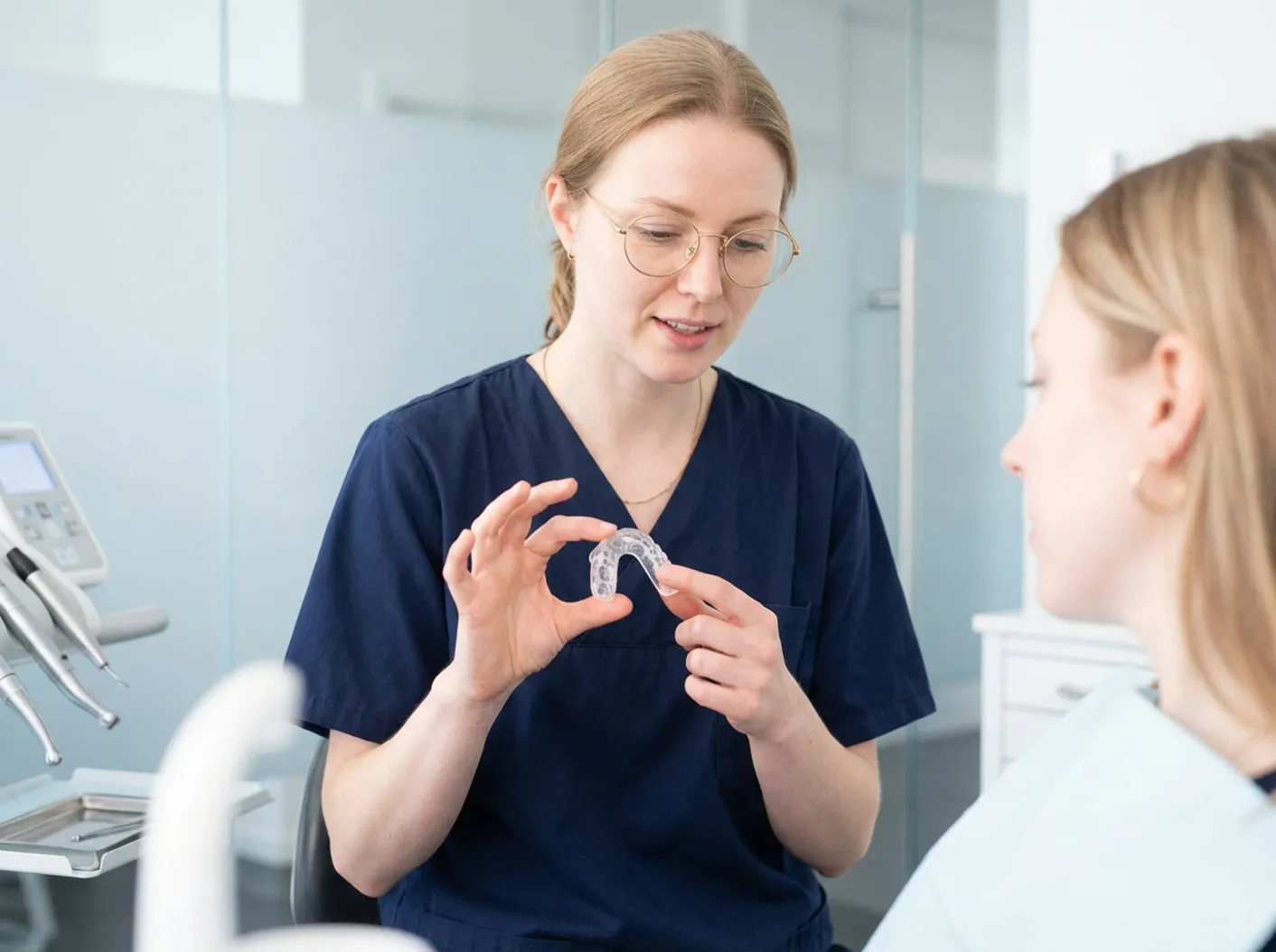
Clear retainer after braces
Much remains unstable after orthodontic correction. The periodontal ligament has to reorganise itself. The alveolar bone also remodels over several months. The lips, cheeks and tongue exert continuous forces. Chewing loads and often bruxism also play a part. Without retention, the risk of...
Über 350 Google-Bewertungen

What does ‘clear retainer after braces’ mean?
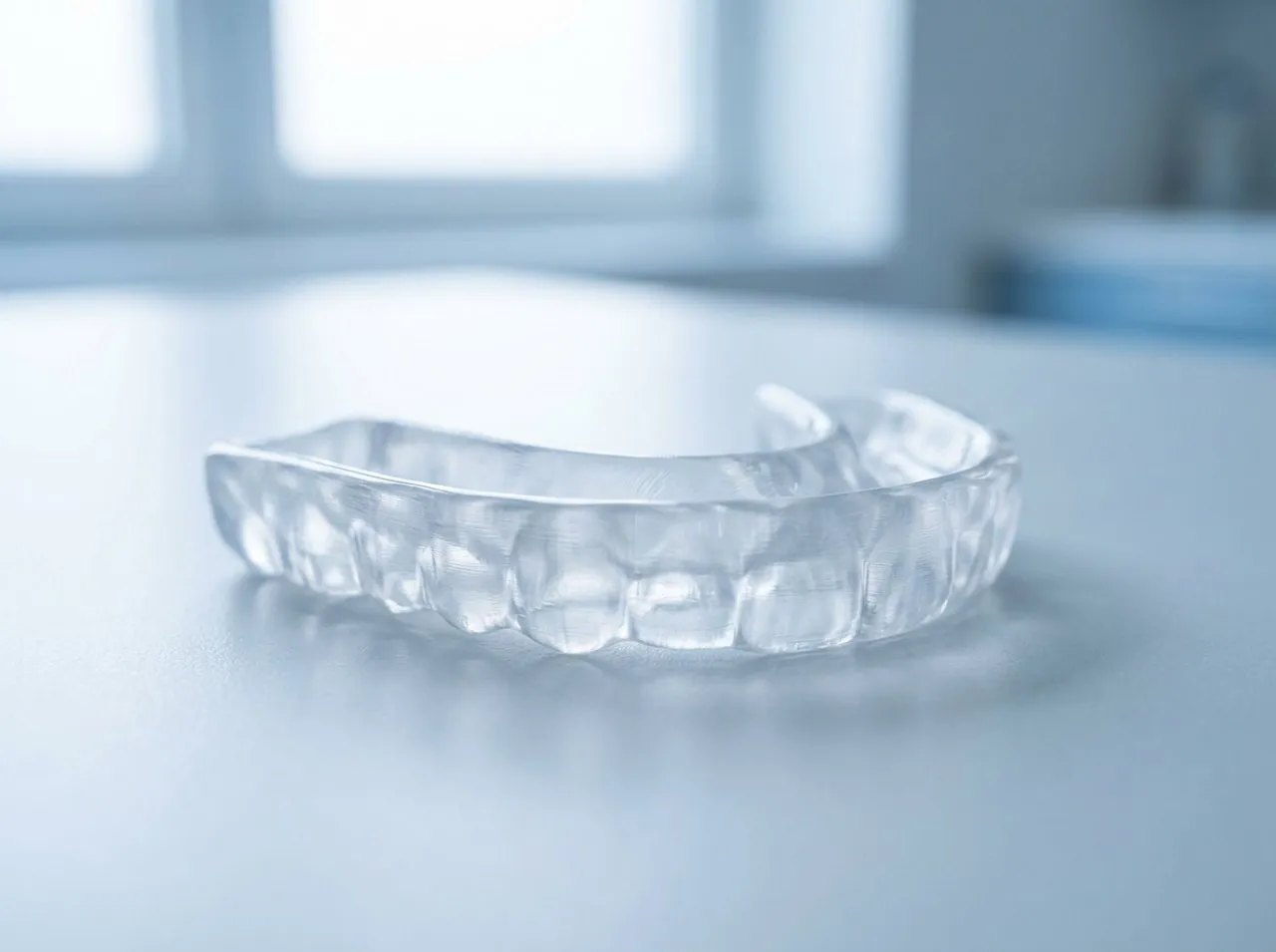
This usually refers to a transparent retainer. The typical type is a vacuum-formed retainer, often called an Essix retainer. It is made individually from a scan or model. It is important to distinguish it from an active aligner. Aligners produce planned tooth movements through defined pressure zones. A retainer is primarily used for stabilisation.
What types of retainer are there?
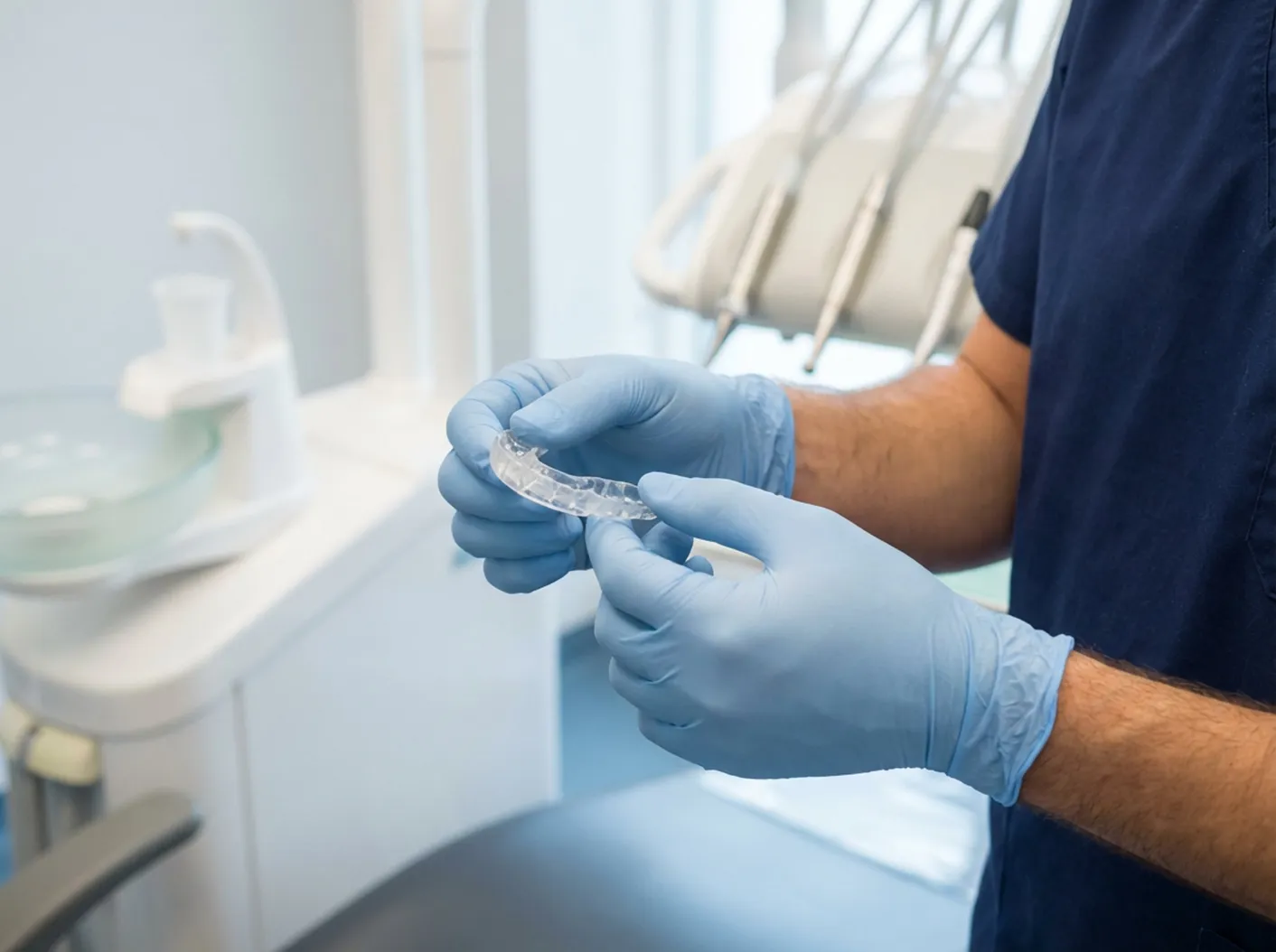
We generally distinguish between removable and fixed systems. A fixed wire retainer often stabilises the front teeth very well. It is bonded lingually and works continuously. The vacuum-formed retainer covers the tooth crowns like a thin cap. It also stabilises rotations and slight tipping. It also provides protection in cases of mild teeth grinding. A combination is often useful. The wire reliably secures the incisors. The clear retainer supplements the dental arch.
Wearing time: how long is retention advisable?
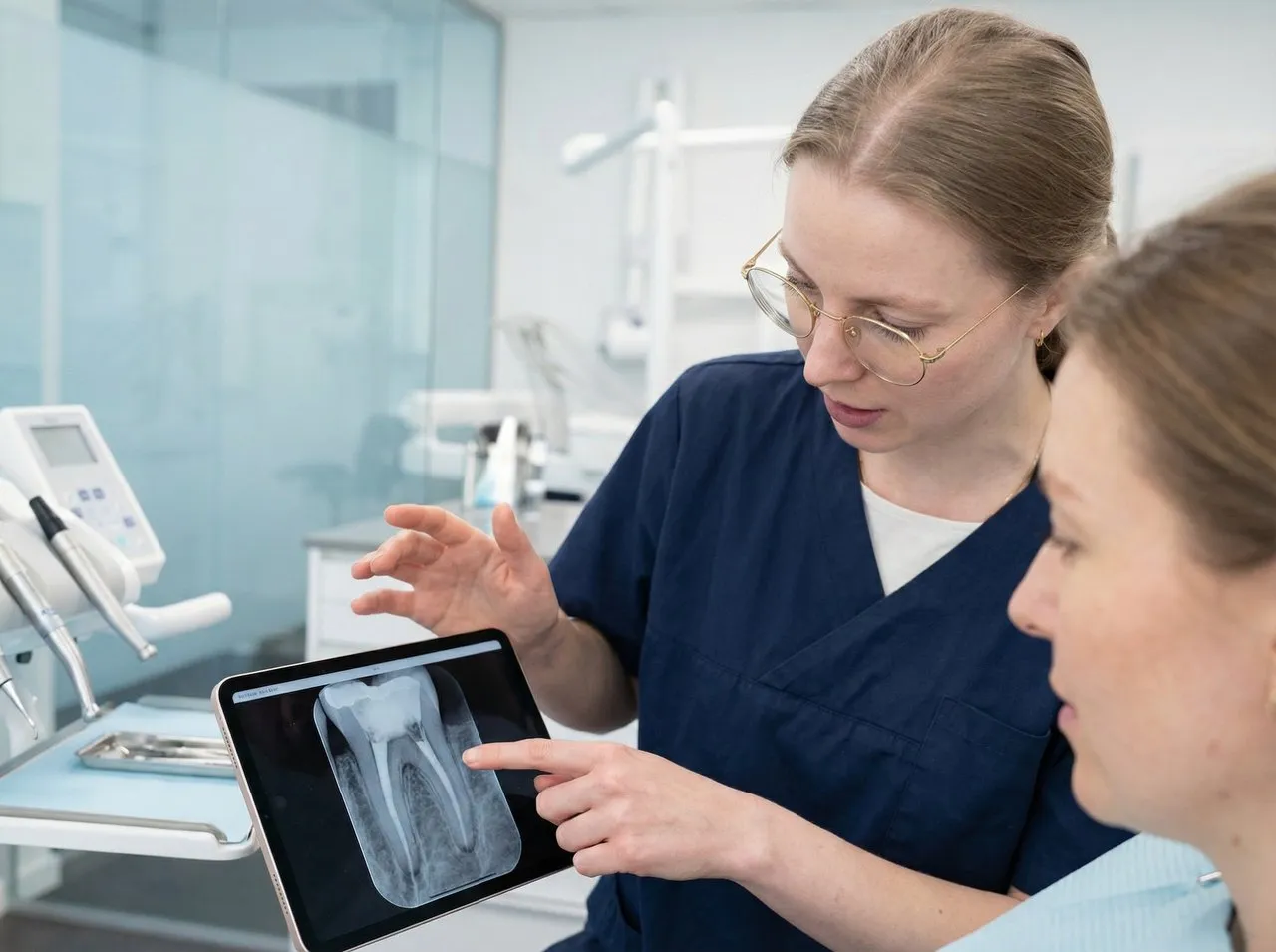
The phase immediately after the braces are removed is critical. Consistent wear is particularly important in the first few weeks. In most cases, the rule is: remove it only for eating and brushing. Night-time retention is often sufficient later on. The duration depends on the clinical findings, age and bite. Growth and crowding also play a role. Check-ups are essential during this phase. We check the fit, contact points and occlusion. This allows us to detect early movement.
Everyday life with a retainer: wearing comfort and storage
A dry storage container is essential. This helps you avoid germs, odours and deformation. Make sure the box has air holes and clean it regularly. A clear retainer can sometimes offer protection during sport. For contact sports, however, a custom-made mouthguard is better. This significantly reduces the risk of dental trauma.
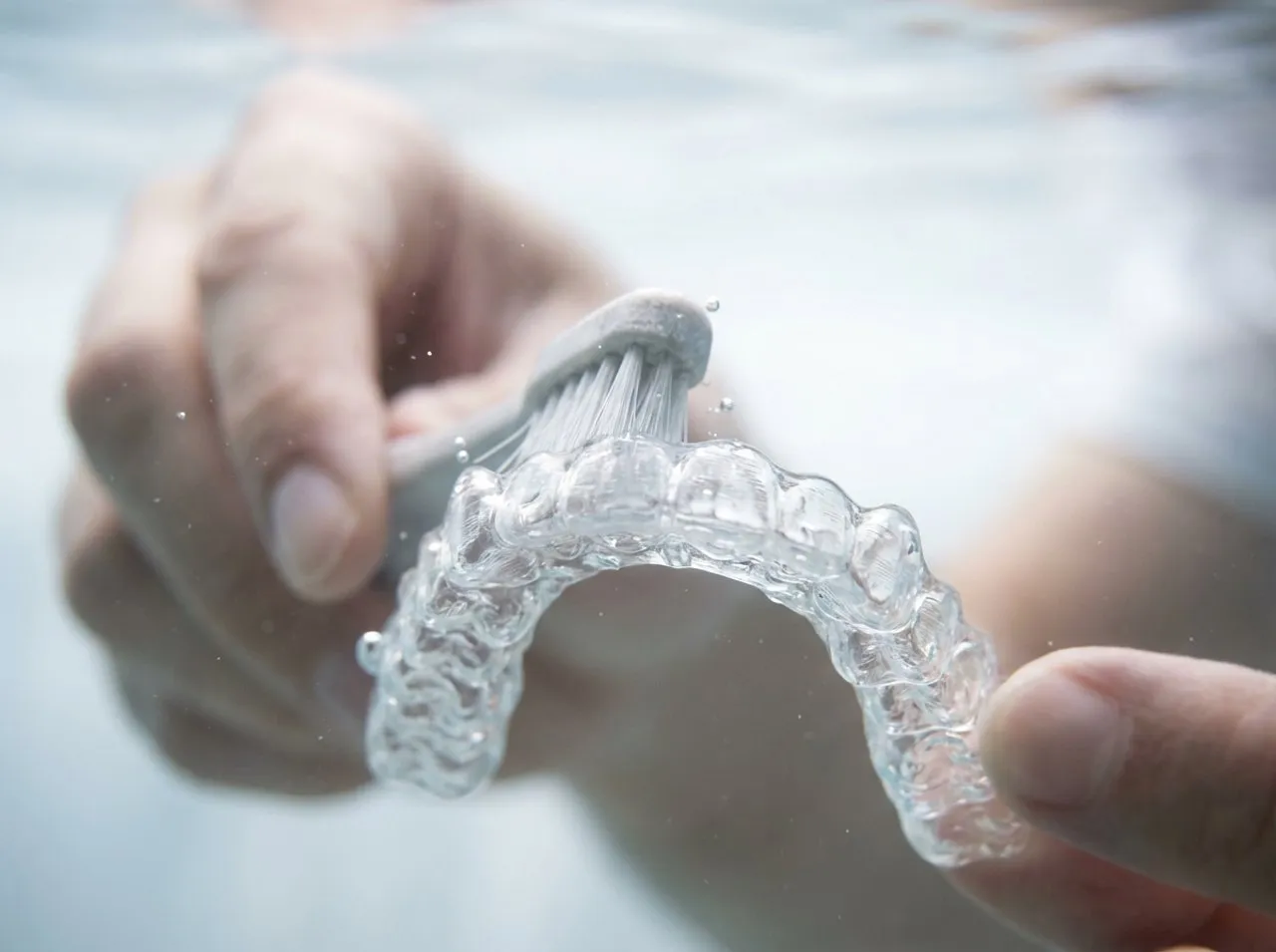
Cleaning and protecting the material
Clean the retainer daily with lukewarm water. Use a soft brush and a mild cleaning product. Abrasive toothpaste causes microscopic scratches and encourages deposits. A gentle cleaning soak once or twice a week is advisable. Retainer tablets or special solutions are suitable for this. Rinse thoroughly afterwards. Avoid heat and aggressive chemicals. Hot water can warp the plastic. Alcohol-based products damage surfaces.
Typical problems after the retention phase
A slight feeling of tension at first is possible. Severe pain, pressure points or ‘pinching’ are unusual. If this happens, the fit should be checked promptly. Cracks often result from grinding or dropping the retainer. A damaged retainer loses its holding force. This increases the risk of relapse. Tooth decay and gingivitis are also relevant concerns. Biofilm can remain under the plastic for longer. Fluoride, interdental care and professional dental cleaning (PZR) are therefore important.

If the retainer no longer fits
A tight fit after a break in wearing it may indicate slight tooth movement. Do not continue wearing the retainer if it puts considerable pressure on your teeth. Have your occlusion and fit checked promptly. If there are significant changes, it is often advisable to have a new retainer made. This helps avoid pressure points and unwanted forces. Digital scans make rapid reproduction easier in this situation.
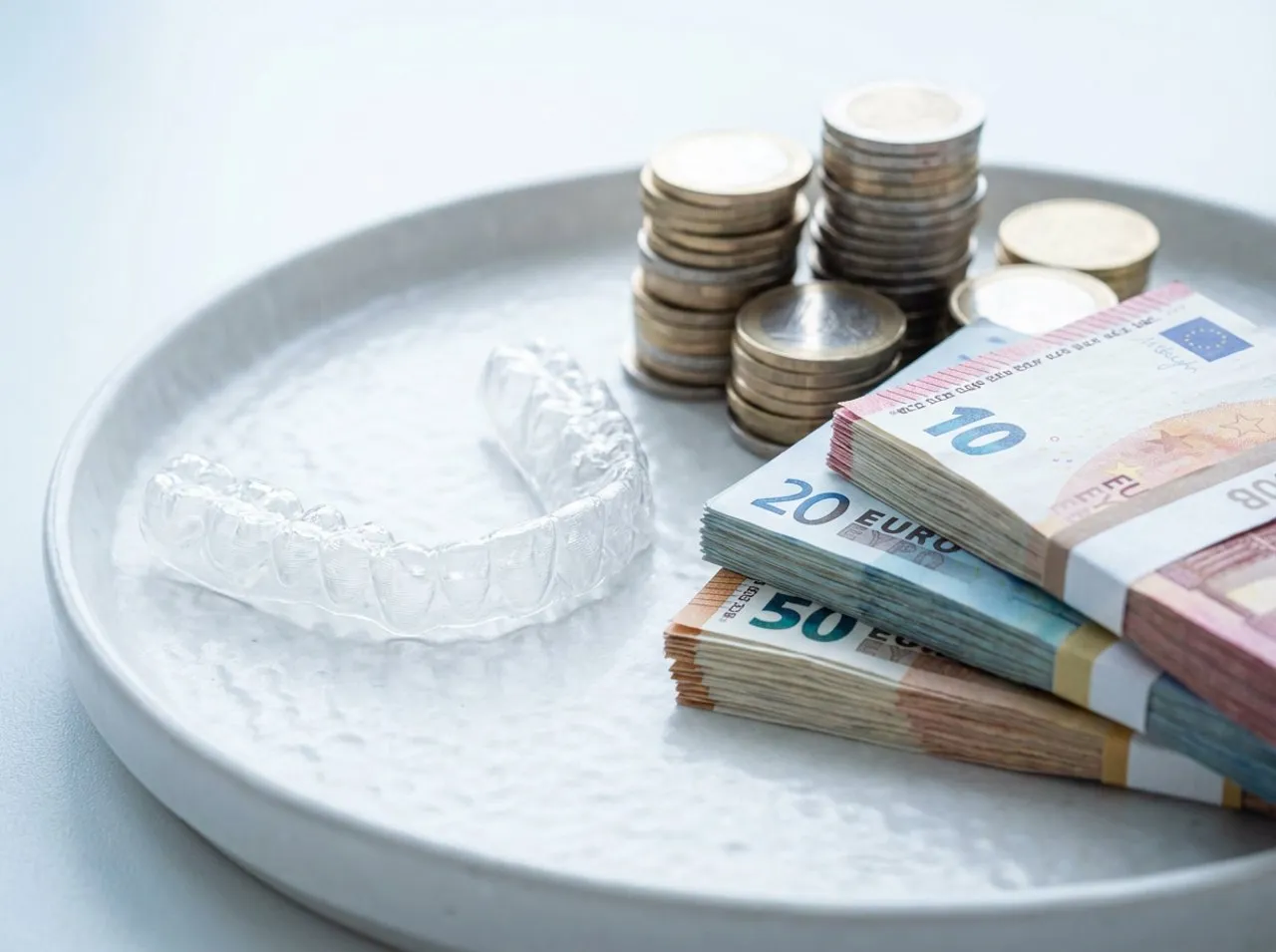
Costs: what does the price depend on?
The cost of a retainer depends on the manufacturing method and the scope of treatment. An intraoral scan is precise and often more comfortable. Laboratory work, materials and the number of appliances affect the price. If the risk is high, we often recommend a spare retainer. This ensures retention is maintained even if the retainer is lost. This is particularly useful when travelling. There is no standard rule for reimbursement. Statutory health insurance providers do not always cover retention in full. Private insurance policies and supplementary insurance vary depending on the contract.

Wunschlachen Berlin: advice and procedure
At Wunschlachen, we plan retention individually. We take occlusion, crowding and periodontal factors into account. This creates a reliable wearing schedule. Digital scans make retainers easier to reproduce. Replacement retainers are therefore often available more quickly. This reduces interruptions to retention.
Conclusion
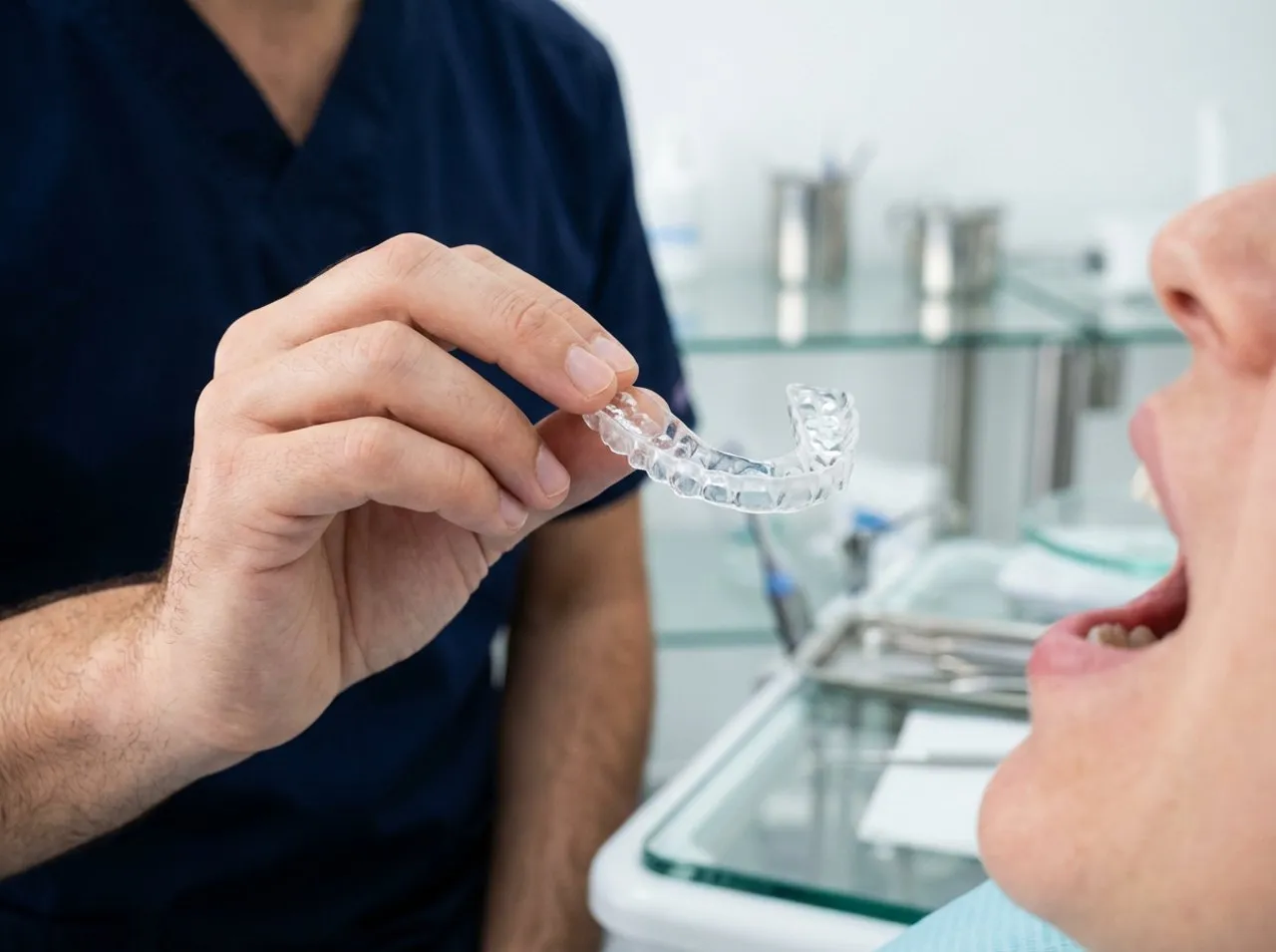
A clear retainer stabilises the result after braces. Consistent wear, hygiene and check-ups are essential. This keeps the teeth stable in their positions over the long term.
FAQ: frequently asked questions about clear retainers
Fibres in the tooth-supporting structures pull towards the original position. Muscles and occlusal forces also act continuously. Retention significantly reduces these restoring forces.
A retainer is intended for stabilisation, not treatment. It holds the position achieved during the retention phase. Active aligners or appliances are needed for tooth movement.
The retainer sits evenly and does not wobble. Slight initial pressure is possible. Persistent pain is a reason to arrange a check-up.
The appliance should be removed for eating. Hot drinks can deform the material. Water is safest when the retainer is in place.
Lukewarm water and a soft brush are usually sufficient. Avoid abrasive pastes and hot water. A mild cleaning soak can also help.
Consistent cleaning and dry storage often help. A check-up is advisable for stubborn deposits. Sometimes replacement is the most hygienic option.
Slight tooth movement can occur quickly. The retainer then often feels noticeably tighter. If there is significant pressure, it should be checked.
Crowding, rotations and growth increase the risk. Bruxism can also impair stability. Previous periodontal damage also plays a role.
It is very reliable but requires good hygiene. Deposits can accumulate more easily on the lingual side. Check-ups and interdental care are therefore important.
You should come in promptly if you experience pressure, cracks or changes in fit. Prompt replacement is also advisable if the retainer is lost. Regular checks ensure long-term stability.
Book your appointment now
We would be happy to advise you in person at our practice.