Augmentation in dentistry – secure support for your dental prosthesis
The loss of a tooth can have many causes. Accidents, periodontitis or long-standing gaps between teeth are often the reason. As a result, the surrounding jawbone frequently recedes over time. In such cases, what is known as augmentation, a surgical...
Über 350 Google-Bewertungen
What does “augmentation” mean in dentistry?
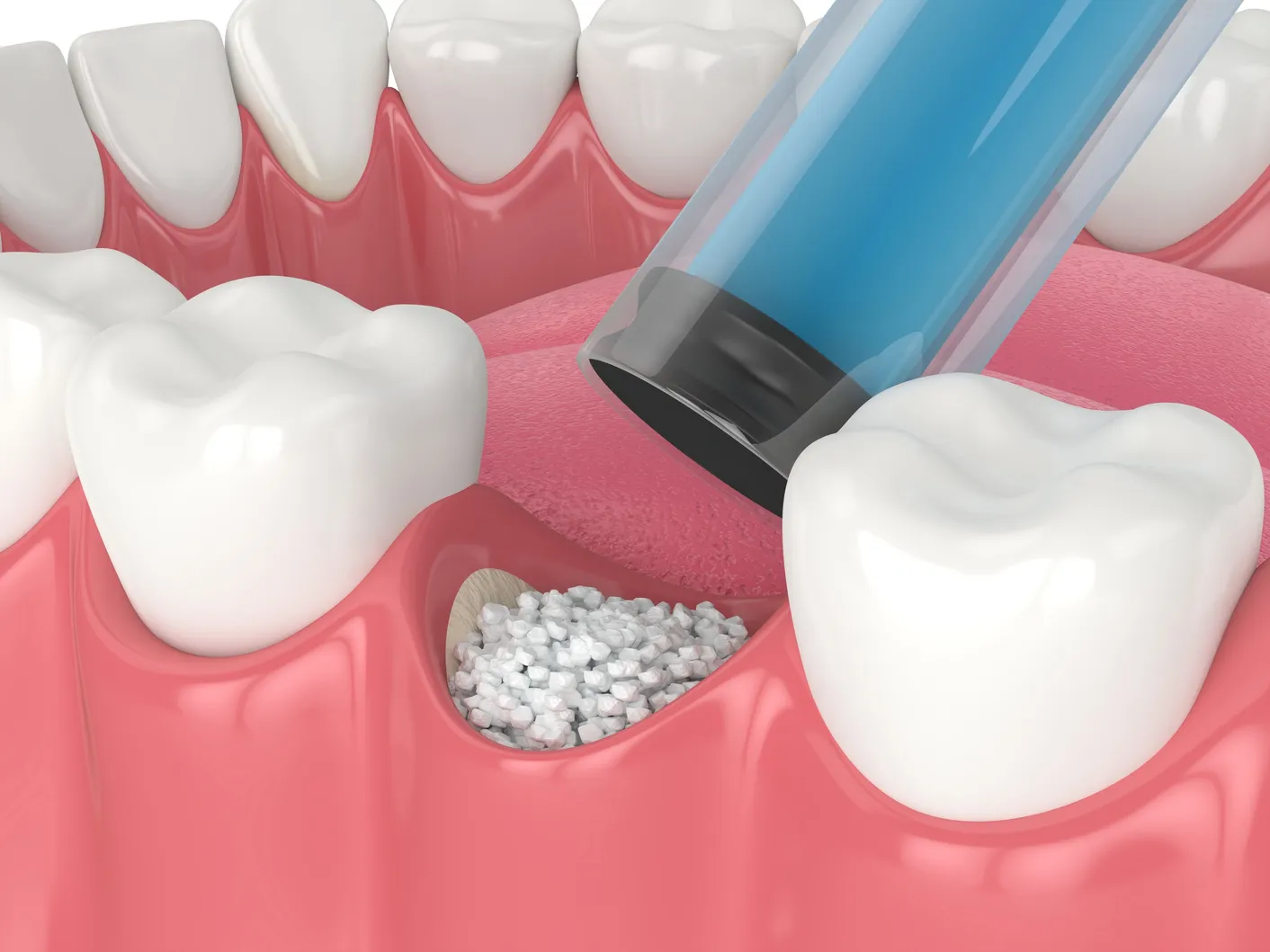
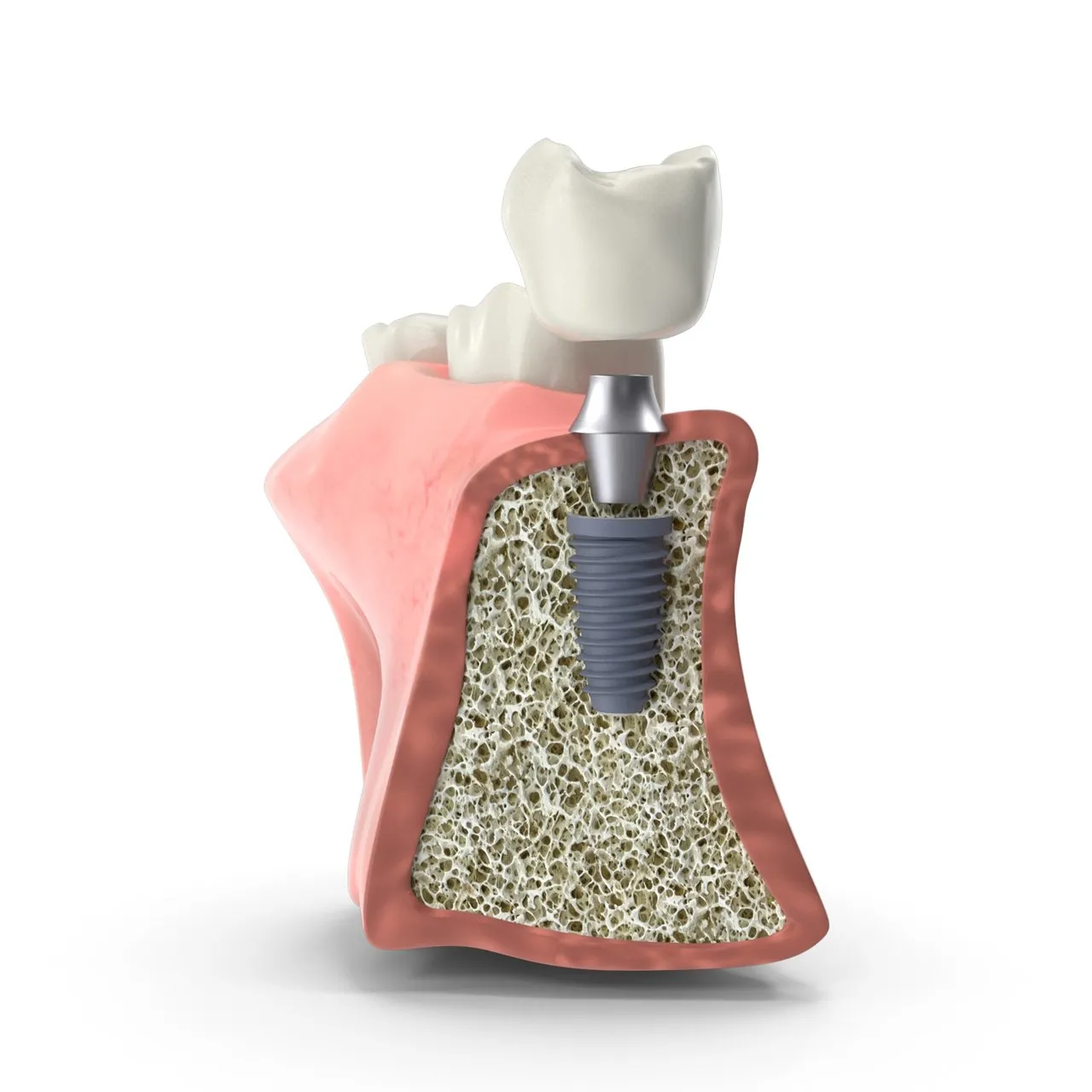
In dentistry, “augmentation” refers to the restoration of lost bone substance in the jaw. The aim of this procedure is to create sufficient bone density so that an implant can be securely anchored. Without enough bone mass, the dental prosthesis may be unstable, become loose or even be lost. Augmentation is an established part of modern implantology and comprises various procedures, depending on the extent of the bone loss and the patient's situation. Your dentist will decide whether a minor bone graft at a single site or complex augmentation surgery is required.
Difference between augmentation and jawbone grafting
The term jawbone grafting is often used synonymously with “augmentation”. In fact, both refer to the rebuilding of bone substance in the jaw area. However, there are subtle differences in their usage: • Jawbone grafting is the more general, colloquial term for all bone grafting procedures in the jaw, regardless of whether individual teeth or larger sections of the jaw are involved. • Augmentation is the more precise, technical term for targeted bone grafting as part of dental treatment, e.g. for a single dental implant. In practice, the two terms overlap, but “augmentation” is mostly used in connection with implantology procedures.
When is augmentation necessary?
Bone grafting is generally necessary when there is not enough bone material in the jaw to securely anchor a dental implant. Possible causes of bone loss include: • Prolonged tooth loss • Periodontitis • Traumatic tooth extraction • Inflammation or cysts Genetic factors can also lead to insufficient bone substance. The aim of augmentation is to create the conditions for long-term stable implant treatment.
How does jawbone grafting work?
Various procedures are available in modern dentistry to carry out dental bone grafting on an individual basis. Which procedure is suitable depends on the amount and location of the bone loss. Below, we present established methods:
External sinus lift
The external sinus lift is an established method for increasing bone density in the posterior upper jaw. Access to the maxillary sinus is created through the sinus wall and bone material is inserted. This procedure is suitable when the available bone is severely reduced.
Internal sinus lift
The internal sinus lift is a gentler procedure used for smaller bone defects. Here, bone substitute material is inserted beneath the maxillary sinus membrane through the hole drilled for the implant. It is a minor procedure with a short healing time.
Augmentation surgery
Augmentation surgery is a surgical method for enlarging the jawbone. Bone material is inserted and secured precisely at the affected site.
Bone block grafting
In this procedure, a block of bone, usually taken from the lower jaw, is removed and screwed into place at the implant site. This method is particularly effective for severe bone loss in height and width.
Bone spreading / bone splitting
These techniques are used when the alveolar ridge is high enough but too narrow. The bone is split in a controlled manner and filled with bone substitute material, increasing its width.
Bone condensation
In certain cases, bone density can be improved using targeted expansion techniques. The bone is mechanically compressed so that its structure becomes denser and more stable – without external material.

Healing time and prospects of success
The healing time after augmentation varies depending on the procedure and situation. A healing period of 4 to 9 months should generally be expected. Only then can an implant be placed. Modern techniques and high-quality materials now make very good results possible. However, careful oral hygiene and regular dental check-ups are essential. Following successful augmentation, the functionality of implants is in no way inferior to that of natural teeth.
Frequently asked questions (FAQ)
Augmentation is the medical term for targeted jawbone grafting, usually in connection with implants. Jawbone grafting is often used as a general term for all bone grafting in the jaw.
Bone grafting is necessary when there is not enough bone substance to anchor an implant securely.
A sinus lift is a bone grafting procedure in the upper jaw beneath the maxillary sinus. There are internal and external sinus lifts.
In an internal sinus lift, bone substitute material is inserted through the hole drilled for the implant. The method is minimally invasive and suitable for smaller defects.
An external sinus lift is a more complex procedure through the side wall of the maxillary sinus and is used for severe bone loss.
Depending on the method, healing takes between 4 and 9 months.
The patient's own bone, synthetic bone substitute material or animal-derived preparations are used. This depends on the individual situation.
The procedure is carried out under local anaesthetic or sedation. After the operation, there may be mild pain or swelling, which can be treated effectively.
As with any surgical procedure, there are risks such as inflammation, rejection of the material or impaired wound healing. However, these are rare.
In principle, yes. The dentist checks beforehand whether any general health factors rule it out.
Book your appointment now
We would be happy to advise you in person at our practice.