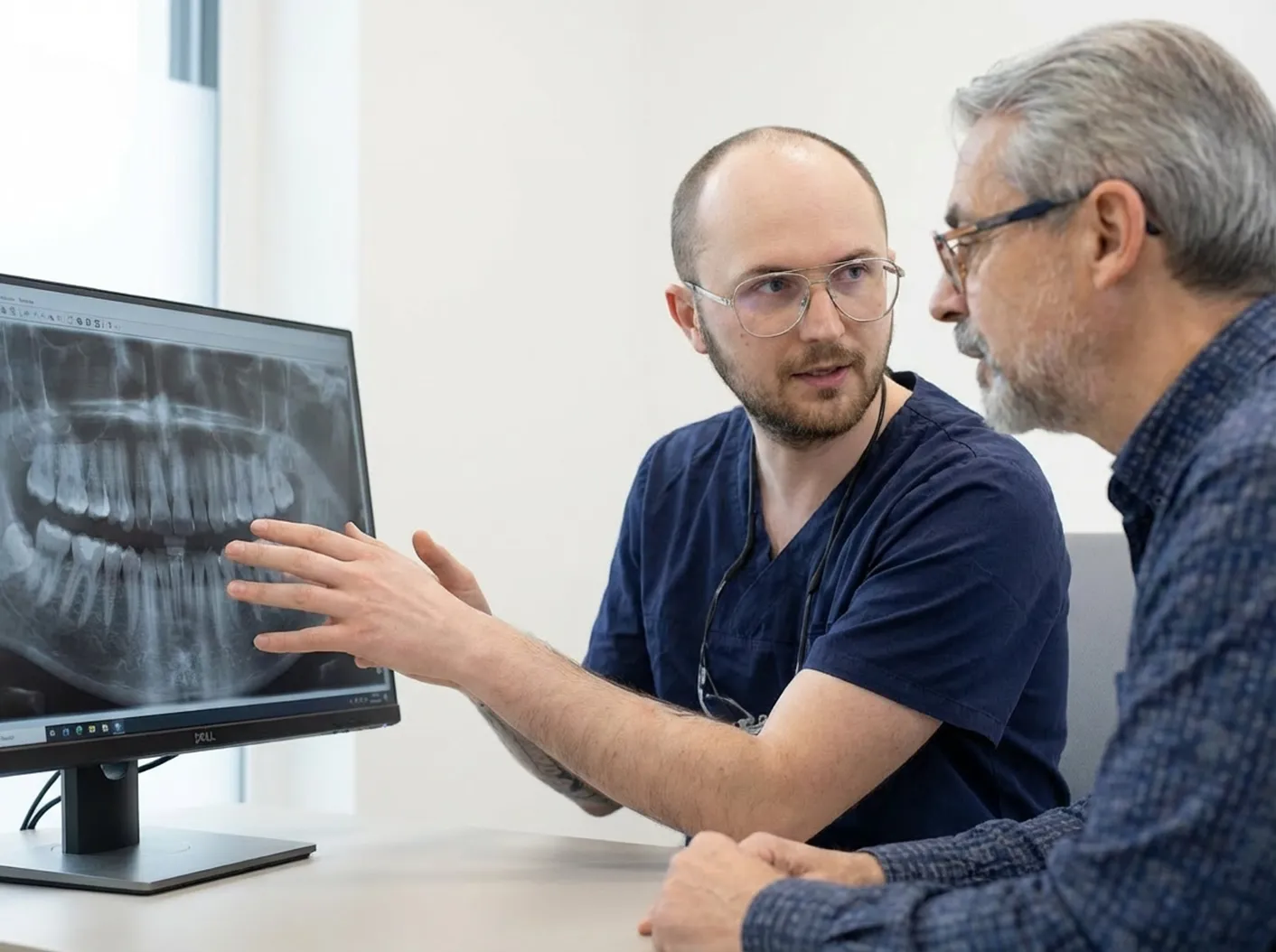
Full upper and lower dentures for pensioners: costs
Anyone who needs full upper and lower dentures often asks about the costs first. There is no fixed standard price for pensioners. The key factors are the clinical findings, standard care, the dental bonus booklet and any hardship provision.
Über 350 Google-Bewertungen
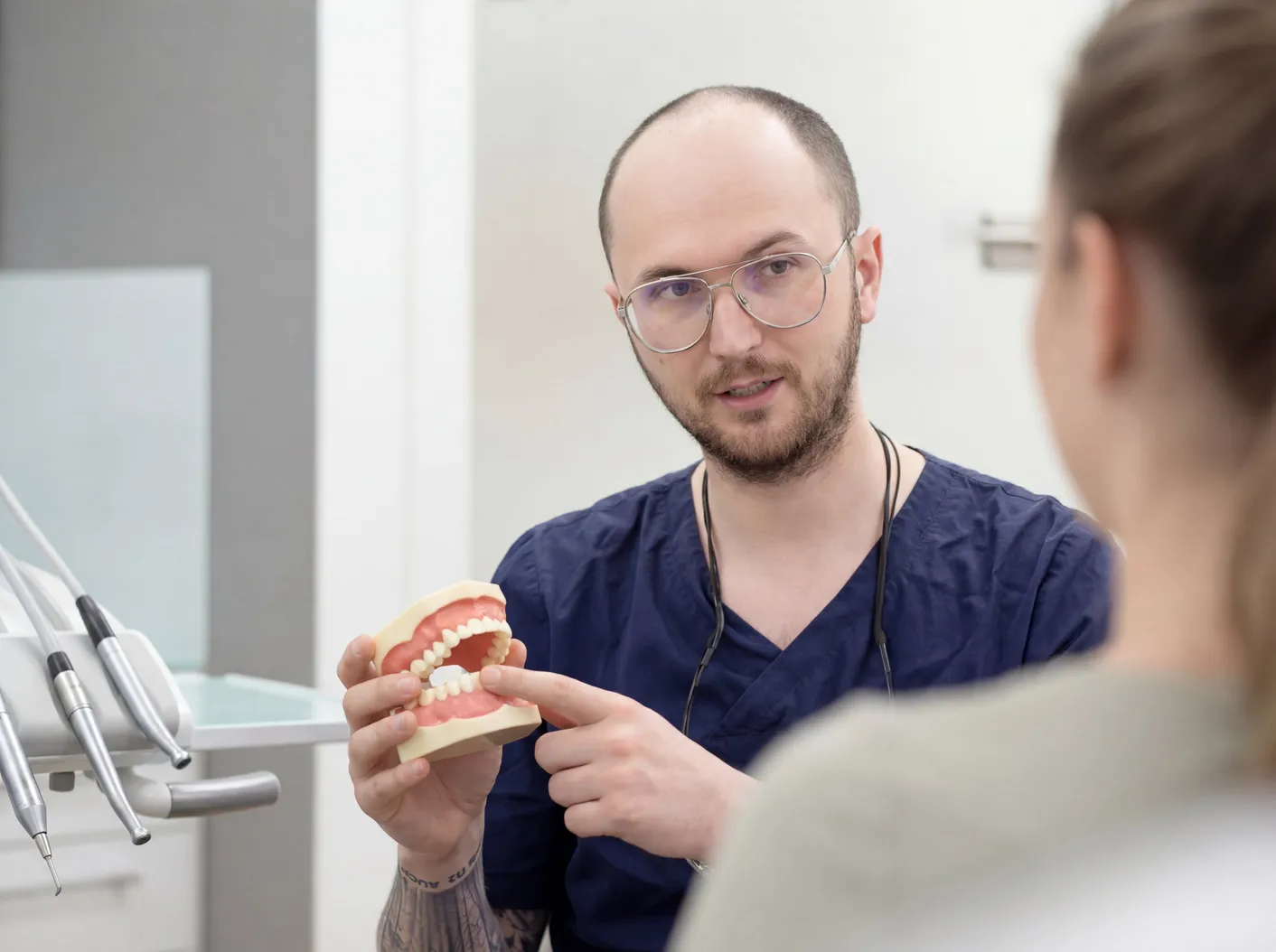
How much do full upper and lower dentures cost?
A full set of dentures for the upper and lower jaws is usually referred to as full or complete dentures. Basic treatment starts at 600 euros per jaw. From 1,200 euros is a realistic price for both jaws together.
These figures are only a guide. The exact price depends on the dental practice, laboratory and work involved. Impressions, bite registration and adjustments also affect the total cost.
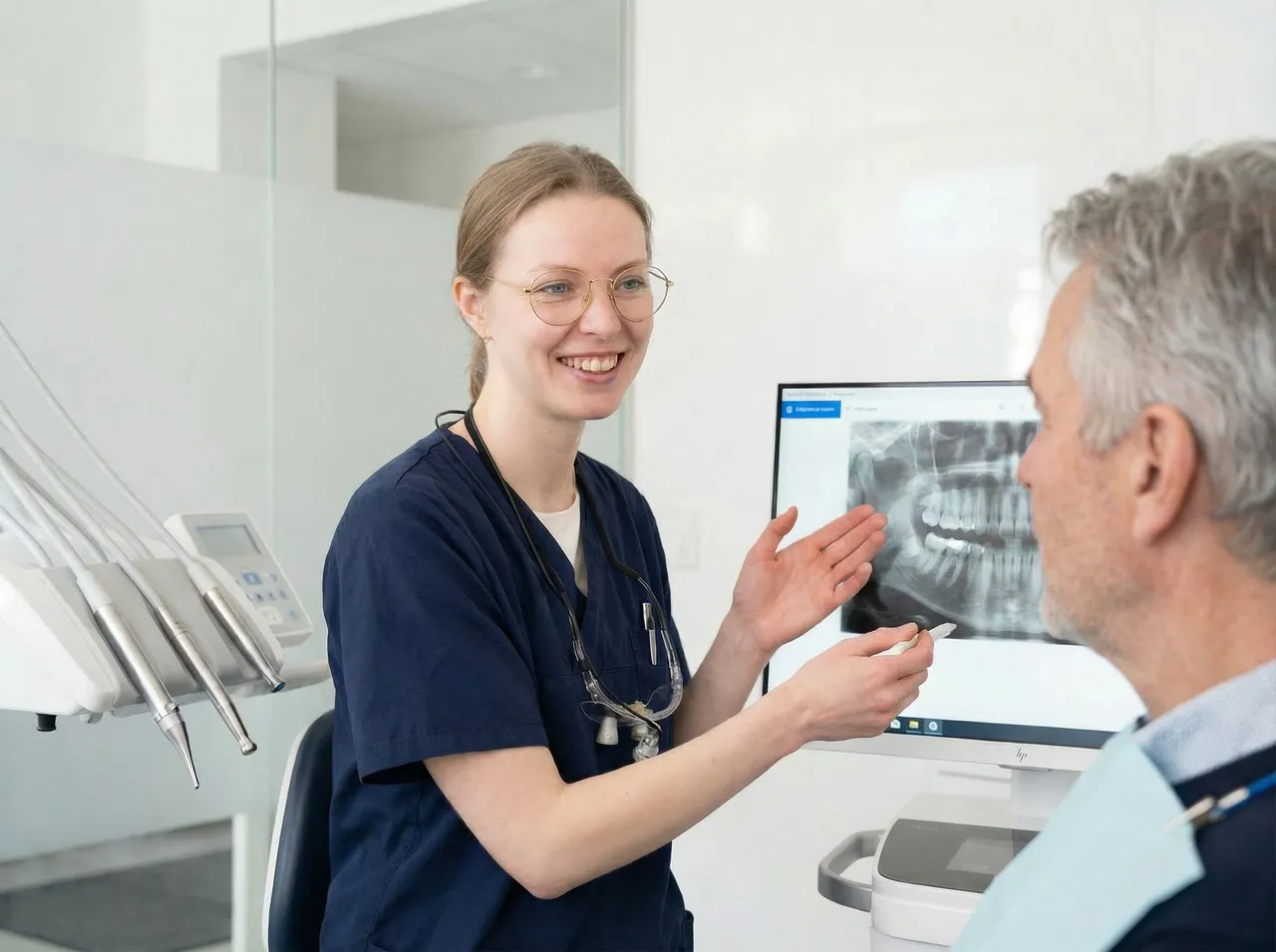
Which type of treatment is usually meant?
The word ‘dentures’ usually refers to conventional full dentures. They replace all the teeth in one jaw. For an edentulous jaw, they are the typical standard care provided by statutory health insurance.
This is important for many pensioners, because the fixed subsidy is based on this standard solution. Anyone who wants special extras usually pays the difference themselves.

What determines the cost of full dentures?
The condition of the jaw is the first important factor. If the jaw ridge has severely deteriorated, treatment is often more complex. More appointments and adjustments are then usually needed.
The material also matters. Standard care usually involves a basic, functional design. Anyone who wants better aesthetics, retention or comfort often pays more.
The upper and lower jaws behave differently. A denture often fits more securely in the upper jaw. Retention is more difficult in the lower jaw because the supporting surface is smaller.
What does health insurance cover for pensioners?
The same basic rules apply to pensioners as to other insured people. The health insurance fund pays a fixed subsidy based on the clinical findings towards standard care. This subsidy is generally 60 per cent of the average cost of standard care.
The subsidy increases with a fully maintained bonus booklet. It can then be 70 or 75 per cent. This can reduce your own contribution considerably.
There is one more important point. The health insurance fund does not pay for every preferred option. Anyone choosing a more complex design usually bears the additional costs themselves.
What additional costs are possible?
Additional costs often arise from special tooth shades or elaborate tooth arrangements. Special denture teeth or additional retention elements can also increase the price. The same applies to subsequent relining or repairs.
Implant-supported dentures are considerably more expensive. These are no longer conventional full dentures. Costs can run to several thousand euros per jaw.
Anyone looking for solid basic care will usually find conventional complete dentures less expensive. They are the typical standard care for edentulous jaws. The health insurance fund’s fixed subsidy is also based on them.
Why are fit and follow-up checks so important?
New dentures often take some getting used to. Small pressure points or a loose fit are not unusual at first. The dentures should then be checked and adjusted.
The jaw continues to change, particularly in old age. As a result, an existing denture may fit less well later on. Regular check-ups help maintain function and wearing comfort.

Why is the treatment and cost plan so important?
The treatment and cost plan shows the expected total costs. It also states the fixed subsidy from your health insurance fund. Only then can you properly assess your own contribution.
Pensioners in particular should examine the plan carefully. This shows at an early stage whether a hardship application would be worthwhile. The bonus booklet should also be checked in advance.
Another advantage is better planning. You can see immediately whether only standard care is included. It also reveals any possible additional costs at an early stage.
Conclusion: How much do full upper and lower dentures cost for pensioners?
The cost of full upper and lower dentures for pensioners is not a fixed, standard amount. From 1,200 euros is a realistic price for basic full dentures. The fixed subsidy, bonus booklet and hardship provision then determine the amount you pay yourself.
Anyone on a small pension should have their eligibility for the hardship provision checked. Standard care may then be covered in full. A precise treatment and cost plan provides the necessary clarity.