Anaesthesia during root canal treatment: how it works
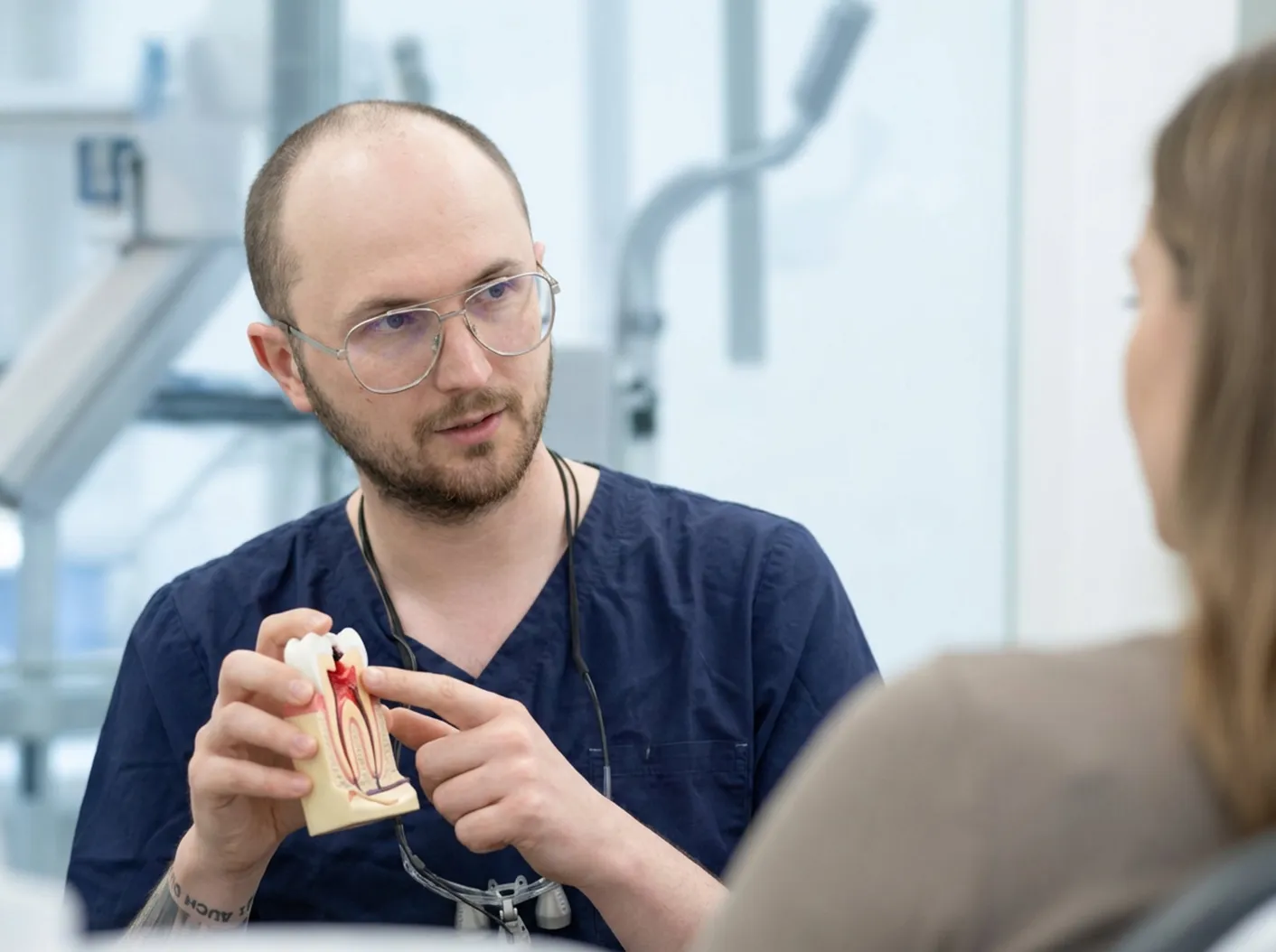
Many people fear root canal treatment because of the possible pain. The good news is that suitable anaesthesia usually makes the procedure quite tolerable. At Wunschlachen, we explain every step to you.
Über 350 Google-Bewertungen
Why effective anaesthesia is so important
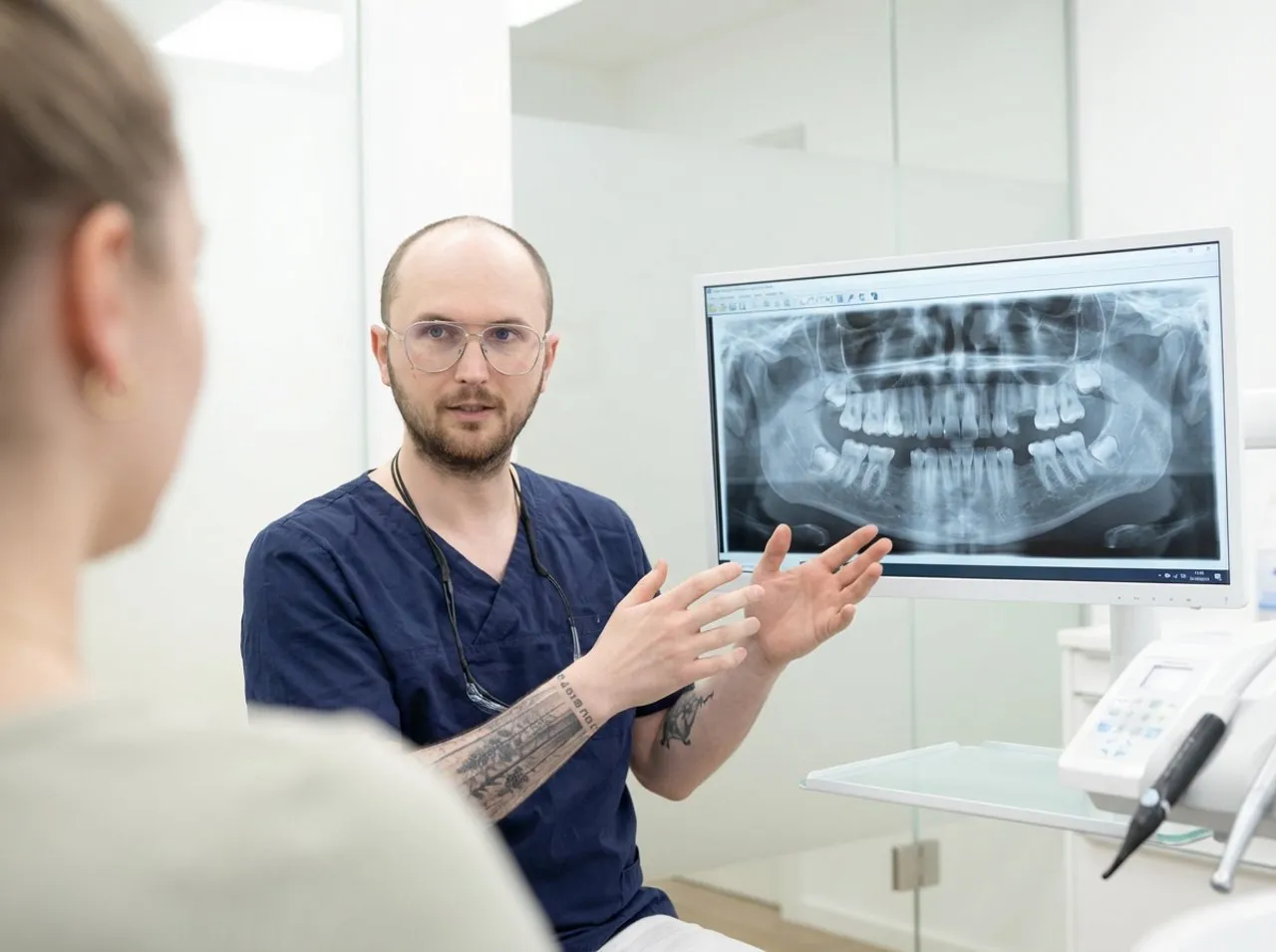
During root canal treatment, we work close to the dental nerve. Without local anaesthetic, this would be very unpleasant. The anaesthetic blocks the transmission of pain in the treatment area. Inflamed tissue is often more sensitive than healthy tissue. We therefore check very carefully that the anaesthetic has taken effect before we begin. You should be able to lie still and relaxed during treatment. Reducing pain also improves precision. This allows us to clean and irrigate the canal thoroughly. This reduces the risk of problems after the appointment.

Which type of anaesthesia is used for root canal treatment?
Anaesthesia for root canal treatment is now standard practice. It is tailored precisely to the tooth. A local anaesthetic administered by injection is usually sufficient. You will then mainly feel pressure, but no sharp pain. It takes effect within a few minutes. In the lower jaw, the nerve supply is often more concentrated. We therefore often use a nerve block here. Infiltration anaesthesia is often sufficient in the upper jaw. Sometimes we combine techniques to ensure reliable anaesthesia. This includes supplementary intraligamentary anaesthesia, for example. It acts directly at the tooth socket.
What does the anaesthetic feel like?
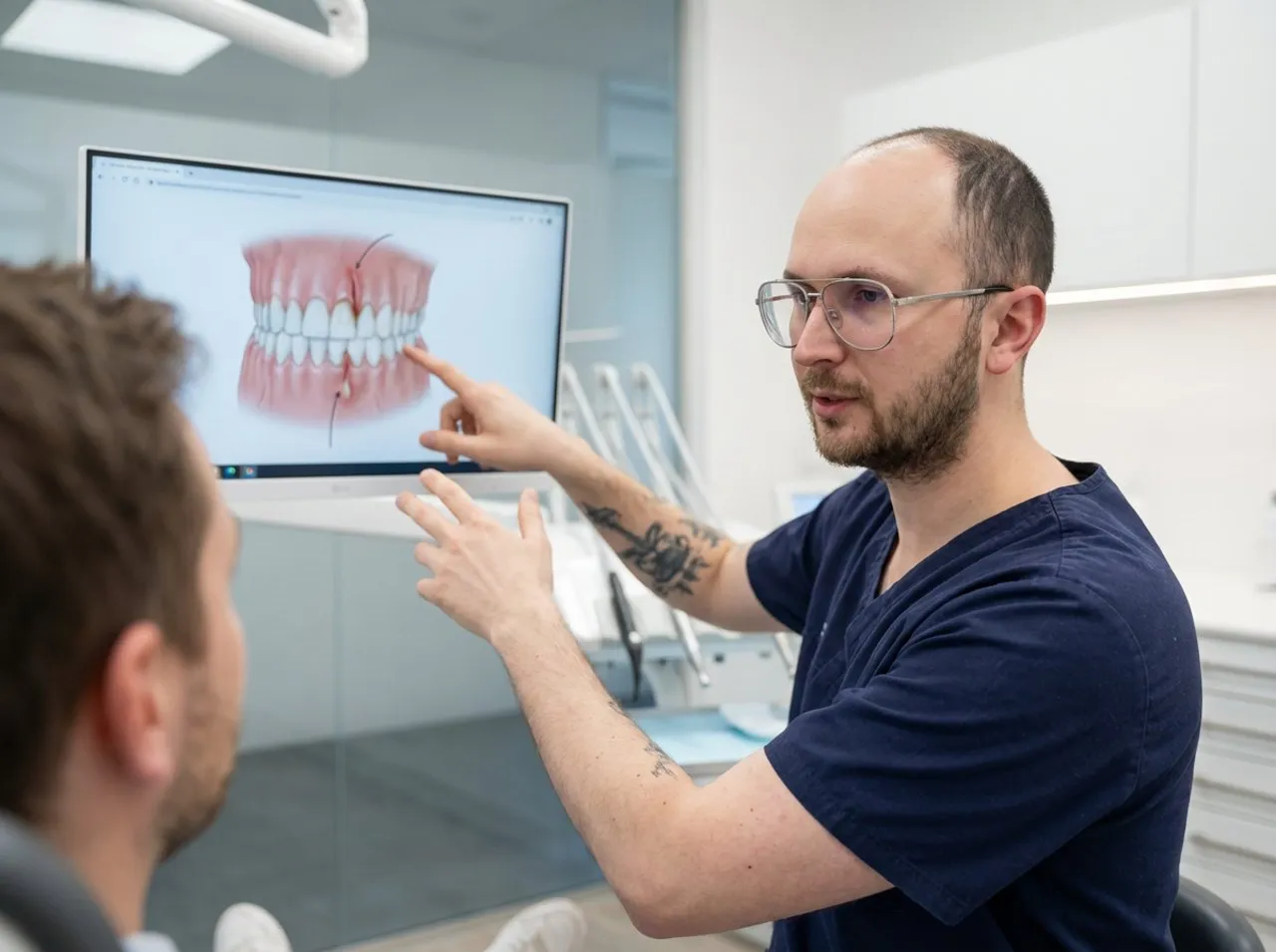
The injection usually feels like brief pressure. A feeling of numbness then spreads. Some patients feel warmth or tingling. Many first notice a numb lip. The tooth itself then feels ‘as if it has gone to sleep’. This is a normal sign that the anaesthetic is working. You may still feel pressure during treatment. If you feel a sharp sensation, we need to administer more anaesthetic.

How long does the anaesthetic last?
The anaesthetic usually lasts two to four hours. The exact duration depends on the anaesthetic used and your metabolism. Slight tingling as it wears off is normal. Do not chew again until sensation has returned. This will help you avoid injuring your lip or cheek. Hot drinks are also risky during this period.

Pain during root canal treatment despite anaesthesia: why does this happen?
Some patients report pain despite an effective injection. This happens particularly when there is severe inflammation around the root. The acidic pH level can reduce the anaesthetic's effect. Anatomical variations also play a role. Additional canals or deep nerve branches are possible. A top-up injection is then sometimes needed. Rarely, the nerve inside the tooth is still severely irritated. In that case, we use targeted intrapulpal anaesthesia. This works very quickly, but only briefly. The important thing is to tell us immediately if it hurts. We will stop treatment and administer more anaesthetic. Nobody has to endure pain.
What side effects are possible?
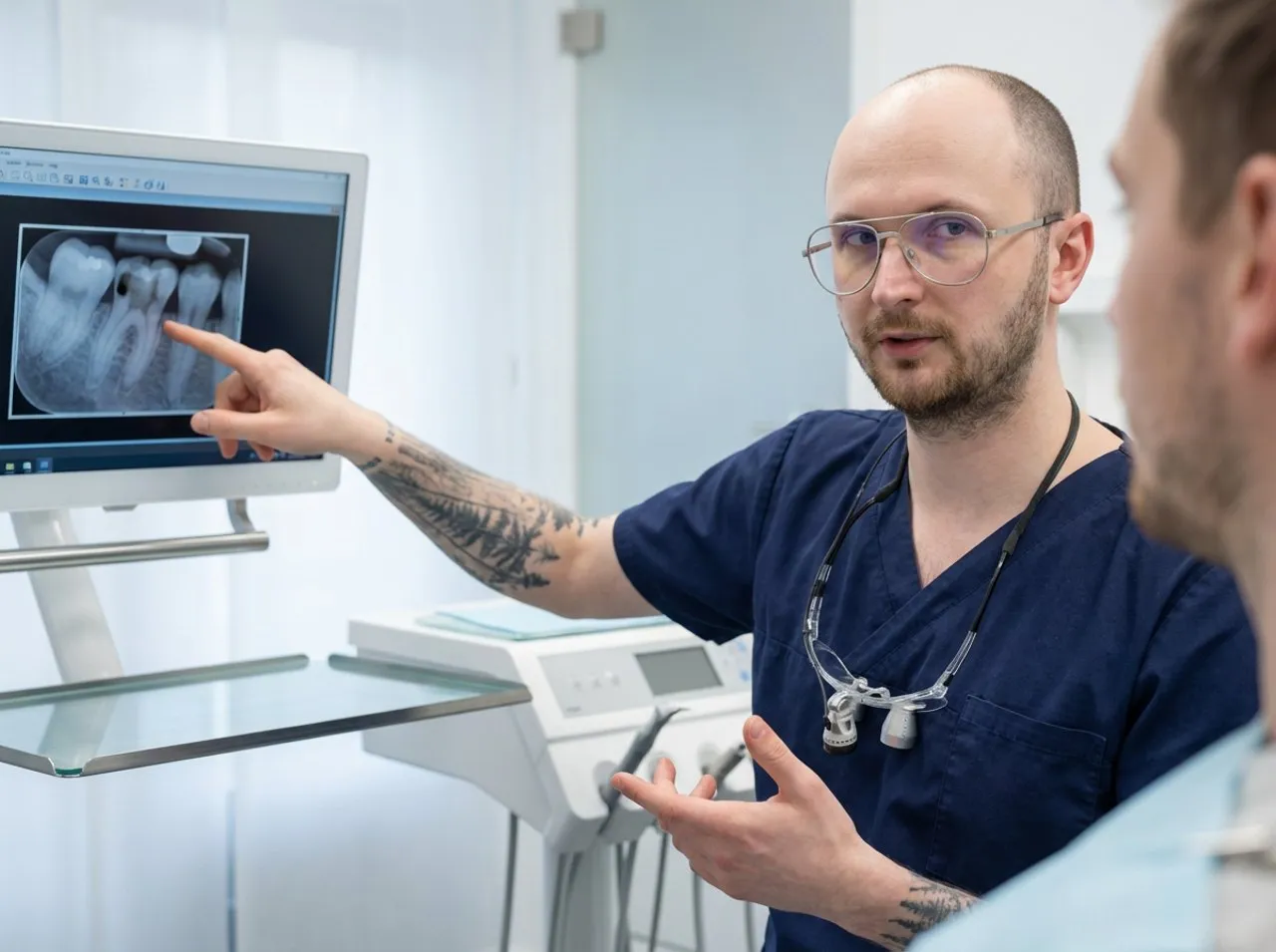
The injection site may be tender to pressure for a short time after the injection. A small bruise is also possible. Both usually subside within a few days. Some local anaesthetics contain vasoconstrictor additives. These can make your heart beat faster for a short time. Tell us beforehand if you have heart problems. Allergies to local anaesthetics are rare. Nevertheless, we ask specifically about previous reactions. This enables us to minimise risks.

Root canal treatment under general anaesthetic or sedation
A general anaesthetic is rarely necessary for endodontic treatment It may be appropriate in specific clinical cases. We discuss this on an individual basis. Many people search online for root canal treatment under general anaesthetic. Your personal situation is always the decisive factor. Sedation can help if you have severe dental anxiety. Dormicum contains the active ingredient midazolam and has a calming effect. Its effect often lasts one to two hours. Tavor can also reduce anxiety and tension. Its use must always be agreed with a doctor. After taking such medication, you must not drive yourself. Important: sedation does not replace local anaesthetic. It only helps you feel calm and less stressed. Pain relief comes from the local anaesthetic.

How anaesthesia works at Wunschlachen
First, we review your medical history and any allergies. We then select the appropriate anaesthetic. We explain its effects and how long they last. The injection is administered slowly and in a controlled manner. This means the injection is usually only noticeable for a short time. If needed, we also use surface anaesthesia. Before the actual treatment, we test the numbness. We ask about sensation, pressure and cold. Only then do we begin the root canal treatment. You remain responsive at all times throughout the appointment. Simply raise your hand if anything bothers you. This provides reassurance and builds trust.

Tips before and after treatment
Eat a light meal beforehand if possible. Fasting is not usually necessary for local anaesthetic. Different rules apply to sedation. Allow yourself some rest after the appointment. Your lip may remain numb for a long time. Speaking and laughing will then feel different. Cooling helps with mild swelling. Nevertheless, continue to brush your teeth carefully. Call us if you have a fever or severe throbbing. Avoid alcohol on the day of treatment. It can promote bleeding and irritate the mucous membranes. It also increases tiredness after sedation.
Your dental practice in Berlin – locations
Our dental practices in Berlin are located in Reinickendorf, Schöneberg, Friedrichstraße and Charlottenburg. We offer high-quality treatments and modern technology. Book your dental appointment now. Online or by phone for a radiant smile.
General dentistry and surgery
Reinickendorf
Zahnarzt & Implantate
Gotthardstr. 27, 13407 Berlin Tel.: 030 / 495 20 10[email protected]Mo-Do: 08:00–20:00 Fr: 08:00–14:00
Mehr erfahrenSchöneberg
Zahnarzt & Implantate
Bayerischer Platz 7, 10779 Berlin Tel.: 030 / 854 44 83[email protected]Mo-Do: 08:00–20:00 Fr: 08:00–14:00
Mehr erfahrenFriedrichstraße
Zahnarzt & Implantate
Friedrichstraße 147, 10117 Berlin Tel.: 030 / 959 990 644[email protected]Mo-Do: 09:00–18:00 Fr: 09:00–14:00
Mehr erfahrenCharlottenburg
Zahnarzt & Implantate
Savignyplatz 5, 10623 Berlin Tel.: 030 / 233 290 390[email protected]Mo-Do: 09:00–18:00 Fr: 09:00–13:00
Mehr erfahrenOrthodontics and paediatric dentistry
Reinickendorf
Kieferorthopädie & Kinderzahnmedizin
Gotthardstr. 27, 13407 Berlin Tel.: 030 / 495 20 10Mo-Do: 08:00–20:00 Fr: 08:00–14:00
Mehr erfahrenSchöneberg
Kieferorthopädie & Kinderzahnmedizin
Bayerischer Platz 7, 10779 Berlin Tel.: 030 / 854 44 83Mo-Do: 08:00–20:00 Fr: 08:00–14:00
Mehr erfahrenFAQ: anaesthesia during root canal treatment
Local anaesthetic is usually very effective.
The tooth feels numb, and often the lip or cheek does too.
Often two to four hours, sometimes a little longer.
Tell us immediately so that we can administer more anaesthetic.
An acidic pH level can inhibit the anaesthetic's effect.
We can combine local techniques and gently administer further anaesthetic.
Yes, but local anaesthetic is usually sufficient.
Yes, it can have a calming effect, but it does not replace local anaesthetic.
Wait until sensation and control have returned.
If you experience severe pain, fever or increasing swelling.
Book your appointment now
We would be happy to advise you in person at our practice.