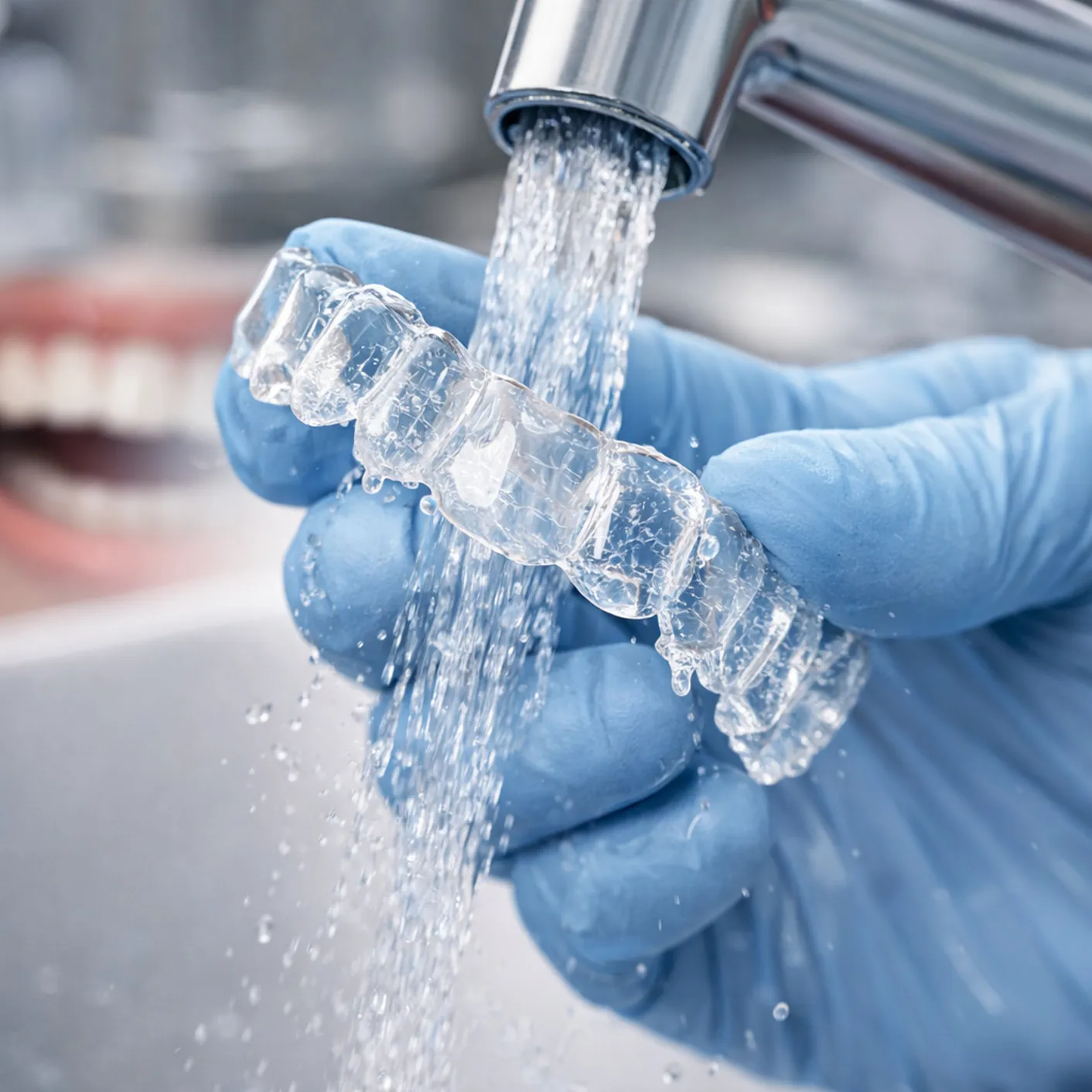
Cleaning aligners: hygiene and protecting the material
Transparent aligners are medical devices used to straighten teeth. They fit closely around the dental arch for many hours a day. This creates ideal conditions for biofilm and deposits to form. In the following article, you will learn how to clean aligners properly.
Über 350 Google-Bewertungen
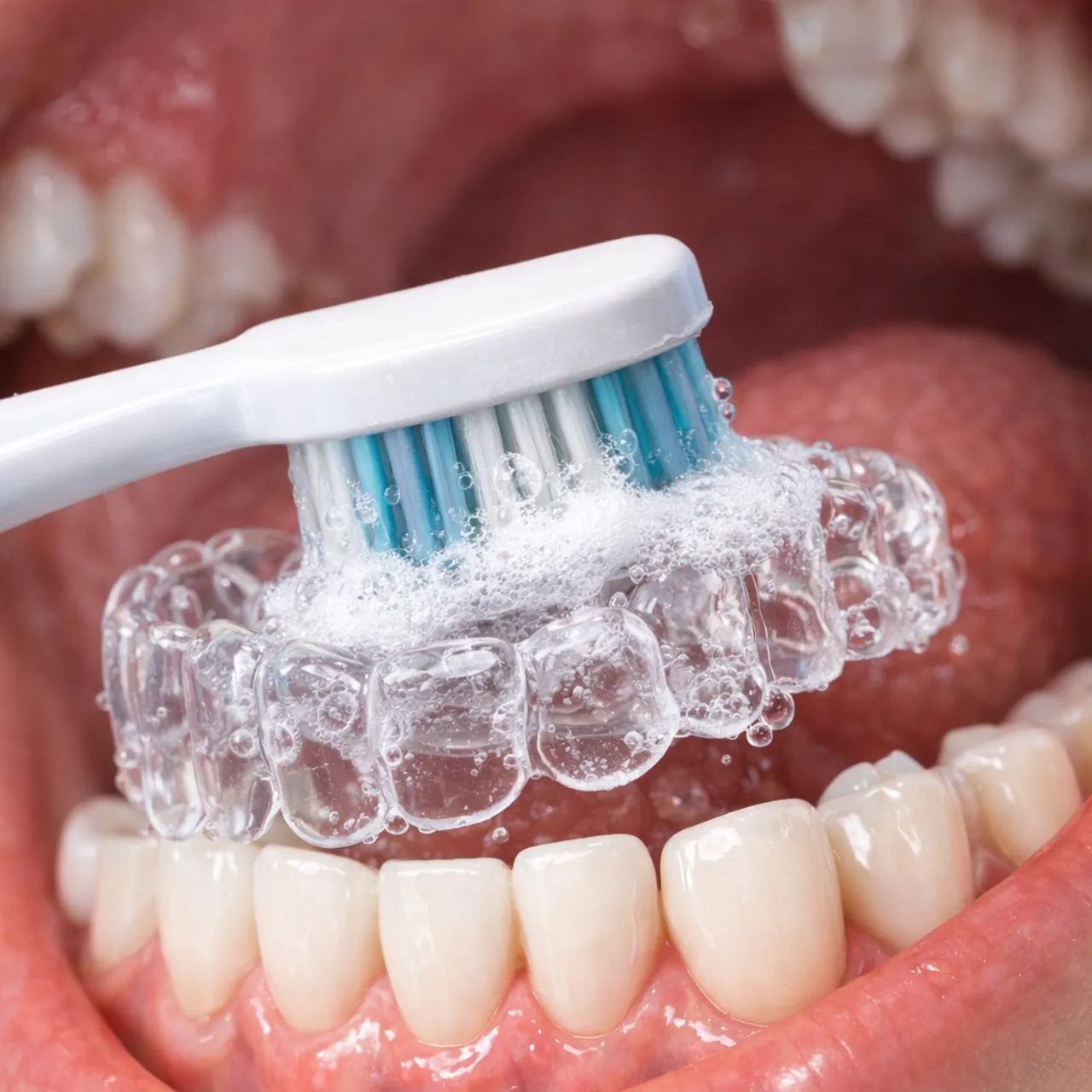
Cleaning aligners: why hygiene is crucial
Salivary proteins and bacteria accumulate on the surfaces. This creates a biofilm that causes odour and discolouration. Inadequate care increases the risk of gingivitis and tooth decay. Deposits on the plastic act as a reservoir for plaque. This can promote decalcification of the tooth enamel. Build-up can also impair the fit. Consistent cleaning also protects transparency. Cloudiness is often caused by microcracks and deposits. Both can frequently be avoided.

Understanding the materials: why heat and abrasion cause damage
Aligners are usually made from thermoplastic polymers. These materials are sensitive to heat. Hot water can cause deformation and stress cracks. Abrasive particles are also problematic. Many toothpastes contain abrasives for cleaning enamel. On plastic, they create dull areas and microscratches. Alcohol and harsh household cleaners are also unsuitable. They can chemically alter surfaces. The consequences are odour, cloudiness and reduced stability.
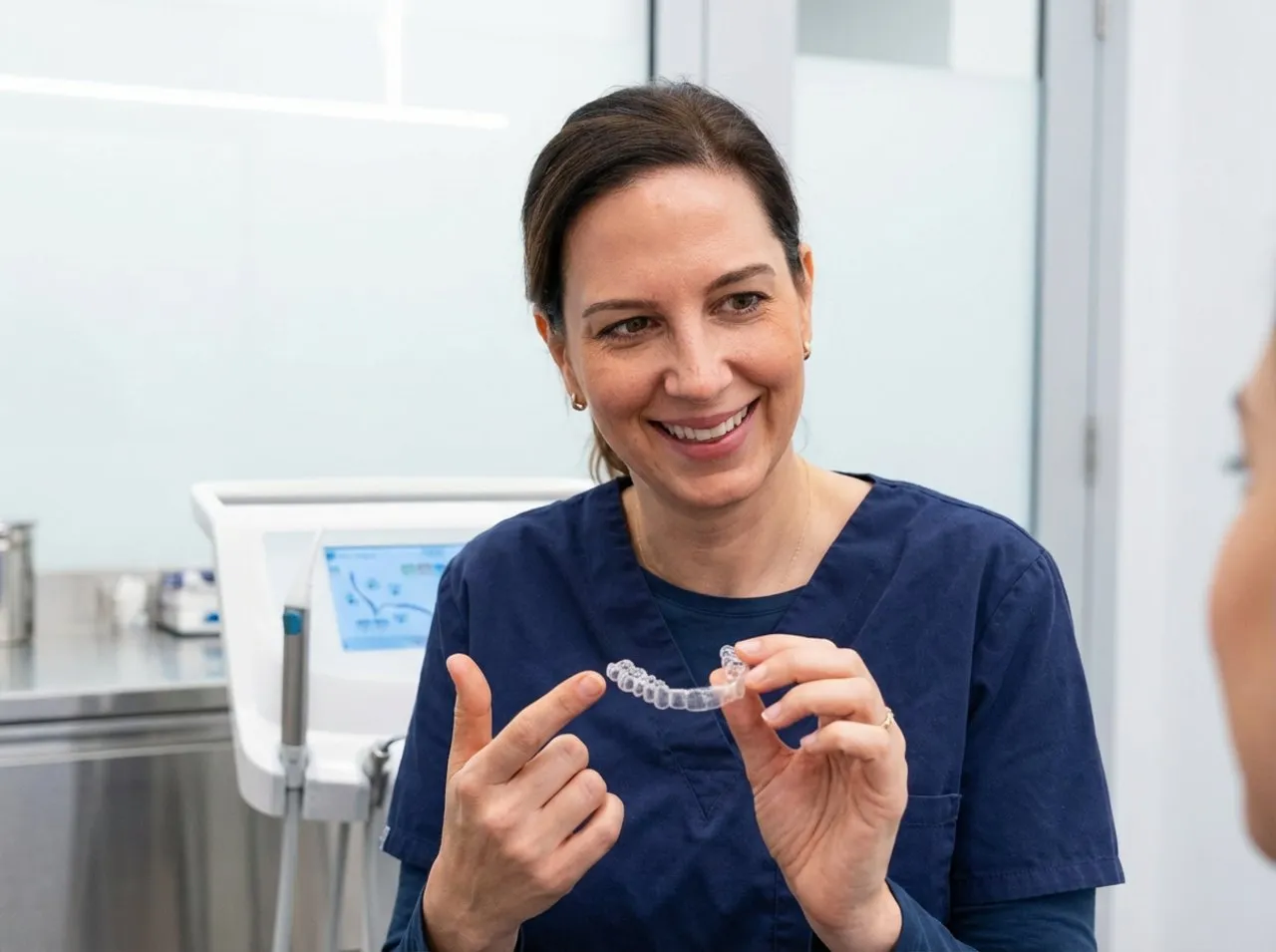
Cleaning clear dental aligners: daily routine
Clean the aligners briefly every time you remove them. First rinse them with lukewarm water. This removes coarse food debris and films of saliva. Then use a soft, separate brush. Use mild liquid soap with little dye as the cleaning agent. Carefully brush the inner surfaces, outer surfaces and edges. Rinse thoroughly afterwards. Soap residues can irritate the mucous membranes. Leave the aligners to air-dry briefly. Then store them in a clean container. Damp storage without air circulation encourages the growth of germs. A ventilated box is usually advisable.
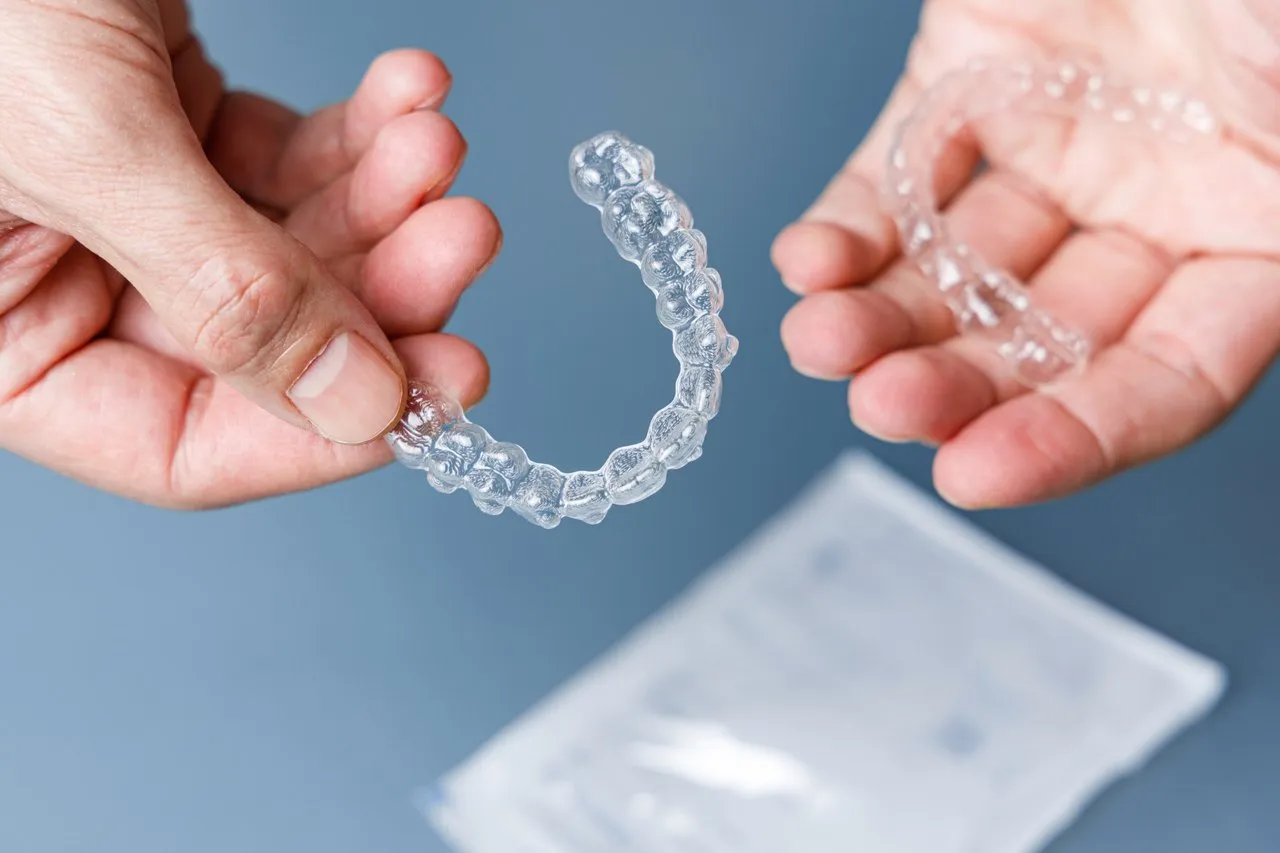
Cleaning your aligner without making mistakes: common causes of cloudiness
Many stains are caused by drinks containing dyes. Coffee, tea and red wine deposit pigments. Smoking also often leads to yellowish deposits. Another factor is limescale from tap water. Mineral residues settle on rough areas. This looks dull and feels rough. Cleaning your teeth themselves is also important. Without dental hygiene, biofilm quickly builds up again. This is especially true around attachments and interdental areas.
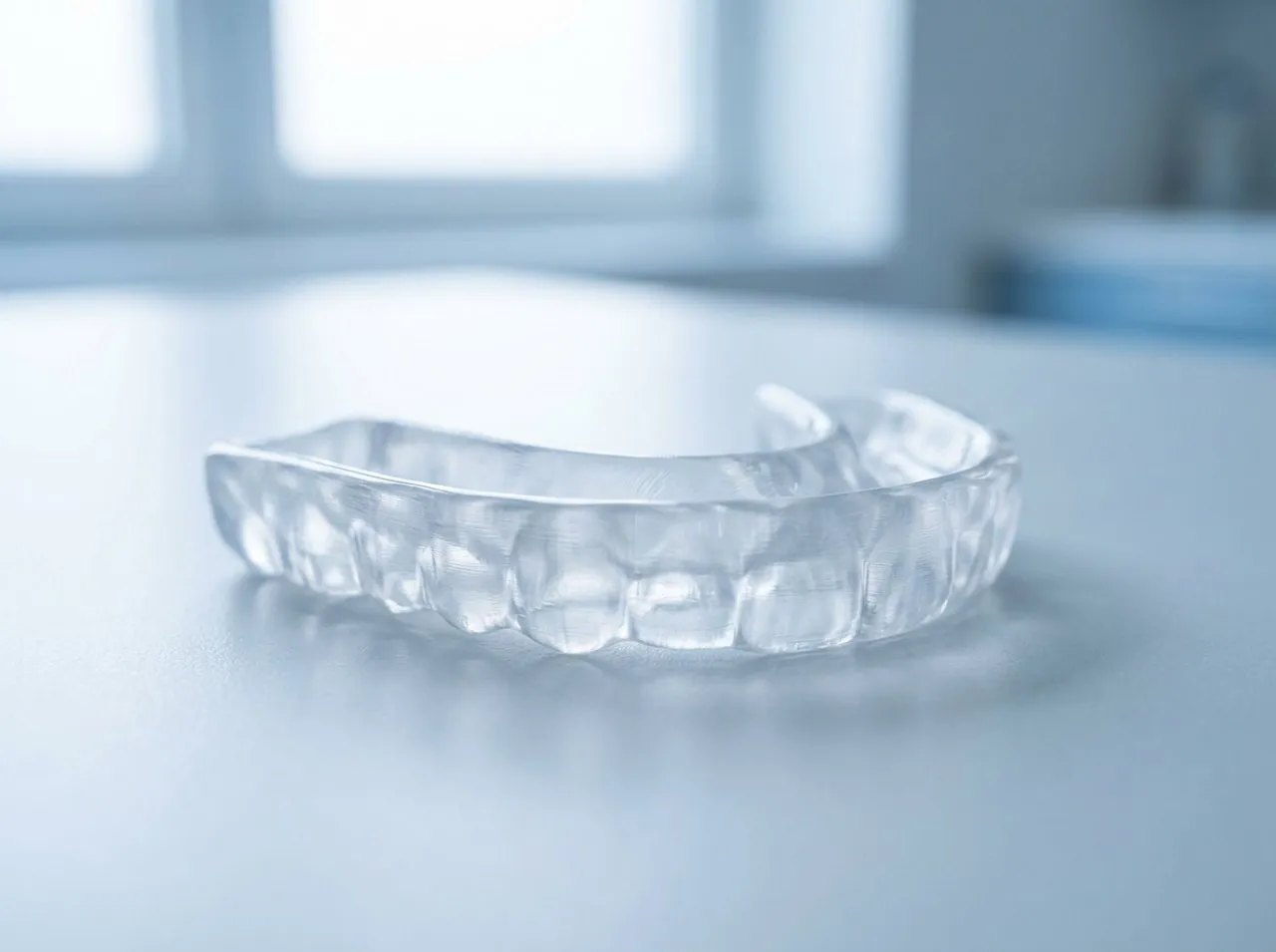
Cleaning on the go: hygiene away from home
You should also protect your aligners consistently when out and about. Rinse them with drinking water after removing them. Then store them exclusively in their box. Avoid using serviettes or tissues as a temporary solution. Germs and fibres adhere to them. Aligners can also easily be thrown away by accident. Brushing your teeth after a meal is ideal. If this is not possible, rinsing with water is advisable. Clean them thoroughly later as soon as you can.
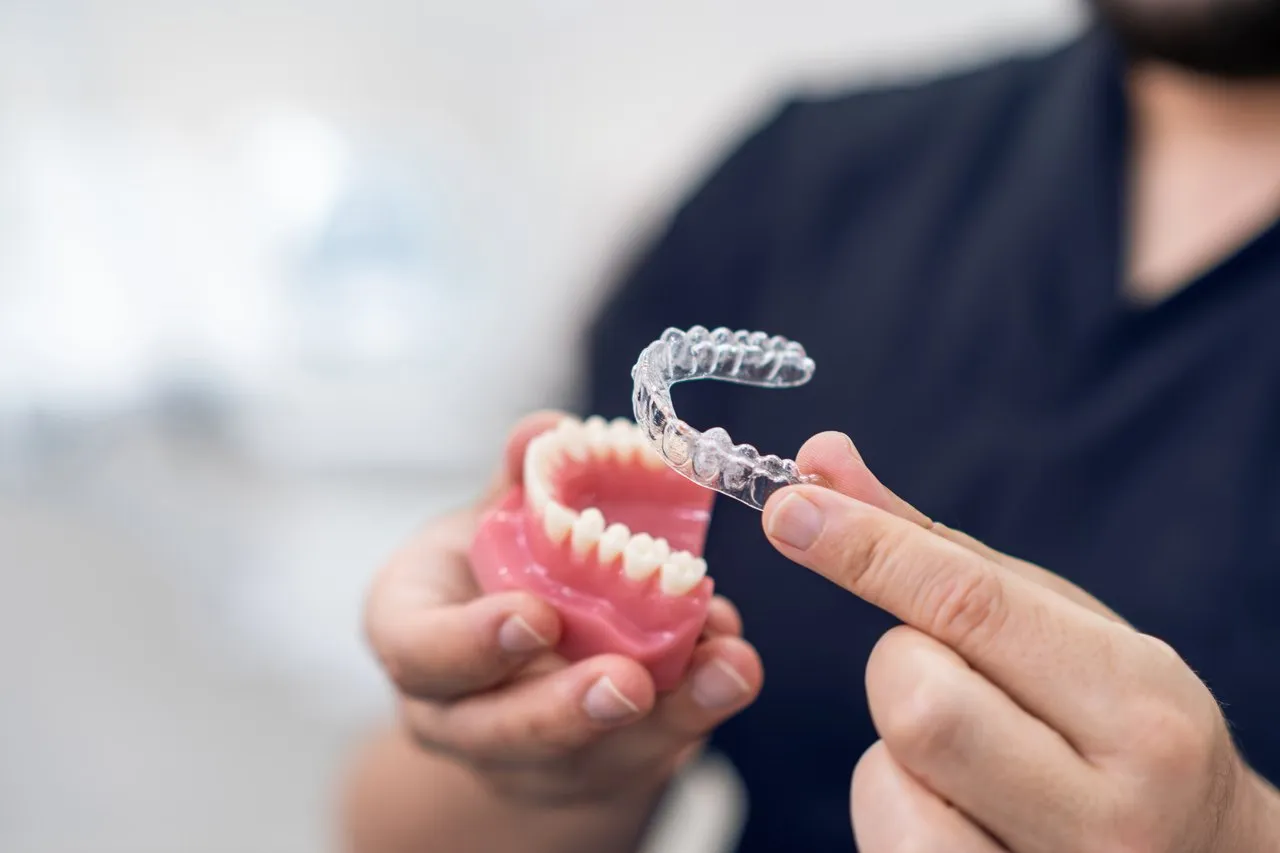
Deep cleaning: when tablets are useful
An additional deep clean can be carried out weekly. Special cleaning tablets for aligners are suitable for this. They are usually designed for use on plastics. Leave the aligners to soak only for the time specified by the manufacturer. Excessively long contact times can alter surfaces. Rinse thoroughly again afterwards. If there is a strong odour, an examination is advisable. A persistent odour may indicate biofilm or poor box hygiene. Professional advice can help here.
In-practice care: combining aligner care and oral hygiene
The best results come from a coordinated overall approach. This includes brushing your teeth, interdental care and fluoridation. Regular check-ups are also part of the treatment. Pay attention to sensitive areas along the gum margin. Pressure points or signs of inflammation should be investigated. The same applies to cracks or loss of fit. A professional dental clean can support the treatment. It reduces the bacterial load in hard-to-reach areas. This also makes home hygiene easier. Anyone wanting to clean an aligner should always do so in a way that protects the material. This keeps the fit and comfort consistent. It also makes treatment planning more reliable.
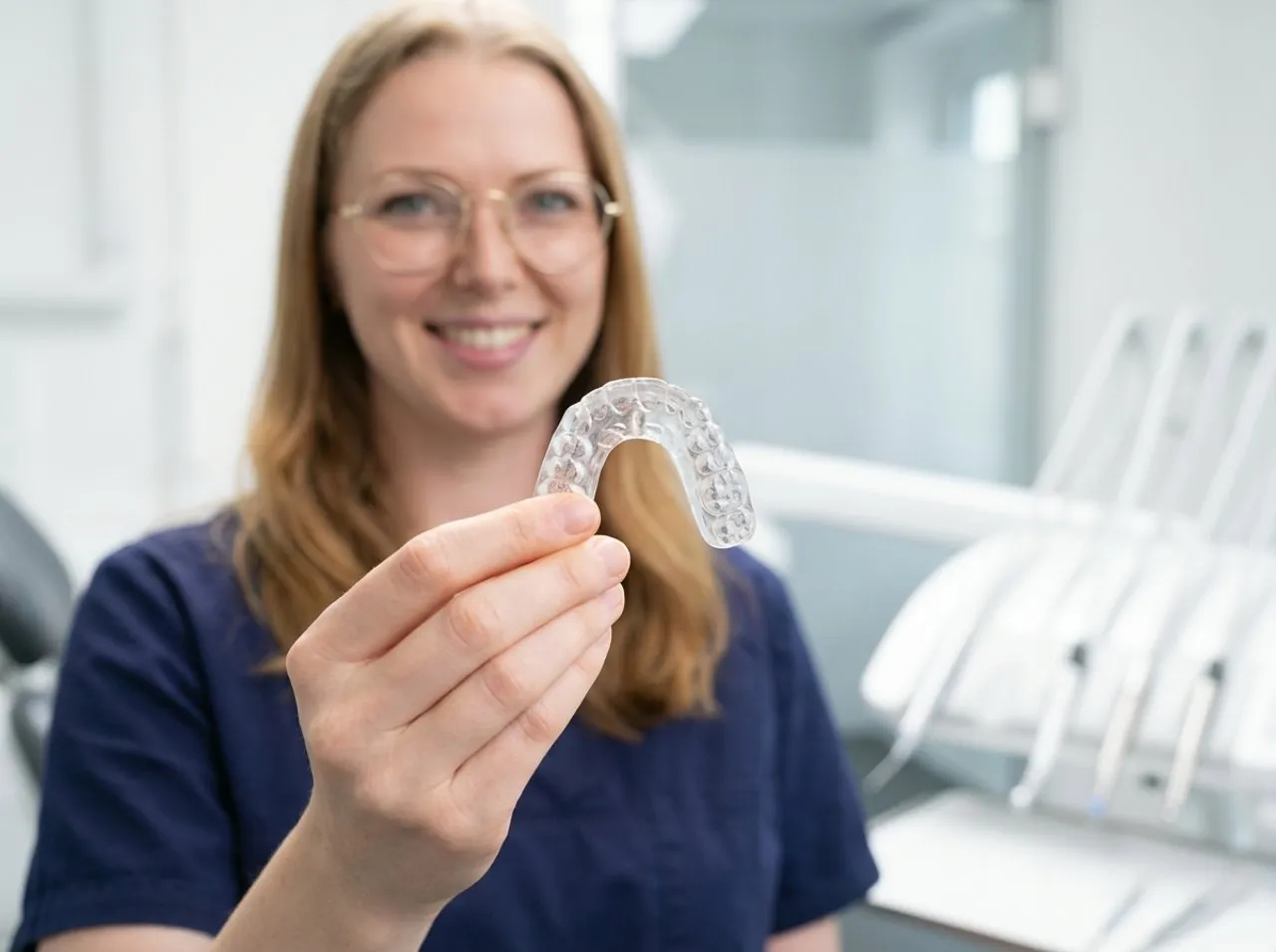
When should you contact the practice?
Contact us if your aligners become very cloudy despite correct care. This also applies to persistent bad breath or irritation of the mucous membranes. A medical assessment of the cause is then advisable. At the Wunschlachen dental practice in Berlin, we check the fit and condition. We assess biofilm, the risk of tooth decay and gum health. You will then receive a personalised hygiene routine. Anyone who has to clean dental aligners regularly benefits from clear routines. These routines reduce potential sources of error. They also improve long-term oral health.
FAQs about aligner care
Clean your aligners at least in the morning and evening. A brief rinse after removing them is also recommended.
Toothpaste is often too abrasive for plastic surfaces. It can cause microscratches and reduce transparency.
Hot water can deform thermoplastic materials. Use lukewarm water to protect the fit.
Mild liquid soap with little dye is often well tolerated. Harsh cleaners and alcohol should be avoided.
A weekly deep clean can reduce deposits. Use tablets that are explicitly approved for aligners.
First check the storage box for biofilm. If the odour persists, a dental examination should be carried out.
Aligners should generally be removed when eating. Drinks containing dyes increase the risk of discolouration.
Rinse the box daily and dry it completely. A clean, dry environment reduces the growth of germs.
Deposits can thicken the inner surface unevenly. This can make the fit less precise.
If your aligners quickly become very cloudy despite correct care, an examination is advisable. We check the condition of the material, oral hygiene and possible causes.
Book your appointment now
We would be happy to advise you in person at our practice.