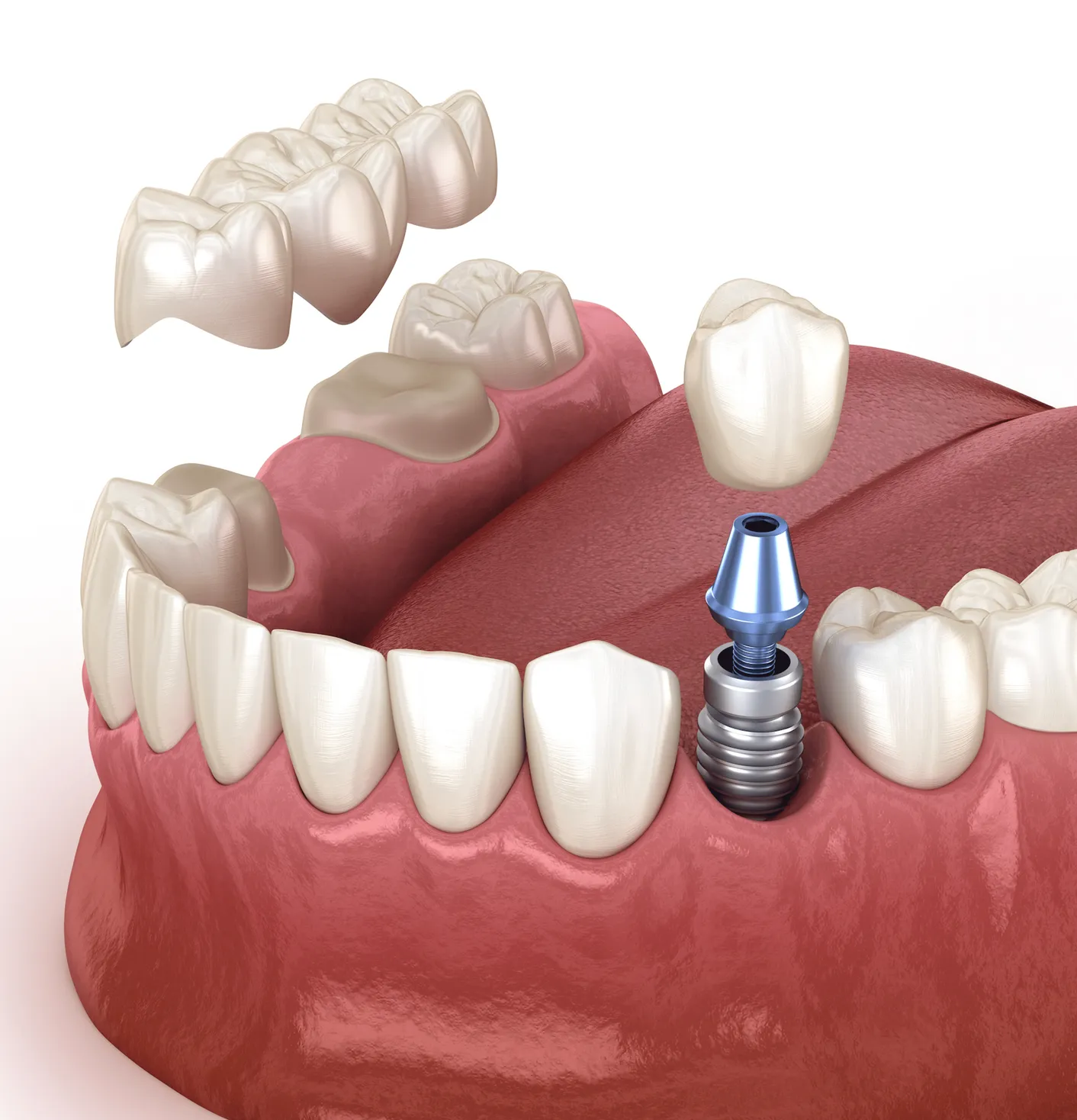
Which is better, a bridge or an implant?
Gaps between teeth can impair chewing and speech and, in the long term, affect the health of the entire jaw. They are not solely an aesthetic problem and therefore require prompt action. At our Wunschlachen dental practice in Berlin, we offer you two tried-and-tested solutions for...
Über 350 Google-Bewertungen
Video laden
Mit Klick wird eine Verbindung zu TikTok hergestellt.
Implant or bridge:
Both implants and bridges are intended to restore the function and appearance of the teeth. The difference lies in the method.
• A dental bridge is supported by neighbouring teeth and, as its name suggests, bridges the gap.
• A dental implant, on the other hand, replaces the lost tooth root with an artificial screw in the jaw.
The choice of the appropriate method depends on numerous factors, e.g. the patient's wishes, dental health and bone structure. Both techniques are suitable for the upper and lower jaw.
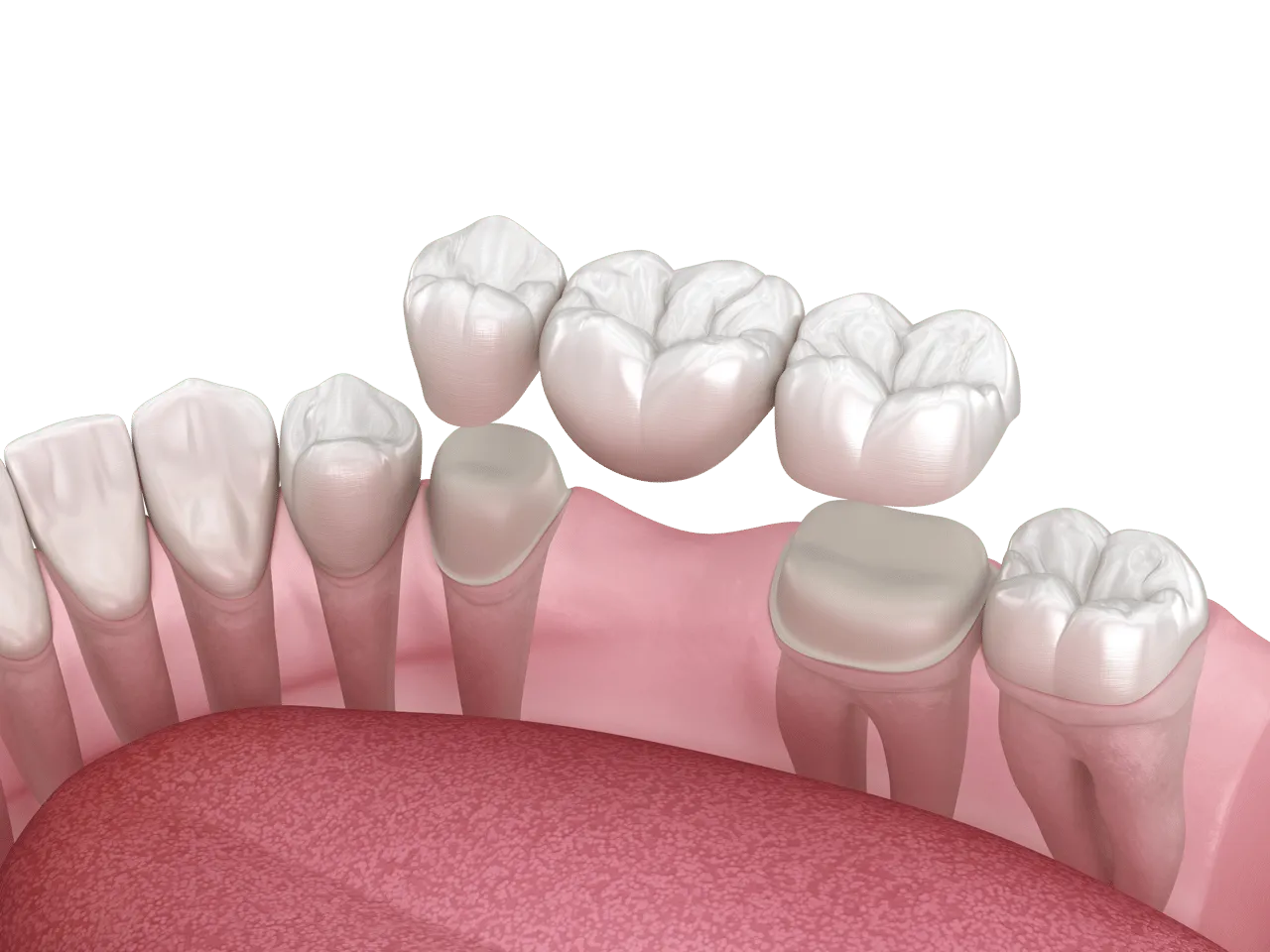
Dental bridge – the classic solution for gaps between teeth
A dental bridge is a fixed dental prosthesis supported by neighbouring teeth. The individual teeth (abutment teeth) are ground down and fitted with crowns, to which the pontic is attached.
Advantages of a dental bridge
• No surgery required
•Faster treatment compared with an implant
• Good aesthetics and function
• Proven method with a long tradition
• Less expensive than many implants
Disadvantages of a dental bridge
• Tooth substance from healthy neighbouring teeth must be sacrificed
• The strain on the abutment teeth can damage them in the long term
• Increased risk of tooth decay at the edges of the crowns
• Only suitable to a limited extent – bridges reach their limits with large gaps or an edentulous jaw
A bridge can be a good choice for small to medium-sized gaps. It is also a suitable solution if neighbouring teeth have already been filled or damaged.
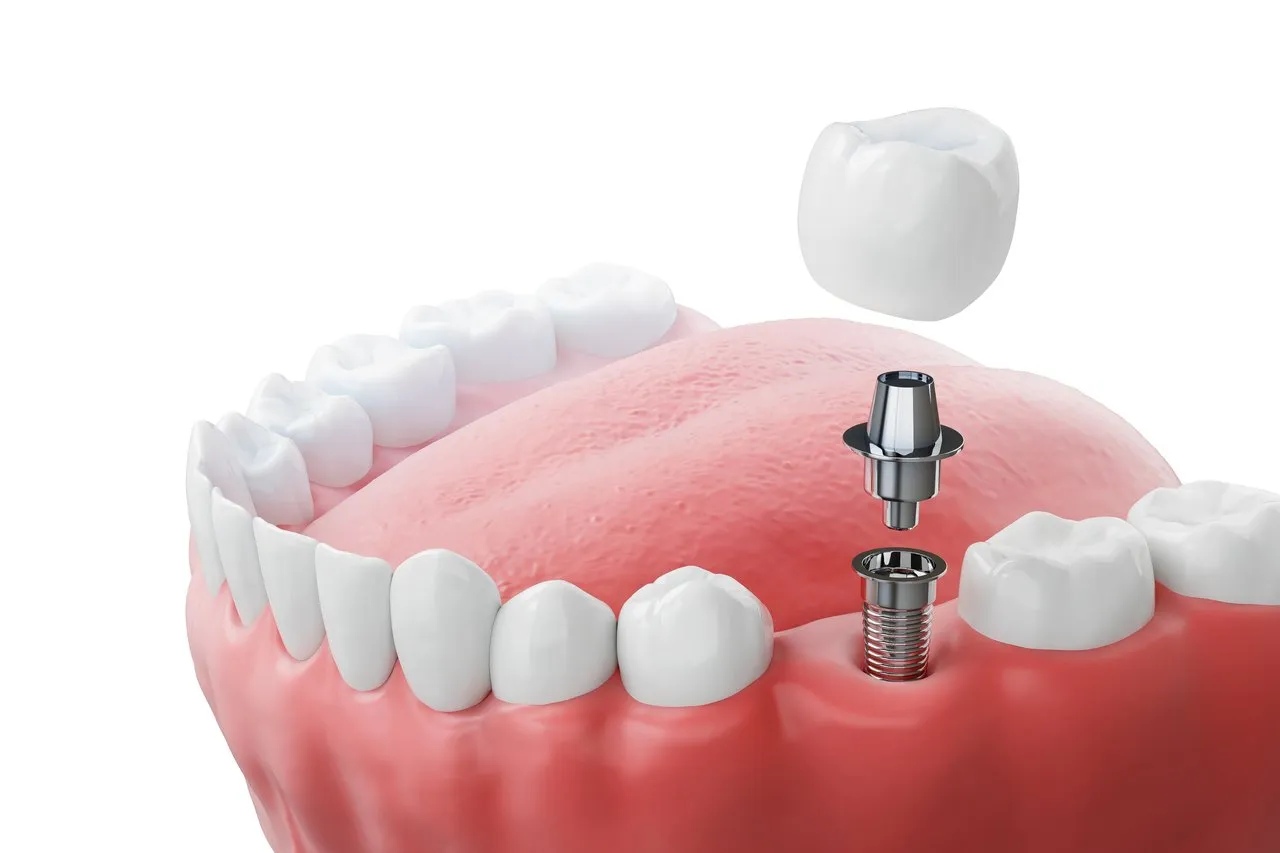
Dental implant. The modern, long-term solution
A dental implant is a small titanium or ceramic post anchored in the jawbone. It performs the function of the natural tooth root and supports the visible dental prosthesis, e.g. a crown or a conventional bridge.
Advantages of implants
• Preserves healthy teeth
• Very durable – often lasts a lifetime with good care
• Very comfortable to wear – feels like a natural tooth
• Stimulates the jawbone and helps prevent bone loss
• The most aesthetically sophisticated solution
Disadvantages of implants
• Surgery is necessary – under local anaesthetic
• Treatment takes longer because the jawbone needs to heal
• Not immediately possible for everyone – bone augmentation may be necessary
• Higher costs compared with a fixed bridge
• Thorough oral hygiene is essential, as inflammation can jeopardise the implant
Particularly for younger or health-conscious patients who want to make a long-term investment, an implant is often the better choice.
Which is better – a dental bridge or an implant?
Many patients ask themselves this question. The short answer: it depends.

The choice between an “implant or bridge” should always be made together with an experienced dentist. At Wunschlachen, we provide comprehensive advice and use modern 3D X-ray technology to analyse your individual situation precisely.

Implant costs and bridge costs
The question “Implant or bridge: which costs more?” is also frequently asked. In fact, implants are generally more expensive than bridges. This is due to the more complex treatment, the high-quality materials and their longer durability. A simple dental bridge costs approximately €800–€1,500, depending on the material and the work involved. Dental implant costs are often between €1,800–€3,500, depending on bone augmentation, the dental prosthesis and the technique used. Nevertheless, an implant can pay off in the long term, particularly when it comes to preventing subsequent damage to neighbouring teeth.
Conclusion: implant or bridge – which is better?
Both solutions have their merits. The dental bridge is convincing thanks to its straightforward procedure, lower costs and quick placement. The implant, on the other hand, stands out for its natural feel, preservation of neighbouring teeth and outstanding longevity. Which is better: a bridge or an implant? – You should not make this decision on your own. At our practice in Berlin, we provide individual, honest advice based on the latest technologies. Book your appointment at Wunschlachen now. We will personally advise you on the options of an “implant or bridge”.
Frequently asked questions (FAQ)
An implant looks more natural because it visually imitates a real tooth. However, modern bridges can also look very natural.
Treatment with a bridge usually takes 1–2 weeks. Implant treatment can take several months, as healing time and, if necessary, bone augmentation are required. We will draw up a treatment and cost plan for your treatment with us.
Titanium implants are generally very well tolerated and biocompatible. Ceramic or metal bridges are also proven materials with a high level of tolerability.
A bridge is fitted without surgery and is therefore less invasive. An implant requires surgery. However, this is performed under local anaesthetic and is generally well tolerated.
A bridge generally lasts between 10 and 15 years. An implant can last longer, up to 25 years. With good care, it can last a lifetime.
Yes, a normal diet is possible with both options. Implants often provide better support and greater chewing comfort, especially with firm foods.
In some cases, a bridge may be a better choice for replacing teeth, e.g. if the neighbouring teeth are too severely damaged or an implant is not an option for health reasons.
This happens very rarely. Our staff will always be there to support you in this situation. Together, we will look for an alternative treatment. In such cases, a bridge or another implant may be an option.
Both types of replacement require very good oral hygiene. Implants must be cared for particularly carefully to prevent inflammation.
Statutory health insurance funds generally only pay a fixed subsidy. The amount depends on the clinical findings. Private or supplementary insurance policies may cover further costs. We will be happy to advise you at our practice and draw up a cost plan.
This question cannot be answered in general terms. The cost of a single implant or a bridge depends on the clinical findings. Book an appointment now to find out more about your costs.
Book your appointment now
We will be happy to advise you personally at our practice.