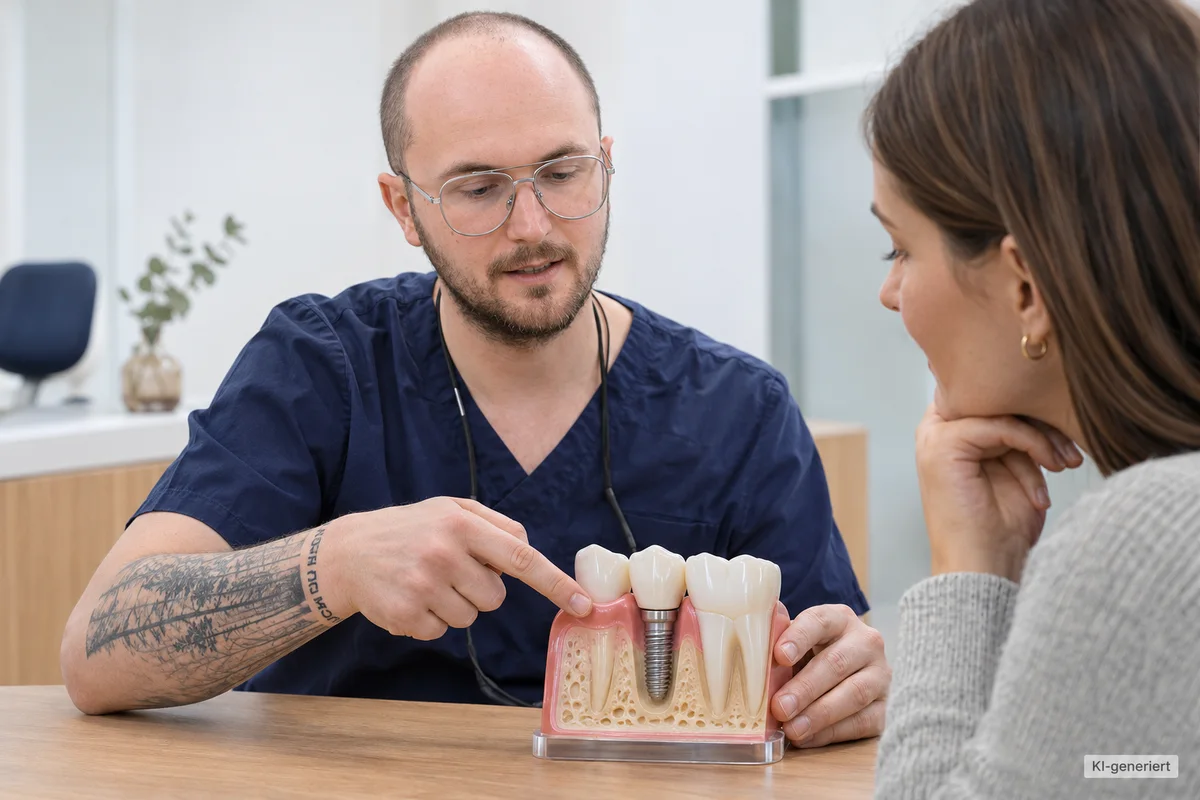
Is my implant inflamed, what can I do myself and when do I need urgent help?
Pain and swelling can occur after implant surgery; how they progress is crucial. If your symptoms worsen, or you develop new swelling, pus or a fever, you should contact your dental practice immediately. Home remedies are no substitute for treatment. If you have difficulty breathing, call 112 immediately.
- Monitor how symptoms progress
- Pain, discomfort and swelling can occur after implant surgery. As healing progresses, an improvement is to be expected rather than a renewed deterioration.
- Have worsening symptoms assessed
- Increasing pain or swelling, as well as pus or a fever, are signs that should be assessed by a dentist promptly.
- Difficulty breathing is an emergency
- If you have difficulty breathing, call 112 immediately. Do not wait for a practice appointment in this situation.
In this article
After implant surgery: assessing symptoms correctly
Use the timeline as a guide, not for self-diagnosis. The individual aftercare instructions provided by your dental practice take precedence.
- Symptoms are mild and improving
Follow the agreed instructions on rest and oral hygiene and monitor how your symptoms progress. Do not try to treat an infection yourself with home remedies.
- Symptoms are worsening or newly occurring
Contact your dental practice immediately for an assessment if you experience increasing pain, new or increased swelling, pus or a fever.
- The implant feels loose
Avoid putting pressure on the area and have the finding examined by a dentist promptly, rather than testing the mobility yourself.
- You are having difficulty breathing
Call 112 immediately. This situation is an emergency and should not be managed by watchful waiting at home.
What does inflammation after implant surgery mean?
Inflammation is a defence response by the body. It occurs at the wound. This is initially to be expected after an operation. It becomes problematic if an infection develops. Bacteria then multiply in the surgical area. This can interfere with healing.
Typical symptoms after the procedure
Mild swelling, a feeling of pressure and warmth are common. Minor bruising is also possible. These signs usually subside quickly.
Pay attention to how your symptoms progress. You should notice an improvement every day. A deterioration is a warning sign.
Inflammation around an implant: when does it become serious?
The depth of the inflammation is crucial. Superficial irritation can often be managed well. Deep pockets around the implant are serious. Bone can be lost there. This is often referred to as peri-implantitis.
Inflamed implant: what should I do?
Contact your treating practice early if your symptoms worsen. Home remedies are no substitute for a diagnosis or treatment. Follow the individual instructions on cooling and oral hygiene, and avoid additional irritation or pressure on the wound.
Common causes of inflammation after implant surgery
Bacteria enter the tissue through the wound. Plaque and tartar increase the risk. A poorly fitting temporary restoration can also cause irritation. Smoking reduces blood circulation. Diabetes can slow wound healing. Pre-existing periodontitis increases the risk of inflammation.
Normal healing or a developing infection?
The key factor is how your symptoms develop over time: expected healing shows an overall improvement, whereas pain that increases again or new swelling requires assessment. Pus, an unpleasant taste, a fever or implant mobility are also not typical signs of uncomplicated healing. A specific number of days alone does not determine the diagnosis. Have your progress assessed by a dentist, particularly if your symptoms worsen or you are unsure.
Peri-implantitis: definition and significance
Peri-implantitis is inflammation around the implant. It also affects the bone. Without treatment, the implant may be lost. A milder precursor is called mucositis. Only the soft tissue is affected in this case. This stage is often reversible.
Home remedies for peri-implantitis: what is useful?
Home remedies are not a treatment for inflammation around an implant. Mouthwashes should also only be used on a dentist's recommendation. Have the cause of your symptoms assessed; peri-implant disease requires professional treatment.
Diagnosis at the dental practice
We examine the mucous membrane, the wound edges and the probing depths. We assess bleeding and discharge. If necessary, we take X-rays. Sometimes a 3D scan is helpful. It shows the bone structure precisely. This is how we plan the next steps.
Treatment: which steps are usual?
First, we gently remove deposits. We clean the area around the implant. This reduces the bacterial load. An antibiotic may be necessary in cases of severe infection. The dentist makes this decision on an individual basis. Monitoring progress is important. Peri-implantitis often requires further measures. These include deep cleaning and surgical debridement. In some cases, bone augmentation may be appropriate.
What you should bear in mind at home
Do not smoke during the healing phase. Sleep with your upper body slightly elevated. Avoid hard foods on the surgical side. Use a soft toothbrush. Clean the neighbouring teeth carefully too. Attend the recommended follow-up appointments.
Warning signs: when you should act immediately
If pain or swelling increases, pus is discharged, a fever develops or the implant feels loose, have this assessed by a dentist immediately. You should also report persistent bleeding or new numbness to your treating practice. If you have difficulty breathing or heavy bleeding, call 112 immediately.
Prevention: how to reduce the risk
Professional preventive care reduces the bacterial load. Consistent oral hygiene is crucial. We demonstrate suitable brushing techniques and interdental cleaning aids. Regular aftercare ensures long-term success. Risk factors must be closely monitored. These include smoking and periodontitis.
Inflammation after implant surgery at Wunschlachen
At the Wunschlachen practice in Berlin, we work in a structured manner. We combine clinical examinations with modern diagnostics. This enables us to identify problems early. We explain every step clearly. You receive clear hygiene and lifestyle advice. Prompt appointments are available if you experience symptoms.
Conclusion
Such a procedure is not always dangerous. The way symptoms develop is crucial. Early assessment protects the implant and bone.
Frequently asked questions
What symptoms are still normal after implant surgery?
Mild swelling and a feeling of pressure can occur after the procedure. Pay attention to the overall development and the individual advice from your practice.
How can I recognise an infection after implant placement?
Increasing pain after a short period of relief is typical. New swelling and an unpleasant taste often occur as well. A fever may develop.
How long can swelling last?
The severity and duration of swelling depend on the procedure. If swelling develops newly or continues to increase, ask your treating practice.
Can inflammation around an implant occur without pain?
Yes, that is possible. Bleeding when brushing can be an early sign. This is why follow-up appointments are important.
What exactly does peri-implantitis mean?
It is inflammation around the implant with bone loss. It differs from purely mucosal irritation. Without treatment, there is a risk of implant loss.
Does mouthwash help with inflammation?
Mouthwashes can reduce germs. They support professional cleaning. The choice should be agreed with a dentist.
When are antibiotics used?
Antibiotics are used for bacterial infections and clear signs of infection. The decision depends on the findings. Local treatment remains important.
Can smoking promote inflammation?
Yes, smoking impairs blood circulation. This means the wound heals more slowly. The risk of complications increases.
What can I do myself to prevent it?
Maintain thorough oral hygiene. Attend preventive care and check-ups. Avoid pressure and strain during the healing phase.
Does an inflamed implant always have to be removed?
No, conservative measures are often successful. The timing and extent of bone loss are crucial. Early treatment improves the chances of success.
Inflamed implant – what should I do?
Have increasing pain, new swelling, pus or a fever assessed by a dentist immediately. Do not delay seeking advice in favour of trying to treat it yourself. If you have difficulty breathing, call 112 immediately.
Can I treat inflammation around an implant with home remedies?
No. Home remedies are not a treatment for an infection or peri-implant disease. Neither mouth rinses nor cooling can replace an examination or any necessary treatment. Follow your individual aftercare instructions and have the cause of your symptoms assessed.
Sources
- Dental implants
The basis for expected symptoms and warning signs in the early period after implant surgery, as well as for the recommendation to seek a dental assessment. Not used as evidence for the diagnosis or treatment of later peri-implant diseases.
- Peri-implant diseases
Applies exclusively to peri-implant diseases and their professional assessment and treatment. The source is not applied to early postoperative infections or their progression over time.
- Emergency – Clinic for Dental, Oral and Maxillofacial Medicine
Emergency information from Freiburg University Medical Centre; the basis for calling 112 immediately in the event of difficulty breathing. Not evidence for other symptoms or for the treatment of implant inflammation.