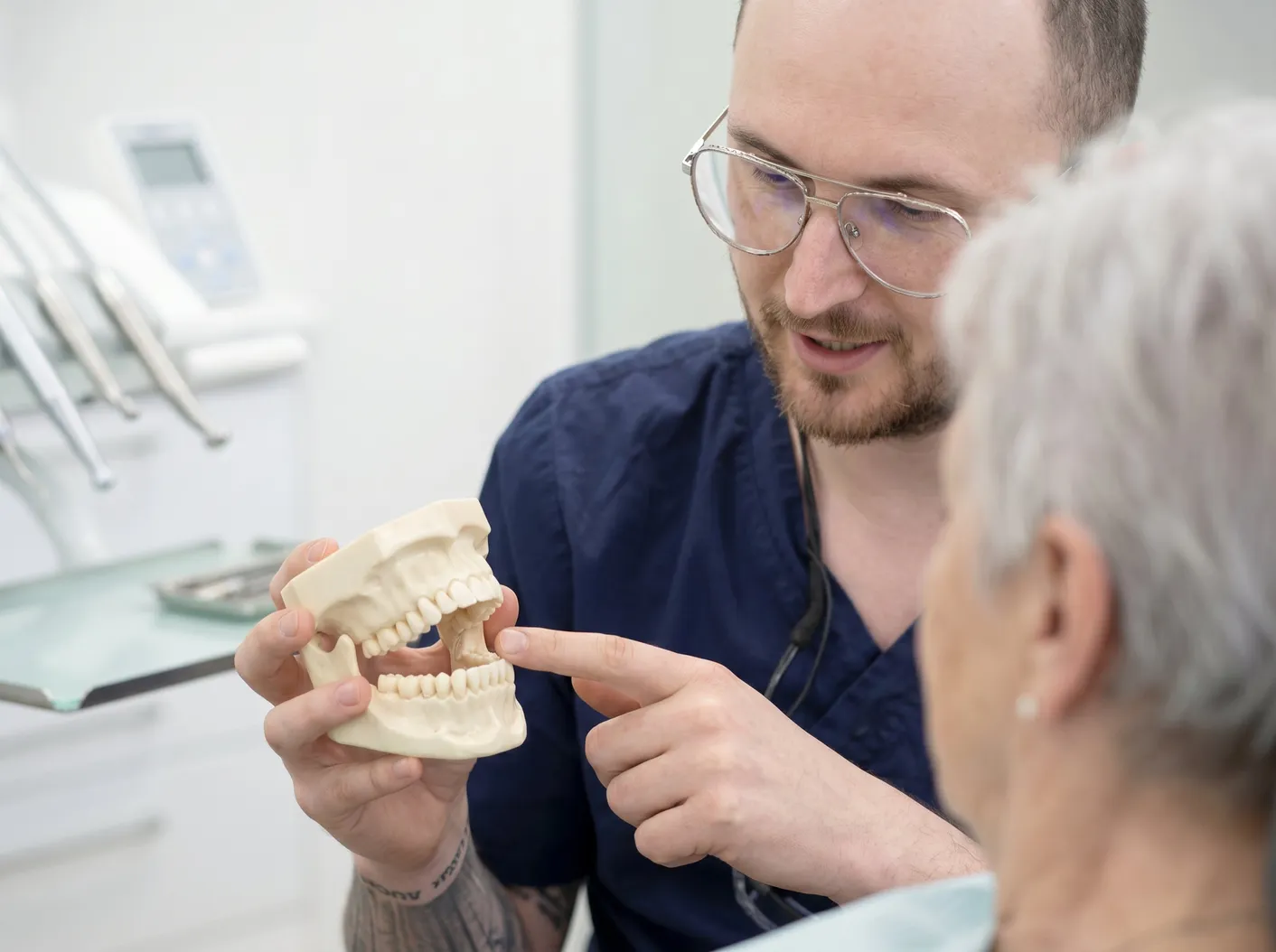
Lower-jaw denture without visible clasps – your options
A denture in the lower jaw without visible clasps is of interest to many patients. They want a secure fit, a natural feel and no visible clasps. The key factors are the fit, the anatomy of the jaw and the appropriate type of denture.
Über 350 Google-Bewertungen
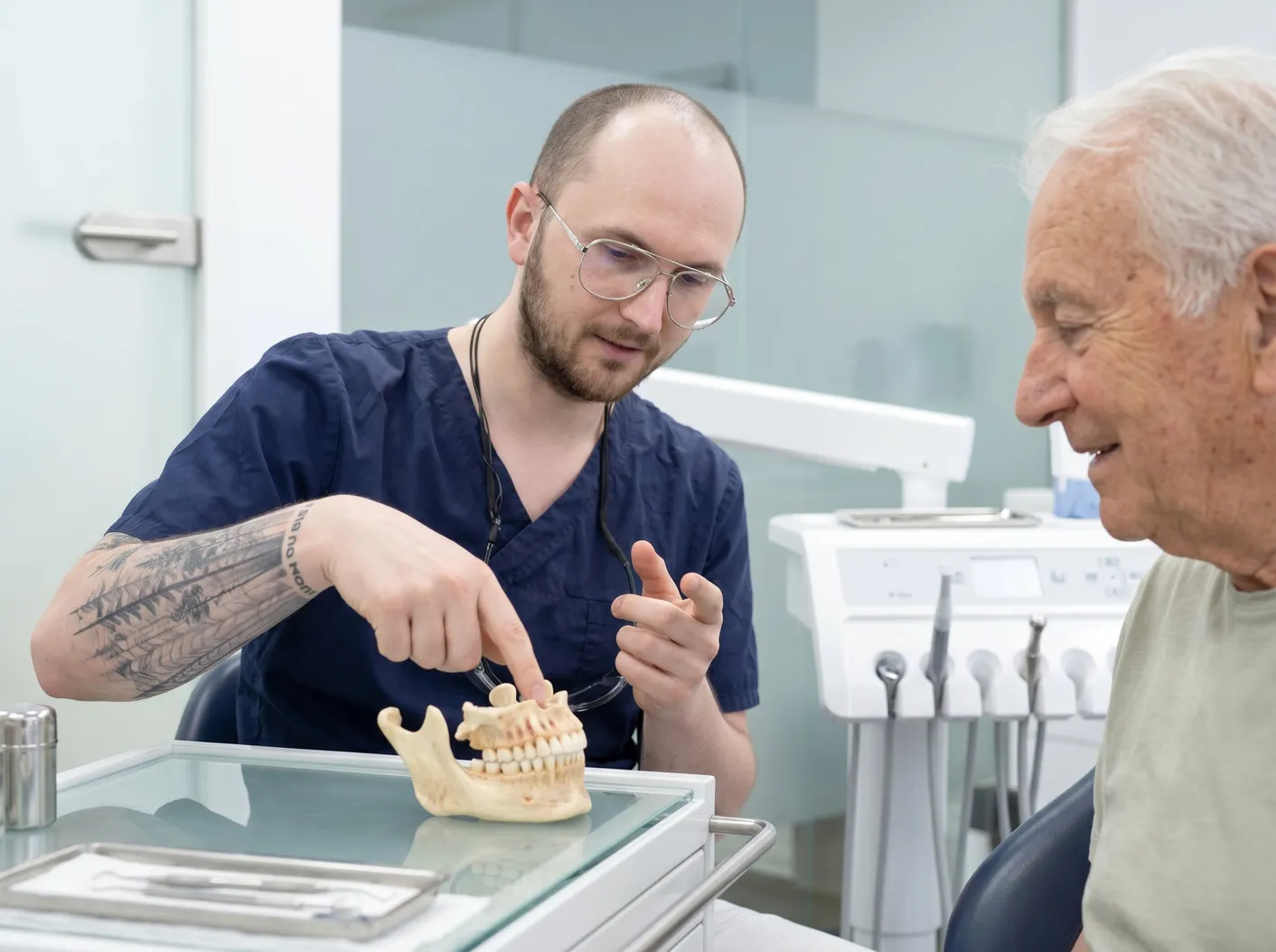
What does a denture in the lower jaw without visible clasps mean?
A denture in the lower jaw without visible clasps usually refers to a removable dental prosthesis without visible clasps. It is often a full denture for a toothless lower jaw. It is held in place not by metal clasps, but by its precise fit.
The film of saliva, lips, tongue and cheeks also play an important role. They stabilise the prosthesis in everyday life. This is why every lower-jaw denture must be fabricated with great precision.
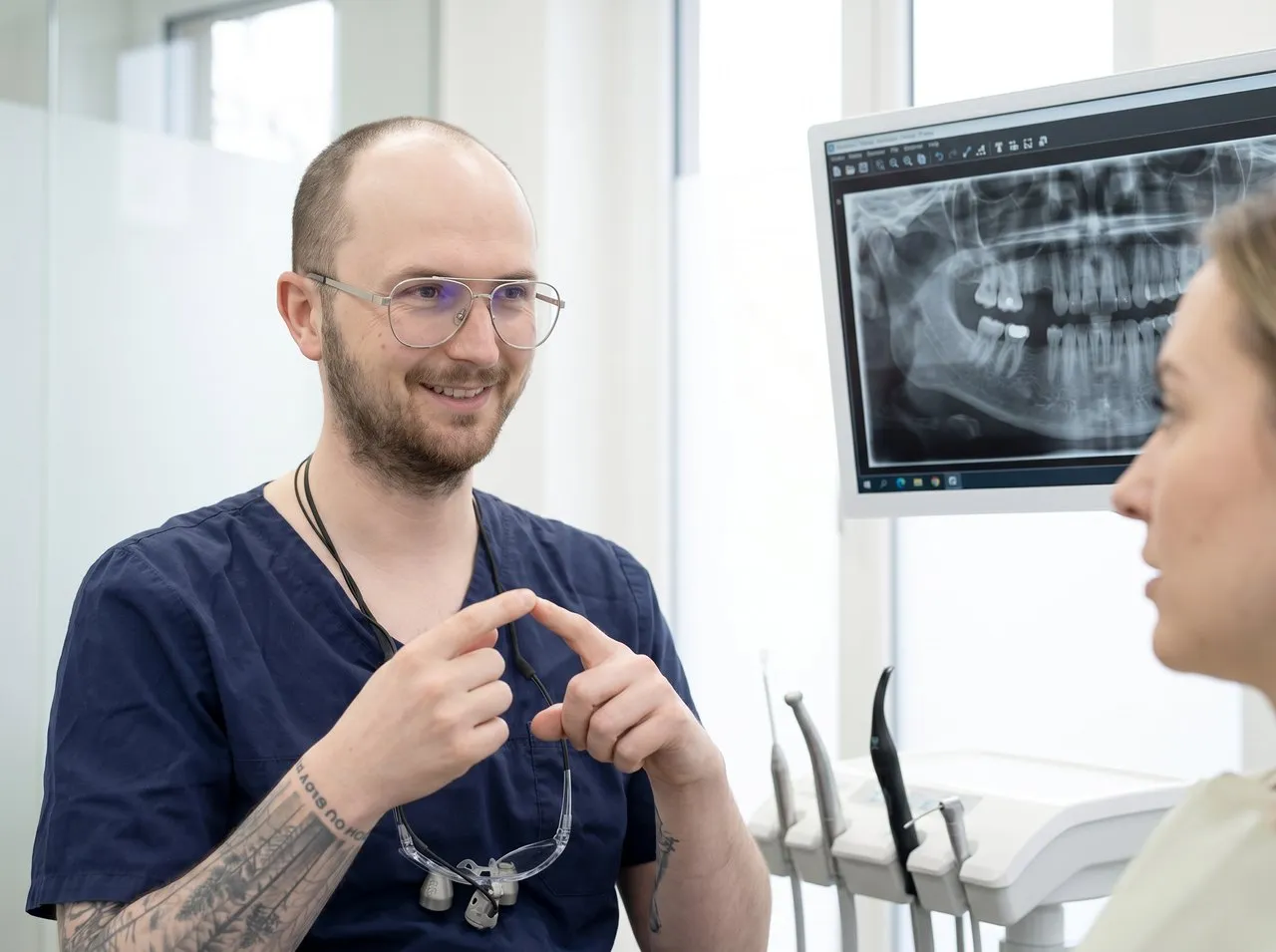
Why is retention in the lower jaw often more difficult?
The lower jaw usually provides less supporting surface than the upper jaw. The tongue is also constantly moving. This can significantly affect the stability of a denture.
In addition, the jawbone may recede after tooth loss. The dental prosthesis then often fits more loosely. Many people therefore want a solution without visible clasps, but with a secure fit.
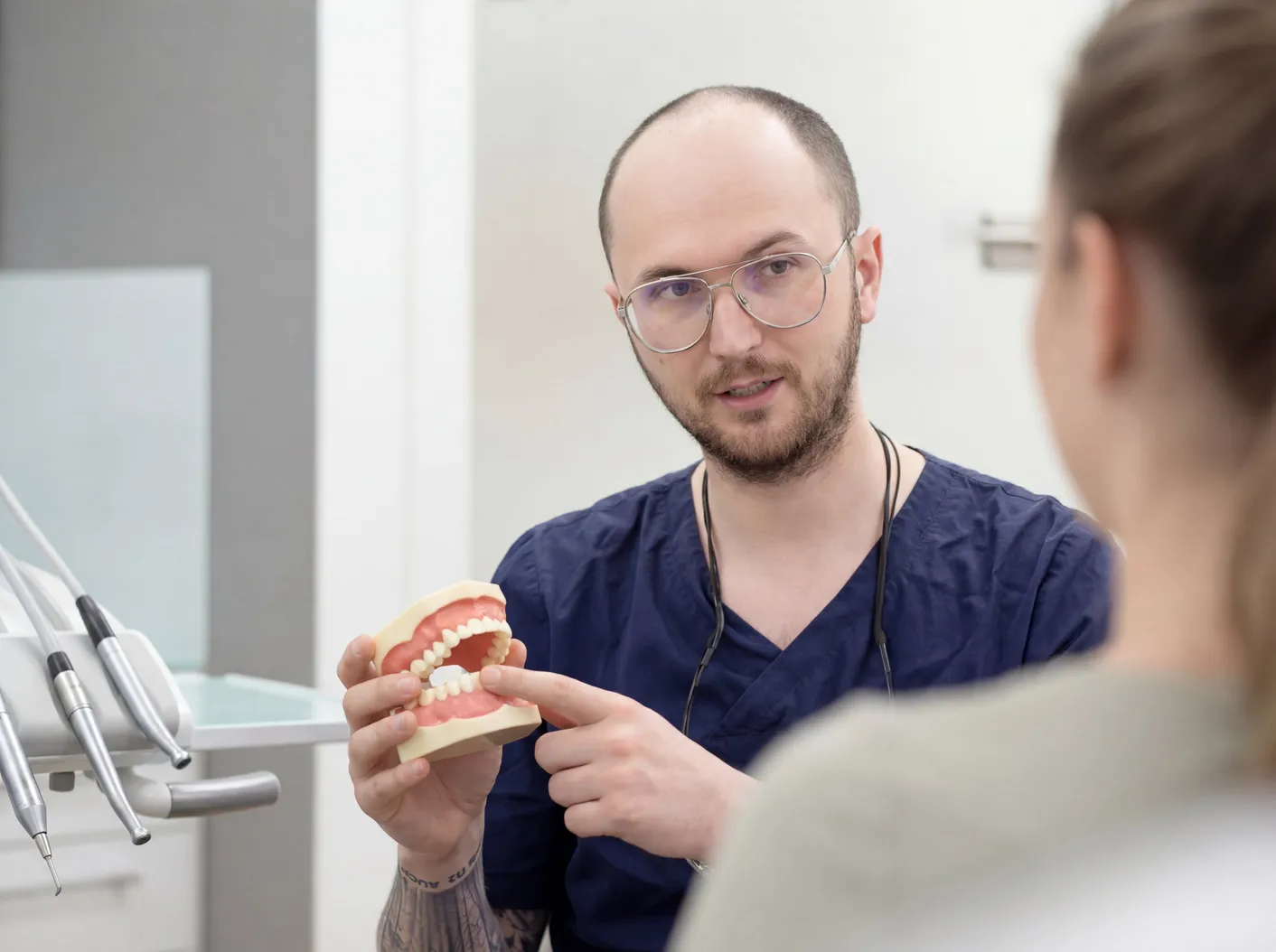
What types are available?
Various types of prosthesis can be used in the lower jaw. Which solution is suitable depends on the remaining teeth and the amount of available bone. Aesthetic preferences are also important.
A conventional full denture is suitable when all teeth have been lost. It does not require clasps. It is held in place solely by its shape, border design and the denture-bearing tissues.
If individual teeth remain, a partial denture without visible clasps may be possible. Concealed connecting elements are often used in this case. These solutions are more discreet than clasp-retained dentures.
Another option is an implant-supported lower-jaw denture. It remains removable, but is secured to implants. This often significantly improves retention.

Advantages of a lower-jaw denture without visible clasps
Many patients choose this type for aesthetic reasons. Visible clasps are often considered unsightly. An inconspicuous prosthesis generally looks more harmonious.
Speech may also feel more natural. Many people gain confidence in everyday life as a result. This applies particularly to social situations and mealtimes.
There is also a more comfortable feeling in the mouth. Modern dentures are now precisely fitted and lightweight. This significantly improves wearing comfort.

When is this type of solution advisable?
A denture in the lower jaw without visible clasps is advisable when aesthetics are important. It may also be suitable if no visible metal parts are desired. It is also often a good choice for a completely toothless lower jaw.
However, whether the prosthesis fits securely enough must be assessed individually. The condition of the mucosa is important in this respect. The shape of the jaw ridge also plays a major role.
Limitations and possible problems
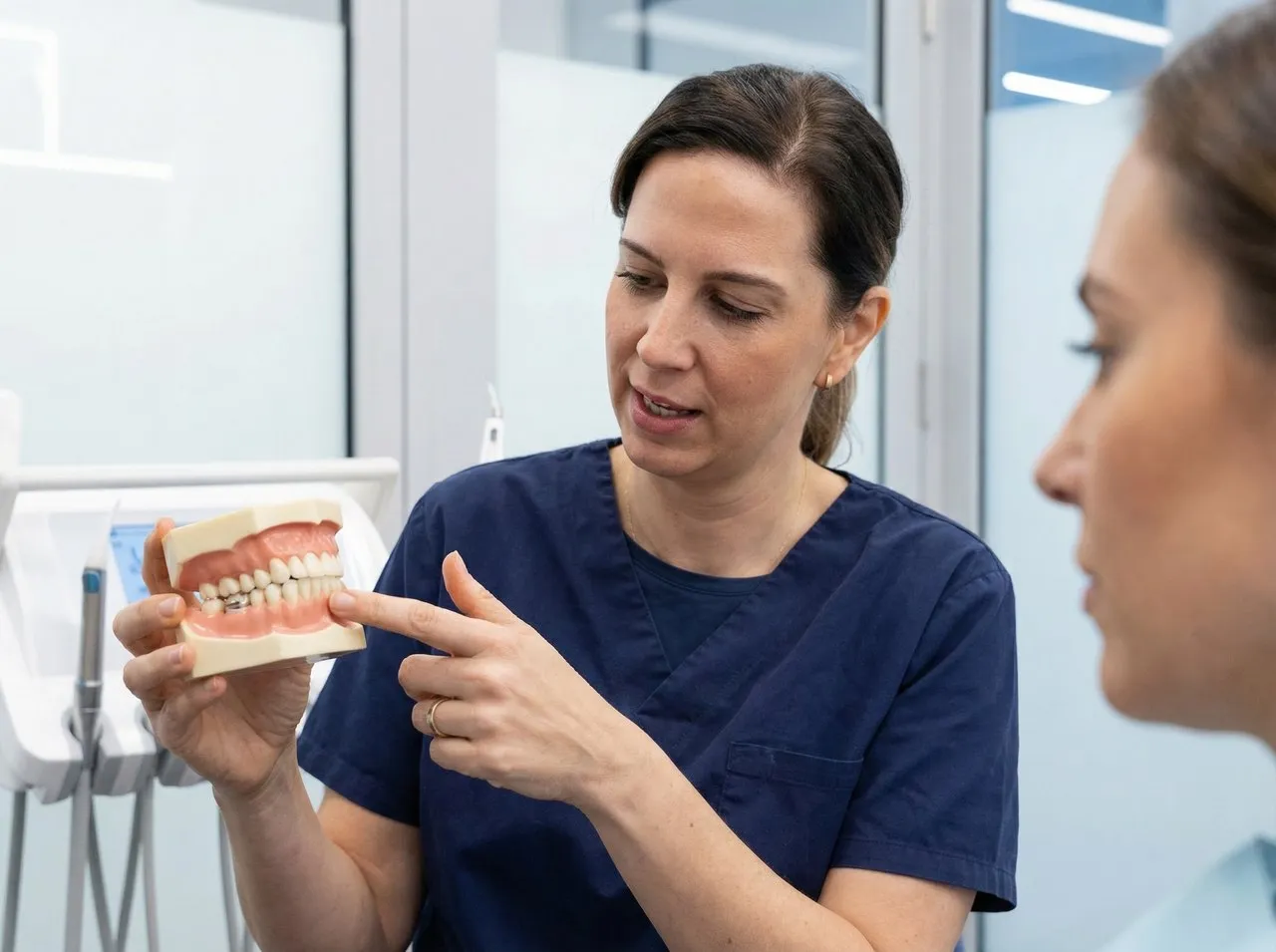
Not every lower-jaw denture fits optimally from the outset. Pressure points, friction or uncertainty when chewing may occur initially. This is particularly possible in cases of severe bone loss.
A loose fit is also not uncommon in the lower jaw. In such cases, relining or adjustments can help. Sometimes an implant-based solution is more advisable in the long term.
Honest advice before treatment begins is essential. This is the only way to align expectations and possibilities effectively. It increases satisfaction with the result.
How does the treatment work?
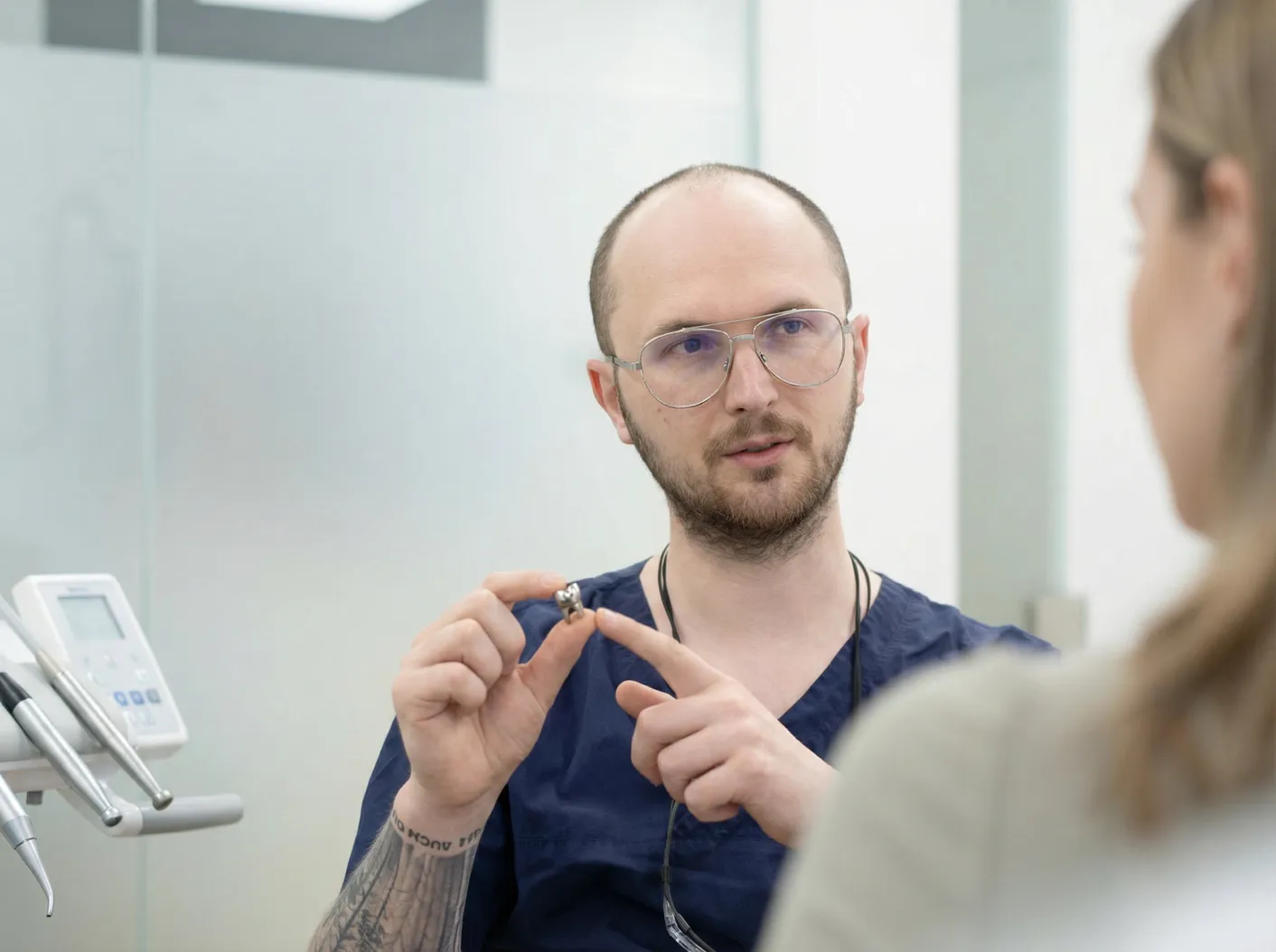
Treatment begins with an examination and consultation. The mucosa, jaw shape and bite are assessed. Detailed planning then follows.
The next step is to take impressions or digital scans. The dental laboratory uses these to fabricate the denture. Several try-ins ensure the correct shape and fit.
Aesthetics are also checked before the denture is fitted. The tooth colour and position should look natural. The dental prosthesis is then inserted and finely adjusted.

How can the retention of a lower-jaw denture be improved?
A good denture base is the most important factor. It must rest precisely on the jaw. Even small deviations can impair the fit.
Regular check-ups are also important. The lower jaw changes over time. Relining may then be necessary.
If retention is significantly reduced, implants can help. Even a small number of implants often improve stability. This applies particularly in difficult anatomical conditions.

How does the treatment work?
Cleaning should be carried out daily. The denture, mucosa and tongue must be cared for thoroughly. This helps to reduce deposits and irritation.
Rinsing with water after eating often helps. Food debris should not be left to adhere for long. Regular check-ups at the practice are also important.
Even a well-fitting denture needs follow-up care. Otherwise, changes to the jaw often go unnoticed. Early adjustments protect comfort and function.

Conclusion: a lower-jaw denture without visible clasps can be planned effectively
A denture in the lower jaw without visible clasps can be an aesthetic and functional solution. Precise planning and a very good fit are crucial. If necessary, retention can also be improved with implants.
For many patients, a clasp-free prosthesis is a major benefit. It is inconspicuous and supports everyday life. At Wunschlachen, we assess which solution suits your individual oral situation.