Partial denture for the lower jaw without clasps: A modern approach
Dentures are a tried-and-tested solution for replacing missing teeth. Tooth loss can have a considerable impact on chewing efficiency and general well-being, particularly in the lower jaw. A partial denture for the lower jaw without clasps is a modern, aesthetically appealing solution that is both functional and comfortable.
Über 350 Google-Bewertungen
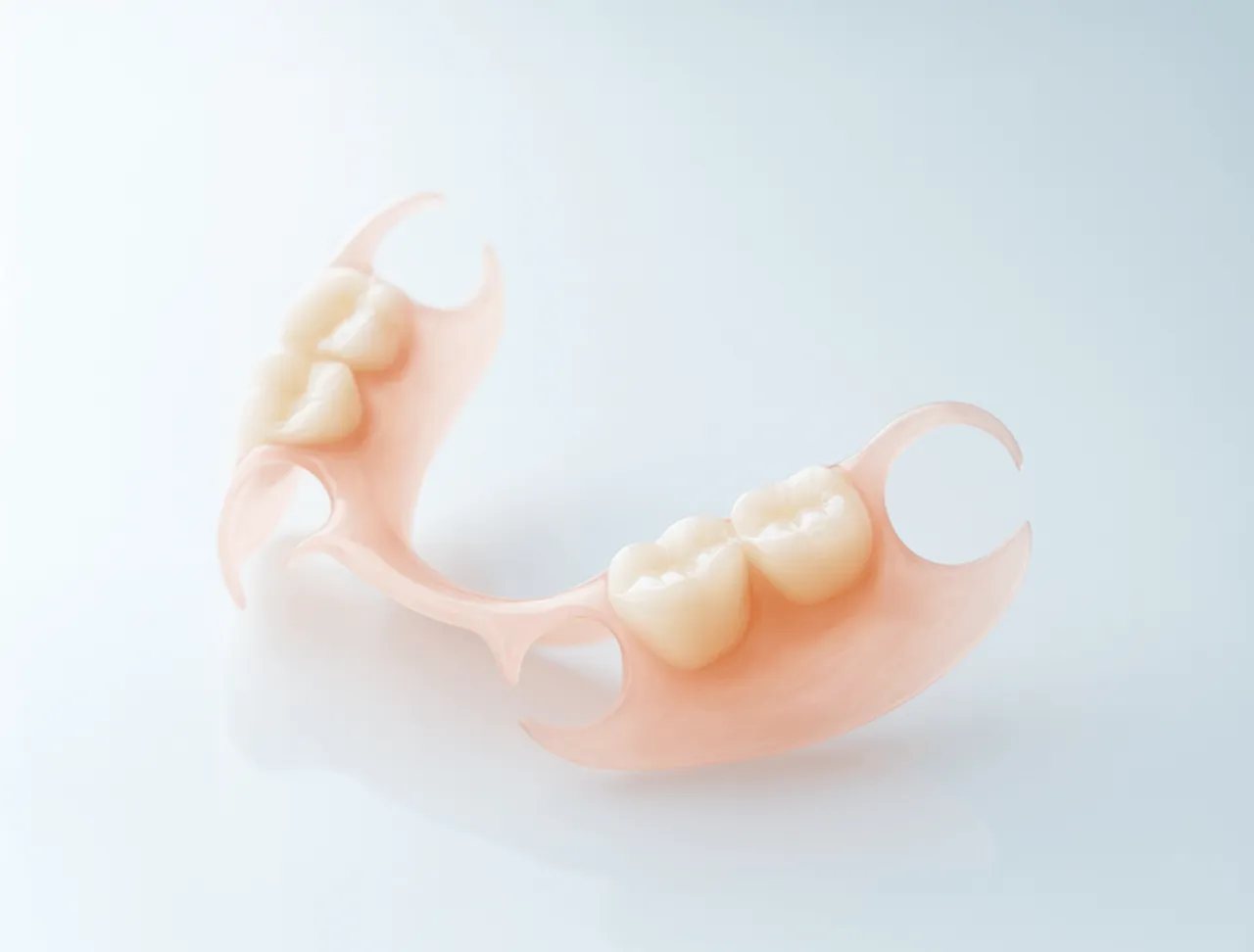
What is a partial denture for the lower jaw without clasps?
A partial denture is a dental prosthesis used to replace one or more missing teeth while the remaining teeth stay intact. The special clasp-free version is also known as an adhesive-retained dental prosthesis. These dentures are designed to be secured directly in the patient’s mouth using a special adhesive or a precise custom fit, without the need for clasps. Unlike conventional partial dentures, which are often secured with clasps or wire retainers, these dentures have the advantage of requiring no visible fastenings. This contributes significantly to a more natural appearance and makes the denture more comfortable for the patient.

Benefits of a partial denture for the lower jaw without clasps
Aesthetics and comfort:
As no clasps or wire retainers are necessary, the denture looks more natural and is more comfortable to wear. This is particularly beneficial for dentures in visible areas of the lower jaw, as no metal parts are visible.
Better fit:
This type of partial denture is often custom-made for the patient using modern CAD/CAM technology (computer-aided design/computer-aided manufacturing), resulting in a better fit and greater wearing comfort.
No pressure on neighbouring teeth:
As no clasps are used, there is no direct pressure on the neighbouring teeth, reducing the risk of tooth movement or damage to the adjacent teeth.
Easy care:
Caring for a partial denture without clasps is generally easier because there are no metal parts to clean. Patients need only maintain thorough oral hygiene and clean the denture regularly.
Quick adjustment:
Patients often only have to wait a short time until the denture is fully adjusted. Thanks to modern manufacturing technologies, adjustments and repairs can often be carried out more quickly than with traditional solutions.

Suitability for patients
This type of partial denture is particularly suitable for patients who: • Have several missing teeth in the lower jaw but do not want to replace the entire row of teeth. • Do not want surgery for implants but still need a stable and aesthetically pleasing solution. • Prefer a comfortable, minimally invasive treatment that does not require visible clasps. • Have high expectations regarding wearing comfort and aesthetics.

How is a partial denture without clasps fitted?
Fitting a partial denture without clasps usually requires several dental appointments. The process involves:
Preliminary examination:
First, a thorough examination of the teeth and mouth is carried out. The dentist checks the condition of the remaining teeth and the jawbone.
Taking an impression of the jaw:
A precise impression of the jaw is taken so that the denture can be custom-made. This is particularly important to ensure a perfect fit and secure hold.
Making the denture:
The denture is custom-made based on the impression. State-of-the-art manufacturing technologies ensure that the denture is both functional and aesthetically pleasing.
Fitting and securing:
The finished denture is then fitted and inserted in the patient’s mouth. It is usually secured with a special adhesive that holds the denture in place without clasps.

Costs and insurance
The cost of a partial denture without clasps varies depending on the material, the complexity of the case and individual requirements. Such a denture generally costs between €500 and €1,500. Statutory health insurance often covers part of the cost of basic dental prosthetic care, while aesthetic and modern solutions are often only partially subsidised. Private health insurance generally offers higher reimbursement.