Removing brown tooth discolouration with home remedies
Brown tooth discolouration often looks unsightly and is quickly noticeable. Home remedies can sometimes reduce superficial deposits, but they are no substitute for a dental diagnosis. The cause, gentle application and proper oral hygiene are what matter.
Über 350 Google-Bewertungen

What brown tooth discolouration means
Brown patches on teeth do not always have the same cause. They are often extrinsic deposits caused by coffee, tea, red wine or nicotine. Some mouthwashes also promote dark deposits. There is also intrinsic discolouration within the tooth enamel or dentine. This can be caused by medication, previous dental injuries or tooth decay, for example. Such changes usually cannot be lightened effectively with home remedies.

Which home remedies can help with brown deposits
Mild home remedies are often used for light, superficial deposits. It is important to use them cautiously and without excessive abrasion. Otherwise, the tooth surface may be damaged unnecessarily. Brushing with a small amount of bicarbonate of soda is very common. It can loosen superficial deposits temporarily. However, using it too often increases the risk of enamel damage. Also, oil pulling is often mentioned. This involves swishing edible oil around the mouth for a few minutes. This method can complement oral care, but it removes brown discolouration only to a limited extent. Another gentle measure is thorough brushing with fluoride toothpaste. Electric toothbrushes often remove deposits more effectively than manual models. Dental floss and interdental brushes also help prevent new deposits.

Why home remedies have clear limitations
Home remedies only work on the surface of the tooth. They cannot reach deep discolouration within the tooth. The result is therefore often limited. Moreover, not every brown patch is a cosmetic problem. Dark areas can also be caused by deposits, tartar or tooth decay. Without an examination, the cause often remains unclear. Combining too many remedies puts unnecessary strain on the tooth surface. This is especially true of abrasive powders and acidic substances. A gentle approach is therefore important.

Which home remedies are better avoided
Not every home remedy is suitable for teeth. Some methods may seem plausible at first but are risky. This is especially true of highly acidic or coarse-grained substances. Lemon juice, vinegar and other acids damage tooth enamel. The surface becomes rougher and more susceptible to new discolouration. In the long term, this can make the tooth more sensitive. Baking powder is also often recommended. However, its particles can be highly abrasive. Frequent use damages the natural protective layer of the teeth. Activated charcoal is also controversial. It can remove deposits mechanically, but it can also roughen the surface. As a result, pigments often adhere more easily later on.
When home remedies are no longer enough
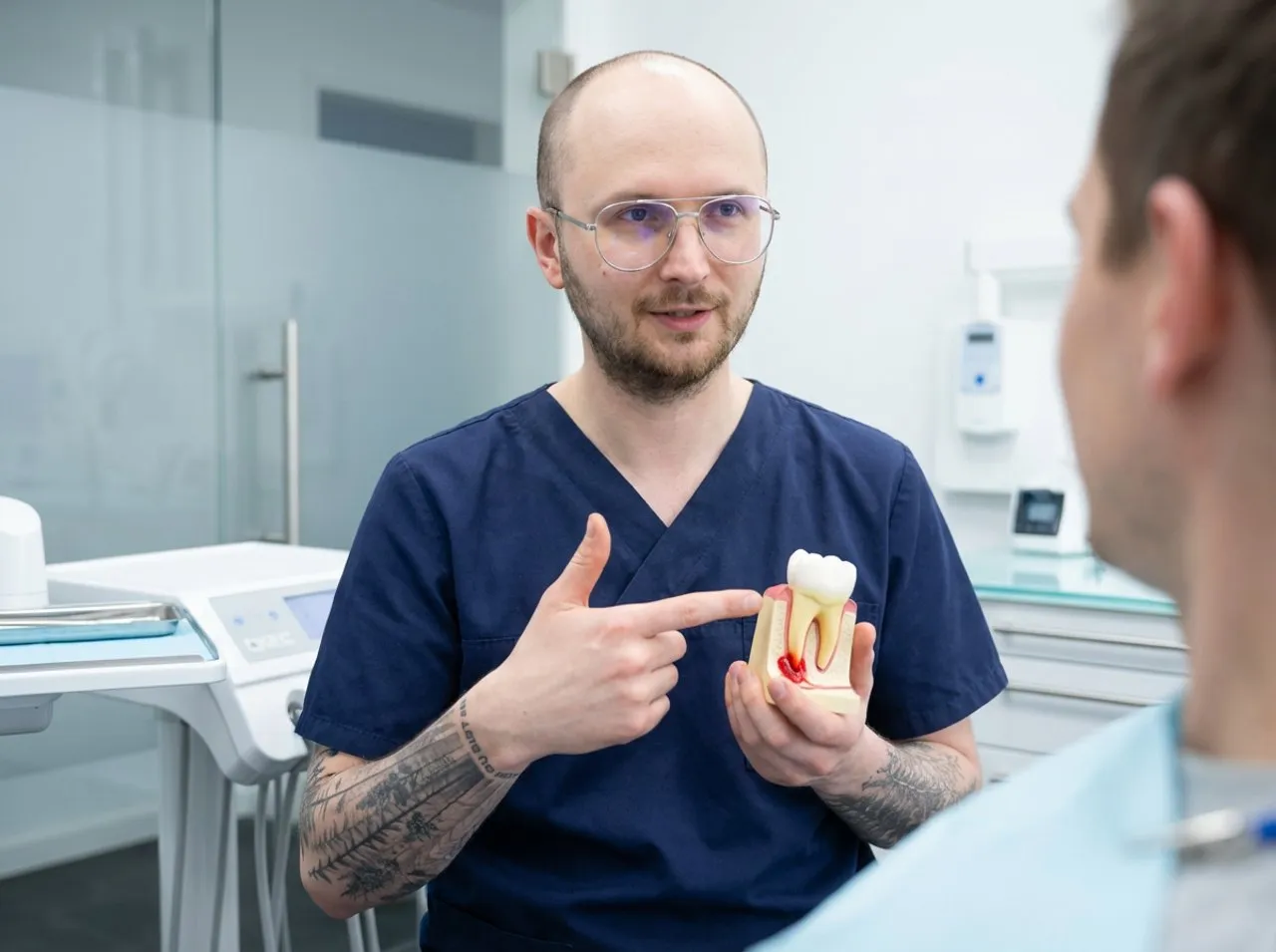
If brown patches persist despite good oral care, the cause should be investigated. Not every dark patch is harmless. Discolouration can also conceal decay-related defects or leaking fillings. Brown edges along the gumline are sometimes caused by deposits or tartar. However, old restorations or inflammatory processes are also possible. A dental examination will provide clarity. Particular caution is needed if only one tooth becomes dark. This may indicate an intrinsic change. In such cases, home remedies usually do not help.

Professional options at the dental practice
The practice can first determine whether the problem is caused by deposits or actual tooth damage. This is crucial for treatment. The appropriate treatment can then be selected. Professional dental cleaning often helps with extrinsic deposits. Discolouration, biofilm and tartar are removed in a targeted manner. Afterwards, the tooth surfaces usually look considerably lighter. Other procedures may be considered for deeper changes. These include teeth whitening, replacing old fillings or restorative treatment. The appropriate solution depends on the diagnosis.
How to prevent brown tooth discolouration
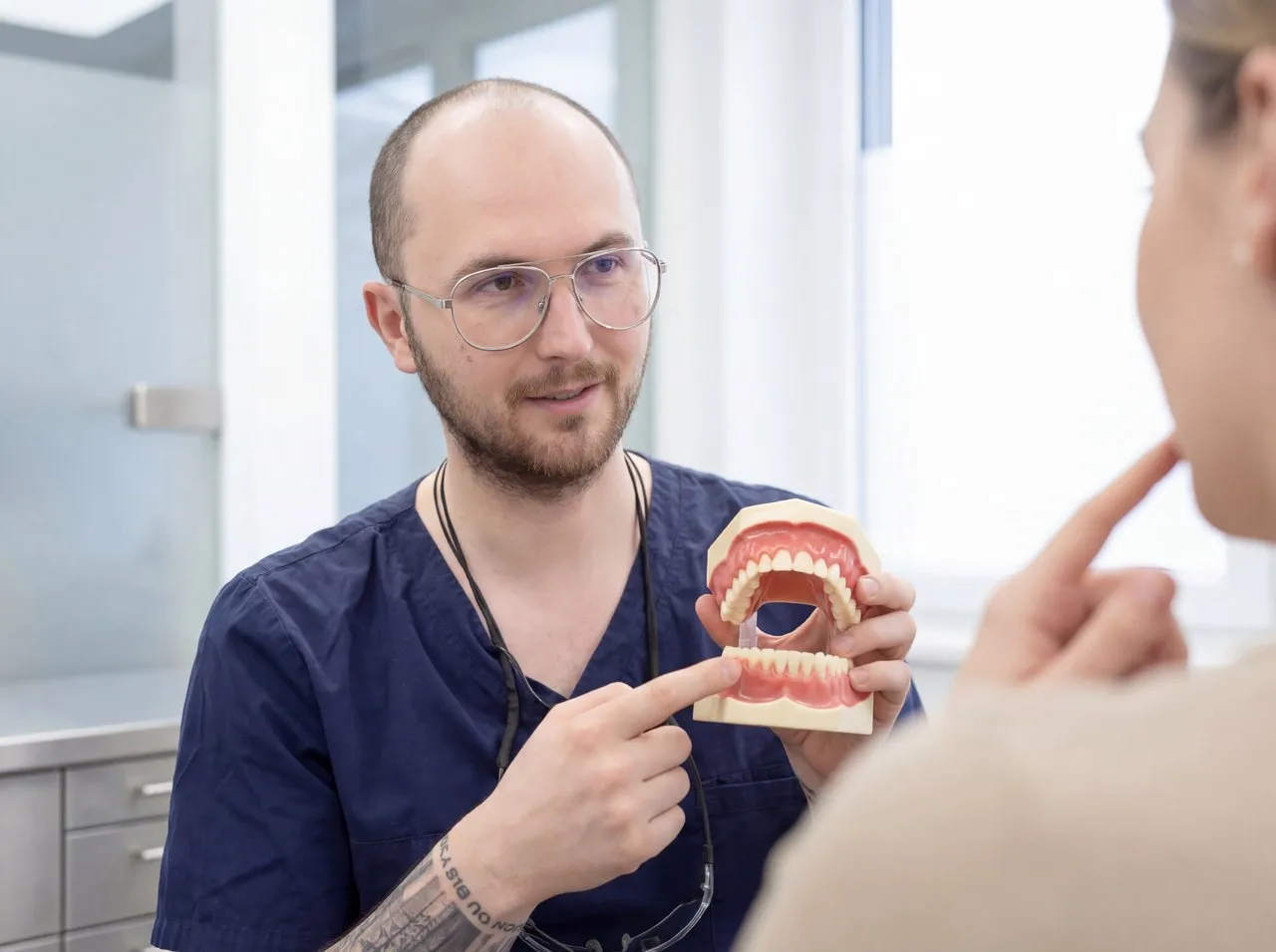
The best prevention starts in everyday life. Reducing your consumption of staining food, drinks and tobacco significantly lowers the risk. This applies particularly to coffee, black tea, red wine and tobacco. Drinking water helps after consuming strongly staining foods. This rinses pigments out of the mouth more quickly. However, vigorous brushing immediately after consuming acids should be avoided. A systematic oral hygiene routine is particularly important. Brushing twice a day, using fluoride and cleaning between the teeth are advisable. Regular preventive dental care supports long-term tooth preservation.