Restoring receding gums – options at Wunschlachen
Receding gums worry many people. The teeth appear longer and more sensitive. Those affected wonder whether their gums can be restored.
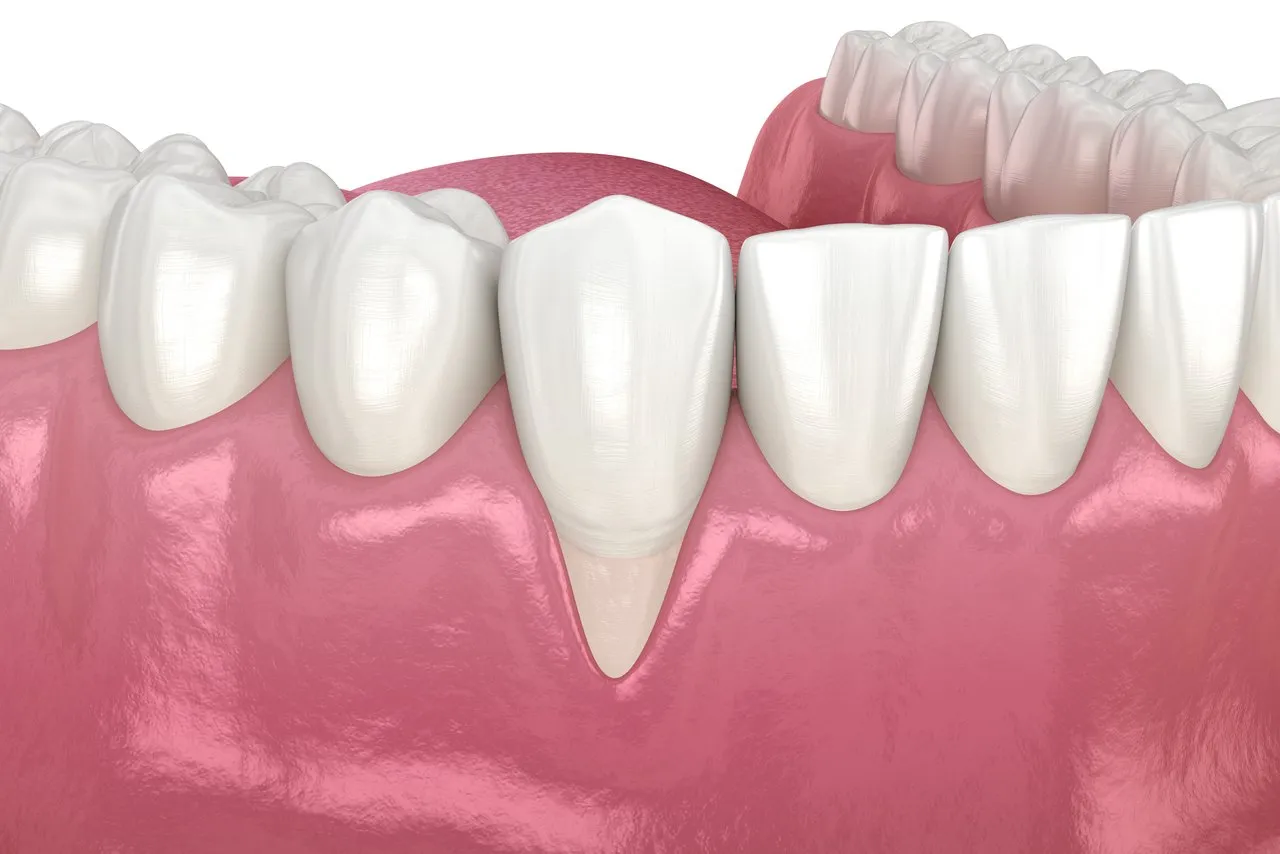
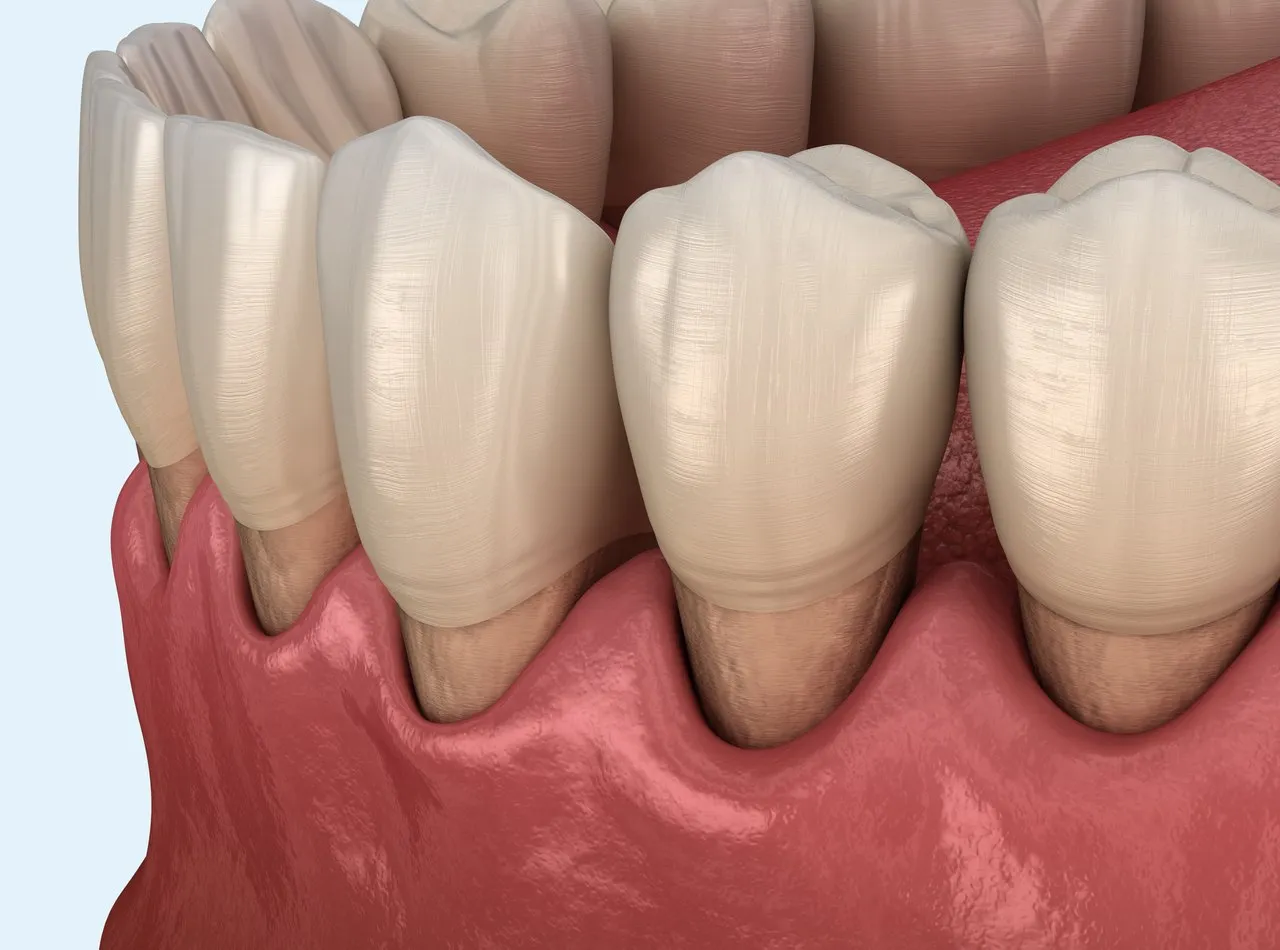
We deal with gum recession every day at our practice. This means that the gum tissue recedes towards the tip of the root. This exposes the necks of the teeth and often creates an aesthetic problem.
Über 350 Google-Bewertungen
Understanding gum recession
If you want to restore your gums, you should understand the cause. Gum recession does not happen overnight. It is often caused by a combination of improper oral care and inflammation. A common cause is brushing too vigorously. A hard toothbrush can also injure the gums. Sometimes undiagnosed periodontitis is a contributing factor. This disease causes inflammation of the tissues supporting the teeth. Bacteria attack the gums and bone. Left untreated, this leads to pockets, loose teeth and further recession.

Symptoms of gum recession
Exposed tooth necks are often the first sign. The teeth are sensitive to cold, heat and sweet foods. Many patients also notice that their teeth look longer in the mirror. Sometimes the gum recedes around only one tooth. Local irritation or excessive pressure is then often responsible. Grinding, clenching or misaligned teeth can also play a role.

Is it really possible to restore receding gums?
Completely destroyed tissue cannot simply be regrown. Nevertheless, much can be improved. The earlier treatment begins, the better the chances. First, the cause of the gum recession must be identified. If periodontitis is present, treating the inflammation is the first priority. Professional cleaning, gentle ultrasonic instruments and good oral hygiene are important here. If damage from brushing is the main cause, the technique is adjusted. We show you how to make gentle movements with a soft brush. Special toothpastes and interdental brushes are also used.

Surgical methods for rebuilding gum tissue
When the recession is clearly visible, brushing alone is no longer enough. Gum augmentation can then help. This reinforces the tissue around the exposed tooth necks. One common method is a gum graft. The dentist removes a small amount of connective tissue from the palate. This is transplanted to the exposed area and stitched in place. This can restore the appearance of the gums. The teeth look shorter and more harmonious again. At the same time, sensitivity in the tooth necks is reduced. Another technique is the repositioned flap. Existing gum tissue is loosened and moved upwards. It is then fixed in place until everything has healed securely. Which method is suitable depends on the clinical findings. Bone level, tooth position and oral hygiene play a key role. A thorough examination is therefore essential.

Limitations, risks and healing
Even modern techniques cannot fully restore all lost gum tissue. If significant bone loss has occurred, some of the recession sometimes remains visible. Stability and the absence of inflammation then become more important. As with any procedure, there are risks. Possible complications include swelling, pain and post-operative bleeding. These symptoms usually subside within a few days. Good aftercare is important. Cooling the area, eating soft foods and adapted oral hygiene support healing. Smoking should be avoided at all costs during this phase.

Restoring gums without surgery – is it possible?
Mild gum recession can sometimes be stabilised. Gentle brushing techniques prevent further loss. Frequent preventive dental appointments provide additional help. However, without treatment, gum tissue rarely grows back. Creams or home remedies can soothe minor irritation. However, they are no substitute for a visit to the dentist. It is important to protect exposed tooth necks. Fluoride varnishes or special gels harden tooth enamel. This reduces pain and prevents new defects.
Gum treatment at Wunschlachen
At our Wunschlachen practice, we take time to address your concerns. We analyse exactly why your gums are receding. We then discuss all the options for restoring or stabilising them. These include professional dental cleaning, periodontitis treatment and microsurgical procedures. On request, we offer gentle sedation for patients with dental anxiety. This allows you to experience treatment in a relaxed, low-stress way. Together, we create an individual treatment plan. Your goal may be healthy function or primarily aesthetics. Ideally, we achieve both at the same time.
Preventing gum recession
The best approach is to prevent recession from occurring in the first place. Gentle but thorough oral hygiene is the foundation for this. Brushing twice a day and cleaning between the teeth daily are crucial. Avoid vigorous scrubbing with lots of pressure. Use small, controlled movements instead. Electric toothbrushes with pressure control can help with this. Regular check-ups at our practice are just as important. This allows us to detect early gum recession. This increases the chances of preserving your gum tissue.
Conclusion: What is realistic
There is only limited scope to restore receding gums. Nevertheless, their appearance can often be significantly improved. The cause, timing and chosen treatment are decisive. Acting early can stop further loss. In many cases, surgical techniques make it possible to visibly rebuild gum tissue. This protects your teeth and restores a harmonious smile.