Broken front tooth – when an incisor is damaged
A broken front tooth, particularly an incisor, can affect your ability to chew and speak. This can happen as a result of an accident, trauma or sudden strain. But what should you do if a front tooth breaks? What treatment options are available, and what costs should you expect?
Über 350 Google-Bewertungen
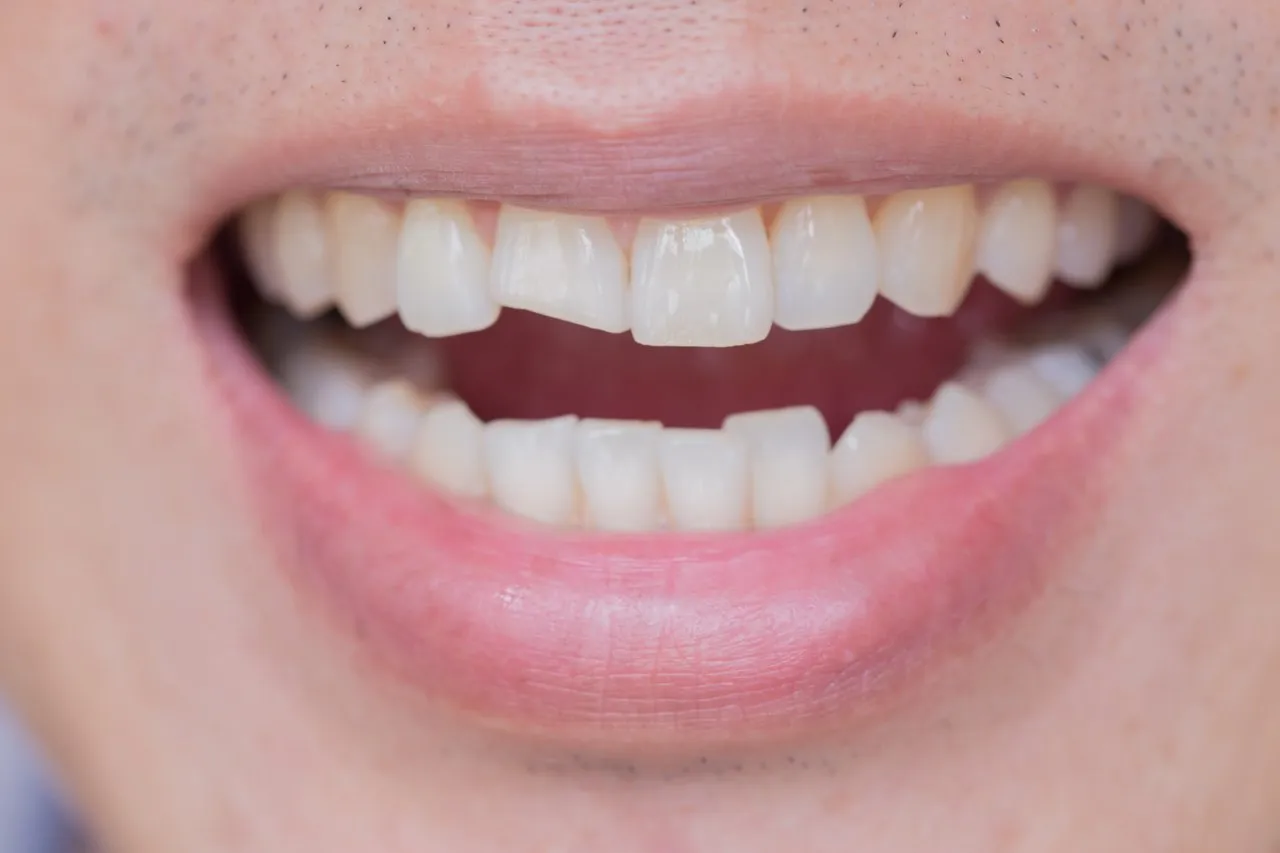
Tooth breaking off – causes of a broken front tooth
An incisor can break off for various reasons. Common causes include:
• Accidents and falls: Falls or collisions can occur, particularly during sporting activities or in road traffic.
• Dental diseases: If teeth are weakened by caries or periodontitis, even a small amount of stress may be sufficient.
• Tooth wear: Excessive teeth grinding or chewing on hard objects can cause a piece of the tooth to chip off.
• Age-related wear: Tooth enamel can become thinner with increasing age. This makes teeth more susceptible to cracks and fractures.
If a front tooth has broken off, both aesthetic and functional aspects of the treatment are important. The affected tooth must not only be repaired, but also integrated into the overall appearance of the dentition.

What to do if a piece of tooth has broken off
If a piece of the incisor has broken off, it is important to act immediately:
1. Keep any tooth fragments: If a piece of the tooth has broken off, keep the fragment if possible. It may be possible to reattach it.
2. Apply a cold compress: If there is pain or swelling, cooling the affected area can help to relieve the symptoms.
3. See a dentist: A broken tooth should be treated by a dentist as soon as possible. The sooner treatment is provided, the better the chances of a complete reconstruction.

Restoring a broken tooth
A broken front tooth can often be repaired successfully. Depending on the severity of the fracture, there are various treatment options:
1. Composite filling (plastic filling): For a small chip in an incisor, the missing piece can be rebuilt with a plastic filling (composite). This treatment is generally quick and inexpensive. The material is shaped to match the natural tooth.
2. Veneer: If the tooth is severely damaged or aesthetics are the priority, a veneer can be applied. Veneers are particularly durable and offer an aesthetic result because their colour is matched to the natural tooth.
3. Crown: For more extensive damage, a dental crown may be necessary to restore the function and stability of the tooth. A crown is placed over the broken tooth and protects it from further damage.
4. Dental implant: If the broken front tooth cannot be saved, a dental implant may be an option. An artificial tooth is inserted into the jaw and functions like a natural tooth.

Repairing a broken incisor – what costs are involved?
The cost of repairing a broken incisor can vary depending on the treatment method. Here are some typical cost factors:
• Cost of a tiny piece of tooth breaking off: For a small fragment, the cost of a plastic filling starts at around 150 euros.
• Cost of a broken tooth: For more extensive damage and the use of veneers or crowns, the costs are generally between 1,000 and 1,500 euros. This depends on the type of material used and the complexity of the treatment.
• Cost of a broken incisor: If an incisor not only needs to be repaired, but also replaced with a crown, the costs can be between 1,000 and 2,000 euros.
• Cost of a broken outer tooth wall: If a piece of the outer wall of the tooth has broken off, more complex treatment is required. In this case, the cost of repair with a crown or veneer can be considerably higher.

Broken tooth treatment
Depending on the extent of the fracture, there are various ways to repair the damaged tooth:
1. Composite filling: These fillings are the most commonly used method for small fractures. The material is applied directly to the tooth and shaped. A composite filling is relatively inexpensive and generally lasts for several years.
2. Veneer: A veneer is a thin ceramic shell that is bonded to the tooth. It is an ideal solution if the tooth is severely damaged. Veneers offer a high level of aesthetic appeal and are particularly durable.
3. Crown: A crown is often used when a filling or veneer is not sufficient. Crowns are stable and protect the tooth from further damage. They are usually made of ceramic or metal.
4. Dental implant: If the tooth cannot be saved, a dental implant may be required. This is a permanent solution in which an artificial tooth is inserted into the jawbone.