
Caring for milk teeth: healthy children's teeth from the very beginning
Caring for milk teeth is about far more than just hygiene. It lays a crucial foundation for your child's lifelong dental health. Many parents underestimate the importance of the first teeth because they fall out eventually anyway.
However, milk teeth perform important...
Über 350 Google-Bewertungen

When does the first milk tooth appear?
Teething usually begins between the sixth and eighth month of life. First, the two lower incisors come through, followed by the upper incisors, the lateral incisors, the canines and finally the molars.
The full set of teeth has usually emerged between the 20th and 30th month of life. A child's primary dentition contains 20 teeth. Each new tooth also brings greater responsibility for its care.
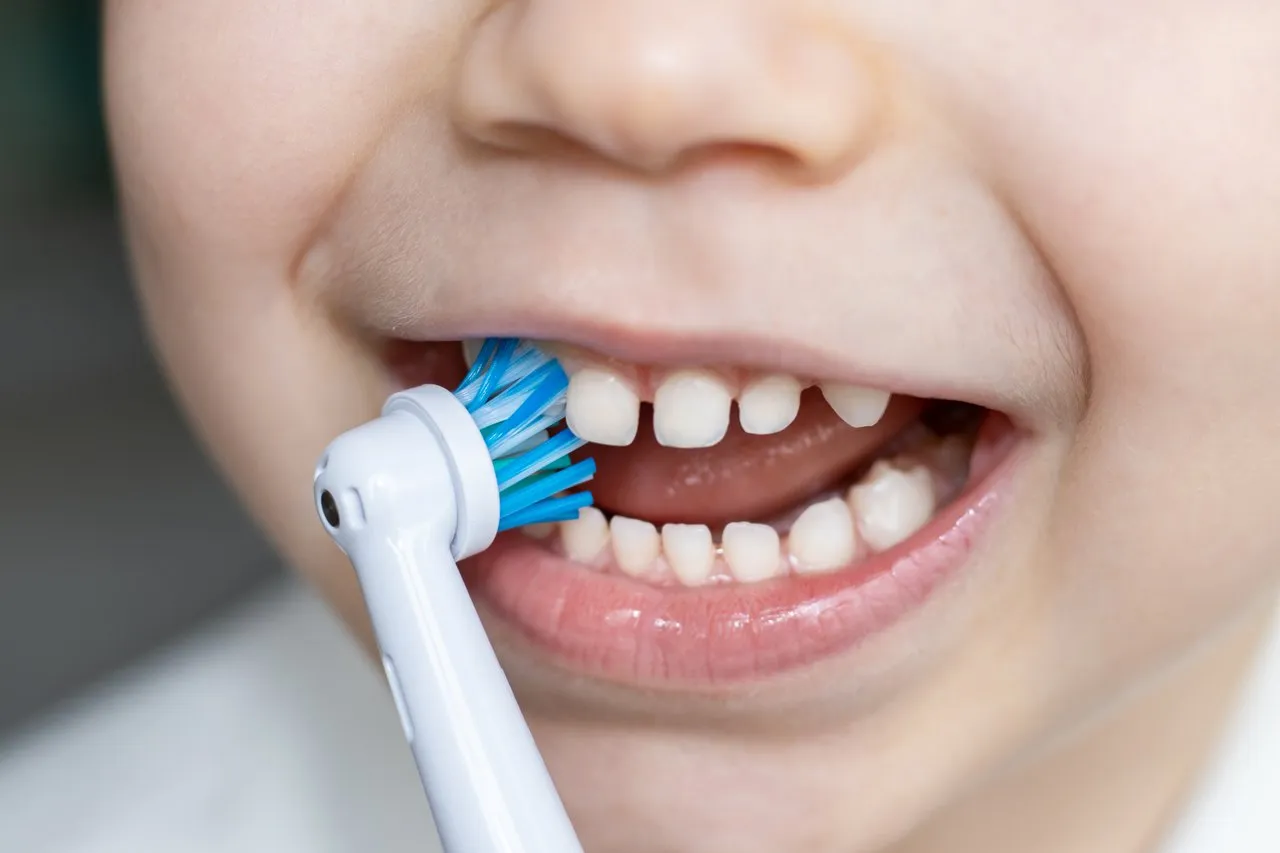
Start early: why caring for milk teeth is so important
Even though they eventually fall out, milk teeth are not "second-class teeth". They perform a wide range of important functions. Not least, they lay the foundation for healthy permanent teeth.
Unhealthy milk teeth can cause caries, which can spread to the tooth that follows. They can also lead to inflammation, make chewing difficult or adversely affect speech development.
That is why it is important to start dental care as soon as the first tooth appears. Use a small, soft baby toothbrush and a special children's toothpaste. The German Society for Dental, Oral and Maxillofacial Medicine recommends a fluoride content of 500 ppm for babies and toddlers. From the second birthday, a toothpaste containing 1,100 ppm may be used.
To begin with, the amount should be roughly the size of a grain of rice, and later the size of a small pea. It is fine if your baby swallows toothpaste at first. Regular care is what matters.
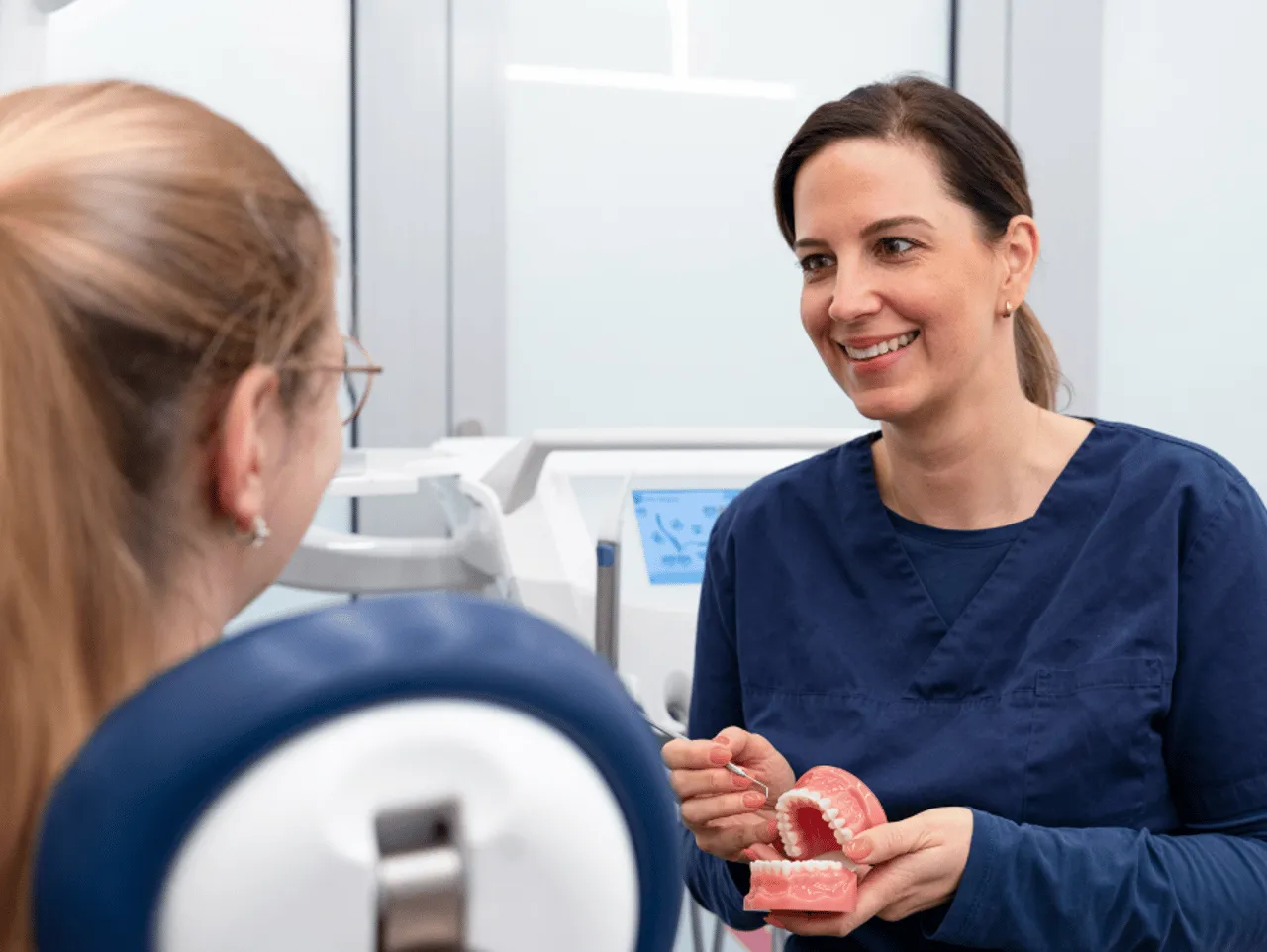
The first dental visit
As soon as the first milk teeth have come through, it is time for the first visit to our practice. Here, we gently check that everything is as it should be, answer all your questions and help build trust from an early age.
Children who have positive experiences at the dentist from the outset are less likely to develop a fear of later treatment. We recommend a second check-up when the first molars have come through, but no later than the child's second year of life. From then on, six-monthly check-ups should become routine.

Developing healthy habits
Brushing teeth is a must every morning after breakfast and every evening before bed. You should always brush your child's teeth again after them until they can write confidently. The fine motor skills needed to handle a toothbrush properly take time to develop.
Diet also plays a major role. Sugary snacks and drinks should not be consumed constantly, but consciously and at specific times. A sugar-free breakfast for nursery or school is ideal, along with water or unsweetened tea to drink.
After brushing teeth in the evening, only water should be drunk. Milk and fruit juices attack the tooth surface severely during sleep.

Toothache in milk teeth: when should you see a dentist?
Milk teeth can also develop caries. They are often even more susceptible to caries than permanent teeth because their enamel is thinner. Typical signs include toothache, sensitivity or visible dark spots.
If your child has any symptoms, do not wait too long. The earlier we intervene, the gentler and simpler treatment will be. In some cases, it is necessary to extract a severely damaged milk tooth. Our practice team makes this decision with great care, taking the development of the jaw into account.
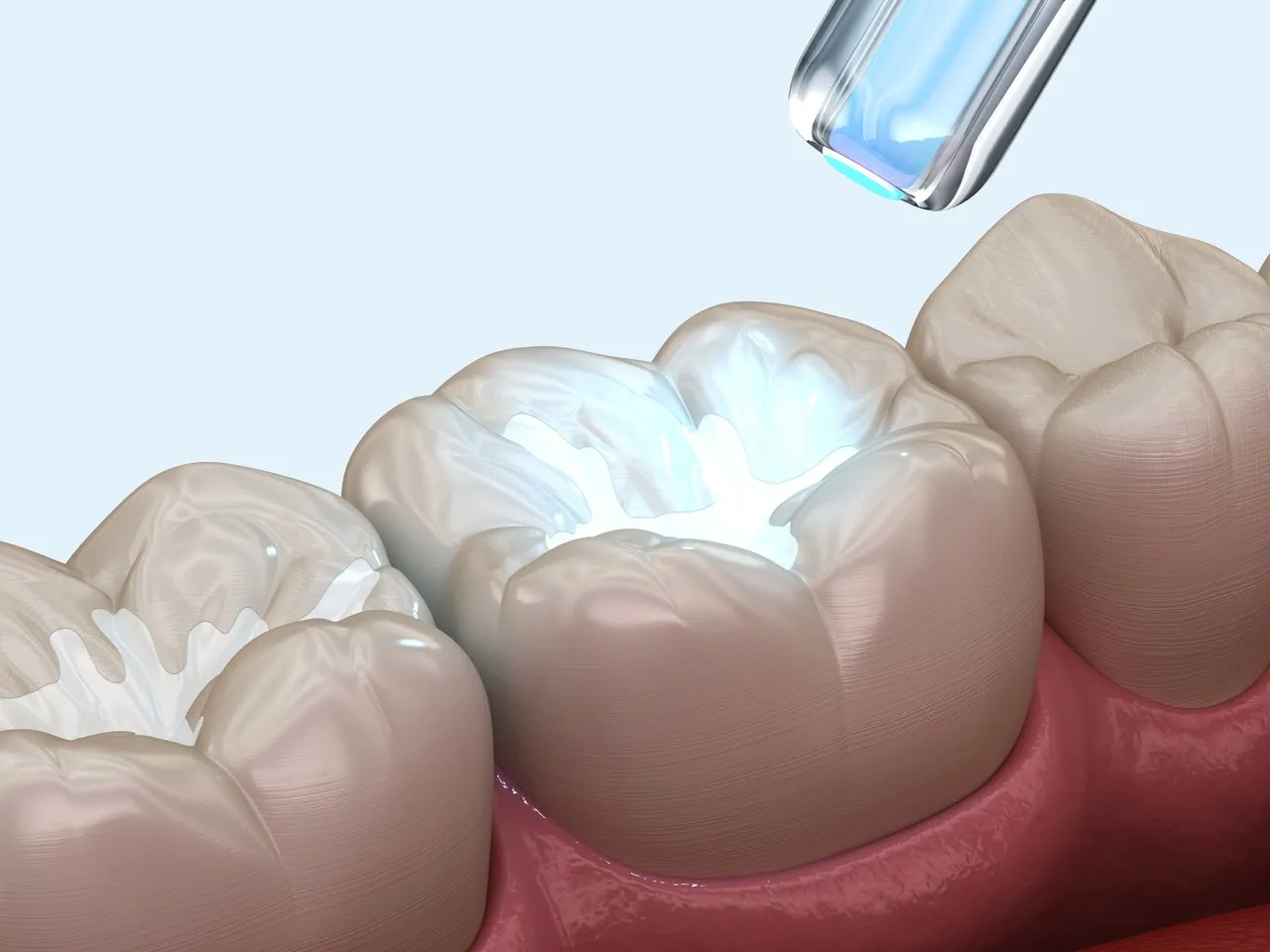
Fissure sealants: protection for permanent molars
As soon as the first permanent teeth emerge, they can be sealed with a protective varnish. This procedure, known as fissure sealing, protects the deep grooves of the molars, where bacteria like to settle. It is a sensible preventive measure that we would be happy to discuss with you at our Wunschlachen practice. Statutory health insurance usually covers the cost.

Milk teeth in Berlin: Wunschlachen is here for you
As a family-friendly dental practice in Berlin, caring for children is particularly important to us. We take our time, explain things in a child-friendly way and work with empathy.
Our aim is for children to go home feeling good and with a smile on their face. Whether it is about their first milk tooth, toothache, questions about dental care or caries prevention, you and your child are in the best hands with us.
Frequently asked questions about caring for milk teeth (FAQ)
A complete set of milk teeth consists of 20 teeth: 8 incisors, 4 canines and 8 molars.
The change of teeth usually begins at the age of 6 and is complete at around 12 years of age.
Milk teeth are with your child from around the sixth month of life until the end of primary school.
Toothache in milk teeth often indicates tooth decay or inflammation. Please visit our practice promptly.
Only if they are severely damaged, inflamed or loose and are obstructing other teeth. The aim is always to preserve the tooth.
Toothpaste with fluoride: 500 ppm for babies, 1,000–1,100 ppm from age 2. Please avoid a sweet flavour.
Twice a day: in the morning after breakfast and in the evening after eating. An adult should brush again until primary school age.
Yes. Tooth decay bacteria can spread to permanent teeth or affect tooth alignment.
Care for milk teeth regularly, maintain a tooth-friendly diet and attend check-ups at our practice every six months. This helps prevent decay in milk teeth.
Yes. We offer child-friendly care and individual preventive programmes for every age group.