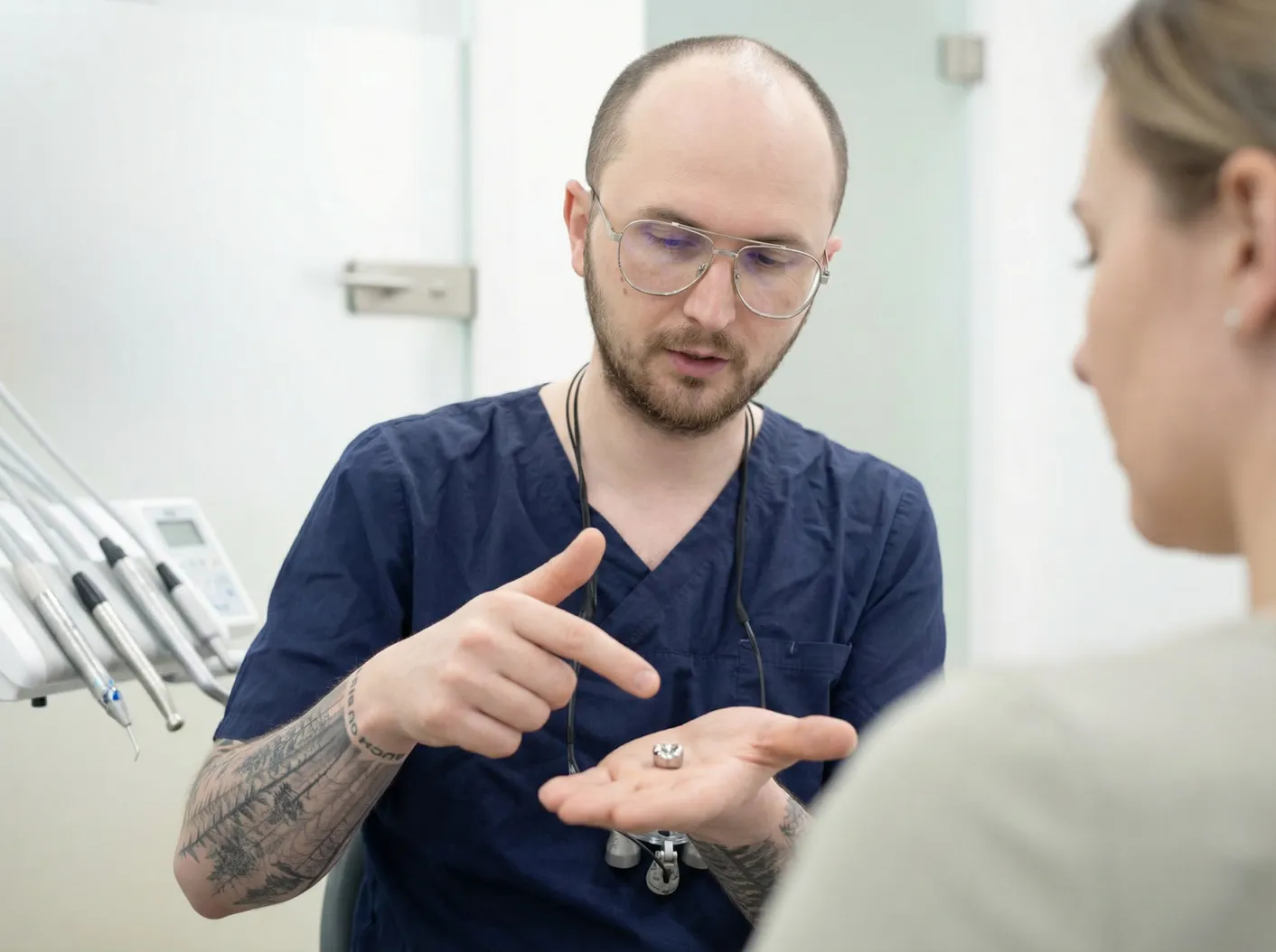
Dental prosthetics: all the information you need to make your decision
Dental prosthetics replace missing or severely damaged teeth. They restore chewing function and aesthetics and can also aid speech and relieve strain on the jaw joints. Dental prosthetics include all treatments that supplement natural tooth substance or replace missing teeth...
Über 350 Google-Bewertungen
What types of dental prosthetics are available?
Depending on the initial situation, an artificial tooth can be created in different ways. A basic distinction is made between fixed and removable dental prosthetics: Fixed dental prosthetics are permanently attached and feel particularly like a natural tooth to many patients. These include inlays/onlays, crowns and bridges. Ceramic dental prosthetics are commonly used today. Ceramic is highly aesthetic and can be colour-matched well to natural teeth. Removable dental prosthetics are taken out for cleaning. These include partial and full dentures. In everyday language, the term ‘dental prosthesis’ is often used as a general term, but it usually refers to the removable option.
Implant-supported dental prosthetics
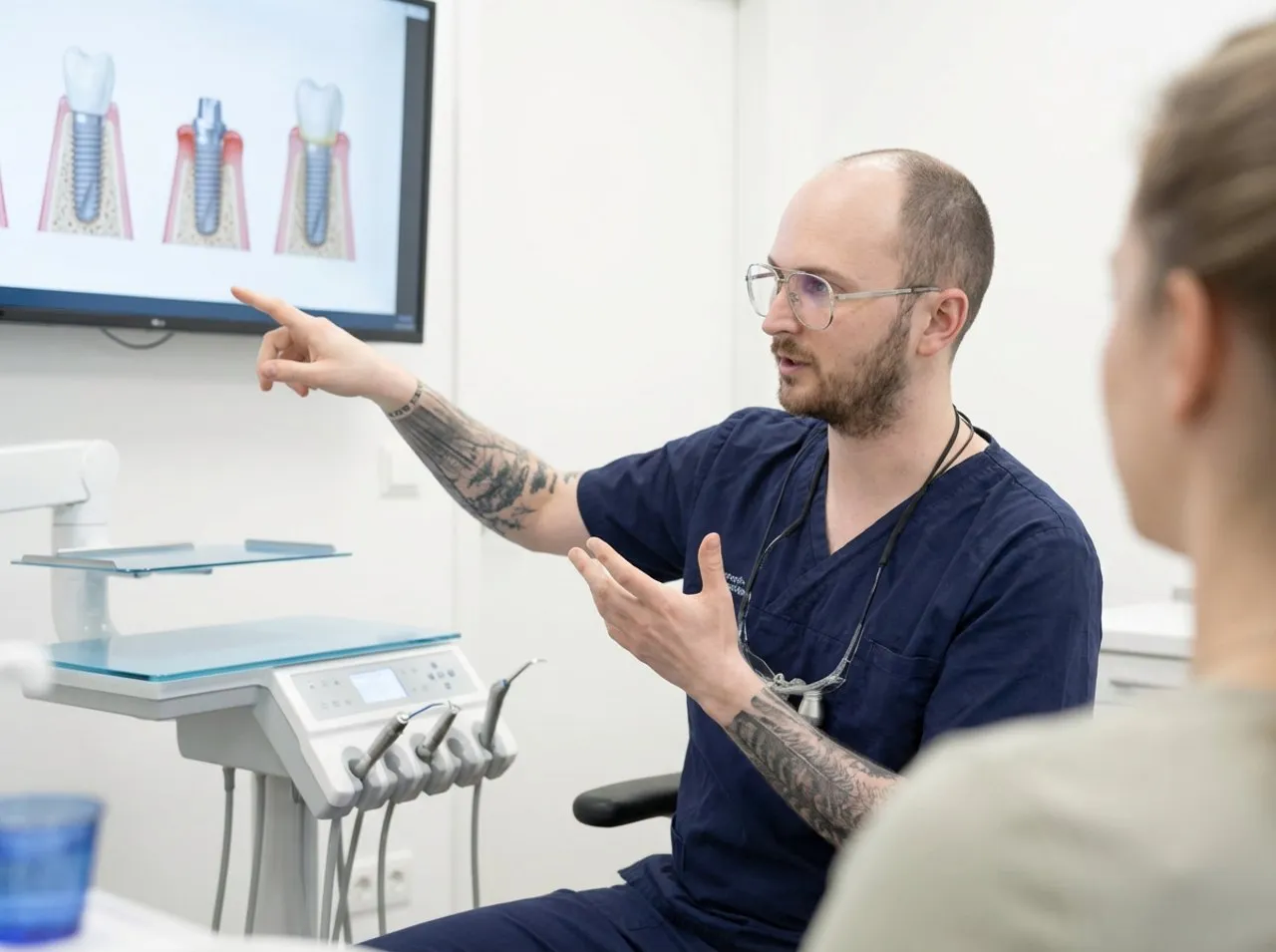
If teeth are missing or the abutment teeth should not be placed under strain, implant-supported dental prostheses can be a particularly stable option. In this case, implants act as artificial tooth roots, to which crowns, bridges or dentures are attached. In this context, one often also comes across the term ‘implant dental prosthesis’. This refers to dental prostheses that are supported or anchored directly on implants. The SEO term ‘dental prosthesis implants’ describes the same principle. Implants form the foundation, and the visible dental prosthesis is the ‘crown’ or prosthetic restoration placed on top.
Materials: What is commonly used?
Different materials may be suitable depending on the treatment and budget. Ceramic (e.g. all-ceramic/zirconia) often offers advantages in terms of aesthetics and biocompatibility. Metal-ceramic combines stability with a proven technique, while plastics are used primarily for dentures and temporary solutions. The best choice of material depends heavily on the bite, tooth position, available space, teeth grinding, aesthetic preferences and the planned care routine.
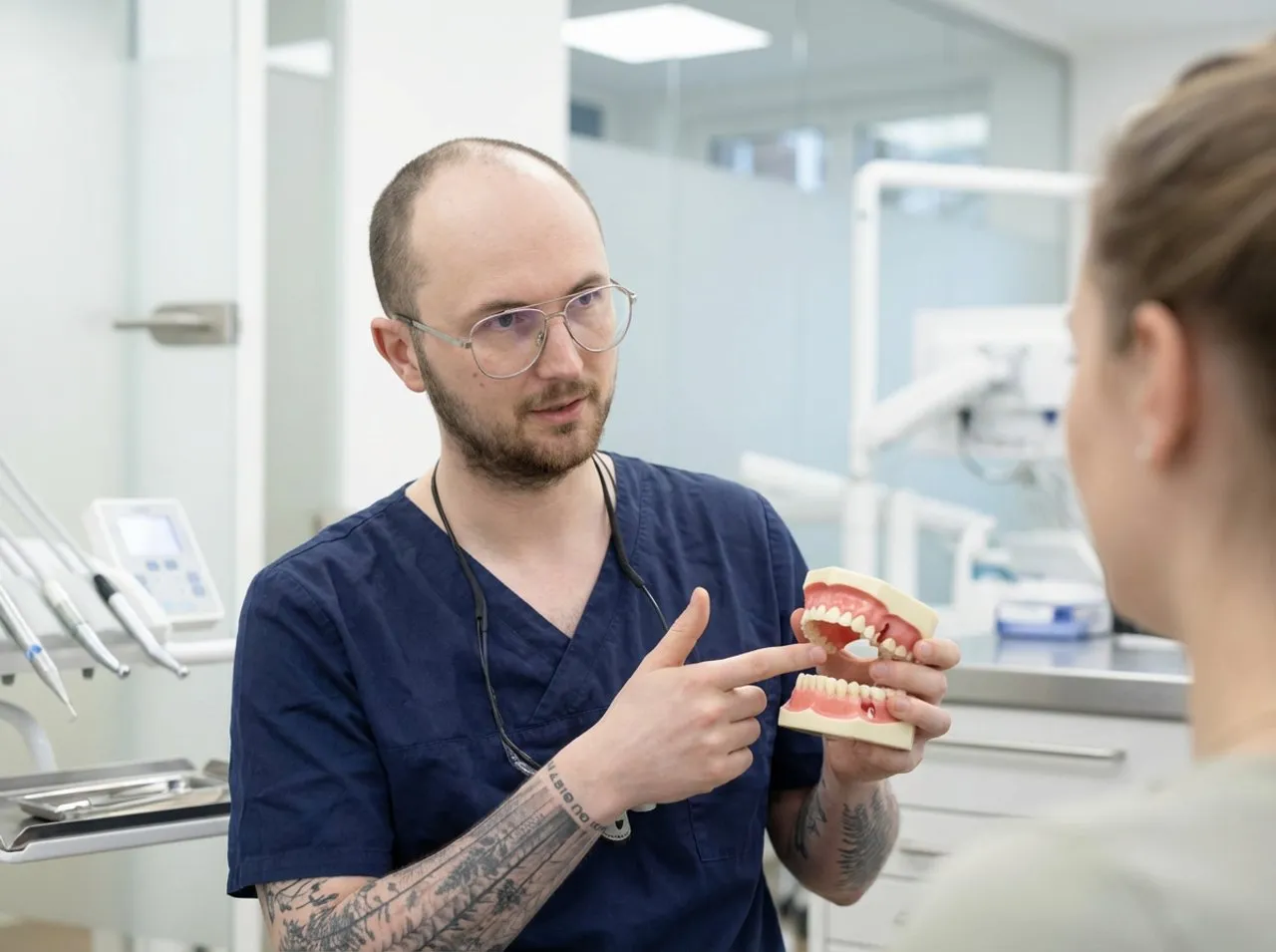
Typical process: From diagnosis to the finished dental prosthetic
The first step is always a diagnosis with a treatment plan: How much tooth substance remains? What is the condition of the gums and bone? How is the chewing load distributed? Depending on the restoration, this is followed by several steps: 1. Planning and, if necessary, preliminary treatment (e.g. treatment of caries/inflammation, periodontal therapy, build-up/fillings). 2. Preparation (for crowns/bridges) or impression/scan and bite registration. 3. Temporary restoration to ensure function and appearance in the meantime. 4. Try-in (depending on the technique) and final fitting. 5. Follow-up check and care instructions.
Implant-supported solutions also involve a surgical phase (implant placement) and a healing period. Only then is the definitive dental prosthesis fitted.
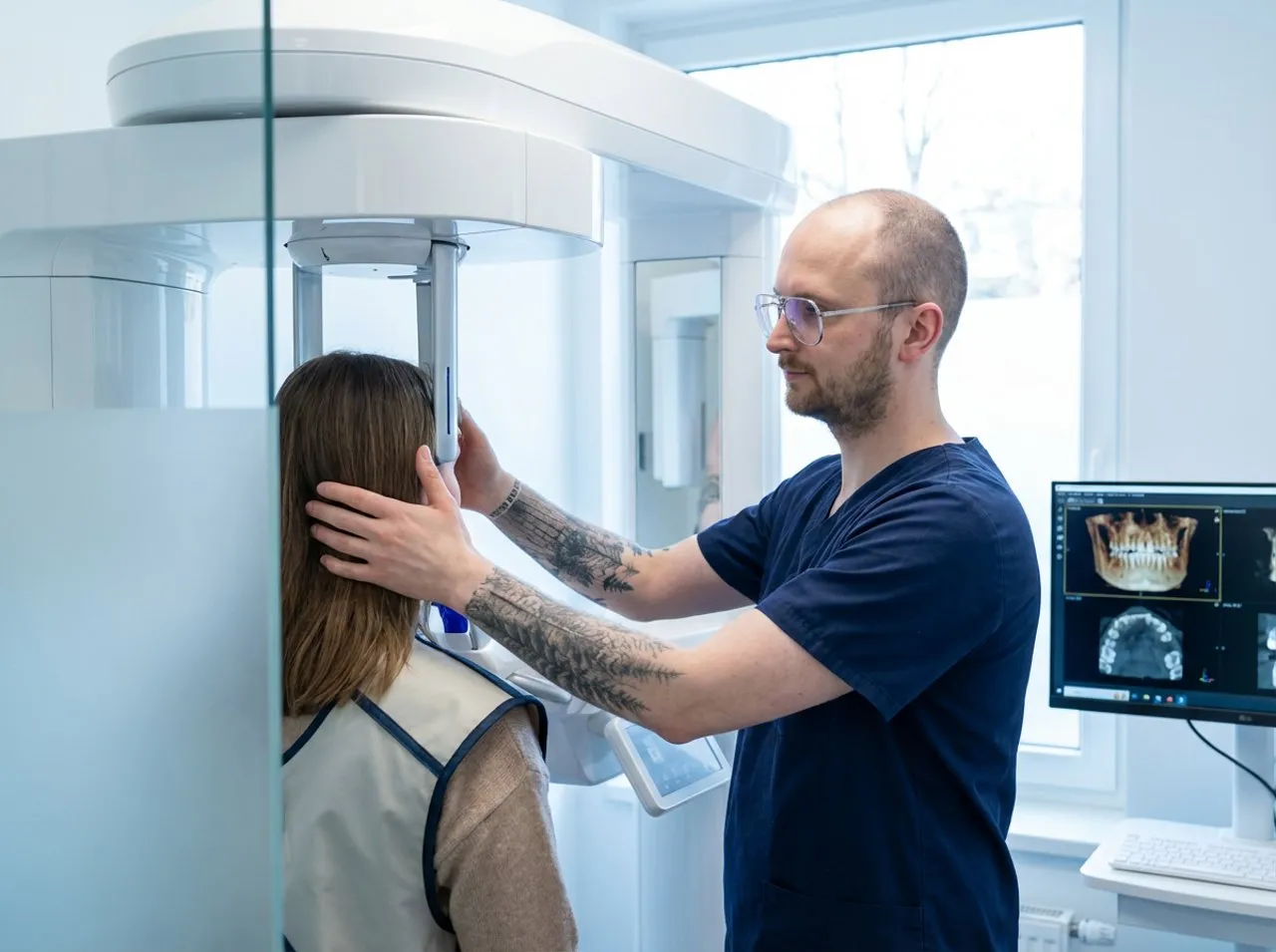
How do you make the ‘right’ decision?
A good decision is based on four factors: function (chewing, speaking), long-term stability, aesthetics and the amount of care required. Fixed solutions often feel very natural. Removable options can be more practical when many teeth are missing or in certain anatomical situations. It is important that the solution fits into your daily life, including cleaning, check-up appointments and, if necessary, a night guard for teeth grinding.
FAQs about dental prosthetics
Fixed dental prosthetics (e.g. a crown or bridge) are permanently attached and cannot be removed by the patient. Removable dental prosthetics (e.g. a partial or full denture) are taken out for cleaning. Depending on their design, they are held in place by clasps, telescopic crowns or implant-supported retaining elements.
Dental prosthetics encompass all treatments that replace missing teeth or restore severely damaged teeth. These range from inlay fillings (inlays/onlays), crowns and bridges to dentures and implant-supported restorations.
Durability depends on the material, oral hygiene, chewing load, teeth grinding, fit and regular check-ups. Many restorations are designed for long-term use. Aftercare and cleaning remain essential.
Ceramic dental prosthetics are often highly aesthetic and well tolerated, but they are not ‘always’ the best choice. In cases of heavy loading, limited space, severe teeth grinding or certain bite conditions, a different material or design may be more appropriate.
Implant-supported dental prosthetics are often advisable when teeth are missing and adjacent teeth should not be ground down. Implants can significantly increase stability and reduce pressure points, provided the bone and general health allow implant placement.
The term ‘dental prosthesis’ is often used when referring to removable dental prosthetics. Depending on the situation, this may be a partial denture (when several teeth are missing) or a full denture (for a jaw with no teeth).
Teeth that are prepared are usually numbed with a local anaesthetic, so any discomfort during treatment can be well managed. After fitting, you may experience sensations of pressure or an altered bite, which can usually be resolved with minor adjustments. Adjustment appointments are particularly important at the beginning with dentures.
Artificial teeth are often produced digitally nowadays. Following an intraoral scan or impression, the restoration is planned and manufactured, milled or printed in a laboratory, depending on the material. The final fit and bite are checked at the practice before it is permanently attached or fitted.
Care depends on the type of restoration. Crowns/bridges are brushed like natural teeth, and interdental brushes or dental floss are also essential for cleaning the gaps. Dentures should be cleaned outside the mouth every day, and the gums also need care and regular check-ups.
Typical causes include a bite that has not been optimally adjusted, pressure points, inadequate cleaning, gum inflammation, material wear or changes in the jawbone. If something feels ‘new’, it is worth having it checked promptly before minor problems become more serious.