
Billing at the dentist – what you need to know
Billing at the dentist raises questions for many patients. Who receives which invoice and when, and how are the costs calculated? At our Wunschlachen practice in Berlin, we attach great importance to transparency. Here, we explain in detail how dental invoices are drawn up,...
Über 350 Google-Bewertungen

Dental invoices: an insight into the process
Every invoice is based on careful documentation of the treatments carried out. This documentation is required by law and ensures that only services actually provided are billed. It serves not only as evidence for the practice, but also as the basis for billing with health insurance funds or directly with the patient.

BEMA or GOZ: billing according to insurance status
Whether you receive an invoice as a patient depends on whether you have statutory or private insurance. Services for patients with statutory insurance are billed using the Bewertungsmaßstab zahnärztlicher Leistungen (BEMA), the German scale of fees for statutory dental services. This system uses a points system in which each service is assigned a specific number of points.
The total value is calculated by multiplying this by the currently applicable point value. This billing is carried out through the Kassenzahnärztliche Vereinigung (KZV), the Association of Statutory Health Insurance Dentists, and is not passed directly on to you as the patient.
Privately insured patients, on the other hand, receive a dental invoice directly. In this case, the Gebührenordnung für Zahnärzte (GOZ), the German scale of fees for dentists, applies. In individual cases, this is supplemented by the Gebührenordnung für Ärzte (GOÄ), the German scale of fees for doctors.
All individual services are listed in detail on your invoice. Patients with statutory insurance who choose individual additional services also receive a GOZ invoice for these components.

When will I receive the invoice from the dentist?
The question ‘When will I receive the invoice from the dentist?’ is a valid one. The answer depends on your insurance status and the treatment chosen. Statutory insurance services are billed directly between the practice and the KZV. You will therefore not receive an invoice. You will only receive a private invoice if you choose individual additional services, such as a high-quality aesthetic filling or dental prosthetics outside standard statutory care. Privately insured patients usually receive their invoice a few days after treatment has been completed. It is often sent by an external billing service provider with which many dental practices work. This gives you access to additional services such as payment by instalments, digital access to invoices and direct communication.

An invoice from the dentist without prior agreement?
A frequent criticism is receiving an invoice from the dentist without prior agreement. At our Wunschlachen practice, we avoid this by providing detailed advice before every treatment. Treatments that are not covered by health insurance are always discussed in advance and confirmed in writing. If you nevertheless receive an invoice without any apparent prior agreement, please contact us. We will clarify the matter together.

Submitting a dental invoice to your health insurance provider
If you have private insurance, you will usually need to submit your invoice to your health insurance provider yourself. This also applies to many people with statutory insurance who have supplementary dental insurance that reimburses certain services retrospectively. Make sure you submit the invoice in full and on time. If anything is unclear, we will be happy to advise you on what information is required and how to submit the documents correctly.

Claiming dental invoices as a tax deduction
Many patients wonder whether they can claim dental invoices for tax purposes. The basic rule is that privately paid healthcare costs can be deducted from tax as extraordinary expenses. However, these must exceed the reasonable personal contribution threshold.
You should therefore keep all invoices and proof of payment safe. Personal contributions towards dental prosthetics or professional dental cleaning may also be relevant for tax purposes.

External billing service providers: benefits for the practice and the patient
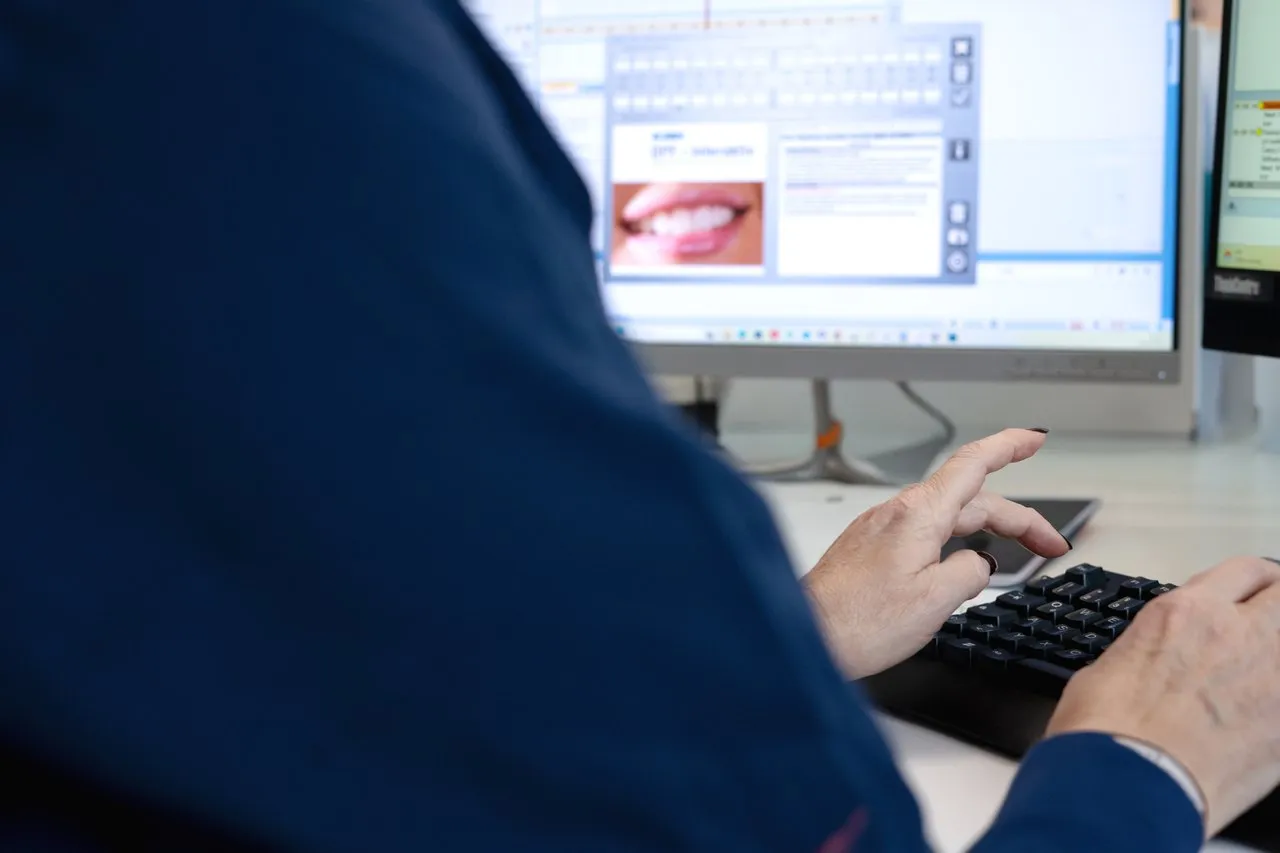
At our Wunschlachen practice, we work with an experienced billing service provider. For you as a patient, this means one thing above all: better service. You receive your invoice with a clear and easy-to-understand breakdown, can arrange to pay in instalments if you wish, and can manage your documents online. For the practice, this reduces the administrative burden. This allows us to concentrate fully on your treatment.
Conclusion: transparency builds trust
Billing at the dentist is not a mystery. We make sure that you are fully aware of future costs. We achieve this through clear communication, written agreements and a structured billing system. If you still have questions about your invoice or whether your health insurance provider will cover the costs, please feel free to contact us. We will be happy to help.
FAQ – frequently asked questions about dental invoices
Privately insured patients usually receive it a few days after treatment; patients with statutory insurance only receive one for private additional services.
No, unless you choose services that are not covered by your health insurance (e.g. aesthetic treatments).
Contact your practice directly. These are often misunderstandings that can be cleared up.
Yes, if they are not within the reasonable personal contribution threshold, e.g. in the case of high personal contributions.
BEMA applies to people with statutory insurance (statutory insurance patients), while GOZ applies to privately provided services or privately insured patients.
Send the original invoice together with a reimbursement claim to your insurer. If you have any questions, we will be happy to help.
Debt collection proceedings may be initiated after payment reminders. Contact us promptly if you experience payment difficulties.
Yes, many external billing service providers offer flexible instalment plans. Our practice also uses this service.
Yes, if you choose individual optional services outside statutory insurance care.
Description of services, date, fee rates (under GOZ/GOÄ), invoice number and, where applicable, tax number. We prepare all invoices in accordance with the applicable standards.
Book your appointment now
We will be happy to advise you in person at our practice.