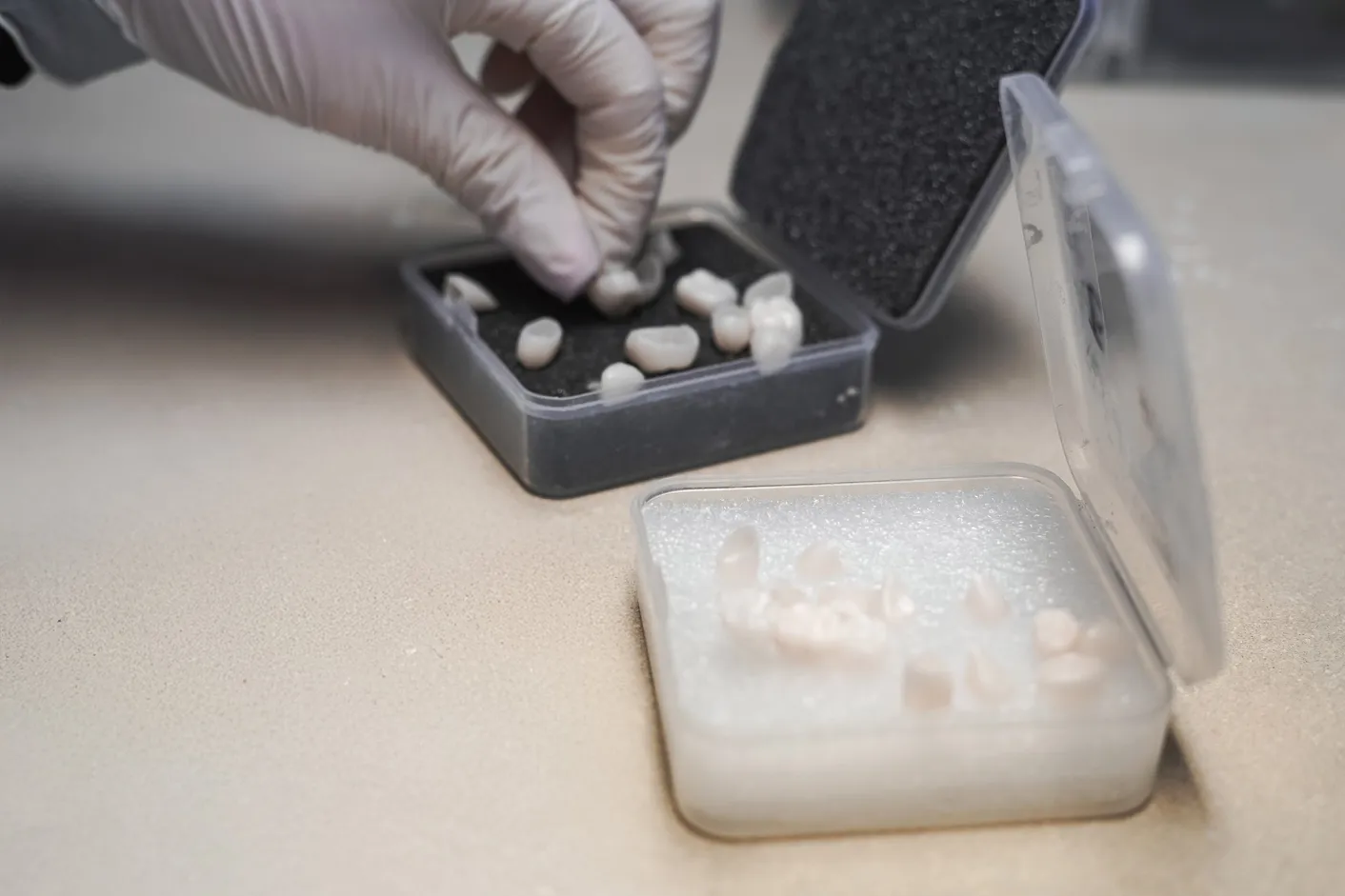
How are crowns fitted? The dental procedure
• A dental crown protects weakened teeth and restores their shape and function. • Fitting usually takes place over two appointments, with a temporary crown in between. • The crown is secured permanently and the bite is checked precisely.
Über 350 Google-Bewertungen
What are crowns?
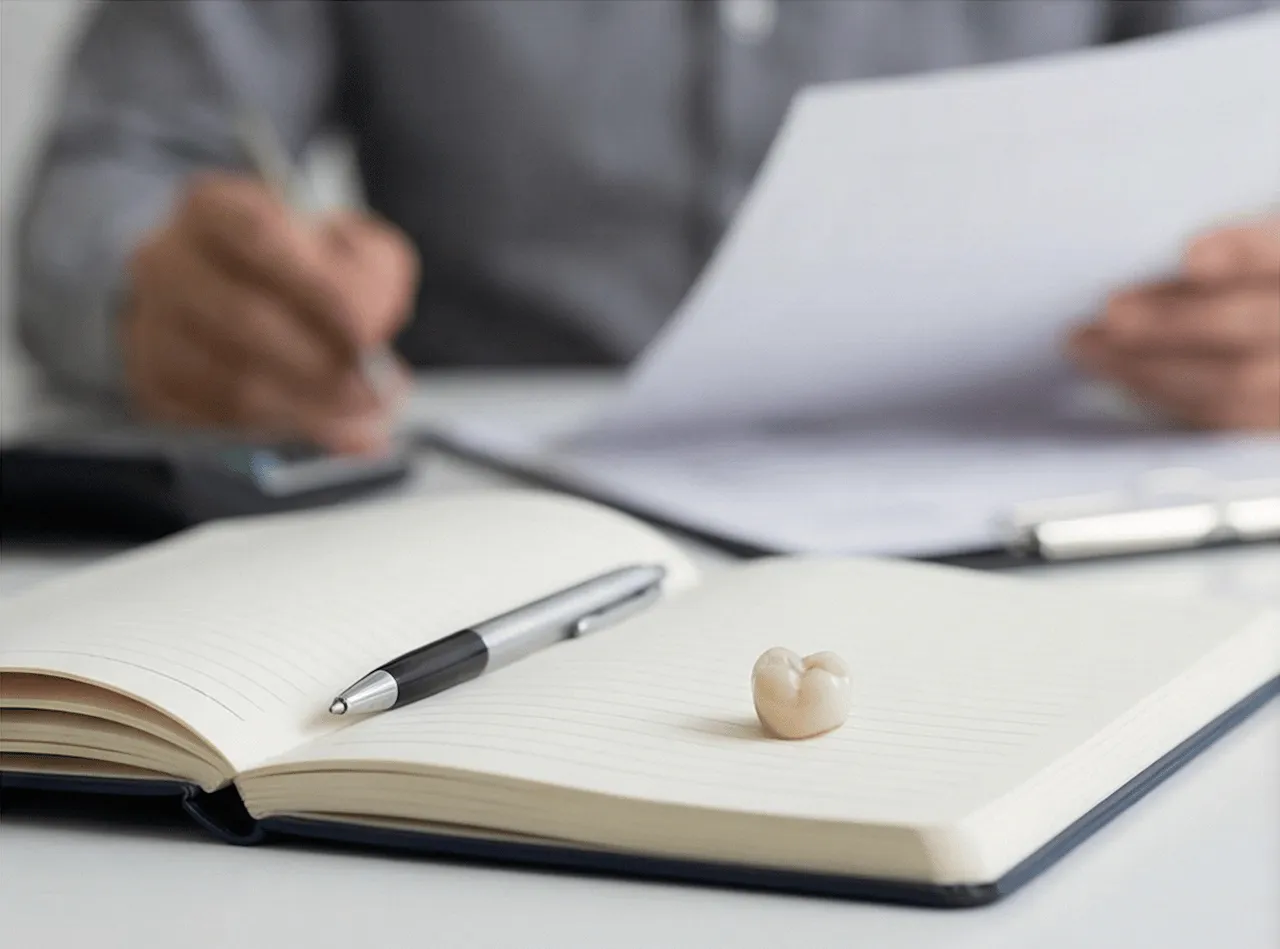
Crowns are a fixed form of protection for a damaged tooth. The crown completely encases the prepared tooth and stabilises it.
Is a crown a dental prosthesis?
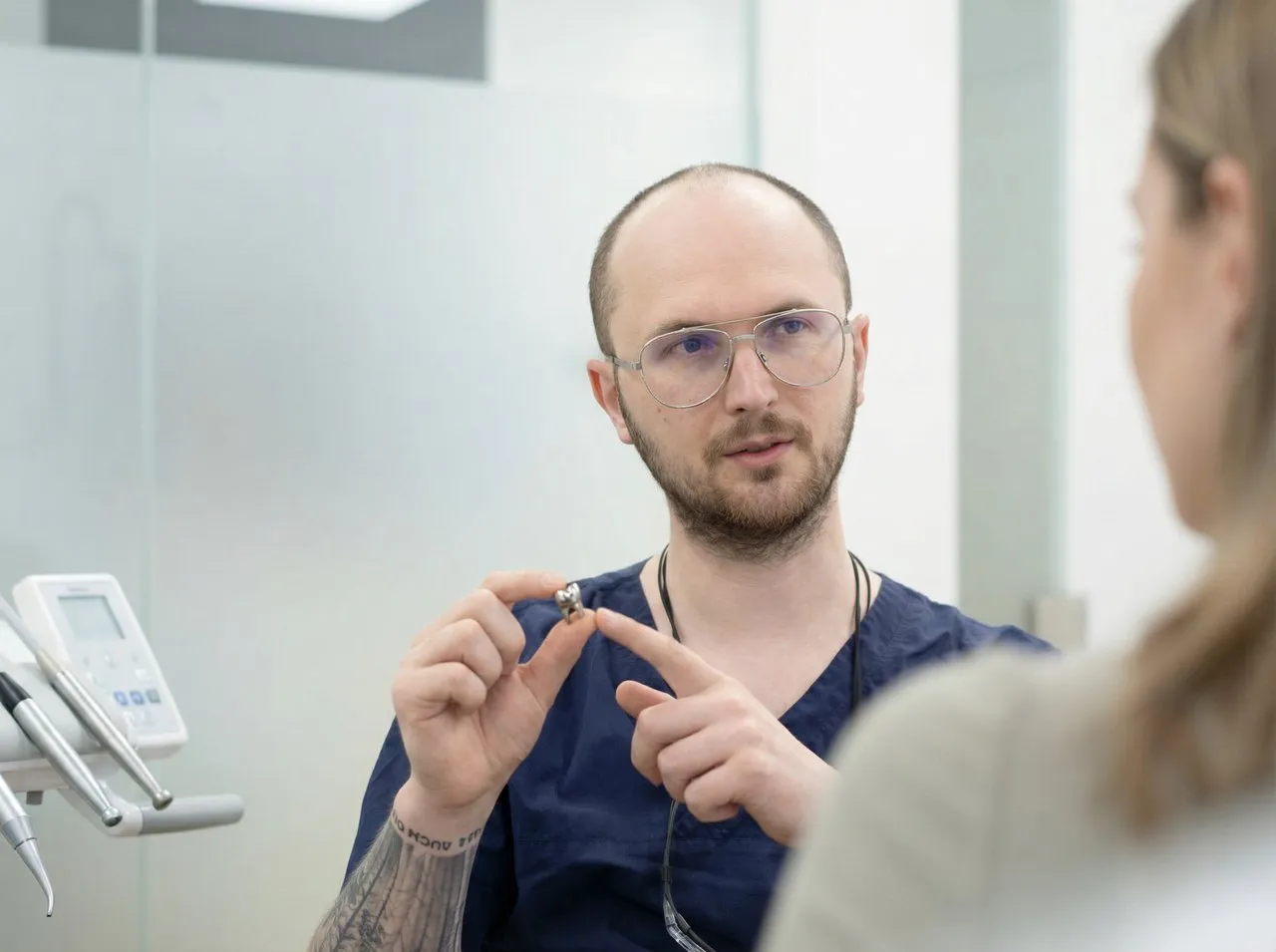
Yes, a crown is a type of fixed dental prosthesis. It restores the tooth's outer shape.
When is a dental crown necessary?
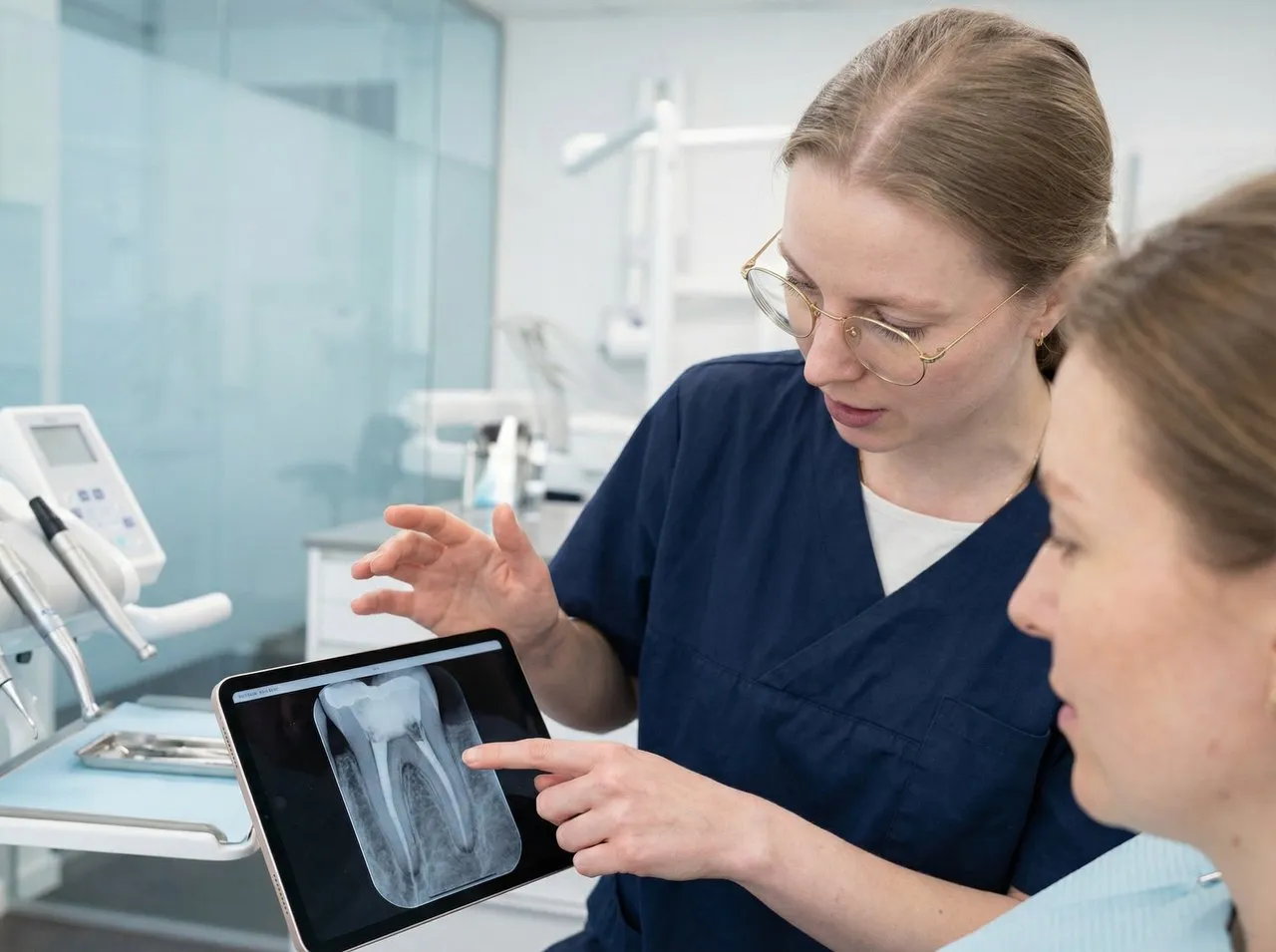
A dental crown is advisable when fillings no longer hold. Typical cases include deep defects, cracks or a tooth with many fillings. A tooth often needs additional protection after root canal treatment as well. Chewing forces are particularly high in the back teeth. In such cases, the dentist often recommends a crown.
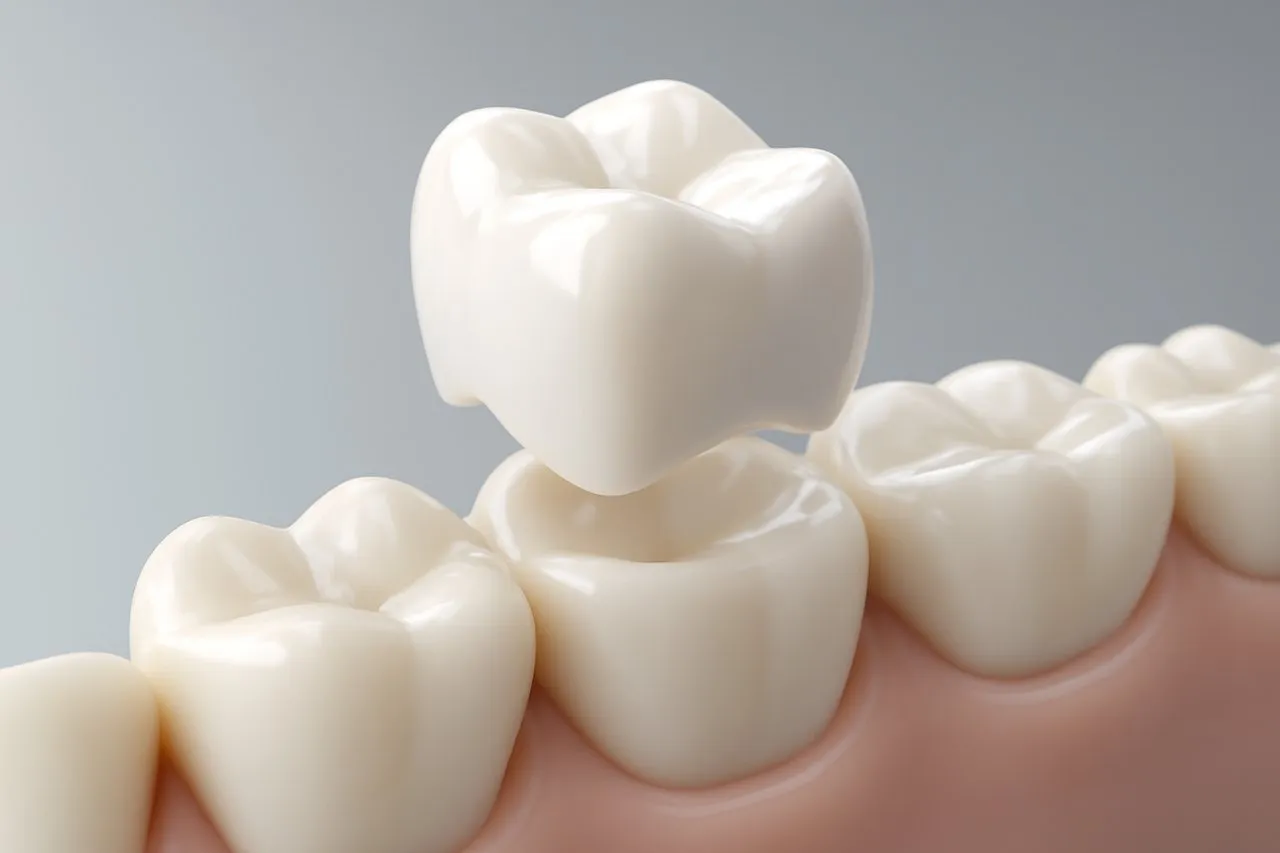
How much tooth needs to remain for a crown?
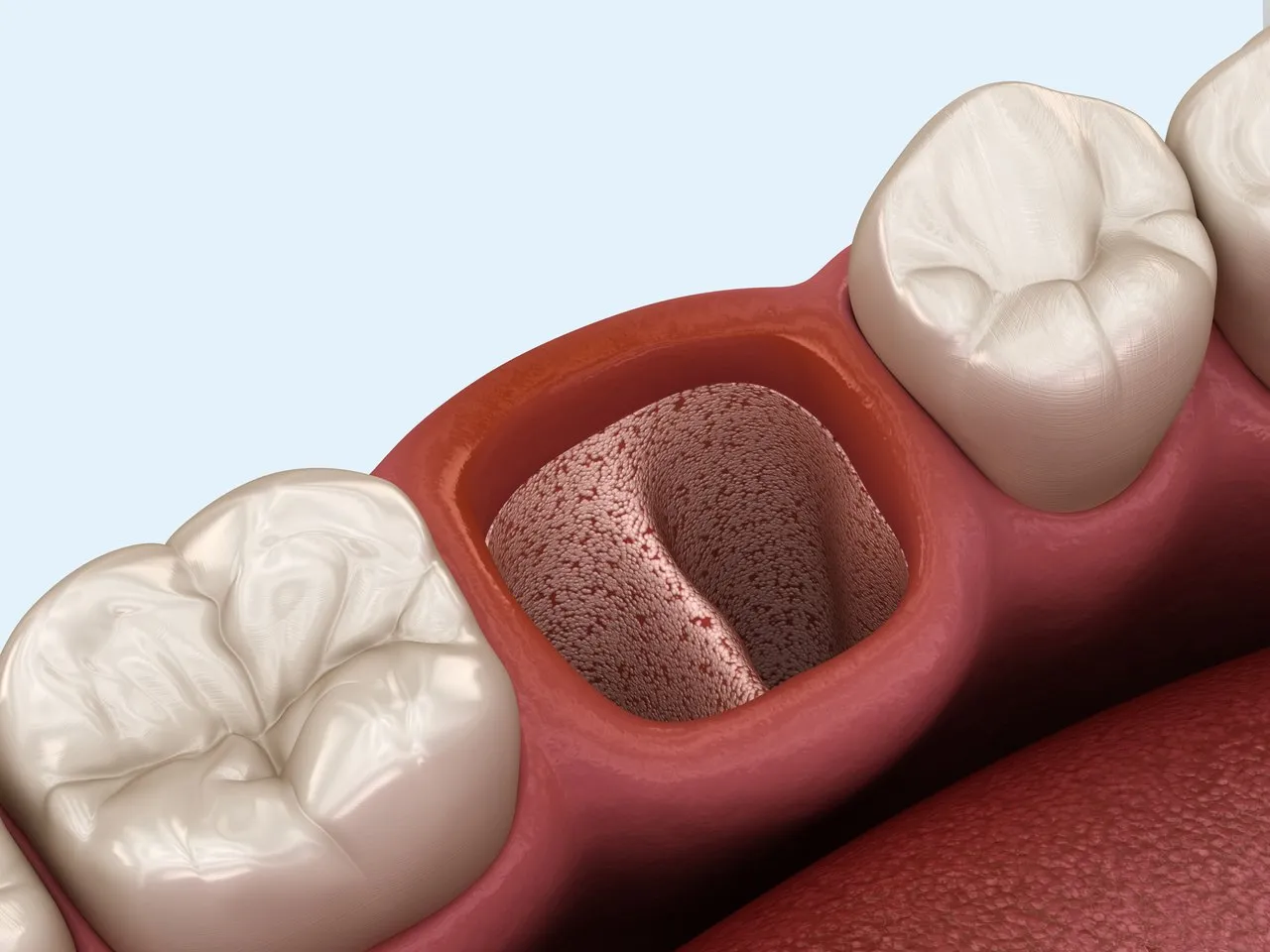
We will clarify this question beforehand. There must be sound remaining tooth structure and a tight marginal seal. If tooth structure is lacking, we plan a build-up with composite. In individual cases, a post-and-core build-up is necessary. Sometimes a partial crown is also possible.
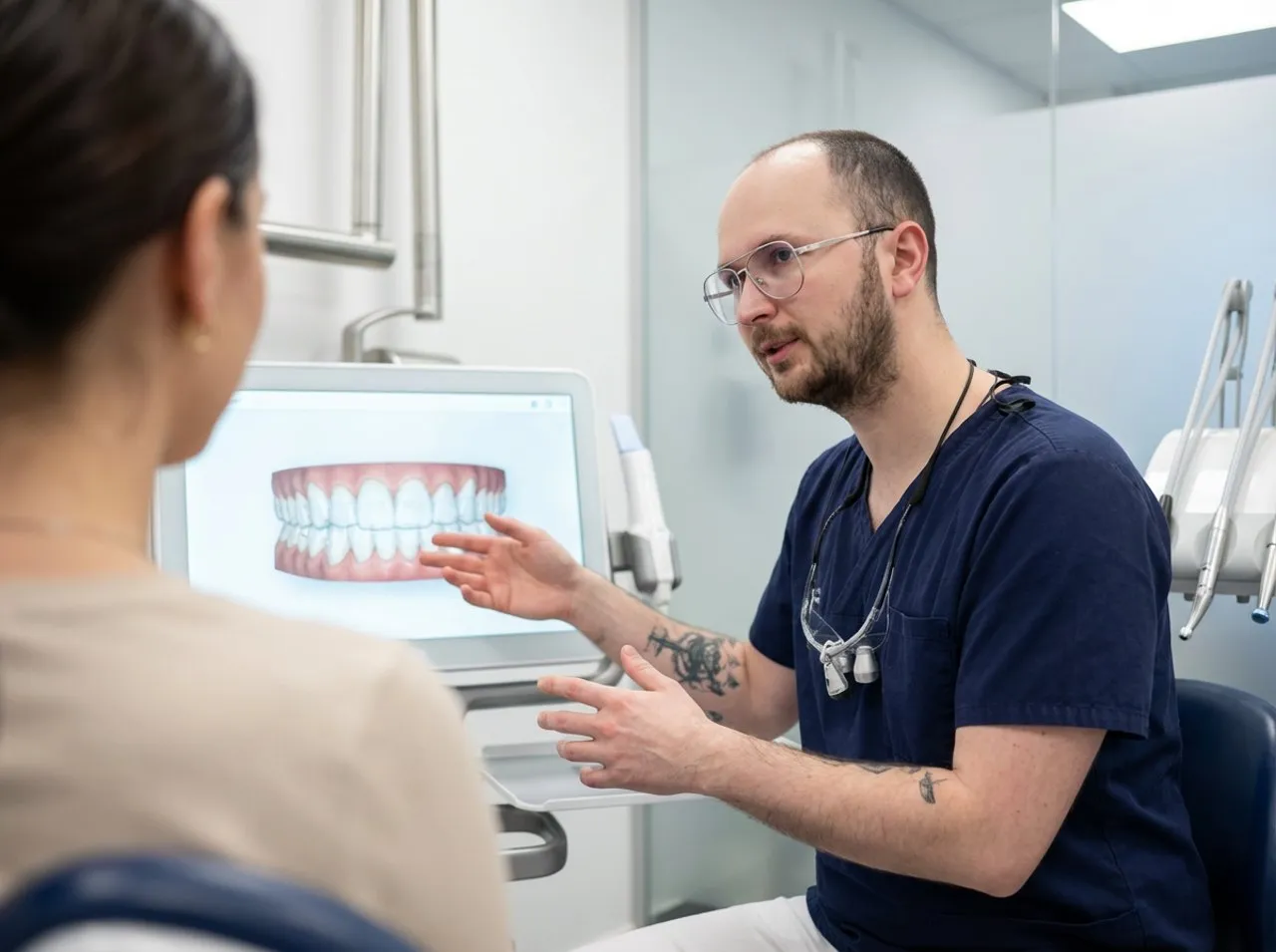
Dental crown procedure at the practice
The process is standardised but adapted to each individual. First comes the examination, including findings and X-rays if necessary. We then discuss the material, shade and costs. This makes dental crown treatment easy to plan.
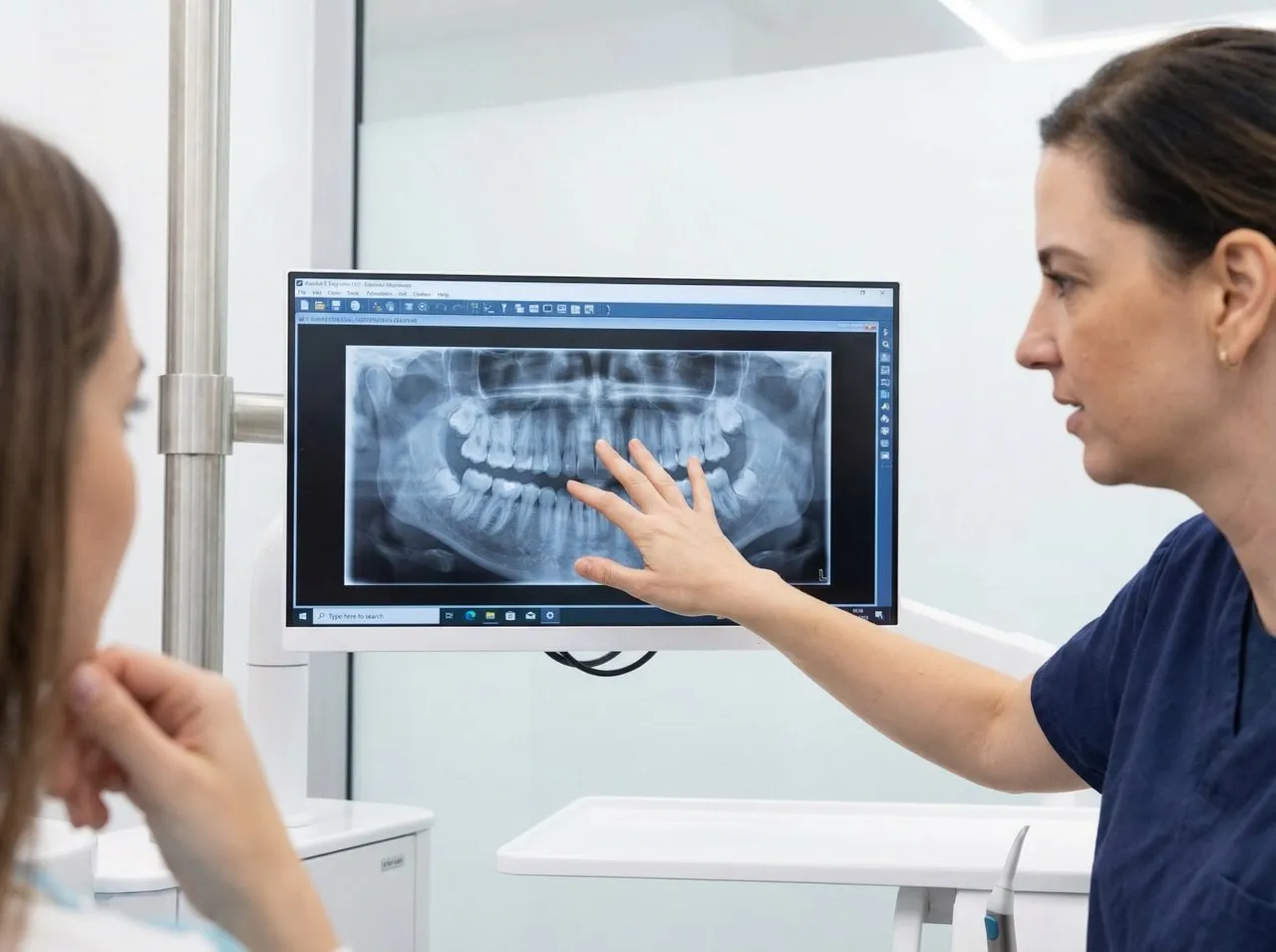
Crowning a tooth: preparation and scan
The procedure begins with a local anaesthetic. The tooth is then prepared conservatively and shaped precisely. Next, an impression or intraoral scan is taken. This is the key step for accurately fitting laboratory work. Contact points are also determined digitally or conventionally.

A temporary crown for protection
After preparation, we fit a temporary crown. It protects the tooth from temperature sensitivity and strain. During this phase, we check the fit and the gum's response. If you experience any problems, we adjust the temporary crown straight away. Oral hygiene remains particularly important during this time.
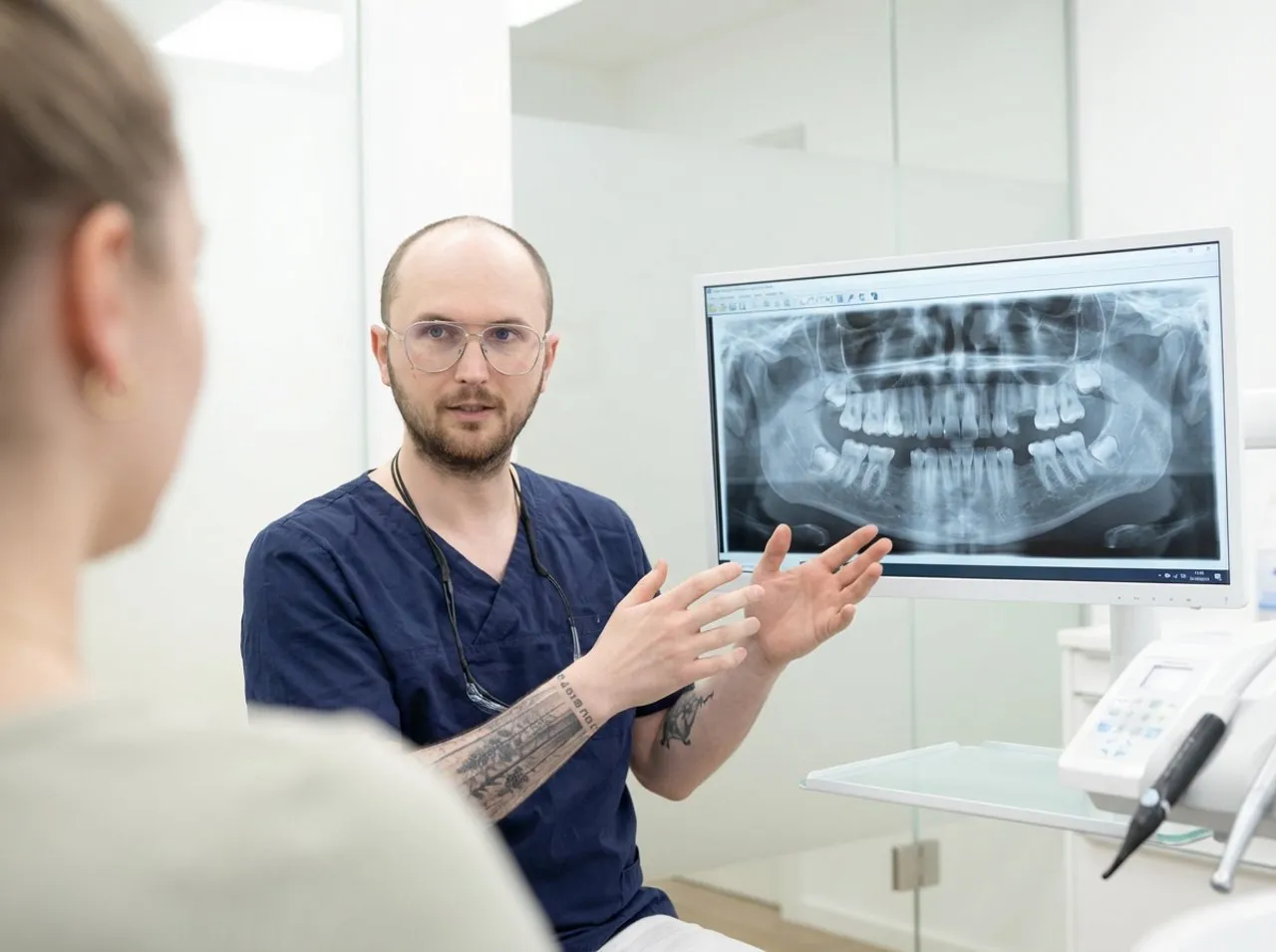
How are teeth crowned?
The process comprises three key aspects: preparation, data capture and fitting.

How is a tooth crowned?
The tooth is prepared, measured and then restored. Of course, we guide you through the entire process. Everything is transparent and professional.

How is a crown fitted?
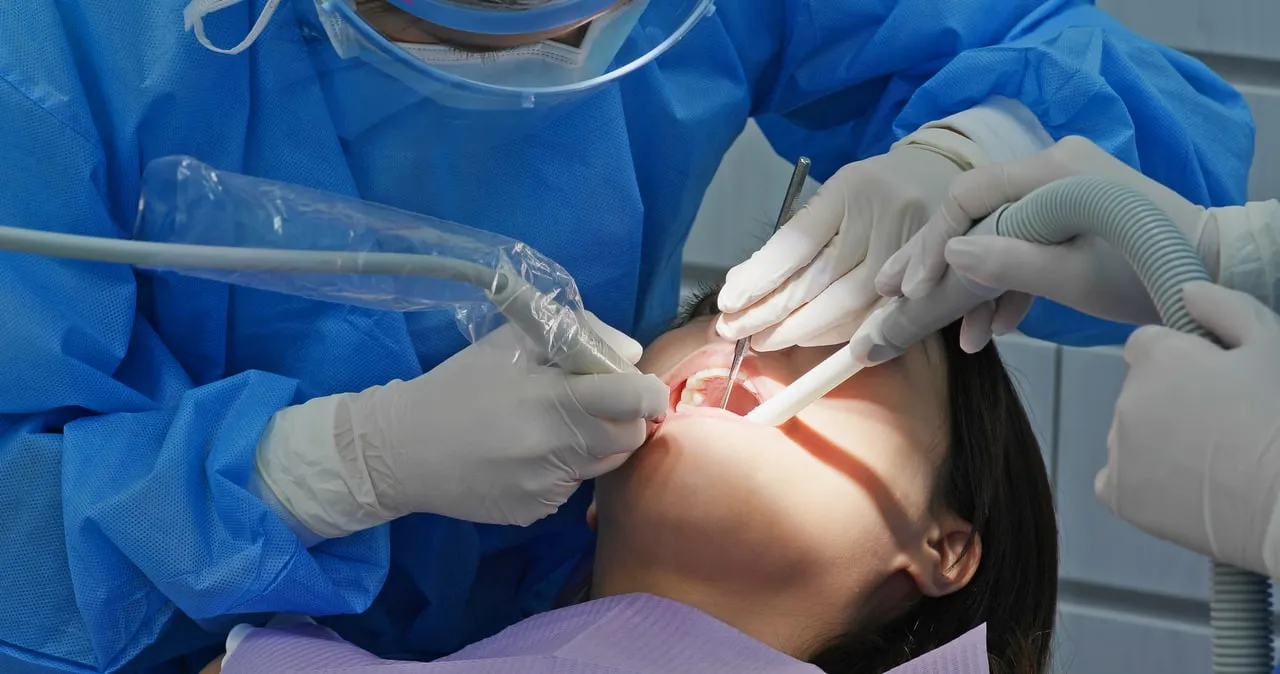
First, we remove the temporary crown. We then test the fit, marginal seal and shade. Only then is the crown placed and permanently secured. We check the bite using thin foils. Any premature contacts are corrected immediately.
How is a dental crown secured?
It is usually secured with cement or using an adhesive technique.
Molar crowns and incisor crowns
A crown on a molar is designed to withstand high chewing loads. Stability, a good seal and precise contact points are essential here. A dental crown on an incisor requires maximum aesthetic precision. We plan the translucency, shape and incisal edge contour very carefully. This gives the tooth a natural appearance.

Procedure for crowning front teeth
For front teeth, we pay particular attention to the shade because aesthetics are the priority here. The gum contour is also included in the planning so that the margin remains inconspicuous.

Replacing a dental crown: what is the procedure?
Common reasons for replacement include decay at the margin, fractured material or a loose crown. We remove the old restoration in a controlled manner and examine the prepared tooth. The usual scan and fitting of the new crown then follow. This restores a well-sealed, durable finish.

Aftercare following crown fitting
Mild sensitivity is possible at first and is usually temporary. Severe pain or problems with your bite should be assessed promptly. Clean the crown margin every day with dental floss or interdental brushes. Regular check-ups significantly extend its lifespan. This keeps your restoration stable in the long term.
Treatment at Wunschlachen in Berlin
At Wunschlachen, you receive precise planning and clear procedures. We work with modern scans and high-quality laboratory partners in Germany. You receive a transparent explanation of the materials and procedure. This makes every step of your dental crown treatment easy to understand. Please feel free to book your appointment in Berlin.
FAQ: Frequently asked questions about crowns
Two appointments are usually needed. The interval depends on the laboratory time and the clinical findings.
Preparation is carried out under local anaesthetic. Temporary sensitivity may occur after the appointment.
Large defects often leave insufficient stable tooth structure. A crown then offers better protection.
Soft foods are usually fine. You should avoid very hard or sticky foods.
The occlusion is then checked again and adjusted by selective grinding. This is a common issue that can be resolved quickly.
This depends on the material and the preparation. Ceramic is often bonded adhesively.
With good care, many years are realistic. Check-ups and hygiene are crucial.
Yes, due to decay, cement loss or high loads. The crown should then be examined promptly.
Not always, provided it remains well sealed and stable. Replacement is advisable if there are problems at the margin.
Wait until the anaesthetic has worn off before eating hard foods. Contact the practice if sensitivity persists.