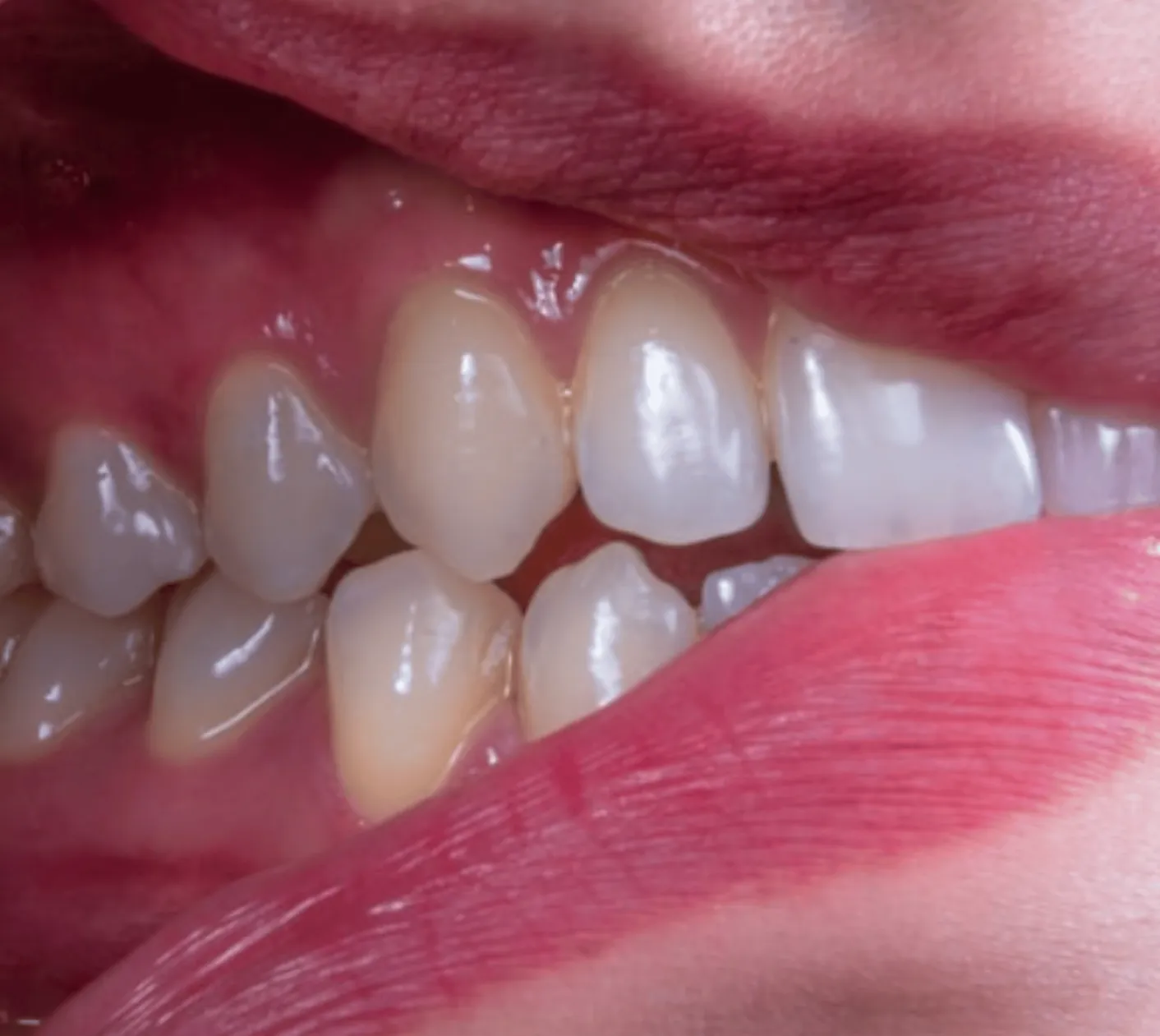
Incisor root: everything you need to know
The incisor is one of the most important teeth in the human dentition. It plays a central role in cutting food and is a decisive factor in aesthetic appearance. But how many roots does an incisor have, and what happens when root canal treatment...
Über 350 Google-Bewertungen
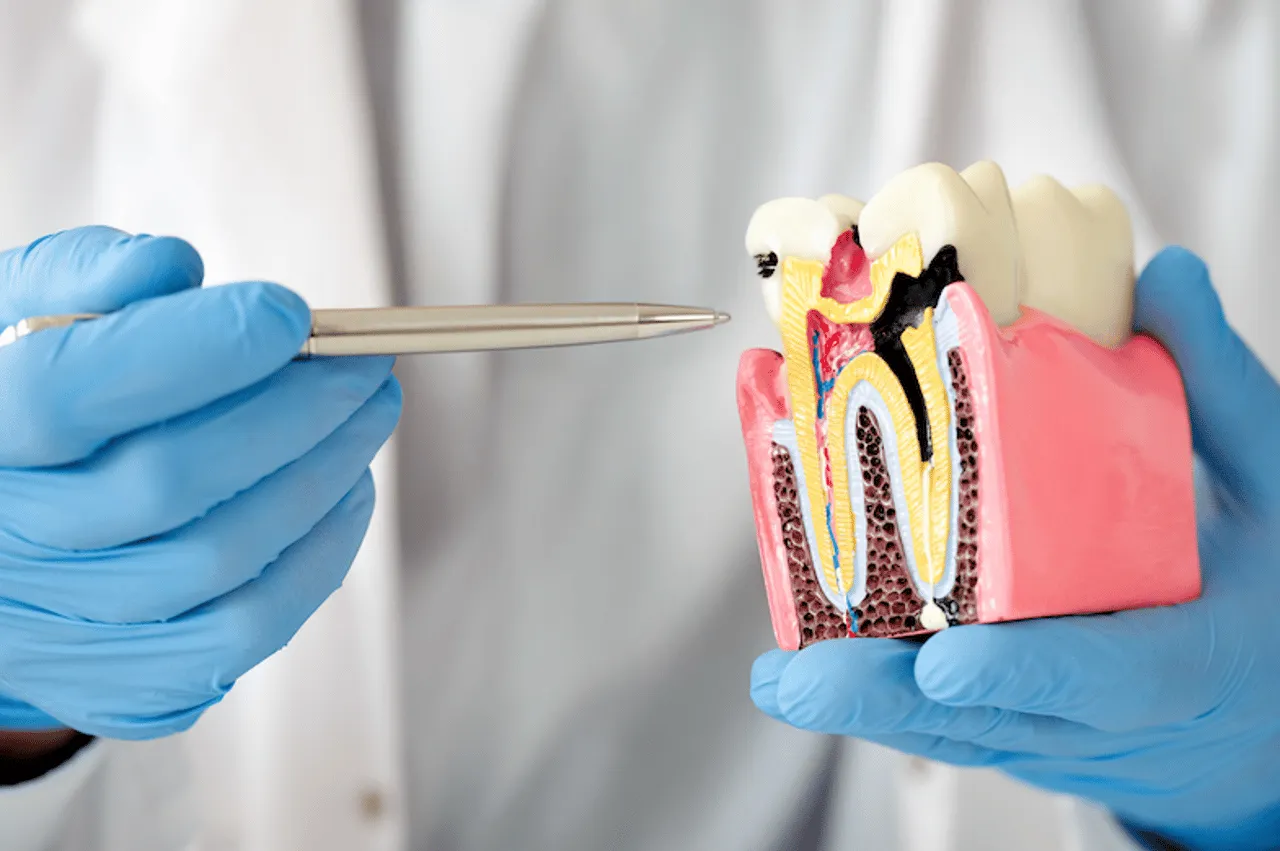
The structure of an incisor
An incisor consists of different parts that work together to perform its functions. The visible part of the tooth is the crown, which is covered by a hard layer called tooth enamel. Beneath the dental crown is the dentine, which surrounds the tooth root. Inside the tooth is the root canal system, which contains the nerves and blood vessels. The root of an incisor is the lower part of the tooth, anchored deep in the jawbone. It anchors the tooth in the jaw and generally has one or two prongs. The root of an incisor is smaller than that of a molar. Incisors generally require less stable support. Nevertheless, it is crucial to the long-term function of the tooth.

How many roots does a tooth have?
Teeth can have different numbers of roots, depending on their type. An incisor usually has only one root. However, there are rare cases in which an incisor can have two roots. This can occur with particularly wide or unusually shaped teeth. In general, however, the incisor is known for its single, straight root. By contrast, molars often have several roots. A molar with four roots, for example, is possible in the upper jaw region. Each set of roots contains its own root canal. Canines, in turn, usually have a single root. However, this root is often stronger than that of an incisor.

What happens if the root of an incisor becomes diseased?
An incisor root can be affected by various health problems. The most common cause of discomfort is inflammation or infection of the tooth root itself. This can be caused by tooth decay, deep-seated tooth damage or an injury to the tooth. When the tooth is diseased, bacteria often spread into the root canal system, leading to inflammation. This inflammation can be very painful and often has to be eliminated with root canal treatment. Incisor root canal treatment is generally carried out when the dental nerve is damaged or has been killed. This can happen as a result of extensive tooth decay or an injury. During root canal treatment, the dentist removes the dental nerve, cleans the root system and fills it with a special material.

What does a tooth root look like?
The tooth root is the lower part of the tooth, anchored in the jawbone. It is usually not visible unless there is inflammation of the tooth or the tooth has been damaged in some other way. The root consists of dentine and dental pulp. The dental pulp contains the tooth's nerves and blood vessels and is located inside the root. It ends at the root tip, which grows into the jawbone. The shape and size of the root can vary depending on the type of tooth. In a molar, the roots are often stronger and more numerous than in an incisor. A molar with 4 roots is an example of a tooth with several roots. These teeth are built to withstand heavy chewing loads, which is why their roots are also larger and more stable.
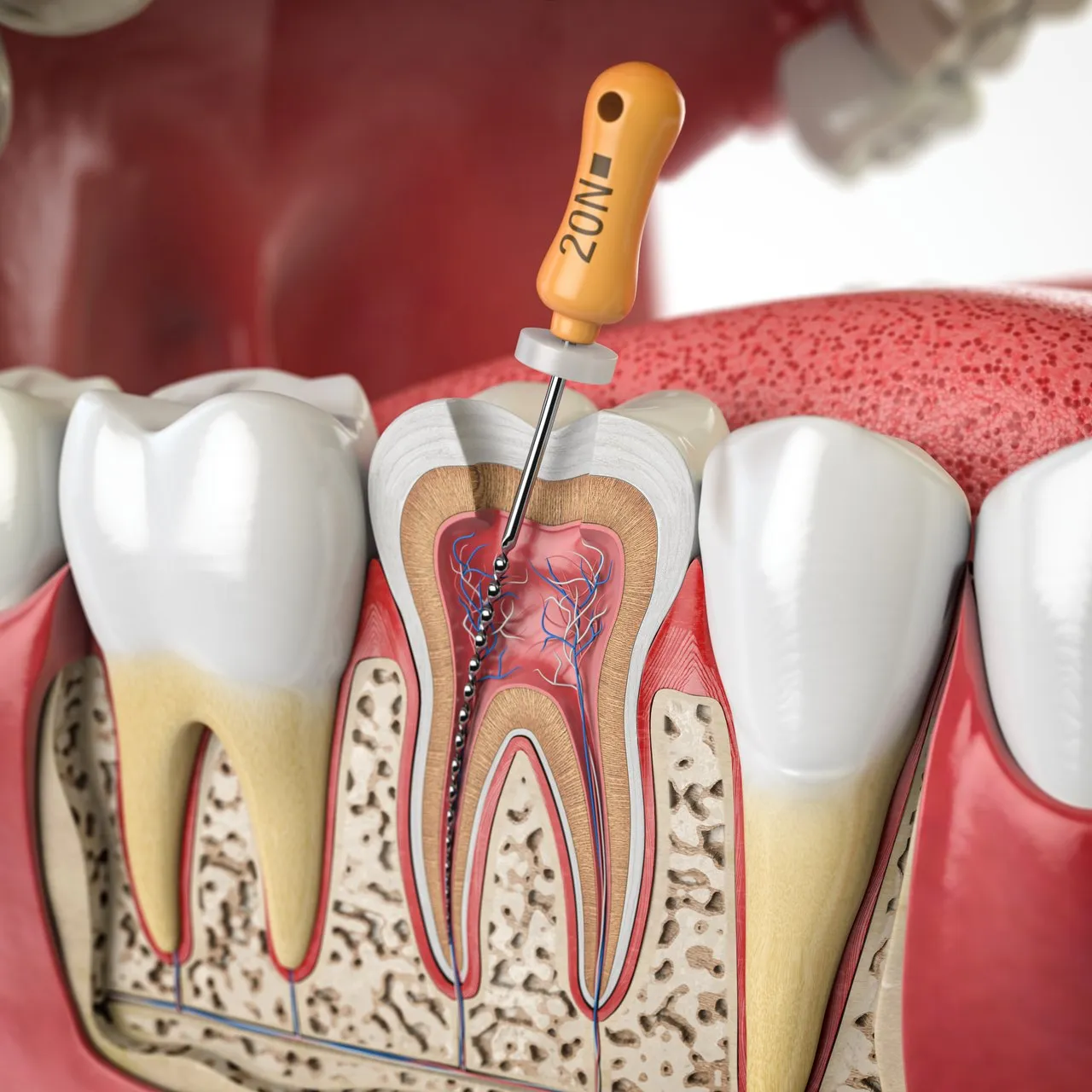
Root canal treatment for an incisor
During root canal treatment on a front tooth or incisor root canal treatment, the dental nerve is removed and the root canal is thoroughly disinfected. The tooth is then sealed with a special filling material. The process is generally pain-free, as a local anaesthetic is used. Treatment may need to be carried out several times to treat all infected areas in the root system. An incisor that has undergone root canal treatment often requires a crown following the procedure. Without a crown, the tooth could become unstable due to the reduction in hard tooth structure.

Conclusion
The incisor root plays a central role in the stability and function of the tooth. If an infection or inflammation occurs, root canal treatment may be necessary. After treatment, the tooth is fitted with a crown in many cases.
Frequently asked questions (FAQ)
An incisor usually has one root. In rare cases, it can also have two roots.
A tooth root is the part of the tooth anchored in the jawbone. It consists of dentine and dental pulp and ends at the root tip.
A molar can have up to four root canals, depending on the type and position of the tooth.
If the root of an incisor becomes diseased, root canal treatment may be necessary to save the tooth.
During treatment, the dental nerve is removed, and the root canal is disinfected and sealed with a special material.
Yes, after treatment the incisor can be stabilised with a crown and used again as normal.
An incisor needs root canal treatment if the dental nerve has been damaged, for example by tooth decay or a dental injury.
A molar can have up to three or even four roots, depending on the type and position of the tooth.
Incisors usually have only one root, while molars have several larger roots.
Yes, after treatment and fitting a crown, the incisor can be used normally again.