
Inflamed tooth – what to do now
If a tooth is inflamed, you first need an assessment, not a definition. This page therefore answers three questions in this order: Do I need to go to hospital immediately? Which of the three possible types of inflammation do I probably have? And what helps in the hours before my appointment? First, for reassurance: the summary of the S3 guideline “Odontogenic Infections” issued by the German Society for Oral and Maxillofacial Surgery and the German Society for Dentistry, Oral and Maxillofacial Medicine states that inflammation without a tendency to spread can generally be treated on an outpatient basis and without antibiotics if no general risk factors are present. The vast majority of cases fall into this group. The next section lists the signs by which the guideline identifies the smaller group. Our page on dental inflammation explains in detail what dental inflammation means medically, how it develops and how to prevent it; this page is about what to do.
Über 350 Google-Bewertungen
These six signs mean you should go to hospital immediately
The S3 guideline “Odontogenic Infections” (AWMF registry number 007-006) lists the following six signs as indications that the inflammation is spreading beyond the tooth. The recommendation was adopted unanimously by the guideline group, with 17 out of 17 votes. If any of these applies, the case belongs in an oral and maxillofacial surgery department or an emergency department, not at the next routine surgery. In Berlin, this means the emergency department at night and at weekends; you can reach the fire brigade on 112 and the medical on-call service on 116 117. The same guideline gives its strongest recommendation for draining such infections: this should be done immediately.
Difficulty swallowing or breathlessness
The guideline groups together “difficulty swallowing/breathlessness/raised floor of the mouth”. If swallowing is difficult, your throat feels tight or the floor of your mouth appears raised, the swelling may be compromising the airways. This is the most urgent of the six points.
The mouth can no longer be opened wide
The medical term for this is trismus. The guideline lists restricted mouth opening first and mentions measuring mouth opening as a possible parameter for monitoring the course of the infection. It does not specify a threshold in millimetres.
Muffled speech
If your voice sounds muffled, as though you have something in your mouth, this suggests swelling in the throat. The guideline lists muffled speech as a separate sign of spreading infection.
Externally visible swelling
The guideline’s assessment question is crucial: can the lower border of the mandible still be felt clearly? If not, the swelling has reached the soft tissue spaces. Visible swelling alone is not yet an emergency, but in combination with the other signs it is a warning signal.
Pain on pressure at the angle of the jaw or inner corner of the eye
The guideline explicitly mentions both pressure points, adding “V. angularis” for the inner corner of the eye. A vein runs through this area, along which inflammation from the upper jaw can spread towards the eye.
Fever and feeling unwell
The guideline lists fever on the same line as exsiccation, meaning dehydration. For monitoring progress, it mentions checking body temperature alongside measuring mouth opening and inflammatory markers in the blood. The guideline does not specify a temperature threshold.

Three types of inflammation, three different kinds of pain
The term “inflamed tooth” usually covers three different conditions, and they feel different. Distinguishing between them is not pedantry; it determines both the urgency and the treatment. In the first condition, the dental nerve is inflamed but still alive; this is called pulpitis. In the second, the nerve has died and the inflammation has spread through the root tip into the bone; this is called apical periodontitis, with apical meaning at the root tip. In the third, pus has accumulated and formed a cavity; this is an abscess. The S3 guideline “Odontogenic infections” describes the transition from the first condition to the second in a single clinical sentence: In acute apical periodontitis, tenderness on biting is the main feature, and the sensibility test for the tooth concerned is usually negative. In other words, as long as the tooth responds to cold, the nerve is still alive. As soon as biting hurts and the cold test no longer produces a response, the inflammation has reached a deeper level. For precisely this assessment, the European Society of Endodontology recommends the cold test in its 2023 S3 guideline, supplemented if necessary by an electric test, together with a combined assessment of the pain history and findings: whether pain is present, whether it has occurred before, whether it starts spontaneously, whether the tooth responds to tapping and whether heat triggers pain. For apical periodontitis, the same guideline strongly recommends an X-ray. The next section matches the three conditions to the symptoms typically described by those affected.
Which presentation matches your symptoms?
This matching does not replace an examination — the specialist literature explicitly describes dental pain as difficult to localise because there are no fibres for localisation in the pulp. Your own suspicions are therefore regularly wrong by one tooth or even one jaw. Nevertheless, this matching is sufficient to determine how urgent the situation is.
Cold hurts, and the pain subsides again after a few seconds
This is the presentation of reversible pulpitis. The specialist literature describes it as a sharp, shooting pain of short duration, triggered by cold; nothing relieves it, but it stops by itself as soon as the stimulus is removed. At this stage, the nerve can often be preserved. An appointment within the next few days is usually sufficient.
The pain starts spontaneously, throbs dully and persists
This is the presentation of irreversible pulpitis. The American Dental Association defines it as spontaneous pain that lingers after a temperature stimulus, with a nerve that is still alive but no longer capable of healing. Cold water often relieves it rather than making it worse. Treatment is the only thing that helps here, and it should take place within one to two days.
Biting hurts, and the tooth feels too high
This is the presentation of apical periodontitis. The American guideline defines it as pain when chewing, tapping or touching, with or without findings on an X-ray, and without swelling. This tooth is easy to localise because the fibres for localisation are in the periodontal ligament. From this point onwards, timing becomes critical.
Swelling, a feeling of pressure, perhaps a blister on the gum
This is the presentation of a localised abscess: spontaneous pain, pus formation and localised swelling, but without involvement of the soft tissue spaces, without swollen lymph nodes, without fever and without feeling unwell. If any of these four features is also present, it is no longer a localised abscess but the situation described in section two.
Nothing hurts, but something is visible on the X-ray
This can happen too. The S3 guideline states that chronic apical periodontitis can only be verified radiologically because of the absence of clinical symptoms. A dead nerve can remain silent for years. Freedom from pain after a painful phase is therefore not proof that the condition has healed.
Getting through the hours until your appointment
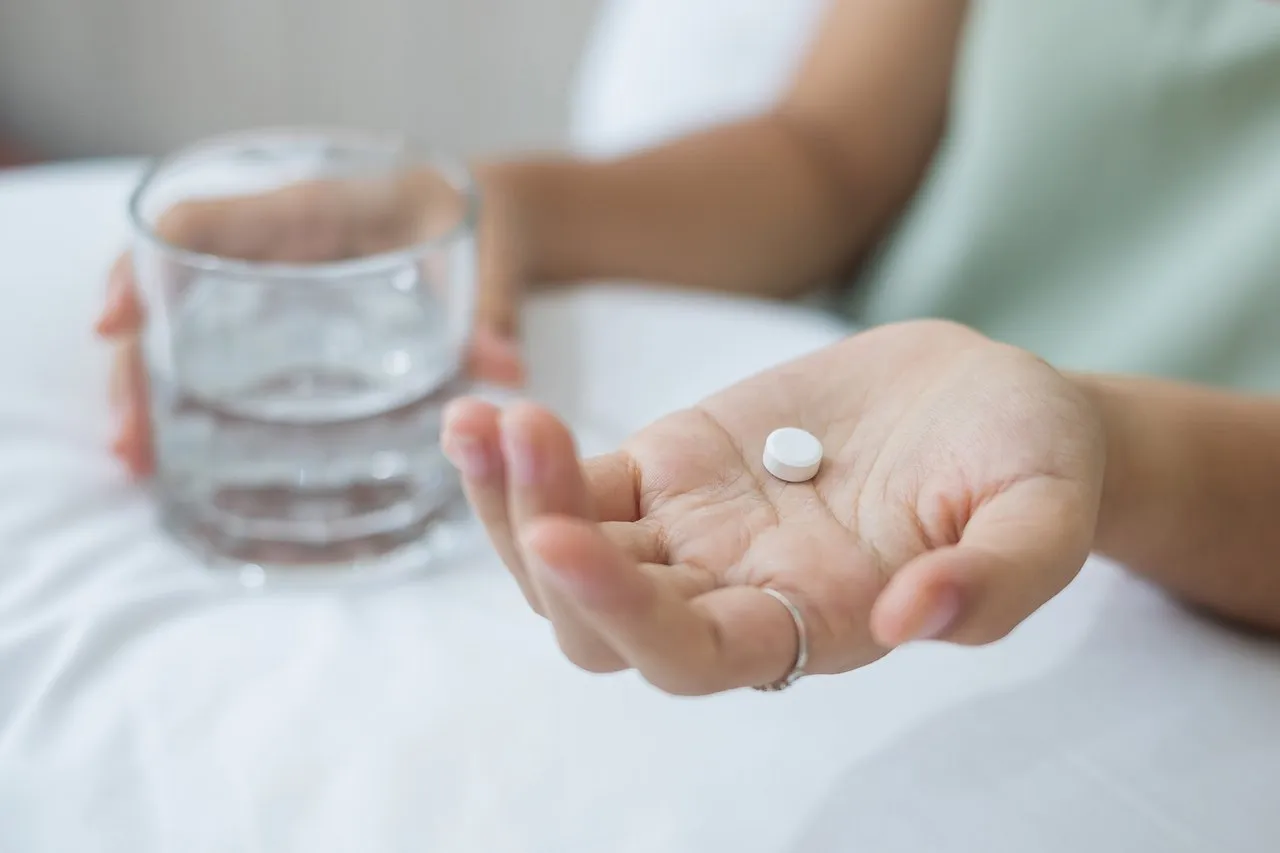
First, the most important point: nothing described here treats the cause. A painkiller acts on the pain, not on the inflammation in the root canal, and dead pulp no longer has a blood supply through which an active ingredient or your own immune system could even reach it. There are reliable figures to guide the choice of painkiller. A Cochrane overview combining data from ten Cochrane reviews and one further systematic review calculated the number needed to treat for 21 over-the-counter painkillers and dosages: the number of people treated for one person to lose at least half of their pain for four to six hours, pain that they would otherwise have retained without the medication. The underlying pain model is pain after a surgical procedure, predominantly after the removal of wisdom teeth. For ibuprofen 400 milligrams, this value is 2.5 from 51 studies with 5,604 participants; for paracetamol 1,000 milligrams, it is 3.6 from 28 studies with 3,232 participants. In Germany, over-the-counter ibuprofen remains within a single dose of up to 400 milligrams and a daily dose of 1,200 milligrams; this is stated in Annex 1 to the Medicinal Products Prescription Ordinance. Ibuprofen 600 milligrams is prescription-only. Whether a painkiller is suitable for you depends on pre-existing conditions, pregnancy and other medication — the package leaflet, your pharmacy or your treating dentist will clarify this, not a website. Cooling also helps: the S3 guideline on odontogenic infections mentions cooling the infected area as a supportive measure that reduces swelling and trismus. The specialist literature describes the application as follows: wrap a cold pack or ice in a clean cloth and apply it externally to the skin for 15 to 20 minutes, then take a break of at least 20 minutes so that the skin is not damaged by the cold. Do not apply ice directly to the skin or use it inside the mouth.
What you should not do now
The following five points are not second-hand advice; each is linked to a source. Two of them contradict what is frequently written elsewhere.
Do not apply heat to your cheek
Heat has exactly the opposite effect to cold: it dilates the blood vessels. The specialist literature states the restriction unequivocally — heat applications should be avoided in acute infections and active inflammation because they can worsen swelling and encourage the infection to spread. This also applies to cherry stone pillows and hot compresses.
Do not take leftover antibiotics from the drawer
The S3 guideline states that antibiotic therapy alone for an acute odontogenic infection is indicated only in exceptional cases and can lead to the infection becoming chronic. Starting an antibiotic without treating the cause can therefore prolong the course of the infection rather than end it. Which medication is useful and when is explained further below.
Do not open the abscess yourself
The guideline describes drainage as a surgical procedure under local anaesthetic, with a drain inserted shallowly and specifically without packing the wound, and with follow-up checks at which the drain is changed at least every second to third day. None of this can be replicated at home.
Do not stop long-term acetylsalicylic acid medication without medical advice
Anyone who permanently takes low-dose acetylsalicylic acid after a heart attack, stroke or comparable event — referred to in the guideline as secondary prevention — should not stop taking it before a dental procedure. S3 guideline 083-018 gives this its strongest recommendation, explaining that stopping it triples the risk of a cardiovascular event. Simply tell us beforehand what you are taking.
Do not give children medicines containing acetylsalicylic acid
Acetylsalicylic acid should be avoided as a painkiller in children because of the risk of Reye’s syndrome; the specialist literature on dental pain management instead names paracetamol and ibuprofen as the first-choice medicines in childhood.
Antibiotics: when they help and when they do not
An antibiotic works via the bloodstream. But when the dental nerve has died, the bloodstream no longer reaches that precise area, because the root canal is cut off from the blood supply. This is why the S3 guideline “Odontogenic infections” gives its strongest recommendation grade to a statement that surprises many people: For a localised odontogenic infection with no tendency to spread, where pus is draining, antibiotic therapy should be omitted if there are no general medical risk factors. In this case, treatment consists of drainage and elimination of the cause. The American Dental Association’s 2019 guideline reaches the same conclusion for pulpitis and states it as a strong recommendation: for symptomatic irreversible pulpitis with or without apical periodontitis, no oral antibiotic, but prompt dental treatment. The Cochrane reviews on this topic also find no robust evidence of any benefit. Conversely, if the inflammation shows a tendency to spread, the same German guideline states that patients should be monitored as inpatients and receive an antibiotic immediately in addition to surgical treatment — this is a moderate-grade recommendation there, not the strongest. The first-choice agents it names are penicillin or amoxicillin, and clindamycin in cases of known penicillin allergy — both are available on prescription only in Germany, and a dosage belongs on a prescription, not on a website. The signs that indicate spreading are explained above in section two; our page on antibiotics for tooth root inflammation covers the duration of action, selection and what to do if there is no response.
When the anaesthetic does not work properly
The concern that an injection will not work on an inflamed tooth is justified and has been well researched. A network meta-analysis of 28 randomised studies, published in the International Endodontic Journal in 2025, states in its introduction that anaesthesia is inadequate in 43 to 83 per cent of lower molars with painful irreversible pulpitis, and that the failure rate is eight times higher than in teeth without pulpitis. The reasons are known: inflammatory mediators make the pain fibres more sensitive, the acidic environment in inflamed tissue makes it harder for the anaesthetic to penetrate, the blood vessels are dilated, and the nerve fibres produce more sodium channels that respond less well to local anaesthetics. What matters is what the same analysis shows as the solution: additional injections alongside a nerve block significantly improve success — as an additional injection after the initial injection has failed to work, with a relative risk of 2.02, and as a combined technique from the outset, with 1.86, each compared with a nerve block alone. The techniques include infiltration from the cheek side and tongue side, as well as intraligamentary injection directly into the periodontal ligament. In practical terms, an inflamed tooth is no reason to postpone your appointment, but it is a reason to mention it at the appointment. Please say so as soon as you feel anything during the test rather than putting up with it. Our page on inflamed teeth where the anaesthetic does not work explains this in detail.
What happens at the first appointment
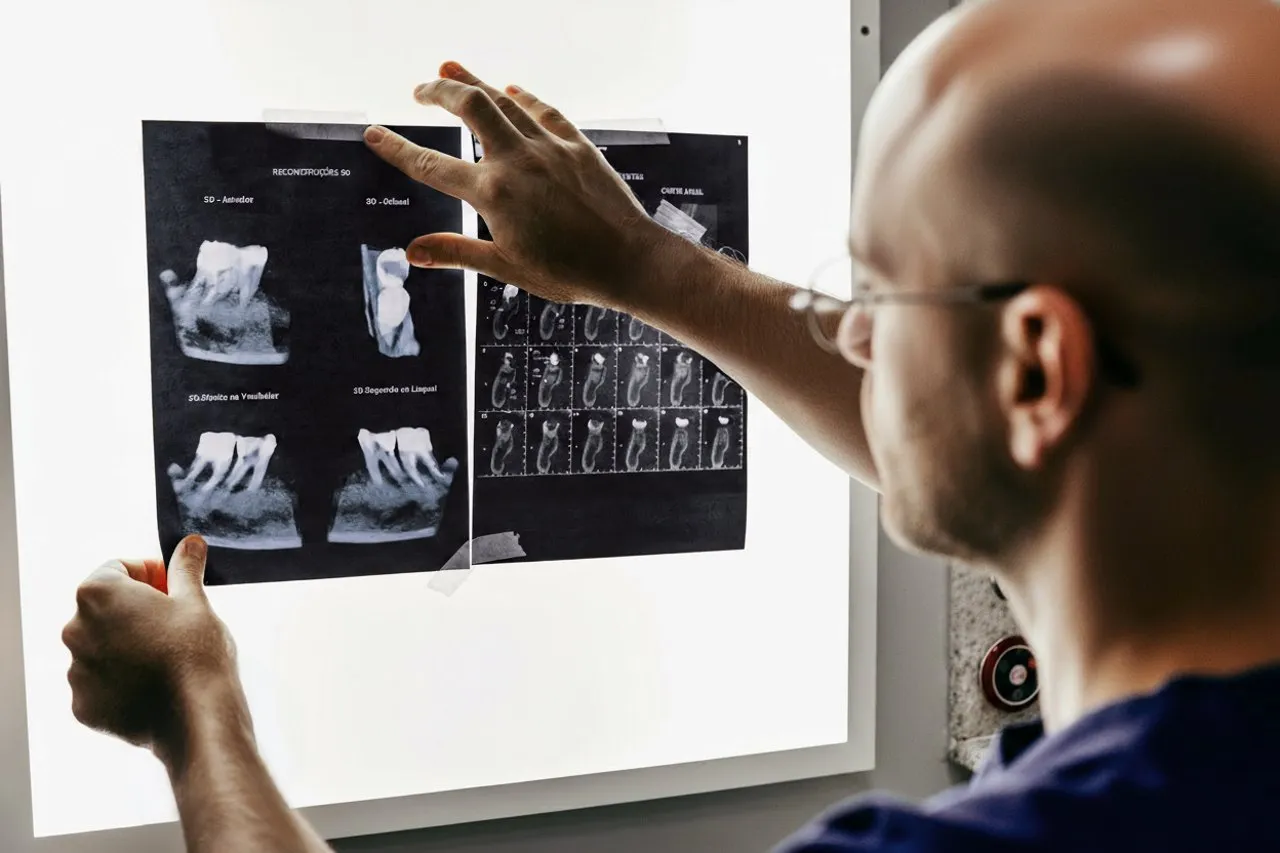
The S3 guideline describes the procedure for a localised infection in two steps, both of which carry the strongest recommendation grade of the expert consensus: Treatment should consist of drainage — that is, trepanation, incision or cleaning of the periodontal pocket — and elimination of the cause. Trepanation means opening the tooth at the top so that the pressure can escape; this is usually the moment when the pain subsides. For an abscess, the pus is drained through a small incision and a drain is inserted to keep the wound open without blocking it. If the tooth is worth preserving and the nerve is still inflamed, root canal treatment is the treatment that addresses the cause in the early stages; the guideline refers to the European Society of Endodontology’s guidelines for this. One point contradicts a widespread assumption: according to the guideline, an affected tooth that is worth preserving should not be left open. If the tooth cannot be preserved, it can be left open until it is removed. The treatment is complete only once the cause has been eliminated; if this takes place in a second procedure, patients should be informed of this during the first treatment. For aftercare, the guideline specifies short intervals and changing the drain at least every two to three days. Our page on root canal treatment for inflammation explains how root canal treatment works in detail.
Urgent care in Berlin: where to go at weekends and at night
The emergency dental service in Berlin is not a private matter for individual practices; it is organised centrally. The statutory duty to ensure care under Section 75(1b) of the German Social Code, Book V (SGB V), explicitly includes care outside consulting hours. For this purpose, the Association of Statutory Health Insurance Dentists Berlin (KZV Berlin) assigns one practice per administrative district on Saturdays, Sundays, public holidays and bridge days for the morning from 9:00 to 12:00 and one for the afternoon from 15:00 to 18:00; recorded information on 030 89004-333 or the KZV Berlin emergency service search will tell you which practice is currently assigned. In addition, the Department of Dentistry, Oral and Maxillofacial Medicine at CharitéCentrum 3, Aßmannshauser Straße 4–6, Berlin-Wilmersdorf, provides an emergency service on Mondays to Fridays from 17:00 to 21:00, Saturdays from 17:00 to 1:00, and Sundays and public holidays from 13:30 to 21:30, telephone 030 45066-2613. KZV Berlin is clear about costs: pain treatment through the emergency service is generally free of charge for people with statutory health insurance, provided they present their electronic health card; costs may arise if additional dental prosthetic services are required. The supplement for treatment at night — BEMA defines night as 20:00 to 8:00 — and on Sundays and public holidays is also covered by statutory health insurance and is not billed to you. A separate safeguard applies to privately insured patients: under Section 2(1), sentence 3 of the German Scale of Fees for Dental Services (GOZ), emergency and acute pain treatment must not be made conditional on a fee agreement. Furthermore, Section 9(2) of the Berlin Dental Chamber’s professional code of conduct prohibits making treatment of an emergency patient conditional on advance payment; Section 12(1) generally requires dentists in private practice in Berlin to participate in the emergency service. However, if any of the six signs from section two is present, the emergency department rather than the emergency dental service is responsible: fire brigade 112, medical on-call service 116 117.
What pain treatment costs
For people with statutory health insurance, pain treatment is covered by their insurance. It is billed according to the Uniform Assessment Standard for Dental Services, known as BEMA, which is Annex A to the Federal Framework Agreement for Dentists and is based on Section 87 SGB V. This lists the items in a pain treatment appointment with their assessment values: 18 for the comprehensive examination, 11 for trepanation of a tooth with dead pulp, 15 for opening a superficial abscess, 29 per canal for preparing the root canal system and 15 for the medicated dressing. These figures are explicitly not amounts in euros; the value of one point is agreed by the Association of Statutory Health Insurance Dentists Berlin and the health insurance funds in the collective agreement (Section 85(2) SGB V). This makes no difference to you because you pay nothing for it. Private treatment is billed according to the German Scale of Fees for Dental Services, and every amount can be derived from it: fee equals number of points multiplied by point value multiplied by the multiplying factor, with the point value under Section 5(1) GOZ being 5.62421 cents and the points listed in Annex 1. Trepanation of a tooth is rated at 65 points and costs 8.41 euros at the 2.3-fold rate; a nerve block with 70 points costs 9.05 euros, a vitality test with 50 points costs 6.47 euros and a comprehensive examination with 100 points costs 12.94 euros. As for the multiplying factor, Section 5(1), sentence 1 GOZ sets the range from the single rate to 3.5 times that rate; under Section 5(2), sentence 4 GOZ, the 2.3-fold rate represents an average service and is the standard rate. A higher rate is permissible only if particular difficulty, time expenditure or circumstances justify it, and under Section 10(3), sentence 1 GOZ it must be justified in writing on the invoice for the individual service in a clear and comprehensible way; conversely, below-average services must be charged at a lower rate. Billing above the 3.5-fold rate is possible only through a written agreement under Section 2(1) and (2) GOZ, which must be concluded before treatment following a personal discussion in the individual case and must include the number and description of the service, the multiplying factor, the amount and a notice that full reimbursement may not be guaranteed. One limit is particularly important for this page: under Section 2(1), sentence 3 GOZ, emergency and acute pain treatment must not be made conditional on such an agreement. Urgent treatment therefore never depends on your signing something beforehand.
A brief overview: causes and prevention
Odontogenic infections are caused by bacterial inflammation originating from the tooth or the periodontium; the possible causes listed in the S3 guideline include deep caries, pulpitis and pulp necrosis, periodontitis, peri-implantitis, and displaced and impacted teeth. It also states that incomplete root canal treatments and deep caries increase the risk. They most commonly originate from the large molars, more often in the lower jaw than in the upper jaw. Everything else about how they develop, their course and prevention — including what brushing your teeth, dental floss and check-up appointments can actually achieve — is covered on our page about tooth inflammation, so that it does not need to be repeated here.
Frequently asked questions (FAQ)
Under the S3 guideline “Odontogenic Infections”, an emergency is inflammation with a tendency to spread. Its six signs are restricted mouth opening, pain on pressure at the angle of the jaw or corner of the eye, external swelling with a lower border of the mandible that can no longer be felt clearly, difficulty swallowing or breathlessness or a raised floor of the mouth, muffled speech and fever. Surgical drainage should then take place immediately — this is the guideline’s strongest recommendation. Without these signs, the situation is urgent but not life-threatening; the American guideline names treatment to address the cause within one to two days as the target.
Because the inflamed tissue is acidic and the anaesthetic penetrates less effectively, because inflammatory mediators make the pain fibres more sensitive, and because the nerve fibres produce more sodium channels that respond less to local anaesthetics. The figures are: inadequate anaesthesia in 43 to 83 per cent of inflamed lower molars, and an eightfold higher failure rate than in teeth without pulpitis. Additional injections — from the cheek side, tongue side or intraligamentary — improve success by a factor of 1.86 to 2.02 in the meta-analysis of 28 studies.
A painkiller acts on the pain, not on the cause. If your usual dose is no longer sufficient, this suggests that the inflammation has progressed — from reversible to irreversible pulpitis or onwards to apical periodontitis. Taking another dose is then the wrong response: in Germany, the over-the-counter limits are 400 milligrams per single dose and 1,200 milligrams per day (Annex 1 AMVV), and beyond that you need an appointment, not a higher dose.
First comes the assessment: examination, cold test, tapping test and usually an X-ray — the 2023 European guideline explicitly recommends an X-ray for apical periodontitis. Then drainage: opening the tooth, draining an abscess through a small incision with a drain, or cleaning the gum pocket. Finally, the cause is addressed, either in the same appointment or at a second appointment, which the guideline states should already be explained at the first.
The Association of Statutory Health Insurance Dentists Berlin states for people with statutory health insurance: pain treatment through the emergency service is generally free of charge, provided the electronic health card is presented. Costs may arise if additional dental prosthetic services are required, such as a repair or re-cementing a crown. For privately insured patients, Section 2(1), sentence 3 GOZ applies: emergency or acute pain treatment must not be made conditional on a fee agreement. And under Section 9(2) of the Berlin Dental Chamber’s professional code of conduct, treatment of an emergency patient must not be made conditional on advance payment.
Book your appointment now
We would be happy to advise you in person at our practice.