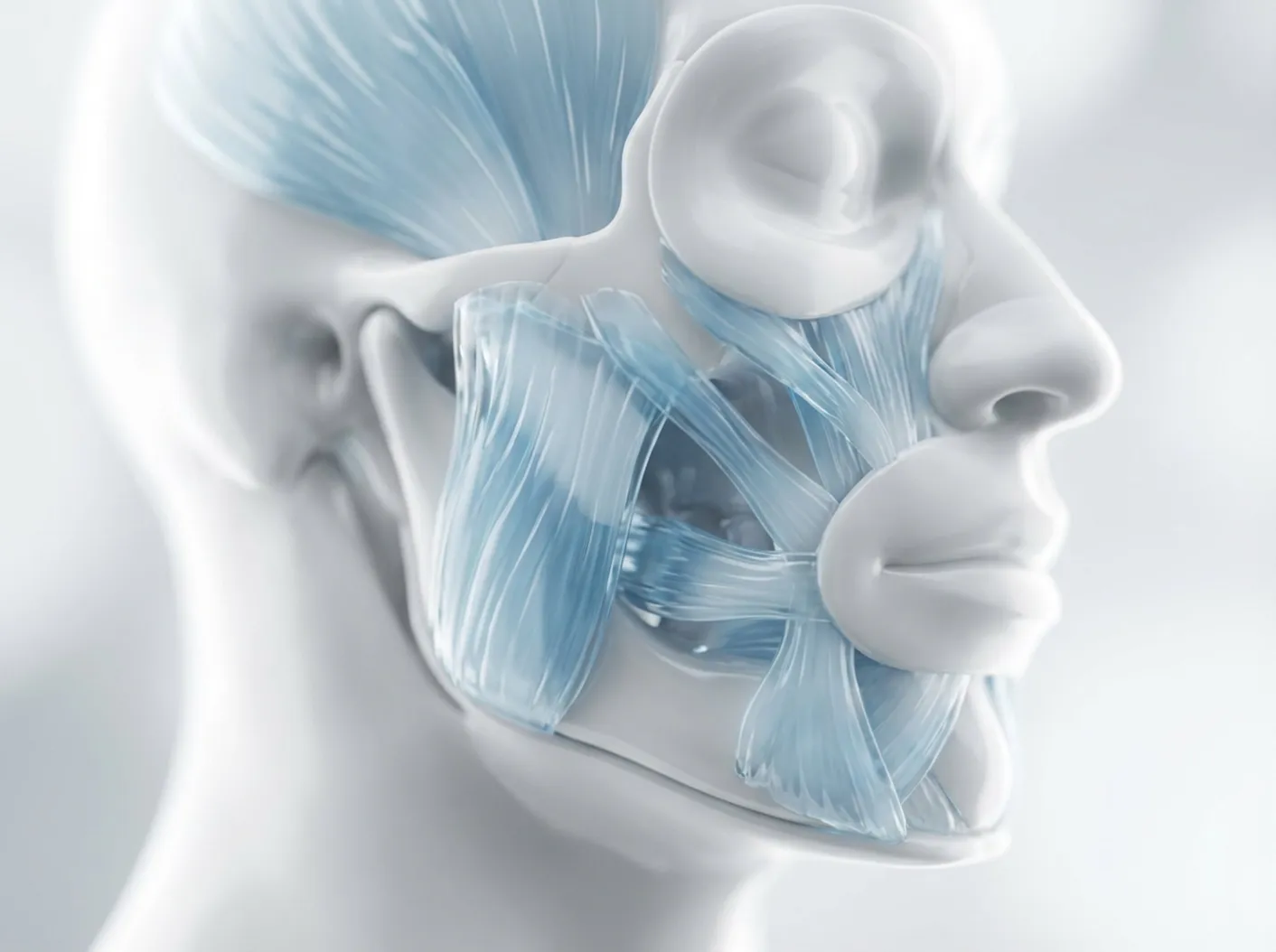
Jaw muscles: structure, function and treatment
A strong, relaxed jaw is important for health and well-being. The jaw muscles work for many hours every day. They are constantly in use when you chew, speak and swallow.
Über 350 Google-Bewertungen
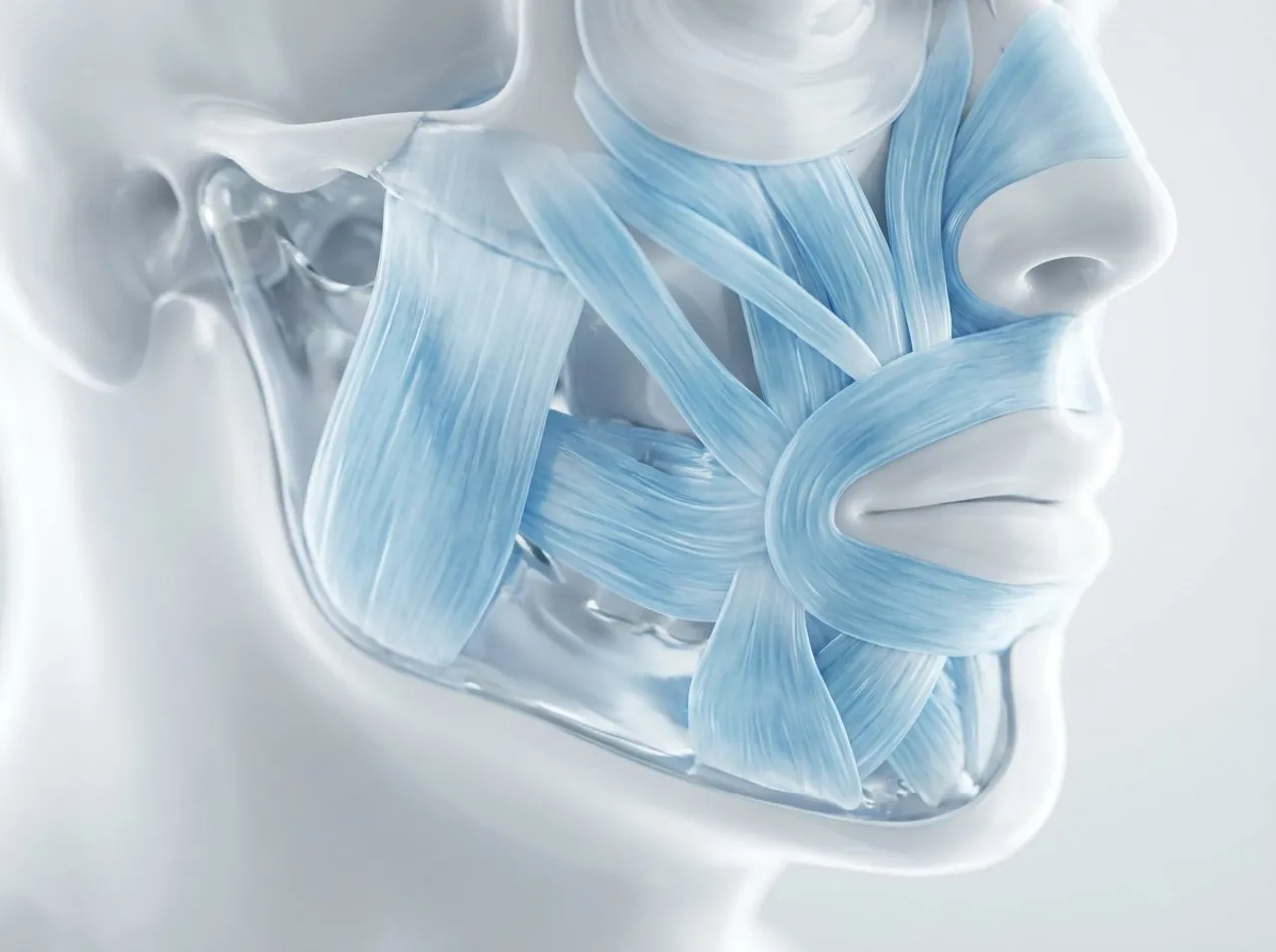
What are the jaw muscles?
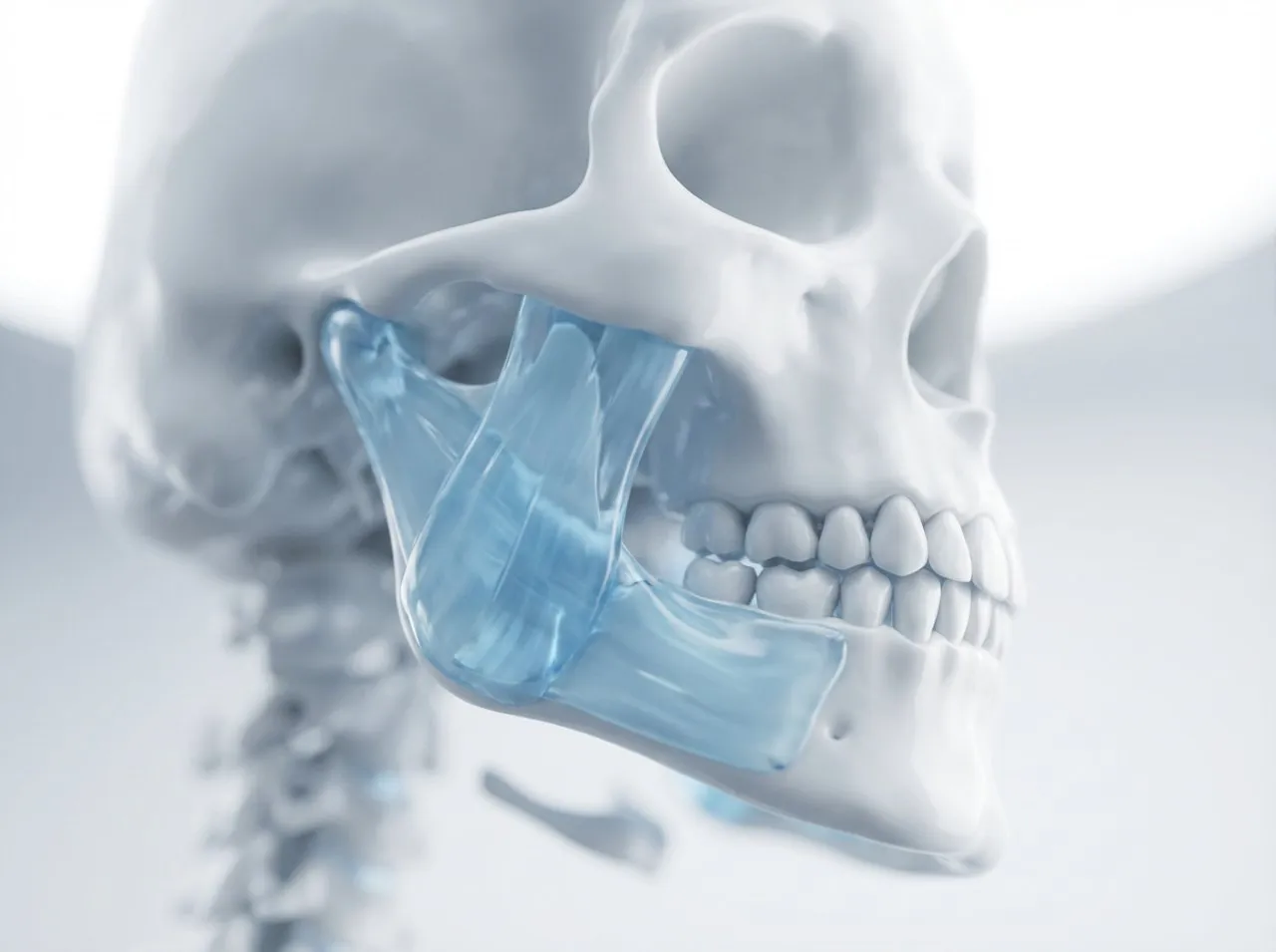
The masticatory muscles comprise several powerful muscle groups. They connect the lower jaw, upper jaw and skull. This enables the jaw to move in all directions. Particularly important are the masseter in the cheek, the temporalis and the pterygoid muscles on the inside. They work closely with the temporomandibular joints.
Functions of the masticatory muscles
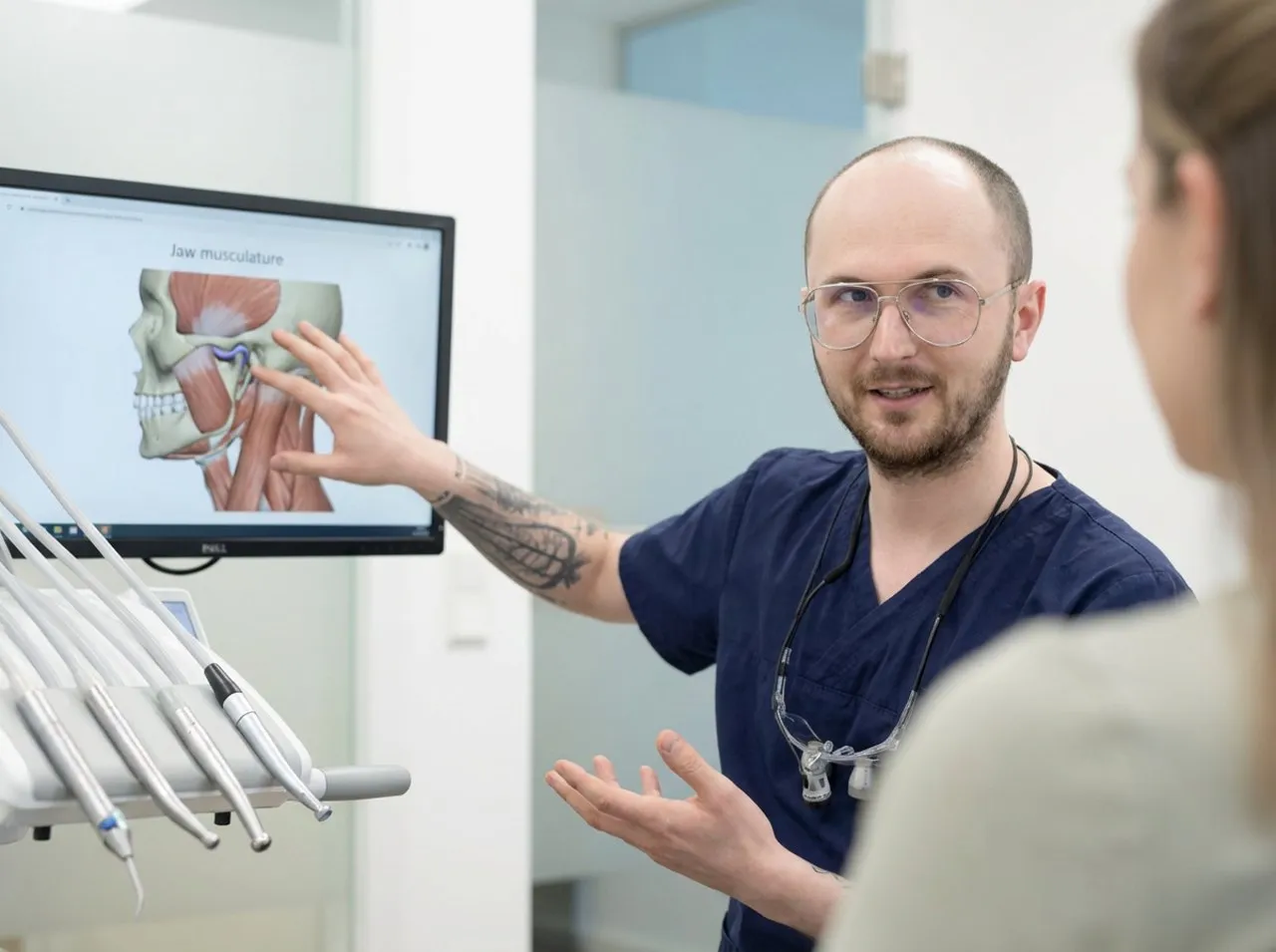
These muscles break down food and ensure a stable bite. They guide the lower jaw precisely upwards and sideways. This allows you to chew powerfully while also controlling the force precisely. The jaw area is also involved in swallowing and speaking. The muscles in the jaw area also influence head posture.
Causes of pain in the jaw muscles
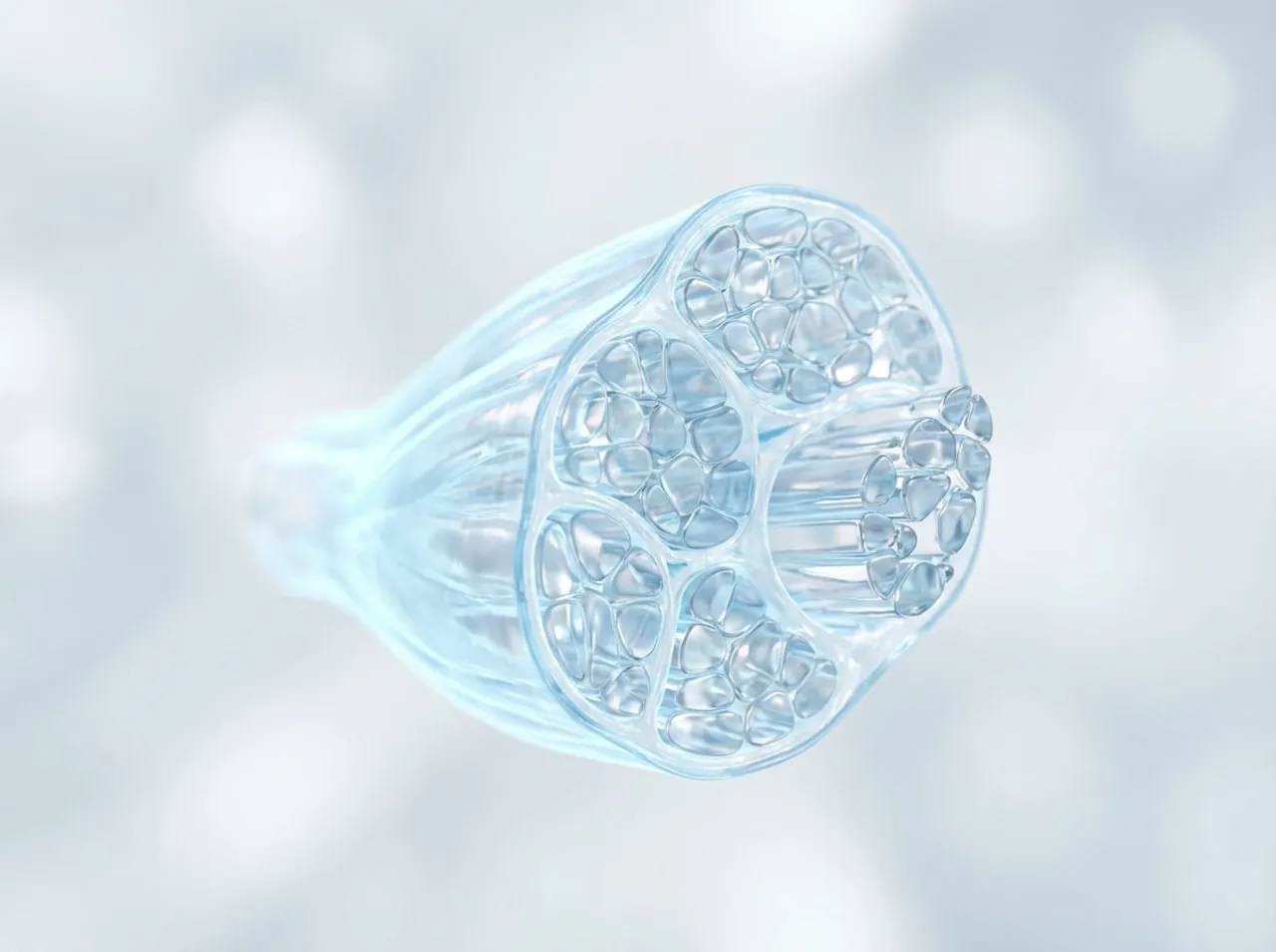
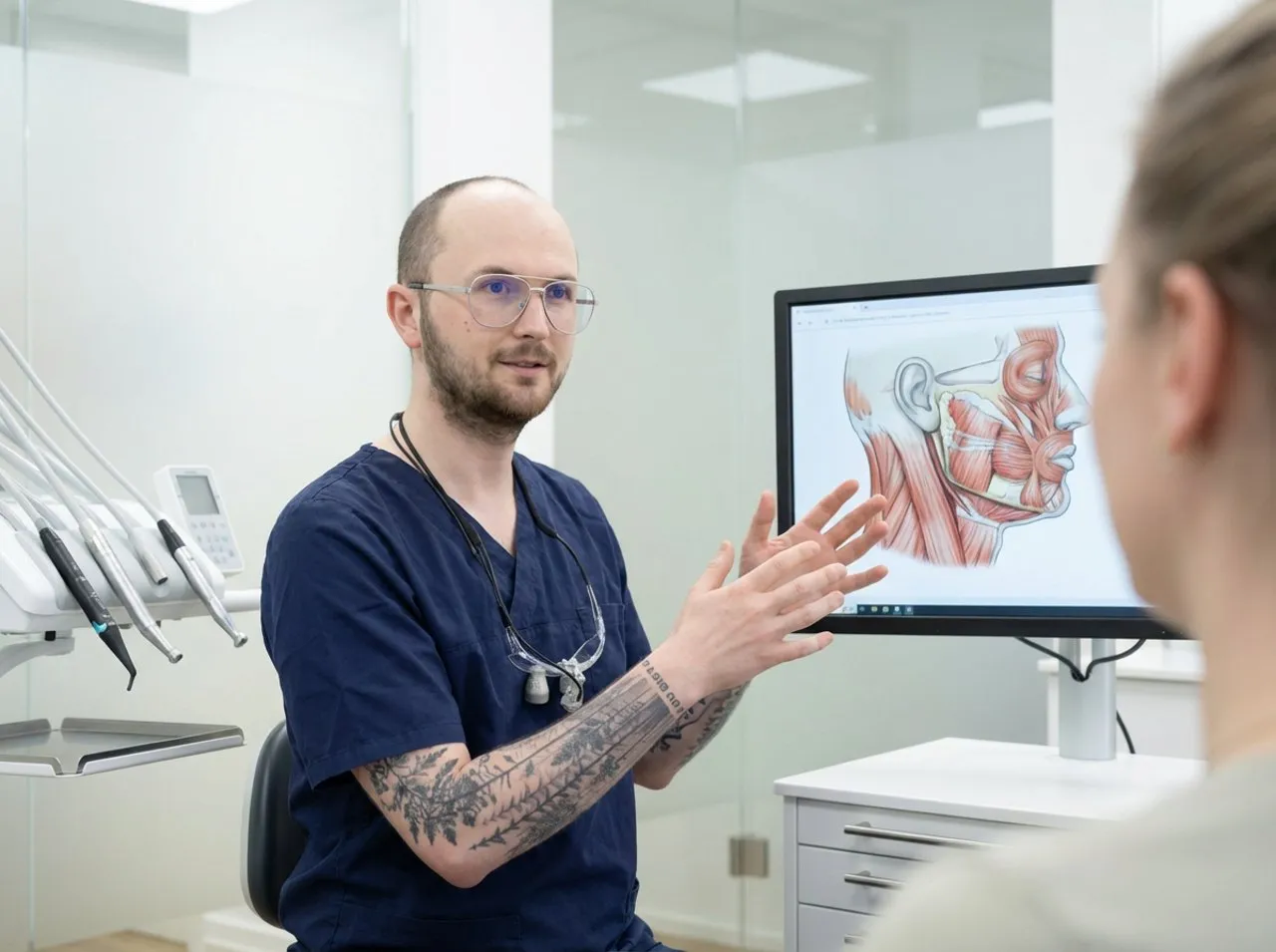
One of the most common causes of tense jaw muscles is stress. Many people unconsciously clench or grind their teeth at night. Professionals call this bruxism. The muscles then work continuously against high resistance. This leads to overloading and painful tension.
Malocclusion and CMD
An impaired bite can also cause problems with the masticatory muscles. If the upper and lower jaws do not meet harmoniously, this is known as CMD. This abbreviation stands for craniomandibular dysfunction. The temporomandibular joints become unbalanced. The muscles try to compensate for the misalignment and become overstrained in the process.
Dental problems and dental prostheses
Missing teeth, high fillings or poorly fitting dental prostheses change the bite. The lower jaw is displaced from its natural position. The jaw muscles have to compensate constantly for this unfavourable bite. This results in pain on one side or a feeling of pressure in the cheek and temple.
Inflammation and other diseases
Inflammatory processes in the temporomandibular joint or at the tooth roots can radiate to the muscles. Rheumatic diseases or injuries to the head can also play a role. In rare cases, there are neurological or internal medical causes. A thorough assessment at a dental practice is therefore important.
Typical symptoms of tense jaw muscles
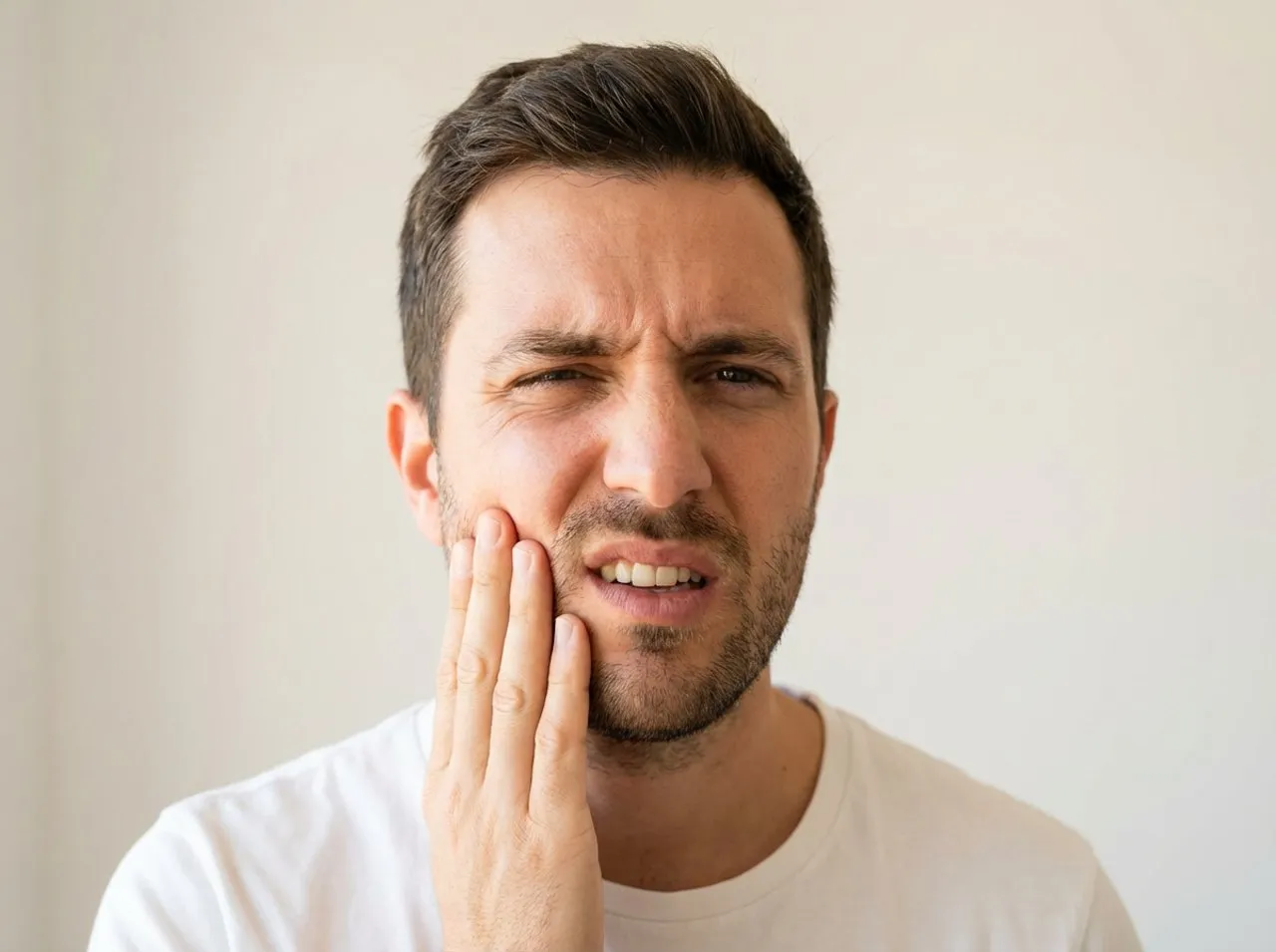
Tense masticatory muscles do not only cause localised pain. Many patients report jaw pain in the morning and pressure in their temples. Jaw clicking, grinding noises or restricted mouth opening often occur. Some affected people also experience neck tension and shoulder pain. If these signs persist, you should have the cause investigated.
Diagnosing jaw muscle problems at the Wunschlachen practice
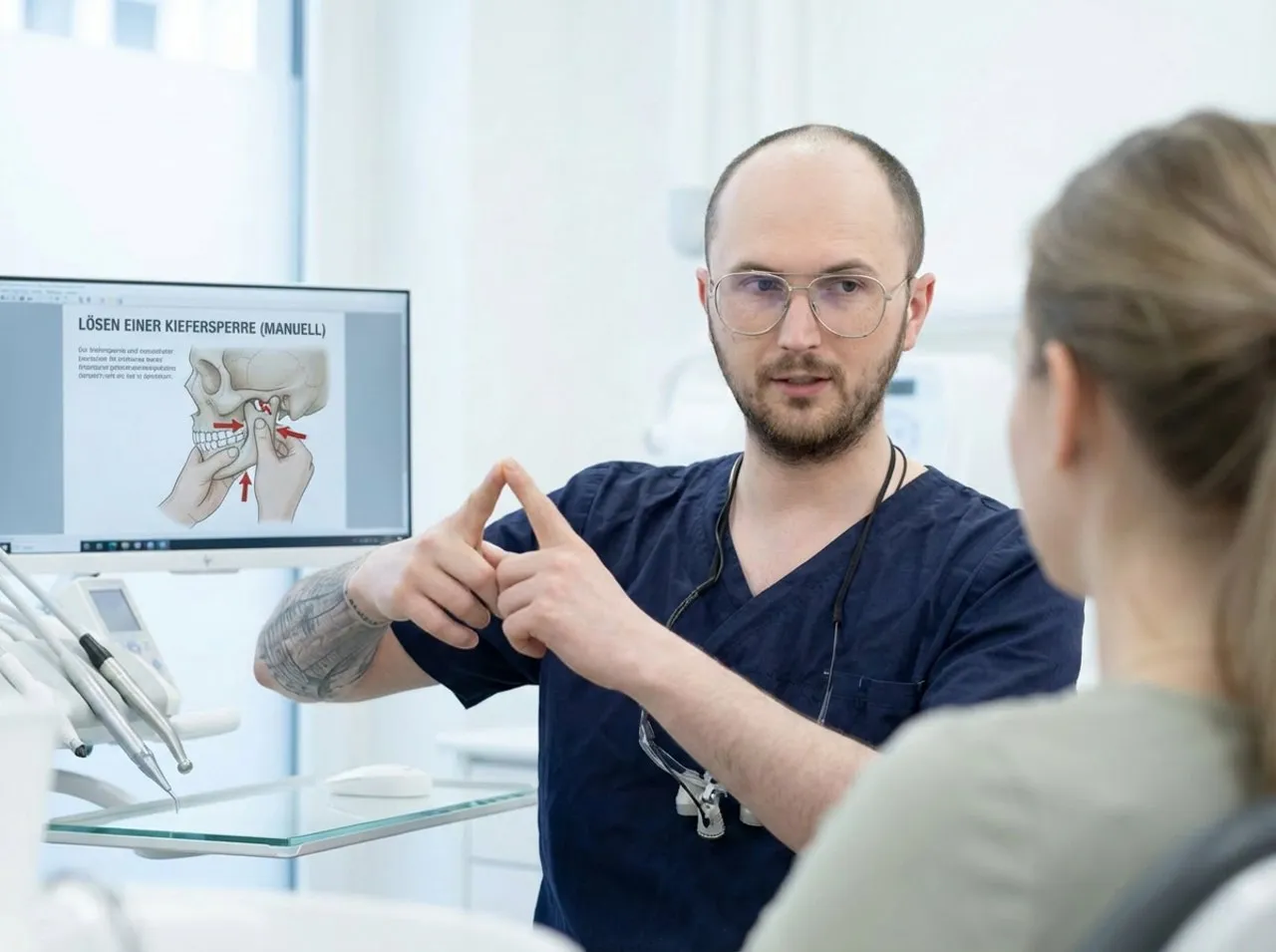
At our Wunschlachen practice in Berlin, we examine the entire masticatory system. First, we talk to you about your symptoms, lifestyle habits and possible stress factors. We then examine your teeth, temporomandibular joints and muscles very closely. Palpation makes it easy to identify painful points and hardened areas. If necessary, we carry out a functional analysis or use imaging techniques. This gives us a clear picture of the situation.
Treatment options for jaw muscle problems
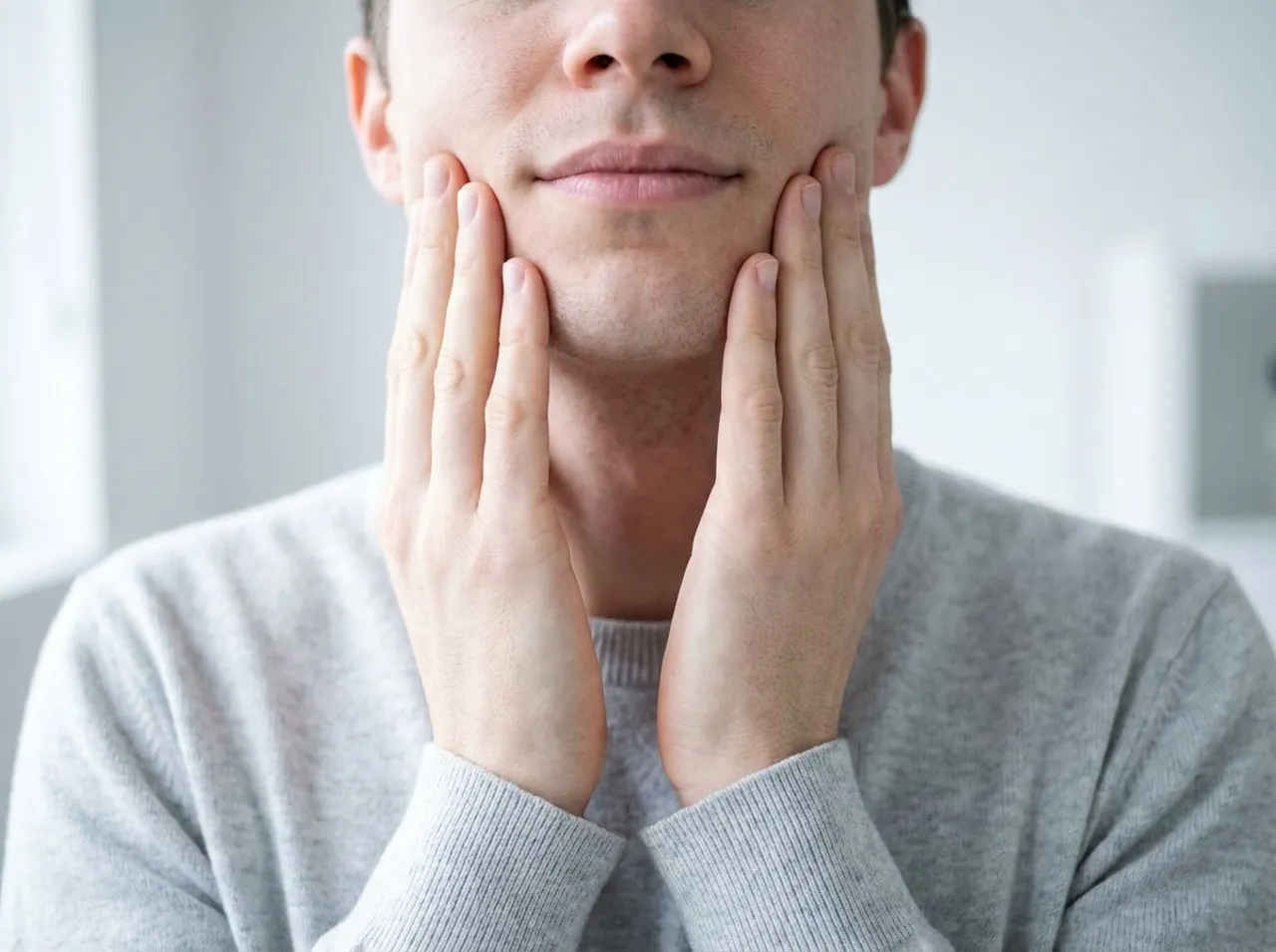
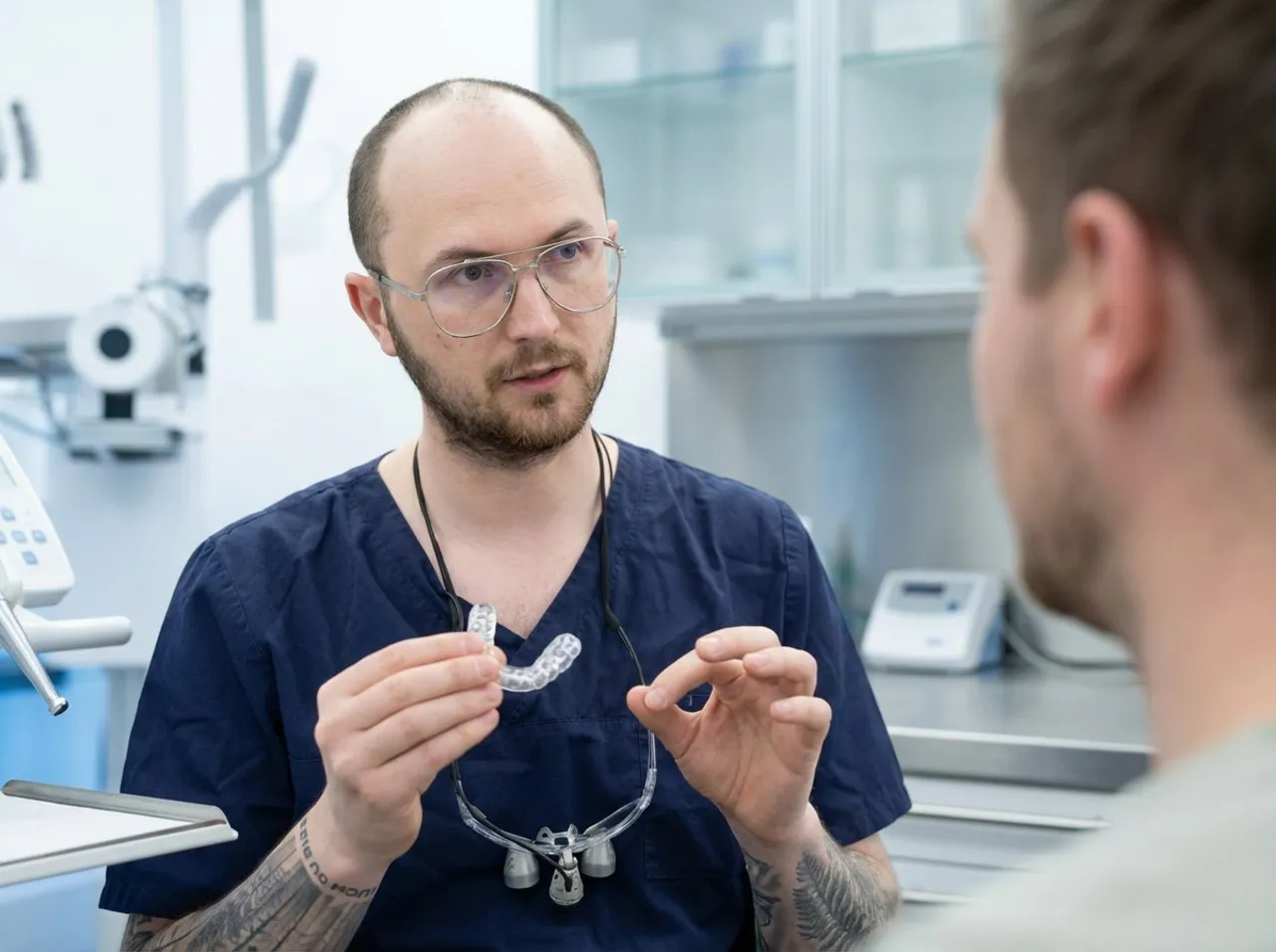
Custom-made bite splints Custom-made bite splints are often used for bruxism. They protect the rows of teeth from wear while also relieving strain on the muscles. The splint stabilises the bite and reduces night-time clenching. Many patients report significantly less pain after only a short time. Correcting the bite If high fillings, crowns or poorly fitting dental prostheses interfere with the bite, small adjustments can help. The aim is stable, even contact between the teeth. This distributes the chewing load evenly across all the teeth again. The jaw muscles can then relax. Physiotherapy and manual therapy Close collaboration with physiotherapists is often beneficial. Specialist therapists treat the jaw area, neck and shoulders. Manual techniques, stretches and trigger point therapy release hardened tissue. Postural training can also help prevent excessive strain in everyday life. Exercises to relax the jaw muscles You can do a lot to relax your jaw with simple exercises. One basic rule is: lips closed, rows of teeth not touching. This so-called rest position relieves strain on the temporomandibular joints. Gentle yawning without force gently stretches the muscles. Light self-massage along the cheek and around the temples supports blood circulation.
Prevention and everyday tips
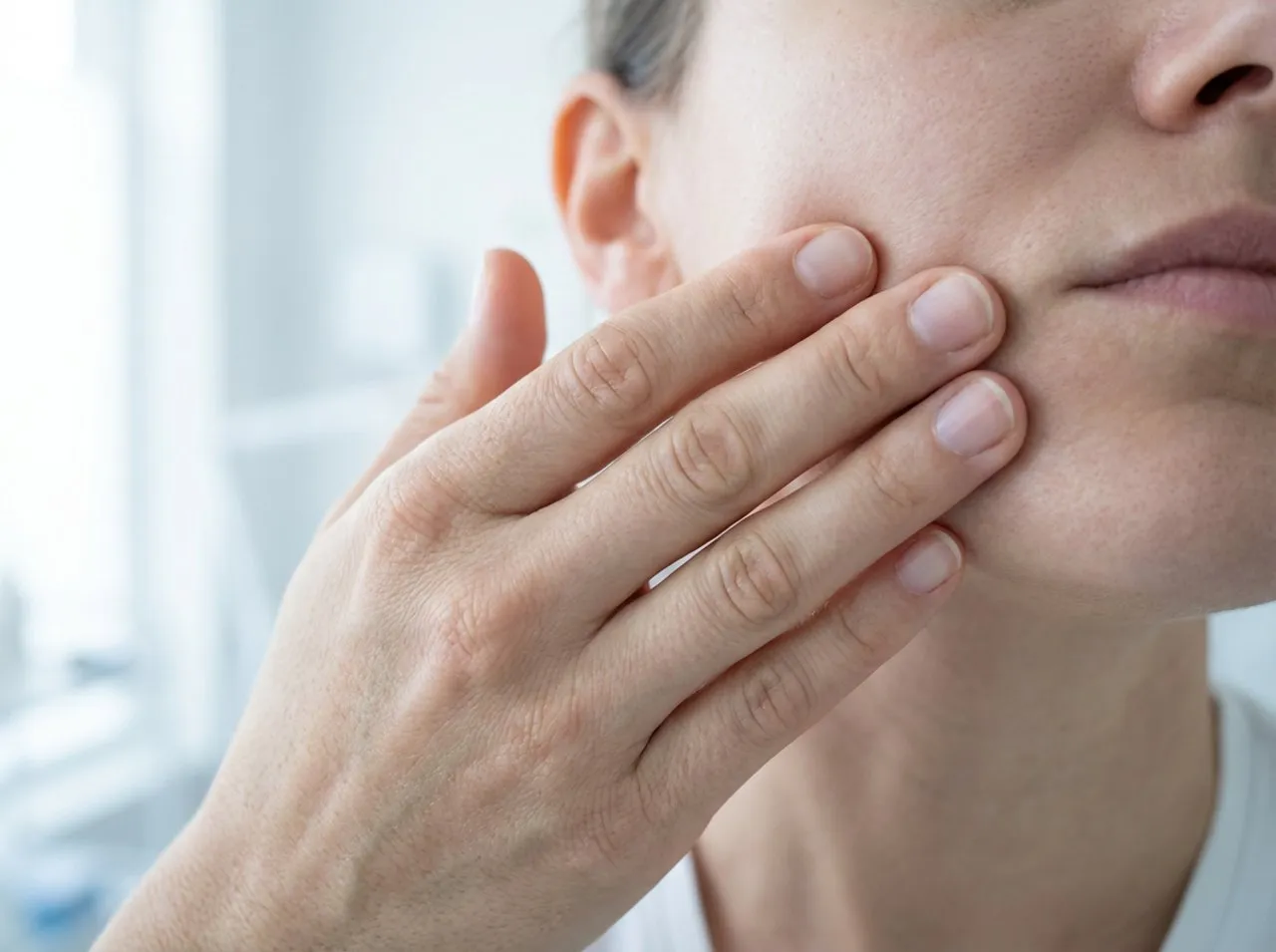
Avoid chewing gum for long periods and constantly chewing hard snacks. Give your masticatory muscles regular breaks. Counteract stress through exercise, breathing exercises or short breaks. Regular dental check-ups help to identify problematic tooth contacts early.

When should you see a dentist?
Short-lived feelings of tension after a strenuous period are usually harmless. However, if pain, clicking or restricted movement persist, you should take action. Visit our practice if you can hardly open your mouth or have severe symptoms. The earlier the cause is identified, the simpler the treatment.
Conclusion
The jaw muscles do demanding work every day. Stress, malocclusion or dental problems can quickly throw this finely tuned system out of balance. With a thorough diagnosis and a personalised treatment plan, symptoms can usually be relieved effectively. This restores your quality of life and gives you back a relaxed smile.
FAQ – Frequently asked questions about jaw muscles
The jaw muscles are part of the masticatory muscles and move the lower jaw when you chew and speak.
Night-time teeth grinding or clenching is often the cause. The muscles work continuously against strong resistance.
Yes, tense muscles in the cheek and temple often radiate pain to the head. Dull, pressing pain is typical.
CMD is the abbreviation for craniomandibular dysfunction. It describes functional disorders affecting the skull, temporomandibular joint and muscles.
The dentist palpates the muscles and checks the jaw movements. If necessary, they use functional analysis or imaging techniques.
Individually fitted bite splints can protect the teeth and relieve strain on the muscles. They are an important part of bruxism treatment.
The rest position, gentle yawning and light massage can help. You should also reduce stress.
Yes, gaps or poorly fitting dental prostheses change the bite. The muscles then have to compensate constantly.
If pain, clicking or restricted mouth opening lasts for more than a few days. We are also happy to advise you if you suspect teeth grinding.
No, the main focus is on functional analysis, splints, physiotherapy and exercises. Medication is usually only used as a supplement and for a limited time.