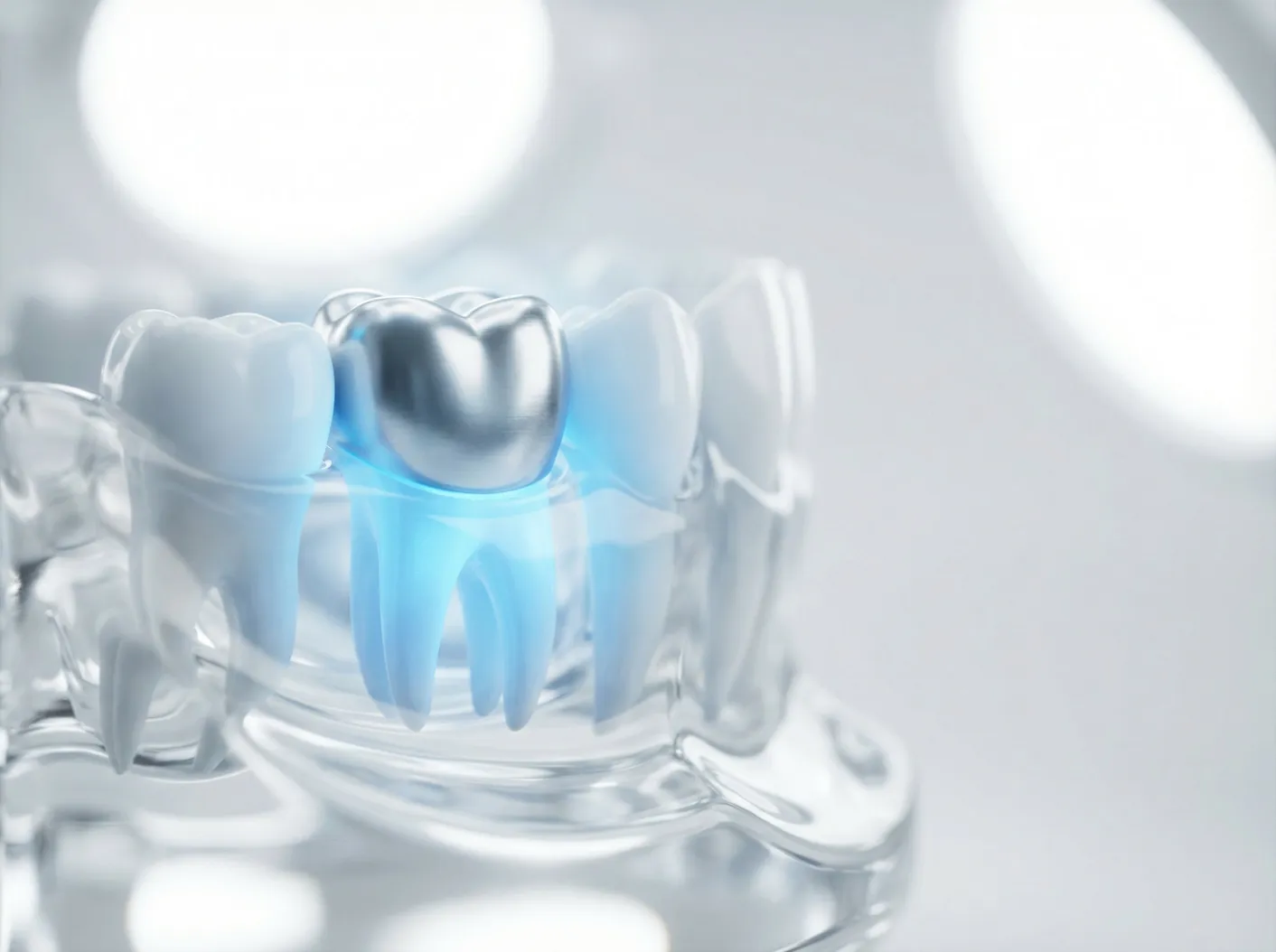
Metal crown on a tooth: durability, costs, risks
A metal crown protects a severely damaged tooth. It stabilises chewing function and prevents further fractures. At the Wunschlachen practice in Berlin, we provide personalised advice on this. Metal crowns are usually placed on back teeth. Durability is what matters most there. Appearance is often...
Über 350 Google-Bewertungen
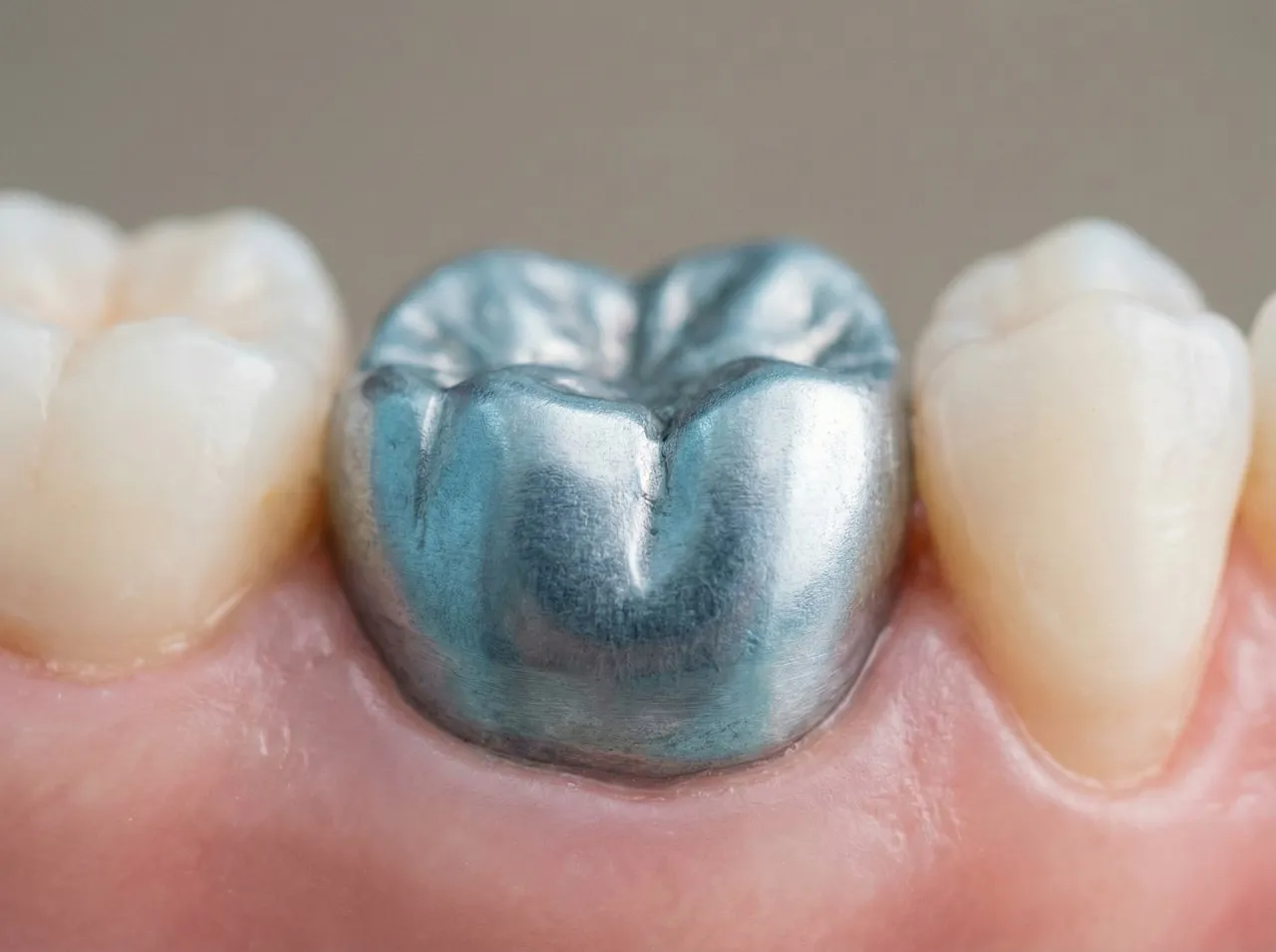
What is a metal dental crown?
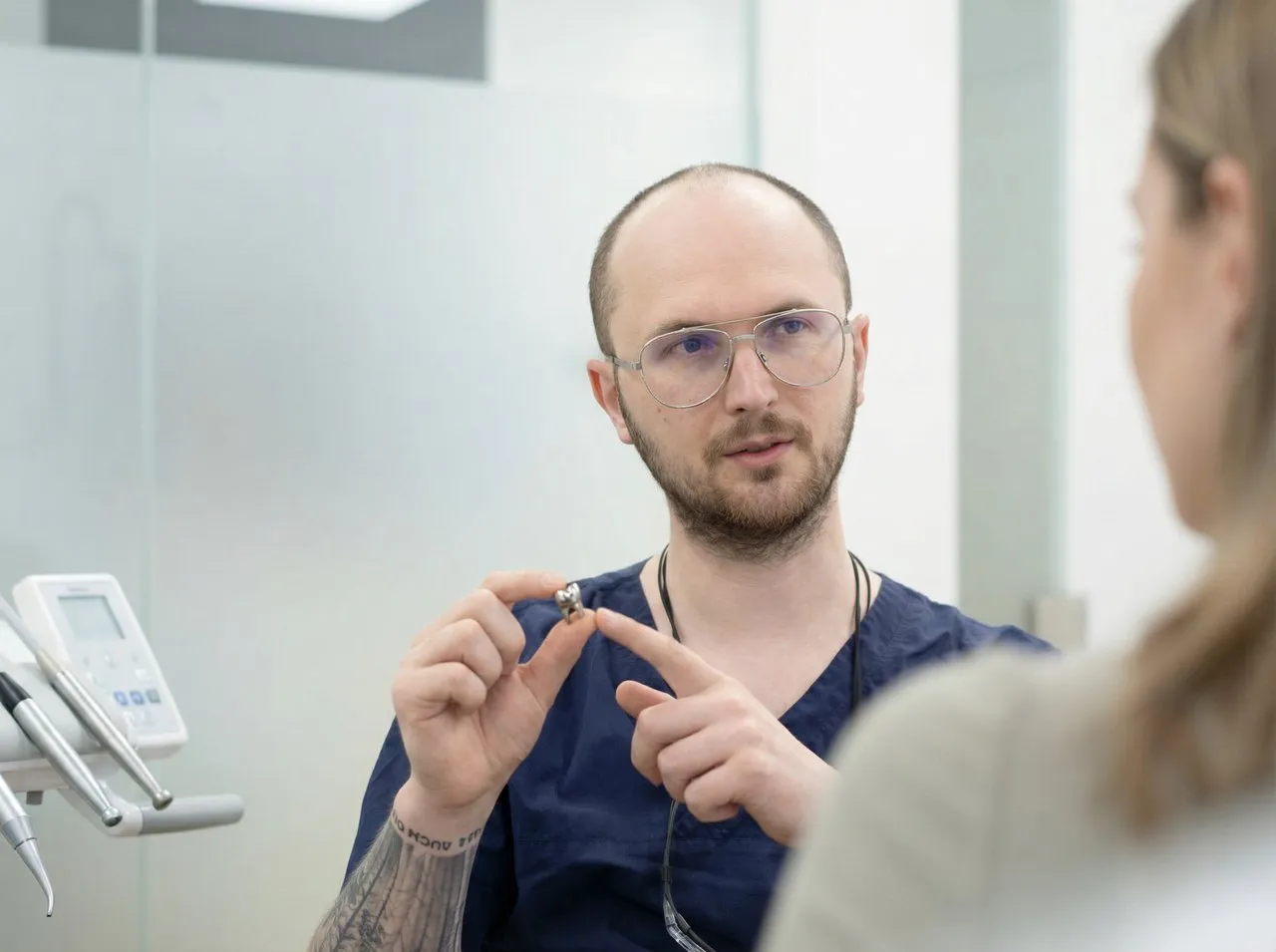
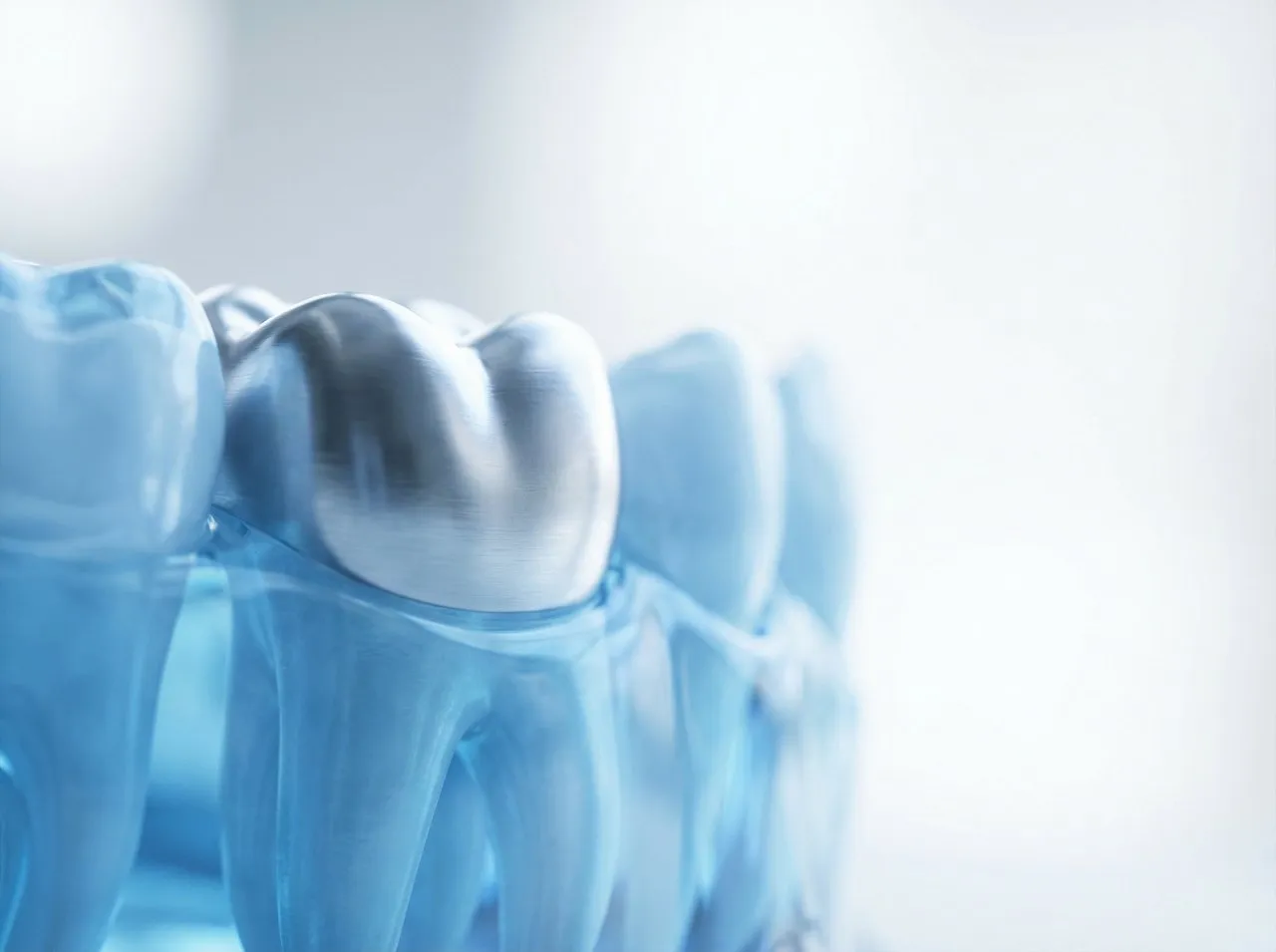
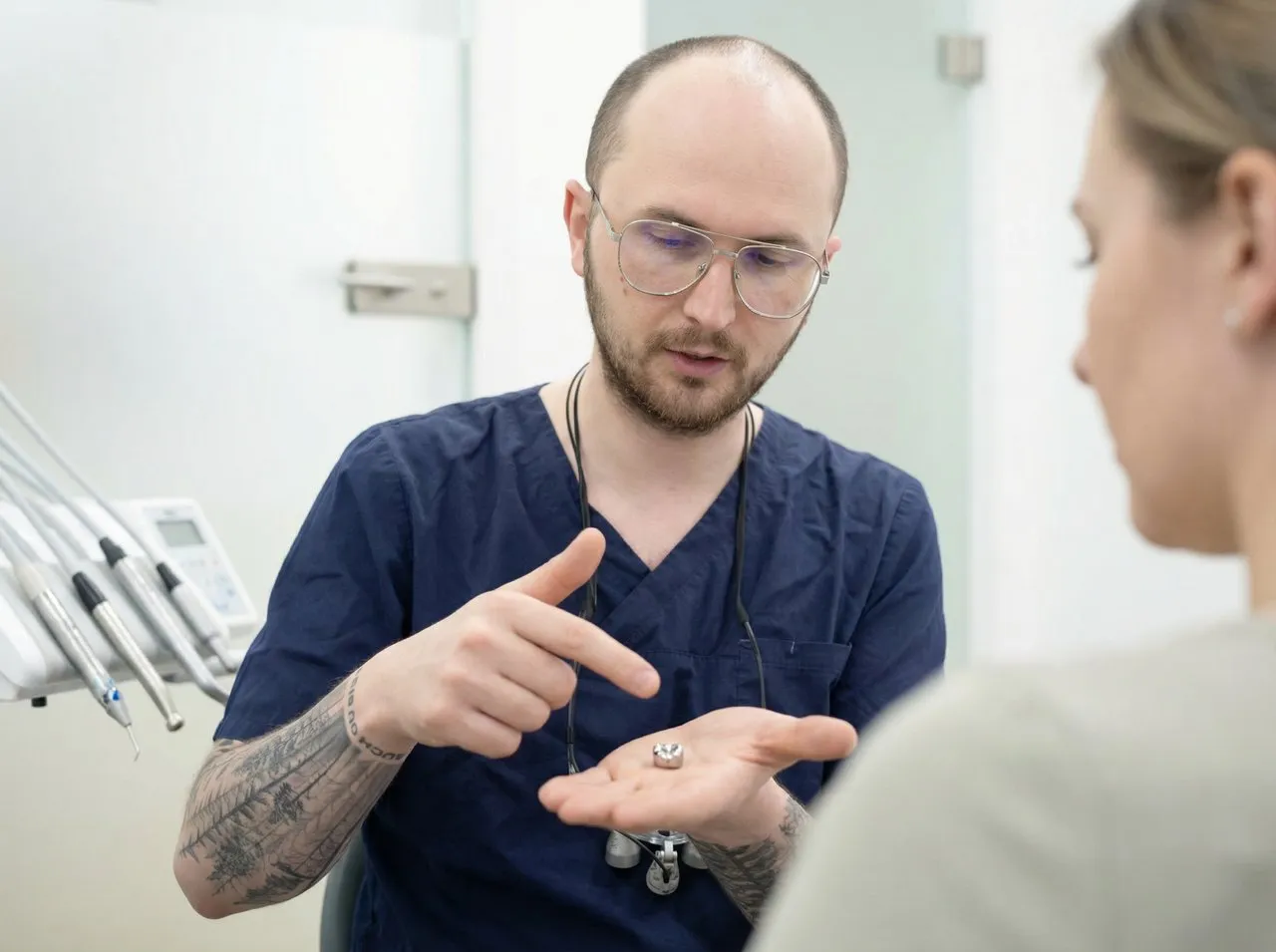
A dental crown is a precisely fitting ‘cap’ for the tooth. It surrounds the prepared tooth and seals it. This helps preserve the tooth for longer. For metal versions, both the crown and framework are made from an alloy. Gold or non-precious metals are often used. This is also known as a full cast crown. Gold alloys are highly resistant to corrosion. They are considered well tolerated and long-lasting. The price also depends on the current price of precious metals. Non-precious metals are often less expensive. They usually contain cobalt, chromium or nickel. If you have an allergy, we choose an alternative. Veneered versions are also available. In these, the metal base is covered with a tooth-coloured ceramic layer. This gives the tooth a more natural appearance.

When is a metal crown advisable?
A crown is needed when a filling no longer holds. This applies to extensive damage or after cracks. Stability is also often lacking after root canal treatment. The back teeth are subjected to high chewing forces. A metal crown withstands these forces well. This makes it a robust solution. It is also suitable for severe teeth grinding. The material is resistant to wear. A bite guard can provide additional protection.
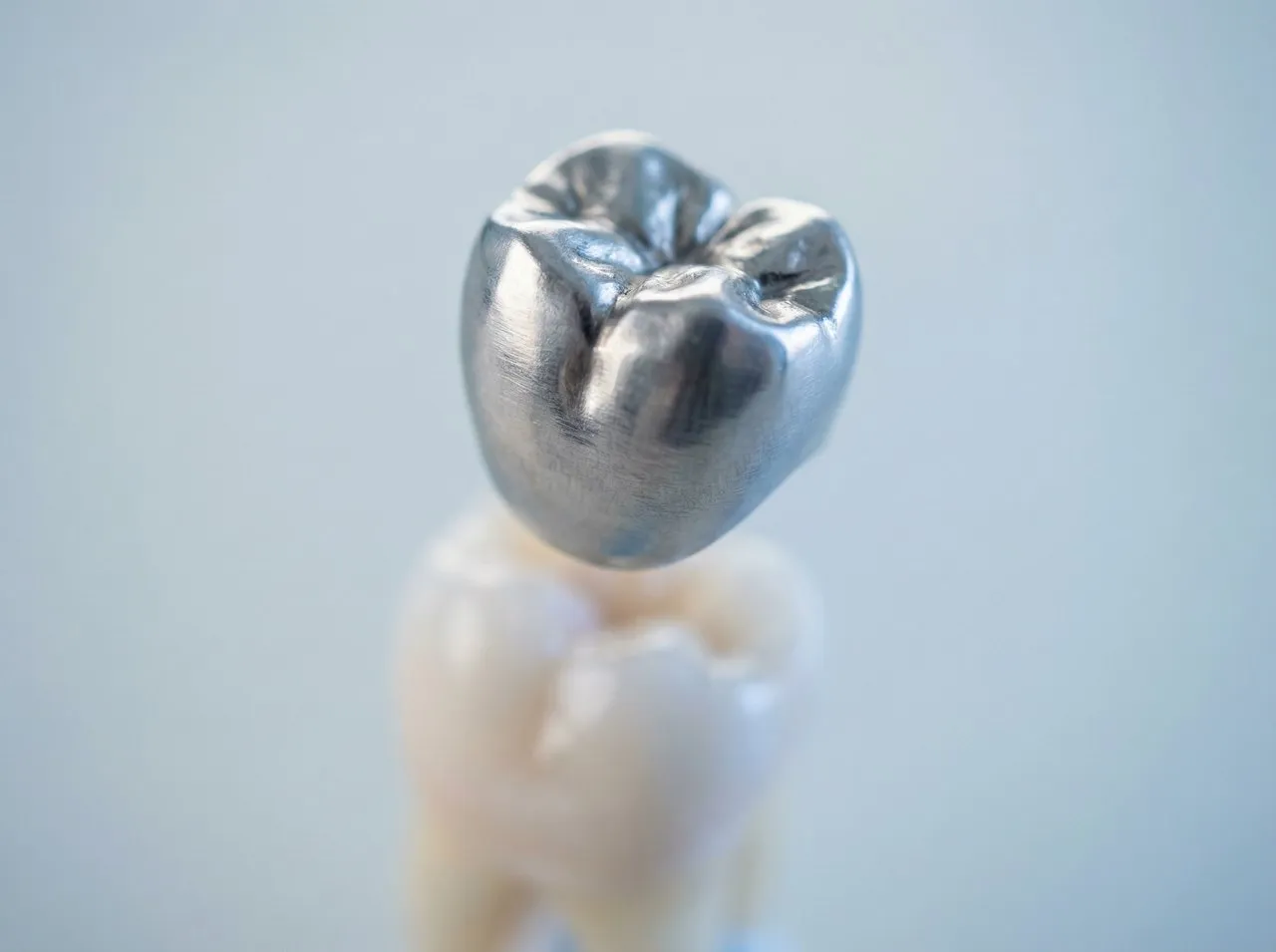
Metal or ceramic crowns: key differences
Metal crowns are very stable and can be made thin. This often preserves more natural tooth substance. Ceramic usually requires slightly more space. Ceramic looks particularly natural. It is therefore often the first choice for front teeth. Metal is usually veneered in this area. For alloys, compatibility and composition play a role. Non-precious metals may contain nickel. If you have a known allergy, we select suitable alternatives. Some patients notice a metallic taste or slight irritation. This is rare and usually temporary. A precise fit at the margin reduces the risk.

Treatment steps at Wunschlachen
The first step is an examination to assess your condition, including X-rays. We check for tooth decay and assess your gums and bite. We then plan the appropriate type of crown. The tooth is gently prepared. An impression or digital scan is then taken. You will often receive a temporary crown in the meantime. The crown is custom-made in the laboratory. When fitting it, we check its fit, contact points and bite. The crown is then secured and polished.
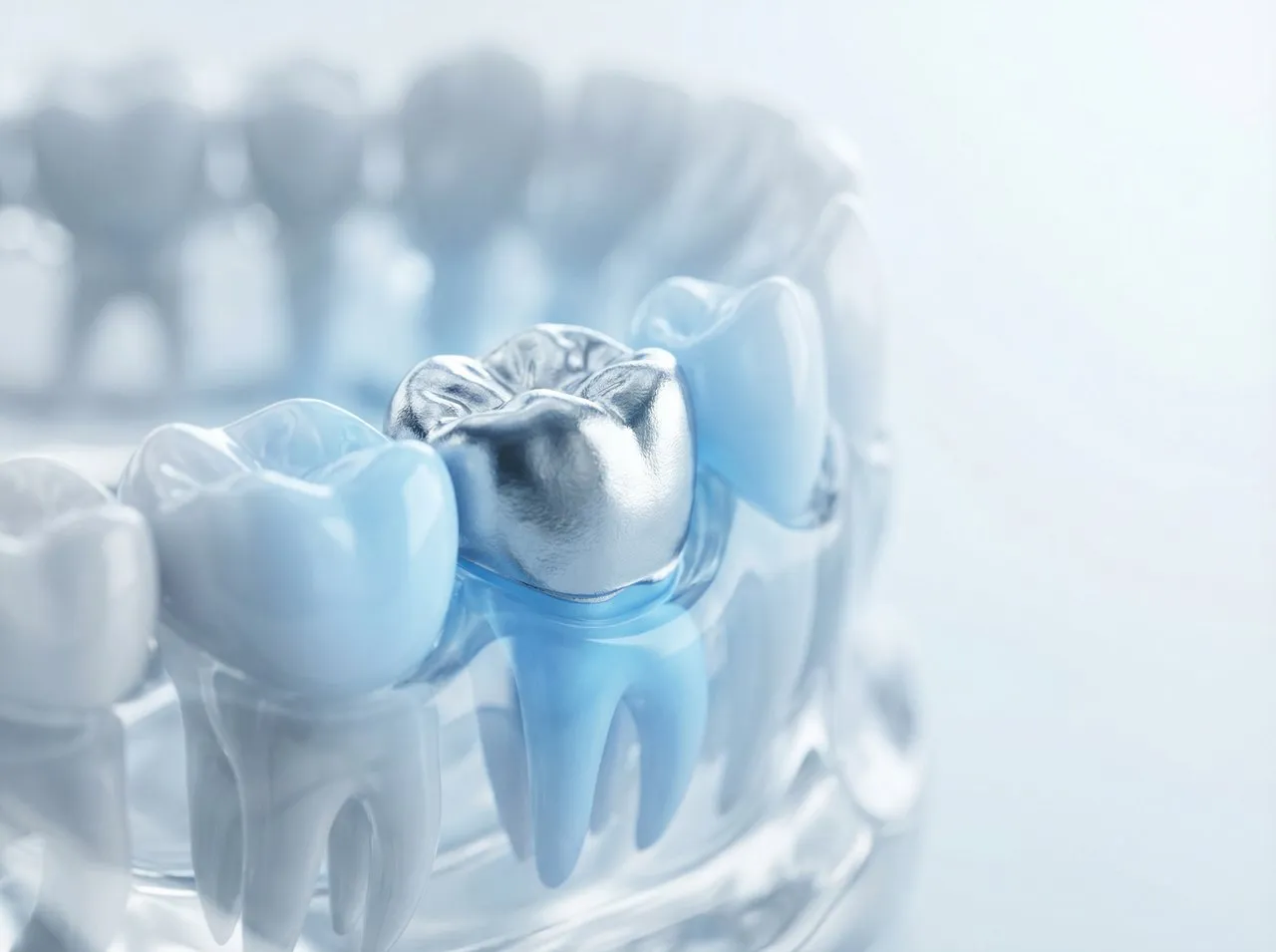
Durability and everyday care
A well-made metal dental crown can last for many years. Care, check-ups and healthy supporting tissues are crucial. Regular preventive dental care reduces the risk of decay at the crown margin. Brush twice daily with fluoride. Use dental floss or interdental brushes. This keeps the crown margin clean. If you grind your teeth, we recommend a night guard. It relieves strain on the teeth and jaw joints. This also protects the dental restoration.
Possible risks and discomfort
Shortly after fitting, the tooth may be sensitive. This often concerns cold or pressure. It usually improves within a few days. A bite that is too high can cause pain. A small adjustment is often all that is needed. Contact us if symptoms persist. In rare cases, inflammation occurs at the gum margin. This is often caused by plaque or a poor marginal seal. We check this at follow-up appointments.
Costs and reimbursement by health insurance
The cost of a metal crown depends on the material, the work involved and the position of the tooth. Preliminary treatments also affect the total amount. These include core build-up, periodontal therapy or root canal treatment. Statutory health insurance funds pay a fixed subsidy based on the diagnosis. A well-maintained bonus booklet increases this subsidy. Additional costs depend on the treatment option chosen. Metal is often economical for back teeth. Aesthetic expectations are higher in visible areas. A veneered crown is often advisable there. Before treatment begins, we draw up a treatment and cost plan. This gives you a clear picture of your own contribution. On request, we can also discuss flexible payment in instalments.
Alternatives to metal crowns
Sometimes a partial crown or an onlay is sufficient. These solutions preserve more natural tooth substance. They are suitable for smaller defects. All-ceramic crowns are an aesthetic alternative. Zirconia is also highly durable. We will discuss which option is suitable during a consultation.
Conclusion: stable dental restoration with clear planning
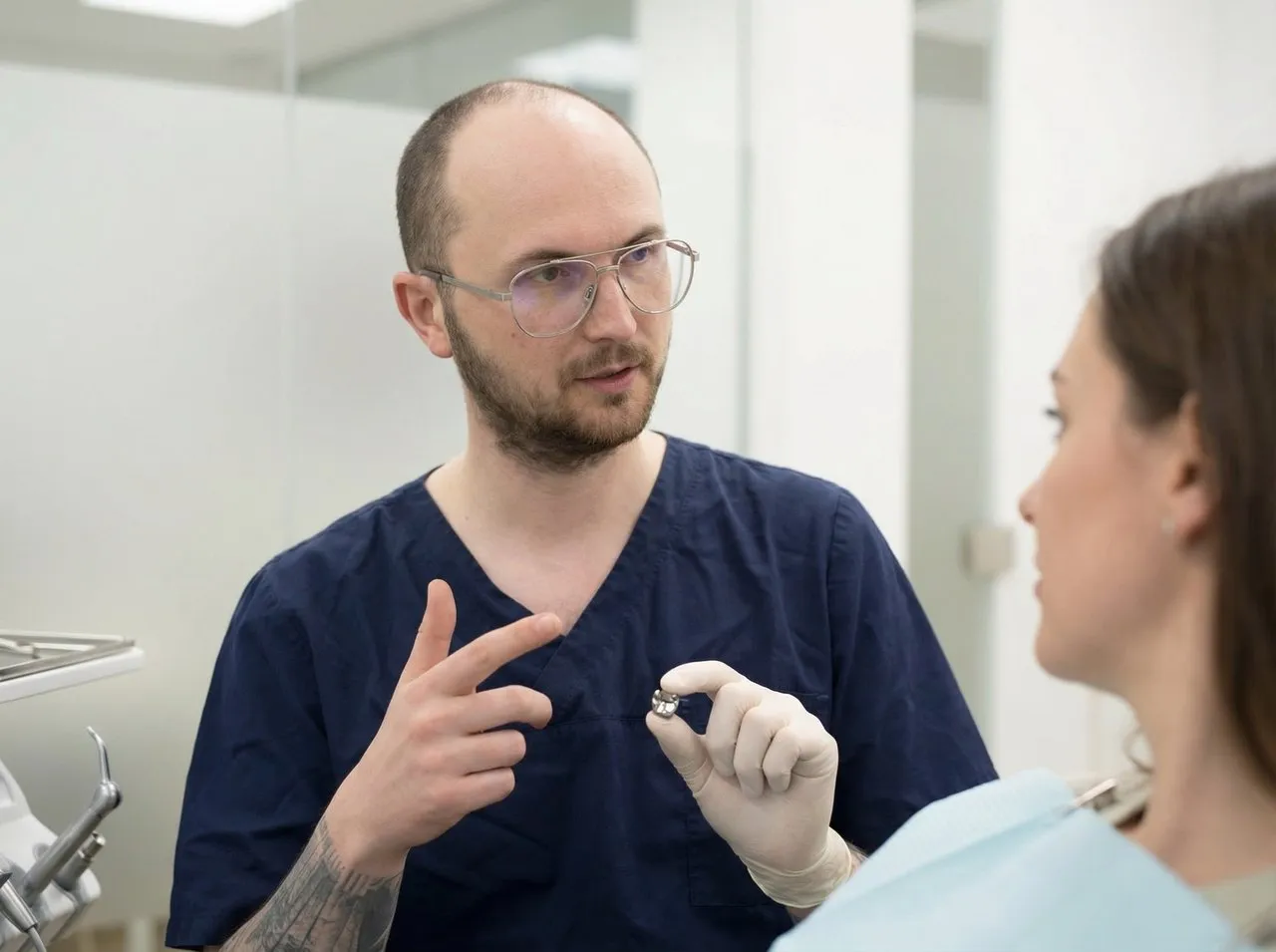
A metal crown is a tried-and-tested restoration for teeth subjected to heavy loads. It protects the tooth and improves chewing. Wunschlachen supports you from planning through to follow-up. Book a consultation appointment. We will assess your situation and explain the options. This enables you to make a confident decision.
FAQ – Frequently asked questions about metal crowns
It is a dental crown made from a metal alloy. It encases the tooth like a protective cap.
Metal can be visible on back teeth. With a veneer, the crown looks tooth-coloured.
Durability depends on care and your bite. Many crowns remain stable and functional for many years.
This is possible if you have a nickel allergy. In that case, we choose nickel-free materials or ceramic.
Ceramic usually looks better. Metal is often thinner and very hard-wearing.
The treatment is carried out under anaesthetic. Temporary sensitivity is possible afterwards.
The contact points may be too high. We can usually adjust the bite quickly.
Yes, this is possible at the margin. Good oral hygiene and check-ups help prevent it.
Yes, it is very hard-wearing. A splint provides additional protection against excessive strain.
A fixed subsidy is available based on the diagnosis. The amount also depends on your bonus booklet.