Snap-in denture for the upper jaw: support from implants
• A snap-in denture for the upper jaw sits on implant abutments and clicks into place. • It improves chewing comfort, speech and security compared with a full denture. • Planning, the number of implants and care determine its stability and longevity.
Über 350 Google-Bewertungen
What is a snap-in denture for the upper jaw?
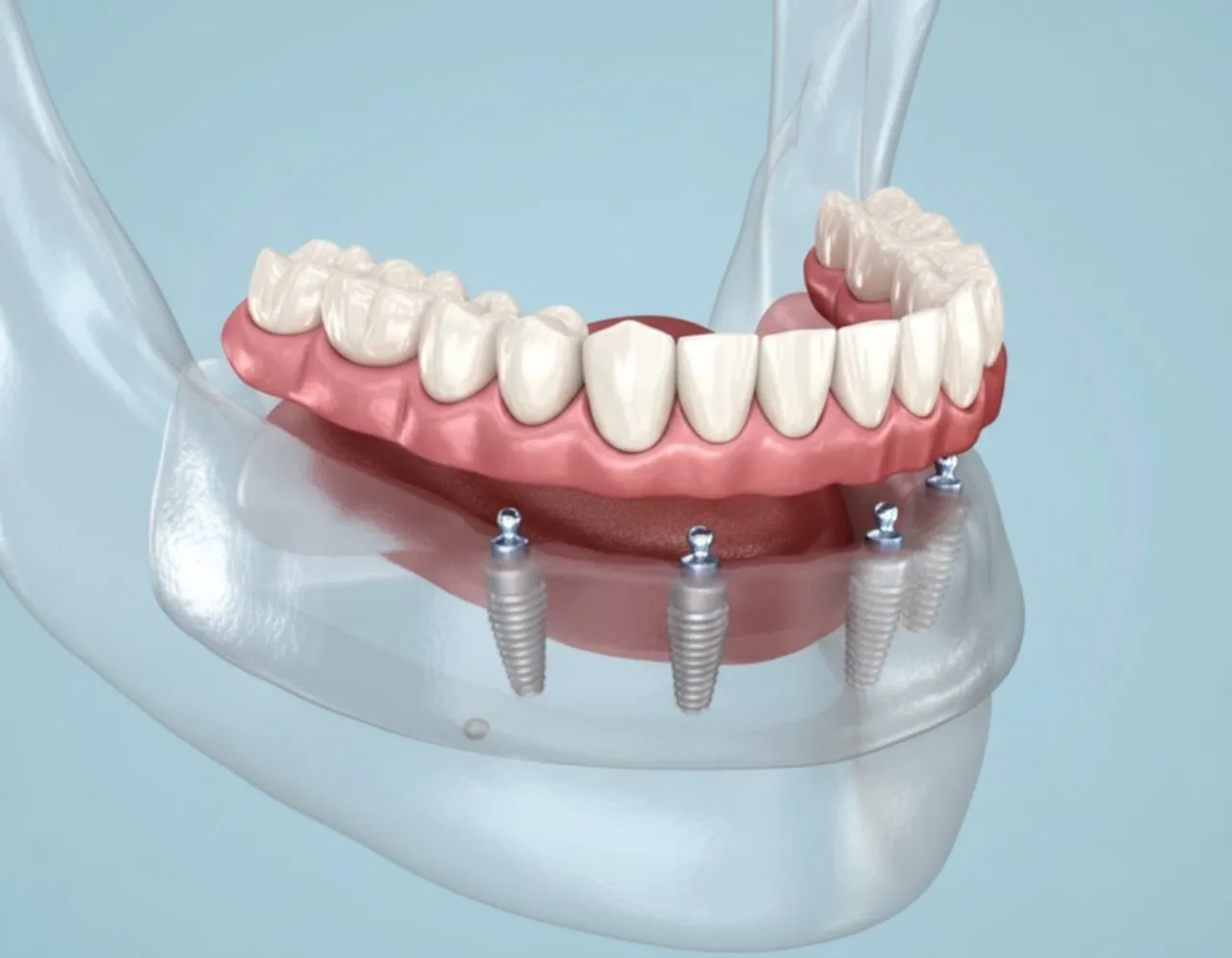
A snap-in denture is a removable denture with a ‘snap’ anchorage. It is not glued in place. It clicks onto abutments in the upper jaw. The connection is made using what are known as attachments. These are often locators or ball anchors. A bar is also possible.
Who is this treatment suitable for?
Many people have poor denture retention in the upper jaw. This often means that a large area of the palate has to be covered. This can interfere with speaking and tasting. An implant-supported denture can provide relief here. It is suitable for an edentulous upper jaw. It is also suitable after loose teeth have been removed.
How many implants does a snap-in denture in the upper jaw need?
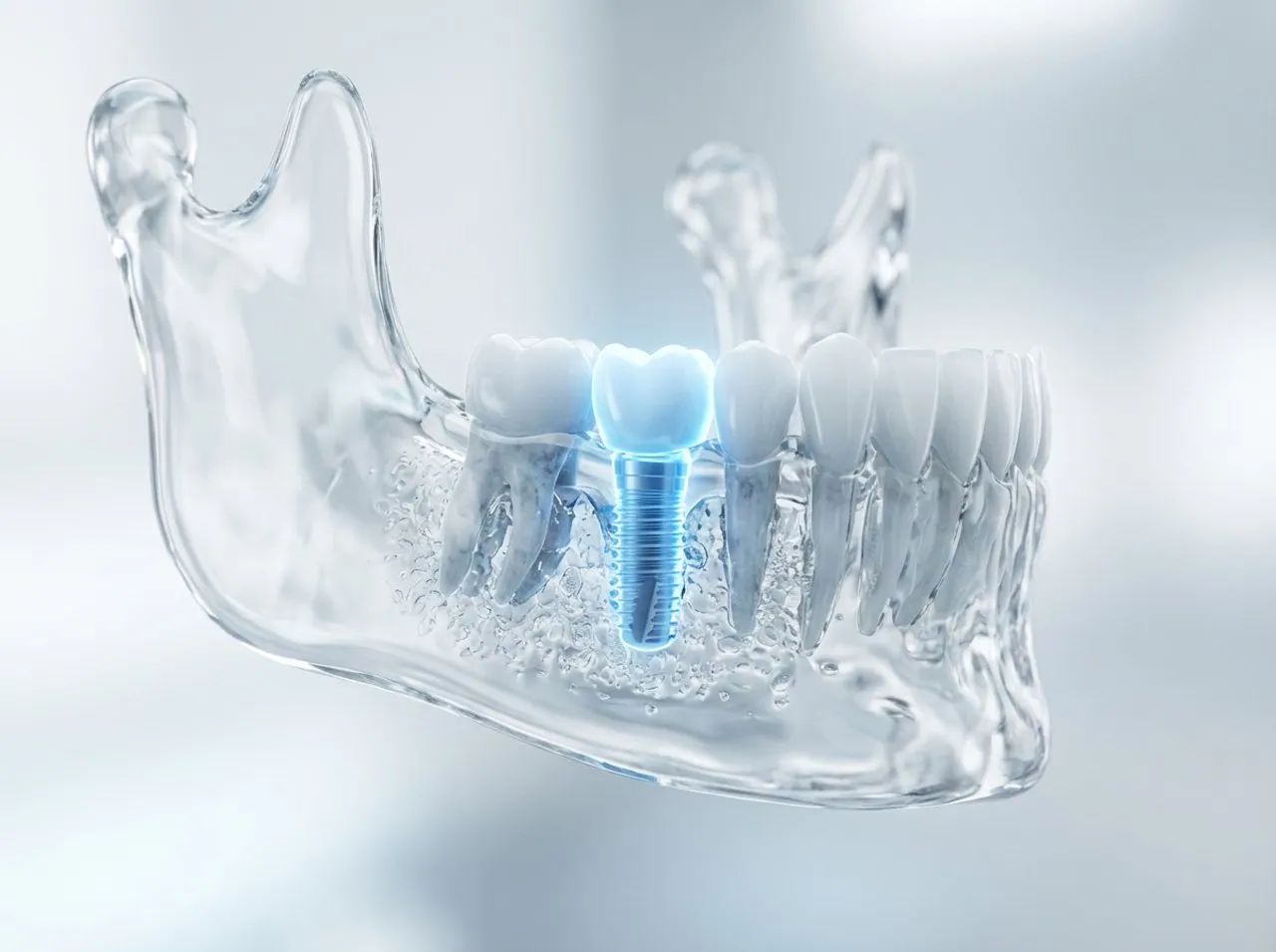
In the upper jaw, the bone is often softer than in the lower jaw. More implants are therefore usually advisable. We often plan four implants. For heavy loads, six may be needed. The exact number depends on bone height and bite. The opposing teeth also play a role. A stable restoration in the lower jaw increases predictability.
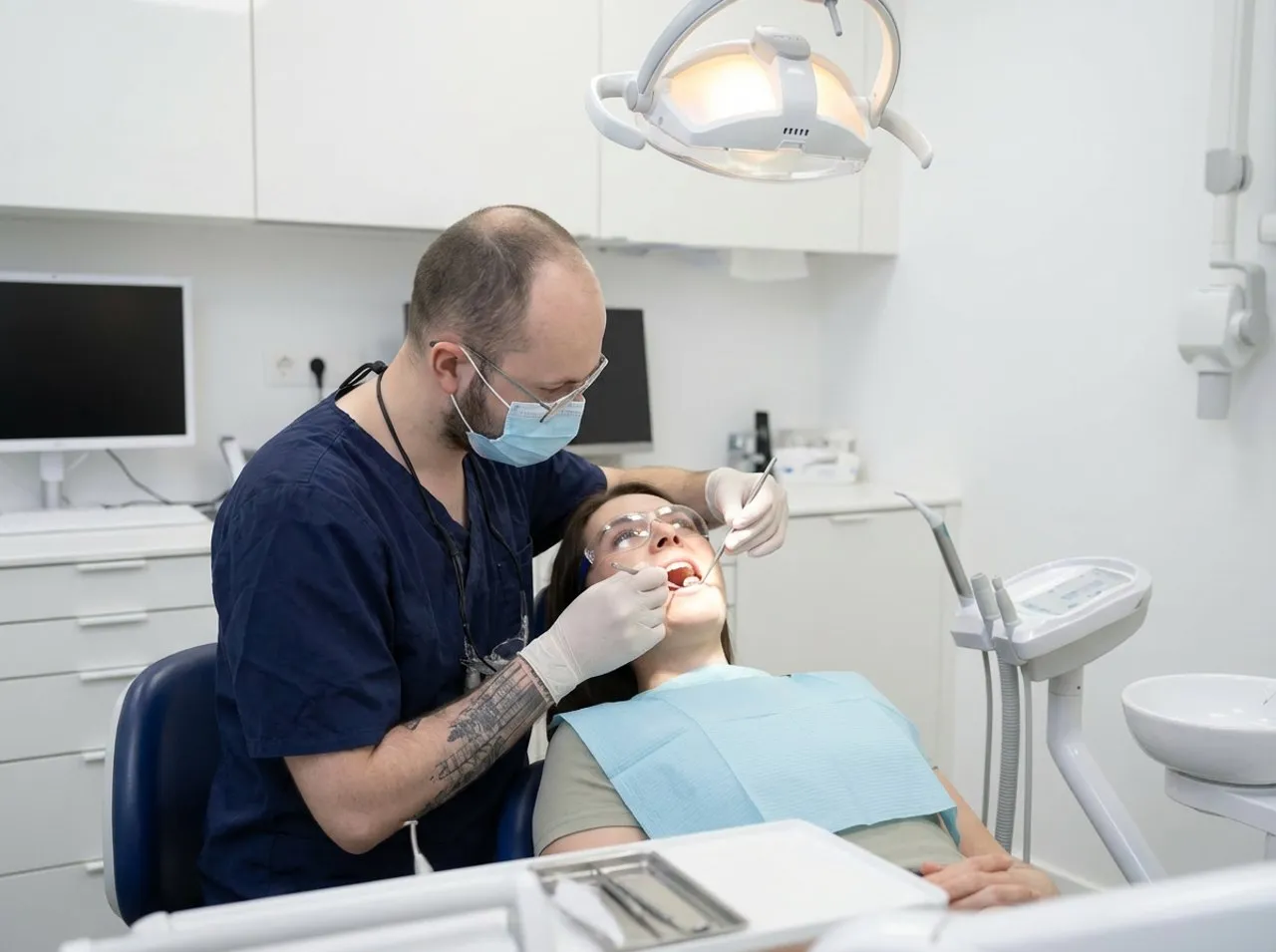
Requirements: bone and maxillary sinus
Tooth loss often leads to bone loss. The maxillary sinus is also located in the molar region. This limits the bone height. Bone augmentation is sometimes necessary. A sinus lift is often considered. This creates space for implants. Not every case requires augmentation. A 3D diagnostic assessment shows the safe position. We then draw up a clear treatment plan.
Which systems actually ‘click’?
With individual anchors, the denture clicks into place at several points. Locator systems are widely used. They provide a defined retention force and a good fit. A bar connects several abutments into a single unit. The denture then attaches using clips. This can be very stable. Which system is suitable depends on space and hygiene. Hand strength and fine motor skills also matter. This is important for older patients.
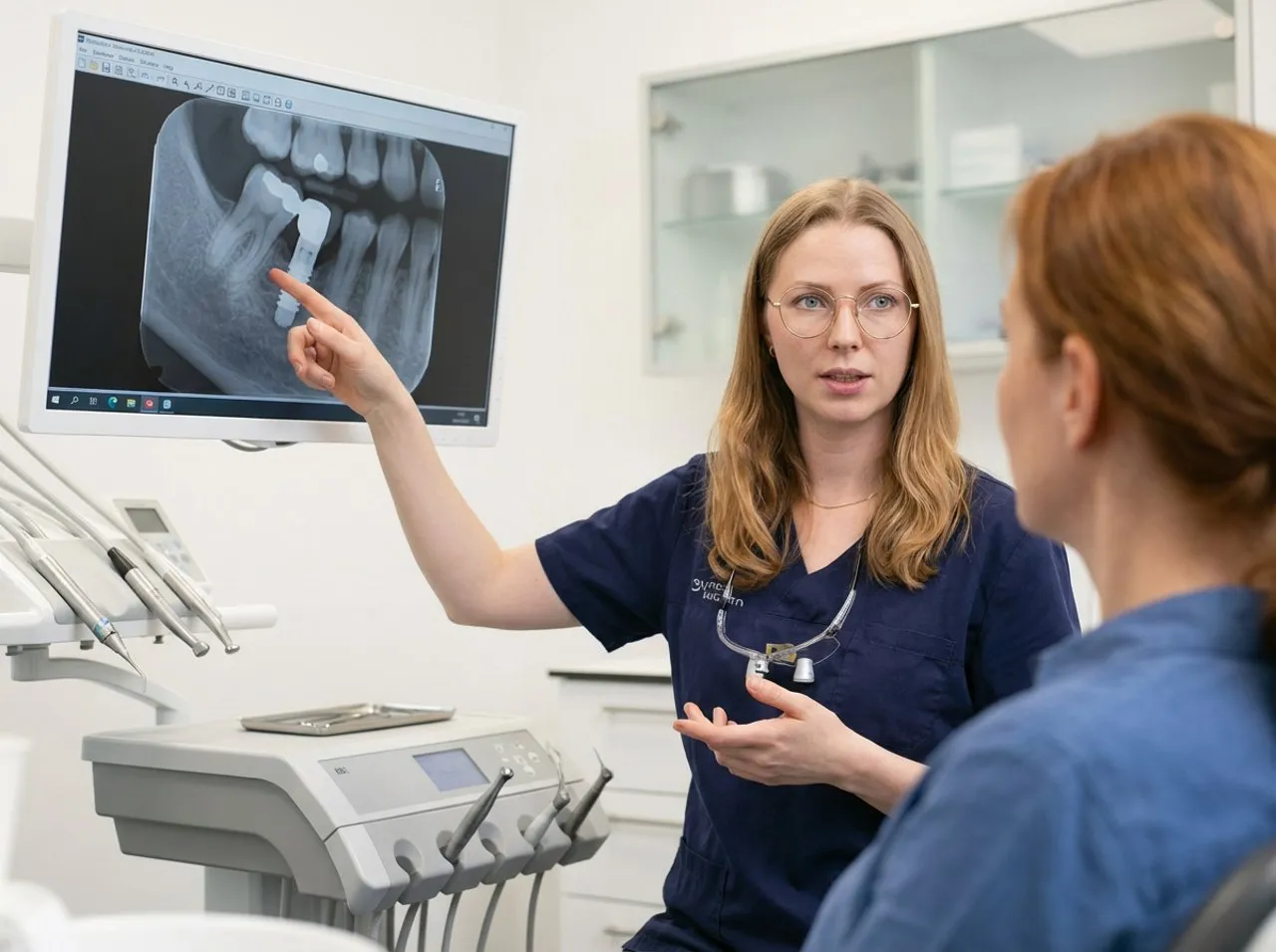
The treatment process at the Wunschlachen practice
Treatment begins with an examination and consultation. We examine the mucous membrane, bite and available bone. This is followed by X-rays and often a 3D scan. We then plan the implant placement digitally. The procedure is usually carried out under local anaesthetic. Sedation is available on request. Placement is followed by the healing period. In the upper jaw, this often takes several months. You usually wear a temporary denture during this time. The laboratory then makes the final denture. We fit the snap-in elements precisely. Finally, the bite is fine-tuned.
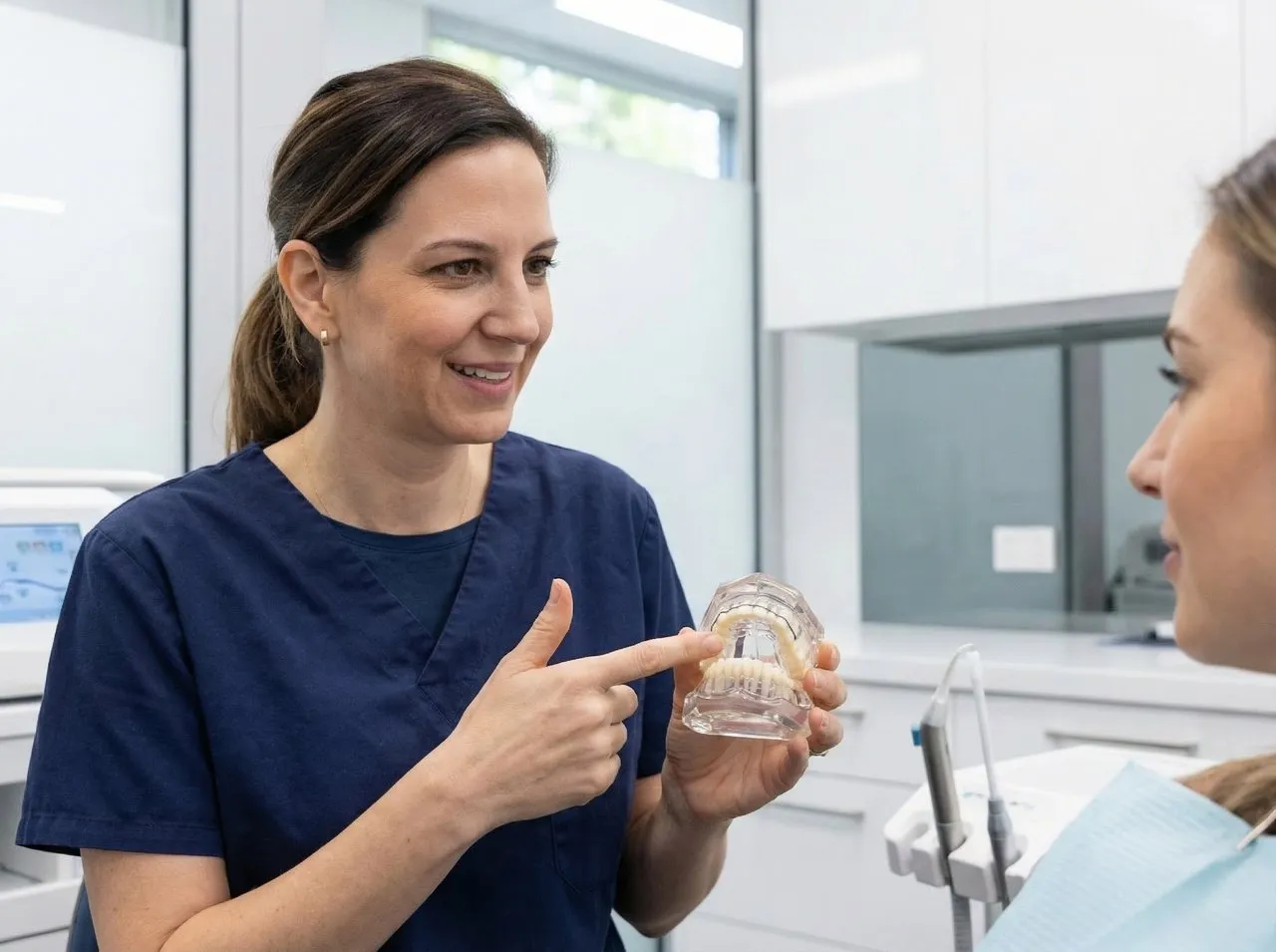
Advantages of a snap-in denture for the upper jaw
Retention is significantly better than with suction alone. Many patients can chew with greater confidence again. Pressure sores become less common. The palate plate can often be made smaller. This improves taste and temperature sensation. Pronunciation also usually becomes clearer. The denture remains removable. This makes cleaning easier. At the same time, it feels considerably more stable.
Possible disadvantages and typical problems
Dental implants involve a surgical procedure. There is a healing phase. Swelling or inflammation occurs rarely. Attachments wear down over time. The retention inserts occasionally need to be replaced. This is normal wear and tear. Some patients initially report pressure sores. These are usually relieved by grinding down the denture. Regular check-ups prevent subsequent damage.
Care and aftercare: how to maintain retention
Remove the denture every day. Clean it with a denture brush. Use a mild cleaner without abrasives. The areas around the abutments need particular attention. Use interdental brushes and soft toothbrushes. Mouthwashes can supplement cleaning. Attend professional check-ups. We check the fit and the gums. This allows us to detect inflammation early.

Costs, health insurance and planning certainty
German statutory health insurance funds pay a fixed subsidy for dental prostheses. Implants are usually not part of standard care. Out-of-pocket costs depend on the plan. A treatment and cost plan before treatment begins is important. This means you know the total costs. We explain the alternatives transparently. Private supplementary insurance may help. This depends on the policy. We help with submitting the paperwork.

Conclusion: greater confidence when eating and speaking
A snap-in denture for the upper jaw can significantly improve quality of life. It combines stability with ease of cleaning. Planning and care are crucial. If you would like greater stability, we would be happy to advise you. Wunschlachen in Berlin supports you from your first appointment through to aftercare.
FAQs about snap-in dentures for the upper jaw
A full denture is usually held in place by suction and the design of its edges. A snap-in denture also clicks onto implants. This makes it considerably more stable.
The procedure is carried out under anaesthetic. Mild pain is possible afterwards. This can usually be controlled well with painkillers.
It often takes several months. The bone needs time to stabilise. The exact duration depends on the clinical findings.
No, not always. It is only considered if there is insufficient bone height. The 3D planning determines this.
The denture can last for many years. Fit, material and care are crucial. However, retention inserts are replaced regularly.
The retention inserts are often worn. Sometimes relining is necessary. This can usually be resolved quickly at the practice.
Often yes, particularly with adjusted retention force. We practise clicking it in and out together. We can change the system if necessary.
Generally, yes. Many patients report significantly better chewing stability. Very hard foods should be tried cautiously at first.
Clean the denture and heads every day. Use soft brushes and interdental brushes. Professional check-ups supplement this care.
Both can work very well. A locator saves space and is easy to maintain. A bar can provide greater stability, but requires more space.