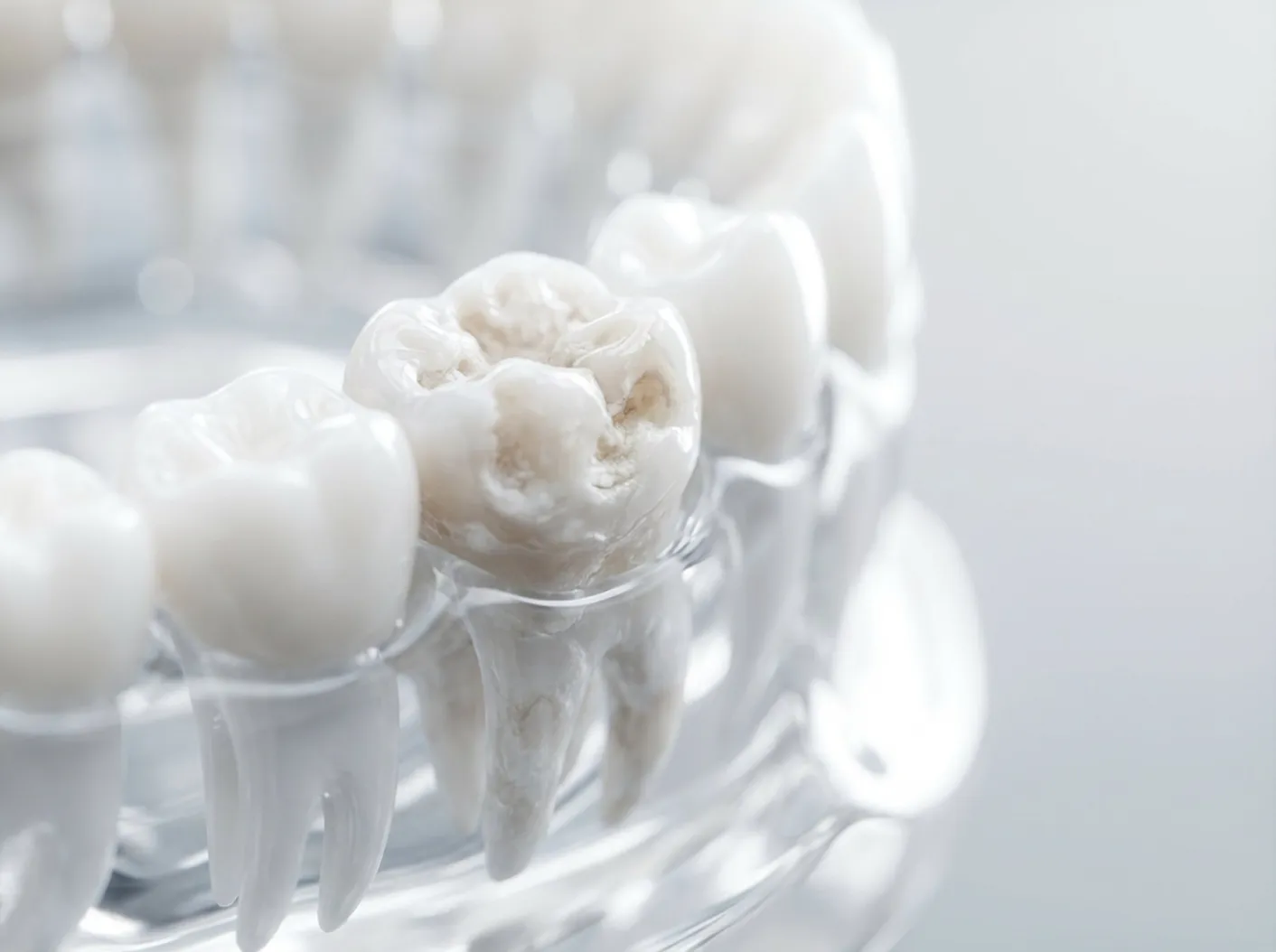
Temporary filling crumbling: What matters now
A temporary filling is an interim solution in the tooth. It protects the cavity until the permanent restoration. If it crumbles, this often causes uncertainty. Many temporary fillings only last for a limited time. They are softer than composite or ceramic. Edges can therefore break off or parts...
Über 350 Google-Bewertungen

Why does a temporary filling crumble?
Chewing pressure is often too high. Hard foods act like a wedge. Microcracks then develop in the material. Moisture also plays a role. Saliva can dissolve the temporary seal. This particularly applies to Cavit and similar materials. Sometimes the seal does not fit perfectly. A build-up that is too shallow provides less retention. A leaky margin accelerates breakage.
How dangerous is a crumbling temporary filling?
Small chips are usually not an emergency. The tooth often remains covered. However, the situation can deteriorate quickly. If the opening becomes larger, bacteria can enter the tooth. This significantly increases the risk of tooth decay. This is particularly critical after root canal treatment. Temperature sensitivity may also increase. Cold, heat and sweet foods irritate the dentine. This can cause a nagging ache.

Typical symptoms you should take seriously
One sign is a rough edge on the tooth. A ‘hollow feeling’ when biting is also typical. Some patients notice a bitter taste of cement. Warning signs include severe pain or throbbing. Swelling, fever or discharge of pus are equally important. These may indicate inflammation. If the tooth appears open after root canal treatment, act quickly. A lost seal compromises disinfection. Germs can enter again.

Immediate steps at home
Stay calm and examine the area in a mirror. Do not remove any remnants with pointed objects. This can injure the inside of the tooth. Chew on the other side. Avoid hard crusts, nuts and sticky sweets. This reduces the risk of further fractures. Rinse carefully with lukewarm water. A mild saline solution can be soothing. Continue to brush gently but thoroughly. If needed, a painkiller taken according to the package leaflet can help. Ibuprofen also reduces inflammation. Do not take it if you cannot tolerate it. Temporary material from a pharmacy can bridge the gap. However, it does not replace dental treatment. Do not use superglue.
When should you see a dentist immediately?
Come in promptly if a piece is missing. This applies even if you have no pain, because leaks are often invisible. Immediate assessment is necessary if you have swelling or fever. Difficulty swallowing is also a warning sign. The same applies to increasing difficulty opening your mouth. Severe, pulsating pain is an emergency, as is bleeding from the cavity. The practice should then respond at short notice.

How does a dentist treat a crumbling emergency filling?
First, we check whether the margins are tightly sealed. We check for tooth decay and cracks. An X-ray is taken if necessary. We then remove any loose remnants of material. The cavity is cleaned and dried. A new temporary restoration is then placed. Depending on the findings, the permanent filling follows. This may be composite, an inlay or a crown. The deciding factor is the remaining tooth substance. After endodontic treatment, a tight seal is essential. We often recommend a stable core build-up. This protects the tooth from fracture.
How long does a temporary filling last?
Durability depends on the material and its location. Front teeth are subjected to less stress. Molars have to withstand considerably more. Many temporary fillings are intended to last from a few days to a few weeks. The risk increases with longer wear. Check-ups are therefore important. If you grind your teeth, the seal is more likely to crumble. A bite splint can help, especially at night.
How to prevent it from crumbling again
Eat carefully for the first few hours. The cement needs time to set. Avoid pressure peaks. Look after your teeth consistently. Use soft brushes and interdental aids. This reduces the risk of inflammation. Avoid extreme temperature changes. Ice water after hot coffee puts stress on the tooth. This can encourage cracks. Do not wait too long for the permanent restoration. Interim solutions are not a permanent treatment. A secure final restoration provides long-term protection.
Temporary filling crumbling: Treatment at Wunschlachen
At the Wunschlachen practice, we determine the cause systematically. We check the marginal gap, occlusion and choice of material. We then plan the appropriate restoration. We work with modern composites and precise adhesive techniques. If necessary, we have inlays or crowns made in the laboratory. Our aim is a tight, stable seal for the tooth. We also provide gentle support for anxious patients. We explain every step clearly. This helps you regain confidence.

Conclusion
When a temporary filling crumbles, prompt action is advisable. Small chips are often harmless. However, an open area should be treated promptly.
FAQ – Frequently asked questions
Temporary fillings are soft and only intended for short-term use. High chewing pressure and saliva can weaken them.
Often not immediately. Nevertheless, a marginal gap can form and allow bacteria to pass through.
Yes, but be careful. Chew on the opposite side and avoid hard foods.
Pharmacies sell temporary filling material. It is only a short-term stopgap until your appointment.
No. Pointed objects can injure the tooth and introduce germs.
If you have swelling, fever, pus or severe, pulsating pain. You should then come in immediately.
The risk of reinfection increases. The canal must be tightly sealed again.
Yes, if it is leaking. Sometimes the permanent restoration is placed directly.
Usually only from a few days to a few weeks. Longer periods increase the risk of problems.
Avoid hard food, attend check-ups and have a permanent restoration placed.