
Unhappy with your new denture: what helps now
A new denture should provide stability and an attractive appearance. Sometimes, however, dissatisfaction arises straight away. If you are unhappy with your new denture, there is usually a treatable cause.
Über 350 Google-Bewertungen
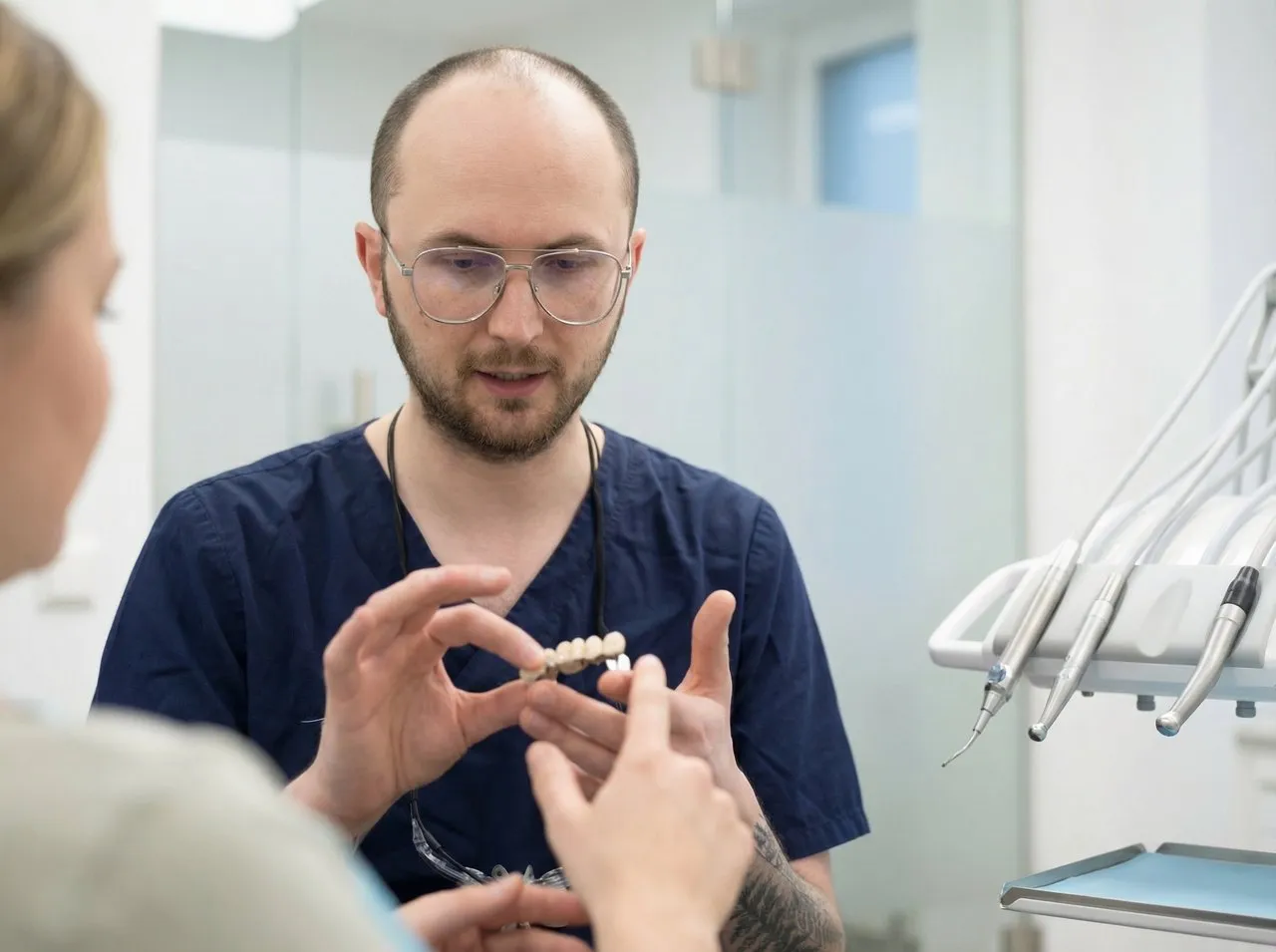
Adjustment period or a genuine fault: how to tell the difference
The soft tissues in the mouth are often irritated after a denture has been fitted. The tongue, cheeks and chewing muscles also have to learn to coordinate anew. Mild irritation is typical during the first few days. Severe pain, on the other hand, is a warning sign. The same applies to persistent movement or an incorrect bite. A prompt check-up is then advisable.
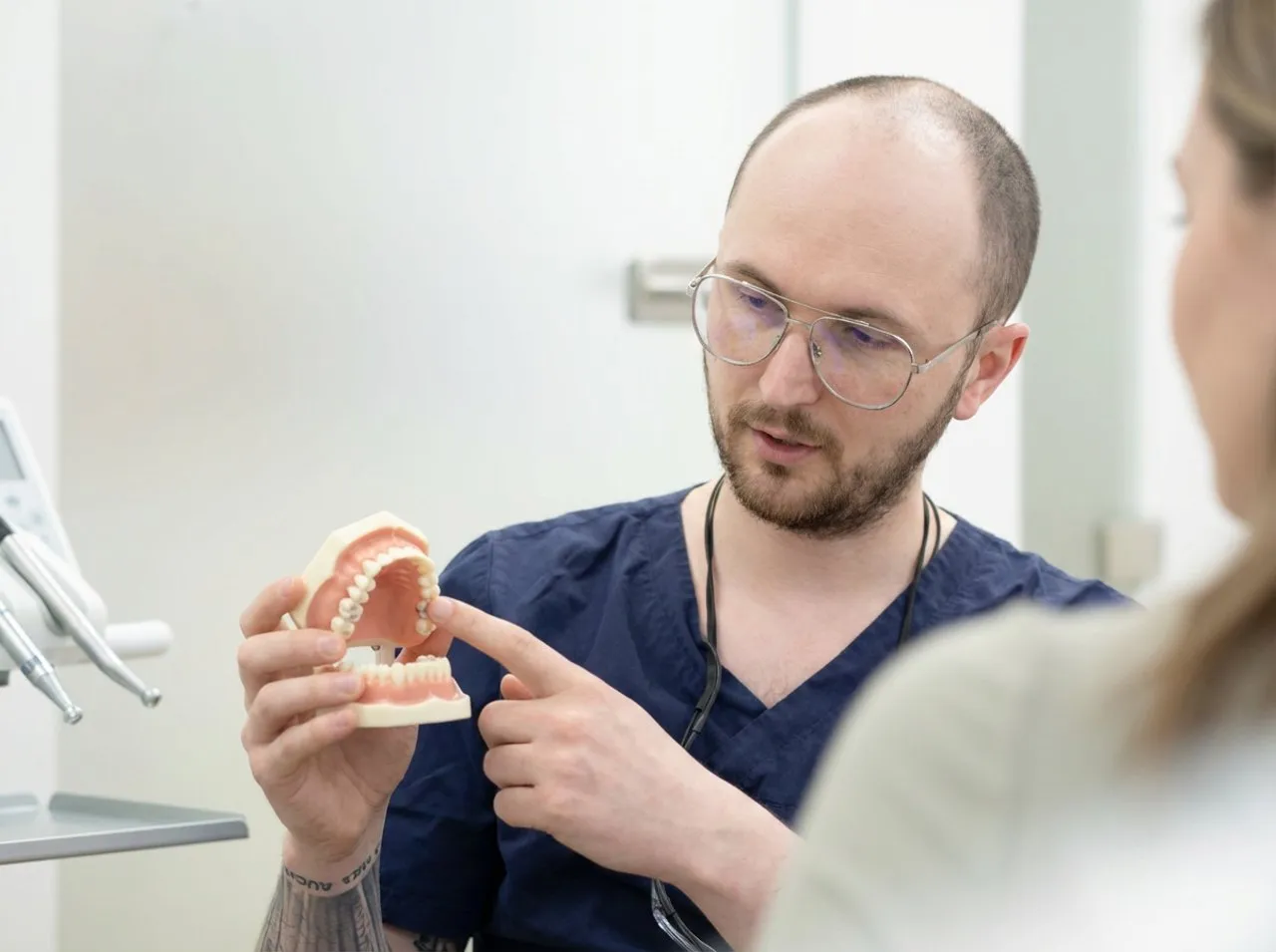
Fit and retention: why the denture does not stay in place
Retention depends on an accurate fit, the design of the borders and the film of saliva. A suction effect also comes into play in the upper jaw. This retention is often absent in the lower jaw. Common causes are atrophy of the jaw ridge and mobile mucosa. A functional border that is too short also reduces stability. A precise functional impression improves the peripheral seal.
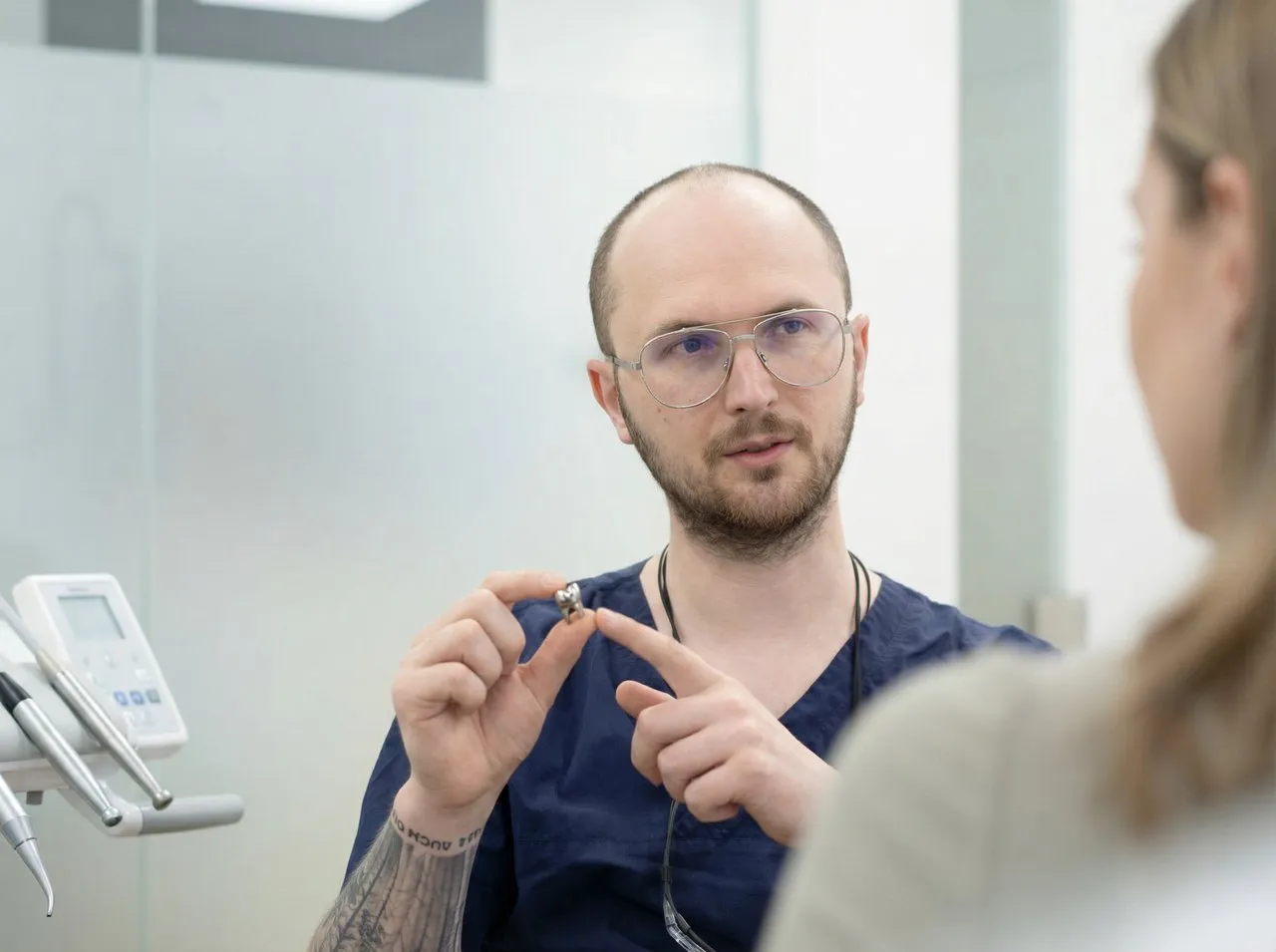
Materials and manufacture: understanding tolerances
The denture is produced from an impression and a model, followed by acrylic polymerisation. Shrinkage and distortion can occur during this process. Even a few tenths of a millimetre can alter the fit. Teeth made from PMMA or composite also have defined occlusal surfaces. Errors can occur when the denture is articulated in an articulator. Follow-up appointments are therefore part of the treatment.
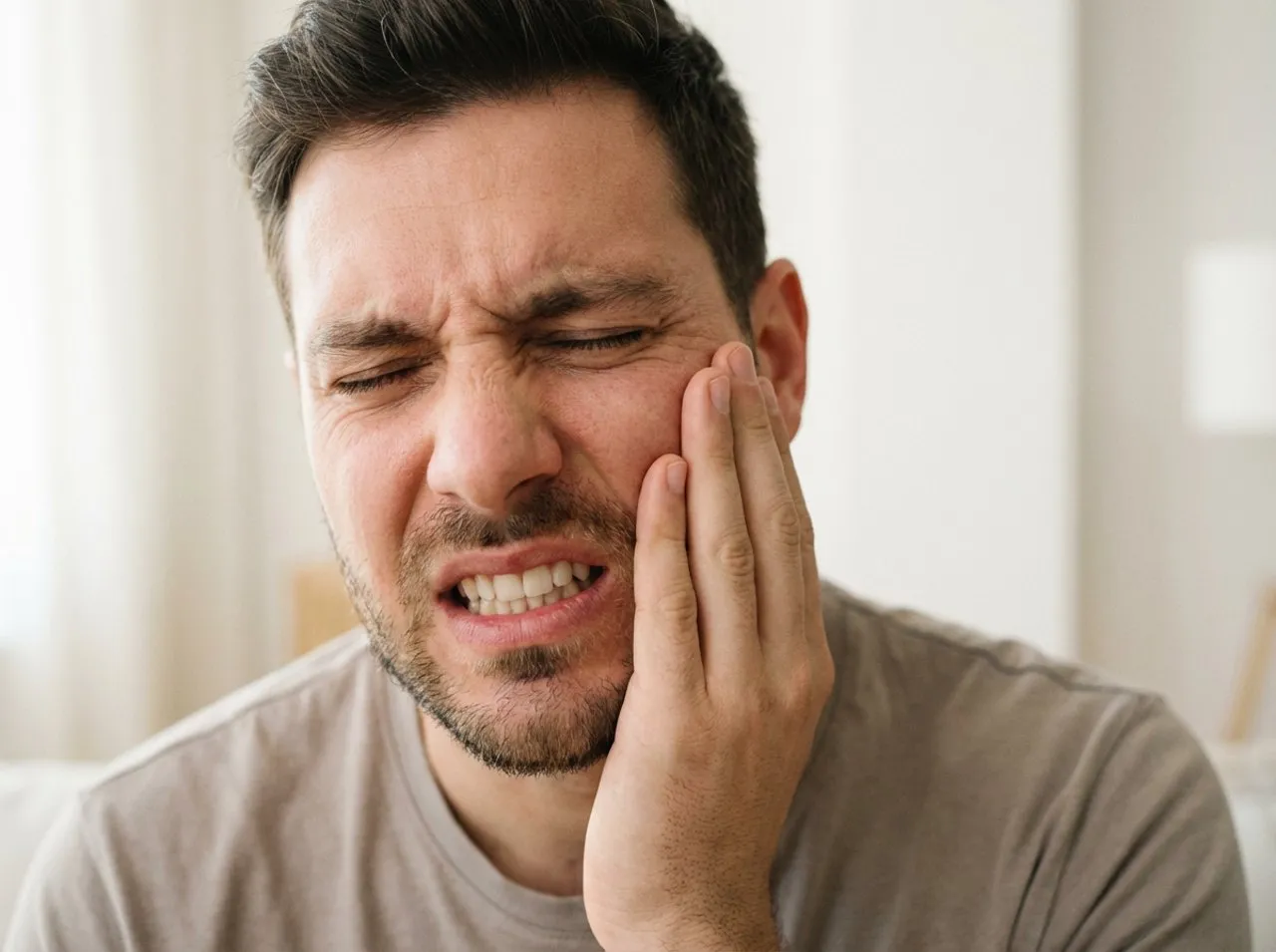
Pressure points, burning and inflammation of the mucous membrane
Pressure points are caused by localised overloading of the mucosa. Ulcers or denture stomatitis can develop. The palate or vestibular fold often burns. At the practice, we mark contact points with indicator paste. We then carefully grind the denture base to relieve the pressure. This usually allows the mucous membrane to heal quickly.
Occlusion and articulation: when the bite is not right
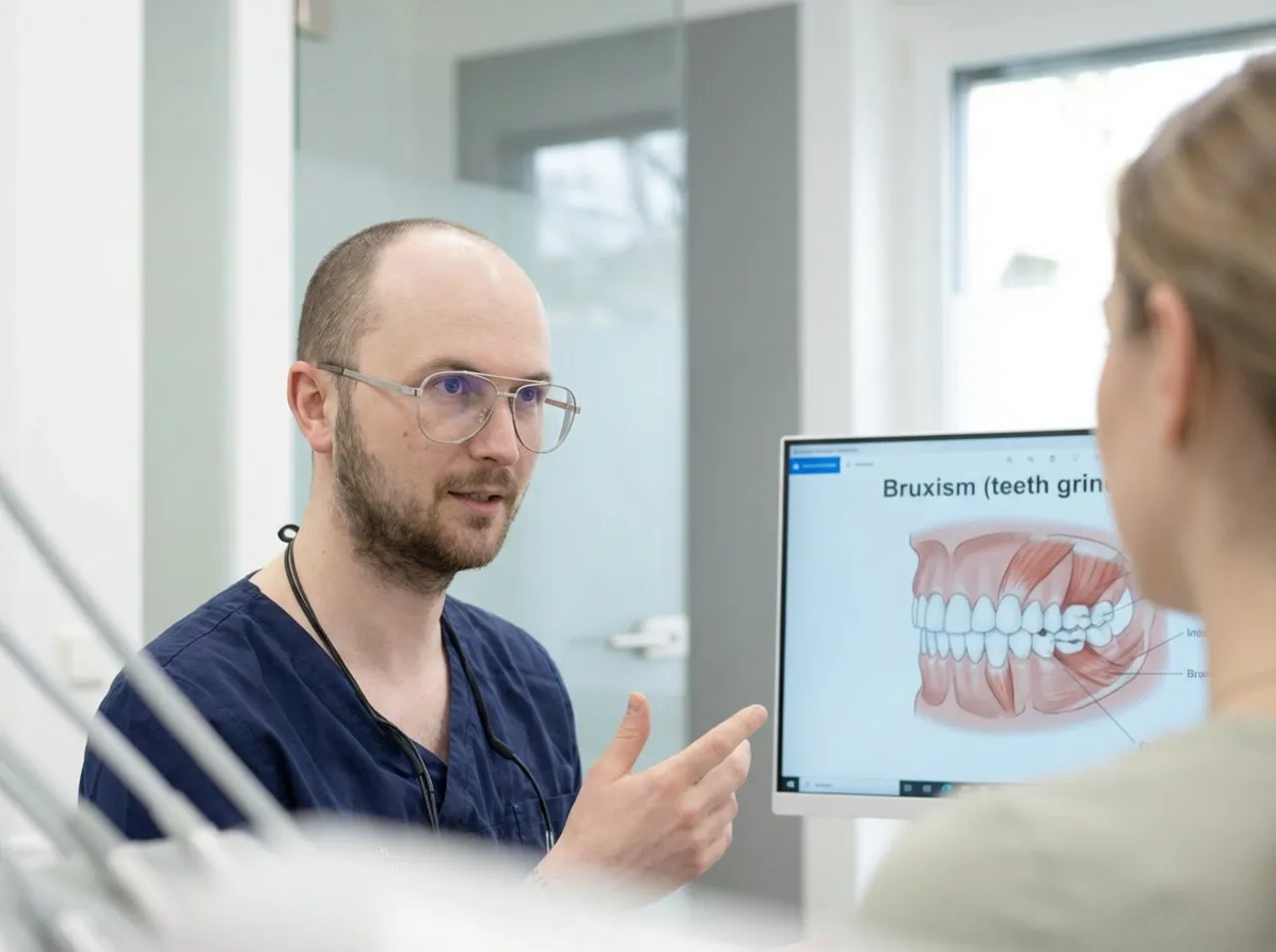
An incorrect bite creates shear forces and muscle tension. The occlusion must provide even support on both sides. The vertical bite height should also be correct. Many people know the phrase ‘new crowns bite does not feel right’. The same principle applies to dentures. We check jaw relationships, intercuspation and excursive contacts. A faulty contact can irritate the temporomandibular joint. This can then cause symptoms of CMD, such as pressure around the ear. Headaches are also possible.
Speech and gag reflex: adjusting phonetics correctly
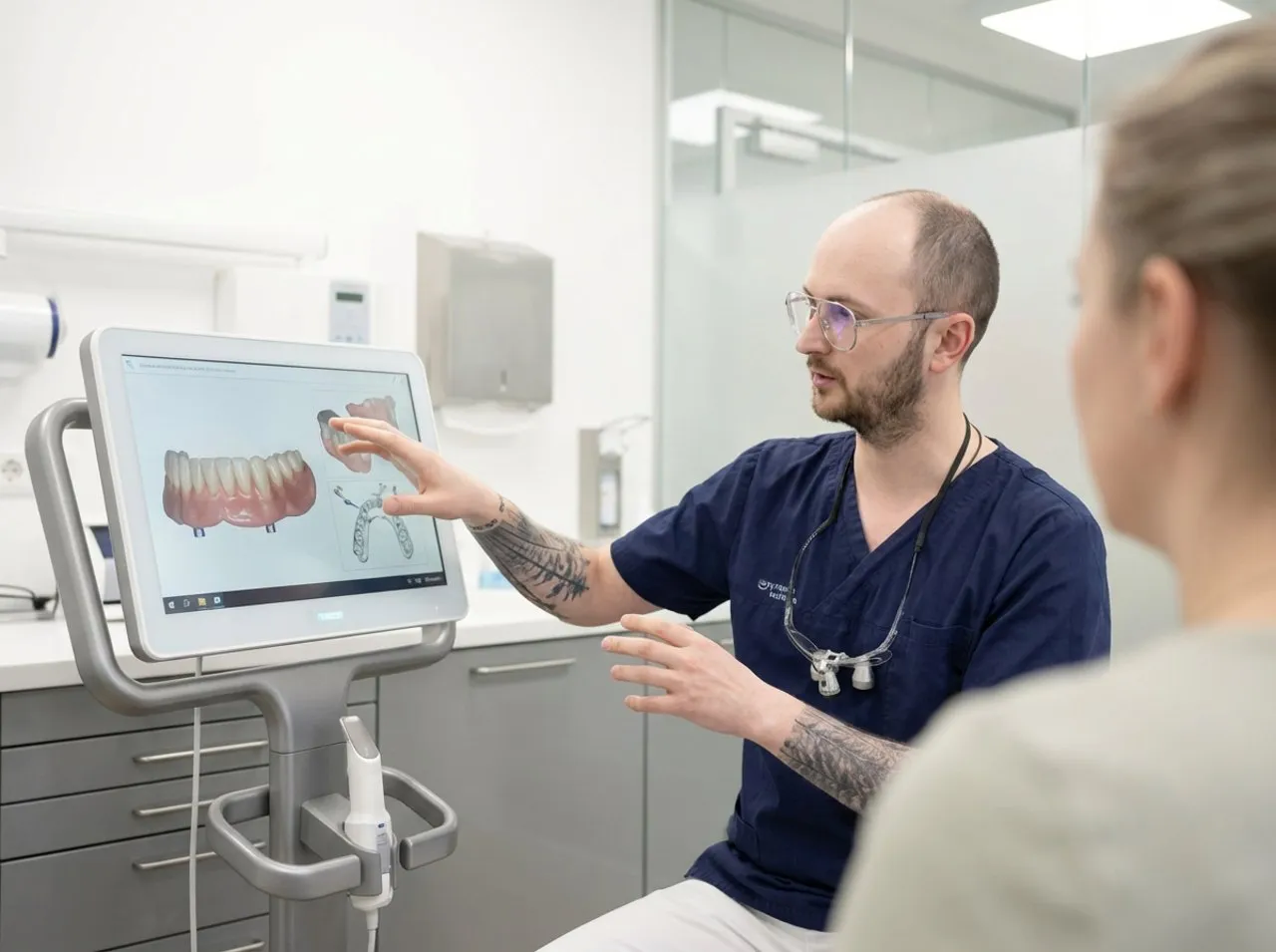
The shape of the denture has a major effect on speech. S sounds are particularly sensitive to palatal contours. A base that is too thick changes the space available for the tongue and affects articulation. A gag reflex is often caused by posterior palatal borders that are too long. Unfavourable border placement on the soft palate can also trigger it. Minor corrections are often sufficient.
Aesthetics: when your dental prosthesis does not look good
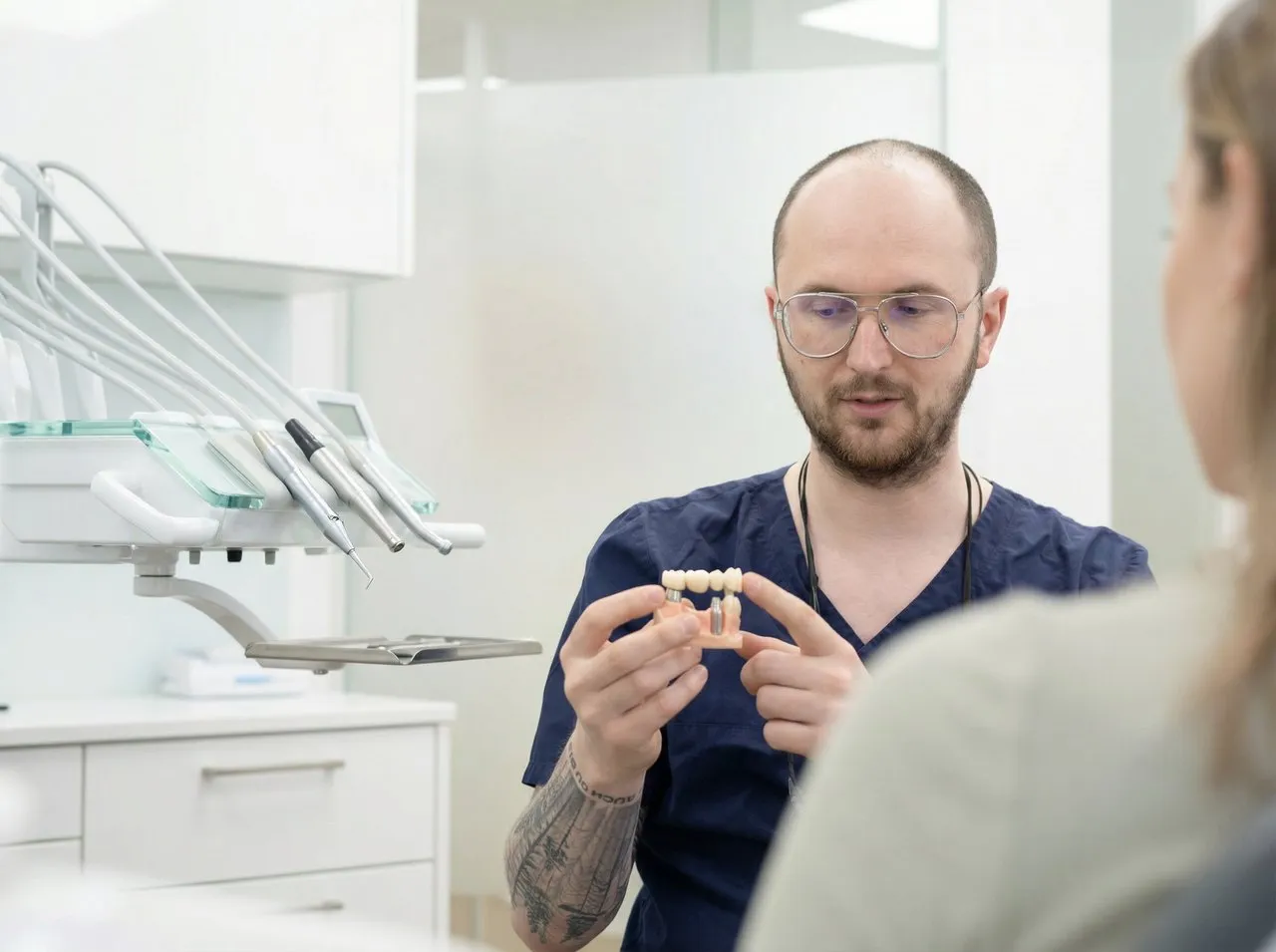
The appearance often concerns tooth shape, colour or the midline. Lip support can also sometimes look unnatural. Tooth positioning plays a central role in full dentures. The gum-coloured sections must harmonise in colour. A wax try-in makes it easier to make confident decisions. Psychological factors also matter. The new look may initially feel unfamiliar. It is therefore understandable to feel “unhappy with your dental prosthesis”.

What you can do at home without risking damage
Eat small portions and chew on both sides. Choose soft, low-fibre foods to begin with. This stabilises the chewing movement. Clean your denture and mucous membrane thoroughly every day. Use a soft brush and lukewarm water. Remove all denture adhesive residue. Never grind the denture yourself. Use denture adhesive only as a short-term stopgap. If you experience problems, professional adjustment is what matters.
How we optimise your denture at Wunschlachen
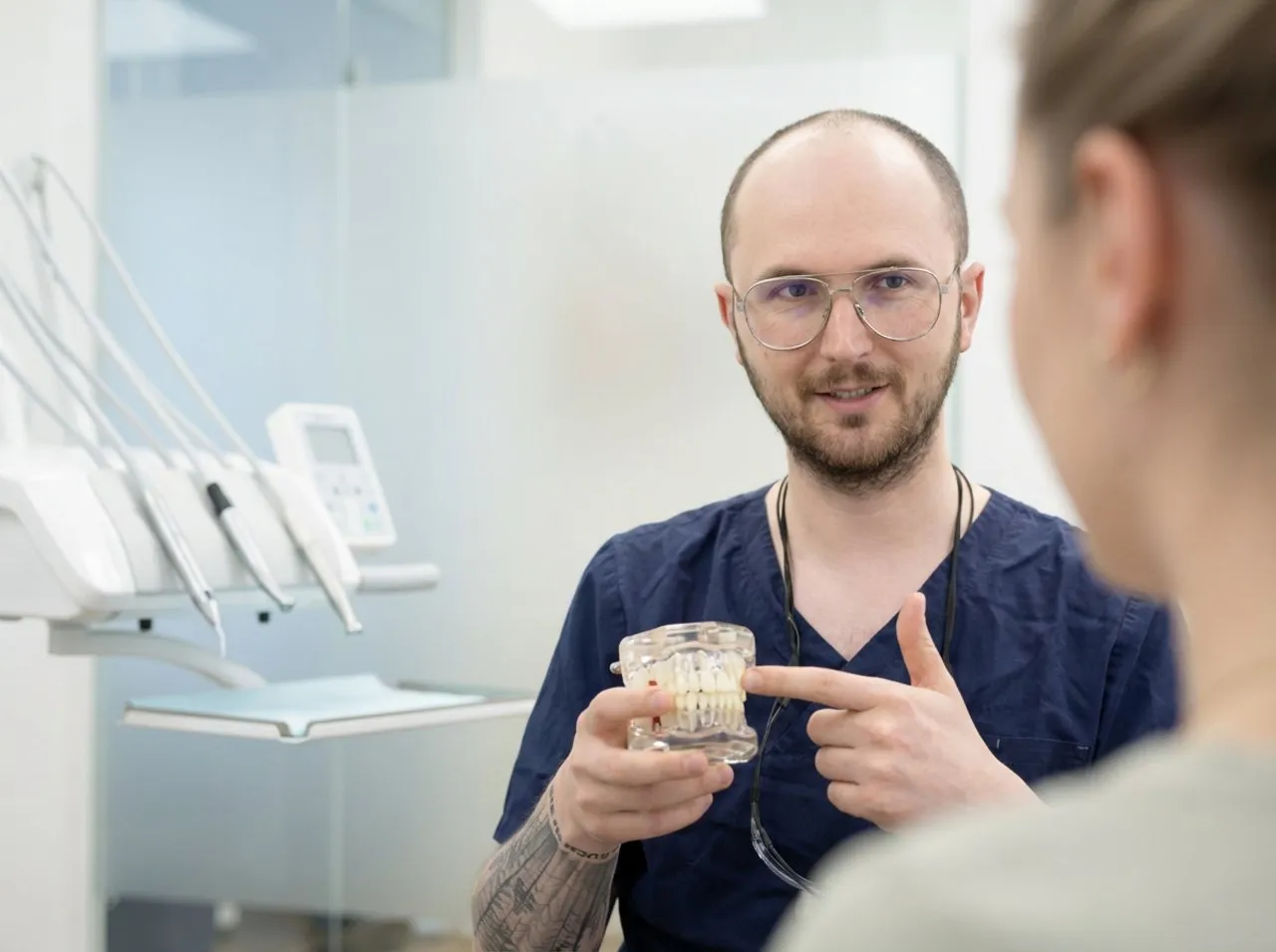
We start by taking your medical history and clinically examining the mucous membrane. We then check the fit, border seal and stability of the denture. Articulating paper immediately reveals faulty contacts. If necessary, we take a new functional impression. An indirect or direct reline often helps. It compensates for ridge resorption and improves the bearing surface. If the base has been incorrectly designed, we replan it. This includes a bite registration, try-in and final fitting. This gives you control over appearance and function.

Complaints and corrective treatment: your rights at the practice
Early feedback and accurate documentation are important. Make a note of pressure points, difficulties eating and changes in speech. This allows corrective treatment to be targeted precisely. In many cases, just a few adjustments are enough. A new denture may be made if there are major discrepancies. We explain the procedure transparently.
Greater security: implant-supported dentures as an option
If the jaw ridge is severely reduced, implant stabilisation can help. Often, two to four implants are sufficient. This significantly improves retention and chewing comfort. We use attachments such as Locators or bars for anchorage. Mini implants may also be possible, depending on the findings. We assess the available bone and the risks beforehand.

Costs, subsidies and manageable financing
For people with statutory health insurance, the fixed subsidy for dental prostheses applies. A well-maintained bonus booklet increases the subsidy. The treatment and cost plan provides transparency.

Conclusion: dissatisfaction can usually be resolved
A new denture often needs fine-tuning. This is part of prosthetic treatment. Diagnostics can significantly improve comfort. If you are unhappy with your new denture, visit Wunschlachen in Berlin. We analyse the cause and make targeted corrections. This helps you feel confident wearing it.
FAQ: Unhappy with your new denture
Yes, adaptation usually takes a few days. Severe pain is not normal.
There is usually localised overloading of the mucosa. The denture needs to be relieved in that area.
The peripheral seal or retention is often inadequate. A functional impression can help.
Chewing feels one-sided or painful. Muscle tension is also typical.
Sometimes, depending on the material. Repositioning the teeth is often advisable.
The border length is checked and shortened. The palatal contours are adjusted.
Usually one to two weeks. Sometimes longer for full dentures.
No, it merely masks the symptoms. The fit must be improved through prosthetic adjustment.
When there is ridge resorption or the denture fits loosely. It significantly improves the bearing surface.
An implant-supported denture offers greater stability. Mini-implants are also possible.