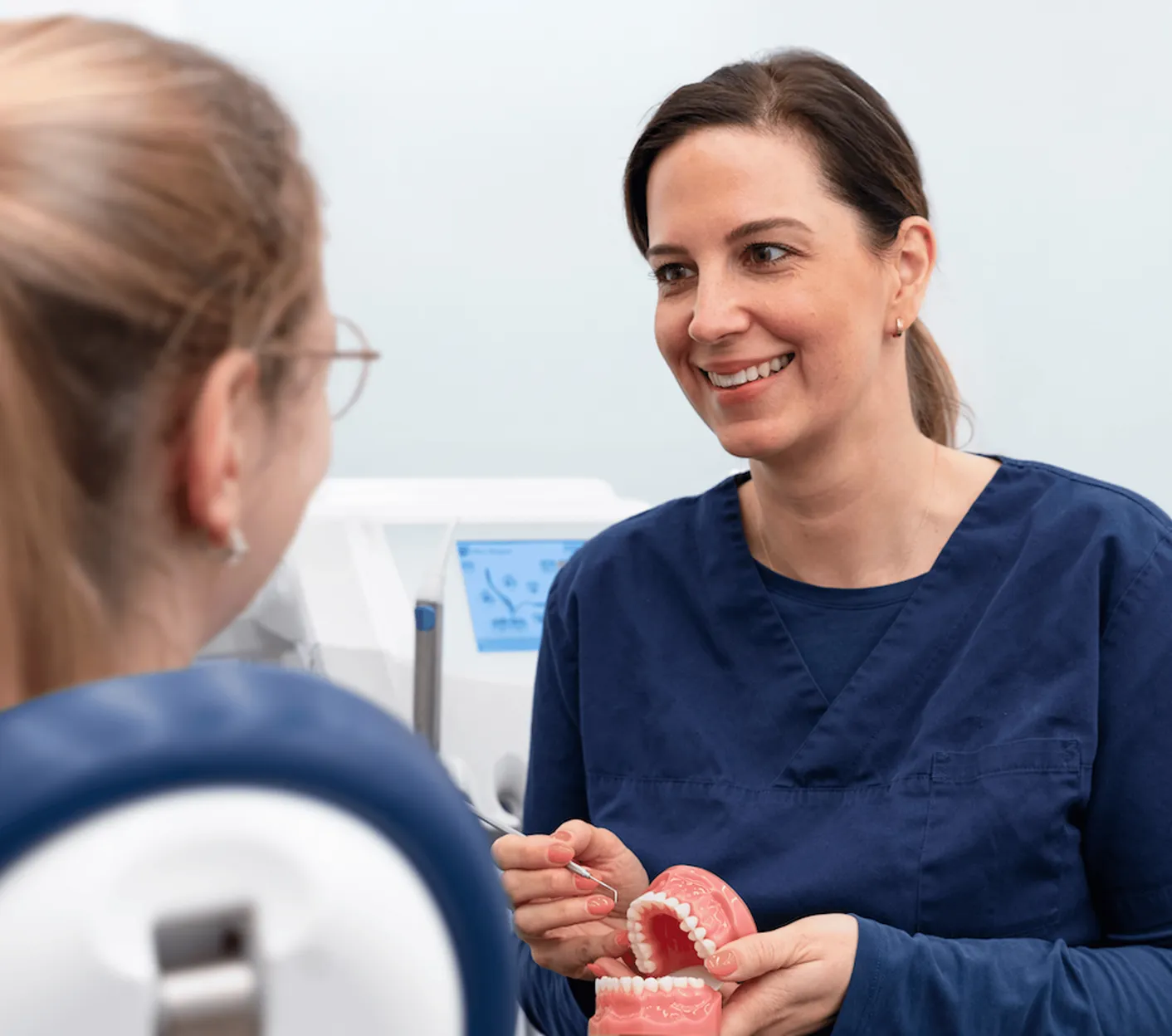
Worn teeth: identify the causes and protect tooth substance
Incisors may look shorter, chewing surfaces flatter, or individual areas may be sensitive to cold. This may be due to tooth wear. This means the loss of tooth substance that has not been caused by tooth decay or a single accident. Minor changes are common and do not automatically need to be restored. However, markedly increasing wear, sensitivity or problems chewing should be investigated. To develop an appropriate plan, the cause, extent and progression need to be considered together. A new crown alone does not answer the question of why the teeth are worn.
The short answer
Worn teeth can be caused by acids, friction and grinding. The cause and progression determine whether protection, monitoring or restorative build-up is appropriate.
- Acid and mechanical stress can act together
- In tooth wear, a distinction is made between different processes: erosion caused by acids, attrition caused by tooth contact and abrasion caused by other mechanical factors. In everyday life, these causes can overlap. Acid may come from food and drink or from stomach contents flowing back into the mouth. The cause should not be identified from the appearance alone; your habits and symptoms should also be taken into account. The UK prevention guideline explains the different causes.
- What grinding explains and what remains unclear
- Grinding and clenching can wear down tooth surfaces, contribute to cracks or damage to fillings and be associated with discomfort in the chewing muscles. It can occur during sleep or while awake. However, tooth wear alone does not prove when or how severely someone grinds their teeth at present. Existing wear may date from earlier periods. Therefore, also discuss morning symptoms or signs noticed by others while you sleep. The NHS information describes bruxism and its signs.
- Recognising and reducing acid-related wear
- Erosion is a chemical loss of tooth substance caused by acids that do not originate from tooth decay bacteria. Frequent acidic drinks and repeated contact with stomach acid can contribute. Tooth substance that has already been lost does not grow back. Prevention therefore aims to reduce harmful acid exposure and protect the remaining surfaces. Fluoride toothpaste can support dental care, but does not replace investigation of the cause. The ADA explains how erosion develops and how to prevent it.
- Which changes warrant an earlier check-up
- Report newly occurring pain, a broken-off piece or a noticeable change when biting together, rather than waiting until your next routine appointment. Photographs or earlier records can help show the progression, if available. You do not need to examine the tooth edges at home using aids for this purpose. Instead, pay attention to new difficulties in daily life: Does certain food become uncomfortable, does a tooth remain sensitive to stimuli for longer, or is a sharp edge bothering you? This information helps when deciding between protection, monitoring and treatment.
Acids and mechanical stress can act together
In tooth wear, a distinction is made between different processes: erosion caused by acids, attrition caused by tooth contact and abrasion caused by other mechanical factors. In everyday life, these causes can overlap. Acid may come from food and drink or from stomach contents flowing back into the mouth. The cause should not be identified from the appearance alone; your habits and symptoms should also be taken into account. The UK prevention guideline explains the different causes.
To prepare for your appointment, you can describe a typical day: What do you drink between meals, how often, and are there periods when you have a sour taste or vomit? The aim is not to blame a particular food. An occasional event and frequently repeated acid exposure provide different information. With mechanical habits too, the actual frequency is more helpful than a blanket judgement about your dental care.

What grinding explains and what remains unclear
Grinding and clenching can wear down tooth surfaces, contribute to cracks or damage to fillings and be associated with discomfort in the chewing muscles. It can occur during sleep or while awake. However, tooth wear alone does not prove when or how severely someone grinds their teeth at present. Existing wear may date from earlier periods. Therefore, also discuss morning symptoms or signs noticed by others while you sleep. The NHS information describes bruxism and its signs.
A custom-made bite splint can protect the teeth from further strain. Whether it is suitable in your case and what monitoring is required depends on the findings. It does not rebuild lost tooth substance and is no guarantee that all causes have been eliminated. You can find basic information under teeth grinding and bite splint. Bring an existing splint to your check-up rather than drawing your own diagnosis from its worn surface.
Recognising and reducing acid-related wear
Erosion is a chemical loss of tooth substance caused by acids that do not originate from tooth decay bacteria. Frequent acidic drinks and repeated contact with stomach acid can contribute. Tooth substance that has already been lost does not grow back. Prevention therefore aims to reduce harmful acid exposure and protect the remaining surfaces. Fluoride toothpaste can support dental care, but does not replace investigation of the cause. The ADA explains how erosion develops and how to prevent it.
Avoid holding acidic drinks in your mouth for a long time or constantly sipping them. After vomiting, you can rinse your mouth with water; vigorous brushing immediately afterwards is not advisable. Discuss a gentle brushing technique and suitable products. Homemade acids, abrasive powders or strong polishing agents do not repair worn teeth. If you are unsure, bring the toothpaste and toothbrush you use, or photographs of the products, to your consultation.
Mention stomach problems too
Recurrent heartburn or a sour taste can be consistent with reflux. If symptoms are frequent, or if you have difficulty swallowing, unintentional weight loss or regular vomiting, a medical assessment is also important. A distinctive pattern of tooth wear alone does not confirm any particular stomach condition. Conversely, dental care should not lead to general symptoms being overlooked. The NHS information lists reasons for seeking a medical assessment of reflux.
Mention these symptoms factually, even if you find them uncomfortable. Treatment does not require justification, but information. Ask which findings the two specialties should share with each other. If you are already receiving medical treatment, you can state what has been investigated and which medicines have been prescribed. Do not change how you take them yourself because of a suspected connection with your teeth. The decision belongs to the responsible treatment team.

Monitoring or restoration: how the decision is made
Mild, stable wear can be monitored; extensive wear can affect the bite, sensitivity or appearance. Depending on the situation, options for rebuilding the teeth include direct composite restorations or other restorative procedures. Not every worn tooth automatically needs a crown. Documentation and follow-up checks help determine whether loss of substance is continuing and which treatment is justified. Leicester Hospitals describes the examination and treatment options.
Ask to be shown which surfaces are affected and what the treatment recommendation is based on. Ask whether a tooth-preserving build-up is possible, what alternatives are available and what care or repairs may be needed later. For an extensive proposal, a clear written plan is helpful. It should explain the aim and sequence, not just list materials and individual prices. A desire for cosmetic improvement can be discussed, but should remain distinguishable from symptoms and medical findings.
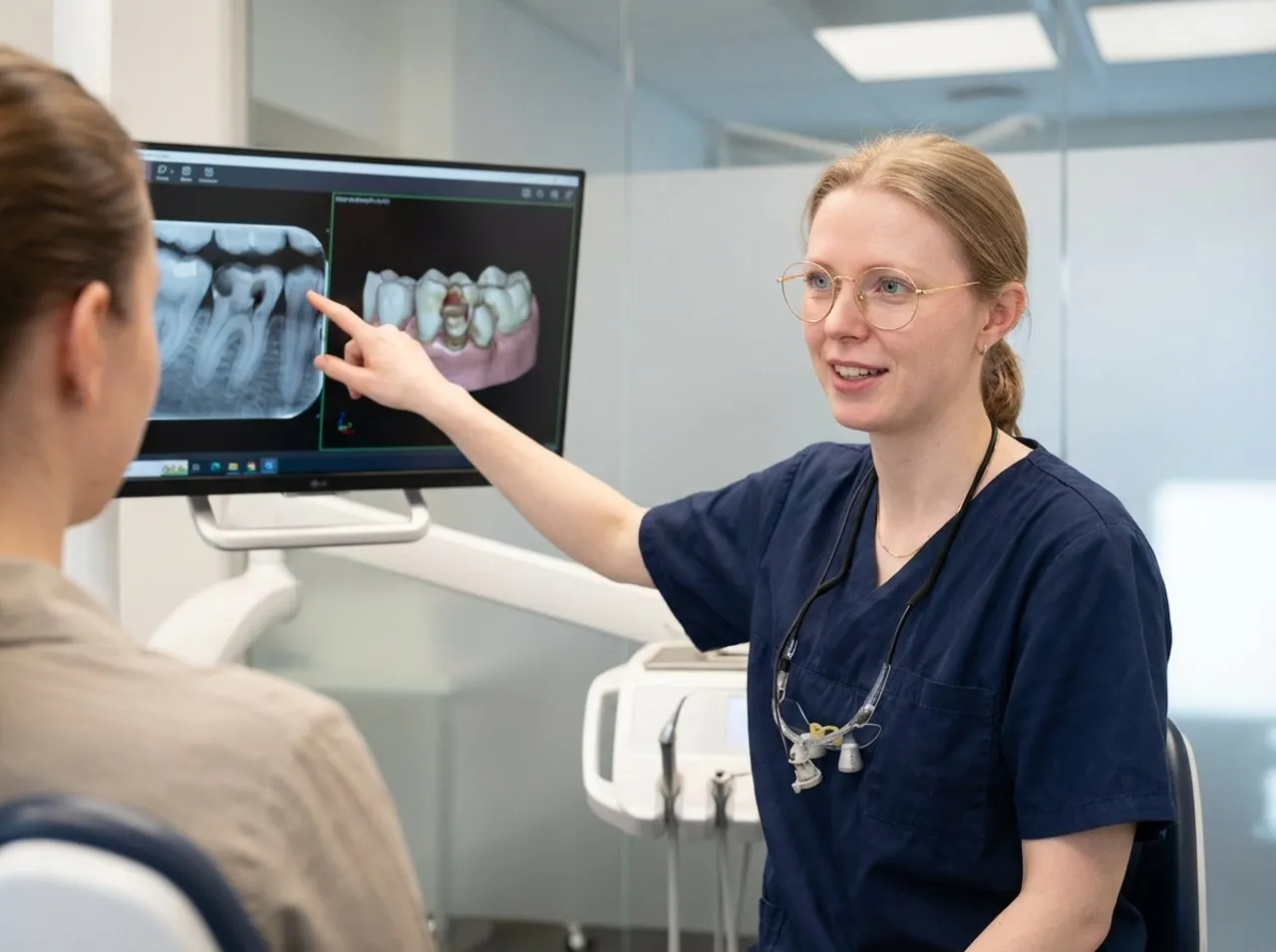
Which changes warrant an earlier check-up
Report newly occurring pain, a broken-off piece or a noticeable change when biting together, rather than waiting until your next routine appointment. Photographs or earlier records can help show the progression, if available. You do not need to examine the tooth edges at home using aids for this purpose. Instead, pay attention to new difficulties in daily life: Does certain food become uncomfortable, does a tooth remain sensitive to stimuli for longer, or is a sharp edge bothering you? This information helps when deciding between protection, monitoring and treatment.
Frequently asked questions
No. Acids and other mechanical factors can also alter tooth substance. Several causes often act together. Appearance alone does not prove current bruxism.
Lost tooth substance does not grow back. Care and control of the causes are intended to protect the remaining surfaces. If necessary, suitable restorative treatment to rebuild the tooth will be discussed.
Not automatically. For mild, stable changes, observation may be sufficient. Depending on the findings, direct composite build-ups or other treatments may be options. The choice is based on the examination.
Stomach acid repeatedly entering the mouth can promote erosion. Frequent reflux symptoms should be medically assessed; a dental finding alone does not confirm a stomach diagnosis.
A bite splint primarily provides mechanical protection. It does not replace investigation of repeated acid exposure and does not rebuild lost tooth substance. Discuss the different causes separately.
New pain, a broken-off piece, increasing sensitivity or an altered bite should be examined promptly. Do not simply wait for your next routine appointment.