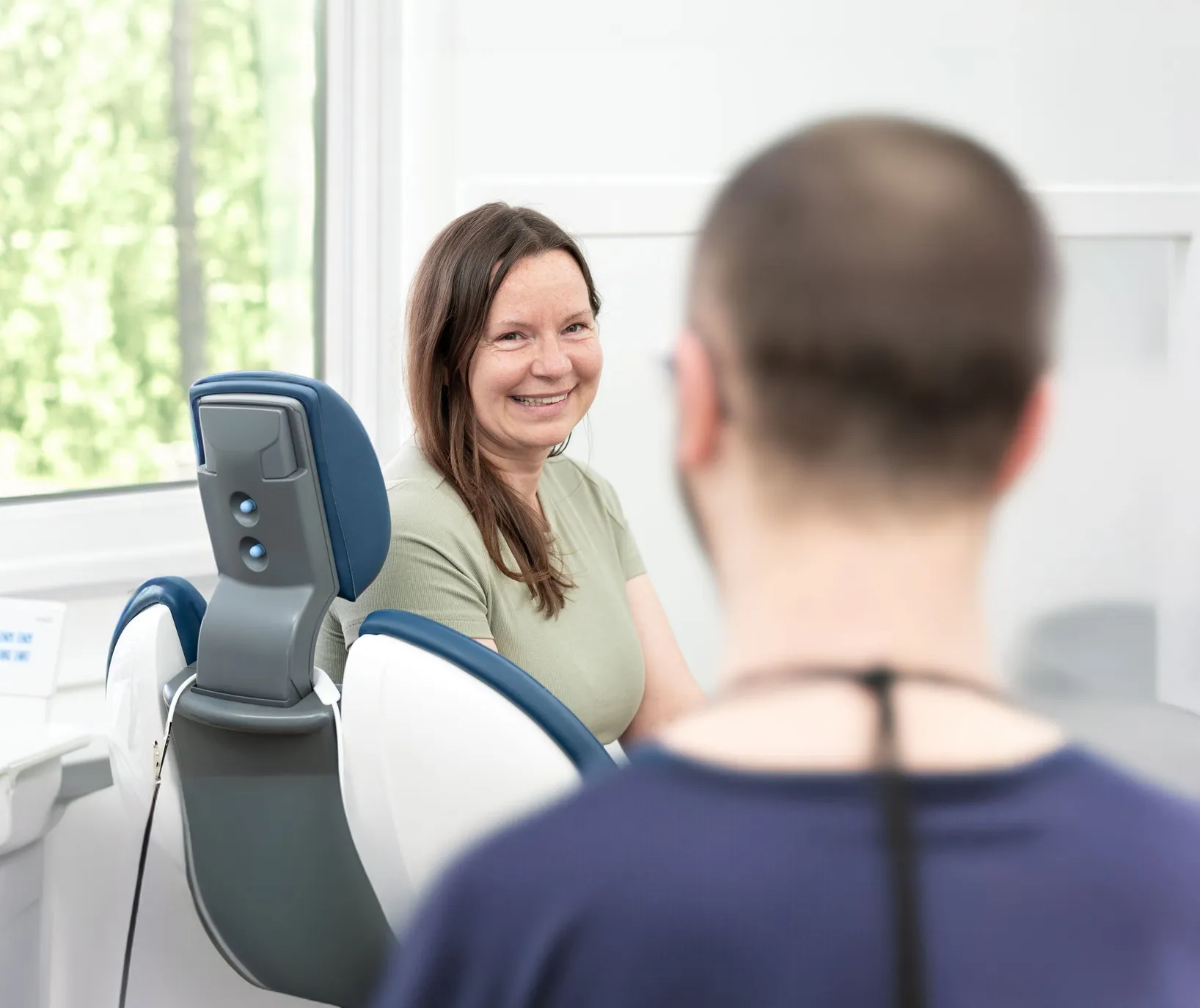
What types of dental restorations are there – and where can I get advice in Berlin?
Dental restorations replace missing teeth or restore severely damaged teeth that can still be preserved. A crown or partial crown restores a natural tooth, while a bridge closes a gap. Partial and full dentures are removable. A telescopic denture combines securely anchored inner crowns with a removable section. Implants can support fixed crowns or bridges and provide support for removable dentures. The right restoration depends on your existing teeth, jawbone, bite and preferences. Wunschlachen offers advice and planning at four locations in Berlin.
- Fixed to natural teeth
- Crown or partial crown on a retained tooth, bridge on suitable abutment teeth
- Removable
- Partial denture when some teeth remain, full denture for an edentulous jaw
- Combined
- Telescopic denture with securely anchored inner crowns and a removable section
- Implant-supported
- Fixed crowns and bridges or removable dentures
- Temporary solution
- Temporary crown or interim denture until the definitive restoration
- Consultations in Berlin
- Reinickendorf, Schöneberg, Friedrichstraße in Mitte and Charlottenburg
Which restoration is suitable can only be determined after an examination. The type and number of appointments depend on the clinical findings and treatment.
In this article
What are dental restorations – and when do you need them?
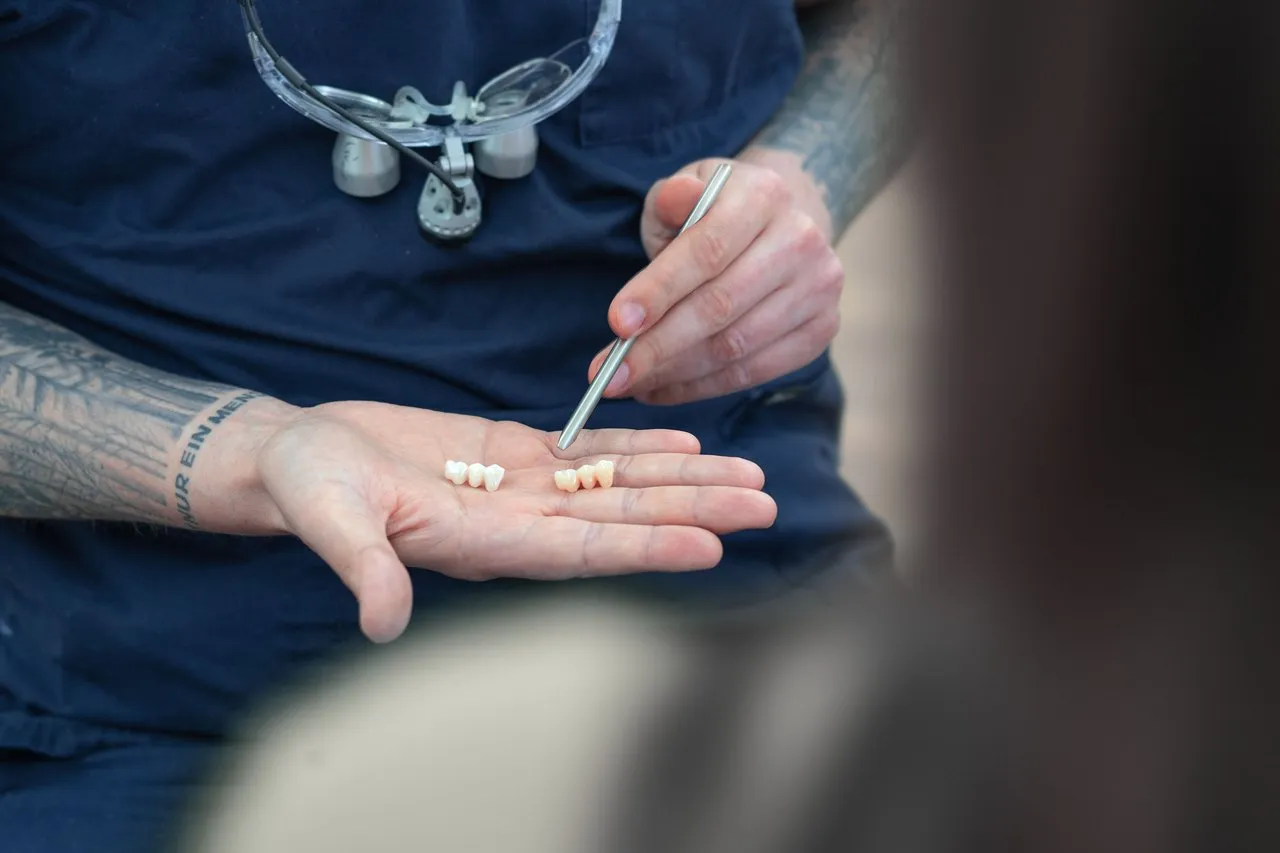
Dental restorations replace missing teeth or restore teeth that are so badly damaged that a filling will no longer hold. They are intended to restore your ability to chew and speak, as well as the appearance of your teeth. In technical terms, this field is called prosthodontics.
A gap is also treated because neighbouring teeth can tip into the gap and opposing teeth can move out of their sockets. Our guide to tooth loss explains why teeth are lost.
Which option is suitable for you depends on the findings: how many teeth are missing, where the gap is and what condition the remaining teeth are in. The page on having dental work done provides an introductory overview.
Crown or partial crown: restoring a retained tooth
A crown may be an option when a tooth can be preserved but a filling no longer has enough support. The crown encases the tooth and largely restores its shape. If enough of the tooth wall remains, a partial crown may be sufficient. It covers part of the tooth's crown and can preserve more of the natural tooth structure.
For a crown, the tooth is prepared and filed down. An impression or 3D scan is then used to create the template for the laboratory. Until the final crown is ready, a temporary crown protects the tooth.
Find out when a crown is advisable, which materials can be used and how it is made on the page about dental crowns.
Bridge: closing a gap with abutments
A conventional tooth-supported bridge typically closes a gap that is bounded on both sides by natural teeth. The neighbouring teeth are usually filed down and, as abutment teeth, support the replacement tooth, known as the pontic. These teeth must be able to support the bridge permanently.
Whether a bridge is an option depends on the number and location of the missing teeth and the condition of the abutment teeth. If the row of teeth has an open end at the back, there is no rear abutment tooth; other treatments are then considered. Instead of being supported by natural teeth, a bridge can also be anchored to implants.
Our page on dental bridges explains the types, requirements and treatment.
Partial and full dentures: how removable dental restorations differ
The removable partial denture replaces several missing teeth when some of your own teeth remain. It may be an option, for example, if the back abutment teeth needed for a bridge are missing. It is held and supported by the remaining natural teeth and the jaw.
A cast metal framework denture has a cast metal frame with retaining and supporting elements. Clasps may be visible. Possible alternatives with less visible retaining elements include a telescopic denture or another suitable form of anchorage. For the lower jaw, the guide explains partial dentures without clasps.
A conventional full denture replaces all the teeth in an edentulous jaw, whether upper or lower. Its individually adapted plastic base with artificial teeth rests on the mucosa. If a few of your own teeth remain, a telescopic denture anchored to them may be an option, depending on the findings.
Our page on dentures explains the differences between the types of denture. A separate page explains the procedure for full dentures.
Telescopic dentures: combining fixed and removable components
The telescopic denture combines fixed and removable dental restorations. Inner crowns are securely anchored to suitable natural teeth or implants. The matching outer crowns sit in the removable part of the denture and are held in place on the inner crowns by friction. This means the denture can be designed without visible clasps. Depending on the clinical findings and design, an upper-jaw version with reduced palatal coverage may also be possible.
To clean it, remove the denture. The inner crowns remain securely anchored. The page on the telescopic denture explains how the double crowns work and when this combined restoration may be suitable.
Implant-supported dental restorations: artificial tooth roots as supports
Implants act as artificial tooth roots. They are inserted into the jawbone and can support a crown, bridge or denture. The healing period is taken into account during planning. Dental restorations on implants can be fixed or removable.
For an implant-supported overdenture, implants give the removable denture additional stability. It can be attached using press-stud or telescopic connections, for example. Find out more on the pages about removable dental restorations on implants in the upper jaw and dentures on implants.
Whether implants are an option is determined by an examination of the teeth, gums, jawbone and bite. Depending on the clinical findings, a 3D X-ray, digital dental volume tomography (DVT), may be useful for planning. This technology is available in Reinickendorf and on Friedrichstraße. After the examination, the dentist decides whether a DVT scan is indicated.
Fixed or removable: which dental restoration is right for you?
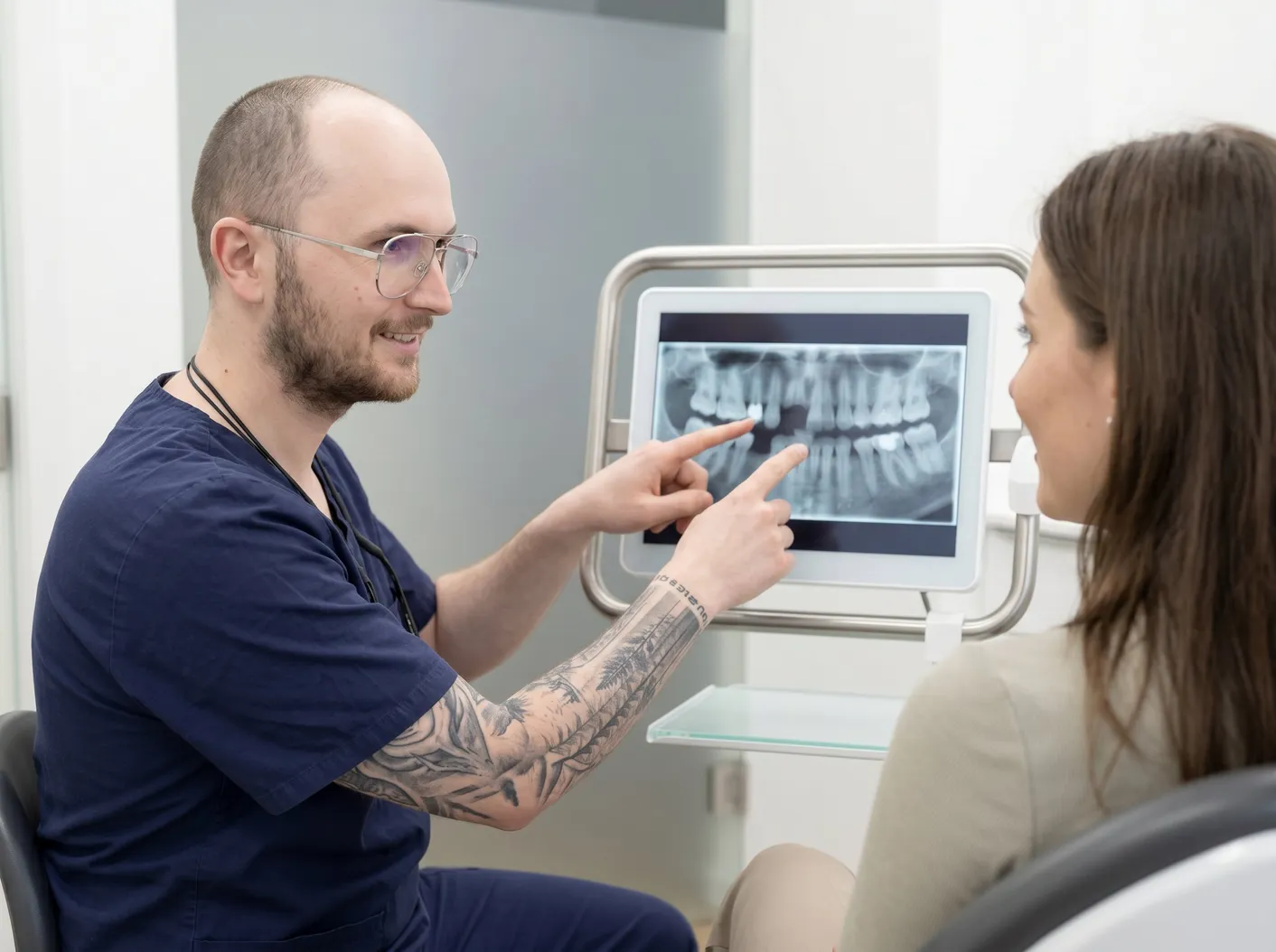
No single dental restoration is right for everyone, including in later life. The decisive factors are your clinical findings, the condition of the remaining teeth and jawbone, your preferences regarding appearance and care, and the load placed on the restoration during chewing.
Fixed dental restorations remain in the mouth and are brushed like natural teeth. For a conventional bridge, the neighbouring teeth are usually filed down. Implants require a procedure and a healing period. Read more in the article about the advantages of fixed dental restorations. Removable dental restorations are taken out for cleaning and require a period of adjustment. Initially, pressure points or reduced retention may occur.
The location of the gap also affects the choice. Two separate guides explain how a back tooth can be replaced without an implant and the options for missing front teeth. If a gap needs to be bridged until the final restoration is fitted, an interim denture can serve as a temporary solution.
After the examination, we will discuss which options suit your clinical findings. Fixed, removable and implant-supported options can be compared, along with their care and the treatment steps required.
What materials are dental restorations made of?
Dental restorations can be made from gold alloys, non-precious metals, all-ceramic materials, metal-ceramic or plastic, for example. Which material is suitable depends on where the dental restoration will be placed, how much load it will bear during chewing, what it should look like and how well you tolerate a material.
Gold alloys and non-precious metals are particularly hard-wearing and are often used in the posterior region. All-ceramic materials such as zirconia are tooth-coloured and are popular for visible teeth. Metal-ceramic combines a metal base with tooth-coloured ceramic. Plastic is used mainly for temporary restorations and dentures.
The material and design must suit the particular restoration. The pages on materials for dental restorations and ceramic dental restorations provide a detailed comparison.
What does treatment with a dental restoration involve?
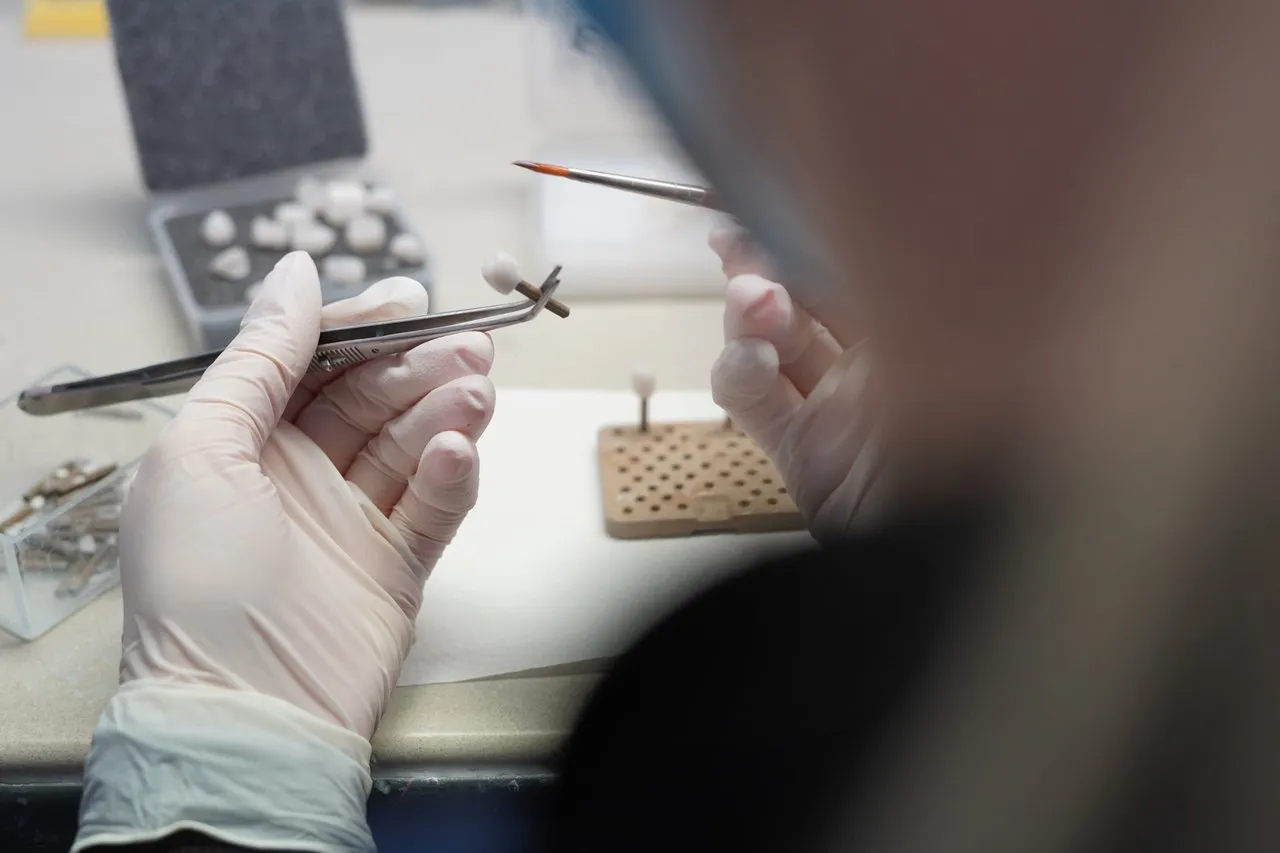
The exact procedure depends on the restoration and your clinical findings. These steps provide a general guide.
1. Examination and consultation. We examine your teeth, gums, jawbone and bite. We then discuss with you which restoration is suitable and plan the next steps together.
2. Preparation. For a crown, the tooth is filed down; for a conventional bridge, the abutment teeth are usually filed down. If implants are planned, the procedure and a healing period are also required.
3. Impression or 3D scan. A dental impression or digital scan provides the laboratory with a record of the initial situation. If necessary, a temporary restoration protects the prepared tooth or bridges a gap.
4. Laboratory fabrication. The laboratory custom-makes the dental restoration. For more extensive work, a try-in may be included to check the shape, bite and appearance.
5. Fitting and adjustment. The finished dental restoration is inserted or fitted. Its fit, bite and function are checked and adjusted if necessary.
6. Aftercare. Further check-ups help monitor the fit and function and detect changes early.
How many appointments are needed and how much time passes between the steps depend, among other things, on the type of dental restoration, the preparation, a possible healing phase and the try-ins required. After the examination, we will discuss which steps and appointments you are likely to need.
How should you care for your dental restoration?
How you clean dental restorations depends on whether they are fixed or removable and which materials they are made from. The practice will explain how to care for your particular restoration.
Fixed dental restorations are brushed like your own teeth. Cleaning between the teeth is especially important: clean these spaces with interdental brushes or dental floss to prevent inflammation. For bridges and implant-supported restorations, the practice team will show you how to clean the joins and hard-to-reach areas.
Take removable dentures out to clean them. Clean them daily with a suitable denture brush or a soft brush. Hard brushes can scratch the surface. The guide to denture toothpaste explains which toothpaste is suitable. Cleaning products and overnight storage must be appropriate for the material and the restoration. The practice will discuss with you which care is suitable for your denture.
Attend regular check-ups even if you have dental restorations. These allow the fit, function and gums to be checked, as well as any remaining teeth or implants, where applicable.
Is your dental restoration causing discomfort? Getting used to it and making adjustments
New dental restorations can feel strange at first. If pressure points develop or the denture feels less secure, the practice can check whether it can be adjusted. Contact the practice rather than waiting a long time or trying to work on the restoration yourself.
If a denture becomes loose over time because the jawbone or gums have changed, it can be relined. After an examination, a decision will be made on whether this is sufficient or whether another adjustment is needed.
If a lower denture is stuck, do not use force. The guide Lower denture will not come out explains what you should do and what you should avoid. You should also contact the practice if your bite feels uncomfortable or a pressure point develops after fitting, so that the fit and function can be checked.
Advice and dental restorations at Wunschlachen in Berlin
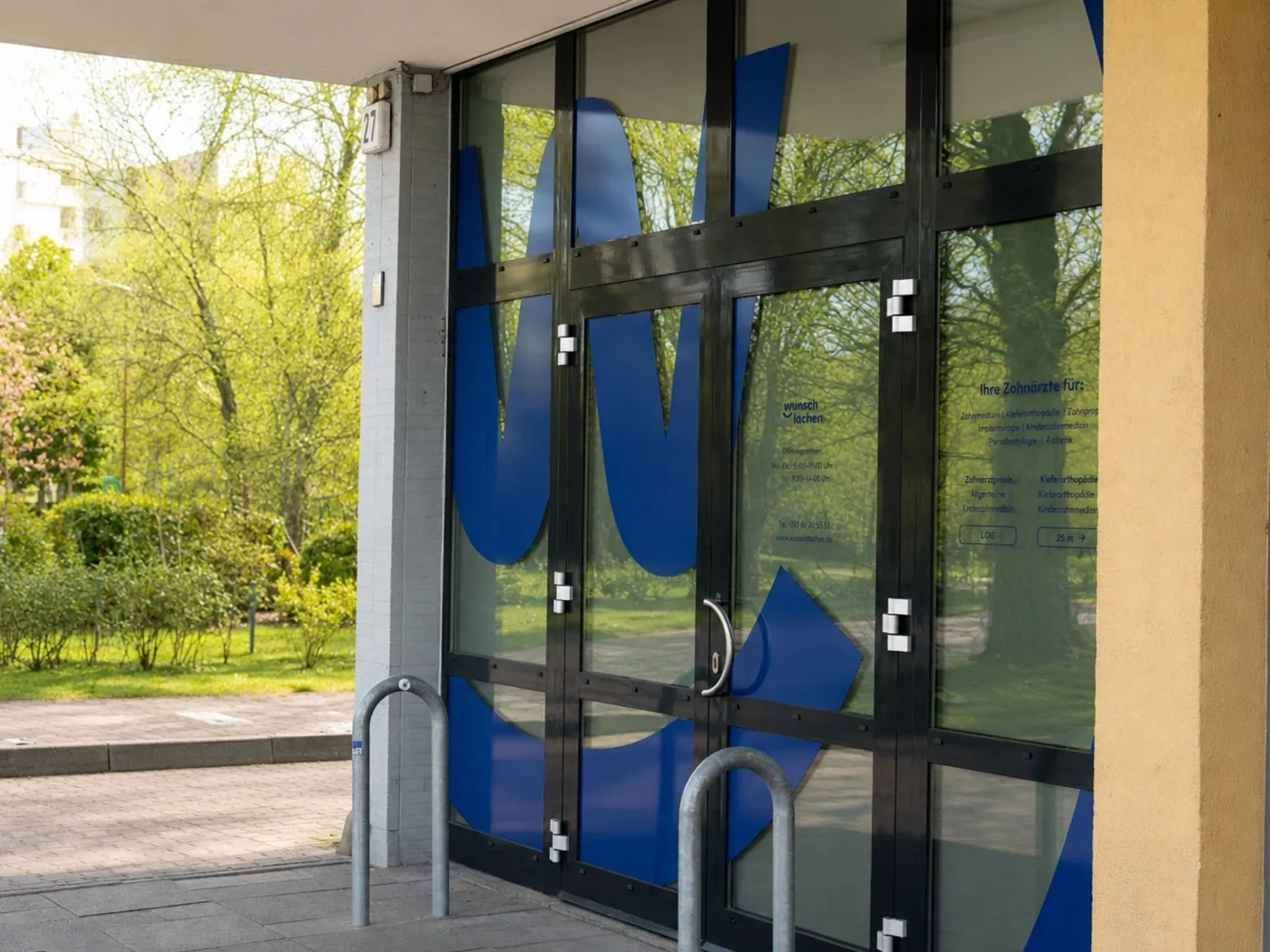
Wunschlachen offers advice and planning for tooth loss or the replacement of an existing restoration at four Berlin locations. During the consultation and examination, we will determine which restorations are suitable for your clinical findings. You will then discuss the next steps and the locations of your further treatment appointments with the practice.
- Reinickendorf Gotthardstraße 27, 13407 Berlin – advice and planning. CBCT is available where clinically indicated.
- Schöneberg Bayerischer Platz 7, 10779 Berlin – advice and planning for tooth loss or the replacement of a restoration.
- Mitte Friedrichstraße 147, 10117 Berlin – advice and planning. Crowns, bridges and dentures are made in our own in-house dental laboratory. CBCT is also available.
- Charlottenburg Savignyplatz 5, 10623 Berlin – advice and planning for crowns, bridges and other restorations. Our own laboratory at this location makes crowns, bridges and dentures.
Dental treatment and dental laboratory work are separate steps. If something feels wrong with your bite after fitting, we can check at Friedrichstraße and Savignyplatz whether an adjustment can be made without sending it away.
As a first step, you can book a dental restoration consultation online. Please feel free to bring any existing reports or X-rays with you. If you have pressure points or your restoration becomes loose, contact your treating practice.
Frequently asked questions
What types of dental restorations are there?
There are fixed dental restorations such as crowns and bridges, removable dental restorations such as partial and full dentures, and combined restorations such as telescopic dentures. Crowns, bridges and dentures can also be supported by implants. A full denture is used for an edentulous jaw. A partial denture replaces missing teeth when some natural teeth remain. Which option is suitable depends on the clinical findings.
What determines whether fixed or removable dental restorations are suitable?
Important factors include the number and position of the missing teeth, the condition of the remaining teeth, gums and jawbone, and the bite. Care, adjustment and your preferences regarding appearance and handling also play a role. After the examination, the suitable options and their respective treatment steps can be compared.
At which Berlin locations can I get advice on dental restorations?
Wunschlachen offers advice and planning in Reinickendorf at Gotthardstraße 27, in Schöneberg at Bayerischer Platz 7, in Mitte at Friedrichstraße 147, and in Charlottenburg at Savignyplatz 5. The Friedrichstraße and Savignyplatz locations also have their own dental laboratories. The practice will discuss the treatment process for your dental restoration with you.
How long does it take to make a dental restoration?
This depends on the restoration and the clinical findings. Preparation, impressions or scans, laboratory fabrication, possible try-ins and fitting all require different numbers of appointments. With implants, the procedure and healing period are additional factors. Following examination and planning, the practice can explain the expected process for your case.
How long do dental restorations last?
This cannot be predicted in general terms. The type and material of the dental restoration, care, the jawbone, remaining teeth or implants, and the forces involved in chewing all play a role. Regular check-ups help to identify changes in fit and function early and make adjustments if necessary.
Is there a temporary solution until the dental restoration is ready?
Yes. A temporary crown can protect the prepared tooth until the final crown is fitted. If teeth are missing, a temporary denture can bridge the gap. Which interim solution is appropriate and how long it is worn depend on the planned treatment.
Sources
- National Association of Statutory Health Insurance Dentists: Dental restorations
Basic information on restorations supported by natural teeth, and on partial and full dentures.
- Freiburg University Medical Centre: Range of prosthodontic treatments
Overview of crowns, bridges, dentures and combined restorations.
- Charité: Implant-supported dental restorations
Fixed and removable restorations supported by implants.
- University Medical Centre Hamburg-Eppendorf: Telescopic denture
Structure, anchorage and treatment steps for telescopic dentures.
- AWMF: S2k guideline on dental digital volume tomography
Guideline on the indication-based use of dental digital volume tomography.
- Dental Association of North Rhine: Prophylaxis and preventive care
Information on caring for teeth and dental restorations.
- German Dental Association: Oral Hygiene Manual
Recommendations for oral hygiene and cleaning removable dental restorations.
- Wunschlachen: Dentist in Berlin-Reinickendorf
Location details, advice on dental restorations and available CBCT technology.
- Wunschlachen: Dentist in Berlin-Schöneberg
Location details as well as advice and planning for dental restorations.
- Wunschlachen: Dentist in Friedrichstraße
Location details, consultations, an in-house dental laboratory and DVT technology.
- Wunschlachen: Dentist in Berlin-Charlottenburg
Location details, advice on dental restorations and an in-house laboratory for crowns, bridges and dentures.