Teeth grinding (bruxism): causes, symptoms and consequences
Teeth grinding is activity of the chewing muscles that does not serve the purpose of chewing; the medical term for it is bruxism. It encompasses two things that are often confused: grinding and clenching during sleep, and tensing or moving the lower jaw while awake. In a survey of 1,209 adults, 16.5 per cent reported sleep bruxism and 5.0 per cent reported awake bruxism. This page explains which causes are supported by evidence and which are no longer considered causes, how to recognise it in yourself, what it does to teeth, muscles and joints, how we identify it at our Berlin practice and what you can do yourself. You can read about how a bruxism splint is constructed, how it is made, what it costs and how long it lasts on our page about bruxism splints.
Über 350 Google-Bewertungen
Awake bruxism and sleep bruxism: two different things
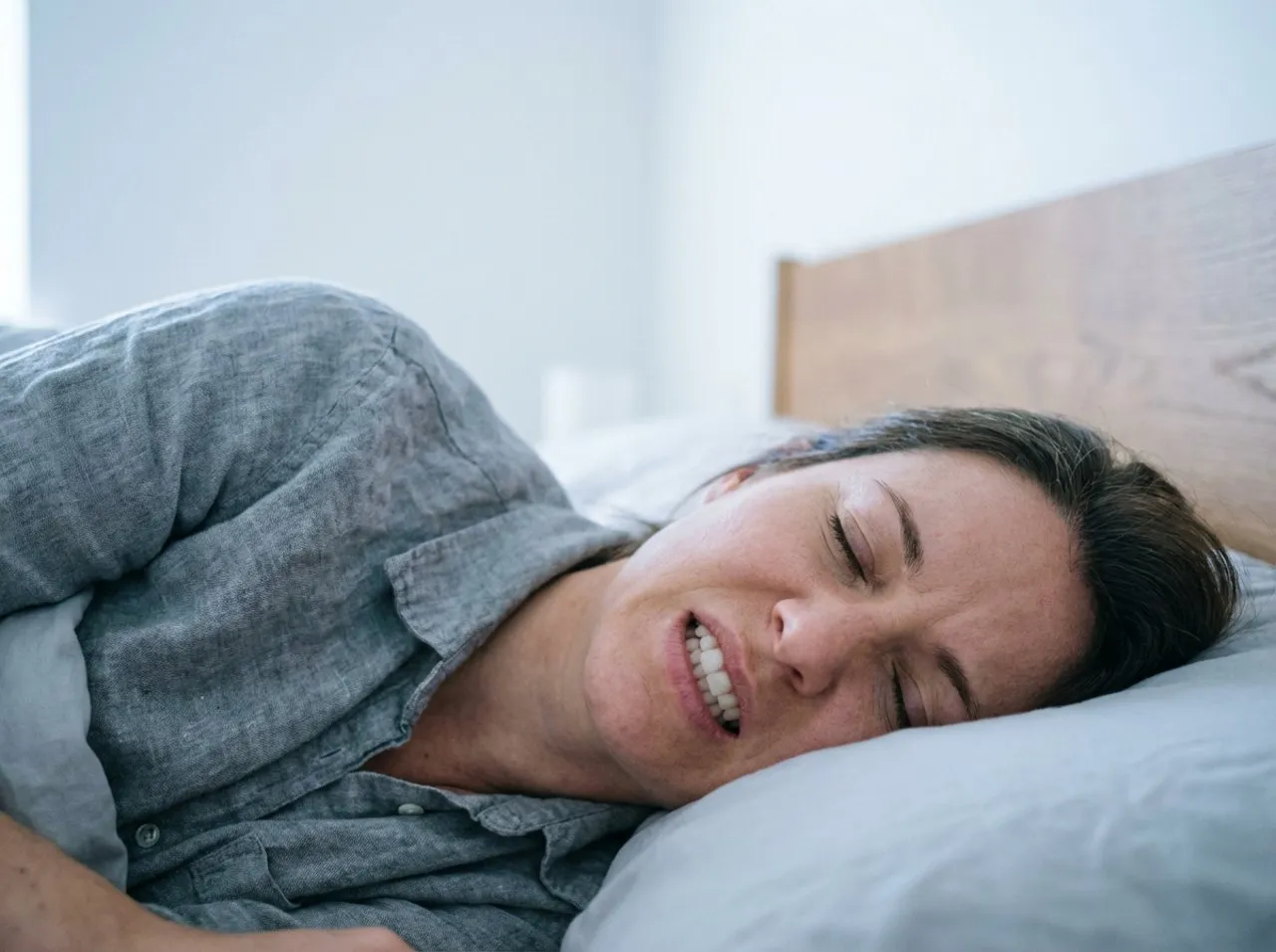
An international consensus group distinguished between two forms in 2018, and the current S3 guideline adopts this distinction. Sleep bruxism is chewing muscle activity during sleep, either rhythmic, with short repeated contractions, or sustained, with prolonged clenching; in around nine out of ten people affected, it is rhythmic or mixed. Awake bruxism is repeated or sustained tooth contact during the day, or tensing of the lower jaw without any tooth contact at all — this form is regularly overlooked because it makes no sound. A second point is important: in otherwise healthy people, bruxism is explicitly no longer considered a disorder. A certain amount may be part of normal sleep architecture, and sometimes the chewing muscle activity is even beneficial — it dilutes acid in reflux and can keep the upper airways open. Bruxism only becomes a problem when consequences occur.
How common is teeth grinding?
Reliable figures are harder to obtain than it might seem, because the result depends on how it was measured: by self-report, dental examination or in a sleep laboratory. The S3 guideline therefore gives ranges — 20 to 39.22 per cent for sleep bruxism in adults and 3 to 68.99 per cent for awake bruxism, with a meta-analysis of 17 studies putting awake bruxism at 15.44 per cent. The fact that the 16.5 per cent mentioned at the outset falls below this range is not a contradiction, but precisely this effect of methodology: it comes from purely self-reported data in the general population, whereas the range also includes surveys involving dental examinations and sleep laboratories. More informative than the average is how prevalence changes over a lifetime: in the Dutch survey, sleep bruxism affected 20.0 per cent of 25- to 34-year-olds and 8.3 per cent of 65- to 74-year-olds. Prevalence is highest in the second to third decade of life and declines thereafter. Whether men or women are more frequently affected is considered unresolved.
How to recognise teeth grinding
Why does teeth grinding so often go unnoticed for years? Because it is silent in 80 per cent of cases. If you think you do not grind your teeth because nobody has complained, you may be mistaken. The following signs are listed in Chapter 4.4 of the S3 guideline. None of them proves bruxism on its own — the guideline explicitly states that questioning and examination are better suited to ruling it out than confirming it. They are good reasons to raise the subject at your next appointment.
Tired or painful chewing muscles in the morning
In a comparative study, people who answered yes to questions about chewing muscle fatigue and temporal headaches were also identified as sleep bruxers in the sleep laboratory with 70 per cent probability.
Restricted mouth opening in the morning
Persistent chewing muscle activity can restrict jaw opening. The time of day when symptoms occur helps distinguish between awake and sleep bruxism.
Wear facets and tooth wear
Excessive tooth wear, known clinically as attrition, appears as eccentric wear facets — areas of abrasion that do not correspond to normal chewing movements. Validated wear indices are available for monitoring progression.
Cracks in the enamel, lost fillings
Fine cracks in the hard tooth tissue, known technically as infractions, and the repeated early loss of fillings, crowns or facing materials are serious warning signs.
Indentations on the tongue and cheek
Tooth marks on the edge of the tongue, indentations on the inside of the cheek and the whitish keratinised line level with the row of teeth, known as the linea alba. Patients almost never notice these themselves.
Enlarged chewing muscle, bony ridges
According to the guideline, hypertrophy of the masseter muscle, which becomes prominent when you bite down firmly, and exostoses on the palate and lower jaw are frequently associated with bruxism.
Reports from a bed partner or parents
A reason to investigate, nothing more: in a unanimously adopted statement, the guideline states that asking about grinding sounds does not reliably identify bruxism.
Causes: what triggers bruxism — and what is no longer considered a cause
The most important point first, because it contradicts a widespread assumption: your bite is not the cause. Premature contacts, interferences when the teeth slide against each other or a deep bite were long considered triggers. The S3 guideline now states separately that bruxism is not triggered or maintained by particular occlusal parameters; peripheral factors such as the way the teeth fit together are no longer considered causes. Two observations led to this rethink: grinding down the teeth could not stop bruxism, and disturbances in the way the teeth fit together often proved to be a consequence of grinding rather than its cause. Bruxism is controlled centrally. The guideline cites changes in the metabolism of certain neurotransmitters, genetic factors, psychosocial stress and the daily rhythm; in one systematic review, 9 of the 10 studies included supported a hereditary component. Awake bruxism is more closely linked to psychosocial stress, while sleep bruxism has a stronger central nervous component. Then there is secondary bruxism — as an accompanying symptom of other illnesses, a side effect of medicines or a result of psychotropic substances.
The proven risk factors
The following associations are supported by figures in the S3 guideline. An increased risk does not mean that a factor is the trigger in your case — it means that it occurred more frequently together with bruxism in studies. This is nevertheless useful in practice, because some of these factors can be changed.
Stress, anxiety and depressive symptoms
The association with emotional stress has been demonstrated through cortisol in saliva; anxiety disorders and depressive symptoms are also factors in adults. The guideline leaves open whether these are causes or accompanying factors.
Snoring and sleep apnoea
Snoring is associated with an odds ratio of 12.6 for sleep bruxism (confidence interval 11 to 14.4), and existing sleep apnoea with an odds ratio of 3.96. It is thought that the chewing muscle activity keeps the upper airways open.
Gastro-oesophageal reflux
In reflux, the prevalence of sleep bruxism is reported as 74 per cent (odds ratio 6.58). Acid in the oesophagus triggers arousal responses; the chewing muscle activity stimulates saliva flow and buffers the acid.
Smoking, alcohol, caffeine
Smoking carries a 1.6- to 2.85-fold risk, depending on dose; heavy alcohol consumption a 1.9-fold risk; and more than eight cups of coffee a day a 1.4-fold risk. In children, even passive smoking is considered a risk factor.
Medicines
Dopamine-containing medicines, tricyclic antidepressants, serotonin reuptake inhibitors, ADHD medicines, narcotics and antihistamines. The evidence is based predominantly on individual cases. Do not stop taking anything on your own initiative; speak to the doctor who prescribed it.
Genetic predisposition
Twin studies show a greater effect of genetic than phenotypic factors. The discussion concerns common gene variants — for example, in serotonin receptors and genes involved in processing stress — rather than a single gene defect. This is entirely consistent with grinding running in families.
Screen time in children
In children aged eight to ten, daily smartphone and tablet use was associated with a 1.82-fold risk of awake bruxism, and more than two hours of screen time a day with a 1.97-fold risk.
Teeth grinding and mental health
‘Stress’ is the standard answer, and it is not wrong, but it is too broad. The guideline lists shift work, self-perceived stress, anxiety and unfavourable ways of coping with stress, supporting this with measurements of cortisol in saliva; anxiety disorders and depressive symptoms are added in adults, and stressful family situations and an unsettled sleep environment in children. At the same time, the guideline is cautious: because of the quality of the studies, it is not possible to decide whether psychological stress is a cause or an accompanying symptom. For treatment, this means that relaxation techniques have a role, above all progressive muscle relaxation according to Jacobson. Where an anxiety disorder, a depressive episode or a persistent sleep disorder is suspected, treatment should be provided by a GP, psychotherapist or sleep medicine specialist; during this time, dentistry protects the teeth and treats symptoms, but not the underlying cause.
When a sleep study is advisable
If you snore loudly, if someone has told you that you stop breathing, or if you are unusually sleepy during the day, the question is no longer solely a dental one. The procedure is regulated: the Joint Federal Committee describes four-stage diagnostics. History-taking and a physical examination are followed by stage three, outpatient polygraphy over a sleep phase of at least six hours, during which airflow, snoring sounds, oxygen saturation, heart rate, body position and the breathing movements of the chest and abdomen are recorded simultaneously. Polysomnography in a sleep laboratory over two consecutive nights is only added as stage four if it remains unclear afterwards whether positive airway pressure therapy is needed. Only practitioners authorised by their Association of Statutory Health Insurance Physicians may carry this out — for our patients in Berlin, KV Berlin. Although polysomnography is the reference standard for bruxism itself, the effort involved means it is not a routine procedure. Whether a splint, a breathing mask or both are appropriate is decided in consultation with sleep medicine specialists.
What teeth grinding does
The forces can be quantified. In a series of measurements involving ten subjects, each of whom wore a measuring splint for three nights, the mean biting force during the 499 episodes analysed was 22.5 kiloponds, with the highest individual amplitude at 42.3 kiloponds. On average, this corresponded to 53.1 per cent of maximum voluntary biting force during the day, and in individual subjects up to 111.6 per cent — at times, people were biting down harder at night than they could voluntarily during the day. An episode lasted an average of 7.1 seconds; with severe sleep bruxism involving more than four episodes per hour, this amounts to roughly 3.8 minutes of load per night over eight hours. This force acts tooth on tooth. The guideline lists the consequences as non-carious loss of hard tooth tissue, loss of restorative material, cracks in the enamel and dentine, periodontal problems, and muscle, joint and head pain. Bruxism is considered a separate risk for dental restorations: a meta-analysis of 27 studies involving 2,105 implants in probable bruxers and 10,264 in non-bruxers found approximately double the risk of loss. The amount of tooth enamel lost per year is deliberately not stated here — there is no reliable source for it.
Headache, neck and ear: the link with CMD
Many people affected seek help not because of their teeth, but because of their head. In a unanimous statement, the guideline states that bruxism can be associated with pain in the chewing muscles, painful functional disorders of the temporomandibular joints and headaches; this interaction is called craniomandibular dysfunction, or CMD for short. The figures are more nuanced than in most advice articles: one systematic review found a clear association between awake bruxism and tension-type headache, with an odds ratio of 5.23, summarised by the authors as five to seventeen times higher odds. The same review found no such association for sleep bruxism, and the association with migraine is controversial. Conversely, when CMD is present, possible signs of bruxism should be looked for. For you, this means that temporal headaches in the morning, joint clicking, pressure in the ear or a tense neck warrant examination of the chewing muscles. Our pages on CMD and CMD symptoms explain what may be behind these symptoms.
Can teeth grinding change the shape of your face?
Yes, this can happen. The large chewing muscle, the masseter, lies on the outside of the angle of the lower jaw and, like any muscle, grows under sustained strain; the guideline lists its hypertrophy among the clinical signs of bruxism. This becomes visible as a broader, more angular lower half of the face. Two qualifications are important: a strong chewing muscle is not an illness, but a clinical finding — and it does not prove bruxism.
Teeth grinding in babies, children and adolescents
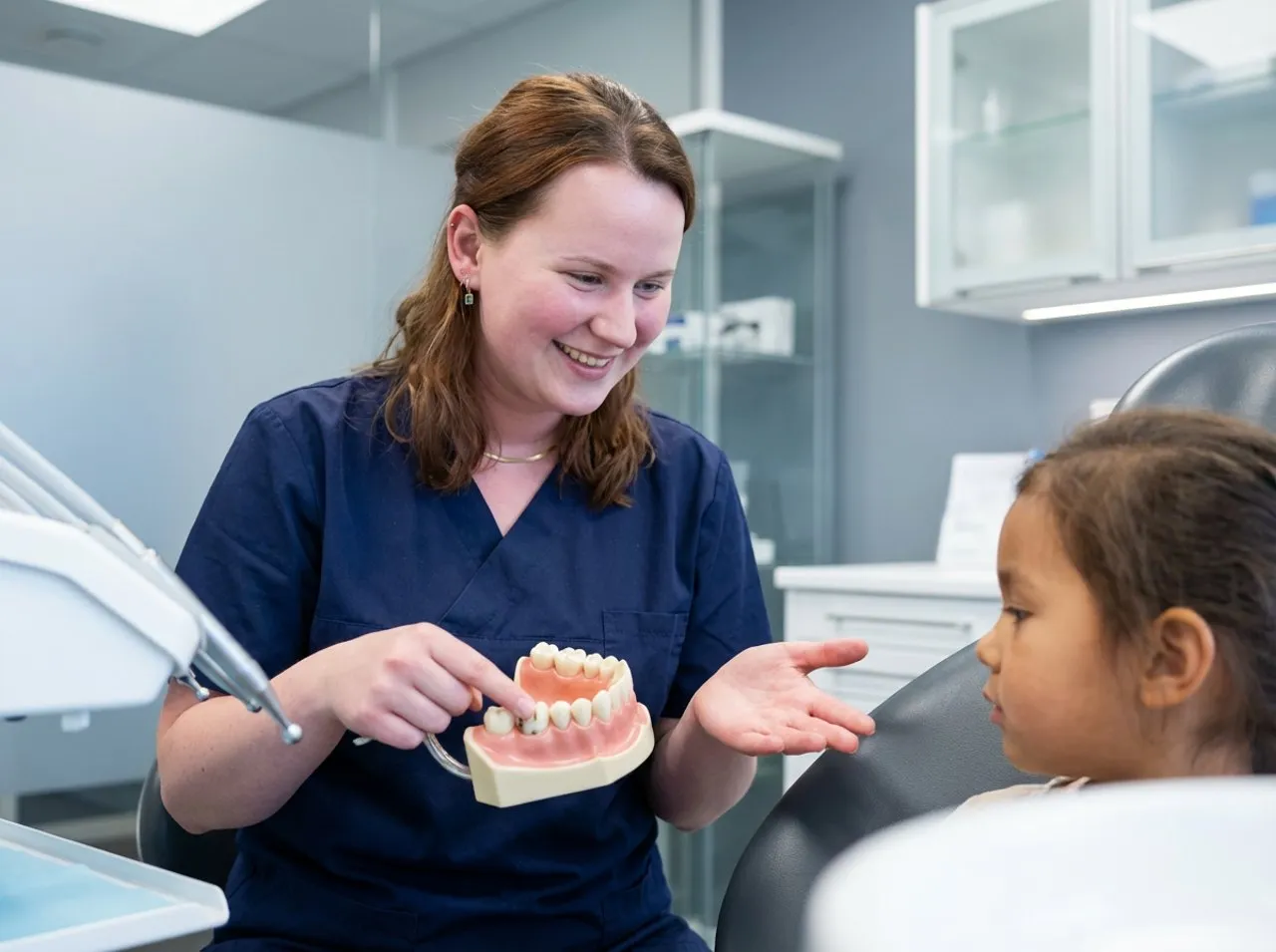
Grinding starts earlier than many parents assume: the guideline states that bruxism occurs when the first teeth erupt. Reported prevalence in children ranges from 2.5 to 56.5 per cent during sleep and from 14.9 to 51.6 per cent during the day; the reason for this range is stated in the guideline itself, as the figures are mostly based on questioning parents. It lists stressful family situations, light and noise in the bedroom, nightmares and interrupted sleep, passive smoking, ADHD medicines, antihistamines and digital media as risk factors. Breathing is particularly important: difficulty breathing through the nose due to allergies, chronic rhinitis, a deviated nasal septum, enlarged nasal turbinates or enlarged tonsils or adenoids — commonly known as ‘polyps’ — should be investigated; the guideline explicitly recommends involving paediatrics, ear, nose and throat medicine and orthodontics. It is cautious about splints: in children, one may be considered for a short period of up to three months, and once all permanent teeth except the wisdom teeth have fully erupted, one may be used as in adults; during the change of teeth, it quickly stops fitting and could interfere with growth processes. The guideline makes no recommendation at all regarding medicines in children. One final point is important: in one of the few long-term studies, childhood bruxism was a clear risk factor for also grinding as an adult.
How we determine whether you grind your teeth
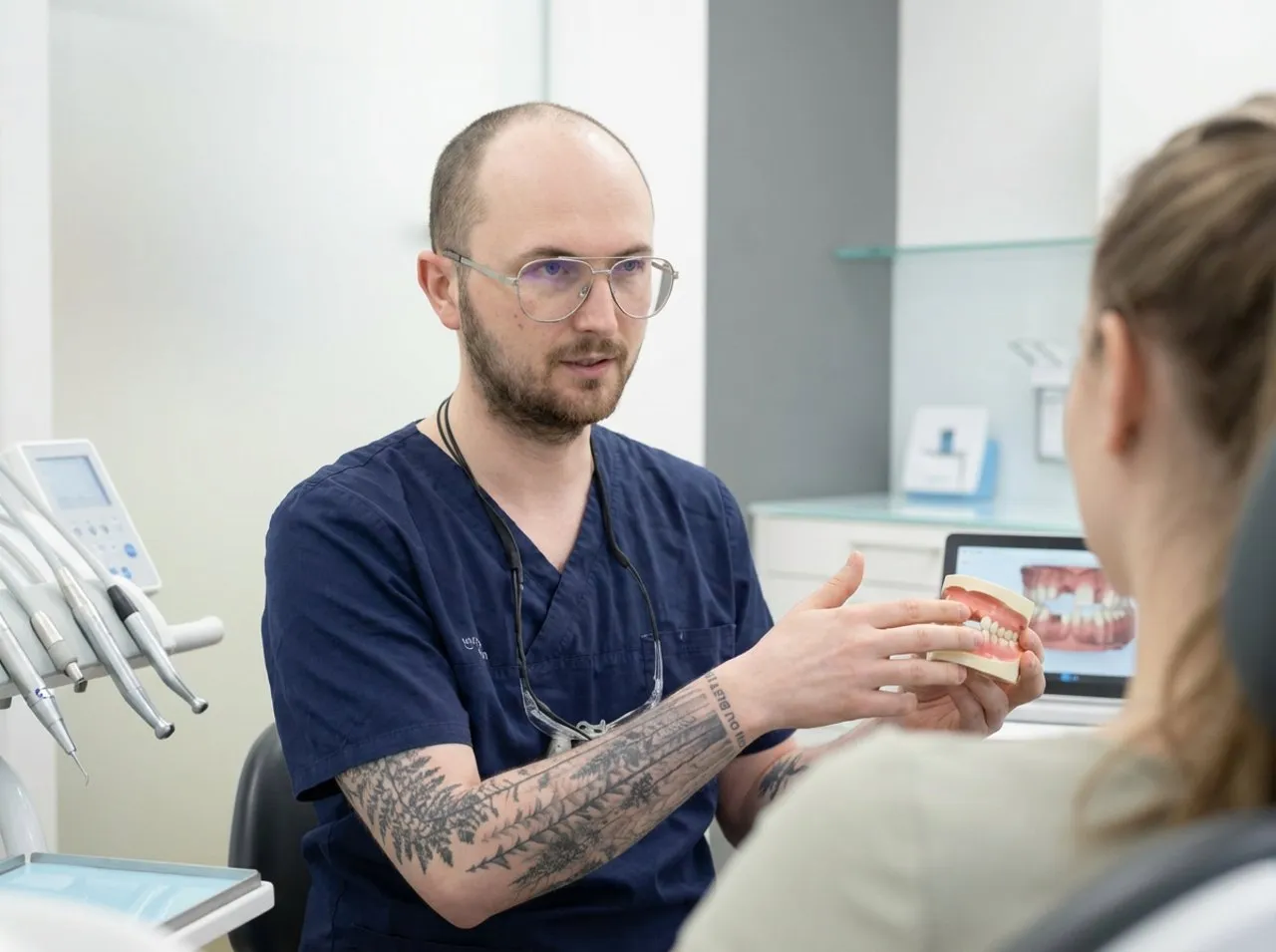
The guideline distinguishes between three levels of certainty, which explains why we rarely give a simple yes or no. Possible bruxism means there are indications from a consultation or questionnaire. Probable bruxism means clinical signs are also present. Definite bruxism requires instrumental measurement — polysomnography, electromyography or app-based self-observation; criteria for this in awake bruxism are still lacking. We therefore work at the level of probable bruxism, which is exactly what the guideline recommends, while explicitly advising against relying on history-taking alone. Specifically, we examine areas of abrasion, check the chewing muscles for tenderness and thickening, look for cracks in the enamel and indentations on the tongue and cheek, check jaw opening and joint sounds, and ask about medicines, sleep, snoring, heartburn and stress. Clinical functional analysis under GOZ item 8000 costs €64.68 at the 2.3-fold fee rate, with the fee range extending from €28.12 to €98.42. Statutory health insurance does not pay for it: under Section 28(2), sentence 8 of the Fifth Book of the German Social Code, functional analysis and functional therapy measures are not part of dental treatment and may not be subsidised either. We will tell you in text form in advance what costs will apply in your case.
Diagnosis codes and cost coverage
Anyone applying for cover quickly encounters the question of the diagnostic code. The answer is clear but unsatisfactory: bruxism has no code of its own in the German ICD-10-GM. Teeth grinding is listed under somatoform disorders as F45.8, with the explicit inclusion there of ‘psychogenic: teeth grinding’. The code G47.63 frequently cited online comes from the American ICD-10-CM and does not exist in the German version — the G47 group ends at G47.9. This is more than a formality, because an incorrect code can cause an application to fail. In the draft version of ICD-11, sleep-related bruxism is listed separately under 7A83. For statutory health insurance, there is a second hurdle: a bite appliance is indeed included in the scale of fees, under K1 with 106 points and under K2 with 45 points for the basic version in cases of acute pain. Under the scale of fees, however, these services can only be billed if the health insurer has issued a statement agreeing to cover the costs beforehand. As a rule, therefore, the application precedes treatment. The same note expressly allows the overall contracting parties at state level to make different agreements, however; it is best to ask your health insurer directly whether such an agreement exists for Berlin.
What you can do yourself — even without a splint
In 2026, the guideline added two new recommendations on self-help: relaxation exercises, breathing exercises or progressive muscle relaxation according to Jacobson should be recommended for treating both forms, and patients should be advised about risk factors. It states equally clearly that the quality of the evidence is very low and that, even with these measures, a reduction in bruxism itself appears only to be possible. The main evidence is that symptoms can be improved — muscle pain, headaches, facial pain and sleep quality.
Self-observation with reminders
The most effective individual measure for awake bruxism: coloured marker dots in places you look at frequently, and app or email reminders. As soon as you notice it, bring your teeth out of contact. The combination of electronic and analogue reminders was more effective than either alone.
Progressive muscle relaxation according to Jacobson
The best-studied relaxation technique in this field and the subject of a dedicated guideline recommendation. Courses are offered by adult education centres, physiotherapy practices and health insurance funds; ask your fund whether and to what extent it subsidises a course.
Breathing exercises
In a polysomnographically controlled study, this was shown to reduce bruxism activity. The guideline cautions that the finding carries limited weight because there were only 13 participants, but has nevertheless included the measure.
Self-massage of the chewing muscles
In a study with 100 participants, massage and splint therapy produced marked improvements in function and pain, with the combination producing the greatest improvement; massage did not affect the measured muscle activity. We show you how to relax the muscles on our page about relaxing the jaw.
Heat, cold and physical therapies
The guideline lists hot roll treatment, fango packs, ice and ultrasound for pain relief and muscle relaxation. They are included in the catalogue of therapeutic remedies as supplementary remedies.
Biofeedback
According to the guideline, devices that emit an audible or vibration signal when chewing muscle activity occurs can be used. The quality of evidence is very low, and an audible signal at night disturbs sleep.
What the guideline does not support
Magnesium does not appear in the S3 guideline as a treatment for bruxism. There are one or two small studies each on music, lavender fragrance and infrared light, whose quality the guideline rates as very low. We mention these so that you can assess home remedies you may come across.
Physiotherapy: your dentist can prescribe it
This is one of the most practically useful and least well-known points. Since 2017, the Joint Federal Committee has had a dedicated directive on prescribing remedies in statutory dental care, in force today since 22 January 2022. It allows dentists to prescribe physiotherapy for craniomandibular disorders — primarily physiotherapy and manual therapy, supplemented by cold, heat and electrotherapy. For short- to medium-term needs, indication group CD1, up to six treatments per prescription and up to eighteen units are provided for; for longer-term needs, group CD2, up to ten per prescription and up to thirty units, in each case one to three times a week. Both times, the catalogue explicitly states that the aim is to learn a self-exercise programme. The S3 guideline raised the recommendation grade in 2026: a prescription should be offered for CMD symptoms that could also be caused by bruxism.
Botulinum toxin for bruxism: effect, duration, limitations, costs
After splints, botulinum toxin is the most frequently studied treatment, and the S3 guideline devoted a chapter of its own to it in 2026. It is injected into the large chewing muscle, the masseter, and additionally into the temporalis muscle if necessary. The effect lasts three to six months. In a controlled study, neither the frequency nor the duration of bruxism activity changed, but its amplitude did — the intensity of the contractions decreased significantly, alongside the symptoms. The recommendation is that the injection could be considered in adults; this is the weakest of the three grades. The guideline rates the quality of evidence as low, and the vote was much less unanimous than usual, with 23 votes in favour, 2 against and 5 abstentions. Two of the ten reviews evaluated fundamentally question the benefit; a meta-analysis of 14 randomised studies involving 395 patients found no significant advantage over placebo in pain reduction, whether after one, three or six months. Two further reviews describe the injection as a second-line treatment, meaning only after information, self-help and splint therapy. Possible side effects listed by the guideline include dry mouth, speech and swallowing problems, muscle weakness, facial asymmetries, an altered smile, headaches and jaw pain. Two legal points are also relevant. No preparation authorised in Germany is authorised for the treatment of bruxism; the guideline explicitly points out the off-label use and the professional and liability law requirements. And statutory health insurance generally does not cover the costs: since 2002, for a medicine to be used outside its authorisation, the Federal Social Court has required a serious illness, the absence of another available therapy and a data-supported prospect of success, all at the same time — with bruxism, the application usually fails on the second requirement alone.
What does not help: grinding down teeth and tablets
This section is included because many pages — including this one in its previous version — mention measures as treatments that the current guideline advises against. This is clearest for grinding down teeth and any other permanent alteration of the chewing surfaces: definitive occlusal measures should not be used for the causal treatment of bruxism — the strongest negative recommendation an S3 guideline can issue, adopted by 28 votes to 0. The reason is the same as for the causes: if the bite does not trigger bruxism, an altered bite cannot stop it either. The guideline adds that extensive rehabilitation involving ground-down teeth costs more hard tooth tissue than the bruxism itself would have caused. Different considerations apply if existing damage needs to be repaired — then it is repair of the consequences, not treatment of the cause. The guideline is similarly clear on medicines: systemically acting medicines cannot be recommended for treating bruxism in either adults or children; almost all the substances investigated were tested in very small, very short studies and outside their authorisation.
Does teeth grinding go away?
This is the question asked most often and answered least often in advice articles. The honest answer is in the first substantive chapter of the S3 guideline: primary bruxism, meaning bruxism without another identifiable cause, is not currently considered curable at its root cause. This is less alarming than it sounds. Firstly, under the current definition, bruxism is not a disorder in otherwise healthy people; it only becomes a problem when consequences occur — and these can be limited with a protective splint, physiotherapy, self-observation and relaxation techniques. Secondly, prevalence declines with age, from 20 and 21 per cent among 25- to 44-year-olds to 8.3 per cent among 65- to 74-year-olds. Thirdly, secondary bruxism is different: if it is a consequence of sleep apnoea, reflux or a medicine, treating that cause can also reduce grinding.
Teeth grinding at night
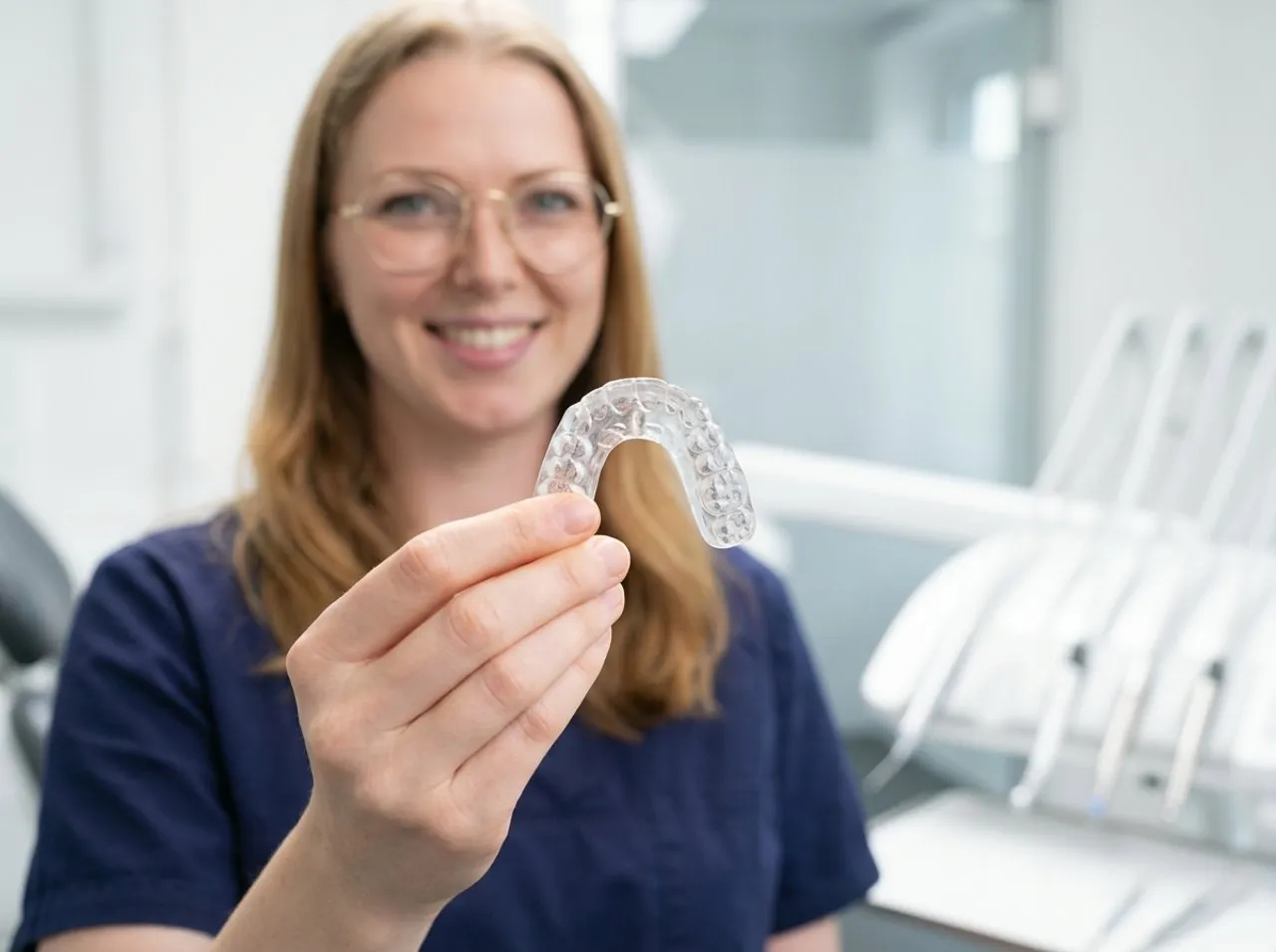
Night-time grinding works differently from clenching during the day: it is rhythmic or mixed in ninety per cent of cases, silent in eighty per cent, and cannot be stopped voluntarily because you are asleep. What helps, the role played by sleeping position and sleep hygiene, and how a night-time splint works are all covered on our page about teeth grinding at night.
When you should make an appointment
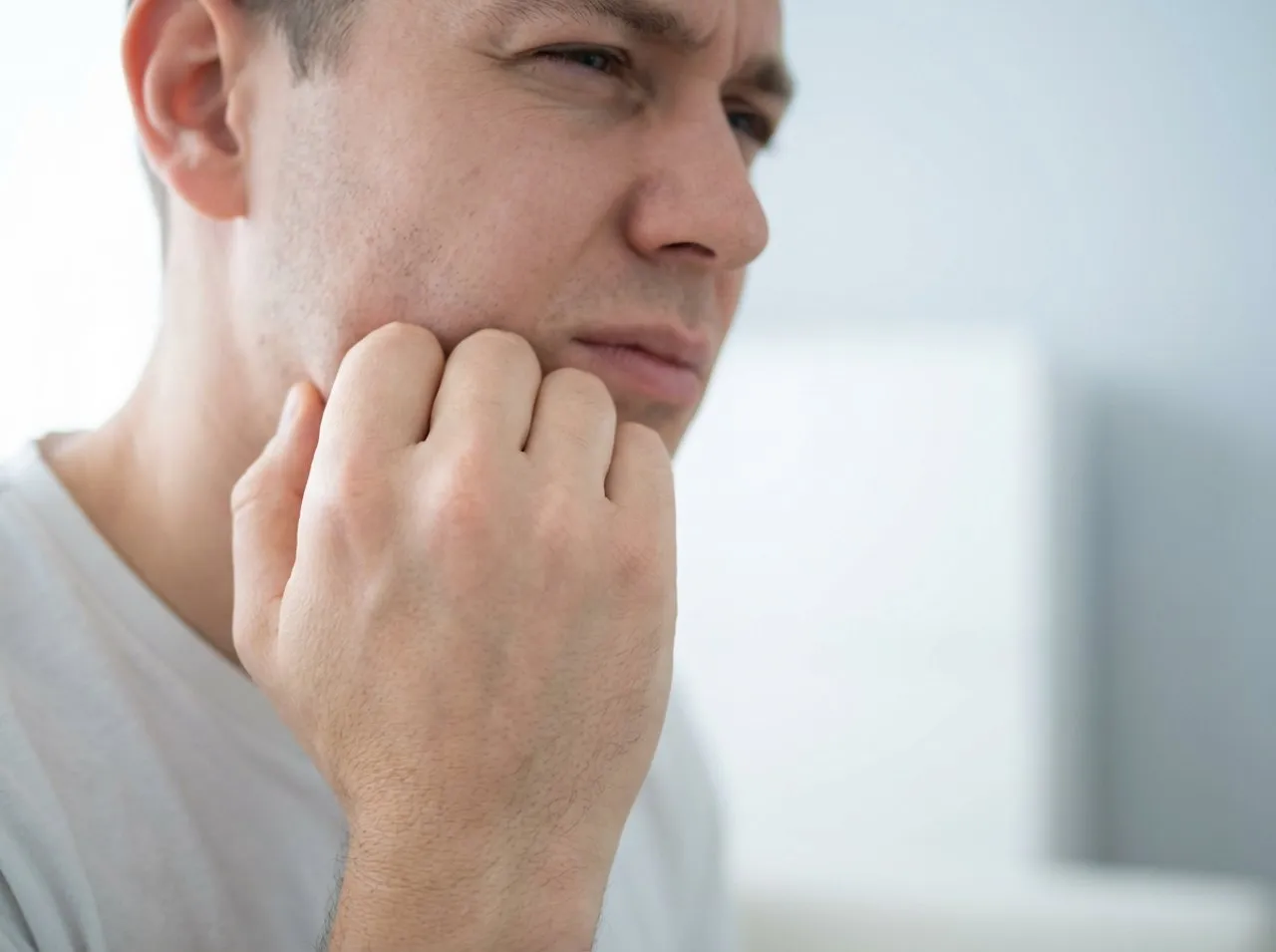
A single morning with a tense jaw is no reason to make an appointment. Conversely, there are two situations that should not wait: when the mouth suddenly can no longer be opened wide or closed — an acutely locked jaw or trismus —, and when chewing movements newly occur for no apparent reason and cannot be suppressed voluntarily, because this may be due to a side effect of medication or a neurological cause. An unhurried assessment is advisable if any of the following persists for weeks or worsens: tired or painful chewing muscles in the morning, temple headaches on waking, restricted mouth opening, new clicking or grating sounds in the temporomandibular joint, ear pressure without any ear findings, teeth becoming noticeably shorter or more sensitive, or fillings or crowns that repeatedly fail prematurely. You should bring the appointment forward if extensive dental treatment is planned — the risk of implant loss is approximately twice as high with probable bruxism and should be factored into the planning — and if loud snoring, observed pauses in breathing or marked daytime sleepiness are also present, because a sleep medicine assessment then takes priority. For children, it is usually sufficient to raise the issue at their scheduled check-up — unless they have symptoms, visible wear on their milk teeth or persistently impaired nasal breathing.
Frequently asked questions about teeth grinding
Often you do not — bruxism is silent in 80 per cent of cases. More reliable indications are morning fatigue or pain in the chewing muscles, temporal headaches on waking and areas of abrasion on the teeth that are noticed at the practice.
In a survey of 1,209 adults, 16.5 per cent reported sleep bruxism and 5.0 per cent reported awake bruxism. Across all survey methods, the S3 guideline gives 20 to 39.22 per cent for sleep bruxism; a meta-analysis of 17 studies puts awake bruxism at 15.44 per cent.
No. The S3 guideline states that bruxism is not triggered or maintained by particular occlusal parameters. It therefore also advises against trying to treat it by grinding down teeth or making other permanent changes to the chewing surfaces.
The S3 guideline says that an injection of botulinum toxin into the chewing muscles could be considered in adults — the weakest recommendation grade, with low-quality evidence. The effect lasts three to six months. A meta-analysis of 14 randomised studies found no significant advantage over placebo in pain reduction; two reviews describe the injection as a second-line treatment.
Generally not. No preparation authorised in Germany is authorised for this indication, so this is off-label use. For cost coverage, Federal Social Court case law requires a serious illness, the absence of another therapy and a data-supported prospect of success, all at the same time.
In Germany, F45.8, ‘Other somatoform disorders’, with the inclusion ‘psychogenic: teeth grinding’. There is no separate bruxism code in ICD-10-GM. The frequently cited code G47.63 comes from the American ICD-10-CM and does not exist in the German version. In the draft version of ICD-11, sleep-related bruxism is listed under 7A83.
The guideline recommends self-observation with reminders, relaxation and breathing exercises, progressive muscle relaxation according to Jacobson and advice on risk factors. If you have symptoms, your dentist can prescribe physiotherapy — up to six treatments per prescription in group CD1 and up to ten in group CD2.
Magnesium does not appear in S3 guideline 083-027 as a treatment for bruxism. There is no recommendation for or against it — the evidence is lacking.
This can happen. The chewing muscle thickens under sustained strain, making the lower half of the face look more angular; the guideline lists hypertrophy of the chewing muscles among the clinical signs. The reverse is not true: a strong chewing muscle does not prove bruxism.
Often, yes. Bruxism occurs when the first teeth erupt, and reported prevalence in children ranges from 2.5 to 56.5 per cent during sleep. Symptoms, visible wear on the milk teeth and persistent difficulty breathing through the nose should be investigated. According to the guideline, splints are only an option for a short period of up to three months and, once the change of teeth is complete, as in adults.
Primary bruxism is not currently considered curable at its root cause. However, prevalence declines with age, and the consequences can be effectively limited. If grinding is a consequence of sleep apnoea, reflux or a medicine, treating that cause can also reduce grinding.