When does a dental implant require bone augmentation?
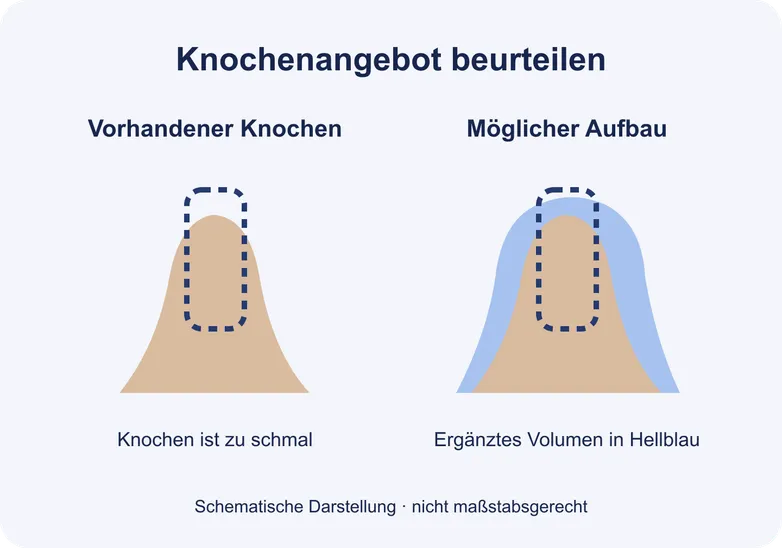
Bone augmentation may be an option if there is not enough bone at the planned position to anchor the implant securely. The findings will determine whether another position or type of restoration would be suitable and whether augmentation and implant placement can be carried out together or in stages.
In this article
What does the examination show?
The height and width of the jawbone at the planned site are important for the decision. The examination also takes into account the position of adjacent teeth and delicate structures. In the posterior upper jaw, the distance to the maxillary sinus may be relevant. The planned position of the future crown or bridge helps with planning the implant in the appropriate position.
Augmentation and implant at the same appointment?
If the implant can be placed securely in the existing bone, simultaneous bone grafting may be possible in suitable cases. For larger defects, it may be advisable to carry out bone grafting first and allow it to heal before implantation. During the planning consultation, ask about the sequence of treatment, temporary restoration and the follow-up appointment.
What should I ask before bone augmentation?
Ask to be shown exactly where bone is missing, what the augmentation is intended to achieve and what alternatives are available for your missing tooth. Ask which material is planned and why, when the next check-up will take place and how the temporary restoration can be worn until then. If you are taking medicines or have previously had treatment on your jaw, mention this during the planning stage.
How do the procedures differ?
Bone grafting can have different objectives. For a narrow section of the jaw, the main aim is to increase width. In the posterior upper jaw, a sinus lift may be an option if bone height is low. Different materials or techniques are used depending on the findings. Ask your dentist to explain the difference using your scans and to explain how the success of the bone graft will be checked before implantation.
You should also discuss whether an existing temporary restoration needs to be adjusted after the procedure and what care instructions apply. The recommendations depend on the procedure and your personal treatment plan.