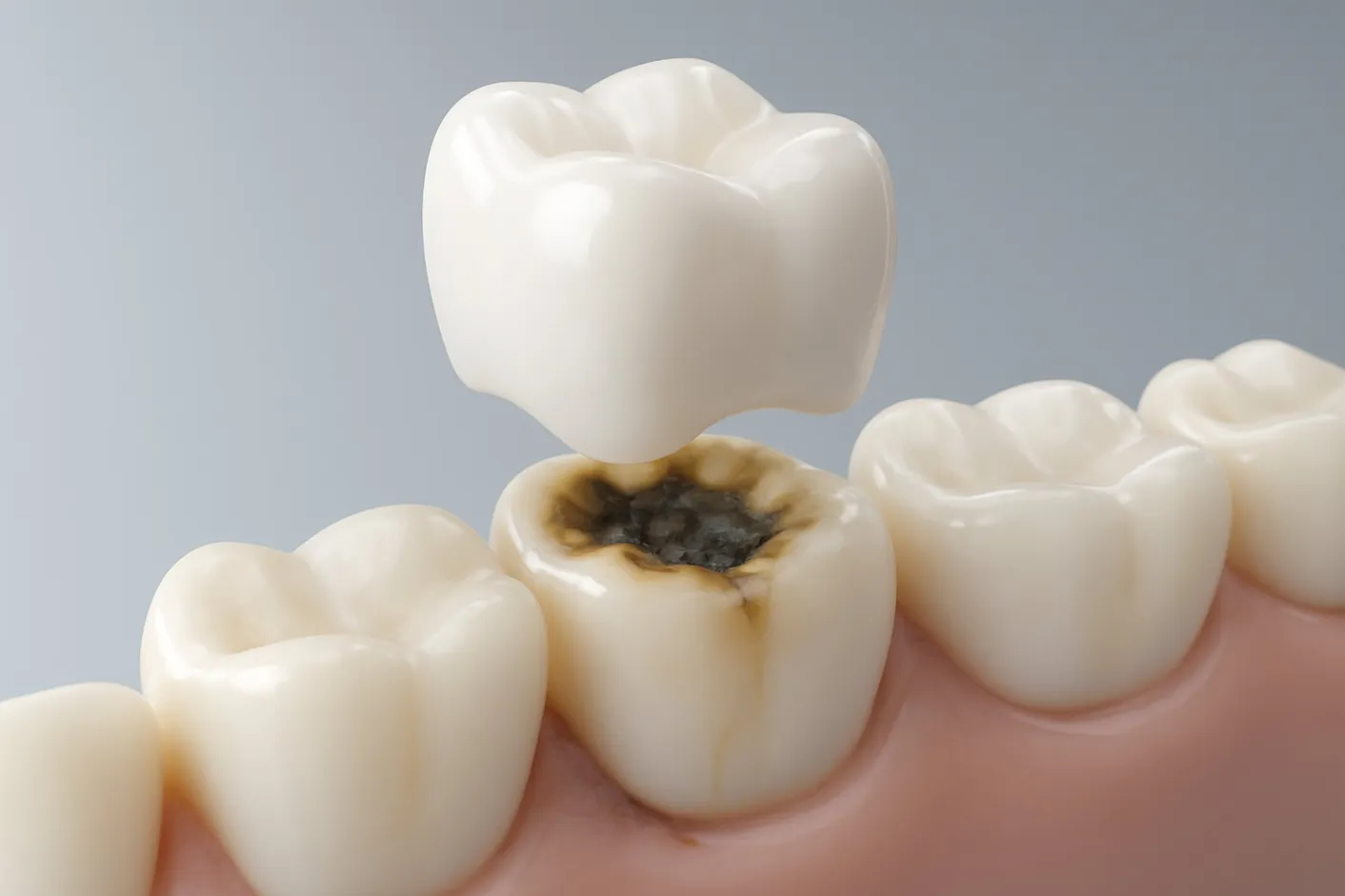
Tooth decay under a dental crown: causes and treatment
Tooth decay can also develop when a tooth has already been crowned. ‘Tooth decay under a crown’ often remains undetected for a long time because the crown conceals the damaged area. If left untreated, it can lead to inflammation, toothache and loss of the tooth. At our practices in Berlin, we explain...
Über 350 Google-Bewertungen
Tooth decay under a crown?
Tooth decay can also develop beneath a dental crown and often goes unnoticed there for a long time – sometimes with no pain at all. Typical signs include pain on pressure, sensitivity when biting, sensitivity to temperature, bad breath or discolouration at the crown margin. To diagnose it, the practice combines X-rays with clinical tests; if left untreated, inflammation, root canal treatment or tooth loss may result.
- Warning signs
- Pain on pressure, sensitivity when biting, reaction to heat or cold, bad breath, discolouration at the crown margin
- Typical causes
- Leaking crown margins through which bacteria can get beneath the crown
- When to see a dentist
- Promptly if you have toothache under a crown or bridge; decay under the crown can also be painless – regular check-ups are important
An X-ray shows many, but not all, defects; a reliable diagnosis requires a dental examination.

How does tooth decay develop under a crown?
Under a crown, saliva meets the crown margin. Tiny gaps at the junction between the tooth and crown can allow bacteria to penetrate deeper. Possible reasons: • Leaking or aged cement joints • Secondary caries in old fillings in the tooth stump • Inadequate oral hygiene or difficult cleaning • Diet-related risks (frequent snacks/soft drinks) • Strain caused by teeth grinding or faulty contacts Even a crowned tooth is not automatically protected. The following symptoms may indicate irritation of the dental nerve or marginal leakage:
• crowned tooth hurts when chewing • crowned tooth reacts to heat

Typical signs
Tooth decay under a crown does not always cause pain. Often, those affected only come forward when the dental crown causes pain in response to hot and cold, a new crown causes pain when chewing, or a slight pulling sensation can be felt under the dental bridge. If the nerve is irreversibly irritated, the tooth under the crown can die. A feeling of pressure, bad breath or dark discolouration at the crown margin are also warning signs. Tooth inflammation under the crown can also radiate diffusely.
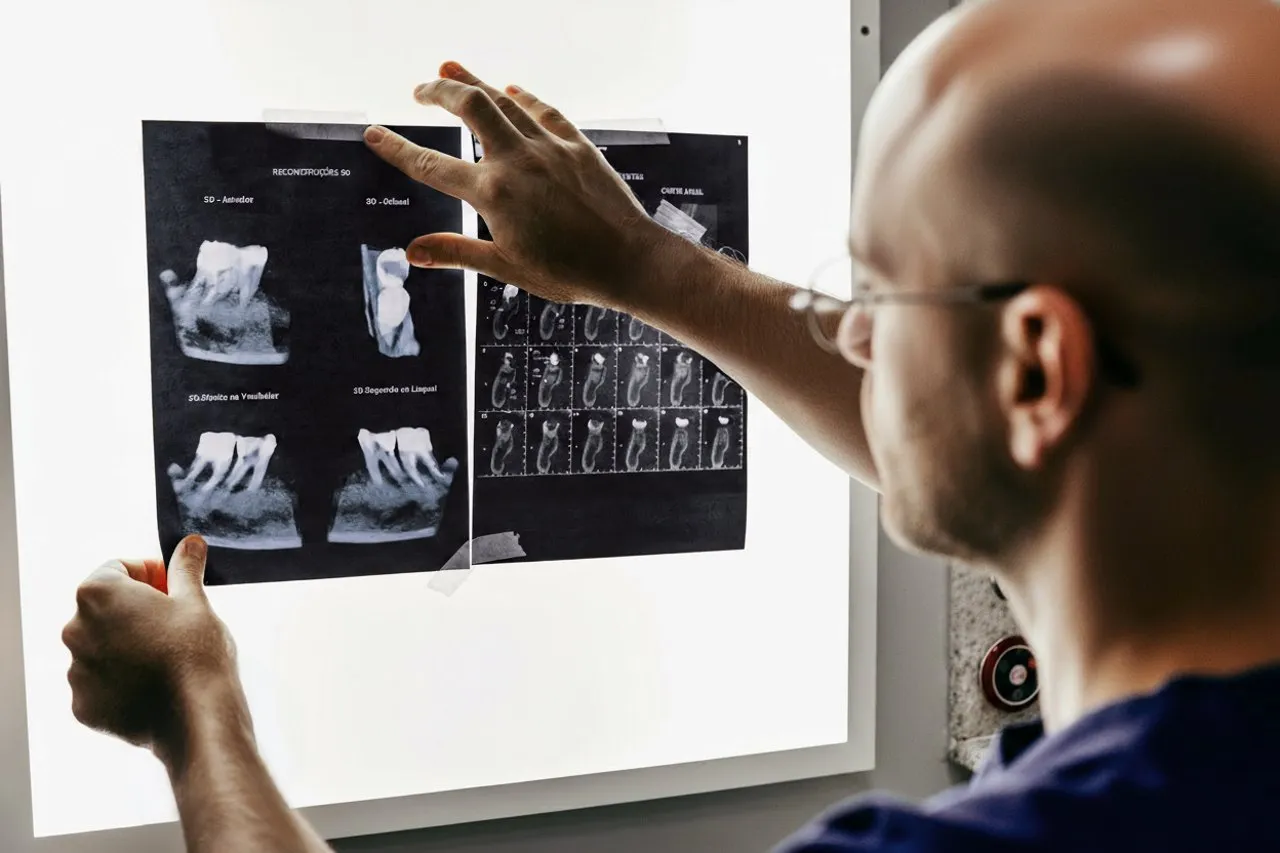
Diagnosis: X-ray to detect tooth decay under a crown
Because visibility is limited, we use targeted diagnostics. A bitewing X-ray or targeted individual radiograph reveals marginal gaps, secondary caries or bony changes at the root tip. Depending on the findings, we assess whether painless caries still requires treatment or whether immediate intervention is necessary.
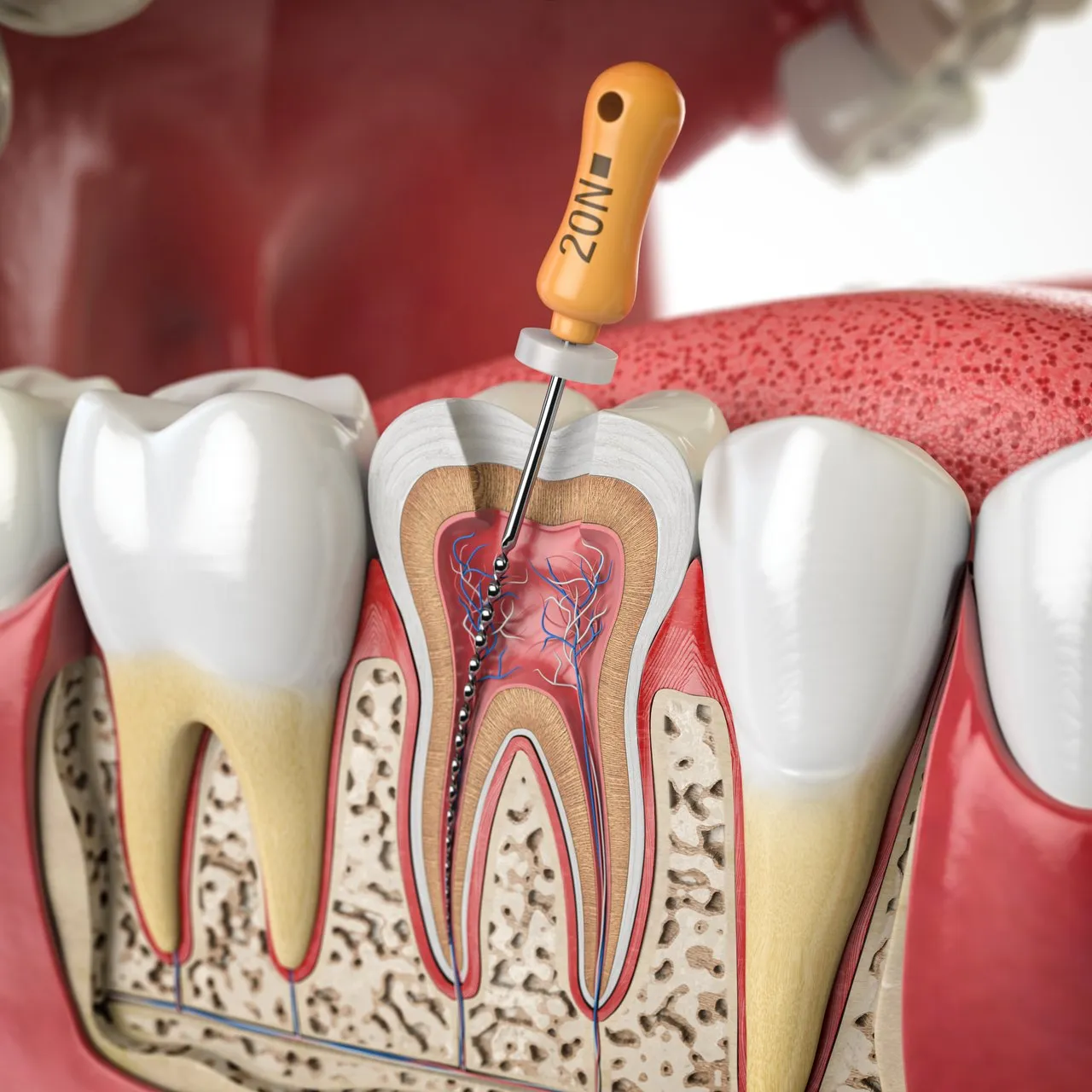
Treatment: gentle, structured and focused on the cause
Treatment depends on the extent of the decay and the status of the nerve. Removing decay when the nerve can be preserved If the nerve is vital, we remove the decay by removing the crown. Many people ask: Does removing a dental crown hurt? With a local anaesthetic, the procedure is well tolerated. Once the decay under the bridge or an individual crown has been removed, the tooth is rebuilt. We prepare it precisely for a new crown. This allows us to eliminate the source of the pain in the long term. Root canal treatment if the nerve is affected If the nerve is affected, we assess the diagnosis, vitality and restorability of the tooth to determine whether pulp-preserving treatment or root canal treatment is appropriate. If root canal treatment is necessary, we have to drill into the crown, clean and disinfect the canals, and fill them tightly. Depending on its condition, the old crown is either replaced or temporarily sealed. Root canal treatment under the crown is also possible if the crown can be preserved. Once treatment is complete, a new, well-sealed restoration ensures long-term success. We discuss whether a new crown should be placed on a root canal-treated tooth. We also report on experiences with crowns on root canal-treated teeth. This enables you to make an informed decision. How is tooth decay under a bridge treated? If you experience symptoms under a bridge, we check whether an abutment tooth is affected. Pain under a dental bridge requires careful, differentiated planning, possibly segment removal, endodontic treatment and a new restoration.

Frequently asked questions from our practice
• How is tooth decay under a crown treated? Depending on the findings: removal of the decay and a new restoration, or endodontic treatment plus a new restoration. • Is a painful crowned tooth always an emergency? Pain is a warning sign; we determine the urgency based on its intensity and any accompanying symptoms. • Can a tooth affected by decay under a crown be saved? In many cases, yes. As long as sufficient healthy remaining tooth structure is present and the root is stable.

Prognosis and prevention
Well-sealed margins, correct occlusion, good oral hygiene and regular check-ups are crucial. Fluoridation, interdental care and professional dental cleaning reduce the risk. Marginal caries detected early can be treated less invasively, helping us avoid more extensive procedures and subsequent costs.

The process at Wunschlachen
1. Medical history and functional test: We discuss your toothache under the crown, sensitivity to heat and cold, how your bite feels and any pre-existing conditions. 2. Imaging: A targeted X-ray to detect tooth decay under a crown confirms the diagnosis. 3. Treatment plan: Transparent procedure, cost breakdown and alternatives. 4. Treatment: Gentle anaesthesia, hygiene standards and microscopic endodontics if required. 5. Aftercare: Checking the bite and marginal seal, and hygiene coaching.
FAQ: Tooth decay under a crown
Typical symptoms include pain on pressure, sensitivity when biting, temperature sensitivity, bad breath or discolouration at the margin. Symptoms often develop gradually.
Please have it examined promptly. Toothache under a crown or toothache under a bridge can indicate tooth decay or nerve irritation.
With a local anaesthetic, the pain is generally well tolerated. We look after your wellbeing throughout the entire treatment.
A reaction to heat can indicate nerve irritation or a leaking margin and should be investigated.
Not always, but often. If the nerve is involved, a clinical examination and diagnosis are needed to determine whether pulp-preserving treatment or root canal treatment under or with a crown is appropriate. If root canal treatment is necessary, the crown occasionally has to be drilled into.
Rarely, but it is possible. If a new crown causes pain when chewing, this may indicate problems with contact, for example. Such issues can usually be resolved quickly.
If a tooth under the crown has died, endodontic treatment is advisable. Afterwards, a precisely fitting new restoration stabilises the tooth.
Yes. Tooth decay under a crown without pain does occur. Regular check-ups are important to ensure that damage does not progress unnoticed.
An X-ray for tooth decay under a crown is standard and reveals many, but not all, defects. We combine imaging, clinical tests and experience.
Often, yes. This depends on the remaining tooth structure, root status and periodontium. Even with inflammation under a dental crown, we examine conservative options before planning a replacement.