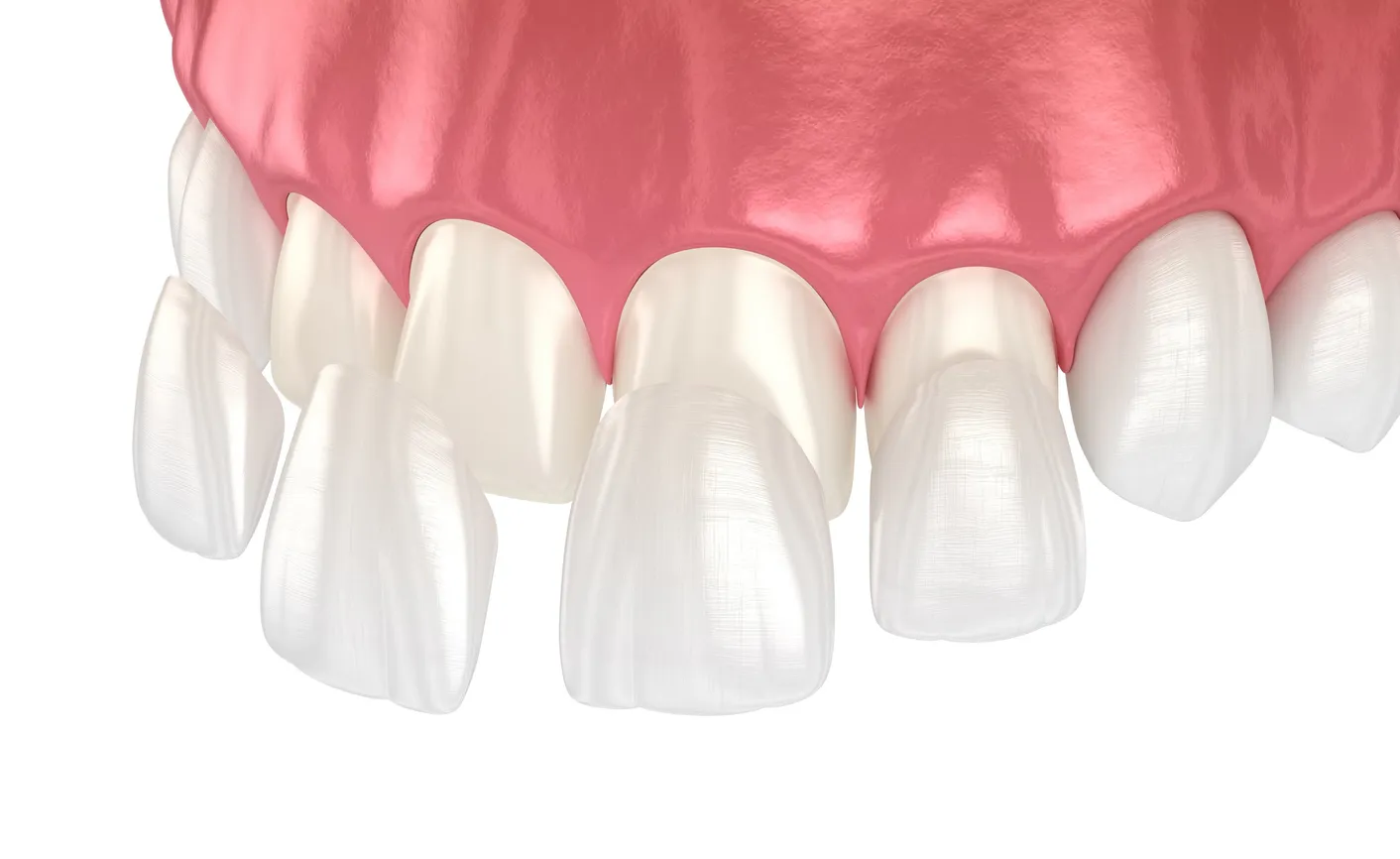
Veneers for a gap between teeth: what is possible?
A gap between the front teeth is immediately noticeable. Many people want a closed, harmonious smile. Veneers can reliably conceal a gap. Many patients specifically seek veneers as a solution for a gap between teeth. This means closing the gap aesthetically without...
Über 350 Google-Bewertungen
Why a gap between teeth develops
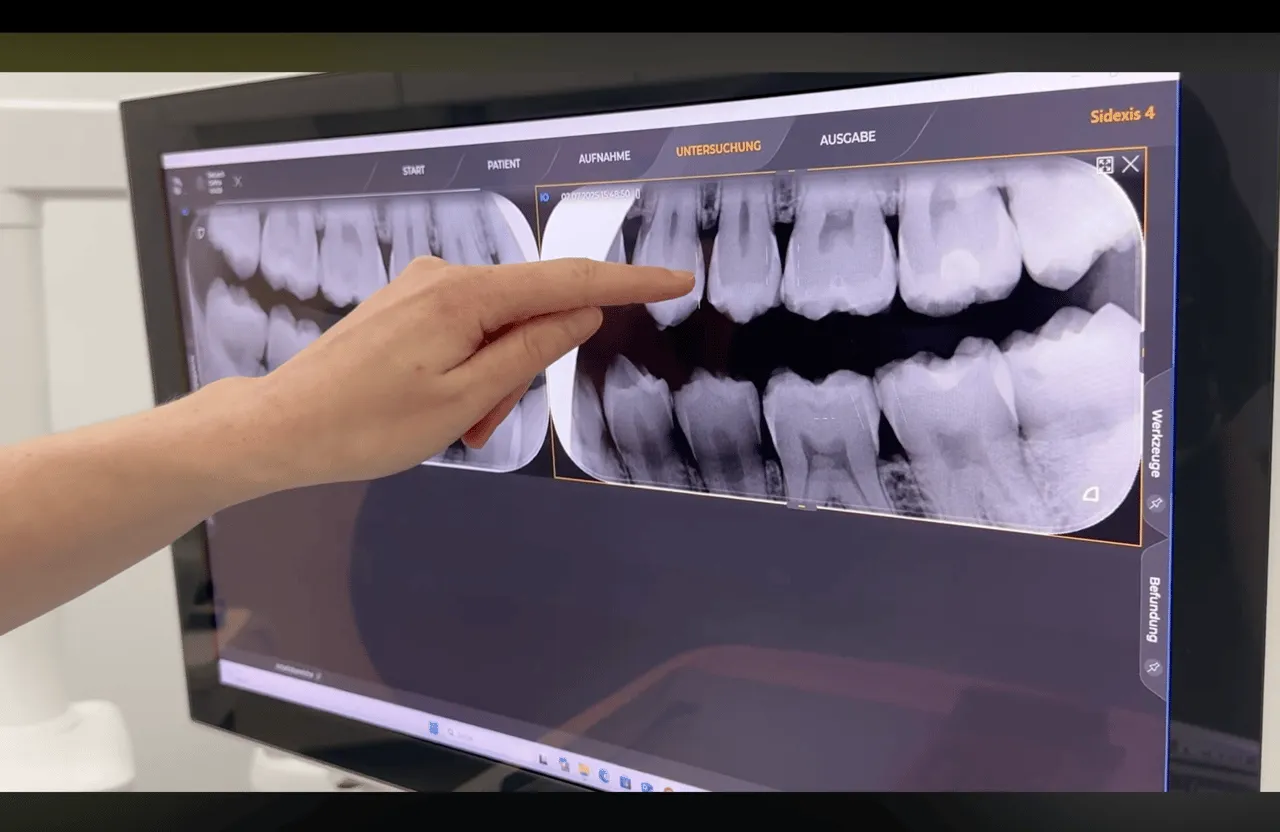
Some gaps are genetic. Others develop through tooth movement, periodontitis or missing neighbouring teeth. A tight lip frenulum can also contribute to a gap. Closing the gap should include an assessment of the lip frenulum. If it pulls strongly, a minor procedure can help. This reduces the risk of the gap reopening. An accurate diagnosis is essential. Only then will the aesthetic solution suit the cause. At our Wunschlachen practice in Berlin, we assess both.
Who is suitable for veneers for a diastema?
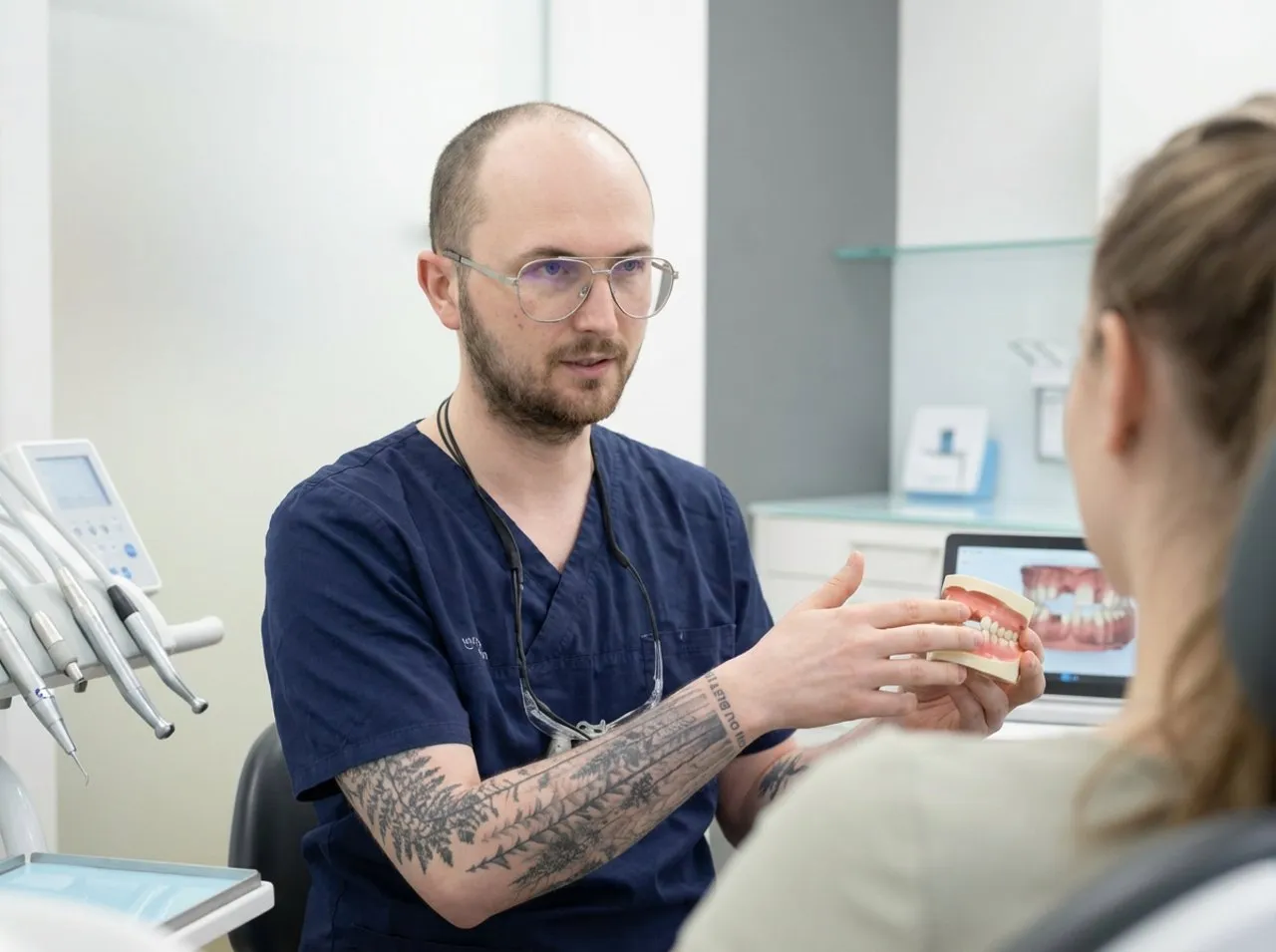
Veneers are suitable when the front teeth are healthy and stable. This also applies to small to medium-sized gaps between teeth. The shape of the teeth can be optimised at the same time. The treatment is advisable for discolouration or small chipped edges. Slight misalignments can also be visually corrected. The bite must remain functionally stable. Veneers are not suitable for untreated tooth decay. Active inflammation of the gums is also a contraindication. Severe bruxism requires a splint and careful consideration of the risks.
Which types of veneer close a gap between teeth?
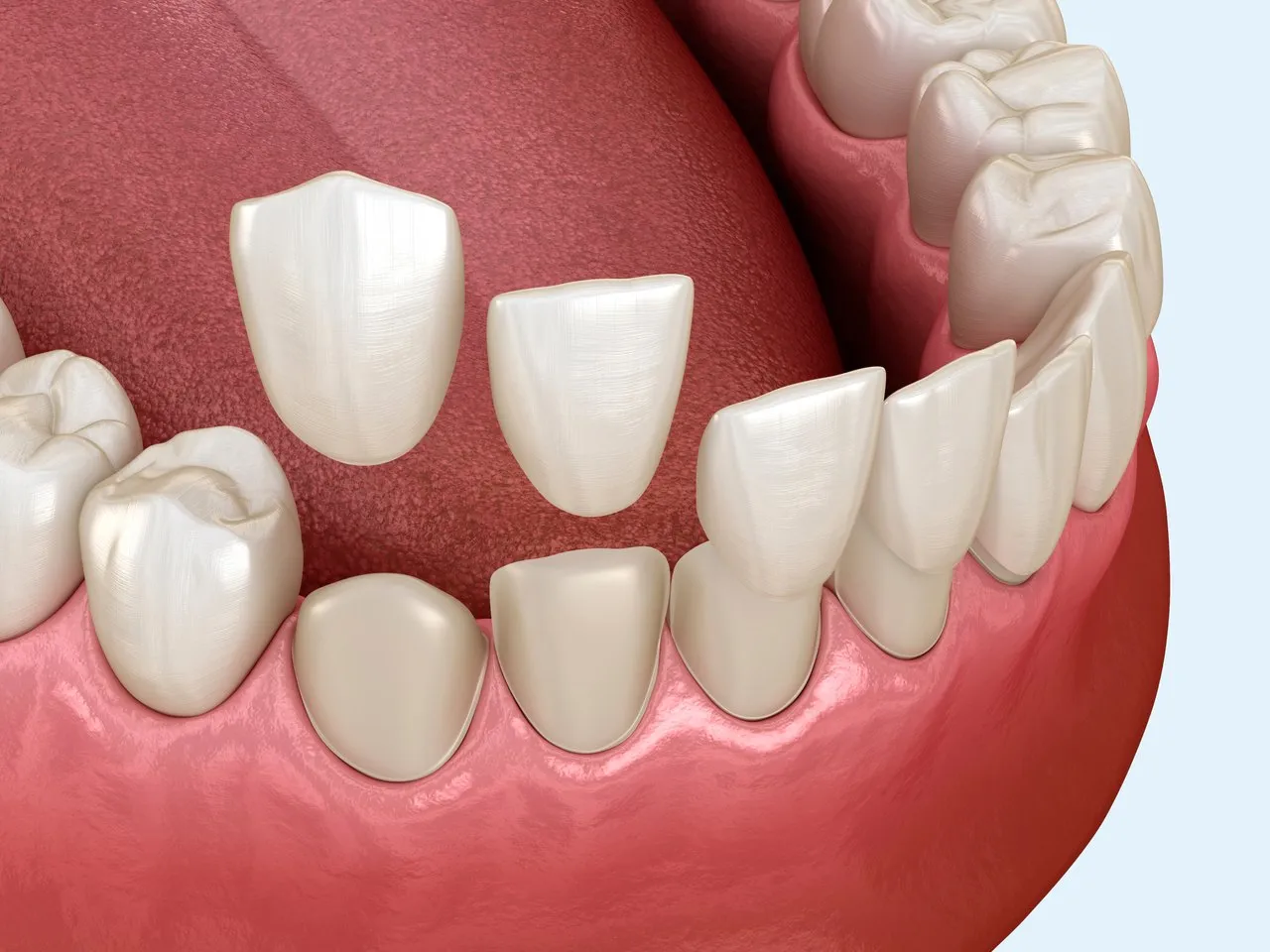
Ceramic veneers are considered particularly colour-stable. They look very natural and are durable. For many patients, they are the premium option. Composite veneers are created directly in the mouth. This is also known as bonding or a composite build-up. The method is often quicker and less expensive. Which option is suitable depends on the size of the gap. Tooth colour, enamel quality and your desired result also matter. We provide transparent advice without time pressure.
Procedure: from consultation to your new smile
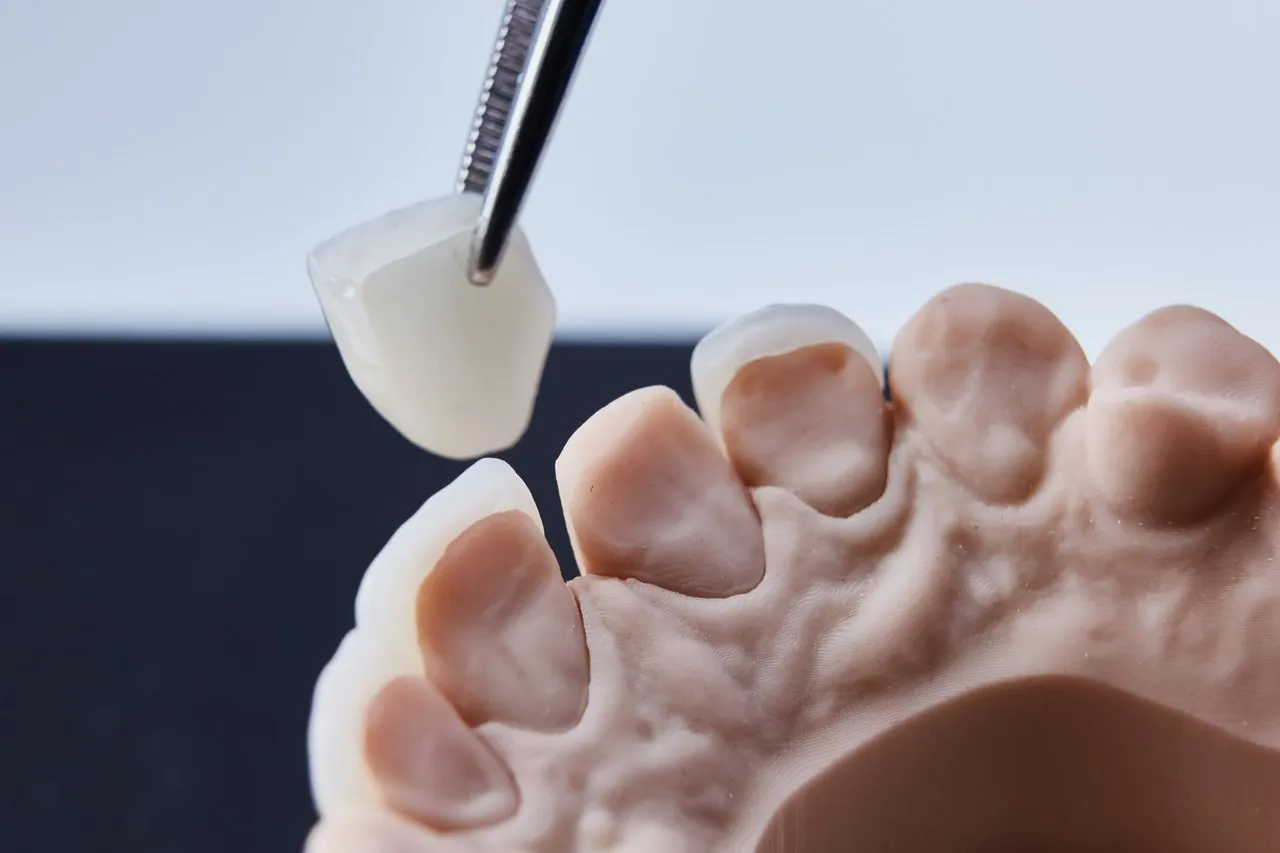
The first step is an aesthetic analysis. We measure the gap and examine your gums and bite. Photographs and digital planning make the desired result visible. We often create a mock-up for a preview. You can see the new tooth shape directly in the mirror. This allows you to discuss changes beforehand. For ceramic veneers, the tooth is usually prepared minimally. Only a small amount of enamel is removed. An impression or digital scan is then taken. If necessary, you will receive a temporary restoration. It protects the teeth until the veneers are fitted. It also shows their eventual shape. The laboratory fabricates the veneers precisely. At the second appointment, they are fitted and bonded. The fit is then finely polished and checked. Before bonding, the surface is thoroughly cleaned. It is then conditioned and dried. This creates a durable bond.
How much tooth substance is lost?
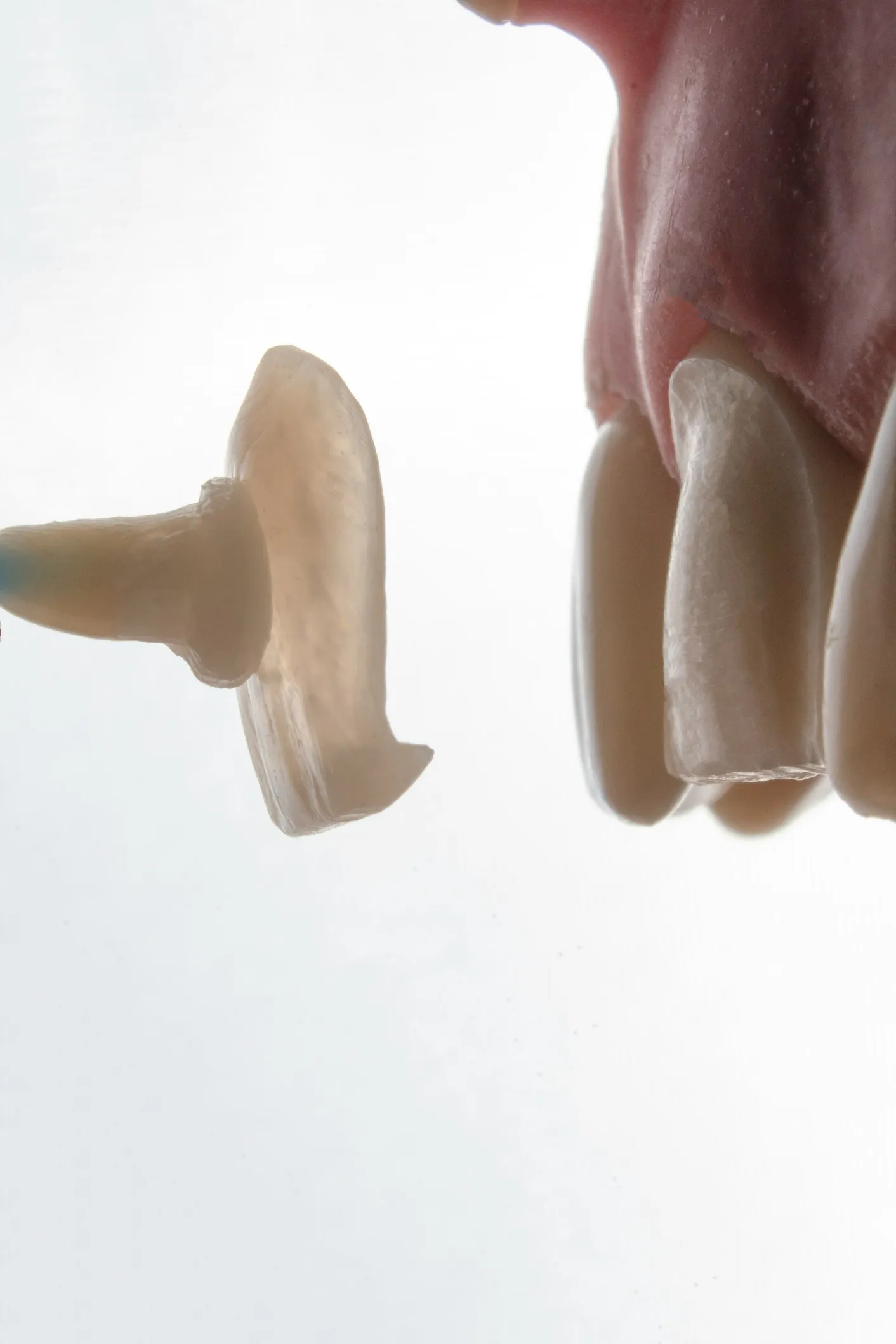
Modern veneers are usually minimally invasive. In many cases, very thin preparation is sufficient. Sometimes even a no-prep veneer is possible. Whether this is feasible depends on the initial situation. Otherwise, shells that are too thick look unnatural. A careful treatment plan prevents this effect.

Costs and health insurance: what you should budget for
Costs depend on the material and the work involved. Ceramic is usually more expensive than composite. The number of teeth being treated also matters. For a gap between teeth, two incisors are often treated. This keeps the centre visually symmetrical. For wider gaps, treating four teeth may be advisable. Statutory health insurance funds usually do not cover veneers. They are generally considered an aesthetic treatment. Private insurance plans or supplementary insurance may cover part of the cost. We draw up a clear cost plan in advance. You can compare your own contribution and the alternatives. Instalments are also available at Wunschlachen on request.
Durability and everyday care
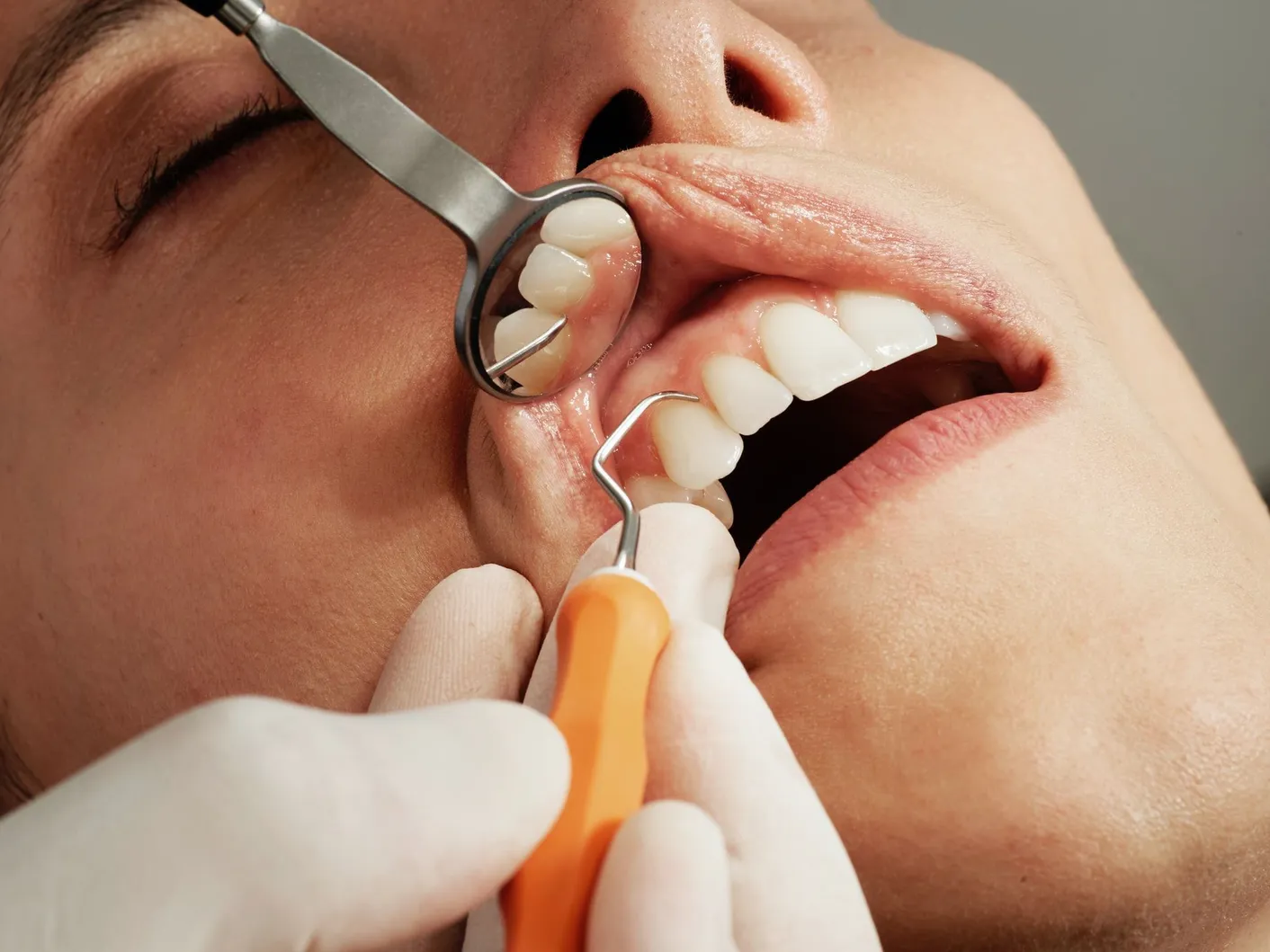
Ceramic veneers often last for many years. Hygiene, check-ups and a good bite are crucial. Regular preventive care extends their lifespan. Brush twice a day with a soft brush. Use dental floss or interdental brushes. Make sure the margins along the gums are clean. Avoid biting down on very hard things. These include ice cubes and hard nuts. If you grind your teeth, a night guard provides protection.
Risks and limitations: when are alternatives better?
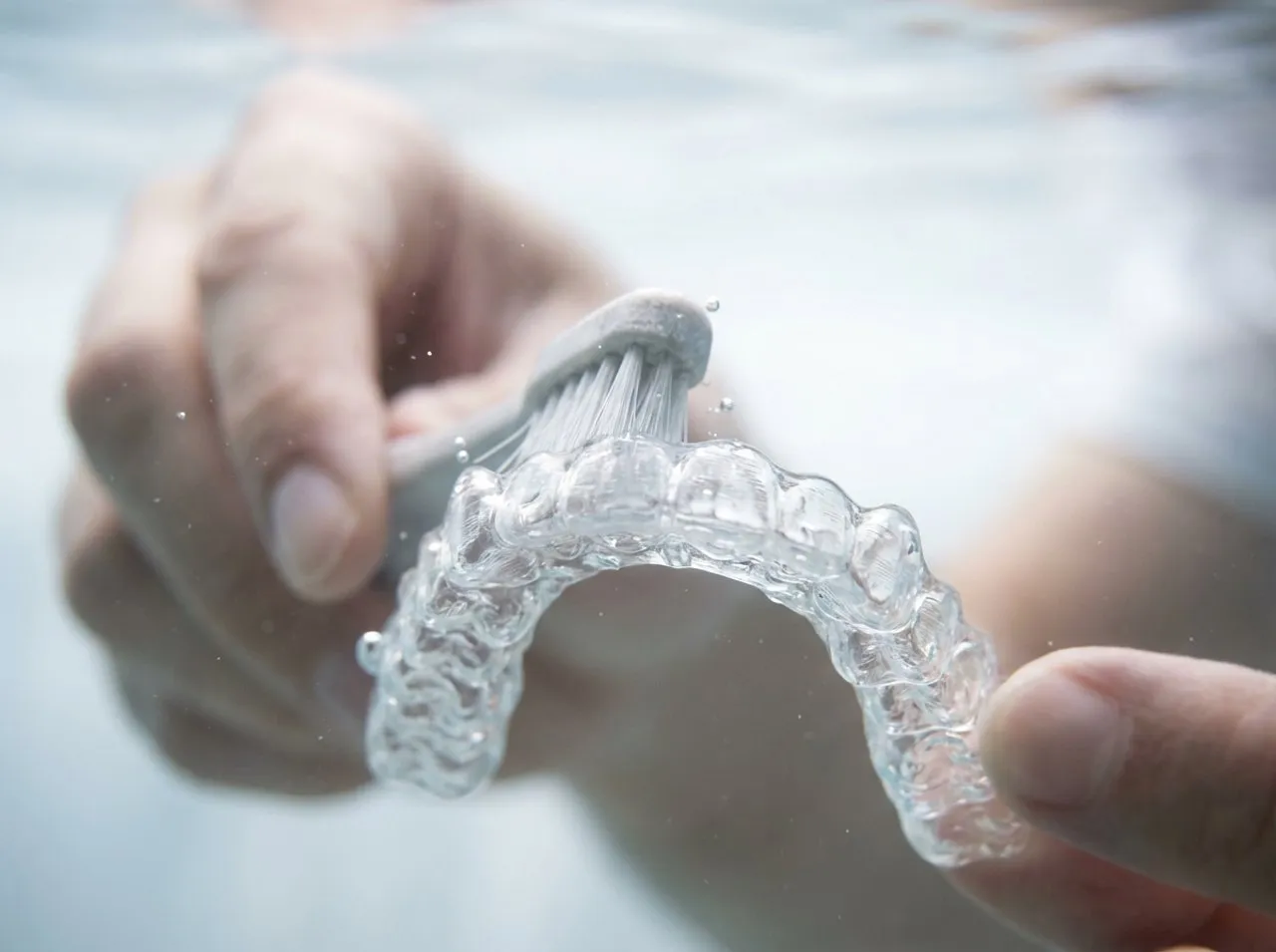
Veneers close a gap visually, not biologically. Significant tooth movement often requires orthodontic treatment. Aligners or braces may then be more appropriate. The gums also play an important role. Uneven margins are more quickly noticeable with bright front teeth. Preliminary treatments can then improve the result. If teeth are very small, veneers can quickly look too wide. The overall aesthetics must then be planned. Sometimes a combination with whitening is better. For large gaps, crowns may be necessary. Implants are also an option for missing teeth. The findings determine which solution is suitable.

Veneers at Wunschlachen in Berlin
We combine aesthetics with function. In doing so, we pay attention to gum harmony and stable occlusion. The aim is a natural result without an artificial look. You will receive an honest recommendation. We explain the advantages and disadvantages of each option. This enables you to make a confident decision about your smile. Book a consultation at Wunschlachen. Feel free to bring photos and questions with you. We will show you how the gap between your teeth can be closed safely.
FAQ: veneers and gaps between teeth
Yes, small to medium-sized gaps can usually be completely concealed.
Often two front teeth are treated so that the centre looks symmetrical.
Bonding is quicker; ceramic is often more durable and colour-stable.
Pain is minimal because only a small amount of enamel is worked on. Local anaesthetic is available if needed.
With good care, they often last for many years and sometimes considerably longer.
Ceramic usually remains colour-stable. Composite is more likely to darken and needs polishing.
Yes, this is usually possible in everyday life.
However, you should avoid excessive strain.
Statutory health insurance funds usually do not pay because it is an aesthetic treatment.
A splint is then important to prevent chipping.
Yes, aligners, braces or a combination of methods are possible.