Dental bridge on a molar: options and procedure
• A dental bridge on a molar closes the gap as a fixed dental restoration. • It is supported by abutment teeth or implants and improves chewing and your bite. • Healthy neighbouring teeth, good oral hygiene and precise planning are essential.
Über 350 Google-Bewertungen

When is a dental bridge on a molar advisable?
If a molar is missing, chewing function often deteriorates quickly. A gap can cause neighbouring teeth to tilt. The opposing tooth can also grow into the gap. A bridge is suitable if the gap is clearly defined. Usually one or two teeth are missing. The adjacent teeth must be stable.
What types of bridge construction are there?
The conventional solution is a three-unit restoration. Two abutment teeth are fitted with crowns, with the pontic between them. This allows a molar to be replaced with a stable restoration. Multi-unit constructions are sometimes necessary. This applies to larger gaps in the posterior region. Here, we assess the load-bearing capacity particularly carefully. An adhesive bridge is rarely suitable for molars. It is intended more for front teeth. The chewing load is considerably higher at the back of the mouth.
When is a dental bridge in the posterior region unsuitable?
If the last molar is missing, this often results in a free-end situation. This means there is no rear abutment for a conventional solution. An implant is often the more stable alternative. Caution is also advisable if teeth are very loose. This applies in cases of active periodontitis or extensive bone loss. The underlying cause must first be treated effectively.
Requirements: what needs to be checked beforehand?
We examine the gums, bone and abutment teeth. Tooth decay, cracks or old fillings are important here. Periodontitis must also be stabilised beforehand. The bite is also crucial. A misaligned bite can overload the structure. In that case, splint therapy or correction is advisable.

Treatment procedure at the practice
First, we carry out an examination with X-rays. We then discuss the treatment and the treatment and cost plan. This tells you about the procedure, alternatives and expected costs. Next, the abutment teeth are prepared by carefully grinding them down. We then take a digital impression. You receive a temporary restoration for the interim period. It protects the teeth and keeps the gap stable. The dental laboratory then makes the final restoration. When fitting it, we check the fit and contact points. The occlusion is also adjusted precisely. Finally, the restoration is permanently fixed in place.
Materials: metal, ceramic and metal-ceramic
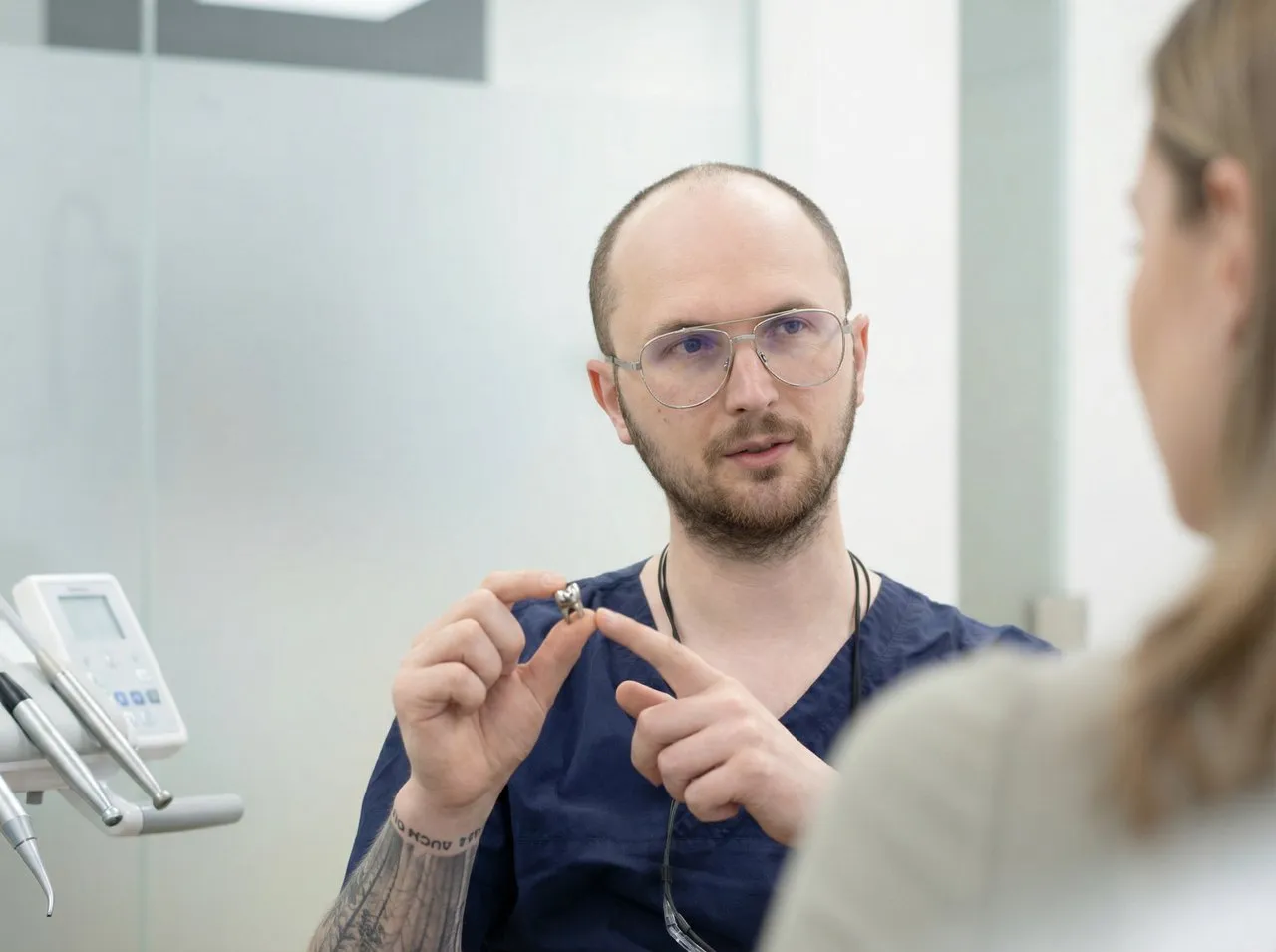
Stability is particularly important for molars. Metal-ceramic is often used. It combines a metal framework with a ceramic veneer. An all-ceramic bridge is highly aesthetic. It can also work at the back of the mouth if conditions are suitable. The choice of material depends on your bite and the space available. A zirconia construction is also possible. It is strong and biocompatible. We provide clear advice about the different materials.
After fitting: what is normal?
Mild pressure sensations are possible at first. The abutment teeth may also be sensitive to cold. This usually settles within a few days. If your bite feels “too high”, contact us promptly. A small adjustment by grinding can relieve the chewing muscles. This helps you avoid pain in the jaw joint.
Durability and care: how to keep your dental restoration stable for a long time
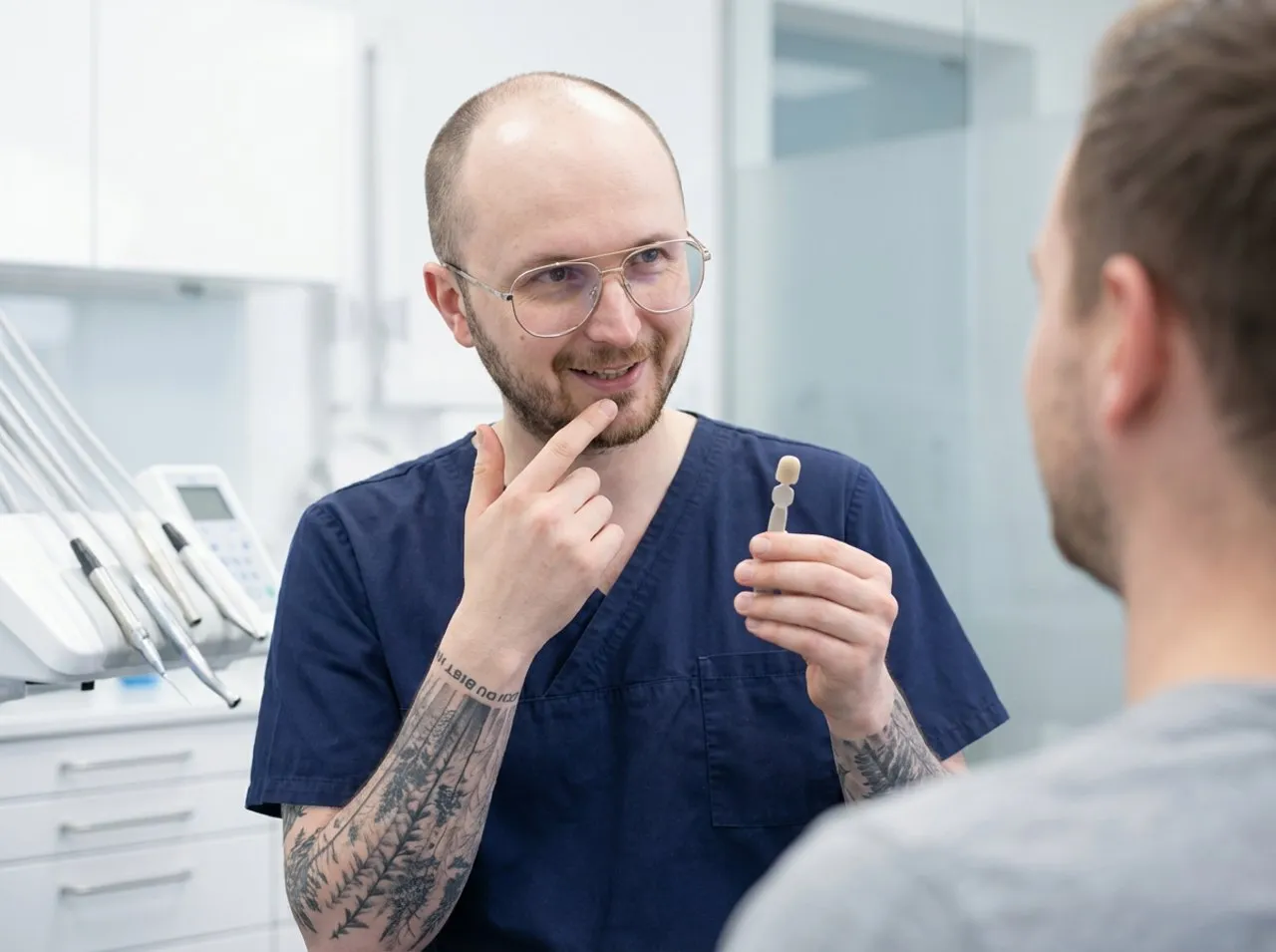
A well-planned restoration often lasts for many years. Daily cleaning under the pontic is essential. Superfloss and interdental brushes are suitable for this. Regular check-ups are a must. During these, we check the margins and gums. Professional dental cleaning provides additional support. Avoid excessive strain from biting hard objects. These include ice cubes and very hard nuts. Night-time teeth grinding should also be treated.
Potential risks and complications
As with any restoration, there are risks. Abutment teeth may become sensitive. Root canal treatment is sometimes needed later. Gum inflammation is also possible. It is often caused by plaque at the margins. Good oral hygiene significantly reduces this risk. Loosening is rare, but possible. It depends on the load and adhesion. If you experience any problems, you should come in promptly.
Dental bridge or implant as an alternative?
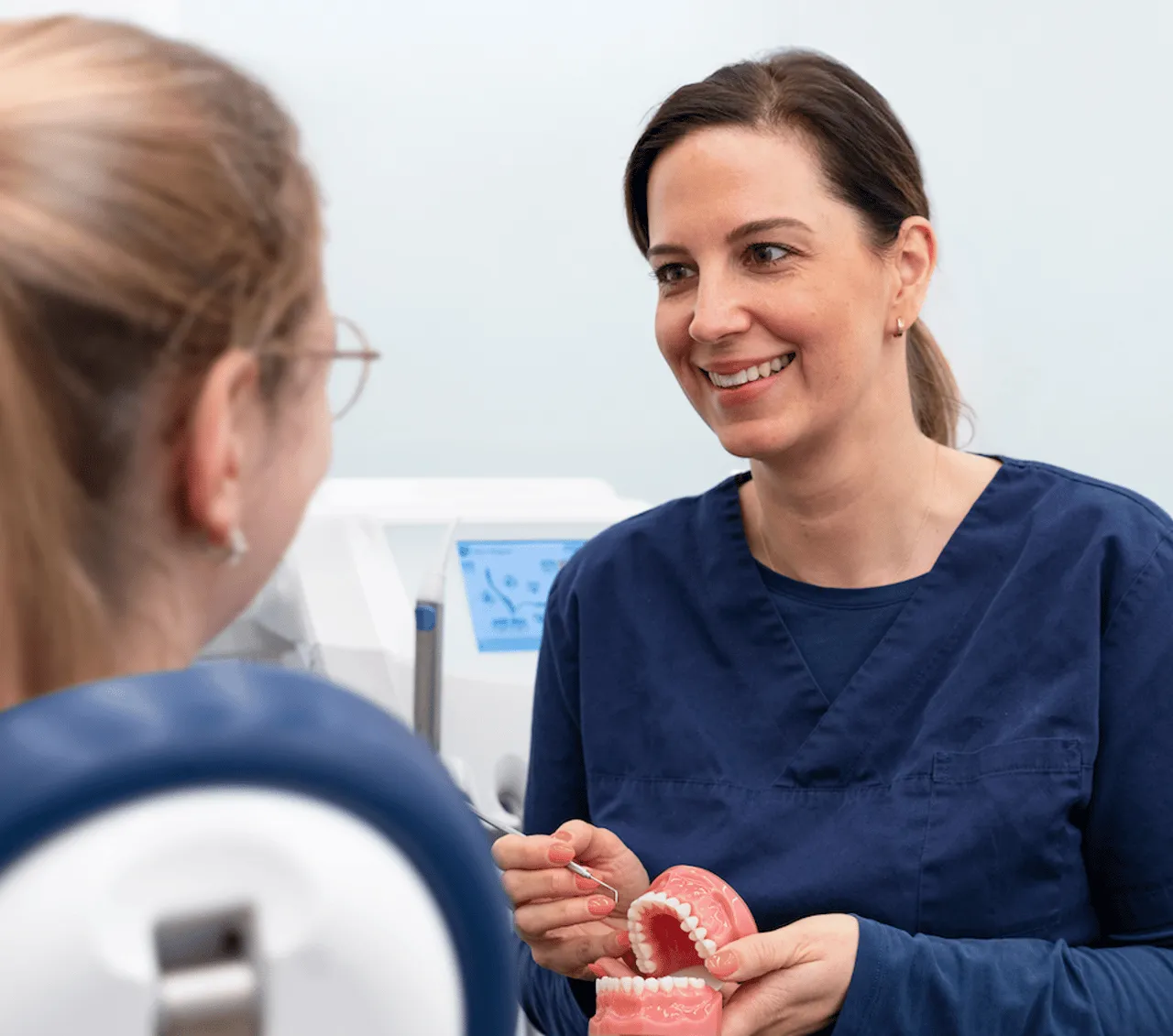
An implant replaces the tooth root. It protects neighbouring teeth because no grinding is necessary. However, it requires sufficient bone and time to heal. Many people search for “molar dental bridge” when they have a posterior gap. A fixed restoration is often completed more quickly. It is advisable if the abutment teeth need crowns anyway.

Costs, health insurance and the bonus booklet
The costs depend on the material and the work involved. Statutory health insurance pays a fixed subsidy towards standard care. A maintained bonus booklet increases the subsidy. Before treatment begins, we draw up the treatment and cost plan. You can use this to apply for confirmation of cost coverage. Private insurance plans reimburse different amounts depending on the policy.
Molar dental bridge at Wunschlachen in Berlin
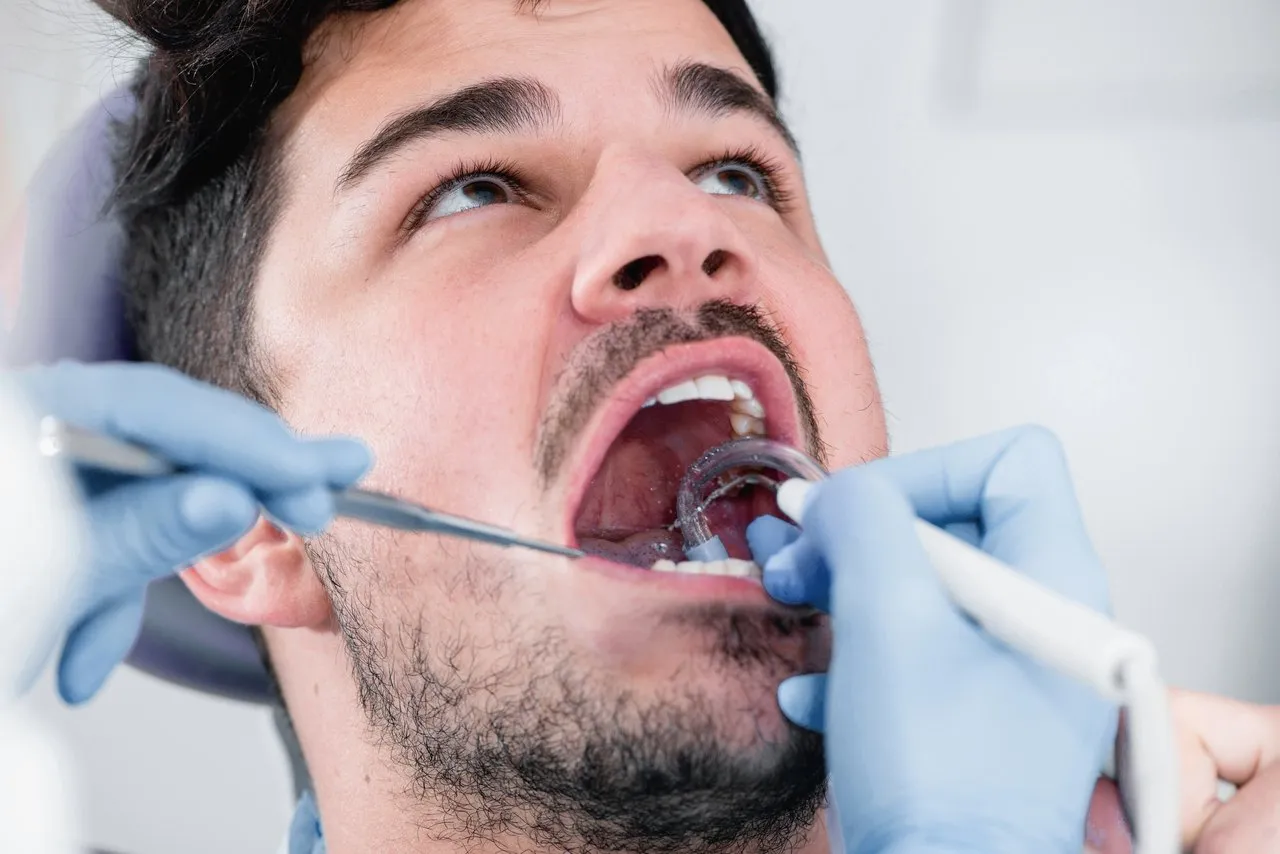
At Wunschlachen, we use modern diagnostics. Digital impressions increase precision and comfort. Our focus is on long-lasting dental restorations. We explain every step clearly and transparently. You will have a dedicated contact person on our team. This keeps the process predictable and transparent.
Conclusion
A dental bridge on a molar reliably closes gaps. It improves chewing, stability and your bite. Healthy abutment teeth and consistent care are important.
FAQ: frequently asked questions about dental bridges on molars
It is suitable when the gap is limited and the neighbouring teeth are stable. Often one molar is missing.
Two to three appointments are usually needed. Laboratory time is additional.
The preparation is carried out under anaesthetic. Temporary sensitivity may occur afterwards.
The pontic replaces the missing tooth. It sits between the abutment crowns.
Metal-ceramic is common in the posterior region. All-ceramic and zirconia are alternatives.
Use Superfloss and interdental brushes. This removes plaque from the margins.
Often ten years or longer with good care. Regular check-ups are essential.
Abutment teeth may later develop tooth decay or inflammation. The fixing rarely comes loose.
Statutory health insurance pays a fixed subsidy. Your own contribution depends on your choice of material.
An implant protects neighbouring teeth, but requires healing time. A bridge is often quicker.