
Eating after a dental implant: what now fits your healing plan
After having a dental implant fitted, the question of what to eat for dinner is a very practical one: can you have bread yet, does everything need to be puréed, and when can you chew on the treated side again? There is no fixed menu for every procedure. A single implant, additional bone augmentation and a more extensive procedure may each require different aftercare. Your treatment team's instructions take priority. The following overview will help you turn these instructions into suitable meals and clarify any uncertainties before your first meal.
The short answer
After an implant, meals depend on the procedure and the aftercare plan. This guidance helps with shopping and questions for the practice.
- Why the type of procedure matters
- An implant replaces a tooth root and is anchored in the jawbone. The visible dental restoration may only be fitted later, or a temporary one may be fitted immediately in certain circumstances. This means that the statement ‘I already have a tooth on it’ alone says little about how much chewing force is permitted. The restoration may be temporary and subject to special rules. Information about implant healing and integration explains this difference in more detail.
- While the anaesthetic is still working
- A local anaesthetic can temporarily leave your lip, cheek or tongue with very little feeling. Bite injuries and very hot food are then harder to notice. Only start eating when the treatment team says you can and the numb areas have regained sufficient sensation. Discharge instructions after sedation may also include specific instructions about eating and drinking.
- What to clarify about chewing and temporary restorations
- Hard crusts, chewy foods and taking forceful bites are often unsuitable for a fresh surgical site. However, a blanket ban for a fixed period would be inaccurate: the team decides based on the procedure and the restoration. Cut permitted food into small pieces and do not force any chewing that causes pain. Do not test whether a temporary restoration is secure by repeatedly biting down.
- Symptoms that need reporting
- Pain, swelling and slight bleeding can occur after an operation. Their severity, how they progress and your individual aftercare instructions are what matter. Worsening symptoms, fever, pus, a restoration that feels loose or persistent bleeding should be assessed promptly. Before you are discharged, ask who you can contact outside opening hours.
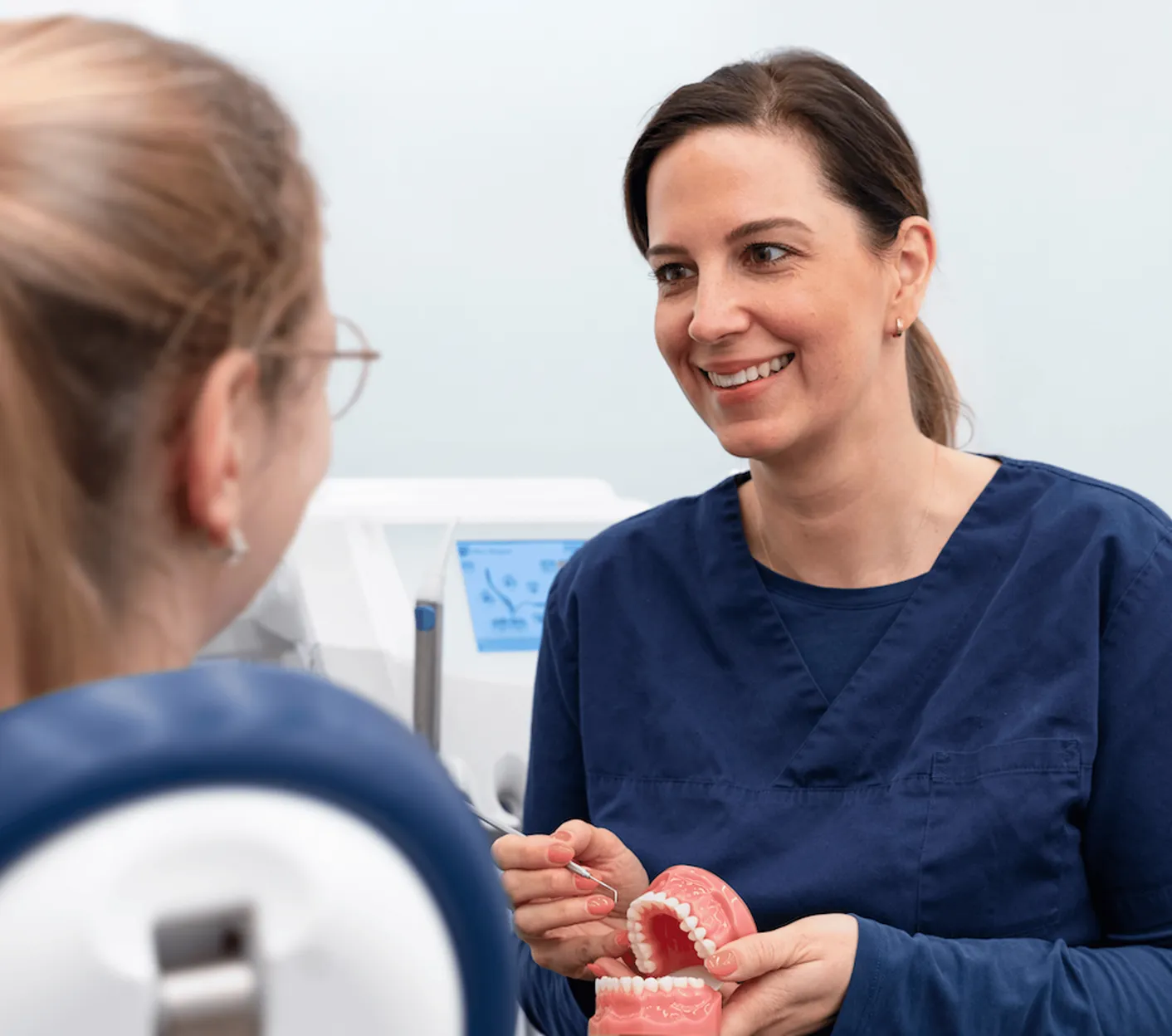
Why the type of procedure matters
An implant replaces a tooth root and is anchored in the jawbone. The visible dental restoration may only be fitted later, or a temporary one may be fitted immediately in certain circumstances. This means that the statement ‘I already have a tooth on it’ alone says little about how much chewing force is permitted. The restoration may be temporary and subject to special rules. Information about implant healing and integration explains this difference in more detail.
For your aftercare, make a note of which site was operated on, whether a tooth was removed or bone was built up at the same time, and what restoration is currently in your mouth. Ask specific questions: Which side may I chew on? What consistency should my food be? Until which follow-up appointment does this apply? These answers are more helpful than general advice on the internet such as ‘everything again from day seven’.
While the numbness lasts
With a local anaesthetic, your lip, cheek or tongue may temporarily have little sensation. This makes bite injuries and very hot food harder to notice. Only start eating when your treatment team allows it and sufficient feeling has returned to the numb areas. Discharge instructions following sedation may include additional guidance on eating and drinking.
Plan your first meal before the appointment so that you do not have to make decisions at the supermarket while tired. For example, have some cooled soup or a soft meal ready and keep the written instructions with it. If you need help with shopping or cooking, arrange this in advance. Accepting support after a procedure is not a test of your resilience.
Soft meals without a monotonous diet
If soft food is recommended, this does not automatically mean an exclusively liquid diet. Depending on what has been approved, options include mashed potato, soft-cooked pasta, scrambled egg, porridge or softly cooked vegetables. A fish dish can be easily flaked, but take care with bones. Soup should be at a comfortable temperature. The key is whether you can eat the meal without biting firmly at the surgical site.
For your shopping, you can list three groups: a soft base, a source of protein and a well-tolerated accompaniment. This means that mash, egg and vegetables make a different meal from soft pasta with a suitable sauce. Take account of allergies, diabetes, swallowing problems and any existing dietary instructions. No particular food supplements can be inferred from the procedure alone.

What to clarify about chewing and temporary restorations
Hard crusts, chewy foods and taking forceful bites are often unsuitable for a fresh surgical site. However, a blanket ban for a fixed period would be inaccurate: the team decides based on the procedure and the restoration. Cut permitted food into small pieces and do not force any chewing that causes pain. Do not test whether a temporary restoration is secure by repeatedly biting down.
A removable denture may also need to be temporarily adjusted or left out after implant placement. Only insert it as instructed. Ask whether the temporary restoration should be worn during meals and who to contact if it causes pressure. The guide to a temporary restoration during implant healing provides more background.
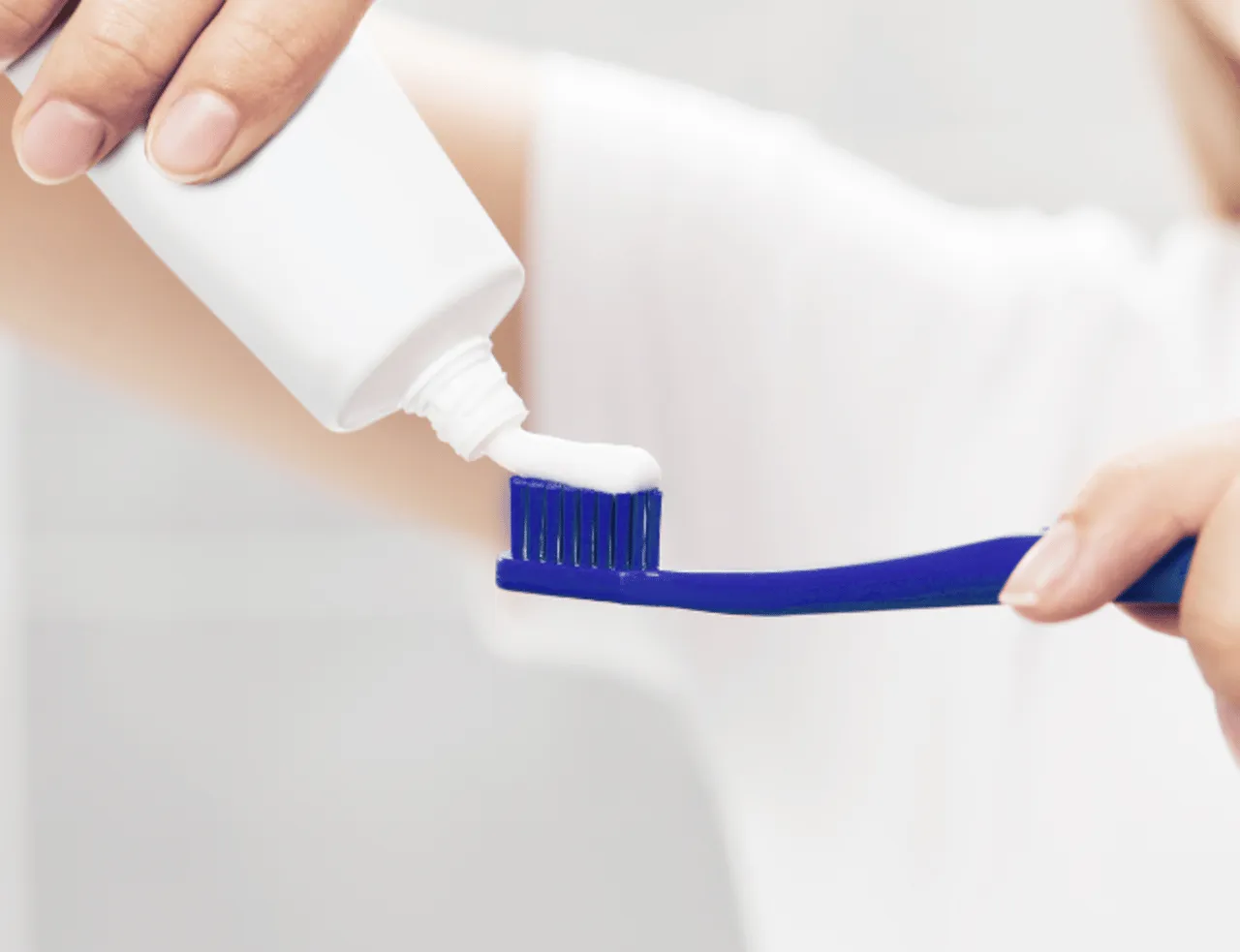
Considering drinking, smoking and oral care together
Aftercare instructions also apply to alcohol and smoking. Smoking is an avoidable risk factor; ask about support with taking a break from smoking or quitting. Drink enough fluids in line with your other medical instructions. Do not use a hot drink at first to test whether feeling has returned to your numb lip.
Oral care goes hand in hand with eating, but must be adapted around the wound. Clinics give different instructions on brushing and mouth rinses depending on the treatment. Do not copy either a general chlorhexidine dosage or vigorous rinsing from instructions intended for others. Ask to be shown how to clean your remaining teeth and how to deal with food debris near the wound. Only use medicines as prescribed.
When eating can return to normal
The return to firmer food depends on healing and the permitted load. The fact that a meal causes little discomfort does not prove that the implant has already been cleared for every chewing load. Discuss the next stage at your review: for example, soft pieces, normal chewing away from the site and finally loading the restoration itself. Not everyone needs the same steps.
A brief note of which foods went well and where pressure occurred can be helpful. Lengthy daily self-checks or repeatedly touching the implant are not necessary for this. If you can eat or drink very little, get in touch promptly. This is especially important if you have pre-existing conditions or take medicines that require you to eat regularly.
Symptoms that need reporting
Pain, swelling and slight bleeding can occur after an operation. Their extent, how they develop and your individual aftercare instructions are what matter. Worsening symptoms, fever, pus, a restoration that feels loose or persistent bleeding should be assessed promptly. Before you are discharged, ask for a contact point that is available outside opening hours.
Breathing or swallowing problems, rapidly increasing swelling or heavy bleeding that cannot be controlled require urgent medical help; in an acutely life-threatening situation, call 112. Do not try to alter the implant or the wound yourself. Take your aftercare documents and medicines list with you for assessment.
Frequently asked questions
This depends on the anaesthetic, the procedure and your discharge instructions. Do not chew on numb areas, and ask before leaving the practice when you may have your first meal.
Not after every implant procedure. If soft food has been recommended, softly cooked meals that are easy to break into pieces may also be suitable. Stricter instructions following a more extensive procedure take priority.
Your treatment team must decide this for your particular restoration. A temporary restoration that has already been fitted does not automatically mean that it can withstand normal chewing forces.
A general ban for every implant procedure cannot be inferred from the aftercare information used here. Individual instructions, intolerances and advice on prescribed medicines must be taken into account.
There is no single date that applies to everyone. Ask at your follow-up appointment how much chewing force is permitted and progress your diet accordingly. Taking forceful bites should not be used as a load test.
Contact your treatment team promptly, especially if drinking is also difficult or your symptoms are getting worse. Breathing or swallowing problems and rapidly increasing swelling require urgent help.