Teeth tilted inwards: what can you do and what are the options?
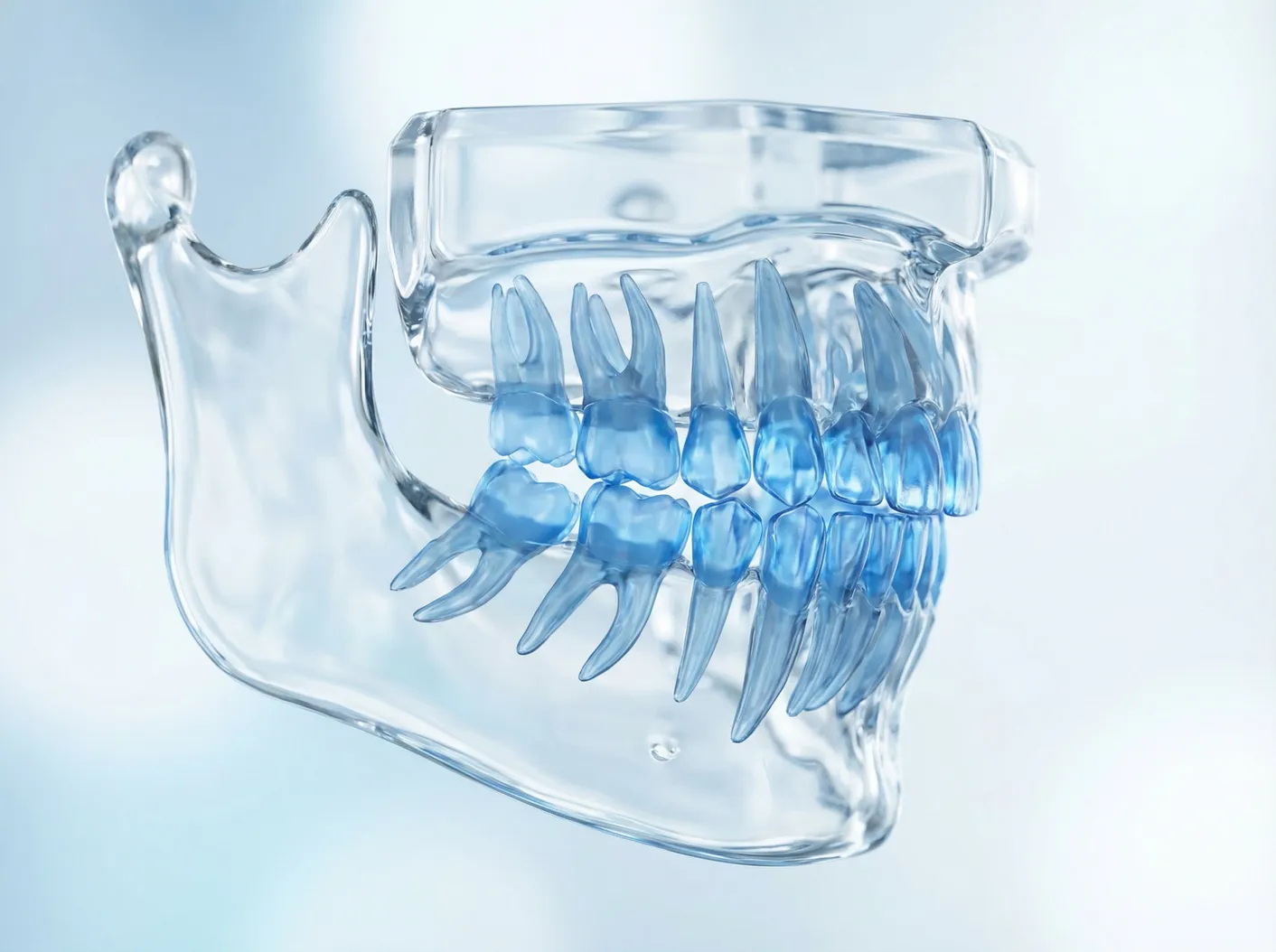
When teeth are tilted inwards, they are incorrectly positioned. The incisors often tilt towards the tongue. Professionals refer to this as lingual tipping or incorrect inclination. The misalignment can affect individual teeth, but can also influence entire rows of teeth. There is often also a...
Über 350 Google-Bewertungen
Typical signs in everyday life
Many people first notice the change in the mirror. The front teeth look narrower and ‘pushed in’. Sometimes the biting edges meet unevenly. Chewing can also feel different. Some people constantly bite in the wrong place. Others unconsciously grind their teeth at night.
Why do teeth tilt inwards?
A lack of space in the jaw is often the reason. Neighbouring teeth then push the front teeth inwards. This is typical of crowded teeth. Sometimes an opposing tooth or a molar is missing. Teeth then move into the gap. The row of teeth loses its stable support. Habits also play a role. These include pressing the lips together, tongue thrusting or prolonged thumb-sucking. Such forces act on the incisors every day.
What are the possible consequences?
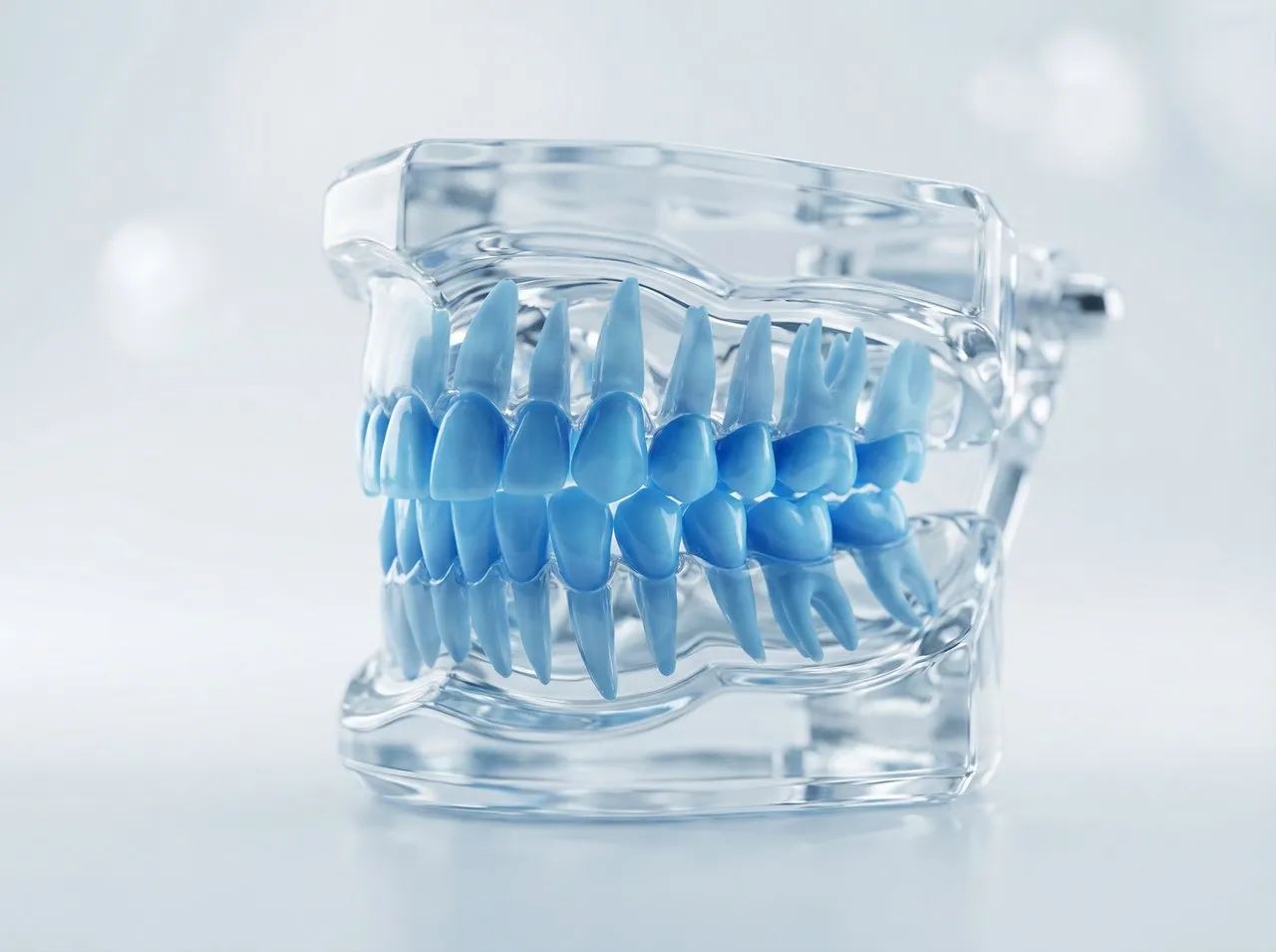
Tilting changes the bite. This can make an overbite more pronounced. In some cases, a crossbite develops in the front teeth. Crooked teeth are harder to clean. Plaque is more likely to build up along the edges. This increases the risk of tooth decay and gum inflammation. The jaw joint can also be affected. The muscles then work against the faulty contacts. This can contribute to tension and headaches.
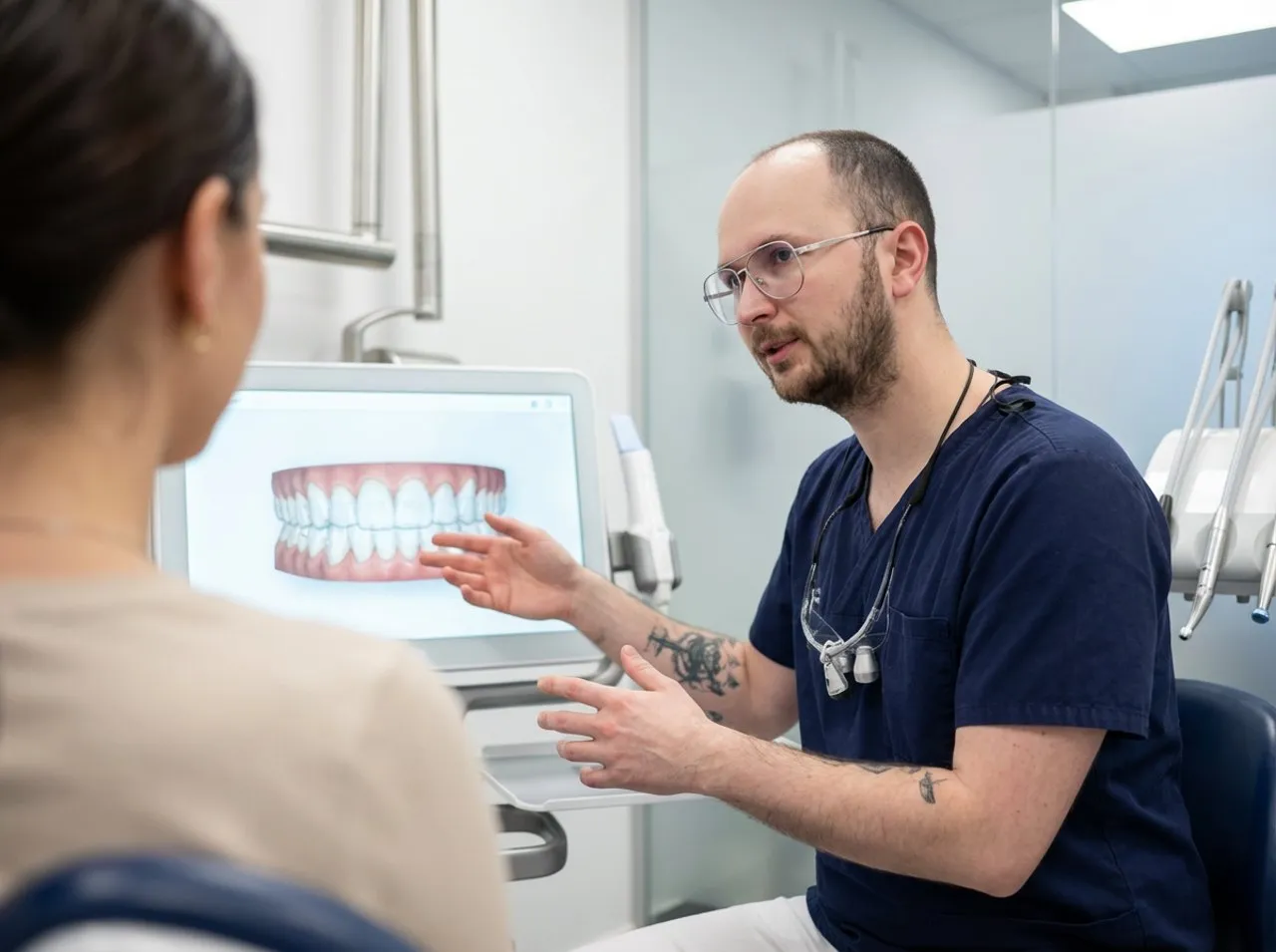
Have misaligned incisors assessed reliably
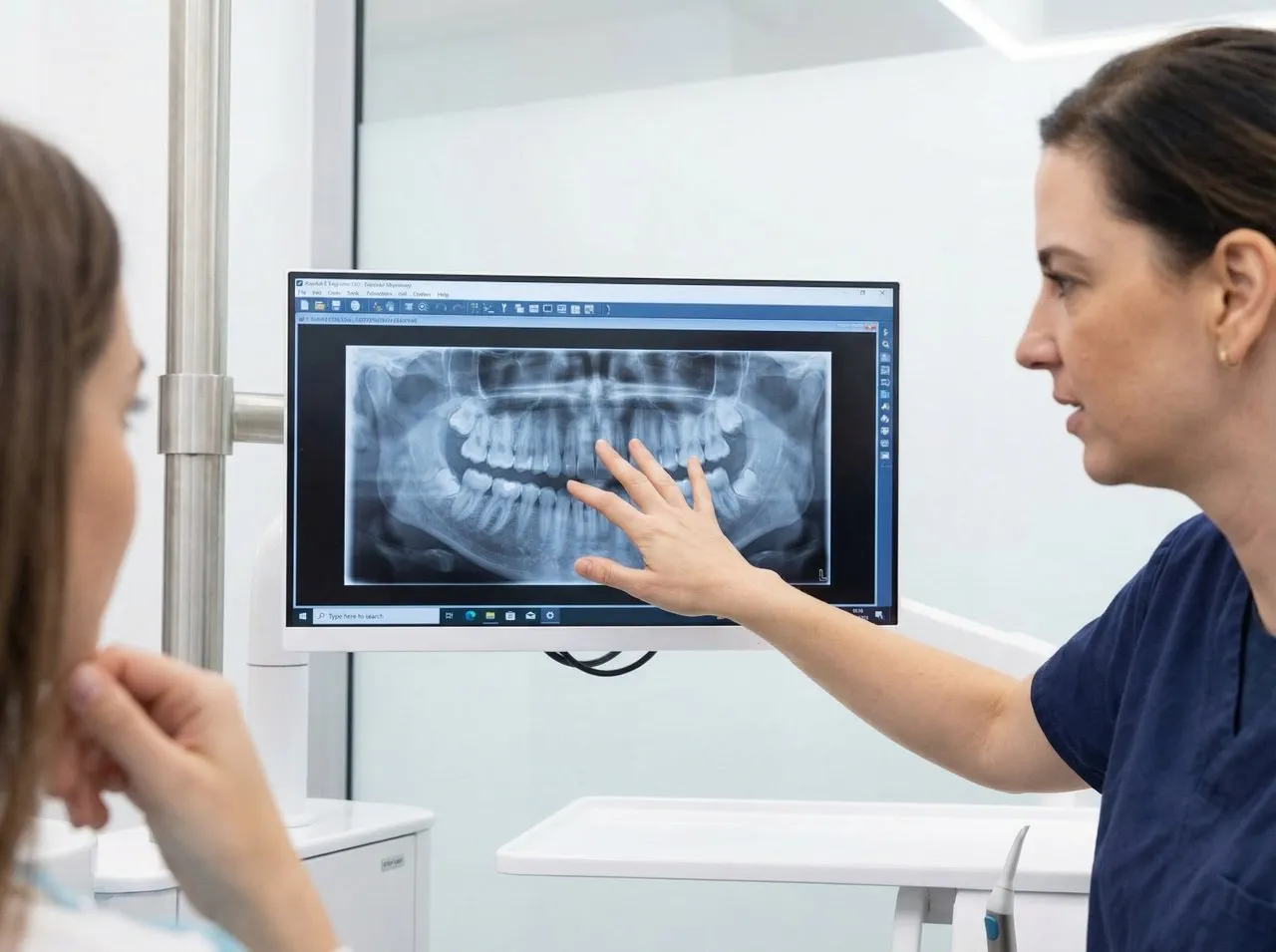
Misaligned incisors should always be examined. The bite, tooth position and jaw shape are crucial. This requires precise diagnostics. We assess the occlusion using bite registrations. We measure the space required and the shape of the dental arch. If necessary, we use digital scans and X-rays. Crowded teeth can be measured accurately. This allows us to determine whether the incisors are tilted inwards. We also identify accompanying factors such as crowding or an overbite. Only then do we plan treatment.
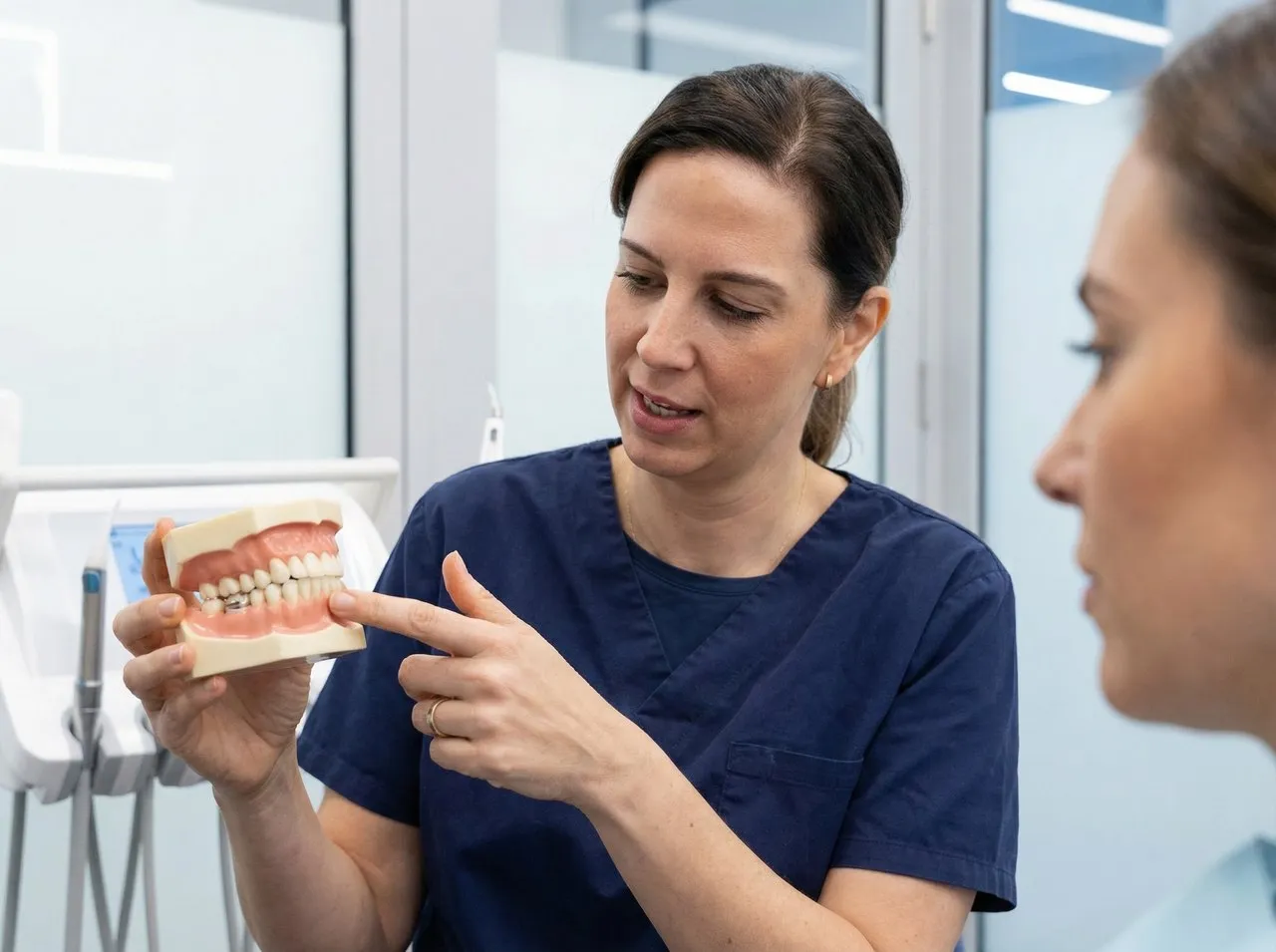
Teeth tilted inwards: what can you do?
The appropriate treatment depends on the findings. The degree of tilting is important. Your age is equally important. For mild misalignments, clear aligners are often sufficient. They move the teeth gradually into the desired position. The trays are usually inconspicuous in everyday life. For more pronounced tilting, fixed braces are advisable. Brackets apply precise forces. This also makes it possible to correct rotations and bite problems. Sometimes it is necessary to create more space. This can be achieved through gentle expansion of the dental arch. In some cases, minor enamel reduction is also possible.
Aligners or fixed braces: a quick comparison
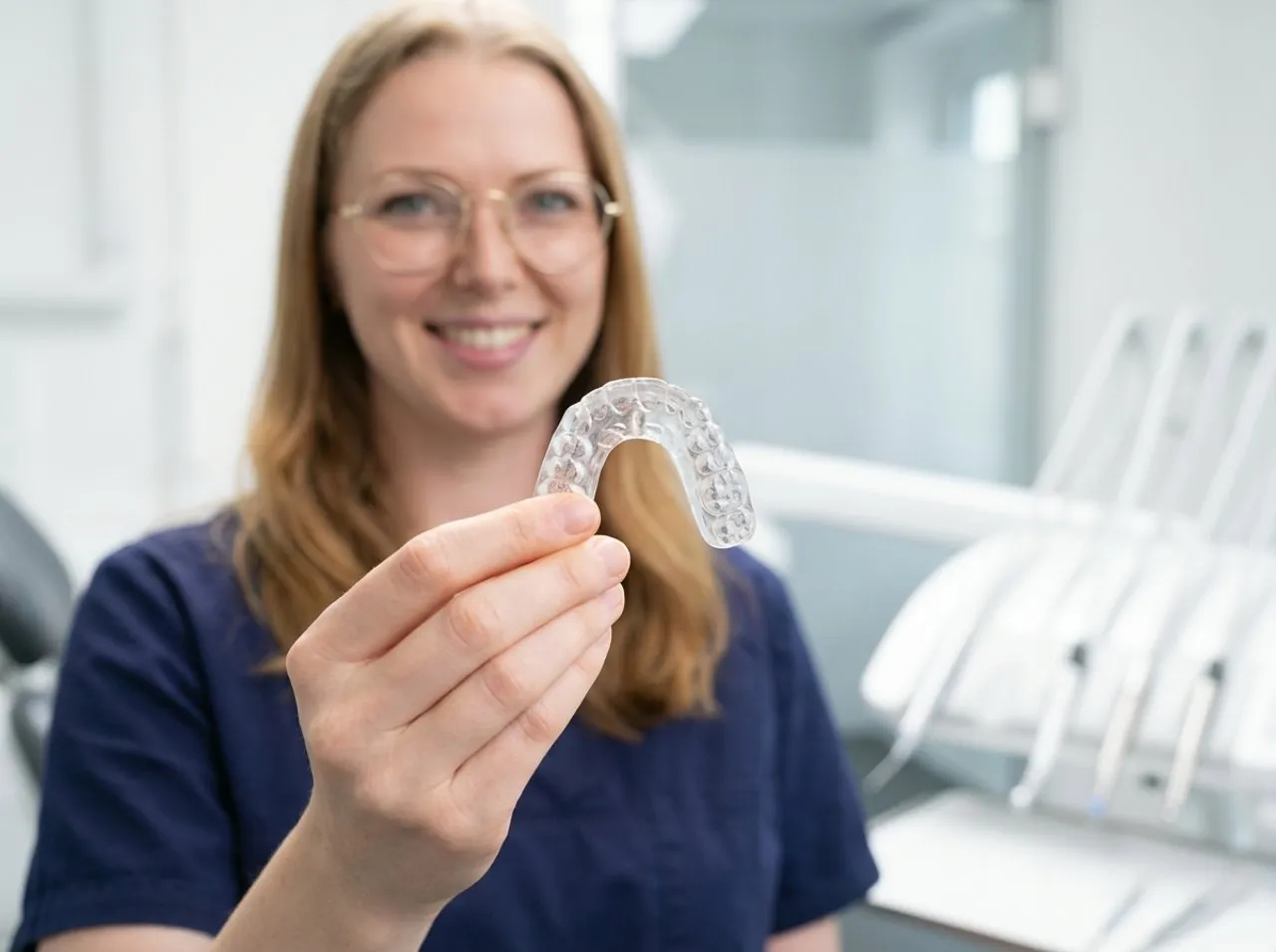
Aligners are well suited to mild to moderate cases. They are removable and hygienic. The requirement is that they are worn consistently. A fixed appliance works around the clock. It is more effective for complex tooth movements. However, cleaning requires more routine. Both methods can be combined. Sometimes we start with brackets. Aligners then stabilise the fine-tuning.
How long does correction take?
The duration varies greatly from person to person. Minor tipping often takes a few months. Complex cases tend to take twelve to twenty-four months. Cooperation is important. Aligners only work when worn for long enough. Check-up appointments should also take place regularly.

Costs, planning and instalment payments
The costs depend on the method and scope. Diagnostics, materials and treatment duration are decisive. A plan makes everything transparent. Many services must be paid for privately. In Berlin, we offer instalment payments on request. This makes your treatment easier to budget for.
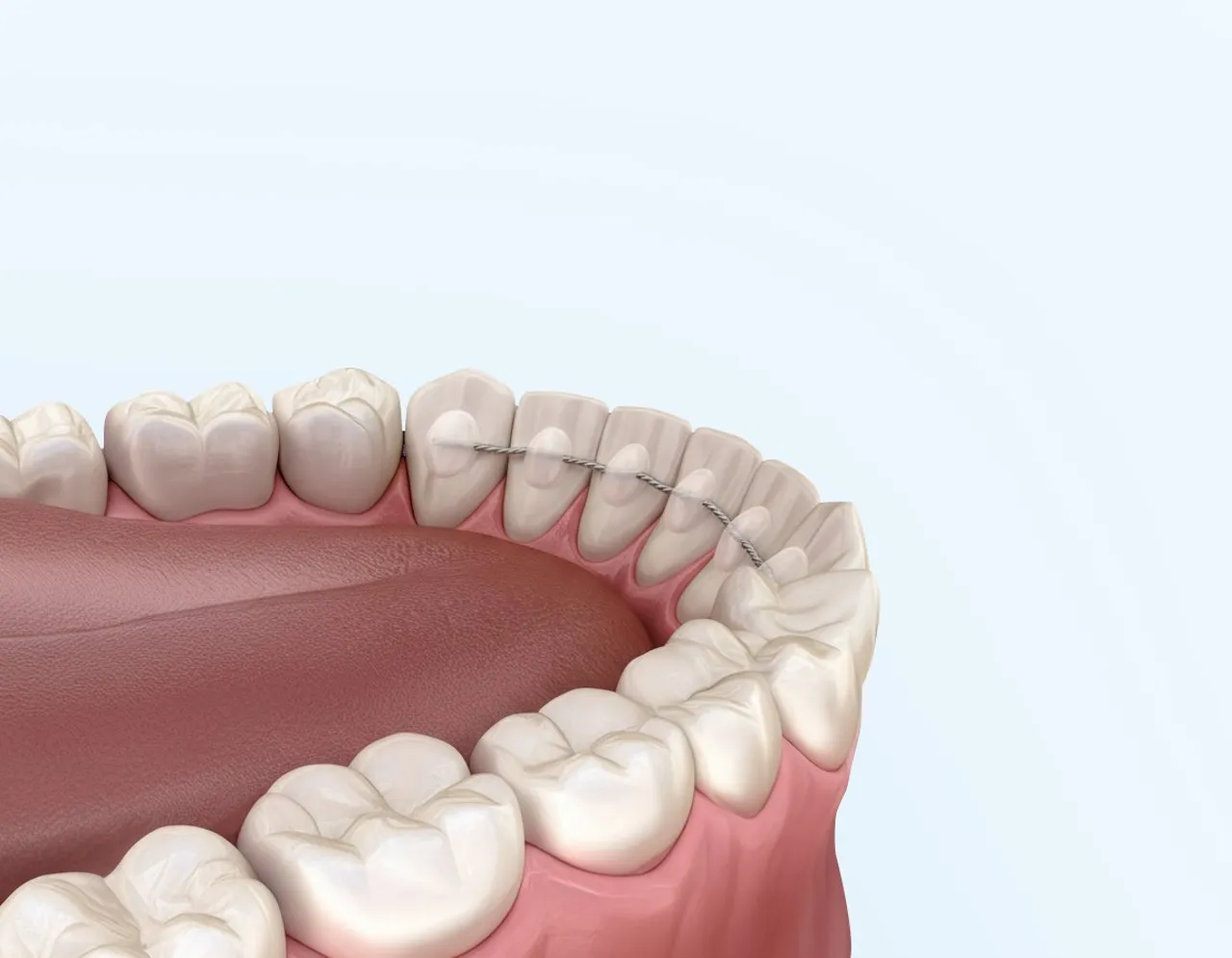
Retention: keeping the result stable
After correction, the teeth must be held in place. Otherwise, they will tilt back again. This is called a relapse. For this, we use retainers or night-time splints. A thin wire can be bonded to the inside of the teeth. Alternatively, a splint worn during sleep provides stability.

What you can do yourself straight away
Avoid pressure caused by harmful habits. Pay attention to your tongue position and lip posture. A bite splint often helps with teeth grinding. Improve your oral hygiene. Use interdental brushes in tight spaces. This significantly reduces the risk of inflammation. Timely advice is also important. When detected early, treatment is usually simpler. This also applies to adults.
Treatment at Wunschlachen in Berlin
At Wunschlachen, we guide you through a structured process. We start with a clear analysis. You then receive a transparent plan. You will learn which method suits your bite. We explain the steps, duration and aftercare. This gives you confidence before starting. If you wish, we can also incorporate aesthetic planning into your treatment. This concerns the shape of the dental arch and the front line. The aim is a harmonious smile.
FAQ: Frequently asked questions
A minor correction with an aligner or partial brace is often sufficient. Analysing the bite is important. Sometimes a splint is needed to relieve pressure.
Not always. The position of the front teeth in the bite is decisive. An orthodontist can make an accurate diagnosis.
Edges and tight spaces are difficult to reach. Plaque remains attached for longer. This increases the risks of tooth decay and gingivitis.
Often, yes. Space can be created by shaping the dental arch or reducing enamel. A space analysis shows whether this is sufficient.
Yes, up to a certain degree. Brackets are usually more efficient for complex movements. Sometimes we combine both methods.
As soon as you notice a shift. Also if you feel pressure or have problems biting. Early assessment often saves time.
Yes, that is possible. Faulty contacts can overstrain muscles. Correcting the bite can provide relief.
The costs depend on the method and effort involved. Aligner costs are often predictable, while fixed braces vary more. A cost estimate provides clarity.
Retention is crucial. Retainers or night guards hold the position. Regular check-ups secure the result.
No, this is not advisable. Uncontrolled forces damage the gums and roots. Always use professional treatment.