Milk tooth after a fall: Recognising and treating the injury
After a fall, a milk tooth may be loose, broken, displaced or pushed into the gum. The lips and gums may also be injured. Reassure your child and seek dental help promptly. A milk tooth is treated differently from a permanent tooth. The first task is therefore to assess the injury and your child's general condition, rather than trying to treat the tooth yourself.
The short answer
Injured milk teeth are treated differently from permanent teeth. A prompt examination will establish the extent of the damage and identify any other injuries.
- Assess the child first, then the tooth
- After the accident, do not focus solely on the visible damage to the tooth. If your child loses consciousness, has breathing problems or has other serious injuries, immediate medical help is required; call 112 in an acute emergency. A blow to the head may also need to be assessed separately.
- Knocked-out milk teeth must not be put back
- Do not put a knocked-out milk tooth back in. The treatment also takes account of the permanent tooth developing in the jaw. If you find the tooth, you may wish to keep it for the examination, but do not try to fix it back in place yourself. A dentist will assess the gap and any other injuries.
- What you can do before the examination
- Keep your child as calm as possible and avoid putting any further strain on the injured teeth. For slight bleeding, gently applying pressure with a clean compress may help, provided your child allows this and cannot swallow the material. Heavy or persistent bleeding requires medical assessment.
- Discolouration and follow-up appointments
- An injured milk tooth may change colour later. However, a grey or dark colour alone is not enough to decide whether the tooth should be removed. How the tooth progresses and additional signs such as pain, swelling or an abnormality of the gum must be assessed.

Assess the child first, then the tooth
After the accident, do not focus solely on the visible damage to the tooth. If your child loses consciousness, has breathing problems or has other serious injuries, immediate medical help is required; call 112 in an acute emergency. A blow to the head may also need to be assessed separately.
Unusual drowsiness, persistent vomiting or other abnormalities after a head injury are reasons to seek medical help. Explain how the accident happened and whether your child's behaviour has changed. Tooth damage that appears minor from the outside says nothing about whether another injury is also present.
If your child's condition allows, look carefully inside their mouth. Ask whether they are in pain without wiggling any teeth forcefully. Make a note of when the accident happened and which areas are affected. This will allow you to explain to the dental practice over the phone what happened and what symptoms your child has.
Loose, broken or pushed inwards?
Dental injuries can look very different. A tooth may remain in place but still be loose. It may be displaced sideways or pushed deeper into the jaw. A tooth that cannot be seen is not necessarily knocked out. A fracture may affect only a small edge or a larger part of the tooth.
Do not try to push a displaced milk tooth back into place yourself or pull out a tooth that has been pushed in. Its position and what to do next must be assessed. Changes when closing the mouth are also important, for example if your child can no longer bite together as usual.
Describe what you can see as simply as possible: ‘The tooth is further back’, ‘a corner is missing’ or ‘the gum is bleeding’. You do not need to name the type of injury over the phone. A description like this helps with planning, whereas trying to diagnose it yourself may cause unnecessary delay or lead you in the wrong direction.
Knocked-out milk teeth are not reinserted
Do not reinsert a knocked-out milk tooth. Treatment also takes account of the permanent tooth developing in the jaw. If necessary, keep the recovered tooth for examination, but do not try to secure it yourself. The gap and any other injuries will be assessed by a dentist.
Different rules apply to permanent teeth: a knocked-out permanent tooth needs immediate dental care. In a mixed dentition, it is not always easy to tell the difference. If you are unsure, seek professional advice promptly and state explicitly that it is unclear which type of tooth is affected.
If a tooth is missing and cannot be found, inform the dental practice. It could, for example, have been pushed into the tissue, or there may be other circumstances that need clarifying. Coughing or breathing problems after the accident also make the possible inhalation of a fragment medically relevant. In that case, do not improvise with dental care alone.
What you can do before the examination
Keep your child as calm as possible and avoid putting any further strain on the injured teeth. For slight bleeding, gently applying pressure with a clean compress may help, provided your child allows this and cannot swallow the material. Heavy or persistent bleeding requires medical assessment.
Touch the injured area only gently. Do not rinse harsh substances into the wound and do not use household glue. Keep any tooth fragments you find and take them with you. Mention even small lip injuries, as they may contain pieces of tooth.
If your child is in pain, ask about an approach appropriate for their age and weight. Do not use a medicine intended for adults or a dose you have calculated yourself. For help outside normal opening hours, emergency dentist provides guidance. In the event of serious accompanying injuries, emergency medical services should be contacted instead.
What is established during the dental examination?
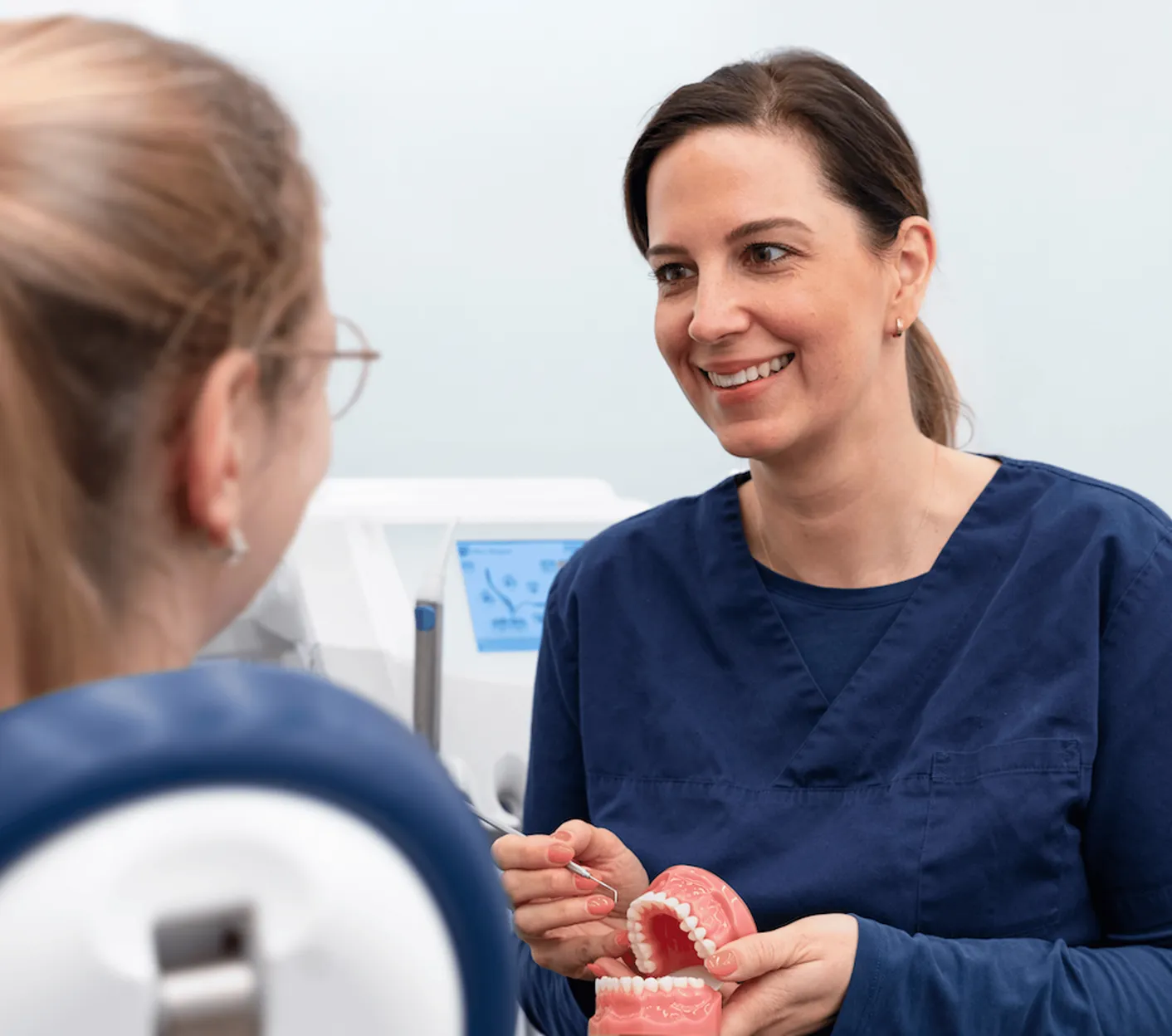
The examination looks at the teeth, gums, lips and, where appropriate, other injured areas. The circumstances and timing of the accident and any symptoms are also included. Depending on the findings, appropriate X-rays may be required. Not every injury requires the same images or the same treatment.
For milk teeth, the proximity of the developing permanent teeth is also taken into account. The international IADT guideline describes different approaches depending on the type of injury. Observation may be appropriate for some findings, while others require treatment or removal. A photograph is not sufficient for making this decision.
Ask about the exact injury and the aim of the recommended measure. Treatment is not right simply because the tooth would fall out eventually anyway. Milk teeth have important functions until then, and an injury can affect further development.
Care and eating after treatment
After the examination, you will receive advice tailored to the injury and treatment. This often involves avoiding further strain and keeping the area carefully clean. Ask to be shown how to continue cleaning your child's mouth. An injured area should not be left uncleaned indefinitely.
If chewing is uncomfortable, softer foods and smaller pieces may help. Whether any particular restrictions are needed and how long they apply must be discussed individually. General online guidance is less suitable for this than the instructions given after the examination.
Also clarify whether any additional medicines or products are actually needed. Antibiotics or special oral care products are not an automatic treatment for every dental accident. Write down the agreed steps, especially if several adults look after your child. This ensures that the same advice is followed at home and that check-ups are not missed.
Discolouration and follow-up appointments
An injured milk tooth may change colour later. However, a grey or dark colour alone is not enough to decide whether the tooth should be removed. How the tooth progresses and additional signs such as pain, swelling or an abnormality of the gum must be assessed.
Attend the recommended follow-up appointments even if your child soon starts eating normally again. Some consequences of a dental injury only become apparent later. Report any new symptoms or swelling earlier rather than waiting for a routine appointment that is already planned.
You can note any changes during recovery and take a photo if needed. This supplements the examination but does not replace it. Paediatric dentistry also supports further development. Ask which signs are important and what changes should prompt you to get in touch again.
Frequently asked questions
No. A knocked-out milk tooth is not replanted. Have the gap and any other injuries assessed promptly by a dentist.
No. A tooth may also have been pushed deeper into the tissue. If it cannot be found, mention this during the examination.
Not automatically. The type of injury, its position and other findings determine what should be done. The decision is part of the dental examination.
Discolouration may occur after an injury. On its own, it does not prove any particular consequence and is not an automatic reason for removal. Have the tooth's progress monitored.
No. Medicines are selected according to the injury and the individual findings. A general recommendation for every dental accident would not be appropriate.
Call 112 in the event of acute breathing difficulties, loss of consciousness or other serious injuries. Unusual symptoms after a head injury also require medical assessment.