Open bite: causes, effects and treatment
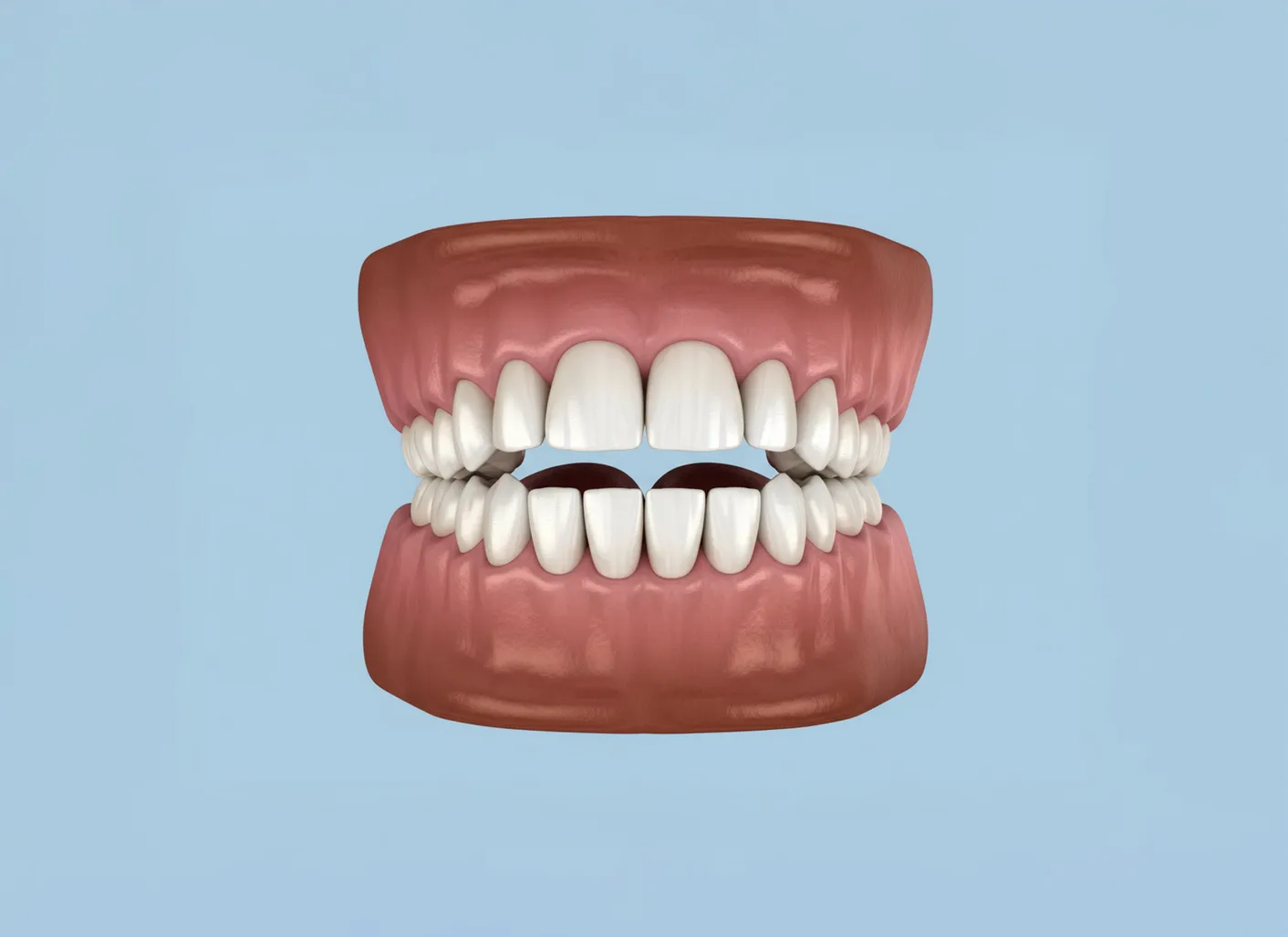
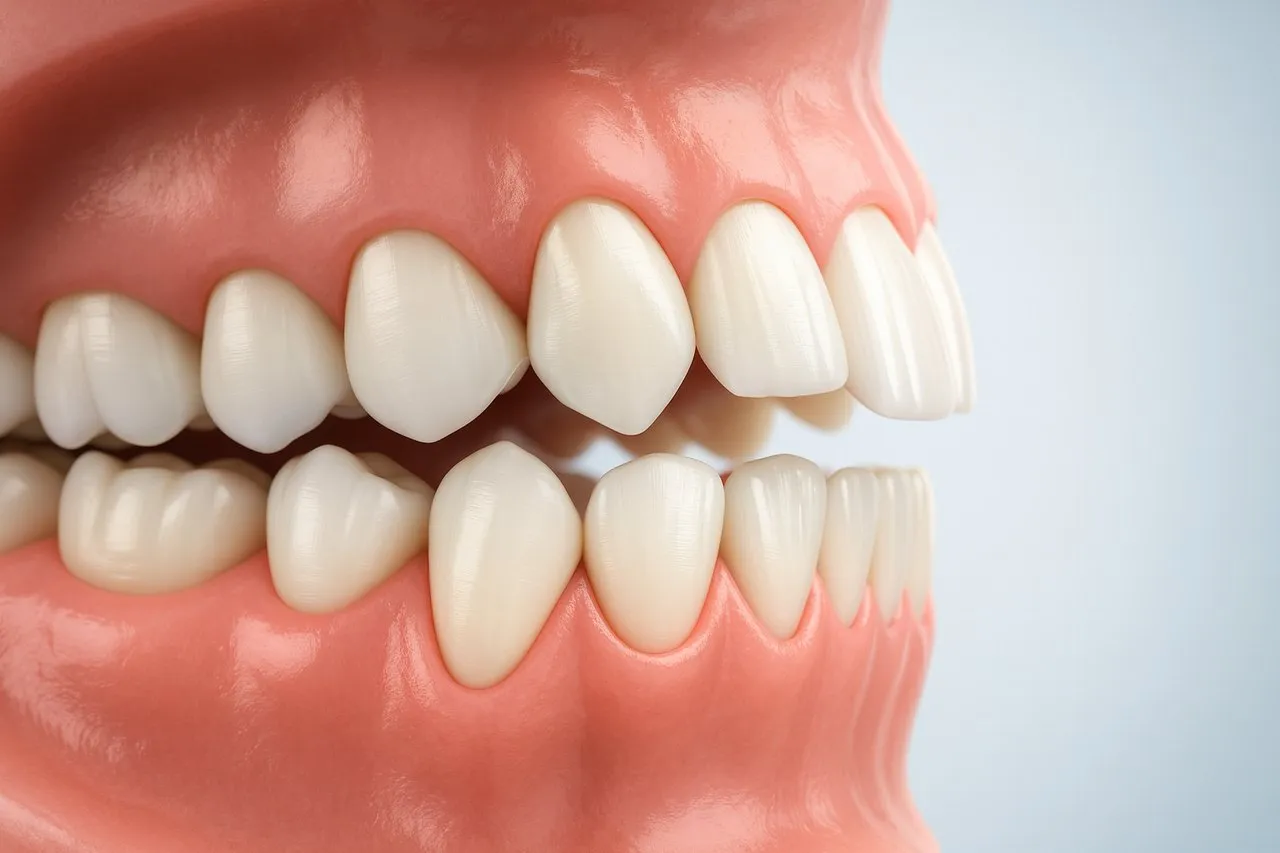
An open bite is a common dental misalignment that can affect both children and adults. It is a developmental abnormality of the teeth and jaws. The upper and lower teeth do not bite together correctly. Instead, a visible gap remains...
Über 350 Google-Bewertungen
Can an open bite correct itself?
An open bite is a dental misalignment in which the upper and lower front teeth do not meet when the mouth is closed – a visible gap remains. Causes include genetic predisposition, excessive dummy use and thumb-sucking. If left untreated, it can lead to chewing problems, speech disorders and jaw joint problems. In children, the misalignment can usually be corrected with braces and functional appliances within one to two years; adults sometimes also require surgery.
- Typical causes
- Genetic predisposition, excessive dummy use, thumb-sucking
- Duration of treatment
- Approximately 1–2 years in children, depending on severity and age
- Treatment
- Fixed or removable braces and functional appliances; in adults, potentially combined with surgical procedures
The type and duration of treatment depend on the individual findings and are planned by an orthodontist.
Causes of an open bite
The causes of this type of misalignment can be varied. Genetic factors often play a role. External influences such as prolonged dummy use or thumb-sucking can also lead to the development of an open bite. In some cases, failure of the bite to correct itself during childhood is also a cause. If the misalignment is not corrected in adults, it can lead to further problems. These include jaw joint problems, impaired chewing muscles and even speech disorders. Another factor in the development of an open bite is inadequate treatment of dental misalignments during childhood. If these misalignments remain uncorrected for a long time, they can worsen and lead to a more open bite. People who used a dummy or sucked their thumb are also at increased risk.
Open bite: symptoms
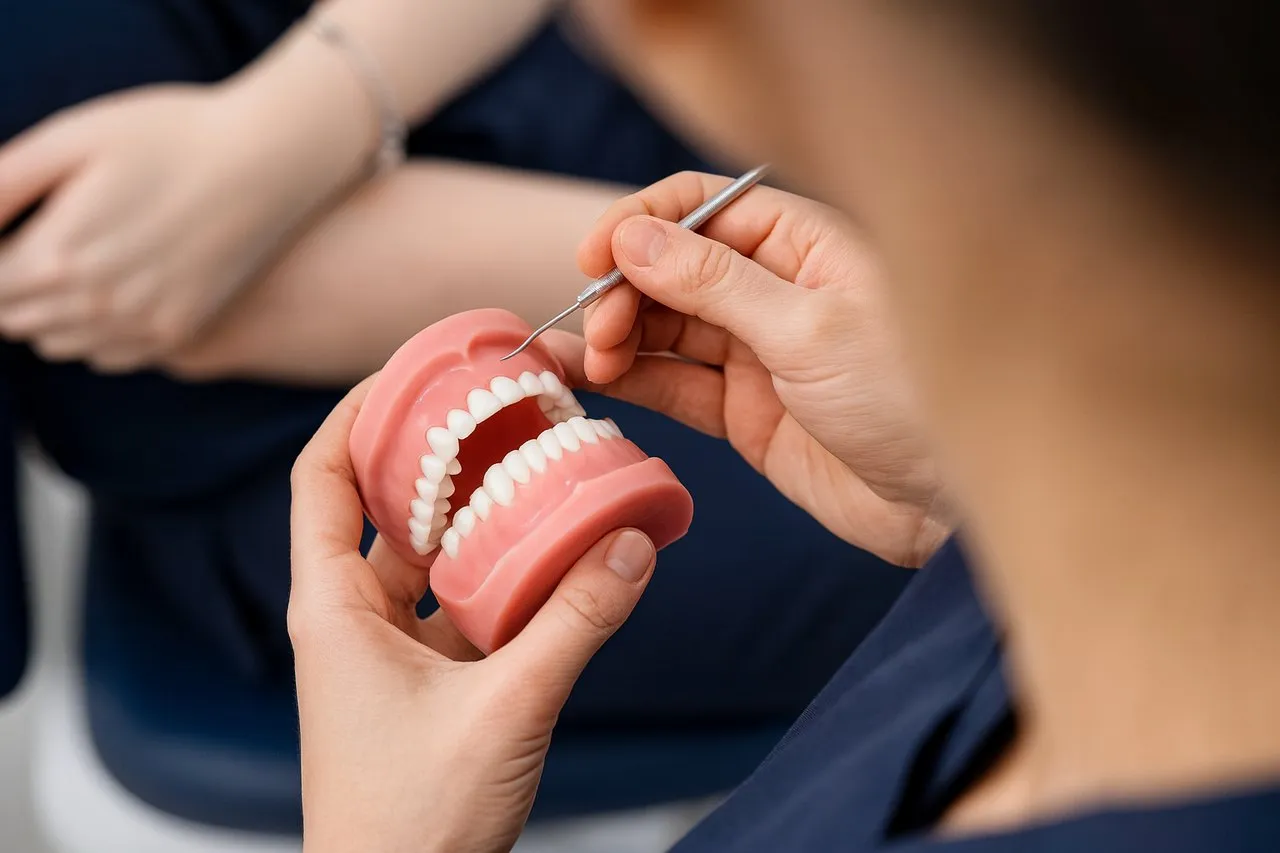
An open bite can cause various symptoms that affect both the appearance and the function of the jaw. The most common complaints include: 1. Aesthetic impairments: The visible gap between the teeth can negatively affect the appearance of the person concerned. This can lead to low self-esteem, particularly in childhood.
2. Chewing problems: An open bite can make it difficult to chew food. This can lead to problems with eating and digestion.
3. Speech problems: An open bite can also affect the pronunciation of certain sounds. This can lead to speech disorders.
4. Temporomandibular joint pain: In advanced cases, the temporomandibular joints can be overloaded due to the misalignment of the jaw. This can result in pain and tension.
Open bite treatment
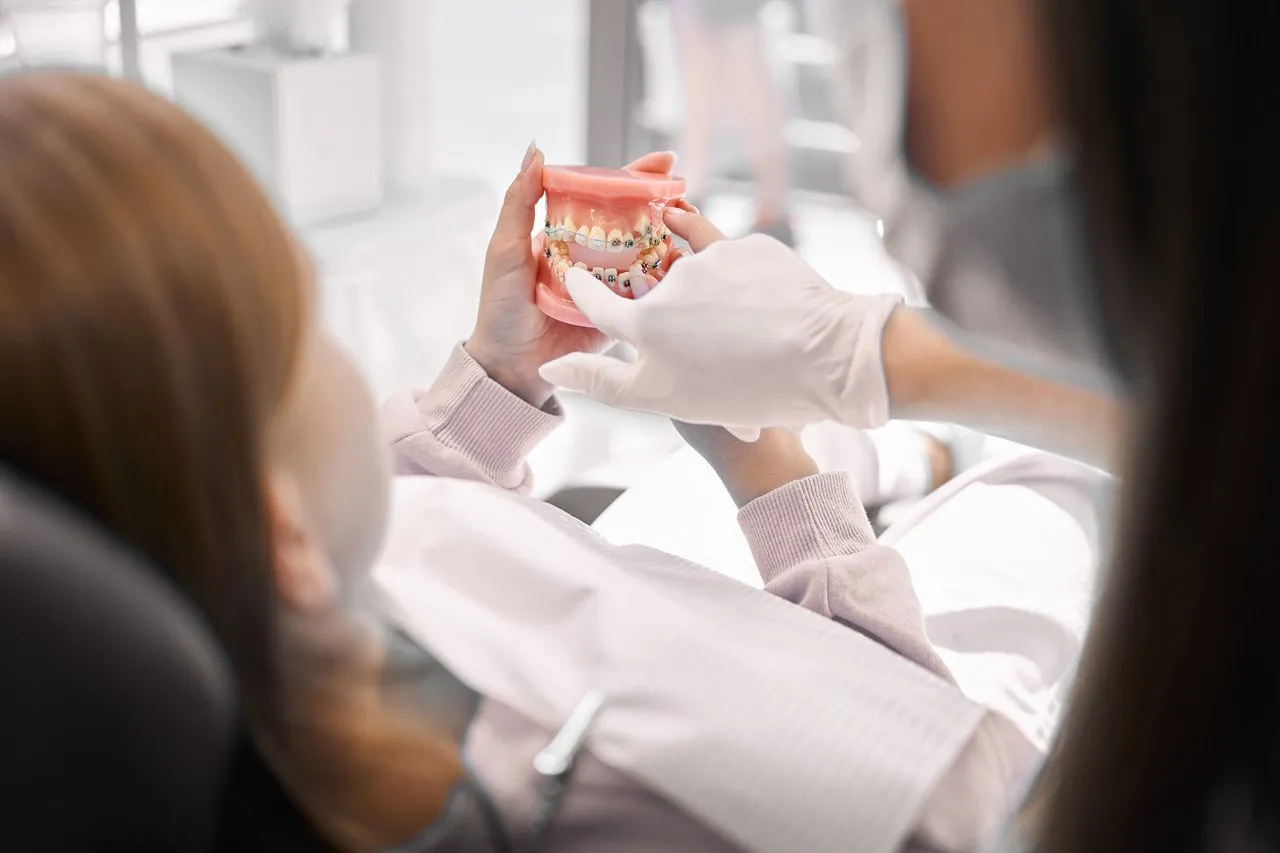
The treatment of an open bite depends on the severity of the misalignment and the age of the patient. In children, early treatment offers the greatest chance of completely correcting the misalignment. In many cases, an open bite can be corrected with braces or orthodontic appliances. Treatment during growth is particularly important, as the jaw is still malleable. For adults whose open bite is already fully developed, combined treatment may be necessary. This consists of orthodontic measures and surgical procedures. In particularly severe cases, it may be necessary to surgically reposition the jaw to restore the correct alignment. Treatment with braces generally takes place over a longer period of time. It can vary depending on the age of the patient and the severity of the misalignment.
In many cases, retention of the bite is also recommended after completion of treatment with braces. For example, through the use of retainers or other devices. This can prevent the misalignment from recurring. The duration of retention varies from case to case. In some patients, treatment can be completed within one to two years. Others require a longer treatment period. In every case, retention should be supervised by an experienced orthodontist to achieve optimal results.
Open bite in children
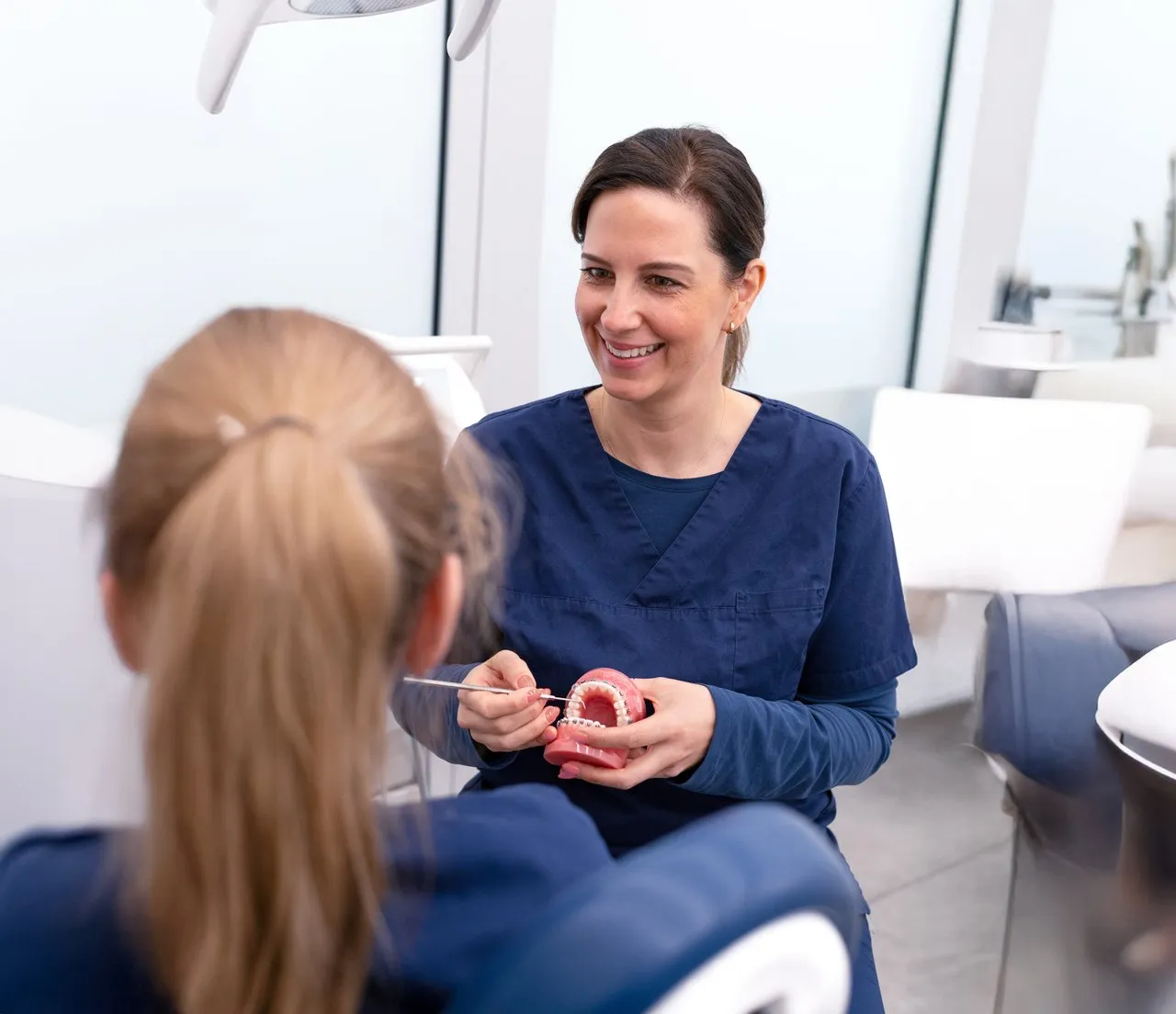
In childhood, the likelihood of complete correction is particularly high. In many cases, the use of braces and functional appliances can help to correct the bite.
If the misalignment was caused by dummy use or thumb sucking, this behaviour should be stopped early. Close collaboration with an orthodontist may also be necessary to achieve this. They will recommend the right course of action in each individual case.
Conclusion
An open bite is a common dental misalignment. It not only has aesthetic effects but also impairs jaw function and general quality of life. Early diagnosis and treatment, particularly during childhood, are crucial to avoid later complications. Through the targeted use of braces and, where necessary, surgical procedures, the misalignment can be successfully treated at any age.
Frequently asked questions (FAQ) about open bite
A dental misalignment in which the upper and lower teeth do not bite together correctly. This creates a visible gap between the teeth.
Causes can include genetic predisposition, excessive dummy use or thumb-sucking.
Yes, in children the misalignment can be corrected in many cases with braces and functional appliances.
Correction takes between one and two years, depending on the severity and the patient's age.
Yes, adults can benefit from a combination of orthodontic treatment and, where necessary, surgical procedures.
Yes, it can affect pronunciation, particularly of sounds that involve the teeth.
Dummy use can lead to an open bite during childhood if the dummy is used excessively.
If left untreated, it can result in chewing problems, jaw joint problems and even chronic pain.
Fixed or removable braces can be used, depending on the severity of the misalignment.
In adults, a combination of braces and surgical procedures may be required to correct the misalignment.