
Overcoming dental anxiety
Dental anxiety can place a heavy burden on everyday life. It often leads to appointments being postponed, feelings of shame and worsening symptoms. Anyone who wants to overcome dental anxiety needs understanding, clear steps and a suitable treatment plan.
Über 350 Google-Bewertungen

Why dental anxiety should be taken seriously
Many people feel tense before a dental appointment. When anxiety is severe, this becomes a real obstacle. As a result, tooth decay, inflammation or damaged fillings remain undetected for longer. Minor problems can then worsen. The subsequent treatment needed often places an additional burden on patients. Dental anxiety is therefore not a peripheral issue. It affects oral health, quality of life and self-confidence. A compassionate practice can provide crucial support in this situation.

Overcoming dental anxiety: The first step is to be open
The first step is usually to contact the practice. Many patients do not mention their anxiety at first. Tell us that you feel uncertain when you book your appointment. This allows the team to allow more time. A calm first appointment without treatment is also possible. Anyone who wants to overcome dental anxiety does not need to put on a perfect front. No one has to justify the condition of their teeth. What matters is starting structured care.

Fear of the dentist: What should I do at my first appointment?
Many people affected ask themselves this question. An appointment with a clear objective is helpful. At first, it often involves only a discussion, examination and planning. Write down your concerns in a few bullet points beforehand. This helps during the conversation. Many patients forget important points when they are tense. Agreed signals during treatment are also helpful. A hand signal gives you control. Short breaks can also provide reassurance.

Common causes of dental anxiety
Dental anxiety often has a history behind it. Some patients report unpleasant experiences in childhood. Others fear losing control, noises or injections. Sometimes anxiety develops gradually. One postponed appointment leads to the next postponed appointment. This creates a cycle of uncertainty and avoidance.

What measures help with dental anxiety?
There is no single solution for everyone. A combination of communication, predictability and gentle treatment is usually effective. The approach should suit the individual. A clear explanation of the procedure before each measure is helpful. Transparency reduces uncertainty. Many patients relax when they know what the next step will be. Short appointments can also be useful. This keeps the strain manageable. Where more extensive treatment is needed, care can be planned in stages. In certain cases, additional sedation methods may be an option. Whether this is advisable depends on the clinical findings. The decision is always made following an individual consultation.

Small steps are often more effective than one giant leap
Anyone who wants to overcome dental anxiety does not have to manage everything at once. A gradual approach is often more sensible. An initial conversation is already an achievement. This can be followed by a professional dental clean or a check-up. More extensive procedures are planned later. This sequence builds trust and routine. Every positive appointment changes your expectations. Anxiety can slowly give way to a sense of reliability. This is often what creates genuine stability.
How an anxiety-aware practice supports you
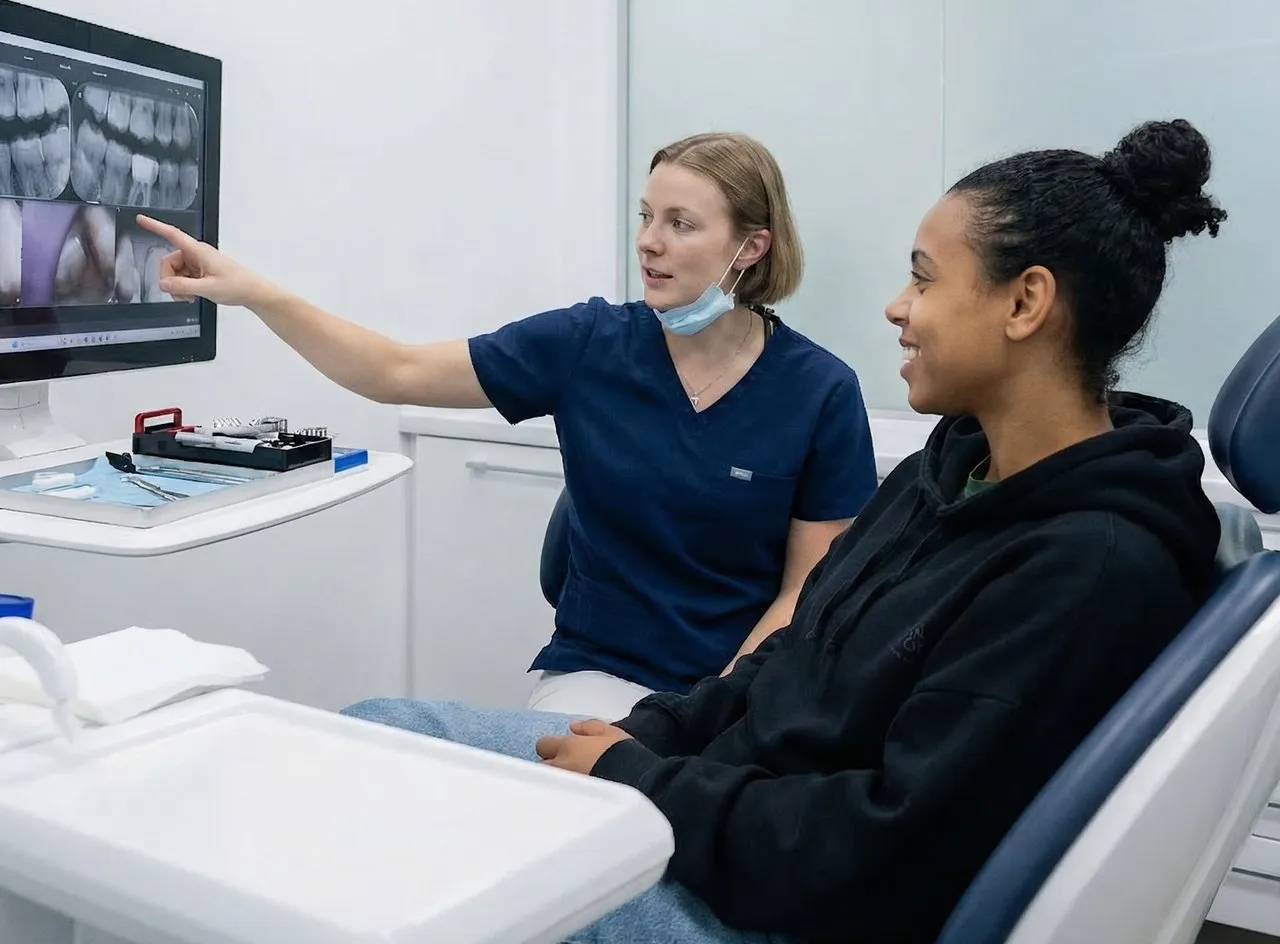
Good care does not begin only in the treatment room. Friendly communication on the telephone can make a big difference. A clear organisational process also helps. During the appointment itself, a calm atmosphere and clear explanations are important. Patients should be able to ask questions. Decisions must be explained in a way that makes sense. A respectful approach is also essential. Patients with anxiety do not need empty reassurance. They need to be taken seriously, along with structure and genuine human warmth.

What you can do yourself before your appointment
Try not to schedule your appointment between two other stressful commitments. Allowing a little extra time reduces pressure. Breathing out slowly often has a noticeably calming effect. Music through headphones can muffle distracting noises. Avoid dwelling on negative accounts of other people's experiences shortly beforehand. Such content often increases anticipatory anxiety. It is better to focus clearly on your own next step.

Why seeking help early is often the best approach
The earlier anxiety is addressed, the simpler treatment remains. Minor problems usually require less intervention. This also reduces the emotional strain. If you wait a long time, it is often not just the dental problem that gets worse. The psychological barrier also grows. Many patients experience this as a distressing cycle. Early support is therefore worthwhile. A gentle start can prevent anxiety from dominating the entire course of treatment. This is often the most important turning point.

Overcoming dental anxiety at Wunschlachen in Berlin
At Wunschlachen, we know how distressing dental anxiety can be. That is why we focus on clear explanations, calm processes and individual planning. Every step of treatment is discussed transparently. Our aim is to provide guidance rather than pressure. This creates an environment in which treatment becomes possible again. Even if you have hesitated for a long time, you can still begin. The best time is not a perfect moment. It is the moment when you allow yourself to accept support.
FAQ: Frequently asked questions about overcoming dental anxiety
Yes, in many cases it is. It usually happens gradually. Trust, good communication and a suitable approach are crucial.
A short consultation without treatment is a good option. This significantly lowers the barrier. The next step can then be planned more easily.
Yes, definitely. Only then can the practice team respond appropriately. Being open makes it easier to schedule appointments and manage treatment.
Breathing exercises, allowing extra time and having a clear plan are helpful. Having someone accompany you can also provide support. It is important to have a calm start without additional stress.
Yes, a great many adults experience this problem. Its severity varies, however. Some people feel nervous, while others avoid treatment for a long time.
The appointment often begins with a conversation. This is followed by an examination and planning. Treatment does not have to take place straight away.
Yes, very often. A hand signal gives you control. Many patients find this significantly reassuring.
A professional practice should not judge you. It assesses the condition of your teeth, not you as a person. The aim is to find a good solution, not to criticise.
Shame often makes anxiety worse. It stops many people affected from making appointments. This is precisely why respectful treatment is so important.
Ideally, early on. Problems often remain smaller and easier to plan for. The psychological barrier is also usually overcome more quickly.