Permanent tooth behind a baby tooth: What parents need to know now
While brushing their child's teeth, parents suddenly discover another tooth behind a baby tooth. The double row looks unusual and is sometimes referred to as ‘shark teeth’. This colloquial expression is not a diagnosis. A permanent front tooth can become visible while its baby tooth is still present. Whether the situation should initially be monitored or treated depends on factors including the position, available space and condition of the teeth. Do not pull out the baby tooth yourself to make room.
The short answer
A second row of teeth may become noticeable when baby teeth are being replaced. Whether monitoring or treatment is appropriate depends on the clinical findings, not on a photograph alone.
- What you may notice when baby teeth are being replaced
- During the mixed dentition phase, baby teeth and permanent teeth are both present in the mouth. Occasionally, a new front tooth appears on the tongue side behind the baby tooth that is still present, particularly in the lower jaw. The baby tooth may already be loose or may still be firmly in place. These differences are important for the assessment. A second visible row of teeth does not automatically mean that an additional supernumerary tooth has developed.
- A different situation: the new back tooth
- A permanent back tooth can erupt behind the existing row of baby teeth without a baby tooth having fallen out there first. This is different from a front tooth appearing behind its baby tooth predecessor. The observation that ‘a tooth is coming through at the back’ is therefore not enough to assume that something is going wrong. The exact location should be shown to a dentist.
- Not every baby tooth needs to be removed
- Depending on the findings, the initial approach may be to monitor whether the baby tooth becomes looser and falls out. Removal may be considered in certain situations, but is not decided solely because of the unusual appearance. Even after the baby tooth has been lost, the subsequent position of the permanent tooth cannot be predicted for every child. The available space and further development remain important.
- Symptoms that should be assessed sooner
- Pain, swelling, pus, fever or a preceding accident should be mentioned explicitly when booking an appointment. They should not simply be dismissed as normal accompanying symptoms of the change of teeth. Significant acute symptoms require a prompt dental assessment. A newly visible tooth alone does not explain every symptom in this area.
What you may notice when baby teeth are being replaced
During the mixed dentition phase, milk teeth and permanent teeth are present in the mouth at the same time. Occasionally, a new front tooth appears on the tongue side behind a milk tooth that is still present, particularly in the lower jaw. The milk tooth may already be loose or still firmly in place. These differences are important for the assessment. A second visible row of teeth does not automatically mean that an additional supernumerary tooth has developed.
Show the area at a dental check-up and describe when you first noticed it. A quick phone call will help you arrange a suitable appointment. You do not need to identify the tooth or assess its root development beforehand. Information about a normal loose milk tooth can be found in the guide loose milk tooth; this page focuses specifically on the new tooth that is already visible behind it.
A different situation: the new back tooth
A permanent back tooth can erupt behind the existing row of baby teeth without a baby tooth having fallen out there first. This is different from a front tooth appearing behind its baby tooth predecessor. The observation that ‘a tooth is coming through at the back’ is therefore not enough to assume that something is going wrong. The exact location should be shown to a dentist.
A newly erupting back tooth in particular can be overlooked when brushing because it is far back and initially sits lower. Ask to be shown the area and how to clean it properly. The child should not have to decide for themselves whether they are brushing a baby tooth or a permanent tooth. All accessible tooth surfaces need care, even while the change of teeth is still under way.

What the examination determines
The team checks which teeth are present, how mobile the baby tooth is and whether the new tooth has enough space. They also consider the bite, the development of the rest of the dentition and any symptoms. Imaging is used when it is needed to answer a specific question; a double row of teeth does not automatically mean that an X-ray is required. A photograph alone is no substitute for an examination.
Afterwards, ask about the findings and the next step. If monitoring is planned, it should be clear when the area will be checked again and which changes you should report before then. If further investigations or an orthodontic assessment are recommended, ask for the reason to be explained. This helps distinguish a developmental issue from a misalignment that requires treatment.
Not every baby tooth needs to be removed
Depending on the findings, the initial approach may be to monitor whether the baby tooth becomes looser and falls out. Removal may be considered in certain situations, but is not decided solely because of the unusual appearance. Even after the baby tooth has been lost, the subsequent position of the permanent tooth cannot be predicted for every child. The available space and further development remain important.
Ask why removal is or is not yet recommended in your child's particular case. Also ask about follow-up afterwards. A statement such as ‘it will always straighten out’ would be just as inaccurate as assuming that every double row will inevitably lead to braces. Treatment takes account of the entire dentition and how it actually develops.
Do not try to pull the tooth out with string or tools
A baby tooth must not be pulled out with string, pliers or other implements. Such attempts can cause pain and injury. Also, do not encourage the child to push the new tooth in a desired direction by applying pressure. If necessary, tooth positioning is planned professionally rather than altered at home through repeated pressure tests.
If the area causes problems when eating, describe this to the practice. A specific description is more helpful than asking for a tooth to be removed purely as a precaution. If a baby tooth remains unusually firm or the area does not change over a longer period as discussed, arrange the planned check-up. A fixed deadline from an internet forum is not personalised guidance.
Reaching the second row when brushing
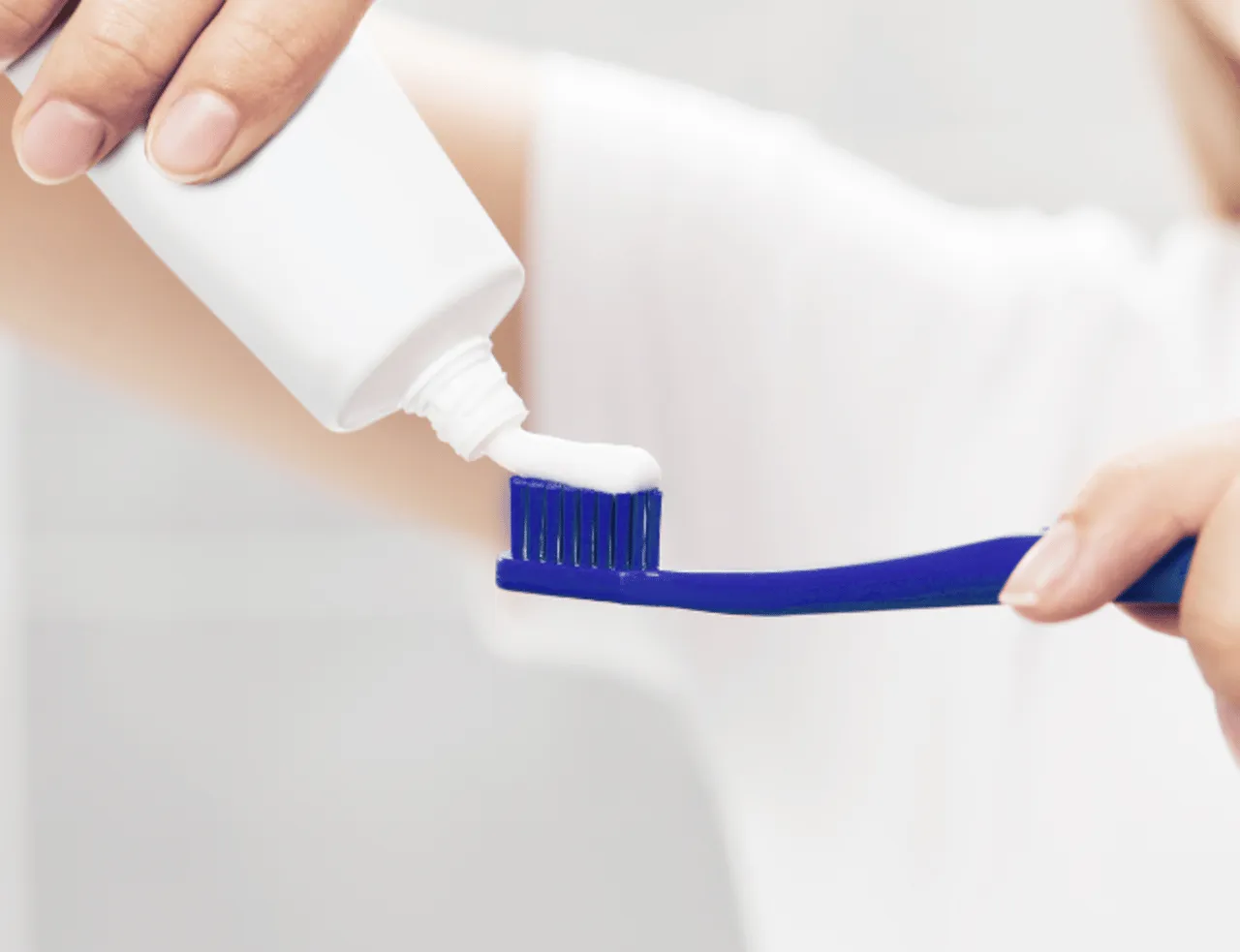
Continue to clean the accessible tooth surfaces carefully. The new position can change the angles and access points. A small brush and a demonstrated technique can help you reach the area behind the baby tooth. Ask for advice if brushing hurts or the tooth is only partially visible. Parents support oral care according to the child's abilities.
Use the age-appropriate fluoride toothpaste recommended for your child. A mouthwash does not replace either brushing or an examination. Do not remove plaque with pointed objects. Normal oral care should continue during a monitoring period. Information about teething in babies relates to the initial development of teeth and is not intended as guidance for this change of teeth.
Symptoms that should be assessed sooner
Pain, swelling, pus, fever or a preceding accident should be mentioned explicitly when booking an appointment. They should not simply be dismissed as normal accompanying symptoms of the change of teeth. Significant acute symptoms require a prompt dental assessment. A newly visible tooth alone does not explain every symptom in this area.
If breathing or swallowing problems, rapidly increasing swelling or a life-threatening condition occur, call 112. For a double row of teeth causing no symptoms, on the other hand, a routine examination is the next step. If necessary, make a note of when the area first became visible and whether eating or brushing is affected. The regular children's dental check-up also examines the development of the entire dentition.
Moving forward with a follow-up plan
After the appointment, parents should know whether the area will initially be monitored, what oral care has been demonstrated and when it will be checked again. Make a note of these arrangements rather than checking the baby tooth several times a day to see whether it has become looser. An earlier photograph can document progress; constant photography or pulling at the lip is not necessary for this.
Explain the next steps to the child simply and without threatening removal. Even if treatment proves necessary, it will be discussed and prepared. A double row of teeth is initially an observation from which the examination can produce a specific plan. This plan may change as development progresses, without you having to decide on the procedure yourself.
Frequently asked questions
Not automatically. When baby teeth are being replaced, the permanent successor may become visible while the baby tooth is still present. The examination determines which tooth it is.
No. The position, mobility, available space and any symptoms determine the approach. Monitoring or removal is decided on the basis of the individual clinical findings.
Its position may change as it develops, but a particular outcome cannot be guaranteed. Arrange the planned follow-up appointment.
A permanent back tooth can erupt additionally behind the row of baby teeth. This is different from a front tooth behind its baby tooth predecessor.
Do not use string or tools and do not force removal. If a firmly anchored baby tooth is causing problems or there are any symptoms, have the situation assessed.
Mention pain, swelling, pus, fever or an accident when booking the appointment. Breathing problems or a life-threatening condition require urgent medical assistance.