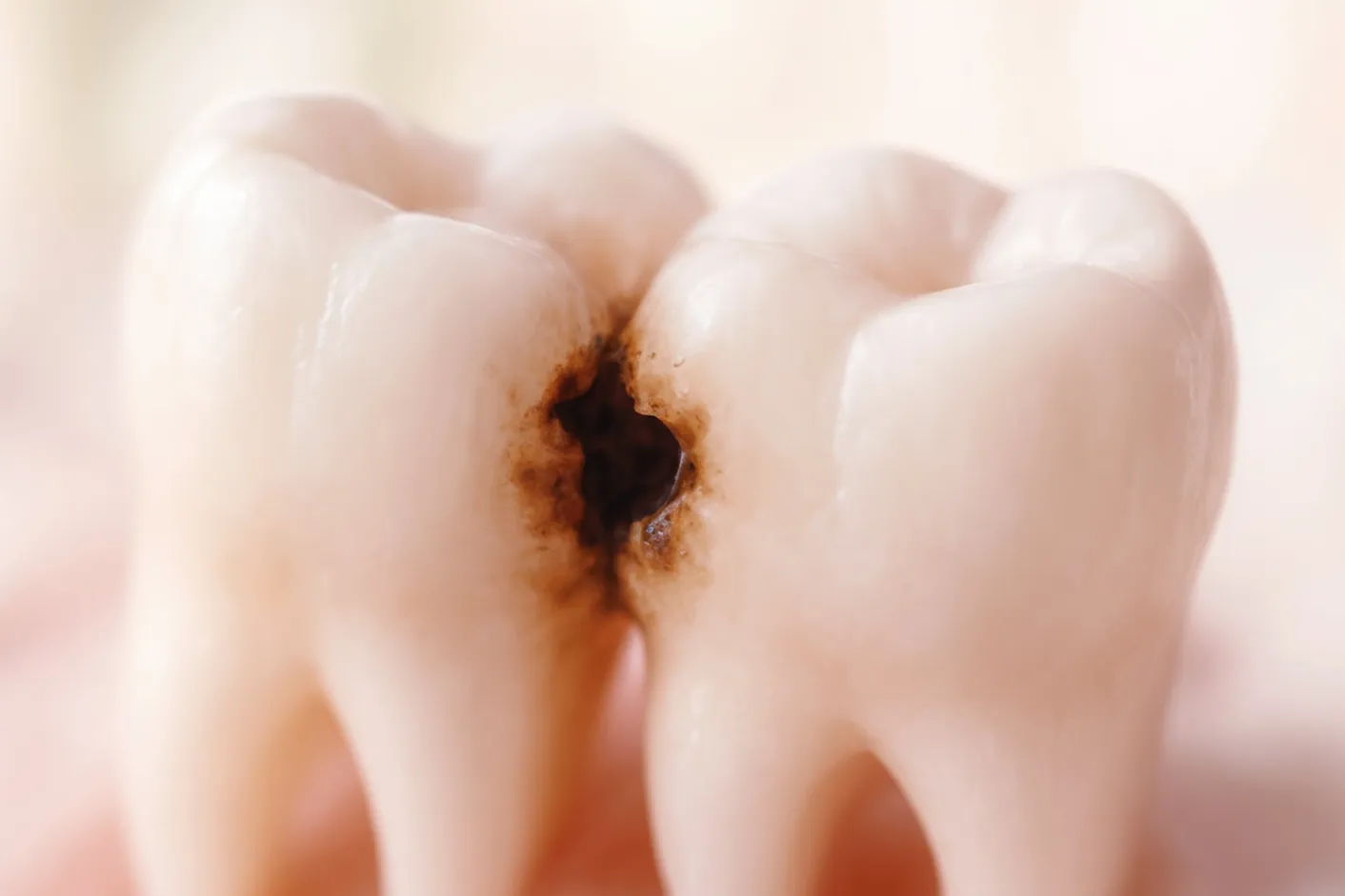
Treating tooth decay between teeth
Tooth decay is one of the most common dental diseases worldwide. It is particularly insidious when it develops in hard-to-reach areas, such as between the teeth. This so-called interdental decay often goes unnoticed for a long time because it is barely visible from the outside. Only when...
Über 350 Google-Bewertungen
Why does tooth decay develop between teeth?
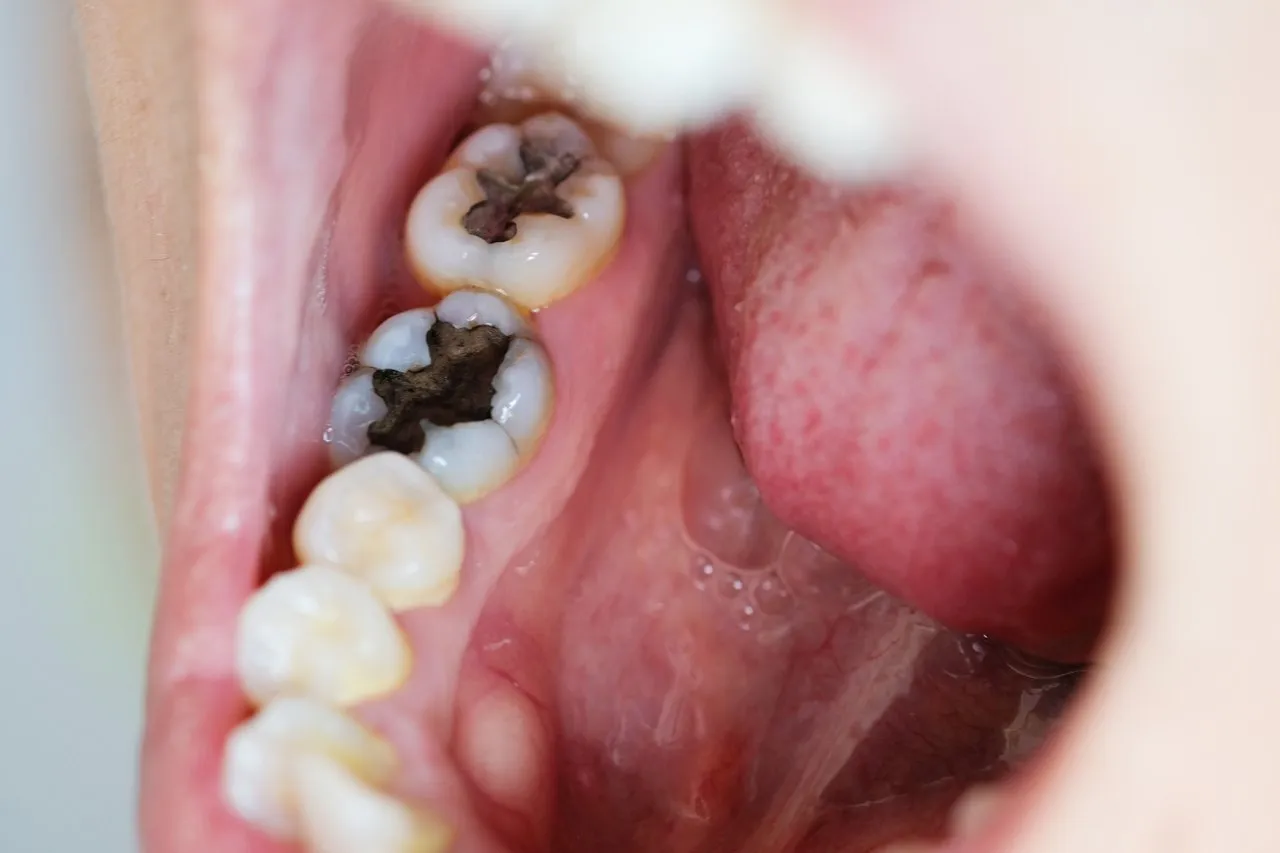
The spaces between the teeth are particularly susceptible to caries because food debris and plaque can easily accumulate here. These areas are difficult to reach with a toothbrush.
If the interdental spaces are not cleaned regularly with dental floss or interdental brushes, bacteria can convert sugar into acids unhindered. These then attack the tooth enamel. This is how caries develops between the teeth.
Initially unnoticed, it develops and then penetrates ever deeper into the tooth. Caries in an incisor or a front tooth is often particularly distressing. This form of the disease directly affects the appearance of the smile.
Symptoms: how to recognise tooth decay between teeth
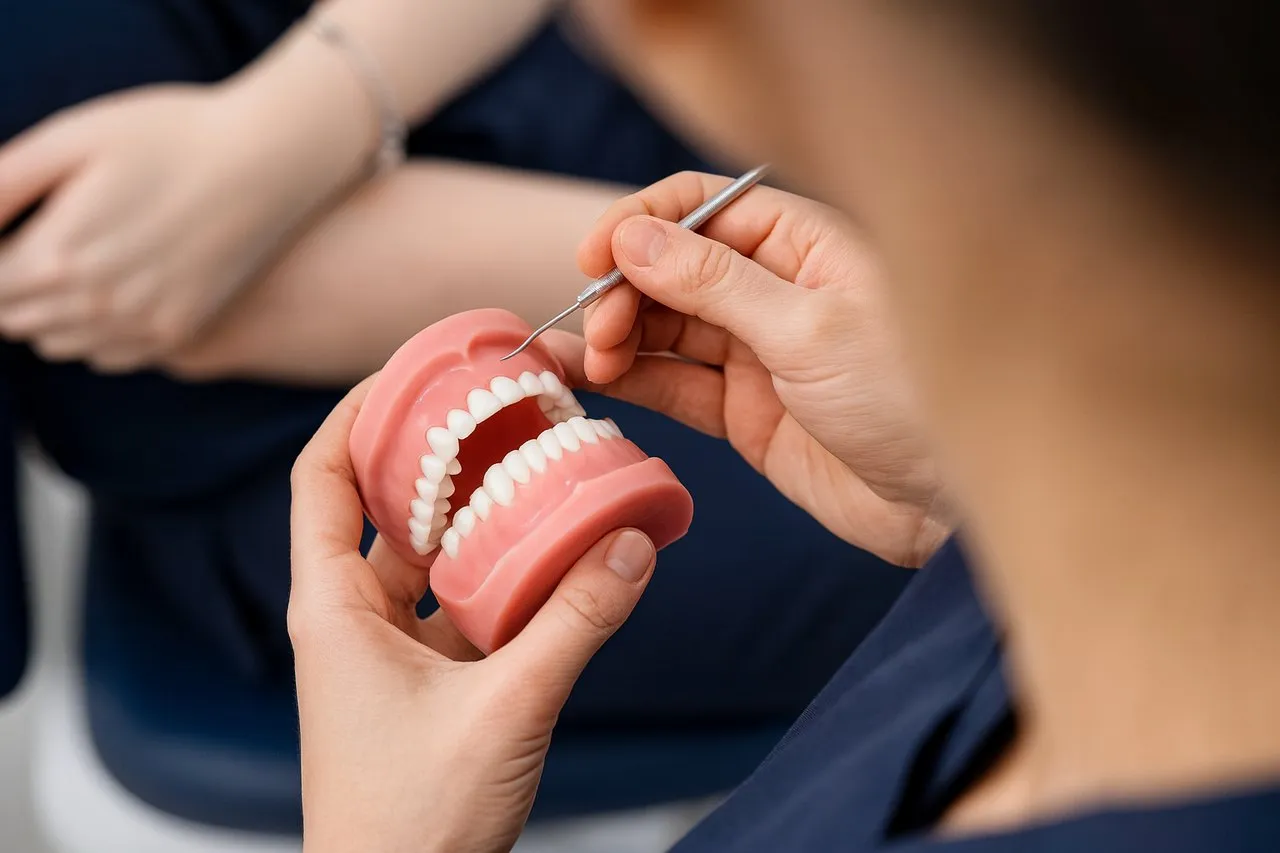
Many patients only notice the disease at a late stage, as caries in the interdental space is not always visible from the outside. Typical signs are: • pain in the interdental space or pain between the teeth when chewing or on contact with something sweet or cold • sensitivity in the front or back teeth • dark shadows or discolouration between the teeth • an unpleasant taste in the mouth
Pain often only occurs at a late stage, particularly around the inner surface of an incisor or in the interdental space. This is because the tooth enamel is thinner in these areas.
Diagnosis: making tooth decay visible
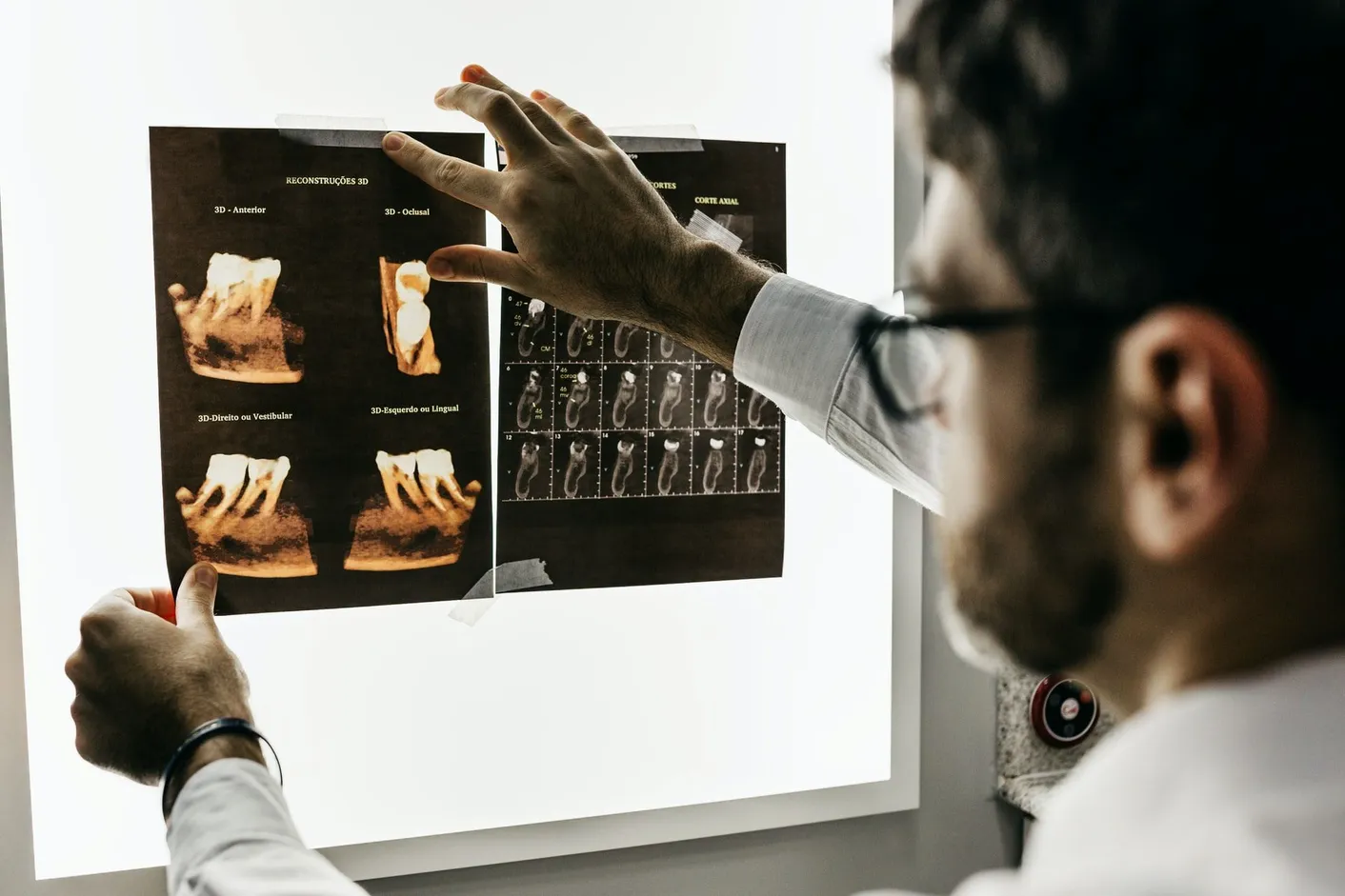
As the spaces between teeth are difficult to access, diagnosis usually involves special methods. X-rays are particularly important for detecting tooth decay, specifically what is known as a bitewing X-ray. This allows dentists to detect even the smallest carious lesions early, before symptoms appear. X-rays are crucial for treating decay in front teeth or hidden decay between teeth in good time.
Treating tooth decay between teeth
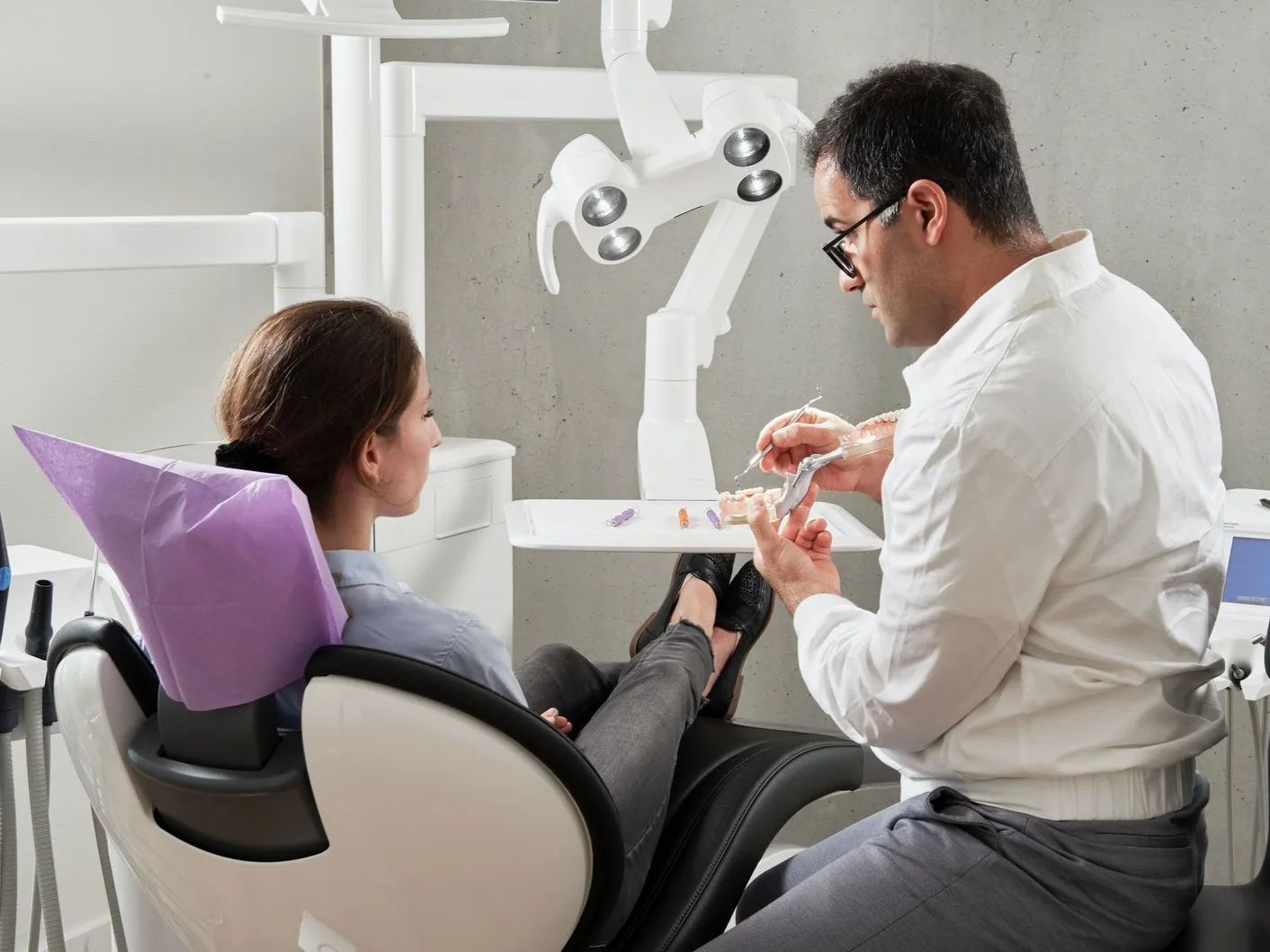
Treatment depends on the stage of the disease: 1. Early stage: If the caries is only superficial, it can often still be stopped through fluoridation and better oral hygiene. 2. Advanced caries: If the caries between the teeth has to be removed, this is done with a filling. The damaged tooth substance is gently removed and replaced with a stable, tooth-coloured material. 3. Deep defects: With very deep caries, root canal treatment may be necessary to preserve the tooth.
A precise approach is particularly important when removing caries between the teeth, as the interdental spaces are difficult to access. Modern methods and materials now ensure that the teeth remain stable and functional for a long time.

Tooth decay in the front teeth
Caries on the incisors is particularly distressing for many patients. Visible defects affect not only dental health but also aesthetics. • Caries in the front teeth and internal caries on an incisor must therefore be detected and treated early. • Modern, tooth-coloured filling materials can repair defects so that they are virtually invisible.
This keeps your smile not only healthy but also aesthetically pleasing.
Pain between teeth: what should you do?
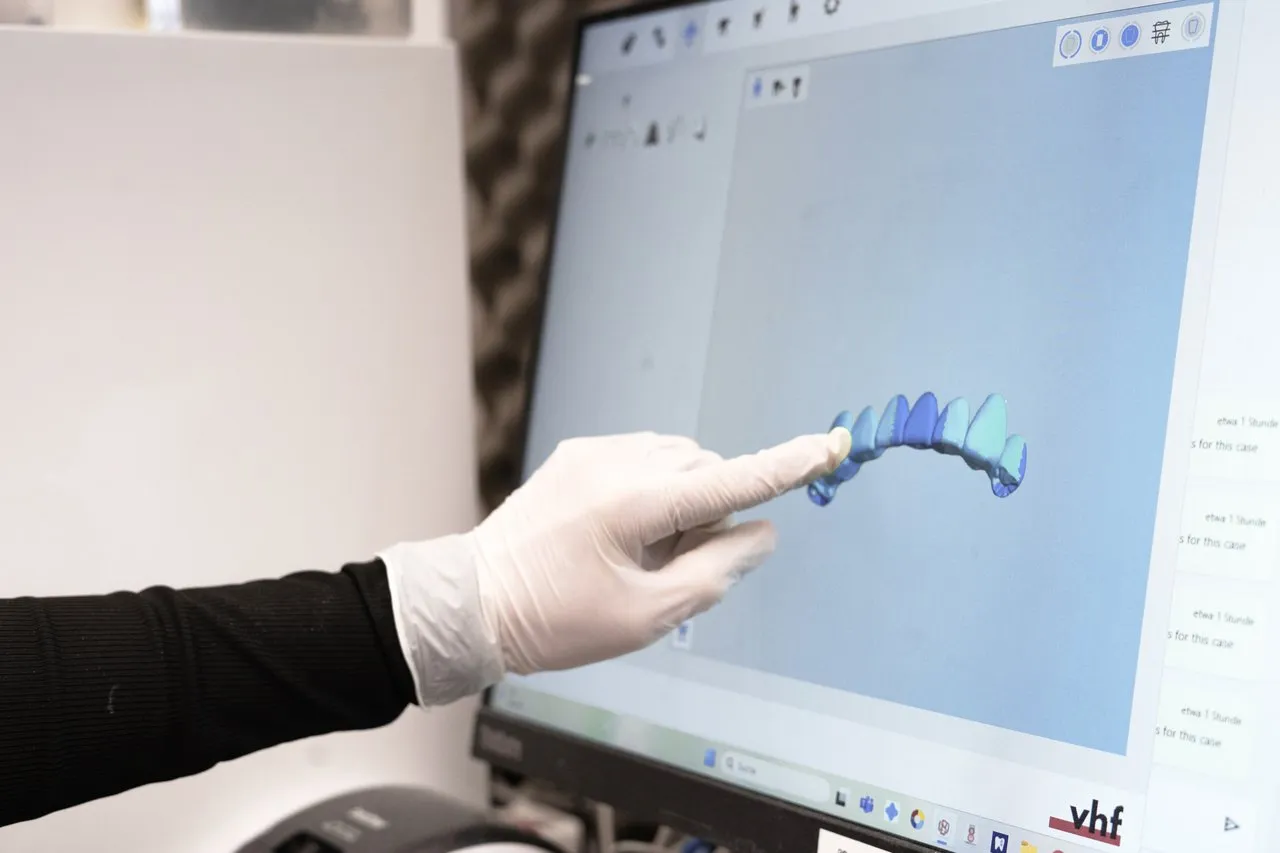
If pain occurs between teeth, the tooth decay has usually already progressed. You should see a dentist now at the latest. The earlier treatment begins, the less extensive it will be – and the better the chances of recovery. Do not wait until the symptoms become unbearable: untreated tooth decay between teeth continues to progress steadily.

Prevention: how to protect the spaces between your teeth
Prevention is always the best treatment. To prevent caries in the interdental spaces, you should follow these tips: • Clean the interdental spaces daily with dental floss or interdental brushes • Brush your teeth regularly with fluoride toothpaste • Follow a low-sugar diet to deprive bacteria of their food source • Have regular dental check-ups • Have professional dental cleaning to remove even stubborn deposits
With the right oral hygiene, you can significantly reduce the risk of caries between the teeth.
Conclusion
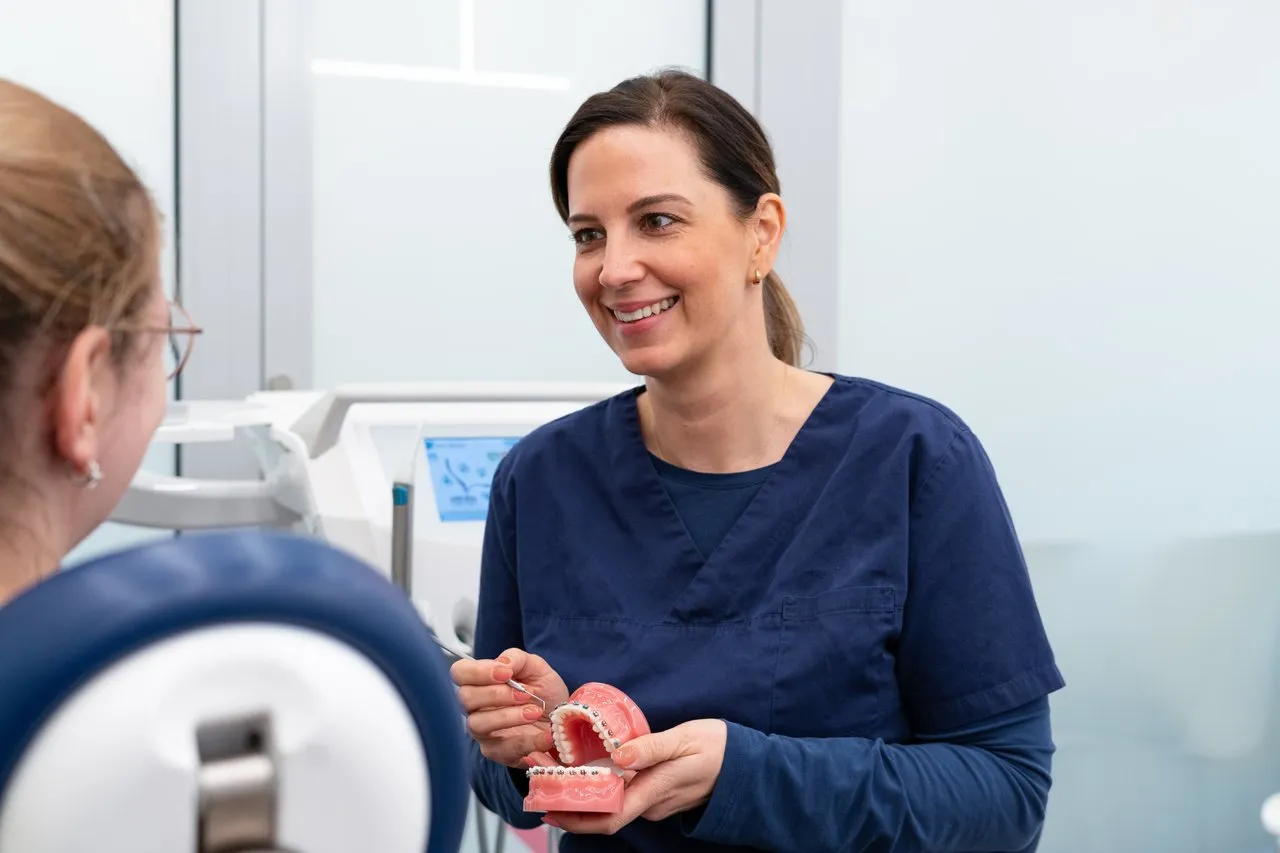
Tooth decay between teeth is an insidious form of dental disease that is often only noticed late. Typical symptoms such as pain between teeth, discolouration or sensitivity should be taken seriously. Timely diagnosis, for example with an X-ray, and appropriate treatment preserve the tooth and prevent more extensive damage. Prompt action is particularly important for front teeth in order to preserve both function and appearance. Consistent preventive care, modern diagnostics and early treatment can keep the spaces between your teeth healthy. We help you protect your smile in the long term.
Your dental practice in Berlin – locations
Our dental practices in Berlin are located in Reinickendorf, Schöneberg, Friedrichstraße and Charlottenburg. We offer high-quality treatments and modern technology. Book a dental appointment now, online or by phone, for a radiant smile.
General dentistry and surgery
Reinickendorf
Zahnarzt & Implantate
Gotthardstr. 27, 13407 Berlin Tel.: 030 / 495 20 10[email protected]Mo-Do: 08:00–20:00 Fr: 08:00–14:00
Mehr erfahrenSchöneberg
Zahnarzt & Implantate
Bayerischer Platz 7, 10779 Berlin Tel.: 030 / 854 44 83[email protected]Mo-Do: 08:00–20:00 Fr: 08:00–14:00
Mehr erfahrenFriedrichstraße
Zahnarzt & Implantate
Friedrichstraße 147, 10117 Berlin Tel.: 030 / 959 990 644[email protected]Mo-Do: 09:00–18:00 Fr: 09:00–14:00
Mehr erfahrenCharlottenburg
Zahnarzt & Implantate
Savignyplatz 5, 10623 Berlin Tel.: 030 / 233 290 390[email protected]Mo-Do: 09:00–18:00 Fr: 09:00–13:00
Mehr erfahrenOrthodontics and children's dentistry
Reinickendorf
Kieferorthopädie & Kinderzahnmedizin
Gotthardstr. 27, 13407 Berlin Tel.: 030 / 495 20 10Mo-Do: 08:00–20:00 Fr: 08:00–14:00
Mehr erfahrenSchöneberg
Kieferorthopädie & Kinderzahnmedizin
Bayerischer Platz 7, 10779 Berlin Tel.: 030 / 854 44 83Mo-Do: 08:00–20:00 Fr: 08:00–14:00
Mehr erfahrenFrequently asked questions (FAQ)
It is tooth decay that forms between two teeth and is therefore difficult to detect.
Typical symptoms include pain between teeth, sensitivity and discolouration. Book an appointment as soon as possible if you experience these symptoms.
Most reliably with an X-ray (bitewing X-ray).
No, tooth decay between teeth can only be removed through dental treatment.
Yes, because it affects not only dental health but also appearance. Prompt action is important.
By gently removing the decay and placing a tooth-coloured filling.
Not necessarily. Pain often only occurs at an advanced stage.
By carefully cleaning between teeth with dental floss or interdental brushes.
Sugary foods promote tooth decay. A tooth-friendly diet, on the other hand, protects against possible damage.
At least twice a year by a dentist, in addition to regular professional dental cleaning.